浙江农业学报 ›› 2025, Vol. 37 ›› Issue (11): 2315-2324.DOI: 10.3969/j.issn.1004-1524.20250101
辣椒炭疽病病原菌分离鉴定及防治药剂筛选
刘亚婷1( ), 吴立东1,2, 邱胤晖1, 陈国钰1, 钟柳青1,*()
- 1.三明市农业科学研究院,福建 三明 365509
2.福建省(山区)作物遗传改良与创新利用重点实验室,福建 三明 365509
-
收稿日期:2025-02-11出版日期:2025-11-25发布日期:2025-12-08 -
作者简介:刘亚婷(1989—),女,浙江丽水人,硕士,助理研究员,主要从事蔬菜遗传育种研究工作。E-mail: 598288001@qq.com -
通讯作者:*钟柳青,E-mail: 303721640@qq.com -
基金资助:福建省农业引导性项目(2023N0046)
Pathogens identification of pepper anthracnose and fungicide screening
LIU Yating1(), WU Lidong1,2, QIU Yinhui1, CHEN Guoyu1, ZHONG Liuqing1,*()
- 1. Sanming Academy of Agricultural Sciences, Sanming 365509, Fujian, China
2. Fujian Key Laboratory of Crop Genetic Improvement and Innovative Utilization of Mountain Area, Sanming 365509, Fujian, China
-
Received:2025-02-11Online:2025-11-25Published:2025-12-08

摘要: 为明确福建省三明市辣椒炭疽病的病原菌,筛选出有效的防治药剂,为辣椒炭疽病的科学防治提供依据,本研究从当地主产区采集辣椒炭疽病病果,通过组织分离法分离纯化病原菌,利用形态学特征观察,并结合多基因序列(ITS、ACT、CHS-1、TUB2、GAPDH和CAL)联合构建系统发育树进行病原菌鉴定,采用菌丝生长速率法和田间防效试验测定10种杀菌剂对病原菌的抑菌效果和田间防效。结果表明,引起研究区辣椒炭疽病的病原菌为暹罗炭疽菌(Colletotrichum siamense)。室内毒力测定结果表明,24%双胍·吡唑酯可湿性粉剂的抑菌效果最好,有效中浓度(EC50)为0.176 mg·L-1;其次为30%苯甲·吡唑酯悬浮剂、60%唑醚·戊唑醇水分散粒剂和17%唑醚·氟环唑悬浮剂,EC50分别为0.263、0.367、0.371 mg·L-1。在田间防效试验中,第3次药后7 d,30%苯甲·吡唑酯悬浮剂和50%咪鲜胺铜盐悬浮剂对辣椒炭疽病的防治效果最好,分别为91.51%和90.83%,其次为24%双胍·吡唑酯可湿性粉剂。综上,30%苯甲·吡唑酯悬浮剂和24%双胍·吡唑酯可湿性粉剂可作为研究区内防治辣椒炭疽病的首选药剂,可交替使用。
中图分类号:
引用本文
刘亚婷, 吴立东, 邱胤晖, 陈国钰, 钟柳青. 辣椒炭疽病病原菌分离鉴定及防治药剂筛选[J]. 浙江农业学报, 2025, 37(11): 2315-2324.
LIU Yating, WU Lidong, QIU Yinhui, CHEN Guoyu, ZHONG Liuqing. Pathogens identification of pepper anthracnose and fungicide screening[J]. Acta Agriculturae Zhejiangensis, 2025, 37(11): 2315-2324.
| 目标基因/序列 Target gene/ sequence | 正向引物序列(5'→3') Forward primer sequence(5'→3') | 反向引物序列(5'→3') Reverse primer sequence(5'→3') | 退火温度 Annealing temperature/℃ | 扩增片段大小 Amplified fragment size/bp |
|---|---|---|---|---|
| ITS | TCCTCCGCTTATTGATATGC | GGAAGTAAAAGTCGTAACAAGG | 56 | 540 |
| ACT | ATGTGCAAGGCCGGTTTCGC | TACGAGTCCTTCTGGCCCAT | 59 | 240 |
| CHS-1 | TGGGGCAAGGATGCTTGGAAGAAG | TGGAAGAACCATCTGTGAGAGTTG | 56 | 280 |
| TUB2 | GGTAACCAAATCGGTGCTGCTTTC | ACCCTCAGTGTAGTGACCCTTGGC | 52 | 490 |
| GAPDH | GCCGTCAACGACCCCTTCATTGA | GGGTGGAGTCGTACTTGAGCATGT | 59 | 980 |
| CAL | GAATTCAAGGAGGCCTTCTC | CTTCTGCACTGAGCTGGAC | 50 | 240 |
表1 分子鉴定所用引物信息
Table 1 Information of primers used for molecular identification
| 目标基因/序列 Target gene/ sequence | 正向引物序列(5'→3') Forward primer sequence(5'→3') | 反向引物序列(5'→3') Reverse primer sequence(5'→3') | 退火温度 Annealing temperature/℃ | 扩增片段大小 Amplified fragment size/bp |
|---|---|---|---|---|
| ITS | TCCTCCGCTTATTGATATGC | GGAAGTAAAAGTCGTAACAAGG | 56 | 540 |
| ACT | ATGTGCAAGGCCGGTTTCGC | TACGAGTCCTTCTGGCCCAT | 59 | 240 |
| CHS-1 | TGGGGCAAGGATGCTTGGAAGAAG | TGGAAGAACCATCTGTGAGAGTTG | 56 | 280 |
| TUB2 | GGTAACCAAATCGGTGCTGCTTTC | ACCCTCAGTGTAGTGACCCTTGGC | 52 | 490 |
| GAPDH | GCCGTCAACGACCCCTTCATTGA | GGGTGGAGTCGTACTTGAGCATGT | 59 | 980 |
| CAL | GAATTCAAGGAGGCCTTCTC | CTTCTGCACTGAGCTGGAC | 50 | 240 |
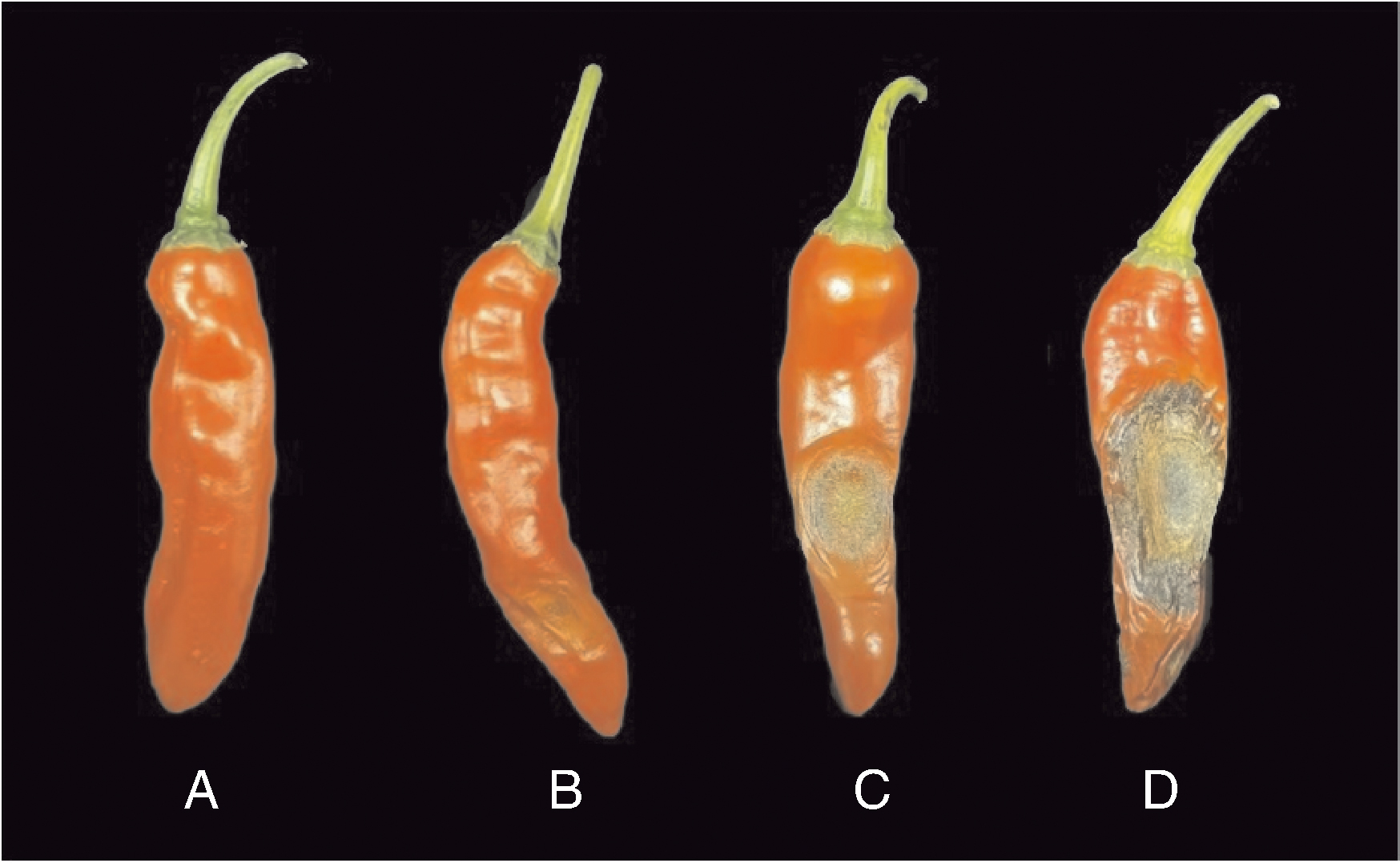
图1 辣椒炭疽病田间发病症状 A、B、C、D分别展示未发病、发病初期、发病中期和发病后期。
Fig.1 Field onset symptoms of anthracnose of chili peppers A, B, C, D show the photos without the disease, the early stage of the disease, the middle stage of the disease, and the late stage of the disease, respectively.
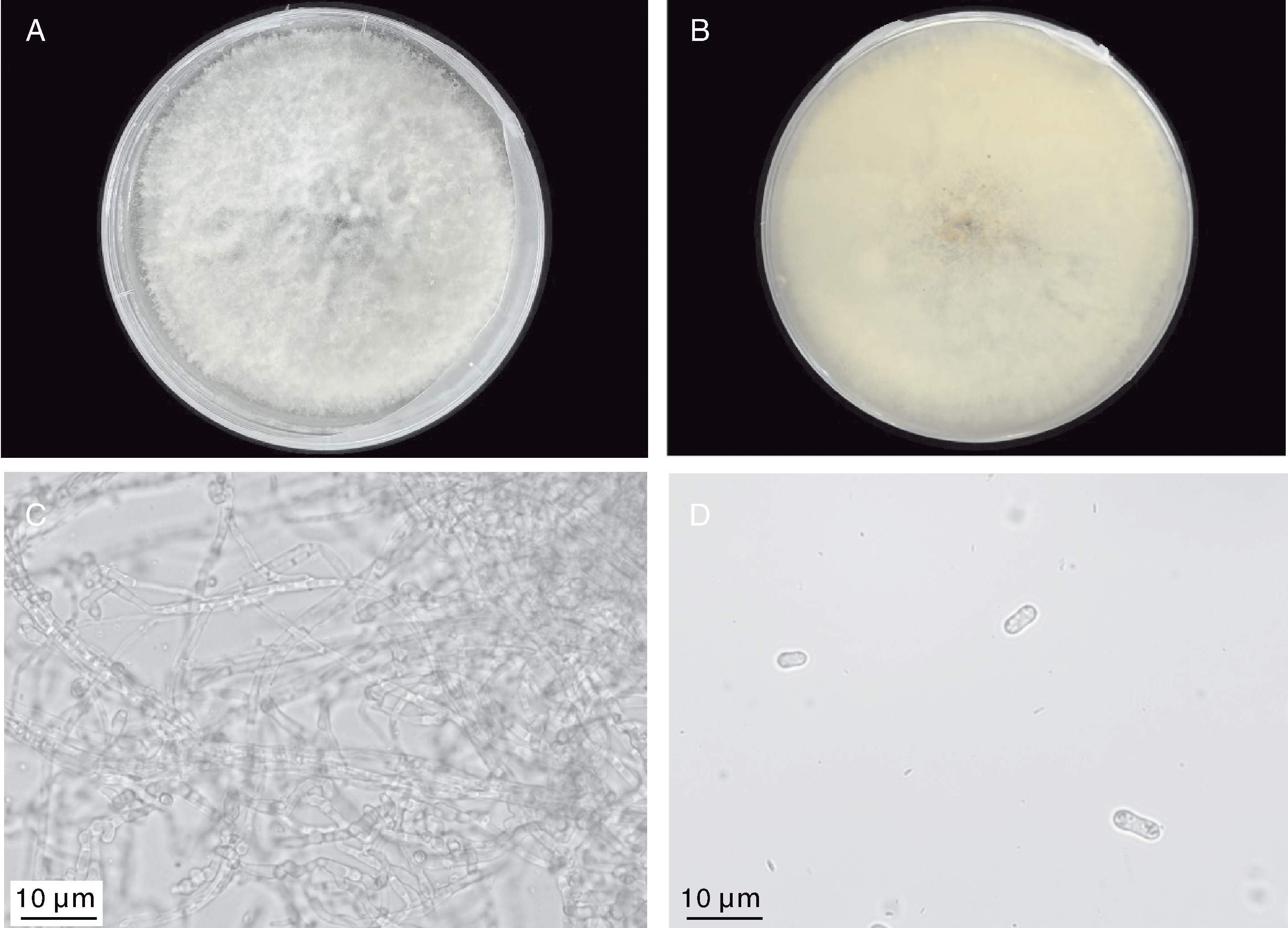
图2 辣椒炭疽病病原菌形态特征 A,菌落正面;B,菌落反面;C,菌丝;D,分生孢子。
Fig.2 Morphological characteristics of the pathogen of pepper anthracnose A, Front side of colony; B, Back side of colony; C, Mycelium; D, Conidia.
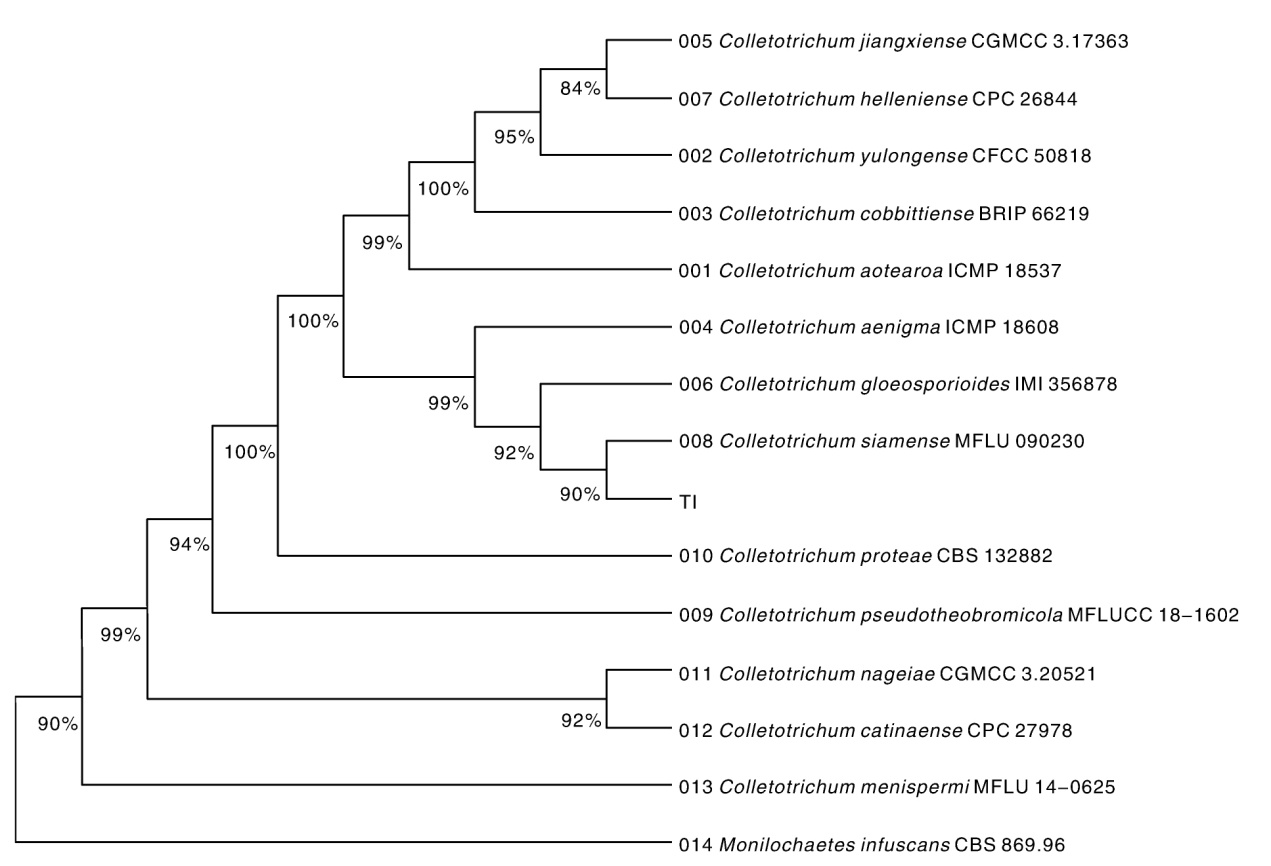
图3 基于多基因序列构建的系统发育树 T1为本研究分离的菌株。
Fig.3 Phylogenetic tree constructed based on multiple genes sequences T1, The isolated strain in the present study.
| 杀菌剂 Fungicide | 回归方程 Regression equation | R2 | EC50/(mg·L-1) | |
|---|---|---|---|---|
| 平均值Mean | 95%CI | |||
| 45%吡醚·甲硫灵悬浮剂 | y=1.481+2.147x | 0.999 5 | 0.690 | 0.635~0.751 |
| 45% Pyraclostrobin + thiophanate-methyl suspension concentrate | ||||
| 60%唑醚·戊唑醇水分散粒剂 | y=1.196+3.261x | 0.990 3 | 0.367 | 0.331~0.410 |
| 60% Azoxystrobin+tebuconazole water dispersible granules | ||||
| 50%咪鲜胺铜盐悬浮剂 | y=1.594+3.861x | 0.996 1 | 0.413 | 0.339~0.563 |
| 50% Prochloraz-copper salt suspension concentrate | ||||
| 40%吡唑萘菌胺戊唑醇悬浮剂 | y=1.193+1.572x | 0.945 7 | 0.759 | 0.667~0.913 |
| 40% Isopyrazam + tebuconazole suspension concentrate | ||||
| 17%唑醚·氟环唑悬浮剂 | y=1.402+2.970x | 0.986 4 | 0.371 | 0.292~0.570 |
| 17% Azoxystrobin epoxiconazole suspension concentrate | ||||
| 42%肟菌·戊唑醇悬浮剂 | y=1.804+3.107x | 0.968 4 | 0.581 | 0.530~0.656 |
| 42% Trifloxystrobin tebuconazole suspension concentrate | ||||
| 27.8%噻呋·苯醚甲悬浮剂 | y=1.597+3.016x | 0.991 0 | 0.530 | 0.484~0.593 |
| 27.8% Thifluzamide difenoconazole suspension concentrate | ||||
| 30%苯甲·吡唑酯悬浮剂 | y=1.932+3.333x | 0.968 2 | 0.263 | 0.213~0.319 |
| 30% Difenoconazole pyraclostrobin suspension concentrate | ||||
| 24%双胍·吡唑酯可湿性粉剂 | y=1.929+2.555x | 0.998 0 | 0.176 | 0.158~0.200 |
| 24% Guazatine pyraclostrobin wettable powder | ||||
| 27%春雷·溴菌腈可湿性粉剂 | y=1.098+1.876x | 0.965 2 | 0.889 | 0.783~1.063 |
| 27% Bromothalonil+kasugamycin wettable powder | ||||
表2 杀菌剂对分离病株的室内毒力
Table 2 Virulence of fungicides on the isolated strain
| 杀菌剂 Fungicide | 回归方程 Regression equation | R2 | EC50/(mg·L-1) | |
|---|---|---|---|---|
| 平均值Mean | 95%CI | |||
| 45%吡醚·甲硫灵悬浮剂 | y=1.481+2.147x | 0.999 5 | 0.690 | 0.635~0.751 |
| 45% Pyraclostrobin + thiophanate-methyl suspension concentrate | ||||
| 60%唑醚·戊唑醇水分散粒剂 | y=1.196+3.261x | 0.990 3 | 0.367 | 0.331~0.410 |
| 60% Azoxystrobin+tebuconazole water dispersible granules | ||||
| 50%咪鲜胺铜盐悬浮剂 | y=1.594+3.861x | 0.996 1 | 0.413 | 0.339~0.563 |
| 50% Prochloraz-copper salt suspension concentrate | ||||
| 40%吡唑萘菌胺戊唑醇悬浮剂 | y=1.193+1.572x | 0.945 7 | 0.759 | 0.667~0.913 |
| 40% Isopyrazam + tebuconazole suspension concentrate | ||||
| 17%唑醚·氟环唑悬浮剂 | y=1.402+2.970x | 0.986 4 | 0.371 | 0.292~0.570 |
| 17% Azoxystrobin epoxiconazole suspension concentrate | ||||
| 42%肟菌·戊唑醇悬浮剂 | y=1.804+3.107x | 0.968 4 | 0.581 | 0.530~0.656 |
| 42% Trifloxystrobin tebuconazole suspension concentrate | ||||
| 27.8%噻呋·苯醚甲悬浮剂 | y=1.597+3.016x | 0.991 0 | 0.530 | 0.484~0.593 |
| 27.8% Thifluzamide difenoconazole suspension concentrate | ||||
| 30%苯甲·吡唑酯悬浮剂 | y=1.932+3.333x | 0.968 2 | 0.263 | 0.213~0.319 |
| 30% Difenoconazole pyraclostrobin suspension concentrate | ||||
| 24%双胍·吡唑酯可湿性粉剂 | y=1.929+2.555x | 0.998 0 | 0.176 | 0.158~0.200 |
| 24% Guazatine pyraclostrobin wettable powder | ||||
| 27%春雷·溴菌腈可湿性粉剂 | y=1.098+1.876x | 0.965 2 | 0.889 | 0.783~1.063 |
| 27% Bromothalonil+kasugamycin wettable powder | ||||
| 杀菌剂 Fungicide | 病情指数Disease index | 防治效果Control efficacy/% | |||||
|---|---|---|---|---|---|---|---|
| 药前 Before medication | 第1次药 后7 d 7 days after the 1st medication | 第2次药 后7 d 7 days after the 2nd medication | 第3次药 后7 d 7 days after the 3rd medication | 第1次药 后7 d 7 days after the 1st medication | 第2次药 后7 d 7 days after the 2nd medication | 第3次药 后7 d 7 days after the 3rd medication | |
| 45%吡醚·甲硫灵悬浮剂 | 7.18 | 5.71 | 5.41 | 5.33 | 58.71 bcd | 70.21 c | 81.24 cd |
| 45% Pyraclostrobin + thiophanate- methyl suspension concentrate | |||||||
| 60%唑醚·戊唑醇水分散粒剂 | 7.21 | 7.18 | 7.27 | 7.05 | 47.91 e | 59.82 e | 75.15 ef |
| 60% Azoxystrobin+tebuconazole water dispersible granules | |||||||
| 50%咪鲜胺铜盐悬浮剂 | 7.22 | 4.91 | 4.23 | 2.61 | 64.17 abc | 76.65 b | 90.83 a |
| 50% Prochloraz-copper salt suspension concentrate | |||||||
| 40%吡唑萘菌胺戊唑醇悬浮剂 | 7.29 | 6.39 | 6.19 | 6.43 | 53.64 cde | 65.83 d | 77.32 e |
| 40% Isopyrazam + tebuconazole suspension concentrate | |||||||
| 17%唑醚·氟环唑悬浮剂 | 7.23 | 6.83 | 6.39 | 5.39 | 50.53 de | 64.72 d | 80.95 d |
| 17% Azoxystrobin epoxiconazole suspension concentrate | |||||||
| 42%肟菌·戊唑醇悬浮剂 | 7.24 | 7.41 | 7.52 | 7.64 | 46.33 e | 58.49 a | 73.15 f |
| 42% Trifloxystrobin tebuconazole suspension concentrate | |||||||
| 27.8%噻呋·苯醚甲悬浮剂 | 7.35 | 6.01 | 5.36 | 4.63 | 56.37 bcde | 70.41 c | 83.68 c |
| 27.8% Thifluzamide difenoconazole suspension concentrate | |||||||
| 30%苯甲·吡唑酯悬浮剂 | 7.41 | 4.16 | 3.31 | 2.42 | 69.86 a | 81.71 a | 91.51 a |
| 30% Difenoconazole pyraclostrobin suspension concentrate | |||||||
| 24%双胍·吡唑酯可湿性粉剂 | 7.08 | 5.33 | 5.20 | 3.40 | 61.46 abc | 71.30 c | 88.00 b |
| 24% Guazatine pyraclostrobin wettable powder | |||||||
| 27%春雷·溴菌腈可湿性粉剂 | 7.28 | 4.68 | 4.24 | 5.25 | 66.14 ab | 76.59 b | 81.48 cd |
| 27% Bromothalonil+kasugamycin wettable powder | |||||||
| CK | 7.21 | 13.92 | 18.17 | 28.46 | — | — | — |
表3 杀菌剂对辣椒炭疽病的田间防治效果
Table 3 Control efficacy of fungicides on pepper anthracnose in field
| 杀菌剂 Fungicide | 病情指数Disease index | 防治效果Control efficacy/% | |||||
|---|---|---|---|---|---|---|---|
| 药前 Before medication | 第1次药 后7 d 7 days after the 1st medication | 第2次药 后7 d 7 days after the 2nd medication | 第3次药 后7 d 7 days after the 3rd medication | 第1次药 后7 d 7 days after the 1st medication | 第2次药 后7 d 7 days after the 2nd medication | 第3次药 后7 d 7 days after the 3rd medication | |
| 45%吡醚·甲硫灵悬浮剂 | 7.18 | 5.71 | 5.41 | 5.33 | 58.71 bcd | 70.21 c | 81.24 cd |
| 45% Pyraclostrobin + thiophanate- methyl suspension concentrate | |||||||
| 60%唑醚·戊唑醇水分散粒剂 | 7.21 | 7.18 | 7.27 | 7.05 | 47.91 e | 59.82 e | 75.15 ef |
| 60% Azoxystrobin+tebuconazole water dispersible granules | |||||||
| 50%咪鲜胺铜盐悬浮剂 | 7.22 | 4.91 | 4.23 | 2.61 | 64.17 abc | 76.65 b | 90.83 a |
| 50% Prochloraz-copper salt suspension concentrate | |||||||
| 40%吡唑萘菌胺戊唑醇悬浮剂 | 7.29 | 6.39 | 6.19 | 6.43 | 53.64 cde | 65.83 d | 77.32 e |
| 40% Isopyrazam + tebuconazole suspension concentrate | |||||||
| 17%唑醚·氟环唑悬浮剂 | 7.23 | 6.83 | 6.39 | 5.39 | 50.53 de | 64.72 d | 80.95 d |
| 17% Azoxystrobin epoxiconazole suspension concentrate | |||||||
| 42%肟菌·戊唑醇悬浮剂 | 7.24 | 7.41 | 7.52 | 7.64 | 46.33 e | 58.49 a | 73.15 f |
| 42% Trifloxystrobin tebuconazole suspension concentrate | |||||||
| 27.8%噻呋·苯醚甲悬浮剂 | 7.35 | 6.01 | 5.36 | 4.63 | 56.37 bcde | 70.41 c | 83.68 c |
| 27.8% Thifluzamide difenoconazole suspension concentrate | |||||||
| 30%苯甲·吡唑酯悬浮剂 | 7.41 | 4.16 | 3.31 | 2.42 | 69.86 a | 81.71 a | 91.51 a |
| 30% Difenoconazole pyraclostrobin suspension concentrate | |||||||
| 24%双胍·吡唑酯可湿性粉剂 | 7.08 | 5.33 | 5.20 | 3.40 | 61.46 abc | 71.30 c | 88.00 b |
| 24% Guazatine pyraclostrobin wettable powder | |||||||
| 27%春雷·溴菌腈可湿性粉剂 | 7.28 | 4.68 | 4.24 | 5.25 | 66.14 ab | 76.59 b | 81.48 cd |
| 27% Bromothalonil+kasugamycin wettable powder | |||||||
| CK | 7.21 | 13.92 | 18.17 | 28.46 | — | — | — |
| [1] | 邹学校, 马艳青, 戴雄泽, 等. 辣椒在中国的传播与产业发展[J]. 园艺学报, 2020, 47(9): 1715-1726. |
| ZOU X X, MA Y Q, DAI X Z, et al. Spread and industry development of pepper in China[J]. Acta Horticulturae Sinica, 2020, 47(9): 1715-1726. (in Chinese with English abstract) | |
| [2] | THAN P P, JEEWON R, HYDE K D, et al. Characterization and pathogenicity of Colletotrichum species associated with anthracnose on chilli (Capsicum spp.) in Thailand[J]. Plant Pathology, 2008, 57(3): 562-572. |
| [3] | SAXENA A, RAGHUWANSHI R, GUPTA V K, et al. Chilli anthracnose: the epidemiology and management[J]. Frontiers in Microbiology, 2016, 7: 1527. |
| [4] | TORRES-CALZADA C, TAPIA-TUSSELL R, HIGUERA-CIAPARA I, et al. Characterization of Colletotrichum truncatum from papaya, pepper and physic nut based on phylogeny, morphology and pathogenicity[J]. Plant Pathology, 2018, 67(4): 821-830. |
| [5] | NOOR N M, ZAKARIA L. Identification and characterization of Colletotrichum spp. associated with chili anthracnose in peninsular Malaysia[J]. European Journal of Plant Pathology, 2018, 151(4): 961-973. |
| [6] | 张河庆, 宋占峰, 韩帅, 等. 四川辣椒炭疽病菌鉴定及防治药剂筛选研究[J]. 中国蔬菜, 2024(4): 93-99. |
| ZHANG H Q, SONG Z F, HAN S, et al. Studies on identification of Capsicum anthracnose in Sichuan and screening of control agents[J]. China Vegetables, 2024(4): 93-99. (in Chinese with English abstract) | |
| [7] | 周志成, 孙海, 肖仲久, 等. 辣椒炭疽病病原分离鉴定及对杀菌剂敏感性测定[J]. 华南农业大学学报, 2023, 44(3): 430-437. |
| ZHOU Z C, SUN H, XIAO Z J, et al. Identification and fungicide sensitivity of pathogen causing anthracnose of pepper[J]. Journal of South China Agricultural University, 2023, 44(3): 430-437. (in Chinese with English abstract) | |
| [8] | 郑婕, 庄远航, 郭梓琪, 等. 南雄辣椒炭疽病菌的分离鉴定与药剂筛选[J]. 中国蔬菜, 2022(10): 58-65. |
| ZHENG J, ZHUANG Y H, GUO Z Q, et al. Isolation, identification and fungicide screening of Capsicum anthracnose pathogen in Nanxiong County[J]. China Vegetables, 2022(10): 58-65. (in Chinese with English abstract) | |
| [9] | 荆卓琼, 郭致杰, 孙倩, 等. 甘肃省辣椒炭疽病病原菌鉴定[J]. 北方园艺, 2024(15): 1-7. |
| JING Z Q, GUO Z J, SUN Q, et al. Identification of pathogen causing anthracnose of pepper (Capsicum annuum L.) in Gansu Province[J]. Northern Horticulture, 2024(15): 1-7. (in Chinese with English abstract) | |
| [10] | 陈剑山, 郑服丛. ITS序列分析在真菌分类鉴定中的应用[J]. 安徽农业科学, 2007, 35(13): 3785-3786. |
| CHEN J S, ZHENG F C. Application of ITS sequences in fungi classification and identification[J]. Journal of Anhui Agricultural Sciences, 2007, 35(13): 3785-3786. (in Chinese with English abstract) | |
| [11] | CARBONE I, KOHN L M. A method for designing primer sets for speciation studies in filamentous ascomycetes[J]. Mycologia, 1999, 91(3): 553-556. |
| [12] | GLASS N L, DONALDSON G C. Development of primer sets designed for use with the PCR to amplify conserved genes from filamentous ascomycetes[J]. Applied and Environmental Microbiology, 1995, 61(4): 1323-1330. |
| [13] | TEMPLETON M D, RIKKERINK E H A, SOLON S L, et al. Cloning and molecular characterization of the glyceraldehyde-3-phosphate dehydrogenase-encoding gene and cDNA from the plant pathogenic fungus Glomerella cingulata[J]. Gene, 1992, 122(1): 225-230. |
| [14] | WEIR B S, JOHNSTON P R, DAMM U. The Colletotrichum gloeosporioides species complex[J]. Studies in Mycology, 2012, 73: 115-180. |
| [15] | 吴立东, 罗英, 曾绍贵, 等. 朝天椒新品种明椒9号的选育[J]. 中国蔬菜, 2018(9): 70-72. |
| WU L D, LUO Y, ZENG S G, et al. A new hot pepper F1 hybrid: ‘Mingjiao No.9’[J]. China Vegetables, 2018(9): 70-72. (in Chinese with English abstract) | |
| [16] | 张明良. 辣椒炭疽病的发生与防治[J]. 安徽农业, 2000(2): 21. |
| ZHANG M L. Occurrence and control of pepper anthracnose[J]. Anhui Agriculture, 2000(2): 21. (in Chinese) | |
| [17] | DIAO Y Z, ZHANG C, LIU F, et al. Colletotrichum species causing anthracnose disease of chili in China[J]. Persoonia, 2017, 38: 20-37. |
| [18] | 冯乐乐, 竹龙鸣, 谢华, 等. 浙江省鲜食大豆炭疽病病原分离及抗性鉴定[J]. 植物病理学报, 2021, 51(6): 840-849. |
| FENG L L, ZHU L M, XIE H, et al. Identification of the pathogen of vegetable soybean anthracnose in Zhejiang Province and evaluation of soybean cultivars for resistance to Colletotrichum truncatum[J]. Acta Phytopathologica Sinica, 2021, 51(6): 840-849. (in Chinese with English abstract) | |
| [19] | 王秋月, 黄娟, 李四光, 等. 重庆高粱炭疽病病原菌鉴定及防治药剂筛选[J]. 植物保护, 2024, 50(4): 323-330. |
| WANG Q Y, HUANG J, LI S G, et al. Identification of the pathogen of sorghum anthracnose in Chongqing and fungicides screening[J]. Plant Protection, 2024, 50(4): 323-330. (in Chinese with English abstract) | |
| [20] | 侯圣凡, 华战迎, 刘峻杰, 等. 我国草莓胶孢炭疽菌的多基因联合鉴定与致病性分析[J]. 中国农业大学学报, 2022, 27(4): 82-94. |
| HOU S F, HUA Z Y, LIU J J, et al. Multi-gene joint identification and pathogenicity analysis of Colletotrichum gloeosporioides complex of strawberry in China[J]. Journal of China Agricultural University, 2022, 27(4): 82-94. (in Chinese with English abstract) | |
| [21] | 李少卡, 赵亚, 王祥和, 等. 海南荔枝炭疽病病原菌鉴定及遗传多样性分析[J]. 农业生物技术学报, 2021, 29(4): 673-687. |
| LI S K, ZHAO Y, WANG X H, et al. Identification and genetic diversity analysis of Litchi chinensis Colletotrichum spp. in Hainan[J]. Journal of Agricultural Biotechnology, 2021, 29(4): 673-687. (in Chinese with English abstract) | |
| [22] | 张童, 姚立萍, 胡玉慈, 等. 甜柿炭疽病病原菌的鉴定及其防治药剂的筛选[J]. 福建农林大学学报(自然科学版), 2020, 49(5): 589-596. |
| ZHANG T, YAO L P, HU Y C, et al. Pathogen identification of sweet persimmon anthracnose and screening of the fungicides[J]. Journal of Fujian Agriculture and Forestry University(Natural Science Edition), 2020, 49(5): 589-596. (in Chinese with English abstract) | |
| [23] | 石文波, 黄楚平, 陈宇航, 等. 纳米氢氧化铜对茶炭疽病菌的抑制活性及作用机制[J]. 农药学学报, 2024, 26(5): 962-973. |
| SHI W B, HUANG C P, CHEN Y H, et al. Antimicrobial activity and mechanism of nano-Cu(OH)2 against tea anthracnose pathogen[J]. Chinese Journal of Pesticide Science, 2024, 26(5): 962-973. (in Chinese with English abstract) | |
| [24] | 任立超, 谢昀烨, 施鹏程, 等. 甜柿炭疽病病原种类及生物学特性比较[J]. 果树学报, 2023, 40(2): 340-349. |
| REN L C, XIE Y Y, SHI P C, et al. Pathogen identification and biological characteristics of sweet persimmon anthracnose causing by Colletotrichum species[J]. Journal of Fruit Science, 2023, 40(2): 340-349. (in Chinese with English abstract) | |
| [25] | 杨洪俊, 张旭, 陈佳佳, 等. 草莓炭疽病病原鉴定及拮抗菌株筛选[J]. 江苏农业科学, 2024, 52(3): 147-152. |
| YANG H J, ZHANG X, CHEN J J, et al. Identification of pathogen and screening of antagonistic strains for strawberry anthracnose[J]. Jiangsu Agricultural Sciences, 2024, 52(3): 147-152. (in Chinese with English abstract) | |
| [26] | 刘在哲, 葛磊, 季延平, 等. 红肉苹果炭疽病病原鉴定及其生长适应性研究[J]. 山东农业大学学报(自然科学版), 2021, 52(5): 713-722. |
| LIU Z Z, GE L, JI Y P, et al. Identification and characterization of Colletotrichum siamense from anthracnose disease of red-fleshed apple and adapation[J]. Journal of Shandong Agricultural University(Natural Science Edition), 2021, 52(5): 713-722. (in Chinese with English abstract) | |
| [27] | 李晶, 仇芳, 张超, 等. 海南白沙和儋州油梨叶部及果实炭疽病菌的鉴定[J]. 果树学报, 2023, 40(7): 1443-1454. |
| LI J, QIU F, ZHANG C, et al. Identification of pathogen species of avocado (Persea americana Mill.) leaf and fruit anthracnose in Baisha and Danzhou, Hainan[J]. Journal of Fruit Science, 2023, 40(7): 1443-1454. (in Chinese with English abstract) | |
| [28] | 苏奇倩, 何鹏搏, 何俊, 等. 中国滇西地区葡萄炭疽病病原菌的鉴定及其杀菌剂筛选[J]. 西南大学学报(自然科学版), 2024, 46(8): 31-44. |
| SU Q Q, HE P B, HE J, et al. Identification of the pathogens causing grape anthracnose in west Yunnan, China and selection of effective fungicides[J]. Journal of Southwest University(Natural Science Edition), 2024, 46(8): 31-44. (in Chinese with English abstract) | |
| [29] | 王成, 赵丹阳, 扈丽丽, 等. 苹婆炭疽病病原菌生物学特性及室内毒力测定[J]. 林业与环境科学, 2023, 39(4): 21-26. |
| WANG C, ZHAO D Y, HU L L, et al. Studies on biological characteristics and lab toxicity test of leaf pathogen(Colletotrichum siamense) on Sterculia monosperma[J]. Forestry and Environmental Science, 2023, 39(4): 21-26. (in Chinese with English abstract) | |
| [30] | 李文, 何月秋, 王佳莹, 等. 百日草炭疽病病原菌的分离鉴定及防治药剂筛选[J]. 农药学学报, 2021, 23(2): 341-347. |
| LI W, HE Y Q, WANG J Y, et al. Isolation and identification of pathogen causing anthracnose on Zinnia elegans Jacq. and fungicides screening[J]. Chinese Journal of Pesticide Science, 2021, 23(2): 341-347. (in Chinese with English abstract) | |
| [31] | 徐丹丹, 石力允, 林泽勉, 等. 美丽崖豆藤炭疽病病原鉴定及防治药剂的室内毒力测定[J]. 华南农业大学学报, 2021, 42(4): 63-69. |
| XU D D, SHI L Y, LIN Z M, et al. Pathogen identification of anthracnose disease on Millettia speciosa and indoor determination of fungicide toxicity[J]. Journal of South China Agricultural University, 2021, 42(4): 63-69. (in Chinese with English abstract) |
| [1] | 高强, 王丽丽, 张渐隆, 杨波, 李峰, 朱先志, 刘爱新, 韩超, 田雷. 高地芽孢杆菌CY1的分离鉴定及其对烟草黑胫病的防治作用[J]. 浙江农业学报, 2025, 37(2): 405-416. |
| [2] | 李强, 刘思彤, 黄显斌, 姜君龙, 邓建宇, 王教瑜, 李玲. 山区猕猴桃溃疡病病原菌的鉴定及不同类型高效防治药剂的筛选[J]. 浙江农业学报, 2025, 37(10): 2116-2128. |
| [3] | 刘胜男, 朱建义, 李明, 赵浩宇, 熊涛, 汤永禄, 周小刚, 李朝苏. 稻茬免耕带旋播种小麦的田间杂草防除效果与小麦产量[J]. 浙江农业学报, 2025, 37(10): 2129-2137. |
| [4] | 燕中立, 李永慧, 李玉成, 李伟, 张学胜, 洪勇, 葛立傲. 蓝藻好氧堆肥负载阿维菌素对草莓红蜘蛛的防治效果[J]. 浙江农业学报, 2024, 36(10): 2264-2272. |
| [5] | 王晓楠, 冯晓晓, 施斌, 陈恩磊, 陈梦丽, 郑永利, 吴慧明. 内生细菌ZN-S10的鉴定及其对番茄青枯病菌的抑菌作用[J]. 浙江农业学报, 2023, 35(11): 2636-2644. |
| [6] | 吴嘉维, 姚张良, 胡琪琪, 张杰, 陈轶, 蒋建荣, 周国鑫, 王霞. 浙北桐乡梨锈病防治适期和防治药剂研究[J]. 浙江农业学报, 2021, 33(9): 1668-1675. |
| [7] | 林瑞, 任海英, 安笑笑, 郑锡良, 梁森苗, 张淑文, 戚行江. 生物有机肥对杨梅凋萎病防控及其树势恢复的影响[J]. 浙江农业学报, 2019, 31(7): 1096-1104. |
| [8] | 蒲占湑;黄振东;胡秀荣;李红叶;. 六种杀菌剂对柑橘炭疽病菌的室内毒力和田间防治效果[J]. , 2014, 26(1): 0-126. |
| [9] | 陈桂华;郑许松;盛仙俏;吴降星;张发成;吕仲贤. 四种防治模式对水稻主要害虫的防治效果及其经济效益分析[J]. , 2008, 20(5): 0-384. |
| [10] | 徐福寿;陈瑞;李克诚;祝小祥 . 不同农药混配组合对稻飞虱防治效果的评价[J]. , 2007, 19(3): 0-240. |
| [11] | 周小军;何锦豪;马赵江. 韩乐天防除水稻直播田杂草试验[J]. , 2000, 12(06): 0-351. |
| [12] | 郑宏海;刘志龙;欧佐梁;赖朝晖;应正定;韩承祥 . 二氧化氯对作物害菌抑制作用的初步研究[J]. , 2000, 12(05): 0-824. |
| 阅读次数 | ||||||
|
全文 |
|
|||||
|
摘要 |
|
|||||

