Acta Agriculturae Zhejiangensis ›› 2026, Vol. 38 ›› Issue (5): 898-908.DOI: 10.3969/j.issn.1004-1524.20250244
• Horticultural Science • Previous Articles Next Articles
Physiological and ecological analysis of greenhouse tomato and construction of temperature prediction model
ZHANG Haoyu1,2( ), MIAO Chen2, ZHU Cuifang2, ZHU Kaili1,2, DING Xiaotao2,*(), JIANG Yuping1,*()
- 1
Department of Urban Construction and Ecological Technology ,Shanghai Institute of Technology Shanghai 201418, China
2Shanghai Key Laboratory of Protected Horticultural Technology ,Shanghai Academy of Agricultural Sciences Shanghai 201403, China
-
Received:2025-03-25Online:2026-05-25Published:2026-06-02

CLC Number:
Cite this article
ZHANG Haoyu, MIAO Chen, ZHU Cuifang, ZHU Kaili, DING Xiaotao, JIANG Yuping. Physiological and ecological analysis of greenhouse tomato and construction of temperature prediction model[J]. Acta Agriculturae Zhejiangensis, 2026, 38(5): 898-908.
share this article
Add to citation manager EndNote|Ris|BibTeX
URL: http://www.zjnyxb.cn/EN/10.3969/j.issn.1004-1524.20250244
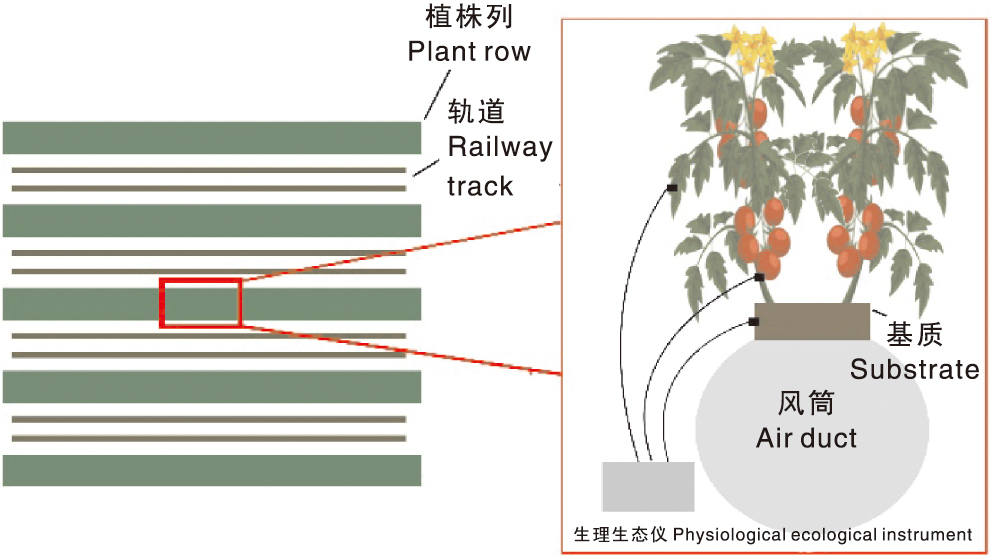
Fig.1 Instrumentation layout
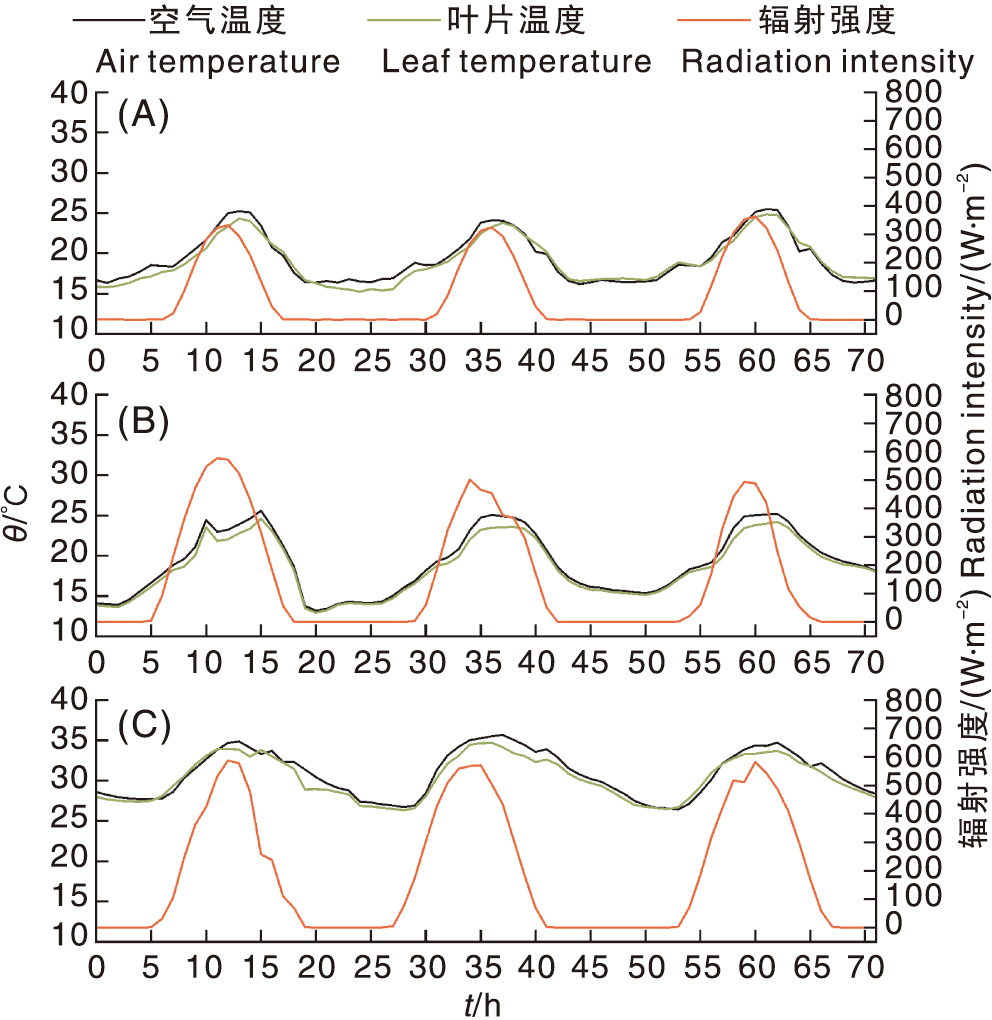
Fig.2 Diurnal variations of leaf temperature, greenhouse air temperature, and solar radiation intensity on sunny days in different seasons A, Winter (January 12-14); B, Spring (April 9-11); C, Summer (July 3-5).
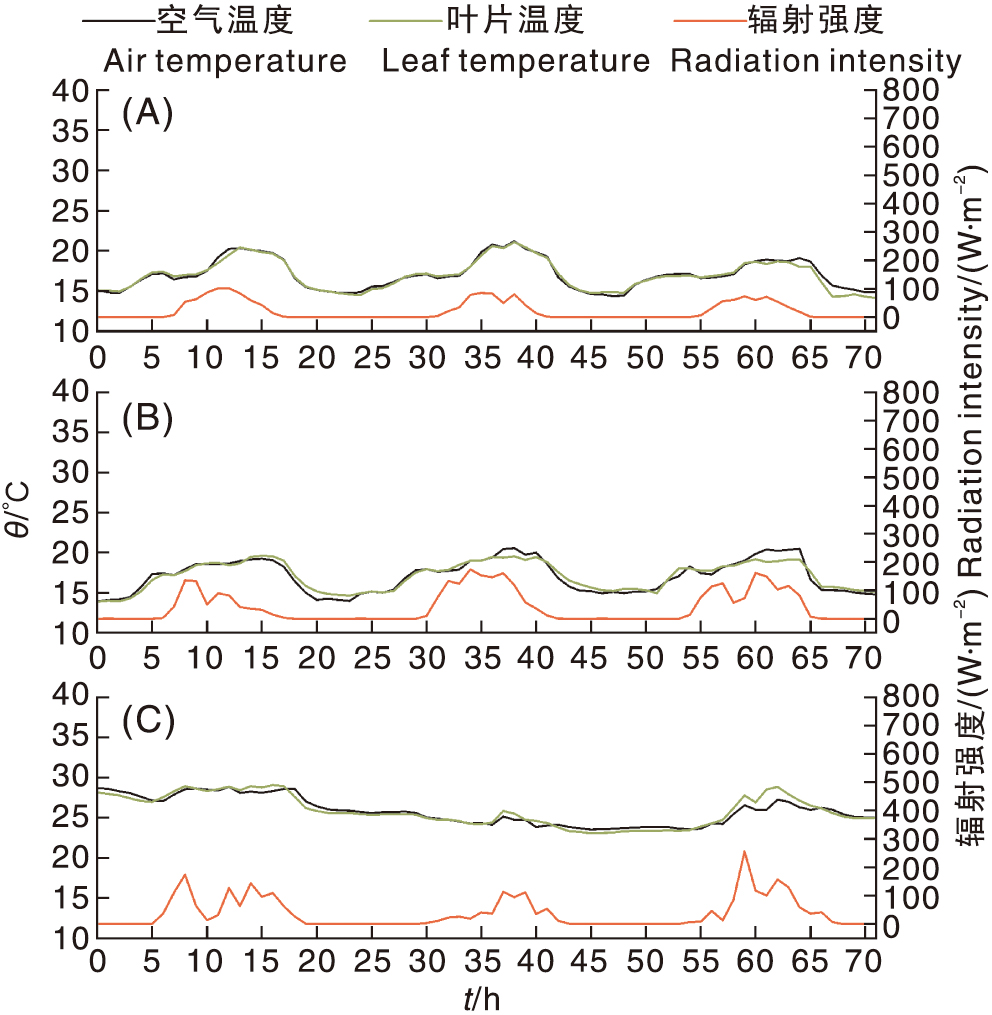
Fig.3 Diurnal variations of leaf temperature, greenhouse air temperature, and solar radiation intensity on cloudy and rainy days in different seasons A, Winter (January 18-20); B, Spring (March 2-4); C, Summer (July 10-12).
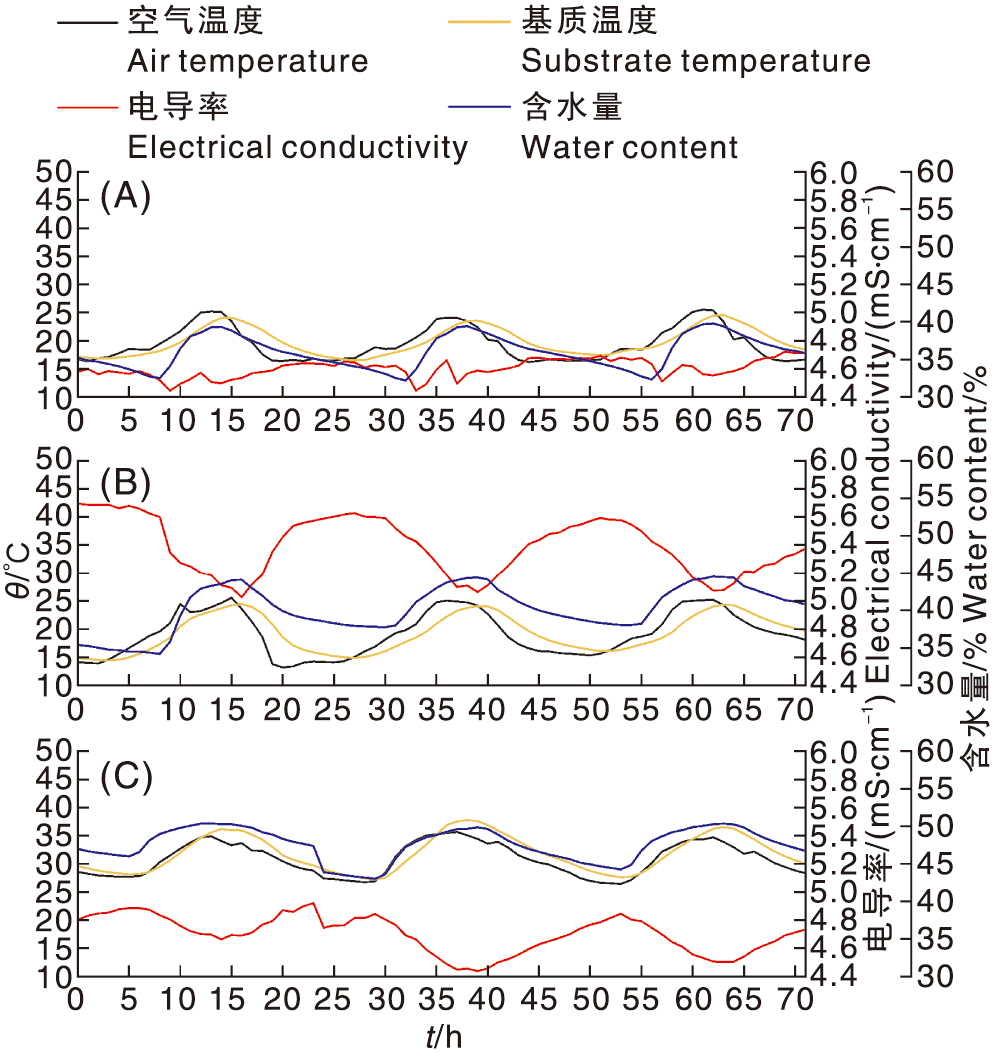
Fig.4 Diurnal variations of substrate temperature, water content, and electrical conductivity on sunny days in different seasons A, Winter (January 12-14); B, Spring (April 9-11); C, Summer (July 3-5).
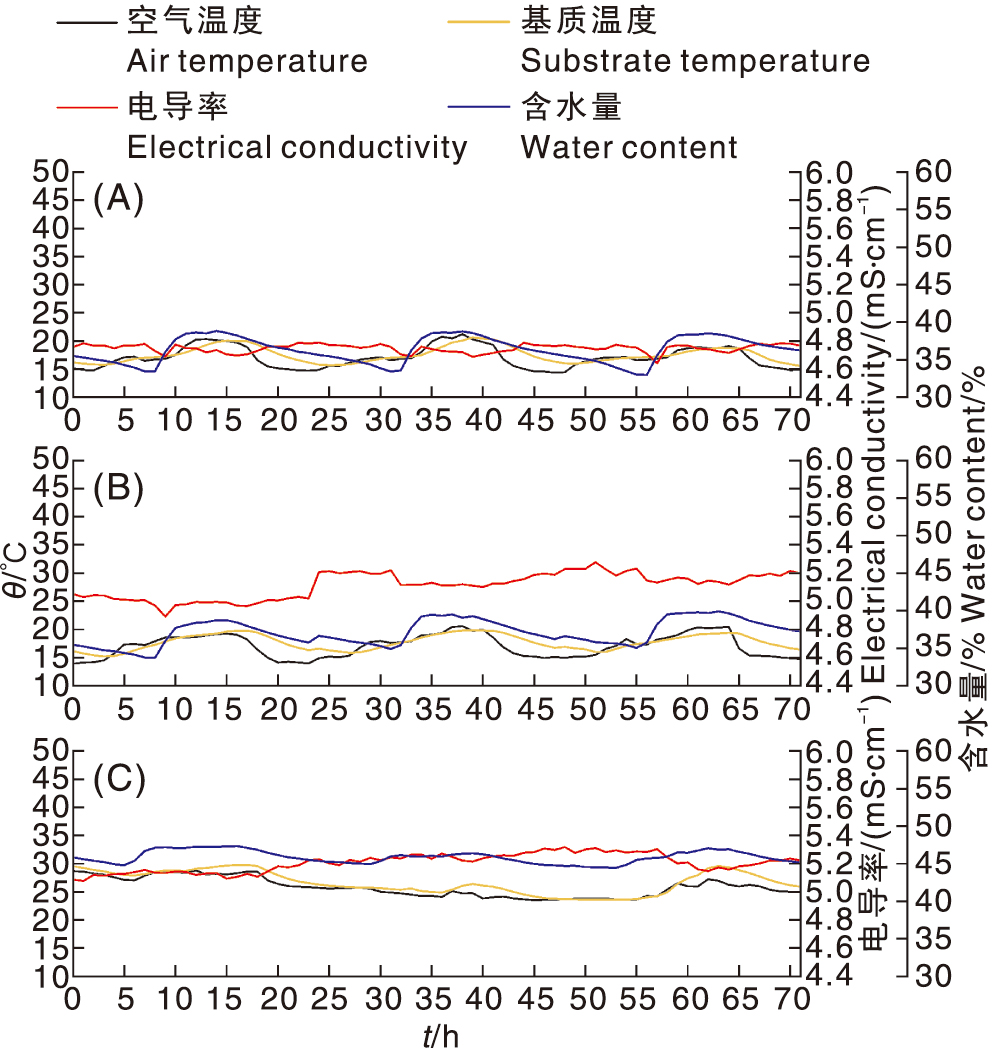
Fig.5 Diurnal variations of substrate temperature, water content, and electrical conductivity on cloudy and rainy days in different seasons A, Winter (January 18-20); B, Spring (March 2-4); C, Summer (July 10-12).
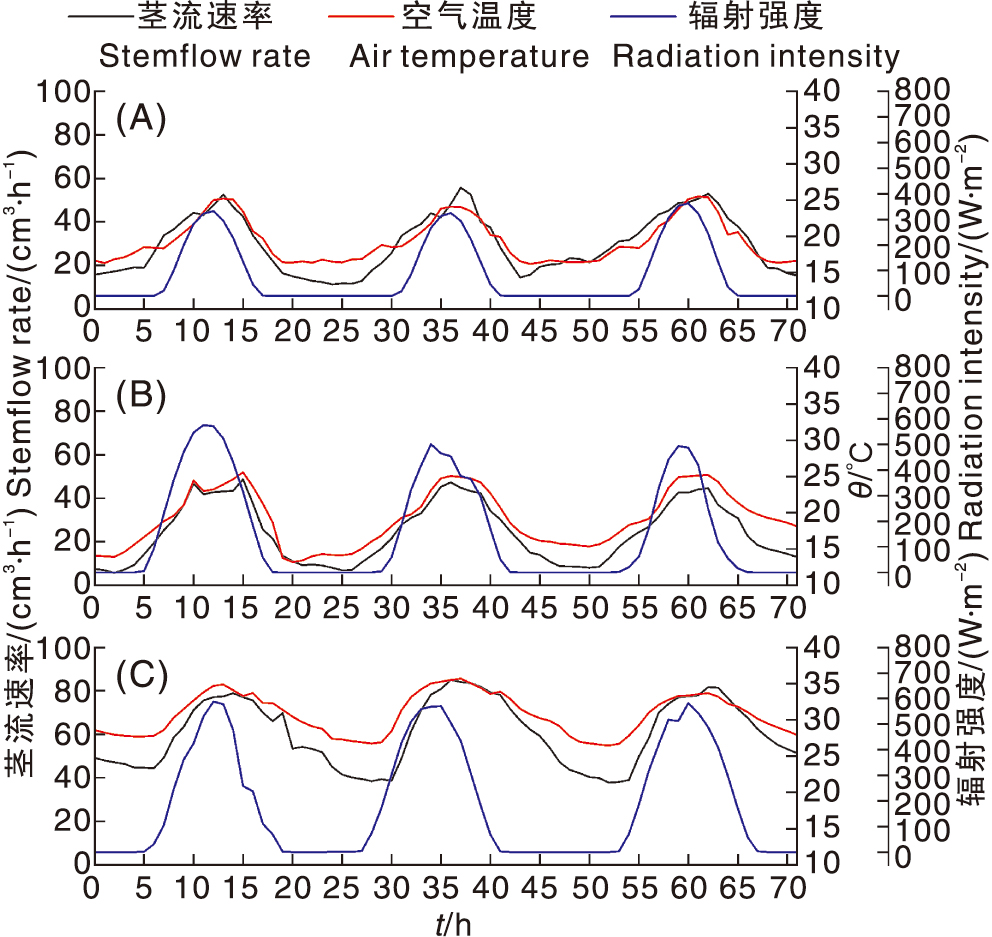
Fig.6 Diurnal variations of stemflow rate on sunny days in different seasons A, Winter (January 12-14); B, Spring (April 9-11); C, Summer (July 3-5).
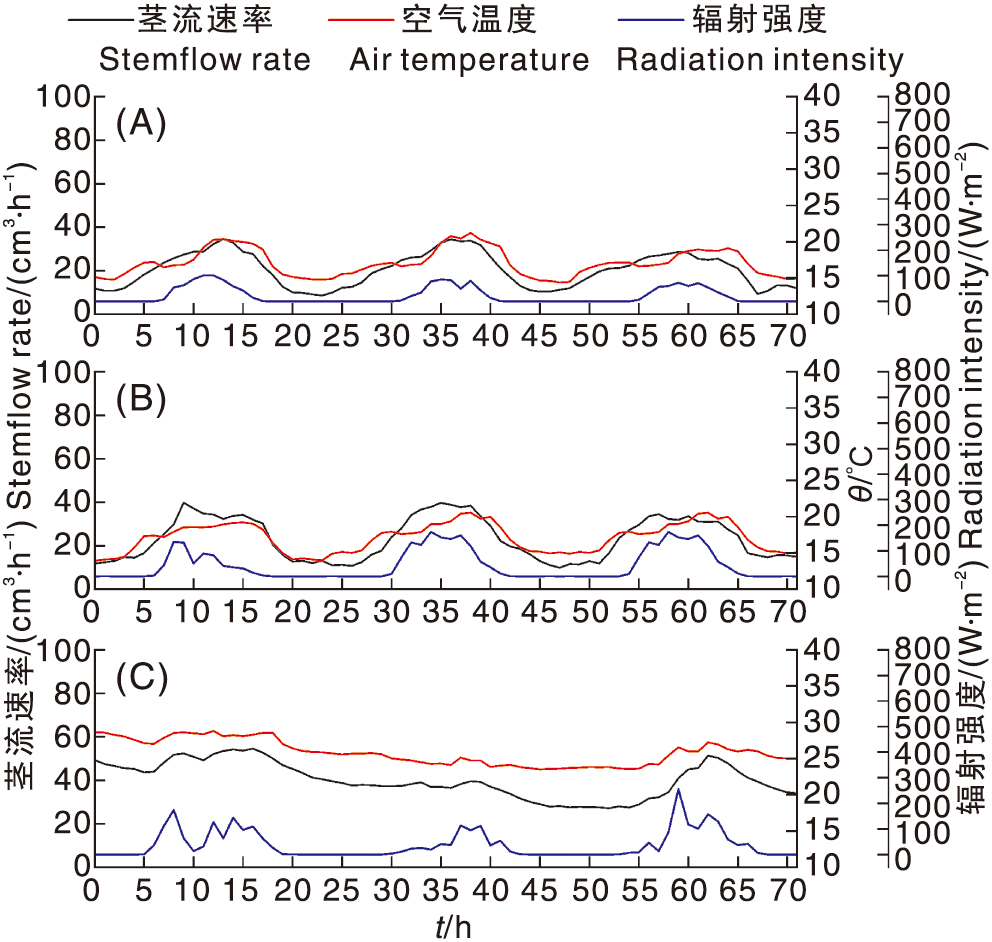
Fig.7 Diurnal variation of stemflow rate on cloudy and rainy days in different seasons A, Winter (January 18-20); B, Spring (March 2-4); C, Summer (July 10-12).
| 生态因子 Ecological factor | 空气温度 Air temperature | 太阳辐射强度 Solar radiation intensity | 叶片温度 Leaf temperature | 基质温度 Substrate temperature | 基质含水量 Substrate water content | 基质电导率 Substrate electrical conductivity |
|---|---|---|---|---|---|---|
| 辐射强度 Solar radiation intensity | 0.520** | |||||
| 叶片温度Leaf temperature | 0.988** | 0.535** | ||||
| 基质温度 Substrate temperature | 0.949** | 0.386** | 0.226** | |||
| 基质含水量 Substrate water content | 0.862** | 0.300** | 0.030 | 0.494** | ||
| 基质电导率 Substrate electrical conductivity | -0.128 | -0.158 | -0.209* | -0.009 | 0.216** | |
| 茎流速率Stemflow rate | 0.787** | 0.653** | 0.137 | -0.180* | 0.519** | -0.728** |
Table 1 Correlation of ecological factors
| 生态因子 Ecological factor | 空气温度 Air temperature | 太阳辐射强度 Solar radiation intensity | 叶片温度 Leaf temperature | 基质温度 Substrate temperature | 基质含水量 Substrate water content | 基质电导率 Substrate electrical conductivity |
|---|---|---|---|---|---|---|
| 辐射强度 Solar radiation intensity | 0.520** | |||||
| 叶片温度Leaf temperature | 0.988** | 0.535** | ||||
| 基质温度 Substrate temperature | 0.949** | 0.386** | 0.226** | |||
| 基质含水量 Substrate water content | 0.862** | 0.300** | 0.030 | 0.494** | ||
| 基质电导率 Substrate electrical conductivity | -0.128 | -0.158 | -0.209* | -0.009 | 0.216** | |
| 茎流速率Stemflow rate | 0.787** | 0.653** | 0.137 | -0.180* | 0.519** | -0.728** |
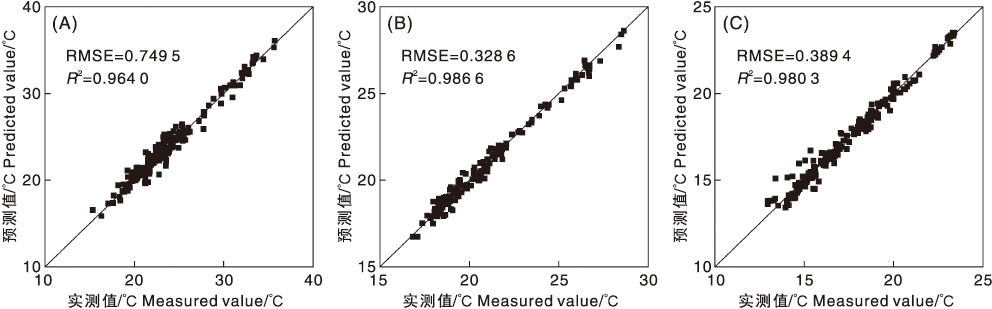
Fig.8 Comparison of predicted and measured leaf temperatures RMSE,Root mean square error; R2, Coefficient of determination. The same as below. A, Sunny day; B, Cloudy and rainy day; C, Night; ■, Predicted value; ―, 1∶1 line.
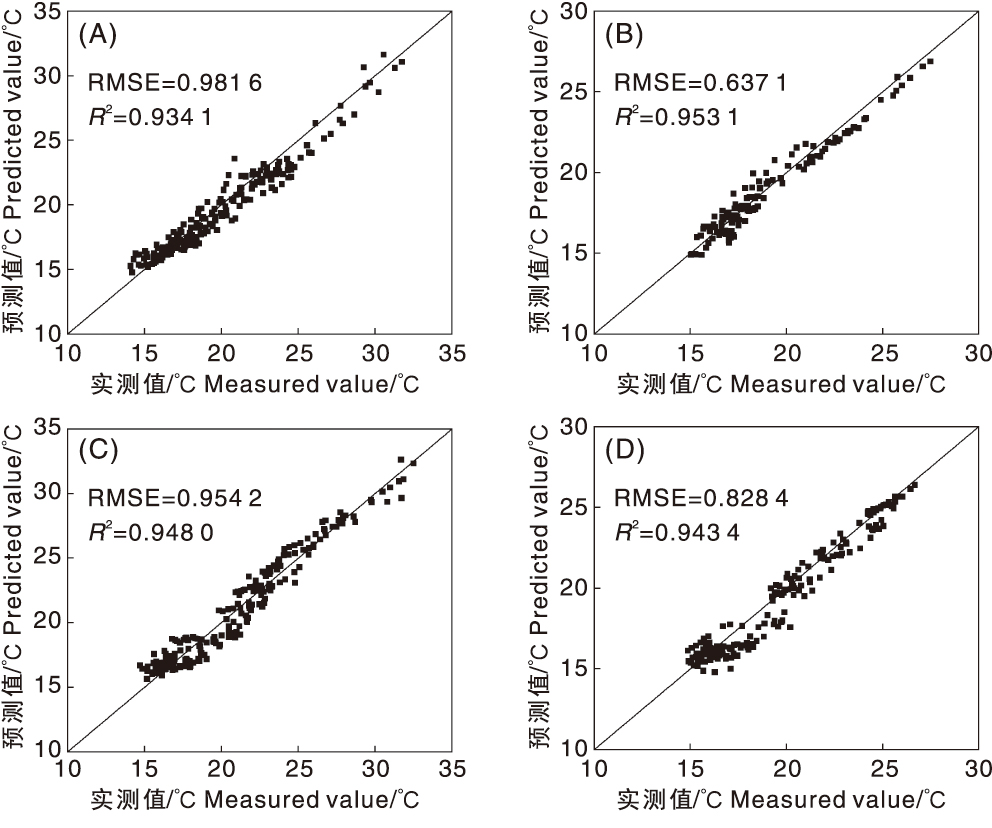
Fig.9 Comparison of predicted and measured substrate temperatures A, Warm sunny day; B, Warm cloudy and rainy day; C, Cool sunny day; D, Cool cloudy and rainy day; ■, Predicted value; ―, 1∶1 line.
| [1] | 李天来. 设施蔬菜产业发展(一) 我国设施蔬菜产业发展现状及展望[J]. 中国蔬菜, 2023(9): 1-6. |
| LI T L. Development status of China’s facility vegetable industry and outlook[J]. China Vegetables, 2023(9): 1-6. | |
| [2] | LU T, MENG Z J, ZHANG G X, et al. Sub-high temperature and high light intensity induced irreversible inhibition on photosynthesis system of tomato plant (Solanum lycopersicum L.)[J]. Frontiers in Plant Science, 2017, 8: 365. |
| [3] | 刘昊昊, 谭军利, 白云, 等. 冷寒干旱区甜瓜生育期拱棚内外气候特征及温度预测模型[J]. 宁夏工程技术, 2023, 22(2): 103-108. |
| LIU H H, TAN J L, BAI Y, et al. Climate characteristics and temperature prediction models inside and outside of arched sheds during muskmelon fertility in cold and arid areas[J]. Ningxia Engineering Technology, 2023, 22(2): 103-108. | |
| [4] | 高峰, 辛文春, 詹慧莹. 北方冬季草莓日光温室内温湿度预报模型的构建研究[J]. 现代农业研究, 2024, 30(12): 120-122. |
| GAO F, XIN W C, ZHAN H Y. Study on the construction of temperature and humidity forecast model in winter strawberry solar greenhouse in the north[J]. Modern Agriculture Research, 2024, 30(12): 120-122. | |
| [5] | PUCHETA J A, SCHUGURENSKY C, FULLANA R, et al. Optimal greenhouse control of tomato-seedling crops[J]. Computers and Electronics in Agriculture, 2006, 50(1): 70-82. |
| [6] | 谢沛宁, 武占会, 王宝驹, 等. 不同营养液温度对植物工厂生菜品质及干烧心的影响[J]. 中国农业大学学报, 2025, 30(1): 65-75. |
| XIE P N, WU Z H, WANG B J, et al. Effects of different nutrient solution temperatures on quality and tipburn of lettuce in plant factory[J]. Journal of China Agricultural University, 2025, 30(1): 65-75. | |
| [7] | GRANIER A. Evaluation of transpiration in a Douglas-fir stand by means of sap flow measurements[J]. Tree Physiology, 1987, 3(4): 309-320. |
| [8] | 徐明磊, 孙亚楠. 光伏温室番茄反季节栽培技术[J]. 蔬菜, 2023(5): 72-74. |
| XU M L, SUN Y N. Off-season cultivation techniques of tomato in photovoltaic greenhouse[J]. Vegetables, 2023(5): 72-74. | |
| [9] | 王文配, 韩泠姝, 张向磊, 等. 热胁迫对中间球海胆抗氧化酶活性及线粒体结构与功能的影响[J]. 广东海洋大学学报, 2022, 42(4): 42-48. |
| WANG W P, HAN L S, ZHANG X L, et al. Effects of thermal stress on the activities of antioxidant enzymes and mitochondrial structure and function in Strongylocentrotus intermedius[J]. Journal of Guangdong Ocean University, 2022, 42(4): 42-48. | |
| [10] | 许超, 何承刚, 牟兰, 等. 干热胁迫下紫花苜蓿Rubisco羧化酶和活化酶活性变化及其基因表达的研究[J]. 草地学报, 2021, 29(2): 228-233. |
| XU C, HE C G, MOU L, et al. The activities of rubisco carboxylase and activase and their gene expressions in alfalfa under drought and heat stresses[J]. Acta Agrestia Sinica, 2021, 29(2): 228-233. | |
| [11] | 杨小飞, 郭房庆. 高温逆境下植物叶片衰老机理研究进展[J]. 植物生理学报, 2014, 50(9): 1285-1292. |
| YANG X F, GUO F Q. Research advances in mechanisms of plant leaf senescence under heat stress[J]. Plant Physiology Journal, 2014, 50(9): 1285-1292. | |
| [12] | 蔡丰乐. 施氮量对高温胁迫下玉米光合特性和籽粒发育的调控效应[D]. 郑州: 河南农业大学, 2022. |
| CAI F L. Regulating effect of nitrogen application rate on photosynthetic characteristics and grain development of maize under heat stress[D]. Zhengzhou: Henan Agricultural University, 2022. | |
| [13] | 苏明, 李翻过, 洪自强, 等. 施氮缓解旱地马铃薯花后高温早衰的抗氧化特性研究[J]. 中国农业科学, 2025, 58(4): 660-675. |
| SU M, LI F G, HONG Z Q, et al. Antioxidant characterization of nitrogen application for mitigating potato senescence post-flowering under high temperature stress[J]. Scientia Agricultura Sinica, 2025, 58(4): 660-675. | |
| [14] | ESSEMINE J, XIAO Y, QU M N, et al. Cyclic electron flow may provide some protection against PSII photoinhibition in rice (Oryza sativa L.) leaves under heat stress[J]. Journal of Plant Physiology, 2017, 211: 138-146. |
| [15] | MESA T, ROMERO A, MUNNÉ-BOSCH S. Differential response of roots and leaves to combined heat and salinity stresses in tomato plants[J]. Environmental and Experimental Botany, 2024, 226: 105890. |
| [16] | ZHAO Y Q, ZHANG Q, LI J W, et al. High temperature in the root zone repressed flowering in Lilium×formolongi by disturbing the photoperiodic pathway and reconfiguring hormones and primary metabolism[J]. Environmental and Experimental Botany, 2021, 192: 104644. |
| [17] | 雷喜红, 李蔚, 李新旭, 等. 营养液EC值对基质栽培番茄产量和品质的影响[J]. 蔬菜, 2020(9): 68-71. |
| LEI X H, LI W, LI X X, et al. Effects of nutrient solution EC value on yield and quality of tomato in substrate culture[J]. Vegetables, 2020(9): 68-71. | |
| [18] | 熊静, 陈清, 刘伟. 基质栽培盐分积累成因的研究进展[J]. 中国蔬菜, 2014(7): 12-17. |
| XIONG J, CHEN Q, LIU W. Research progress on causes of salt accumulation in substrate culture[J]. China Vegetables, 2014(7): 12-17. | |
| [19] | 冯朝阳, 程曼, 袁洪波. 滴灌条件下椰糠内部水分时空双维度动态变化规律研究[J]. 农业机械学报, 2024, 55(S1): 325-335. |
| FENG Z Y, CHENG M, YUAN H B. Spatial and temporal dual dimensional dynamic variation of water content in coconut coir under drip irrigation[J]. Transactions of the Chinese Society for Agricultural Machinery, 2024, 55(S1): 325-335. | |
| [20] | 张蓓蓓, 甘卓亭, 周旗, 等. 黄土塬区小麦茎流速率变化及其与环境的关系[J]. 水土保持通报, 2014, 34(3): 10-13. |
| ZHANG B B, GAN Z T, ZHOU Q, et al. Relationship between wheat sap flow velocity and environmental factors on loess tableland[J]. Bulletin of Soil and Water Conservation, 2014, 34(3): 10-13. | |
| [21] | 李顺澳, 王雪姣, 黄彬香, 等. 膜下滴灌棉花花铃盛期茎流变化及其对气象因子的响应[J]. 沙漠与绿洲气象, 2025, 19(6): 63-70. |
| LI S A, WANG X J, HUANG B X, et al. Changes in sap flow and its response to meteorological factors during the flowering and boll setting stage of drip irrigation cotton[J]. Desert and Oasis Meteorology, 2025, 19(6): 63-70. | |
| [22] | 孔云, 王绍辉, 程继鸿, 等. 不同空气流速对温室厚皮甜瓜容器苗性状的影响[J]. 中国农学通报, 2009, 25(1): 137-140. |
| KONG Y, WANG S H, CHENG J H, et al. Effects of air current at different speeds on the characters of container-growing seedling of muskmelon[J]. Chinese Agricultural Science Bulletin, 2009, 25(1): 137-140. | |
| [23] | 董玉芳, 沃文叶, 杨会, 等. 植被温度预测模型的分析与确定[J]. 东华大学学报(自然科学版), 2020, 46(6): 966-974. |
| DONG Y F, WO W Y, YANG H, et al. Analysis and determination of vegetation temperature prediction model[J]. Journal of Donghua University(Natural Science), 2020, 46(6): 966-974. | |
| [24] | WU B L, SONG Y D, WANG W W, et al. Hysteresis in flag leaf temperature based on meteorological factors during the reproductive growth stage of wheat and the design of a predictive model[J]. Computers and Electronics in Agriculture, 2025, 232: 110113. |
| [25] | 熊晓菲, 吴文茜, 霍洪彦, 等. 基于传感器的农业温室数据直报系统与智能调控研究[J]. 中国农业科技导报, 2024, 26(7): 93-102. |
| XIONG X F, WU W Q, HUO H Y, et al. Research on sensor-based agricultural greenhouse data direct reporting system and intelligent control[J]. Journal of Agricultural Science and Technology, 2024, 26(7): 93-102. |
| [1] | MA Yao;XU Li-hong*;WEI Rui-hua. Usage of fuzzy reasoning technology in cucumber greenhouse environment decision [J]. , 2011, 23(1): 90-93. |
| Viewed | ||||||
|
Full text |
|
|||||
|
Abstract |
|
|||||

