Acta Agriculturae Zhejiangensis ›› 2026, Vol. 38 ›› Issue (5): 1035-1047.DOI: 10.3969/j.issn.1004-1524.20250318
• Review • Previous Articles Next Articles
Research progress of hyperspectral imaging technology in the in-situ sensing of crop quality and safety
ZHANG Hao( ), TAN Feng, ZHOU Yu, WANG Dachen, ZHOU Hongping, JIANG Hongzhe*()
College of Mechanical and Electronic Engineering ,Nanjing Forestry University Nanjing 210037, China
-
Received:2025-04-22Online:2026-05-25Published:2026-06-02

CLC Number:
Cite this article
ZHANG Hao, TAN Feng, ZHOU Yu, WANG Dachen, ZHOU Hongping, JIANG Hongzhe. Research progress of hyperspectral imaging technology in the in-situ sensing of crop quality and safety[J]. Acta Agriculturae Zhejiangensis, 2026, 38(5): 1035-1047.
share this article
Add to citation manager EndNote|Ris|BibTeX
URL: http://www.zjnyxb.cn/EN/10.3969/j.issn.1004-1524.20250318
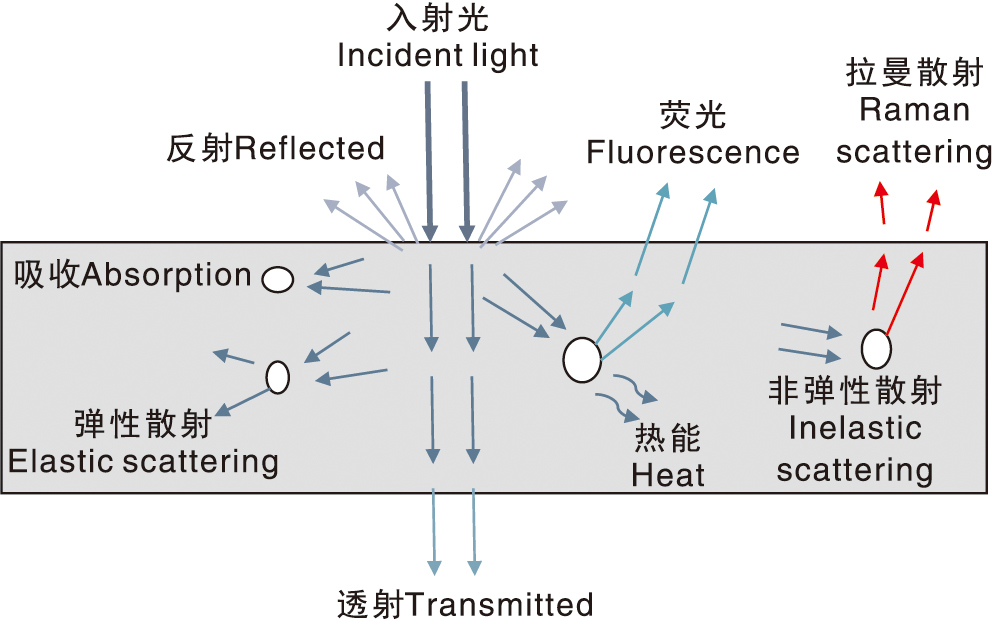
Fig.1 Light-matter interaction
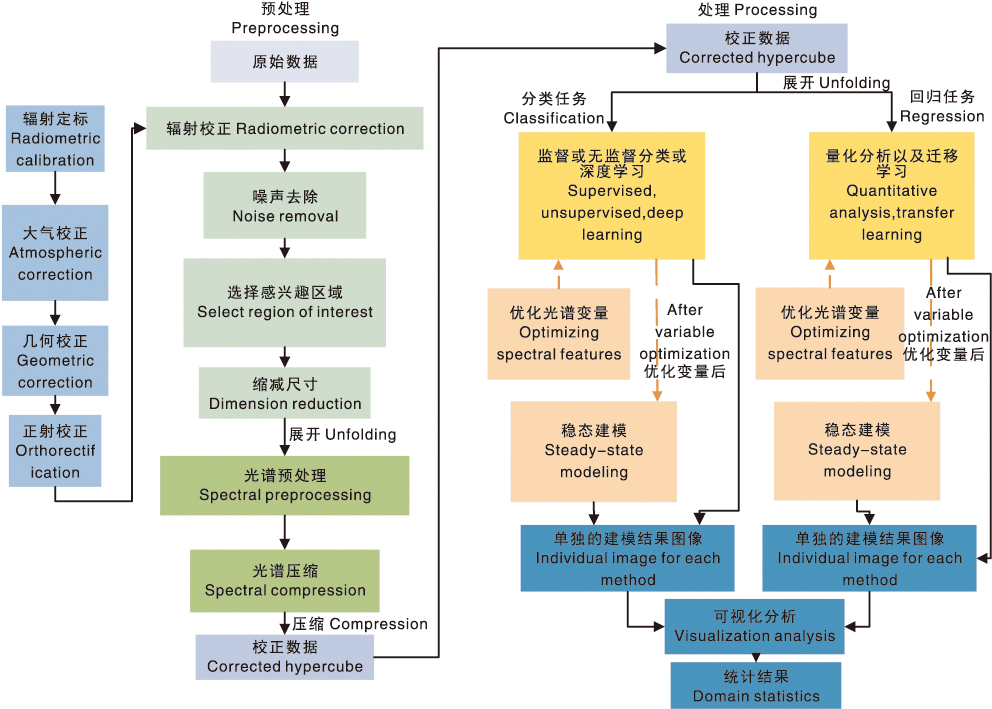
Fig.2 Workflow for in-situ hyperspectral imaging sensing and routine processing
| 样品 Sample | 感知内容 Test items | 建模方法 Modeling approach | 性能评估 Result validation | 参考文献 Reference |
|---|---|---|---|---|
| 葡萄Grape | TSS | PLSR | [ | |
| 花青素含量Anthocyanin content | PLSR | [ | ||
| TP | PLSR | [ | ||
| 葡萄Grape | TSS | PLSR | [ | |
| 花青素含量Anthocyanin content | PLSR | [ | ||
| TP | PLSR | [ | ||
| TA | PLSR | [ | ||
| 葡萄Grape | TSS、成熟度Ripeness | PLS-DA | ACC=86%~91% | [ |
| 蓝莓Blueberry | 成熟度Ripeness | KNN、SVM、AdaBoost | ACC=88% | [ |
| 杧果Mango | 成熟度Ripeness | PLS-DA、CNN | F1>0.97 | [ |
| 草莓Strawberry | 成熟度Ripeness | SVM | ACC=98.6% | [ |
| 桃Peach | 成熟度Ripeness | LIBSVM | ACC=91.7% | [ |
| 油茶果Camellia oleifera fruit | 成熟度Ripeness | PLS-DA | ACC=93.82% | [ |
| 油茶果Camellia oleifera fruit | 成熟度Ripeness | PLS-DA | ACC=88.6% | [ |
| 辣椒Pepper | 成熟度Ripeness | SG-Der-SAM PCA-KELM | ACC=99.8% ACC=89.4% | [ [ |
| 辣椒Pepper | 成熟度Ripeness | PCA-KELM | ACC=97.3% | [ |
Table 1 In-situ perception classification model for ripeness
| 样品 Sample | 感知内容 Test items | 建模方法 Modeling approach | 性能评估 Result validation | 参考文献 Reference |
|---|---|---|---|---|
| 葡萄Grape | TSS | PLSR | [ | |
| 花青素含量Anthocyanin content | PLSR | [ | ||
| TP | PLSR | [ | ||
| 葡萄Grape | TSS | PLSR | [ | |
| 花青素含量Anthocyanin content | PLSR | [ | ||
| TP | PLSR | [ | ||
| TA | PLSR | [ | ||
| 葡萄Grape | TSS、成熟度Ripeness | PLS-DA | ACC=86%~91% | [ |
| 蓝莓Blueberry | 成熟度Ripeness | KNN、SVM、AdaBoost | ACC=88% | [ |
| 杧果Mango | 成熟度Ripeness | PLS-DA、CNN | F1>0.97 | [ |
| 草莓Strawberry | 成熟度Ripeness | SVM | ACC=98.6% | [ |
| 桃Peach | 成熟度Ripeness | LIBSVM | ACC=91.7% | [ |
| 油茶果Camellia oleifera fruit | 成熟度Ripeness | PLS-DA | ACC=93.82% | [ |
| 油茶果Camellia oleifera fruit | 成熟度Ripeness | PLS-DA | ACC=88.6% | [ |
| 辣椒Pepper | 成熟度Ripeness | SG-Der-SAM PCA-KELM | ACC=99.8% ACC=89.4% | [ [ |
| 辣椒Pepper | 成熟度Ripeness | PCA-KELM | ACC=97.3% | [ |
| 样品Sample | 建模方法Modeling approach | 性能评估Result validation | 参考文献Reference |
|---|---|---|---|
| 生菜Lettuce | MC-UVE-CARS-PLS | RC=82.71%,RP=84.67% | [ |
| 生菜Lettuce | PCA | AVG=0.952 6、0.047 7 | [ |
| 冬小麦Winter wheat | BPNN | [ | |
| 玉米Corn | LR | R2>0.6 | [ |
| 紫花苜蓿Alfalfa | PLS | R2=0.86,RMSE=2.00% | [ |
| 葡萄藤Grapevine | RF | ACC=83.3% | [ |
Table 2 In-situ sensing model for moisture content
| 样品Sample | 建模方法Modeling approach | 性能评估Result validation | 参考文献Reference |
|---|---|---|---|
| 生菜Lettuce | MC-UVE-CARS-PLS | RC=82.71%,RP=84.67% | [ |
| 生菜Lettuce | PCA | AVG=0.952 6、0.047 7 | [ |
| 冬小麦Winter wheat | BPNN | [ | |
| 玉米Corn | LR | R2>0.6 | [ |
| 紫花苜蓿Alfalfa | PLS | R2=0.86,RMSE=2.00% | [ |
| 葡萄藤Grapevine | RF | ACC=83.3% | [ |
| 样品Sample | 感知内容Test items | 建模方法Modeling approach | 性能评估Result validation | 参考文献Reference |
|---|---|---|---|---|
| 牧草Forage | 磷含量Phosphorus content | FD-IB+SVM | R2=0.67,RMSE=0.047 2% | [ |
| 水稻Rice | 氮含量Nitrogen content | GA-ELM | R2>0.68 | [ |
| 水稻Rice | 钾含量Potassium content | PROSPECT-5 | R2=0.74 | [ |
| 冬小麦Winter wheat | 氮含量Nitrogen content | SVR | R2=0.88 | [ |
| RFR | R2=0.91 | [ | ||
| 冬小麦Winter wheat | 氮含量Nitrogen content | N-PROSAIL | R2=0.75%,RMSE=0.38% | [ |
| 苹果树Apple tree | 氮含量Nitrogen content | PLSR | R2=0.772 8 | [ |
| MLR | R2=0.784 3 | [ |
Table 3 In-situ sensing model for mineral content
| 样品Sample | 感知内容Test items | 建模方法Modeling approach | 性能评估Result validation | 参考文献Reference |
|---|---|---|---|---|
| 牧草Forage | 磷含量Phosphorus content | FD-IB+SVM | R2=0.67,RMSE=0.047 2% | [ |
| 水稻Rice | 氮含量Nitrogen content | GA-ELM | R2>0.68 | [ |
| 水稻Rice | 钾含量Potassium content | PROSPECT-5 | R2=0.74 | [ |
| 冬小麦Winter wheat | 氮含量Nitrogen content | SVR | R2=0.88 | [ |
| RFR | R2=0.91 | [ | ||
| 冬小麦Winter wheat | 氮含量Nitrogen content | N-PROSAIL | R2=0.75%,RMSE=0.38% | [ |
| 苹果树Apple tree | 氮含量Nitrogen content | PLSR | R2=0.772 8 | [ |
| MLR | R2=0.784 3 | [ |
| 样品 Sample | 感知内容 Test items | 建模方法 Modeling approach | 性能评估 Result validation | 参考文献 Reference |
|---|---|---|---|---|
| 番茄Tomato | 综合品质Comprehensive quality | RNN | [ | |
| 番茄Tomato | 综合品质Comprehensive quality | MLR | [ | |
| 油茶果Camellia oleifera fruit | 综合成熟度Composite maturity index | SPA-CNNR | RP=0.839,RMSEP=0.261,RPD=1.849 | [ |
| 油茶果Camellia oleifera fruit | 综合品质Comprehensive quality | RF | R2=0.853 4,RMSE=0.052 6 | [ |
Table 4 In-situ sensing model for comprehensive quality
| 样品 Sample | 感知内容 Test items | 建模方法 Modeling approach | 性能评估 Result validation | 参考文献 Reference |
|---|---|---|---|---|
| 番茄Tomato | 综合品质Comprehensive quality | RNN | [ | |
| 番茄Tomato | 综合品质Comprehensive quality | MLR | [ | |
| 油茶果Camellia oleifera fruit | 综合成熟度Composite maturity index | SPA-CNNR | RP=0.839,RMSEP=0.261,RPD=1.849 | [ |
| 油茶果Camellia oleifera fruit | 综合品质Comprehensive quality | RF | R2=0.853 4,RMSE=0.052 6 | [ |
| 样品 Sample | 建模方法 Modeling approach | 性能评估 Result validation | 参考文献 Reference |
|---|---|---|---|
| 山核桃 Pecan | XGboost | RMSEP=0.842 | [ |
| 柑橘 Citrus | H-ELR、PLSR | R2=0.876, RMSE=3.447, RPD=2.601 | [ |
| 植物Plants | 3D-CNN-LSTM | [ | |
| 小麦Wheat | K-means、PLSR | [ |
Table 5 In-situ sensing models of chlorophyll content
| 样品 Sample | 建模方法 Modeling approach | 性能评估 Result validation | 参考文献 Reference |
|---|---|---|---|
| 山核桃 Pecan | XGboost | RMSEP=0.842 | [ |
| 柑橘 Citrus | H-ELR、PLSR | R2=0.876, RMSE=3.447, RPD=2.601 | [ |
| 植物Plants | 3D-CNN-LSTM | [ | |
| 小麦Wheat | K-means、PLSR | [ |
| 样品Sample | 感知内容Test items | 建模方法Modeling approach | 性能评估Result validation | 参考文献Reference |
|---|---|---|---|---|
| 小麦Wheat | FHB | ETR | R2=0.94 | [ |
| 小麦Wheat | FHB | SB+VI+WF | R2=0.88,RMSE=2.68% | [ |
| 小麦Wheat | FHB | BPNN | ACC=98% | [ |
| 小麦Wheat | 条锈病Stripe rust | PCA-loadings-BPNN | [ | |
| 小麦Wheat | 条锈病Stripe rust | PLSR | R2=0.65、0.75、0.82 | [ |
| 小麦Wheat | PM | PLSR | ACC=82.35% | [ |
| 小麦Wheat | SR | RFC | ACC=85% | [ |
| 马铃薯Potato | 晚疫病Late blight | RFC | ACC=0.99±0.04 | [ |
| 马铃薯Potato | 晚疫病Late blight | CropdocNet | ACC=98.09% | [ |
| 水稻Rice | 稻曲病False smut | GBDT | ACC=85.62% | [ |
| 水稻Rice | 稻曲病False smut | RF | ACC=74.23%、85.19% | [ |
| 柑橘Citrus | 流胶病Gummosis | SAM | ACC=94% | [ |
Table 6 In-situ sensing models for fungal diseases
| 样品Sample | 感知内容Test items | 建模方法Modeling approach | 性能评估Result validation | 参考文献Reference |
|---|---|---|---|---|
| 小麦Wheat | FHB | ETR | R2=0.94 | [ |
| 小麦Wheat | FHB | SB+VI+WF | R2=0.88,RMSE=2.68% | [ |
| 小麦Wheat | FHB | BPNN | ACC=98% | [ |
| 小麦Wheat | 条锈病Stripe rust | PCA-loadings-BPNN | [ | |
| 小麦Wheat | 条锈病Stripe rust | PLSR | R2=0.65、0.75、0.82 | [ |
| 小麦Wheat | PM | PLSR | ACC=82.35% | [ |
| 小麦Wheat | SR | RFC | ACC=85% | [ |
| 马铃薯Potato | 晚疫病Late blight | RFC | ACC=0.99±0.04 | [ |
| 马铃薯Potato | 晚疫病Late blight | CropdocNet | ACC=98.09% | [ |
| 水稻Rice | 稻曲病False smut | GBDT | ACC=85.62% | [ |
| 水稻Rice | 稻曲病False smut | RF | ACC=74.23%、85.19% | [ |
| 柑橘Citrus | 流胶病Gummosis | SAM | ACC=94% | [ |
| 样品 Sample | 感知内容 Test items | 建模方法 Modeling approach | 性能评估 Result validation | 参考文献 Reference |
|---|---|---|---|---|
| 马铃薯Potato | 黑胫病Blackleg | SVM | BA=0.915 | [ |
| 柑橘Citrus | 溃疡病Citrus canker | RBF、KNN | ACC=100% | [ |
| 柑橘Citrus | 黄龙病Huanglongbing disease | GA、SAE | ACC=99.72% | [ |
| 杧果Mango | 虫害Insect pest | MD-FCM、XCS-RBFNN | ACC=97.02% | [ |
| 棉花Cotton | 蚜害Aphid infestation | PLSR | R2=0.612,RMSE=0.89 | [ |
Table 7 In-situ sensing models for other diseases
| 样品 Sample | 感知内容 Test items | 建模方法 Modeling approach | 性能评估 Result validation | 参考文献 Reference |
|---|---|---|---|---|
| 马铃薯Potato | 黑胫病Blackleg | SVM | BA=0.915 | [ |
| 柑橘Citrus | 溃疡病Citrus canker | RBF、KNN | ACC=100% | [ |
| 柑橘Citrus | 黄龙病Huanglongbing disease | GA、SAE | ACC=99.72% | [ |
| 杧果Mango | 虫害Insect pest | MD-FCM、XCS-RBFNN | ACC=97.02% | [ |
| 棉花Cotton | 蚜害Aphid infestation | PLSR | R2=0.612,RMSE=0.89 | [ |
| [1] | 李杰, 吴桂芳, 德雪红, 等. 农产品品质无损检测方法的研究进展[J]. 粮食与饲料工业, 2024(4): 70-76. |
| LI J, WU G F, DE X H, et al. Research progress on nondestructive testing methods for agricultural products[J]. Cereal & Feed Industry, 2024(4): 70-76. | |
| [2] | 熊春晖, 佘永新, 焦逊, 等. 高光谱成像技术在农产品无损检测中的应用[J]. 粮油食品科技, 2023, 31(1): 109-122. |
| XIONG C H, SHE Y X, JIAO X, et al. Application of hyperspectral imaging technology in nondestructive testing of agricultural products[J]. Science and Technology of Cereals, Oils and Foods, 2023, 31(1): 109-122. | |
| [3] | BENELLI A, CEVOLI C, FABBRI A. In-field hyperspectral imaging: an overview on the ground-based applications in agriculture[J]. Journal of Agricultural Engineering, 2020, 51(3): 129-139. |
| [4] | 王丹, 栾雨晴, 谭佐军, 等. 基于高光谱和卷积神经网络的西兰花农药残留检测[J]. 食品工业科技, 2025, 46(6): 1-8. |
| WANG D, LUAN Y Q, TAN Z J, et al. Pesticide residue detection in broccoli based on hyperspectral technology and convolutional neural network[J]. Science and Technology of Food Industry, 2025, 46(6): 1-8. | |
| [5] | 章恺, 朱丽芳, 李入林, 等. 基于改进WOA-LSSVM和高光谱的猕猴桃糖度无损检测[J]. 食品与机械, 2024, 40(5): 107-112. |
| ZHANG K, ZHU L F, LI R L, et al. Non destructive detection of kiwifruit sugar content based on improved WOA-LSSVM and hyperspectral analysis[J]. Food & Machinery, 2024, 40(5): 107-112. | |
| [6] | 张芳, 邓照龙, 田有文, 等. 基于高光谱成像技术的南果梨酸度无损检测方法[J]. 沈阳农业大学学报, 2024, 55(2): 231-239. |
| ZHANG F, DENG Z L, TIAN Y W, et al. Non-destructive testing method for acidity of Nanguo pear based on hyperspectral imaging technology[J]. Journal of Shenyang Agricultural University, 2024, 55(2): 231-239. | |
| [7] | 周晨昕, 刘英, 夏海飞, 等. 基于高光谱数据的青梅成熟度分类方法[J]. 林业工程学报, 2025, 10(3): 146-153. |
| ZHOU C X, LIU Y, XIA H F, et al. Maturity classification method of greengage based on hyperspectral data[J]. Journal of Forestry Engineering, 2025, 10(3): 146-153. | |
| [8] | WIEME J, MOLLAZADE K, MALOUNAS I, et al. Application of hyperspectral imaging systems and artificial intelligence for quality assessment of fruit, vegetables and mushrooms: a review[J]. Biosystems Engineering, 2022, 222: 156-176. |
| [9] | 丁世春, 马瑞峻, 陈瑜. 基于高光谱成像的水果品质检测研究进展[J]. 江苏农业科学, 2024, 52(15): 16-26. |
| DING S C, MA R J, CHEN Y. Research progress on fruit quality detection based on hyperspectral imaging[J]. Jiangsu Agricultural Sciences, 2024, 52(15): 16-26. | |
| [10] | 袁伟东, 鞠皓, 姜洪喆, 等. 基于高光谱成像技术的油茶果不同成熟阶段判别[J]. 光谱学与光谱分析, 2023, 43(11): 3419-3426. |
| YUAN W D, JU H, JIANG H Z, et al. Classification of different maturity stages of Camellia oleifera fruit using hyperspectral imaging technique[J]. Spectroscopy and Spectral Analysis, 2023, 43(11): 3419-3426. | |
| [11] | FERNÁNDEZ-NOVALES J, TARDÁGUILA J, GUTIÉRREZ S, et al. On-the-go VIS+SW-NIR spectroscopy as a reliable monitoring tool for grape composition within the vineyard[J]. Molecules, 2019, 24(15): 2795. |
| [12] | FERNÁNDEZ-NOVALES J, BARRIO I, DIAGO M P. Non-invasive monitoring of berry ripening using on-the-go hyperspectral imaging in the vineyard[J]. Agronomy, 2021, 11(12): 2534. |
| [13] | BENELLI A, CEVOLI C, RAGNI L, et al. In-field and non-destructive monitoring of grapes maturity by hyperspectral imaging[J]. Biosystems Engineering, 2021, 207: 59-67. |
| [14] | YANG C, LEE W S, GADER P. Hyperspectral band selection for detecting different blueberry fruit maturity stages[J]. Computers and Electronics in Agriculture, 2014, 109: 23-31. |
| [15] | WENDEL A, UNDERWOOD J, WALSH K. Maturity estimation of mangoes using hyperspectral imaging from a ground based mobile platform[J]. Computers and Electronics in Agriculture, 2018, 155: 298-313. |
| [16] | GUTIÉRREZ S, WENDEL A, UNDERWOOD J. Spectral filter design based on in-field hyperspectral imaging and machine learning for mango ripeness estimation[J]. Computers and Electronics in Agriculture, 2019, 164: 104890. |
| [17] | GAO Z M, SHAO Y Y, XUAN G T, et al. Real-time hyperspectral imaging for the in-field estimation of strawberry ripeness with deep learning[J]. Artificial Intelligence in Agriculture, 2020, 4: 31-38. |
| [18] | SHAO Y Y, WANG Y X, XUAN G T. In-field and non-invasive determination of internal quality and ripeness stages of Feicheng peach using a portable hyperspectral imager[J]. Biosystems Engineering, 2021, 212: 115-125. |
| [19] | 孙梦梦. 基于高光谱成像的油茶果成熟度及品质田间检测方法研究[D]. 南京: 南京林业大学, 2024. |
| SUN M M. Study on field detection method of maturity and quality of Camellia oleifera fruit based on hyperspectral imaging[D]. Nanjing: Nanjing Forestry University, 2024. | |
| [20] | 黄华成. 基于高光谱技术的鲜椒成熟度及其损伤识别研究[D]. 贵阳: 贵州大学, 2022. |
| HUANG H C. Study on maturity and damage identification of fresh pepper based on hyperspectral technology[D]. Guiyang: Guizhou University, 2022. | |
| [21] | YUAN W D, ZHOU H P, ZHOU Y, et al. In-field and non-destructive determination of comprehensive maturity index and maturity stages of Camellia oleifera fruits using a portable hyperspectral imager[J]. Spectrochimica Acta Part A: Molecular and Biomolecular Spectroscopy, 2024, 315: 124266. |
| [22] | WU X J, WU X M, HUANG H C, et al. Characterization of pepper ripeness in the field using hyperspectral imaging (HSI) with back propagation (BP) neural network and kernel based extreme learning machine (KELM) models[J]. Analytical Letters, 2024, 57(3): 409-424. |
| [23] | ZHAO J, LI H, CHEN C, et al. Detection of water content in lettuce canopies based on hyperspectral imaging technology under outdoor conditions[J]. Agriculture, 2022, 12(11): 1796. |
| [24] | CHEN C, JIANG Y, ZHU X Q. Research on lettuce canopy image processing method based on hyperspectral imaging technology[J]. Plants, 2024, 13(23): 3403. |
| [25] | YANG F F, LIU T, WANG Q Y, et al. Rapid determination of leaf water content for monitoring waterlogging in winter wheat based on hyperspectral parameters[J]. Journal of Integrative Agriculture, 2021, 20(10): 2613-2626. |
| [26] | SHU M Y, DONG Q Z, FEI S P, et al. Improved estimation of canopy water status in maize using UAV-based digital and hyperspectral images[J]. Computers and Electronics in Agriculture, 2022, 197: 106982. |
| [27] | CEVOLI C, DI CECILIA L, FERRARI L, et al. Evaluation of cut alfalfa moisture content and operative conditions by hyperspectral imaging combined with chemometric tools: in-field application[J]. Biosystems Engineering, 2022, 222: 132-141. |
| [28] | LOGGENBERG K, STREVER A, GREYLING B, et al. Modelling water stress in a Shiraz vineyard using hyperspectral imaging and machine learning[J]. Remote Sensing, 2018, 10(2): 202. |
| [29] | GAO J L, MENG B P, LIANG T G, et al. Modeling alpine grassland forage phosphorus based on hyperspectral remote sensing and a multi-factor machine learning algorithm in the east of Tibetan Plateau, China[J]. ISPRS Journal of Photogrammetry and Remote Sensing, 2019, 147: 104-117. |
| [30] | YU F H, FENG S, DU W, et al. A study of nitrogen deficiency inversion in rice leaves based on the hyperspectral reflectance differential[J]. Frontiers in Plant Science, 2020, 11: 573272. |
| [31] | CHEN X K, LI F L, SHI B T, et al. Estimation of winter wheat plant nitrogen concentration from UAV hyperspectral remote sensing combined with machine learning methods[J]. Remote Sensing, 2023, 15(11): 2831. |
| [32] | LI Z H, JIN X L, YANG G J, et al. Remote sensing of leaf and canopy nitrogen status in winter wheat (Triticum aestivum L.) based on N-PROSAIL model[J]. Remote Sensing, 2018, 10(9): 1463. |
| [33] | YANG G J, ZHAO C J, PU R L, et al. Leaf nitrogen spectral reflectance model of winter wheat (Triticum aestivum) based on PROSPECT: simulation and inversion[J]. Journal of Applied Remote Sensing, 2015, 9(1): 095976. |
| [34] | VERHOEF W. Light scattering by leaf layers with application to canopy reflectance modeling: the SAIL model[J]. Remote Sensing of Environment, 1984, 16(2): 125-141. |
| [35] | YE X J, ABE S, ZHANG S H. Estimation and mapping of nitrogen content in apple trees at leaf and canopy levels using hyperspectral imaging[J]. Precision Agriculture, 2020, 21(1): 198-225. |
| [36] | LU J S, YANG T C, SU X, et al. Monitoring leaf potassium content using hyperspectral vegetation indices in rice leaves[J]. Precision Agriculture, 2020, 21(2): 324-348. |
| [37] | 赵明蕊. 基于高光谱成像技术的加工番茄果实品质无损检测研究[D]. 石河子: 石河子大学, 2023. |
| ZHAO M R. Study on nondestructive testing of fruit quality of processed tomato based on hyperspectral imaging technology[D]. Shihezi: Shihezi University, 2023. | |
| [38] | SHAO Y Y, SHI Y K, QIN Y D, et al. A new quantitative index for the assessment of tomato quality using Vis-NIR hyperspectral imaging[J]. Food Chemistry, 2022, 386: 132864. |
| [39] | XU J J, FU G S, YAN L P, et al. Estimation of the relative chlorophyll content of Carya illinoensis leaves using fractional order derivative of leaf and canopy scale hyperspectral data[J]. Journal of Soil Science and Plant Nutrition, 2024, 24(1): 1407-1423. |
| [40] | VANBRABANT Y, TITS L, DELALIEUX S, et al. Multitemporal chlorophyll mapping in pome fruit orchards from remotely piloted aircraft systems[J]. Remote Sensing, 2019, 11(12): 1468. |
| [41] | XIAO B, LI S Z, DOU S Q, et al. Comparison of leaf chlorophyll content retrieval performance of citrus using FOD and CWT methods with field-based full-spectrum hyperspectral reflectance data[J]. Computers and Electronics in Agriculture, 2024, 217: 108559. |
| [42] | ZHAO R M, TANG W J, LIU M J, et al. Spatial-spectral feature extraction for in-field chlorophyll content estimation using hyperspectral imaging[J]. Biosystems Engineering, 2024, 246: 263-276. |
| [43] | GAO D H, QIAO L, SONG D, et al. In-field chlorophyll estimation based on hyperspectral images segmentation and pixel-wise spectra clustering of wheat canopy[J]. Biosystems Engineering, 2022, 217: 41-55. |
| [44] | ALMOUJAHED M B, APOLO-APOLO O E, WHETTON R L, et al. Field-based hyperspectral imaging for detection and spatial mapping of Fusarium head blight in wheat[J]. European Journal of Agronomy, 2025, 164: 127485. |
| [45] | WHETTON R L, WAINE T W, MOUAZEN A M. Hyperspectral measurements of yellow rust and Fusarium head blight in cereal crops: Part 2: on-line field measurement[J]. Biosystems Engineering, 2018, 167: 144-158. |
| [46] | MA H Q, HUANG W J, DONG Y Y, et al. Using UAV-based hyperspectral imagery to detect winter wheat Fusarium Head blight[J]. Remote Sensing, 2021, 13(15): 3024. |
| [47] | LIU L Y, DONG Y Y, HUANG W J, et al. Monitoring wheat Fusarium head blight using unmanned aerial vehicle hyperspectral imagery[J]. Remote Sensing, 2020, 12(22): 3811. |
| [48] | YAO Z F, LEI Y, HE D J. Early visual detection of wheat stripe rust using visible/near-infrared hyperspectral imaging[J]. Sensors, 2019, 19(4): 952. |
| [49] | GUO A T, HUANG W J, DONG Y Y, et al. Wheat yellow rust detection using UAV-based hyperspectral technology[J]. Remote Sensing, 2021, 13(1): 123. |
| [50] | KHAN I H, LIU H Y, LI W, et al. Early detection of powdery mildew disease and accurate quantification of its severity using hyperspectral images in wheat[J]. Remote Sensing, 2021, 13(18): 3612. |
| [51] | ABDULRIDHA J, MIN A, ROUSE M N, et al. Evaluation of stem rust disease in wheat fields by drone hyperspectral imaging[J]. Sensors, 2023, 23(8): 4154. |
| [52] | LA PAROLA C M. Comparison of multispectral and hyperspectral UAV imagery for late blight (phytophtora infestans) detection in a potato (Solanum tuberosum) field[D]. LISBOA: Instituto Superior D AGRONOMIA, Patrian Uniwersidade de Lisboa, 2022. |
| [53] | SHI Y, HAN L X, KLEEREKOPER A, et al. Novel CropdocNet model for automated potato late blight disease detection from unmanned aerial vehicle-based hyperspectral imagery[J]. Remote Sensing, 2022, 14(2): 396. |
| [54] | WANG Y X, XING M F, ZHANG H G, et al. Rice false smut monitoring based on band selection of UAV hyperspectral data[J]. Remote Sensing, 2023, 15(12): 2961. |
| [55] | AN G Q, XING M F, HE B B, et al. Extraction of areas of rice false smut infection using UAV hyperspectral data[J]. Remote Sensing, 2021, 13(16): 3185. |
| [56] | IMAI N N, TOMMASELLI A M G, et al. Detection and mapping of trees infected with Citrus gummosis using UAV hyperspectral data[J]. Computers and Electronics in Agriculture, 2021, 188: 106298. |
| [57] | FRANCESCHINI M H D, BREDE B, KAMP J, et al. Detection of a vascular wilt disease in potato (‘Blackleg’) based on UAV hyperspectral imagery: can structural features from LiDAR or SfM improve plant-wise classification accuracy[J]. Computers and Electronics in Agriculture, 2024, 227: 109527. |
| [58] | ABDULRIDHA J, BATUMAN O, AMPATZIDIS Y. UAV-based remote sensing technique to detect citrus canker disease utilizing hyperspectral imaging and machine learning[J]. Remote Sensing, 2019, 11(11): 1373. |
| [59] | DENG X L, ZHU Z H, YANG J C, et al. Detection of citrus Huanglongbing based on multi-input neural network model of UAV hyperspectral remote sensing[J]. Remote Sensing, 2020, 12(17): 2678. |
| [60] | PANSY D L, MURALI M. UAV hyperspectral remote sensor images for mango plant disease and pest identification using MD-FCM and XCS-RBFNN[J]. Environmental Monitoring and Assessment, 2023, 195(9): 1120. |
| [61] | 郭伟, 乔红波, 赵恒谦, 等. 基于比值导数法的棉花蚜害无人机成像光谱监测模型研究[J]. 光谱学与光谱分析, 2021, 41(5): 1543-1550. |
| GUO W, QIAO H B, ZHAO H Q, et al. Cotton aphid damage monitoring using UAV hyperspectral data based on derivative of ratio spectroscopy[J]. Spectroscopy and Spectral Analysis, 2021, 41(5): 1543-1550. |
| Viewed | ||||||
|
Full text |
|
|||||
|
Abstract |
|
|||||

