Acta Agriculturae Zhejiangensis ›› 2026, Vol. 38 ›› Issue (7): 1366-1377.DOI: 10.3969/j.issn.1004-1524.20250541
• Horticultural Science • Previous Articles Next Articles
Construction of a synthetic community from the pepper rhizosphere and evaluation of its growth-promoting effects
JIANG Guiwu( ), ZHANG Lin, XU Weihui*(), WANG Zhigang
Heilongjiang Provincial Engineering Technology Research Center of Agromicrobial Preparation Industrialization ,Heilongjiang Provincial Collaborative Innovation Center of Agrobiological Preparation Industrialization, Heilongjiang Provincial Concept Verification Center of High Concentration Organic Waste Liquid Biotransformation and Industrialization, College of Life Science and Agriculture and Forestry, Qiqihar University Qiqihar 161006, Heilongjiang, China
-
Received:2025-08-18Online:2026-07-25Published:2026-08-20

CLC Number:
Cite this article
JIANG Guiwu, ZHANG Lin, XU Weihui, WANG Zhigang. Construction of a synthetic community from the pepper rhizosphere and evaluation of its growth-promoting effects[J]. Acta Agriculturae Zhejiangensis, 2026, 38(7): 1366-1377.
share this article
Add to citation manager EndNote|Ris|BibTeX
URL: http://www.zjnyxb.cn/EN/10.3969/j.issn.1004-1524.20250541
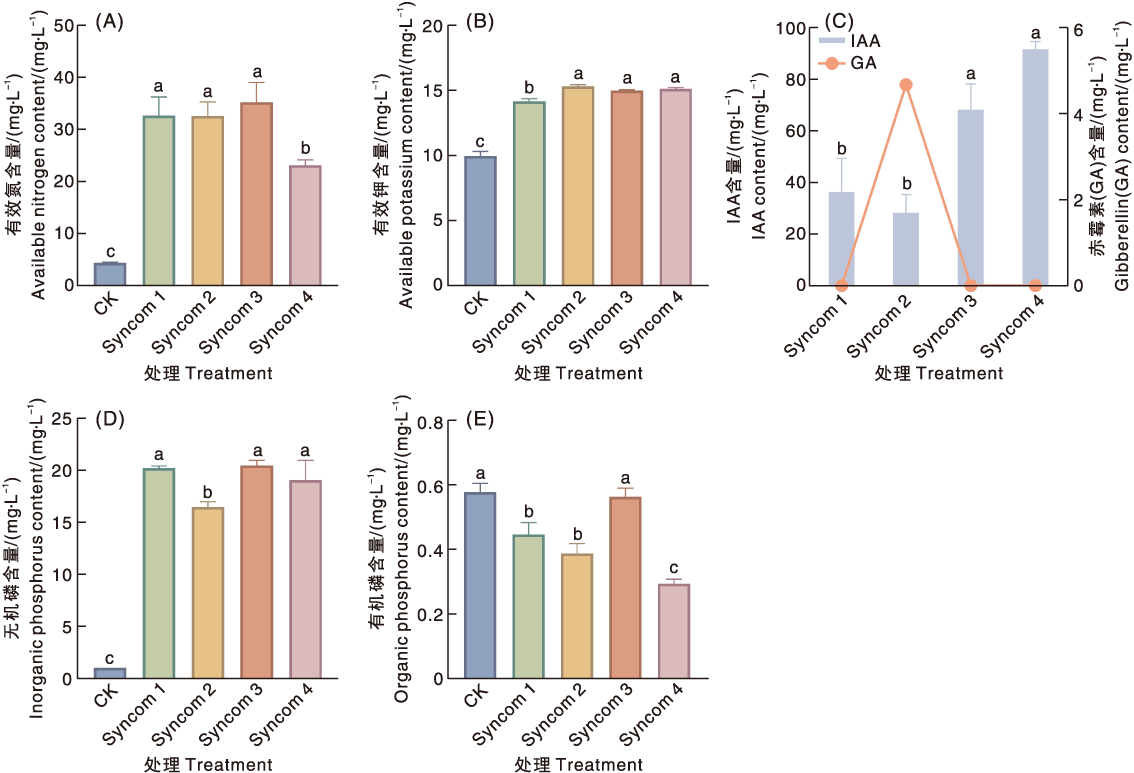
Fig.1 Growth-promoting ability of synthetic bacterial communities CK was treated with either medium without any promoting bacteria or with medium containing the bacterial inoculum, followed by measurement of all relevant growth-promoting parameters. The absence of identical lowercase letters on the columns indicates significant (p<0.05) differences between treatments. The same as Figure 2.
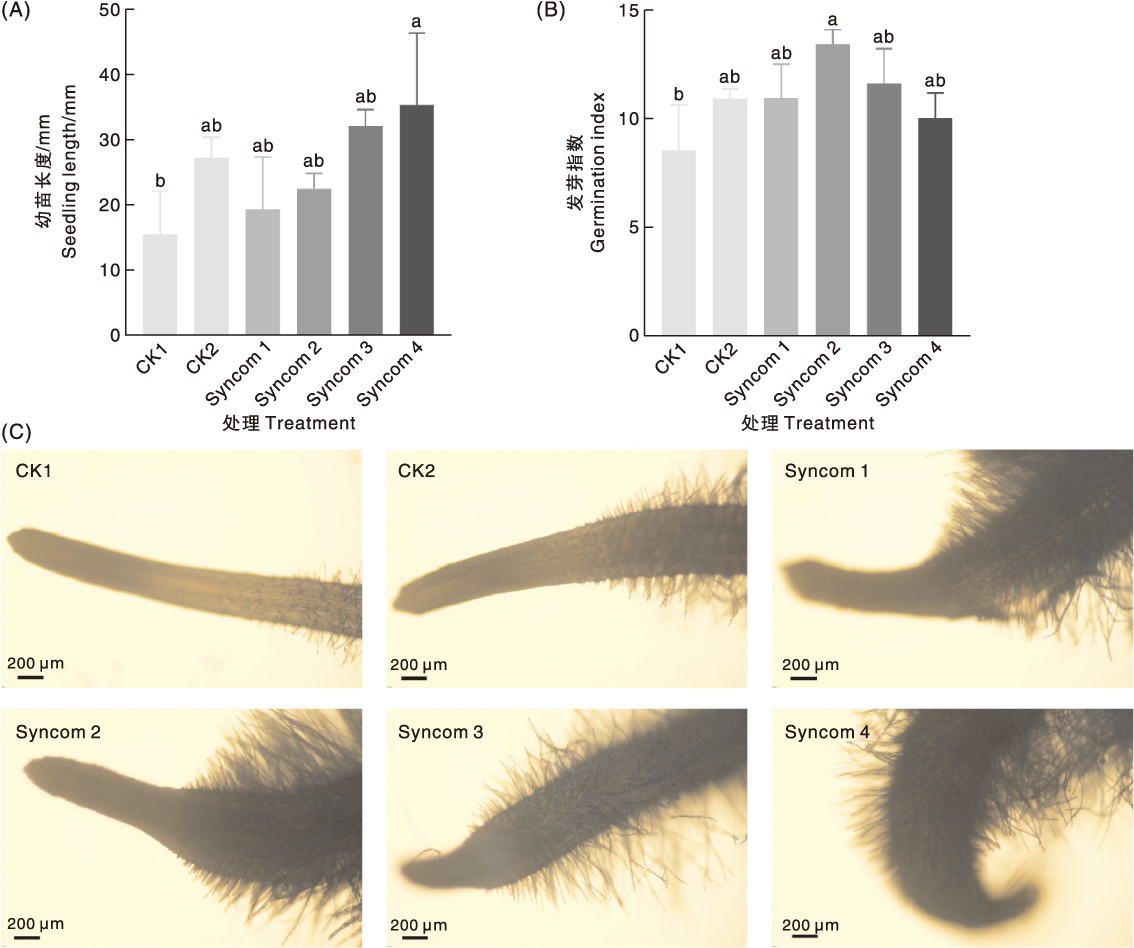
Fig.2 Effect of synthetic bacterial community on seed germination of pepper A, Seedling length; B, Germination index; C, Effect of synthetic bacterial community on root hair of pepper.
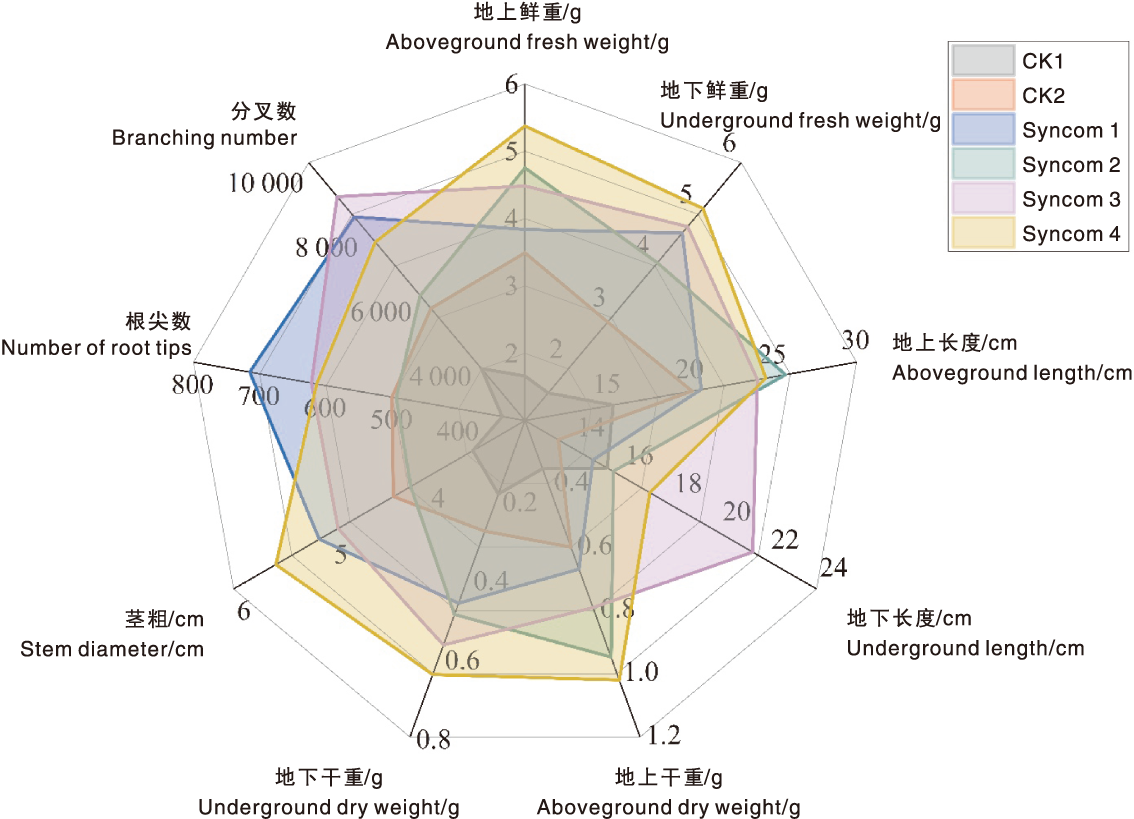
Fig.3 Promoting effect of synthetic bacterial community on pepper plants
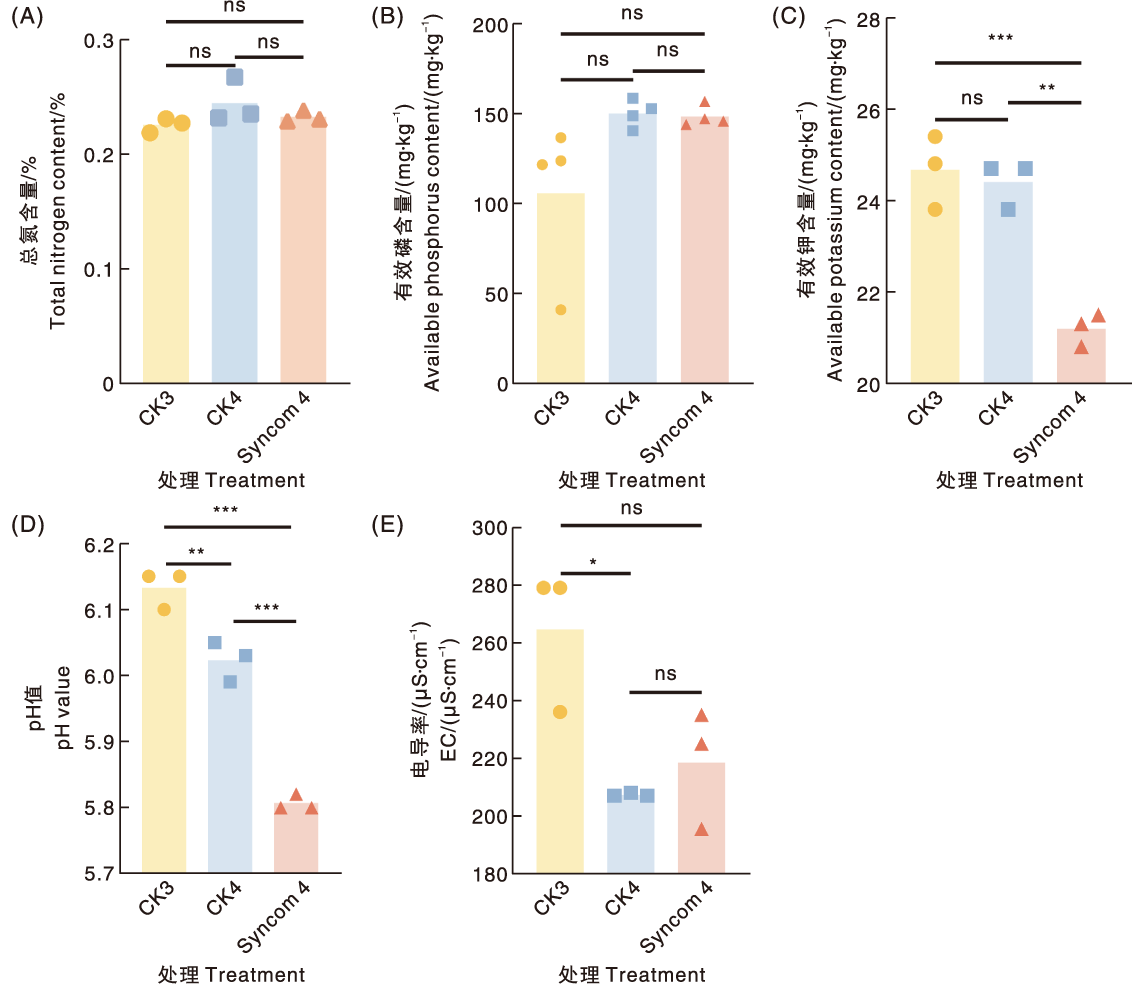
Fig.4 Effects of Syncom 4 the physicochemical properties of pepper rhizosphere soil * indicates statistically significant (p<0.05) differences; **,*** indicate highly significant (**, p<0.01; ***, p<0.001) differences; ns indicates no significant difference. Figures 5-6 are identical.
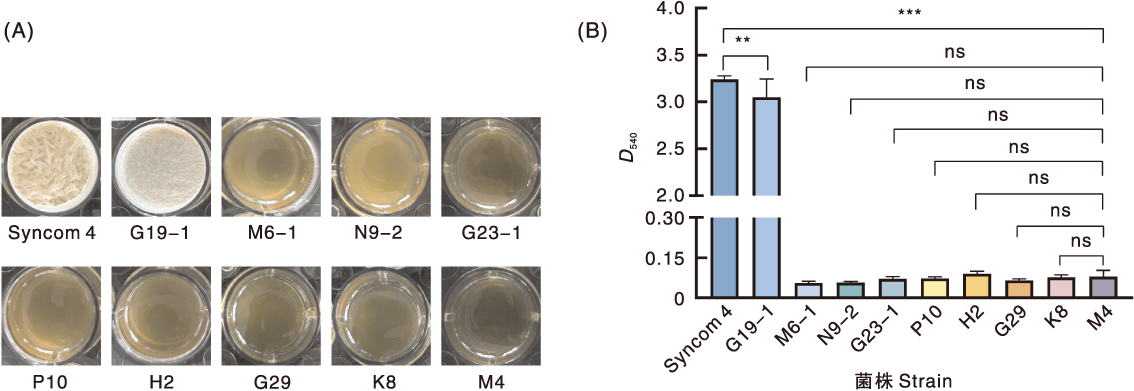
Fig.5 Biofilm formation ability of Syncom 4 and its members A, Representative photographs of biofilms formed after in vitro culture; B, Quantitative results of D540 absorbance for biofilm formation.
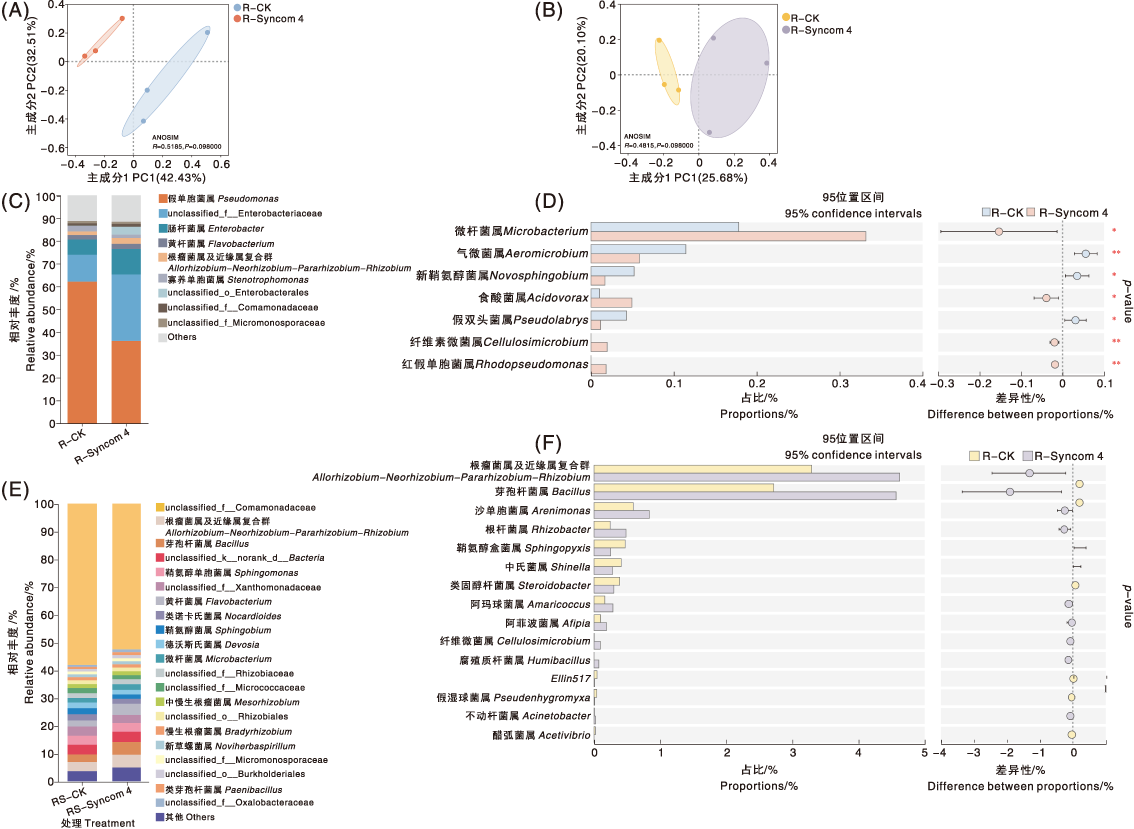
Fig.6 Effects of Syncom 4 on bacterial communities in root and rhizosphere of pepper A, The β diversity of bacteria in pepper roots; B, The β diversity of bacteria in the rhizosphere of pepper; C, Comparative analysis of genus-level composition in pepper roots; D, Comparative analysis of bacterial genus in pepper rhizosphere between two groups; E, Community composition at genus level in roots; F, Community composition at genus level in the rhizosphere of pepper. *(p<0.05) and **(p<0.01) indicate statistically significant enrichment.
| [1] | Mohd Ali M, Khalid N I, Wondi M H, et al. Exploring the nutritional values, volatile compounds, health benefits, and potential food products of chilli (Capsicum annuum): a comprehensive review[J]. Food Chemistry, 2025, 490: 145091. |
| [2] | Zhang H L, Liu Z L, Zheng C C, et al. Root system architecture plasticity with beneficial rhizosphere microbes: current findings and future perspectives[J]. Microbiological Research, 2025, 292: 128028. |
| [3] | Lugtenberg B J J, Chin-A-Woeng T F C, Bloemberg G V. Microbe-plant interactions: principles and mechanisms[J]. Antonie van Leeuwenhoek, 2002, 81(1): 373-383. |
| [4] | Crowther T W, Van Den Hoogen J, Wan J, et al. The global soil community and its influence on biogeochemistry[J]. Science, 2019, 365(6455): eaav0550. |
| [5] | 韦中, 杨天杰, 任鹏, 等. 合成菌群在根际免疫研究中的现状与未来[J]. 南京农业大学学报, 2021, 44(4): 597-603. |
| Wei Z, Yang T J, Ren P, et al. Advances and perspectives on synthetic microbial community in the study of rhizosphere immunity[J]. Journal of Nanjing Agricultural University, 2021, 44(4): 597-603. | |
| [6] | Vorholt J A, Vogel C, Carlström C I, et al. Establishing causality: opportunities of synthetic communities for plant microbiome research[J]. Cell Host & Microbe, 2017, 22(2): 142-155. |
| [7] | Liu H X, Li S M, Luo Y M, et al. Biological control of Ralstonia wilt, Phytophthora blight, Meloidogyne root-knot on bell pepper by the combination of Bacillus subtilis AR12, Bacillus subtilis SM21 and Chryseobacterium sp. R89[J]. European Journal of Plant Pathology, 2014, 139(1): 107-116. |
| [8] | Durán P, Thiergart T, Garrido-Oter R, et al. Microbial interKingdom interactions in roots promote Arabidopsis survival[J]. Cell, 2018, 175(4): 973-983.e14. |
| [9] | 张琳, 余红凤, 毕钰, 等. 辣椒根际促生菌的筛选及促生效应分析[J]. 农业生物技术学报, 2024, 32(9): 2124-2136. |
| Zhang L, Yu H F, Bi Y, et al. Screening of rhizosphere growth-promoting bacteria of pepper(Capsicum annuum)and analysis of their beneficial effects[J]. Journal of Agricultural Biotechnology, 2024, 32(9): 2124-2136. | |
| [10] | 路垚, 刘雅辉, 孙建平, 等. 耐低温降解纤维素菌株的筛选及复合菌系构建[J]. 安徽农业科学, 2022, 50(10): 6-10. |
| Lu Y, Liu Y H, Sun J P, et al. Screening of low temperature cellulose degradation strains and construction of complex microbial system[J]. Journal of Anhui Agricultural Sciences, 2022, 50(10): 6-10. | |
| [11] | 杨晓燕, 叶伟伟, 魏善强, 等. 一株巨大芽孢杆菌发酵培养基的优化及解磷效果研究[J]. 中国农学通报, 2022, 38(15): 105-112. |
| Yang X Y, Ye W W, Wei S Q, et al. Bacillus megaterium: fermentation medium optimization and phosphate solubilization effect[J]. Chinese Agricultural Science Bulletin, 2022, 38(15): 105-112. | |
| [12] | Chen D A, Wei X W, Zhang M, et al. Isolation, identification and phosphate solubilizing capacity of organophosphorus solubilizing bacteria in rhizosphere soil of Camellia oleifera[J]. Agricultural Science & Technology, 2020, 21(1): 41-47. |
| [13] | 王珣珏, 黄巧云, 蔡鹏, 等. 解钾菌解钾效率检测方法的比较[J]. 华中农业大学学报, 2016, 35(1): 81-85. |
| Wang X J, Huang Q Y, Cai P, et al. Comparing different methods of detecting potassium solubilizing efficiency with potassium solubilizing bacteria[J]. Journal of Huazhong Agricultural University, 2016, 35(1): 81-85. | |
| [14] | 张垚, 张芝, 王志刚, 等. 辣椒根际促生菌筛选鉴定及其促生效应初探[J]. 浙江农业科学, 2022, 63(5): 958-963. |
| Zhang Y, Zhang Z, Wang Z G, et al. Screening, identification of growth-promoting rhizobacteria in pepper and preliminary study on its promoting effect[J]. Journal of Zhejiang Agricultural Sciences, 2022, 63(5): 958-963. | |
| [15] | 吴玥, 王秋颖, 关体坤, 等. 磷铁尾矿中高效解磷菌筛选、鉴定及解磷特性[J]. 北京农学院学报, 2022, 37(4): 6-12. |
| Wu Y, Wang Q Y, Guan T K, et al. Isolation, identification and phosphate solubilizing characteristics of a phosphate solubilizing bacterium from ferrophosphate tailings[J]. Journal of Beijing University of Agriculture, 2022, 37(4): 6-12. | |
| [16] | Rajawat M V S, Singh S, Tyagi S P, et al. A modified plate assay for rapid screening of potassium-solubilizing bacteria[J]. Pedosphere, 2016, 26(5): 768-773. |
| [17] | 刘悦, 徐伟慧, 王志刚. 大豆根际促生菌的筛选鉴定与促生效应[J]. 浙江农业学报, 2023, 35(12): 2775-2784. |
| Liu Y, Xu W H, Wang Z G. Screening and identification of soybean rhizosphere growth-promoting bacteria and their growth-promoting effects[J]. Acta Agriculturae Zhejiangensis, 2023, 35(12): 2775-2784. | |
| [18] | 李福艳, 刘晓玉, 颜静婷, 等. 三株产吲哚乙酸根际促生芽孢杆菌的筛选鉴定及其促生作用[J]. 浙江农业学报, 2021, 33(5): 873-884. |
| Li F Y, Liu X Y, Yan J T, et al. Isolation and identification of three indole-3-acetic acid producing plant-growth-promoting rhizosphere Bacillus sp. and their growth-promoting effects[J]. Acta Agriculturae Zhejiangensis, 2021, 33(5): 873-884. | |
| [19] | 刘宗超, 蔡兴, 文田耀, 等. 石墨消解仪-凯氏定氮法测定土壤中全氮量[J]. 化学分析计量, 2022, 31(12): 55-58. |
| Liu Z C, Cai X, Wen T Y, et al. Determination of total nitrogen in soil by graphite digester-Kjeldahl method[J]. Chemical Analysis and Meterage, 2022, 31(12): 55-58. | |
| [20] | 程晓梅, 王斐, 孙楠, 等. 云南大理烟区土壤有效磷时空变化及分区施磷策略[J]. 植物营养与肥料学报, 2023, 29(6): 1103-1111. |
| Cheng X M, Wang F, Sun N, et al. The spatiotemporal variation of soil available phosphorus and phosphorus application strategy in tobacco field of Dali, Yunnan Province[J]. Plant Nutrition and Fertilizer Science, 2023, 29(6): 1103-1111. | |
| [21] | 王景艳, 寇伟锋, 姜超强, 等. 不同树龄石榴园土壤养分调查与评价[J]. 安徽农业科学, 2023, 51(17): 125-128. |
| Wang J Y, Kou W F, Jiang C Q, et al. Investigation and evaluation of soil nutrients in pomegranate orchard with different tree ages[J]. Journal of Anhui Agricultural Sciences, 2023, 51(17): 125-128. | |
| [22] | 黄东慧, 钟鹏, 王建丽, 等. 环境条件对Bacillus altitudinis LZP02生物膜形成的影响[J]. 浙江农业学报, 2022, 34(7): 1466-1473. |
| Huang D H, Zhong P, Wang J L, et al. Effects of environmental conditions on biofilm formation of Bacillus altitudinis LZP02[J]. Acta Agriculturae Zhejiangensis, 2022, 34(7): 1466-1473. | |
| [23] | Bulgarelli D, Garrido-Oter R, Münch P C, et al. Structure and function of the bacterial root microbiota in wild and domesticated barley[J]. Cell Host & Microbe, 2015, 17(3): 392-403. |
| [24] | Batista B D, Singh B K. Realities and hopes in the application of microbial tools in agriculture[J]. Microbial Biotechnology, 2021, 14(4): 1258-1268. |
| [25] | Qiu Z G, Egidi E, Liu H W, et al. New frontiers in agriculture productivity: optimised microbial inoculants and in situ microbiome engineering[J]. Biotechnology Advances, 2019, 37(6): 107371. |
| [26] | Korir H, Mungai N W, Thuita M, et al. Co-inoculation effect of rhizobia and plant growth promoting rhizobacteria on common bean growth in a low phosphorus soil[J]. Frontiers in Plant Science, 2017, 8: 141. |
| [27] | Trivedi P, Mattupalli C, EversolE K, et al. Enabling sustainable agriculture through understanding and enhancement of microbiomes[J]. New Phytologist, 2021, 230(6): 2129-2147. |
| [28] | Hays S G, Patrick W G, Ziesack M, et al. Better together: engineering and application of microbial symbioses[J]. Current Opinion in Biotechnology, 2015, 36: 40-49. |
| [29] | Parnell J J, Berka R, Young H A, et al. From the lab to the farm: an industrial perspective of plant beneficial microorganisms[J]. Frontiers in Plant Science, 2016, 7: 1110. |
| [30] | Singh B K, Trivedi P. Microbiome and the future for food and nutrient security[J]. Microbial Biotechnology, 2017, 10(1): 50-53. |
| [31] | Niu B, Paulson J N, Zheng X Q, et al. Simplified and representative bacterial community of maize roots[J]. Proceedings of the National Academy of Sciences of the United States of America, 2017, 114(12): 2450-2459. |
| [32] | De Souza R S C, Armanhi J S L, ArrudA P. From microbiome to traits: designing synthetic microbial communities for improved crop resiliency[J]. Frontiers in Plant Science, 2020, 11: 1179. |
| [33] | Santhanam R, Menezes R C, Grabe V, et al. A suite of complementary biocontrol traits allows a native consortium of root-associated bacteria to protect their host plant from a fungal sudden-wilt disease[J]. Molecular Ecology, 2019, 28(5): 1154-1169. |
| [34] | Sardans J, Peñuelas J. Plant-soil interactions in Mediterranean forest and shrublands: impacts of climatic change[J]. Plant and Soil, 2013, 365(1): 1-33. |
| [35] | Chen D L, Saeed M, Ali M N H A, et al. Plant growth promoting rhizobacteria (PGPR) and arbuscular mycorrhizal fungi combined application reveals enhanced soil fertility and rice production[J]. Agronomy, 2023, 13(2): 550. |
| [36] | Yaghoubi Khanghahi M, Pirdashti H, Rahimian H, et al. Potassium solubilising bacteria (KSB) isolated from rice paddy soil: from isolation, identification to K use efficiency[J]. Symbiosis, 2018, 76(1): 13-23. |
| [37] | Hall-Stoodley L, Costerton J W, Stoodley P. Bacterial biofilms: from the natural environment to infectious diseases[J]. Nature Reviews Microbiology, 2004, 2(2): 95-108. |
| [38] | Hansen S K, Rainey P B, Haagensen J A J, et al. Evolution of species interactions in a biofilm community[J]. Nature, 2007, 445(7127): 533-536. |
| [39] | Nadell C D, Drescher K, Foster K R. Spatial structure, cooperation and competition in biofilms[J]. Nature Reviews Microbiology, 2016, 14(9): 589-600. |
| [40] | Burmølle M, Ren D W, Bjarnsholt T, et al. Interactions in multispecies biofilms: do they actually matter?[J]. Trends in Microbiology, 2014, 22(2): 84-91. |
| [41] | Arnaouteli S, Bamford N C, Stanley-Wall N R, et al. Bacillus subtilis biofilm formation and social interactions[J]. Nature Reviews Microbiology, 2021, 19(9): 600-614. |
| [42] | Yang N, Nesme J, Røder H L, et al. Emergent bacterial community properties induce enhanced drought tolerance in Arabidopsis[J]. npj Biofilms and Microbiomes, 2021, 7: 82. |
| [43] | Ahmad Ansari F, Ahmad I. Fluorescent Pseudomonas-FAP2 and Bacillus licheniformis interact positively in biofilm mode enhancing plant growth and photosynthetic attributes[J]. Scientific Reports, 2019, 9: 4547. |
| [44] | Büttner H, Niehs S P, Vandelannoote K, et al. Bacterial endosymbionts protect beneficial soil fungus from nematode attack[J]. Proceedings of the National Academy of Sciences of the United States of America, 2021, 118(37): e2110669118. |
| [45] | Zhou X, Wang J T, Liu F, et al. Cross-Kingdom synthetic microbiota supports tomato suppression of Fusarium wilt disease[J]. Nature Communications, 2022, 13: 7890. |
| [46] | Kaur S, Egidi E, Qiu Z G, et al. Synthetic community improves crop performance and alters rhizosphere microbial communities[J]. Journal of Sustainable Agriculture and Environment, 2022, 1(2): 118-131. |
| [47] | Zhang Y, Gao X, Shen Z Z, et al. Pre-colonization of PGPR triggers rhizosphere microbiota succession associated with crop yield enhancement[J]. Plant and Soil, 2019, 439(1): 553-567. |
| [48] | Wang Z, Solanki M K, Kumar A, et al. Promoting plant resilience against stress by engineering root microenvironment with Streptomyces inoculants[J]. Microbiological Research, 2023, 277: 127509. |
| [49] | Sun X L, Xu Z H, Xie J Y, et al. Bacillus velezensis stimulates resident rhizosphere Pseudomonas stutzeri for plant health through metabolic interactions[J]. The ISME Journal, 2022, 16(3): 774-787. |
| [50] | Mishra P, Mishra J, Arora N K. Salt tolerant Pseudomonas taiwanensis PWR-1 in combination with a reduced dose of mineral fertilizers improves the nutritional and antioxidant properties of wheatgrass grown in saline soil[J]. World Journal of Microbiology and Biotechnology, 2023, 40(1): 11. |
| [51] | Kim K, Jang Y J, Lee S M, et al. Alleviation of salt stress by Enterobacter sp. EJ01 in tomato and Arabidopsis is accompanied by up-regulation of conserved salinity responsive factors in plants[J]. Molecules and Cells, 2014, 37(2): 109-117. |
| [52] | Song H R, Wu G W, Wang H S, et al. Rhizosphere inoculation of PGPR strain Bacillus cereus BC56 enhances salt tolerance of cucumber[J]. Plant Growth Regulation, 2024, 103(3): 509-523. |
| [53] | Kim H, Woo O G, Bin Kim J, et al. Flavobacterium sp. strain GJW24 ameliorates drought resistance in Arabidopsis and Brassica[J]. Frontiers in Plant Science, 2023, 14: 1257137. |
| [54] | Hahm M S, Son J S, Hwang Y J, et al. Alleviation of salt stress in pepper (Capsicum annum L.) plants by plant growth-promoting rhizobacteria[J]. Journal of Microbiology and Biotechnology, 2017, 27(10): 1790-1797. |
| [1] | LI Wenbing, LI Shihao, LI Xinyi, CAO Yue, LIU Bingqian, WANG Meng, LI Xiaoyan. Dynamic regulation of quorum sensing signaling molecules in Bacillus spp. biofilm formation [J]. Acta Agriculturae Zhejiangensis, 2026, 38(7): 1507-1516. |
| [2] | ZHU Li, XUE Xinru, LIANG Zongxu, XU Linyu, YU Guofeng, TANG Yi, LI Huanxiu. Correlation between capsaicin content and agronomic traits in pepper (Capsicum annuum L.) germplasm resources [J]. Acta Agriculturae Zhejiangensis, 2023, 35(4): 862-872. |
| Viewed | ||||||
|
Full text |
|
|||||
|
Abstract |
|
|||||

