Acta Agriculturae Zhejiangensis ›› 2026, Vol. 38 ›› Issue (5): 857-866.DOI: 10.3969/j.issn.1004-1524.20250307
• Animal Science • Previous Articles Next Articles
Metabolome analysis of embryos of Megalobrama terminalis at different developmental stages
YU Yongqing1,2( ), TANG Hong1,2, JIAN Jieliang2, GU Zhimin1,2,*(), GUAN Wenzhi2,*()
- 1
College of Fisheries and Life Science ,Shanghai Ocean University Shanghai 201306, China
2Institute of Hydrobiology ,Zhejiang Academy of Agricultural Sciences Hangzhou 310021, China
-
Received:2025-04-15Online:2026-05-25Published:2026-06-02

CLC Number:
Cite this article
YU Yongqing, TANG Hong, JIAN Jieliang, GU Zhimin, GUAN Wenzhi. Metabolome analysis of embryos of Megalobrama terminalis at different developmental stages[J]. Acta Agriculturae Zhejiangensis, 2026, 38(5): 857-866.
share this article
Add to citation manager EndNote|Ris|BibTeX
URL: http://www.zjnyxb.cn/EN/10.3969/j.issn.1004-1524.20250307
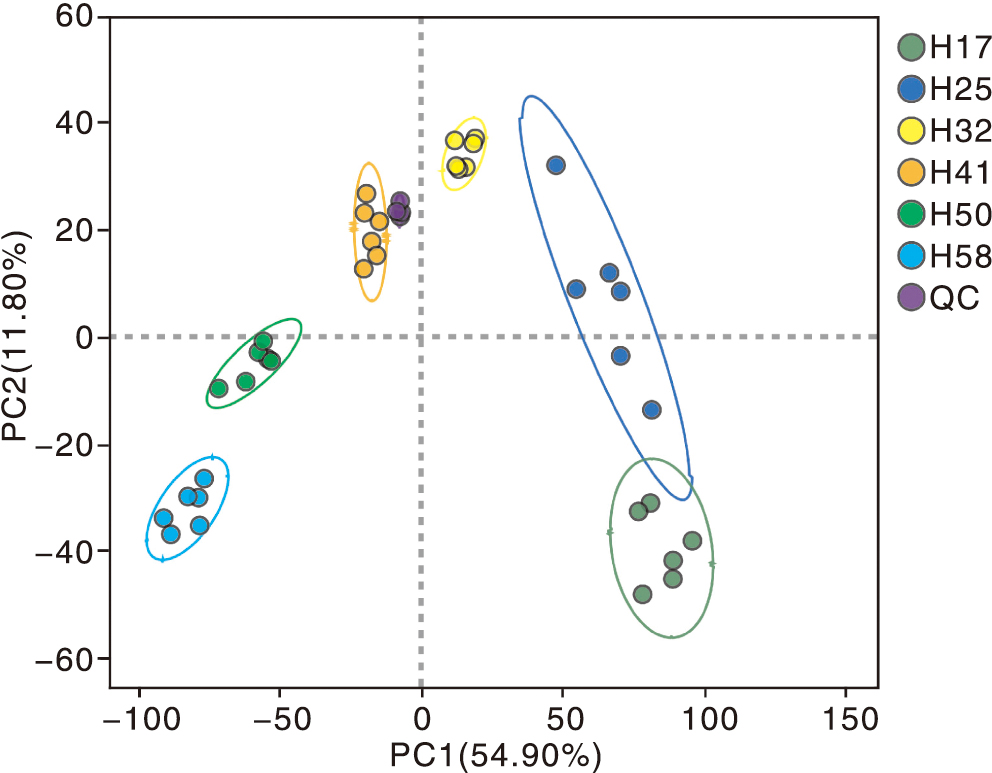
Fig.1 Principal component analysis (PCA) of embryonic samples at different developmental stages of Megalobrama terminalis H17, H25, H32, H41, H50 and H58 denote samples harvested at 17, 25, 32, 41, 50 and 58 hours post-fertilization. QC, Quality control sample. PC1, Principal component 1; PC2, Principal component 2.
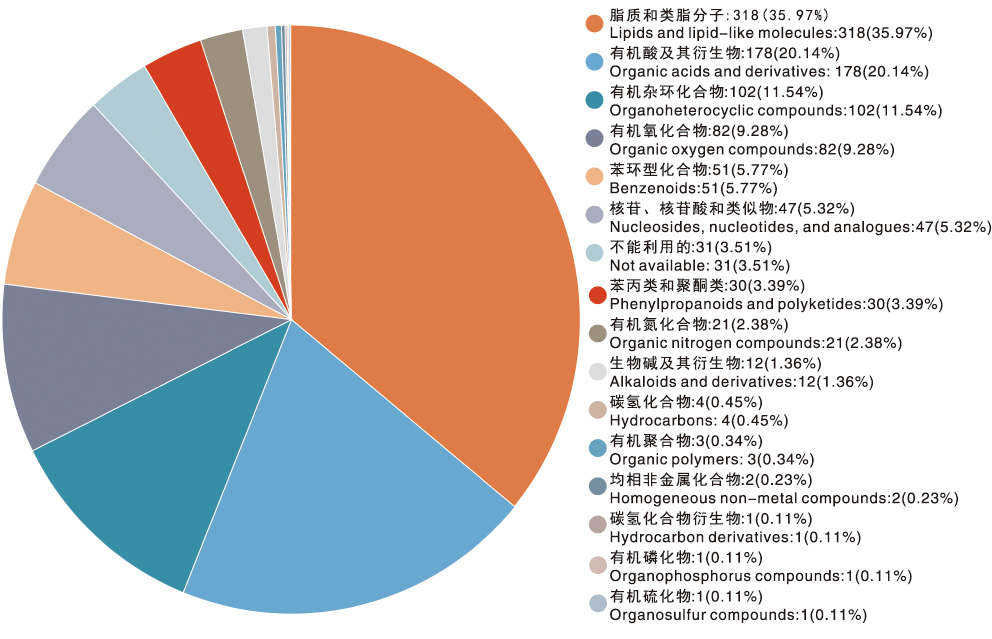
Fig.2 Pie chart of metabolite classification and statistics during embryonic development of Megalobrama terminalis Classification is performed based on the Human Metabolome Database (HMDB).
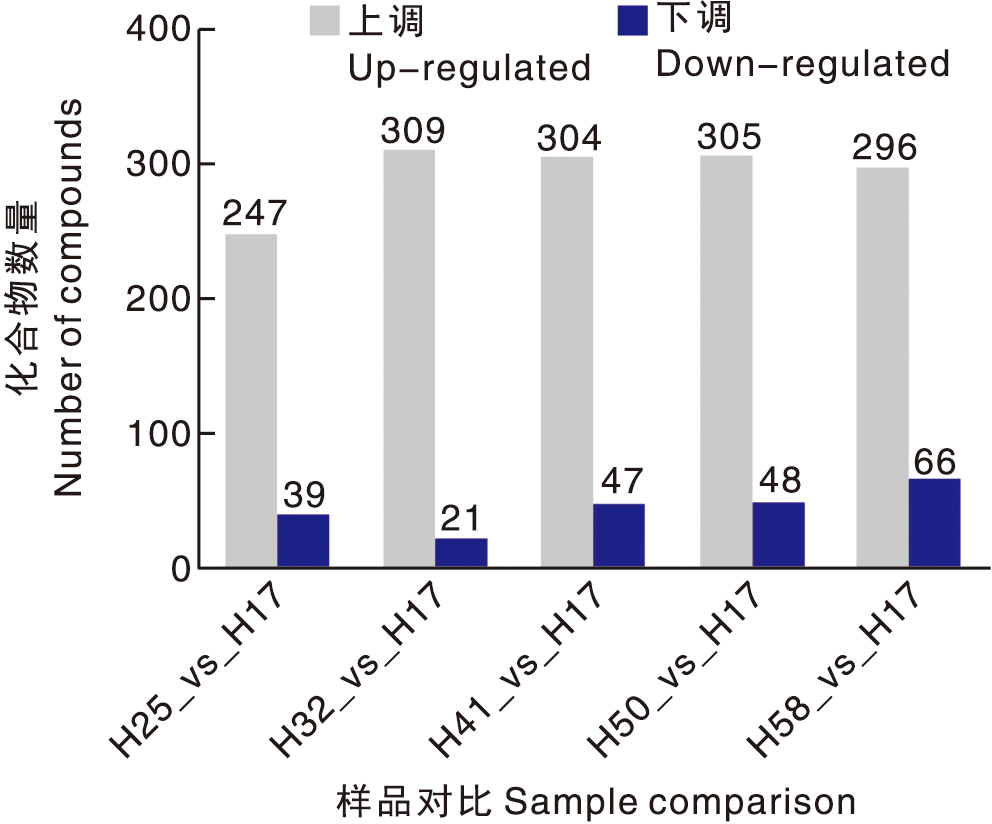
Fig.3 Number of differentially accumulated metabolites (DAMs) in comparisons between different samples H25_vs_H17 represents comparison between samples H25 and H17, and so forth for the others.
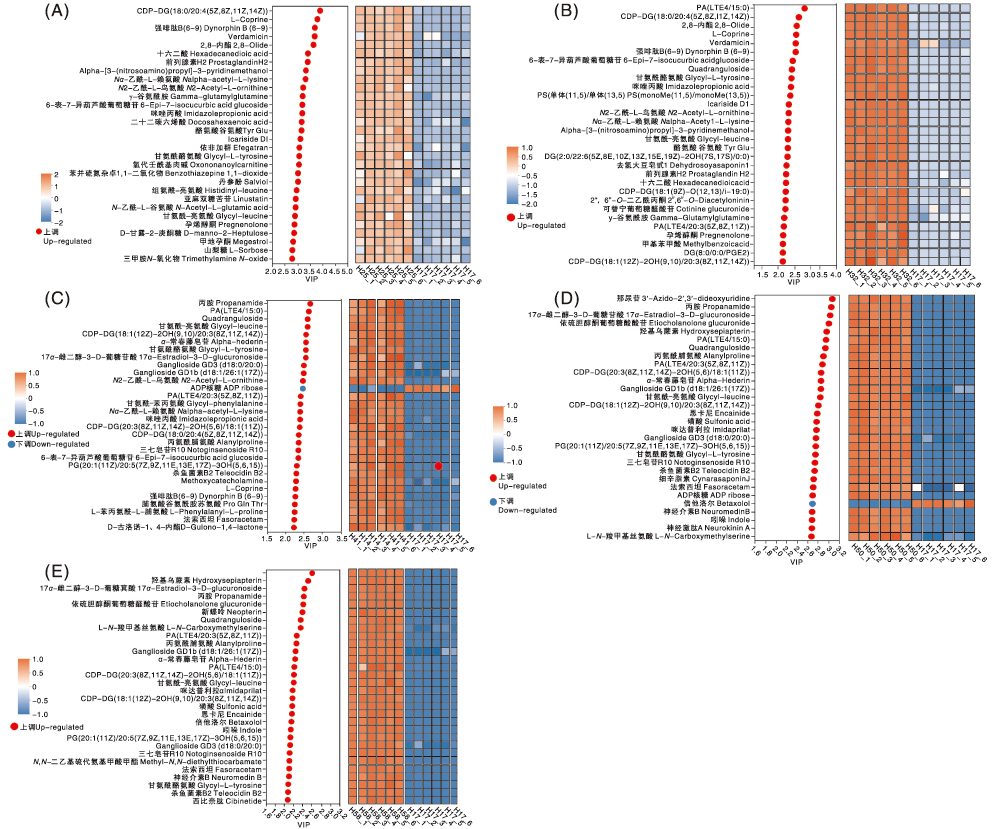
Fig.4 VIP diagram of differentially accumulated metabolites (DAMs) in comparisons between different samples A-E show the comparative results of H25, H32, H41, H50, H58 versus H17 in sequence.
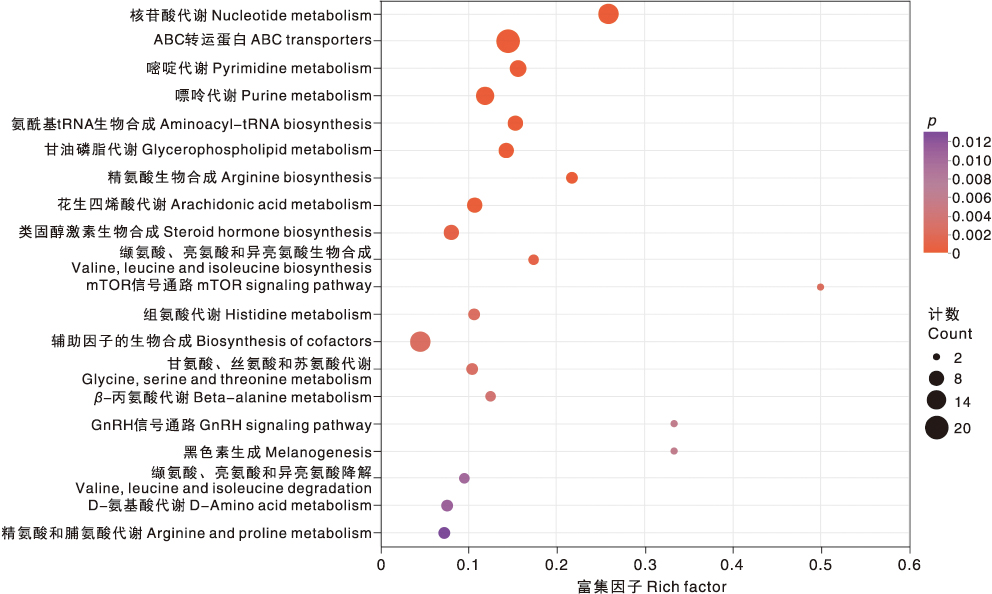
Fig.5 Bubble plot of KEGG metabolic pathway enrichment for differentially accumulated metabolites (DAMs)
| 代谢途径 Metabolic pathway | DAMs | 不同样品对比的FC(倍数变化)值 FC (fold change) values from comparisons between different samples | ||||
|---|---|---|---|---|---|---|
| H25_vs_H17 | H32_vs_H17 | H41_vs_H17 | H50_vs_H17 | H58_vs_H17 | ||
| 核苷酸代谢 | 腺苷Adenosine | 0.99 | 0.97** | 0.93** | 0.87** | 0.84** |
| Nucleotide metabolism | 肌苷Inosine | 1.02** | 1.02** | 1.02** | 1.03** | 1.04** |
| 6-去氢睾酮葡萄糖醛酸苷 | 1.01 | 1.03 | 0.87** | 0.88** | 0.88** | |
| 6-Dehydrotestosterone glucuronide | ||||||
| 胸腺嘧啶Thymine | 1.06** | 1.09** | 1.07** | 1.04** | 1.02 | |
| 腺嘌呤Adenine | 0.95** | 0.90** | 0.86** | 0.79** | 0.74** | |
| ABC转运蛋白 | 壳二糖Chitobiose | 1.00 | 1.05** | 0.98 | 0.94** | 0.74** |
| ABC transporters | 生物素Bioepiderm | 1.05* | 1.11** | 1.10** | 1.10** | 1.10** |
| L-亮氨酸L-Leucine | 1.05 | 1.09** | 1.10** | 1.09** | 1.09** | |
| L-异亮氨酸L-Isoleucine | 1.02** | 1.04** | 1.05** | 1.05** | 1.05** | |
| L-脯氨酸L-Proline | 1.27** | 0.99** | 0.83** | 0.66** | 0.63** | |
| 氨酰基tRNA生物合成 | L-色氨酸L-Tryptophan | 1.08* | 1.19** | 1.23** | 1.25** | 1.25** |
| Aminoacyl-tRNA | L-缬氨酸L-Valine | 1.03** | 1.05** | 1.05** | 1.06** | 1.06** |
| biosynthesis | 天冬氨酸Aspartic acid | 1.03** | 1.05** | 1.05** | 1.06** | 1.05** |
| L-酪氨酸L-Tyrosine | 1.02** | 1.05** | 1.07** | 1.08** | 1.09** | |
| L-组氨酸L-Histidine | 1.05** | 1.07** | 1.08** | 1.09** | 1.10** | |
Table 1 Dynamic changes in accumulation levels of major differentially accumulated metabolites (DAMs) during different embryonic developmental stages of Megalobrama terminalis
| 代谢途径 Metabolic pathway | DAMs | 不同样品对比的FC(倍数变化)值 FC (fold change) values from comparisons between different samples | ||||
|---|---|---|---|---|---|---|
| H25_vs_H17 | H32_vs_H17 | H41_vs_H17 | H50_vs_H17 | H58_vs_H17 | ||
| 核苷酸代谢 | 腺苷Adenosine | 0.99 | 0.97** | 0.93** | 0.87** | 0.84** |
| Nucleotide metabolism | 肌苷Inosine | 1.02** | 1.02** | 1.02** | 1.03** | 1.04** |
| 6-去氢睾酮葡萄糖醛酸苷 | 1.01 | 1.03 | 0.87** | 0.88** | 0.88** | |
| 6-Dehydrotestosterone glucuronide | ||||||
| 胸腺嘧啶Thymine | 1.06** | 1.09** | 1.07** | 1.04** | 1.02 | |
| 腺嘌呤Adenine | 0.95** | 0.90** | 0.86** | 0.79** | 0.74** | |
| ABC转运蛋白 | 壳二糖Chitobiose | 1.00 | 1.05** | 0.98 | 0.94** | 0.74** |
| ABC transporters | 生物素Bioepiderm | 1.05* | 1.11** | 1.10** | 1.10** | 1.10** |
| L-亮氨酸L-Leucine | 1.05 | 1.09** | 1.10** | 1.09** | 1.09** | |
| L-异亮氨酸L-Isoleucine | 1.02** | 1.04** | 1.05** | 1.05** | 1.05** | |
| L-脯氨酸L-Proline | 1.27** | 0.99** | 0.83** | 0.66** | 0.63** | |
| 氨酰基tRNA生物合成 | L-色氨酸L-Tryptophan | 1.08* | 1.19** | 1.23** | 1.25** | 1.25** |
| Aminoacyl-tRNA | L-缬氨酸L-Valine | 1.03** | 1.05** | 1.05** | 1.06** | 1.06** |
| biosynthesis | 天冬氨酸Aspartic acid | 1.03** | 1.05** | 1.05** | 1.06** | 1.05** |
| L-酪氨酸L-Tyrosine | 1.02** | 1.05** | 1.07** | 1.08** | 1.09** | |
| L-组氨酸L-Histidine | 1.05** | 1.07** | 1.08** | 1.09** | 1.10** | |
| [1] | 曹立文, 赵俊, 陈湘麟. 南水水库鲂鱼繁殖生物学研究[J]. 韶关学院学报(自然科学版), 2001, 22(9): 118-122. |
| CAO L W, ZHAO J, CHEN X L. Study on reproductive biology of the Megalobrama skolkovii in the Nanshui Reservoir[J]. Journal of Shaoguan University, 2001, 22(9): 118-122. | |
| [2] | 胡雪松, 石连玉. 我国三角鲂种质资源的研究进展[J]. 水产学杂志, 2020, 33(3): 84-89. |
| HU X S, SHI L Y. A review: research progress on germplasm resource of black bream(Megalobrama terminalis) in China[J]. Chinese Journal of Fisheries, 2020, 33(3): 84-89. | |
| [3] | 唐红, 关文志, 许晓军, 等. 三角鲂foxl2基因克隆和时空表达特征及EE2对其表达的影响[J]. 浙江农业学报, 2024, 36(8): 1789-1799. |
| TANG H, GUAN W Z, XU X J, et al. Cloning and spatio-temporal expression analysis of foxl2 gene and the influence of EE2 on its expression in Megalobrama terminalis[J]. Acta Agriculturae Zhejiangensis, 2024, 36(8): 1789-1799. | |
| [4] | 胡雪松, 马波, 王继隆, 等. 野生黑龙江三角鲂肌肉营养成分分析[J]. 水产学杂志, 2022, 35(6): 21-29. |
| HU X S, MA B, WANG J L, et al. Analysis of nutritional compositions in muscle of wild black bream(Megalobrama terminalis)in the Heilong River[J]. Chinese Journal of Fisheries, 2022, 35(6): 21-29. | |
| [5] | 郭爱环, 练青平, 罗伟, 等. 钱塘江三角鲂的生长特性及种群资源现状评价[J]. 渔业研究, 2022, 44(5): 459-466. |
| GUO A H, LIAN Q P, LUO W, et al. Growth characteristics and exploitation status of Megalobrama terminalis based on YPR models in the Qiantang River[J]. Journal of Fisheries Research, 2022, 44(5): 459-466. | |
| [6] | LIU Y Q, LI Y F, LI J, et al. Gut microbiome analyses of wild migratory freshwater fish (Megalobrama terminalis) through geographic isolation[J]. Frontiers in Microbiology, 2022, 13: 858454. |
| [7] | LIU Y Q, LI X H, LI J, et al. The gut microbiome composition and degradation enzymes activity of black Amur bream (Megalobrama terminalis) in response to breeding migratory behavior[J]. Ecology and Evolution, 2021, 11(10): 5150-5163. |
| [8] | HU X S, LUAN P X, CAO C H, et al. Characterization of the mitochondrial genome of Megalobrama terminalis in the Heilong River and a clearer phylogeny of the genus Megalobrama[J]. Scientific Reports, 2019, 9: 8509. |
| [9] | BAI X H, GUO X W, ZHANG X J, et al. Species identification and evolutionary inference of the genera Megalobrama and Parabramis(Cyprinidae: Cultrinae) in China[J]. Mitochondrial DNA, 2015, 26(3): 357-366. |
| [10] | 胡雪松, 李池陶, 葛延龙, 等. 黑龙江三角鲂的胚胎和早期仔鱼发育观察[J]. 中国水产科学, 2020, 27(10): 1176-1183. |
| HU X S, LI C T, GE Y L, et al. Observation on embryonic and early larval development of black bream(Megalobrama terminalis) in the Heilong River[J]. Journal of Fishery Sciences of China, 2020, 27(10): 1176-1183. | |
| [11] | JEPPESEN M J, POWERS R, Multiplatform untargeted metabolomics[J]. Magnetic Resonance in Chemistry, 2023, 61(12): 628-653. |
| [12] | WILSON I D, WANT E. Untargeted metabolic phenotyping by LC-MS[J]. Methods in Molecular Biology, 2025, 2891: 109-129. |
| [13] | 廖嘉仪, 熊梓彤, 李志力, 等. 急性低温和复温对青田田鱼鳃组织代谢的影响[J]. 南方农业学报, 2024, 55(9): 2813-2823. |
| LIAO J Y, XIONG Z T, LI Z L, et al. Effects of acute cold stress and rewarming on the metabolism of gill tissue of Qingtian paddy field carp(Cyprinus carpio var. qingtianensis)[J]. Journal of Southern Agriculture, 2024, 55(9): 2813-2823. | |
| [14] | 周蓓蓓, 吴明林, 蒋阳阳, 等. 鳜鱼宰后冷藏24 h内肌肉代谢物及相关风味的变化[J]. 食品科学, 2024, 45(16): 244-254. |
| ZHOU B B, WU M L, JIANG Y Y, et al. Changes of metabolites and related flavors in mandarin fish(Siniperca chuatsi) during 24 h of refrigeration[J]. Food Science, 2024, 45(16): 244-254. | |
| [15] | 张彦坤, 杨兵坤, 孙平. 微塑料对剑尾鱼(Xiphophorus helleri)肝脏的毒理学影响[C]// 中国动物学会兽类学分会, 中国生态学学会动物生态专业委员会, 中国野生动物保护协会科技委员会, 等. 第十六届全国野生动物生态与资源保护学术研讨会论文摘要集. 洛阳: 河南科技大学, 2023. |
| [16] | 石岩松, 王婧, 崔文杰, 等. 不同形态微塑料和汞对斑马鱼胚胎发育毒性联合作用研究[J]. 中国环境科学, 2023, 43(4): 1978-1984. |
| SHI Y S, WANG J, CUI W J, et al. The combined development toxicity of microplastics with different shapes and mercury on Zebrafish embryos[J]. China Environmental Science, 2023, 43(4): 1978-1984. | |
| [17] | 刘云浪. 典型工业区有机磷酸酯的环境暴露特征及对斑马鱼胚胎代谢影响研究[D]. 武汉: 中国地质大学, 2022. |
| LIU Y L. Environmental exposure to organophosphate esters in typical industrial areas and their effects on Zebrafish embryo metabolism[D]. Wuhan: China University of Geosciences, 2022. | |
| [18] | 曾露雪. 基于代谢组学和转录组学研究铽对斑马鱼胚胎发育的毒性作用[D]. 赣州: 江西理工大学, 2023. |
| ZENG L X. Toxic effects of terbium on zebrafish (Danio rerio) embryo development based on metabolomics and transcriptomics[D]. Ganzhou: Jiangxi University of Science and Technology, 2023. | |
| [19] | LIU K H, DU J Y, MA Y Y, et al. Embryonic exposure to glycopeptides induces acute toxicity and developmental neurotoxicity in zebrafish (Danio rerio)[J]. Journal of Hazardous Materials, 2024, 480: 136415. |
| [20] | ZHOU X Q, LIU W F, CONG B L, et al. Transcriptomics-based analysis of neurotoxic and reproductive effects in turbot (Scophthalmus maximus) after exposure to tris (2-chloroethyl) phosphate (TCEP)[J]. BMC Genomics, 2025, 26(1): 38. |
| [21] | 黄鑫. 代谢组学评估胚胎发育潜能的研究进展[J]. 世界临床药物, 2021, 42(2): 87-91. |
| HUANG X. Research progress of metabolomics in evaluating embryonic development potential[J]. World Clinical Drugs, 2021, 42(2): 87-91. | |
| [22] | 刘猛. 基于斑马鱼模型的三种芬太尼类物质毒性及代谢研究[D]. 北京: 中国人民公安大学, 2024. |
| LIU M. Study on the toxicity and metabolism of three fentanyl analogues using a zebrafish model[D]. Beijing: Chinese People’s Public Security University, 2024. | |
| [23] | DHILLON S S, TORELL F, DONTEN M, et al. Metabolic profiling of zebrafish embryo development from blastula period to early larval stages[J]. PLoS One, 2019, 14(5): e0213661. |
| [24] | WILSON M H, HENSLEY M R, SHEN M C, et al. Zebrafish are resilient to the loss of major diacylglycerol acyltransferase enzymes[J]. Journal of Biological Chemistry, 2024, 300(12): 107973. |
| [25] | 杨梅. 昆明裂腹鱼胚胎发育及早期抗氧化能力研究[D]. 贵阳: 贵州大学, 2020. |
| YANG M. Study on embryo development and early antioxidant ability of Schizothorax grahami[D]. Guiyang: Guizhou University, 2020. | |
| [26] | MADSEN H B, PEETERS M J, THOR STRATEN P, et al. Nucleotide metabolism in the regulation of tumor microenvironment and immune cell function[J]. Current Opinion in Biotechnology, 2023, 84: 103008. |
| [27] | ZHU Y B, TONG X M, XUE J Y, et al. Phospholipid biosynthesis modulates nucleotide metabolism and reductive capacity[J]. Nature Chemical Biology, 2025, 21(1): 35-46. |
| [28] | YIN J, HU J, DENG X D, et al. ABC transporter-mediated MXR mechanism in fish embryos and its potential role in the efflux of nanoparticles[J]. Ecotoxicology and Environmental Safety, 2023, 263: 115397. |
| [29] | SMITH J L, JONES M K. Long-term consequences of disrupting adenosine signaling during zebrafish embryonic development[J]. Developmental Biology, 2015, 402(1): 123-134. |
| [30] | MENEZES F P, MACHADO TORRESINI F, NERY L R, et al. Transient disruption of adenosine signaling during embryogenesis triggers a pro-epileptic phenotype in adult zebrafish[J]. Molecular Neurobiology, 2018, 55(8): 6547-6557. |
| [31] | CHEN Y L, ERIKSSON S, CHANG Z F. Regulation and functional contribution of thymidine kinase 1 in repair of DNA damage[J]. Journal of Biological Chemistry, 2010, 285(35): 27327-27335. |
| [32] | 曲俊泽, 陈天华, 姚明东, 等. ABC转运蛋白及其在合成生物学中的应用[J]. 生物工程学报, 2020, 36(9): 1754-1766. |
| QU J Z, CHEN T H, YAO M D, et al. ABC transporter and its application in synthetic biology[J]. Chinese Journal of Biotechnology, 2020, 36(9): 1754-1766. | |
| [33] | 陈嘉俊. 壳寡糖对巨噬细胞免疫应答的调节作用[D]. 广州: 仲恺农业工程学院, 2022. |
| CHEN J J. Immunomodulatory effects of chitooligosaccharide on the immune responses of macrophages[D]. Guangzhou: Zhongkai University of Agriculture and Engineering, 2022. | |
| [34] | 王琪, 齐仁立, 王敬, 等. 氨基酸缺乏诱导细胞自噬及miRNA调控机制[J]. 生物技术通报, 2016, 32(9): 38-43. |
| WANG Q, QI R L, WANG J, et al. Investigation of autophagy induced by amino acid deprivation and the regulatory mechanisms of miRNA in autophagy[J]. Biotechnology Bulletin, 2016, 32(9): 38-43. | |
| [35] | 段志鸿. 维生素B7和B12对厚壳贻贝生长发育及运输应激反应的影响[D]. 上海: 上海海洋大学, 2021. |
| DUAN Z H. Effects of vitamins B7 and B12 on the growth development and transport stress of Mytilus coruscus[D]. Shanghai: Shanghai Ocean University, 2021. | |
| [36] | YU Y C, HAN J M, KIM S. Aminoacyl-tRNA synthetases and amino acid signaling[J]. Biochimica et Biophysica Acta Molecular Cell Research, 2021, 1868(1): 118889. |
| [37] | PARK S G, SCHIMMEL P, KIM S. Aminoacyl tRNA synthetases and their connections to disease[J]. Proceedings of the National Academy of Sciences of the United States of America, 2008, 105(32): 11043-11049. |
| [38] | 魏志宏, 赵帅, 秦绪军, 等. 支链氨基酸代谢机制研究进展[J]. 心脏杂志, 2023, 35(2): 213-217. |
| WEI Z H, ZHAO S, QIN X J, et al. Research progress in metabolic mechanism of branched chain amino acids[J]. Chinese Heart Journal, 2023, 35(2): 213-217. | |
| [39] | 刘雅惠, 高露, 王亚菁, 等. c-Myc调控肿瘤代谢作用机制的研究进展[J]. 中国药科大学学报, 2021, 52(3): 379-386. |
| LIU Y H, GAO L, WANG Y J, et al. Advances in the research on mechanism of tumor metabolism regulated by c-Myc[J]. Journal of China Pharmaceutical University, 2021, 52(3): 379-386. | |
| [40] | 张在鹏, 林鹏, 郭松林, 等. 大黄鱼酪氨酸激酶基因克隆及原核表达分析[J]. 生物技术通报, 2016, 32(11): 180-187. |
| ZHANG Z P, LIN P, GUO S L, et al. Cloning and prokaryotic expression analysis of tyrosine kinase gene in large yellow croaker[J]. Biotechnology Bulletin, 2016, 32(11): 180-187. | |
| [41] | ZHENG Q F, WEEKLEY B H, VINSON D A, et al. Bidirectional histone monoaminylation dynamics regulate neural rhythmicity[J]. Nature, 2025, 637(8047): 974-982. |
| [1] | YE Shenyi, SHEN Chaoyi, NIU Ben, LIU Ruiling, FANG Xiangjun, CHEN Huizhi, CHEN Hangjun, WU Weijie, GAO Haiyan. Geographic origin variation of blueberry raw materials and their processing suitability [J]. Acta Agriculturae Zhejiangensis, 2026, 38(4): 755-768. |
| [2] | TANG Hong, GUAN Wenzhi, XU Xiaojun, NIU Baolong, LOU Bao, SHEN Xiaoming, GU Zhimin. Cloning and spatio-temporal expression analysis of foxl2 gene and the influence of EE2 on its expression in Megalobrama terminalis [J]. Acta Agriculturae Zhejiangensis, 2024, 36(8): 1789-1799. |
| [3] | LIU Kai, XIE Nan, GUO Wei, MA Hengjia. Full-length cDNA cloning and bioinformatic analysis of MHCⅠα gene from black amur bream (Megalobrama terminalis) [J]. Acta Agriculturae Zhejiangensis, 2022, 34(6): 1162-1174. |
| [4] | JIN Xiaojie, ZHANG Jingzhen, YANG Xinsun. Comparative metabolite profiling of rhizome and bulbil of wild Chinese yam (Dioscorea polystachya Turcz.) from Wuxue by widely targeted metabolomics [J]. Acta Agriculturae Zhejiangensis, 2022, 34(4): 727-735. |
| [5] | SHI Yujie, LI Xinglong, TANG Yuan, YU Haiping, WU Xiaoyong. Study on metabolic differences of white quinoa from two areas based on GC-MS [J]. , 2019, 31(6): 869-877. |
| [6] | TONG Xuehong 1, 2, TANG Xinhui 2, BAO Chengman 2, YANG Xiaolan 2, CHEN Qian 2, TAO Ping 2. Relationship between embryonic growth and nucleic acids of Scophthalmus maximus [J]. , 2016, 28(3): 428-. |
| [7] | ZHANG Huanchun;CHEN Xiaoyun;WANG Xiaofu;YANG Guiling;XU Junfeng;LI Yueying;*. Unintended effects and their detection in genetically modified crops [J]. , 2012, 24(1): 0-132. |
| Viewed | ||||||
|
Full text |
|
|||||
|
Abstract |
|
|||||

