Acta Agriculturae Zhejiangensis ›› 2026, Vol. 38 ›› Issue (7): 1453-1462.DOI: 10.3969/j.issn.1004-1524.20250522
• Biosystems Engineering • Previous Articles Next Articles
Research on the fixed-point pesticide application algorithm for vegetable greenhouse plant protection robot
MENG Chao( ), LI Junying*(), LU Zheng, ZHANG Jinhao, CHEN Jingye
College of Electromechanical Engineering ,Qingdao University of Science and Technology Qingdao 266061, China
-
Received:2025-08-06Online:2026-07-25Published:2026-08-20

CLC Number:
Cite this article
MENG Chao, LI Junying, LU Zheng, ZHANG Jinhao, CHEN Jingye. Research on the fixed-point pesticide application algorithm for vegetable greenhouse plant protection robot[J]. Acta Agriculturae Zhejiangensis, 2026, 38(7): 1453-1462.
share this article
Add to citation manager EndNote|Ris|BibTeX
URL: http://www.zjnyxb.cn/EN/10.3969/j.issn.1004-1524.20250522
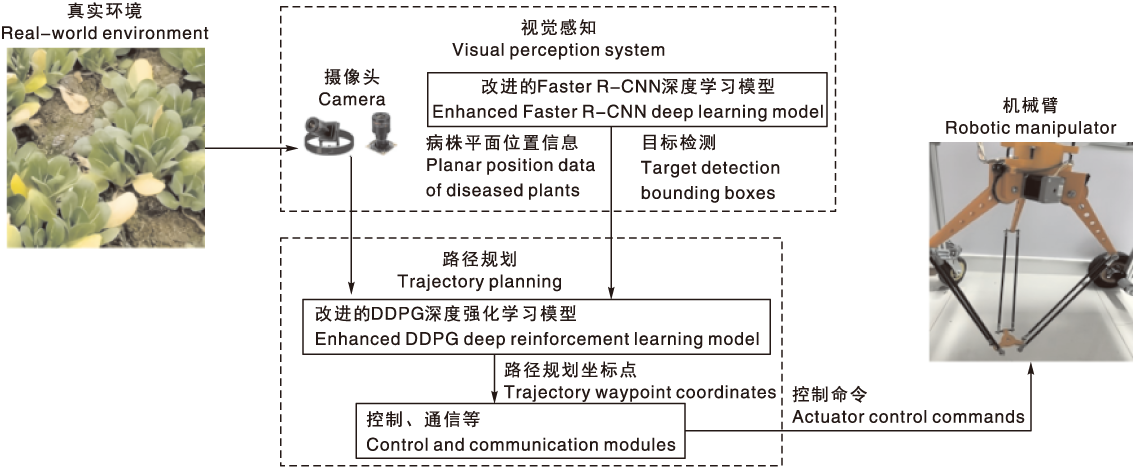
Fig.1 Implementation of deep reinforcement learning
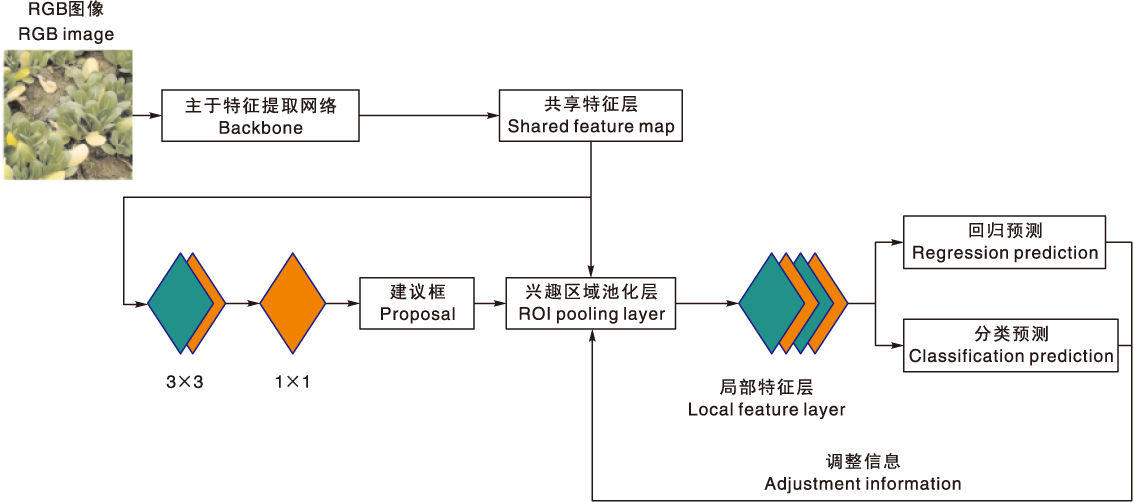
Fig.2 Faster R-CNN model structure
| 主干网络 Backbone network | 准确率/% Precision/% | 召回率/% Recall/% | F1值/% F1score/% | 检测时间/ms Inference time/ms |
|---|---|---|---|---|
| ResNet50 | 87.62 | 89.90 | 88.75 | 175.24 |
| ResNet10 | 88.33 | 90.85 | 89.57 | 174.89 |
| VGG-16 | 93.89 | 95.42 | 94.65 | 171.11 |
| VGG-19 | 89.25 | 89.34 | 89.29 | 173.67 |
Table 1 Test parameters
| 主干网络 Backbone network | 准确率/% Precision/% | 召回率/% Recall/% | F1值/% F1score/% | 检测时间/ms Inference time/ms |
|---|---|---|---|---|
| ResNet50 | 87.62 | 89.90 | 88.75 | 175.24 |
| ResNet10 | 88.33 | 90.85 | 89.57 | 174.89 |
| VGG-16 | 93.89 | 95.42 | 94.65 | 171.11 |
| VGG-19 | 89.25 | 89.34 | 89.29 | 173.67 |
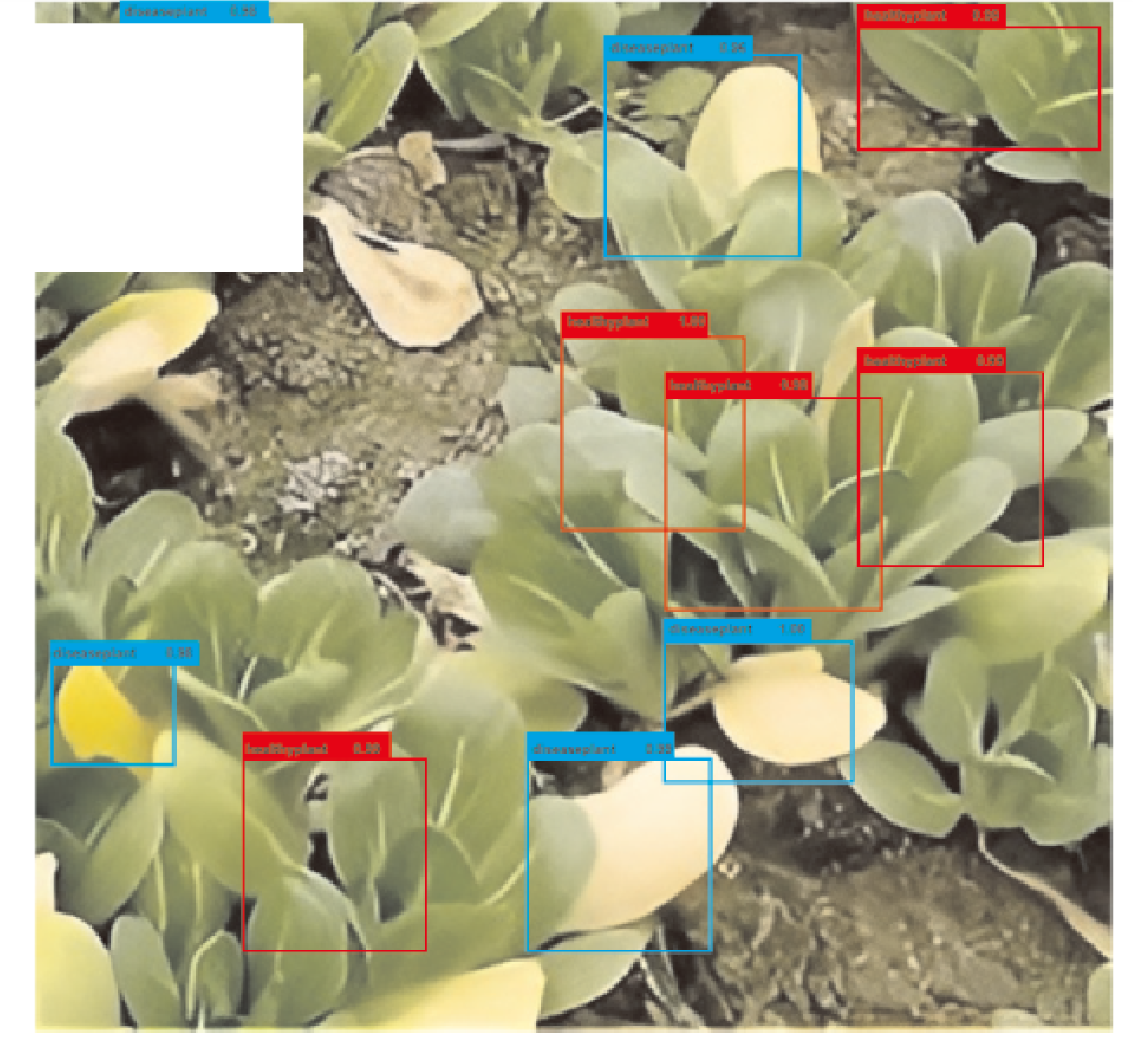
Fig.3 Detection examples of healthy and diseased plants by the VGG-16 model
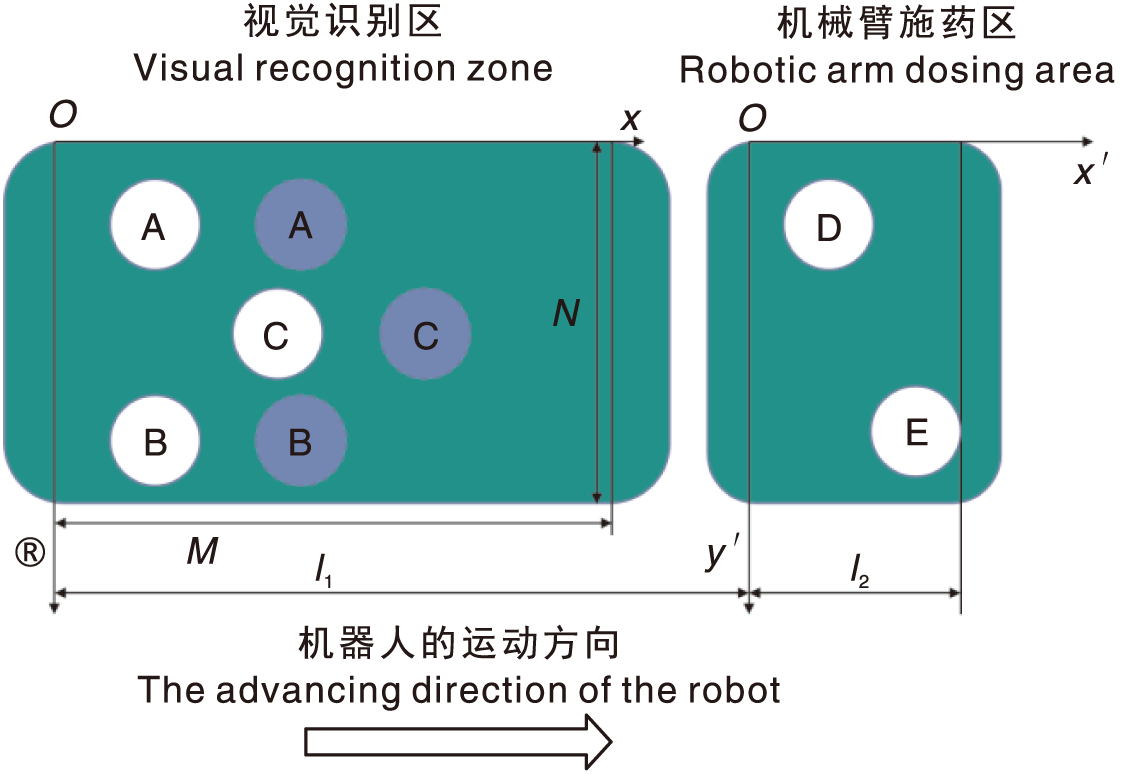
Fig.4 Schematic diagram of visual identification zone and dynamic fixed-point spraying zone
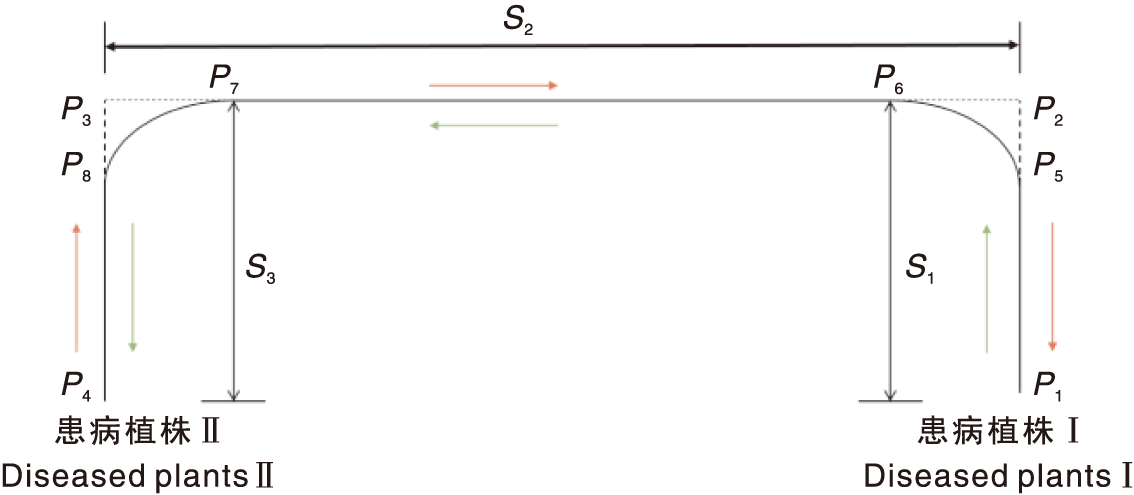
Fig.5 Door-shaped arc-transition spraying path of the robotic arm
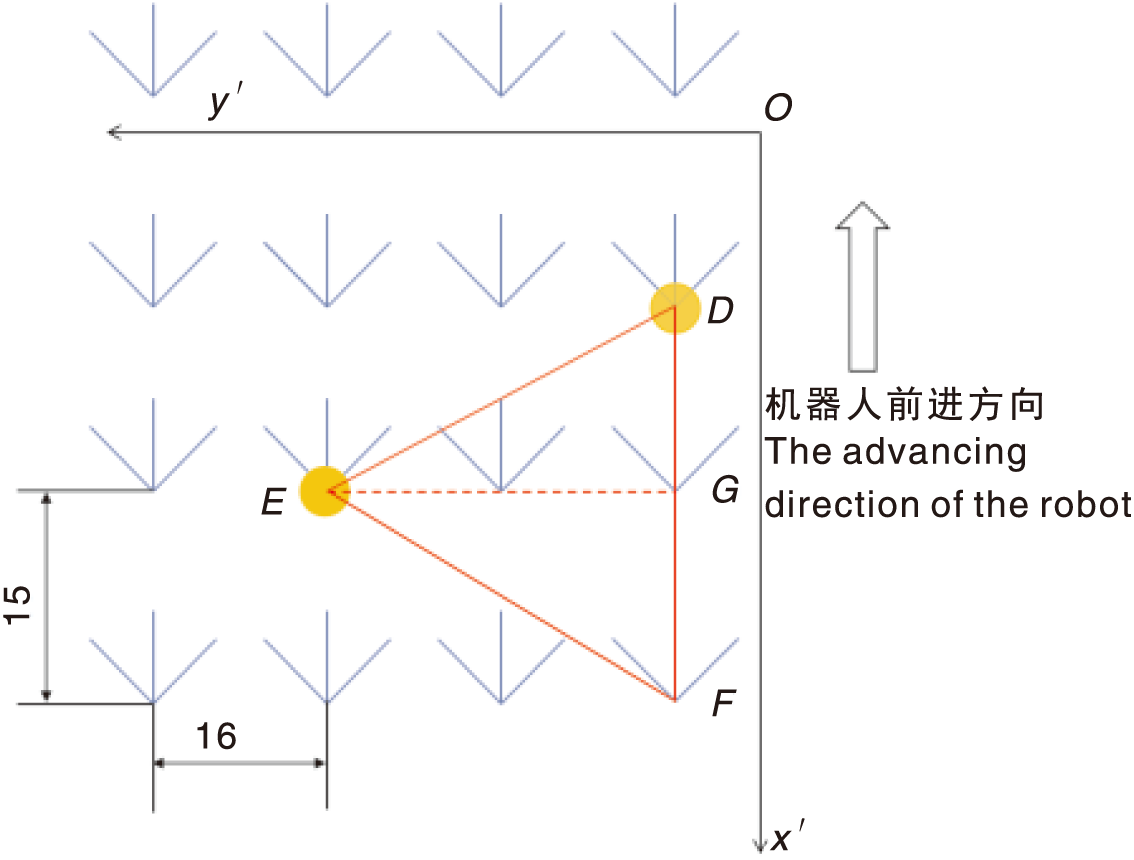
Fig.6 Schematic diagram of dynamic targeted spraying
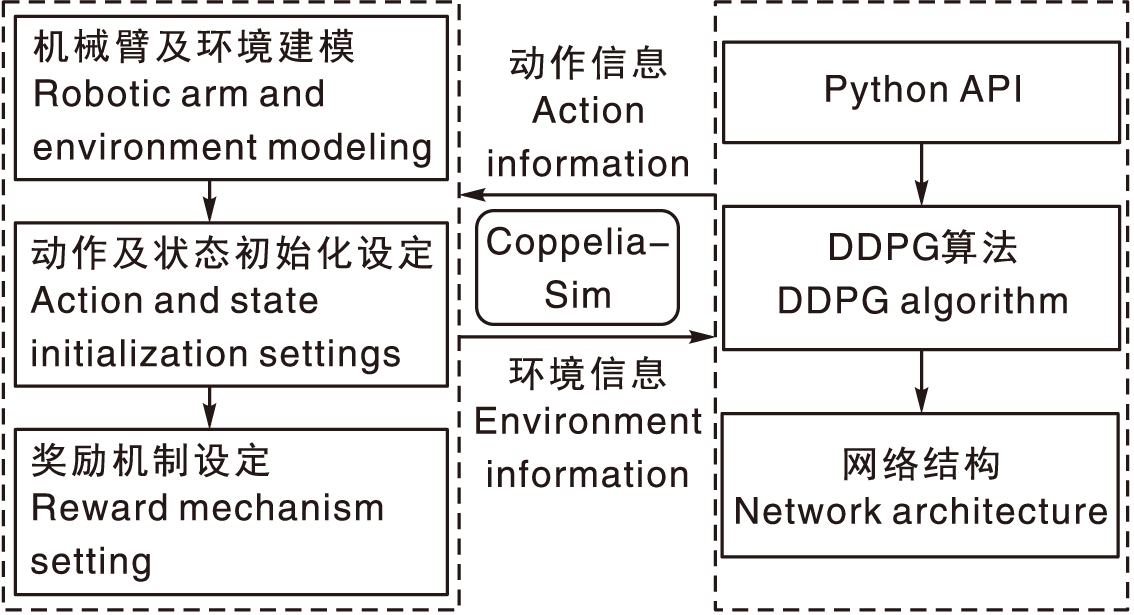
Fig.7 Simulation environment training framework
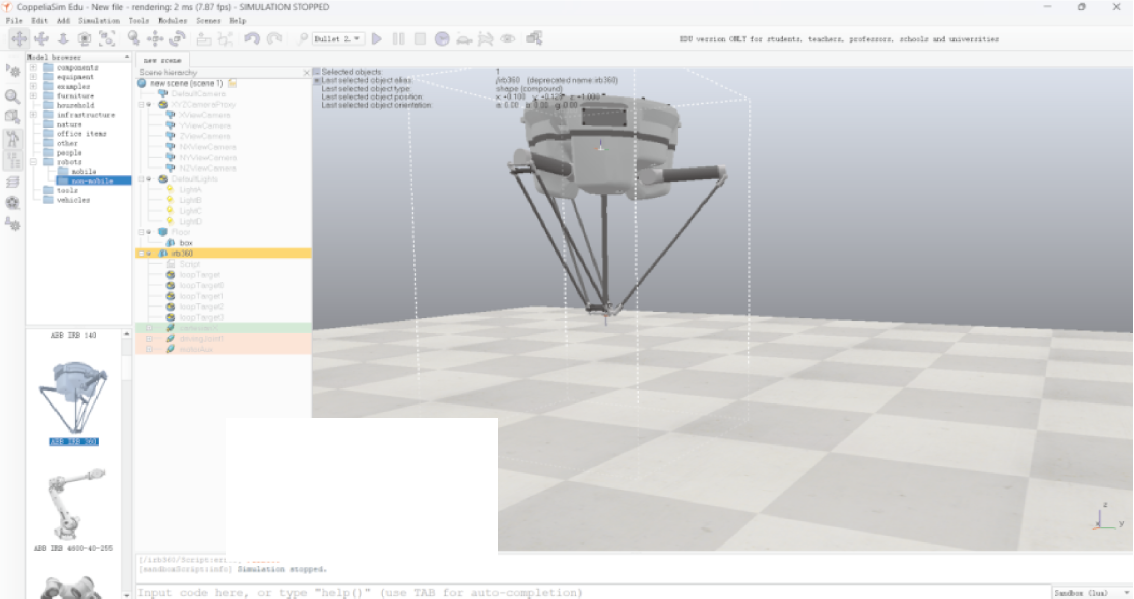
Fig.8 Modeling interface of parallel spraying robotic arm in CoppeliaSim
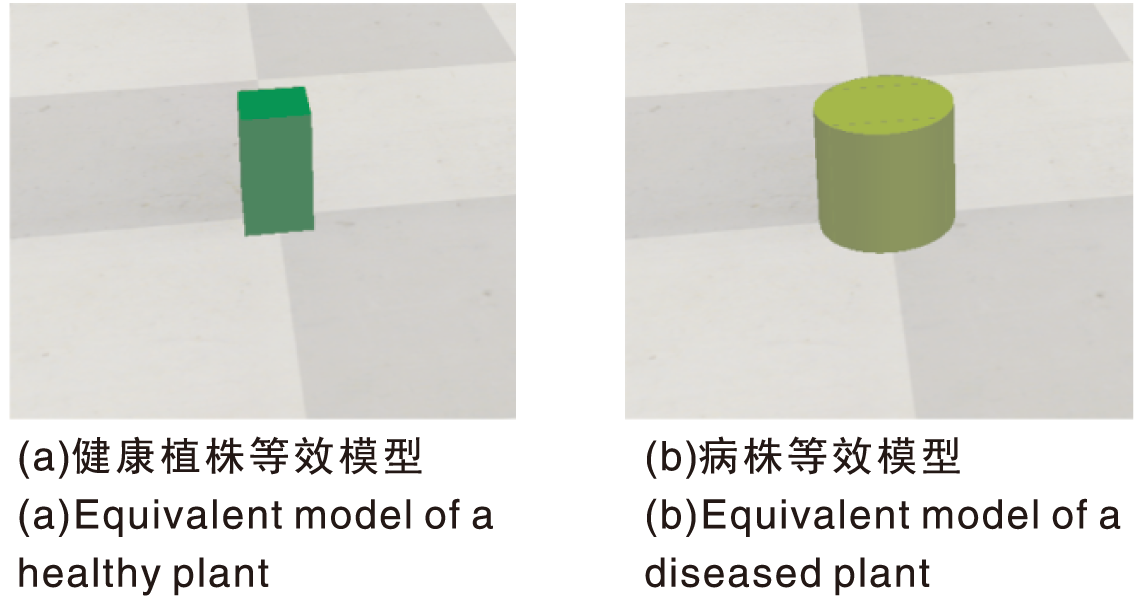
Fig.9 Equivalent cubic model of bok choy
| 参数 Parameter | 值 Value |
|---|---|
| 行动者网络学习率Actor network learning rate | 0.000 1 |
| 评论家网络学习率Critic network learning rate | 0.001 |
| 训练轮数Number of training episodes | 2 000 |
| 回放缓冲区空间Replay buffer capacity | 80 000 |
| 单次更新采样Sampling batch size | 200 |
| 单次更新子集长度Subsequence length for each update | 10 |
| 损失系数Discount factor | 0.99 |
| 衰减系数Soft update coefficient | 1×10⁻⁴ |
Table 2 Hyperparameter settings for DDPG training
| 参数 Parameter | 值 Value |
|---|---|
| 行动者网络学习率Actor network learning rate | 0.000 1 |
| 评论家网络学习率Critic network learning rate | 0.001 |
| 训练轮数Number of training episodes | 2 000 |
| 回放缓冲区空间Replay buffer capacity | 80 000 |
| 单次更新采样Sampling batch size | 200 |
| 单次更新子集长度Subsequence length for each update | 10 |
| 损失系数Discount factor | 0.99 |
| 衰减系数Soft update coefficient | 1×10⁻⁴ |
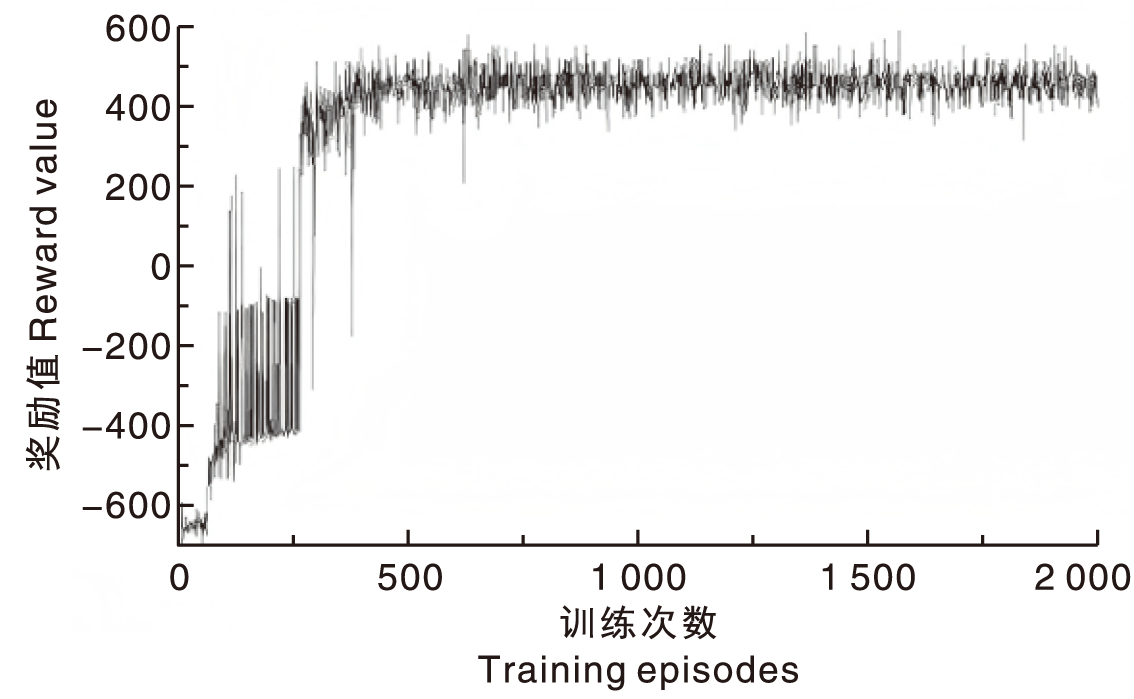
Fig.10 Learning curve of the DDPG model
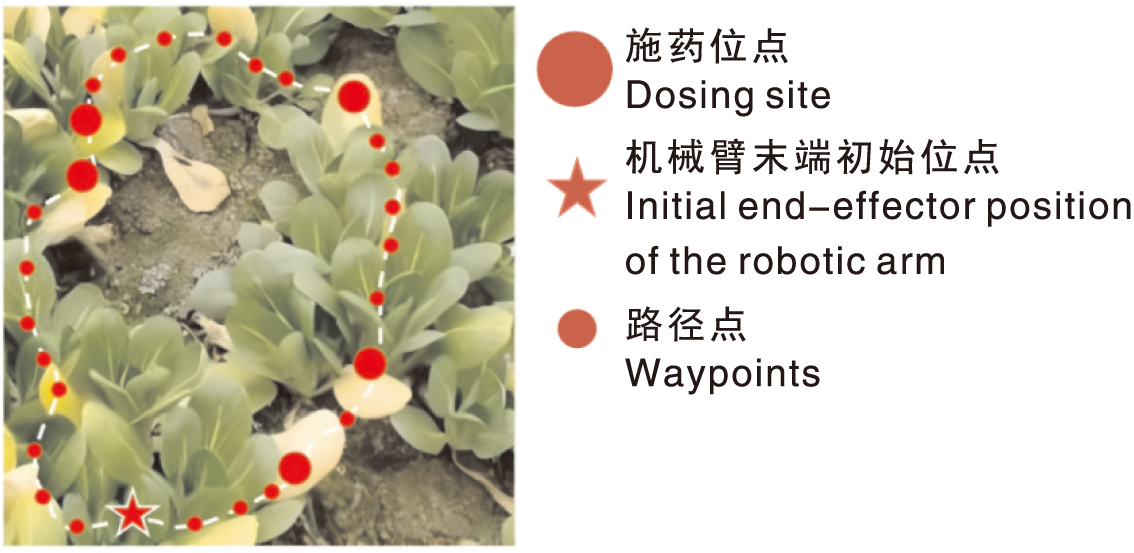
Fig.11 Schematic diagram of DDPG path coordinate projection onto the image plane
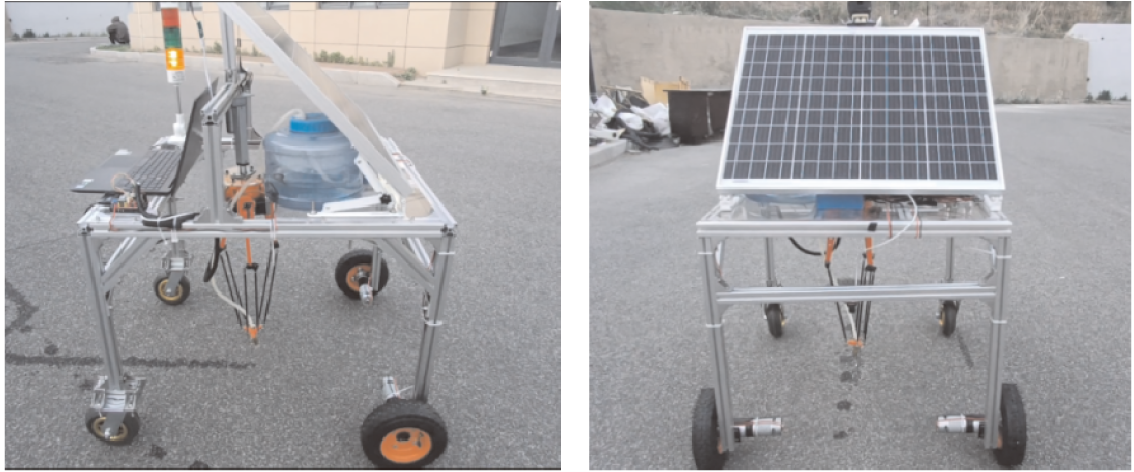
Fig.12 Experimental prototype
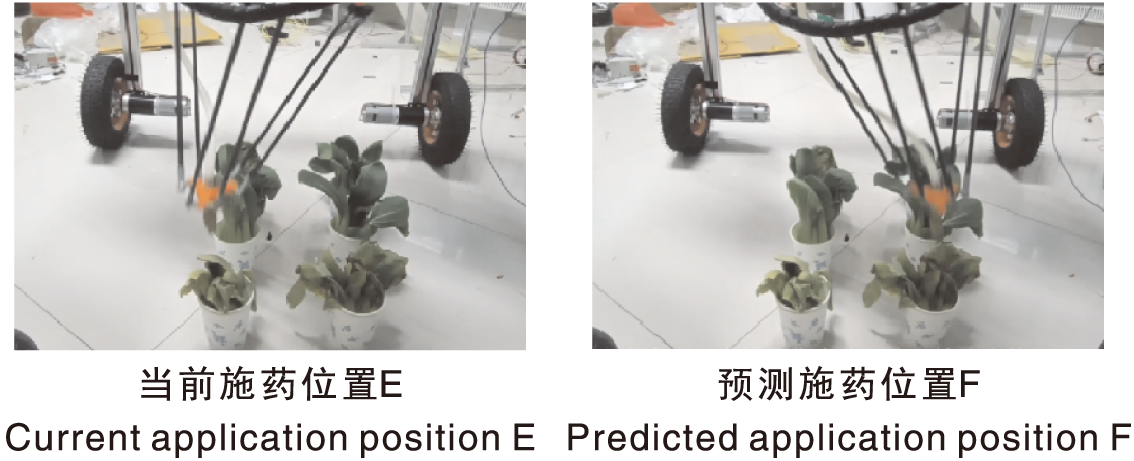
Fig.13 Computing time test of the disease plant detection algorithm
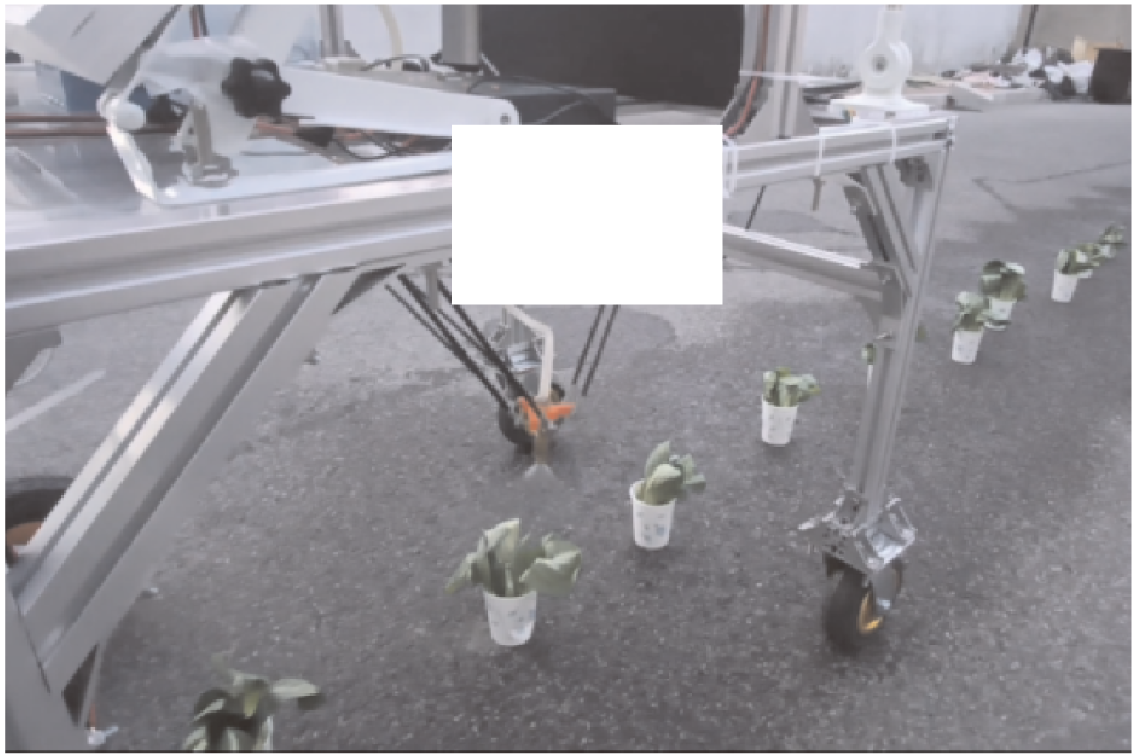
Fig.14 Dynamic spot application experiment
| 机器人行进 速度/(mm·s-1) Robot traveling speed/(mm·s-1) | 患病植株 总个数 Total number of diseased plants | 漏处理个数 Number of missed plants | 误处理个数 Number of falsely treated plants |
|---|---|---|---|
| 100 | 24 | 0 | 0 |
| 150 | 27 | 1 | 1 |
| 200 | 21 | 1 | 1 |
Table 3 Experimental results of the prototype under different traveling speeds
| 机器人行进 速度/(mm·s-1) Robot traveling speed/(mm·s-1) | 患病植株 总个数 Total number of diseased plants | 漏处理个数 Number of missed plants | 误处理个数 Number of falsely treated plants |
|---|---|---|---|
| 100 | 24 | 0 | 0 |
| 150 | 27 | 1 | 1 |
| 200 | 21 | 1 | 1 |
| [1] | 唐烁. 农业面源污染多维度影响及其治理机制优化研究[D]. 哈尔滨: 东北林业大学, 2023. |
| Tang S. Research on the multidimensional impact of agricultural non-point source pollution and optimization of its governance mechanism[D]. Harbin: Northeast Forestry University, 2023. | |
| [2] | 张军勇, 袁立贺. 农药利用率低的原因及改进措施[J]. 农业工程技术, 2018, 38(8): 39. |
| Zhang J Y, Yuan L H. Causes and improvement measures of low utilization rate of pesticides[J]. Agricultural Engineering Technology, 2018, 38(8): 39. | |
| [3] | Yang X, Shu L, Chen J N, et al. A survey on smart agriculture: development modes, technologies, and security and privacy challenges[J]. IEEE/CAA Journal of Automatica Sinica, 2021, 8(2): 273-302. |
| [4] | 邓科. 农业机器人技术在农业工程中的应用及发展趋势[J]. 农机使用与维修, 2023(9): 94-97. |
| Deng K. Research on the application of agricultural robotics in agricultural engineering[J]. Agricultural Machinery Using & Maintenance, 2023(9): 94-97. | |
| [5] | 周维, 牛永真, 王亚炜, 等. 基于改进的YOLOv4-GhostNet水稻病虫害识别方法[J]. 江苏农业学报, 2022, 38(3): 685-695. |
| Zhou W, Niu Y Z, Wang Y W, et al. Rice pests and diseases identification method based on improved YOLOv4-GhostNet[J]. Jiangsu Journal of Agricultural Sciences, 2022, 38(3): 685-695. | |
| [6] | 刘鹏, 张天翼, 冉鑫, 等. 基于PBM-YOLOv8的水稻病虫害检测[J]. 农业工程学报, 2024, 40(20): 147-156. |
| Liu P, Zhang T Y, Ran X, et al. Detecting rice disease using PBM-YOLOv8[J]. Transactions of the Chinese Society of Agricultural Engineering, 2024, 40(20): 147-156. | |
| [7] | 刘诗怡, 胡滨, 赵春. 基于改进YOLOv7的黄瓜叶片病虫害检测与识别[J]. 农业工程学报, 2023, 39(15): 163-171. |
| Liu S Y, Hu B, Zhao C. Detection and identification of cucumber leaf diseases based improved YOLOv7[J]. Transactions of the Chinese Society of Agricultural Engineering, 2023, 39(15): 163-171. | |
| [8] | 宋中山, 汪进, 郑禄, 等. 基于二值化的Faster R-CNN柑橘病虫害识别研究[J]. 中国农机化学报, 2022, 43(6): 150-158. |
| Song Z S, Wang J, Zheng L, et al. Research on citrus pest identification based on Binary Faster R-CNN[J]. Journal of Chinese Agricultural Mechanization, 2022, 43(6): 150-158. | |
| [9] | 彭红星, 徐慧明, 刘华鼐. 融合双分支特征和注意力机制的葡萄病虫害识别模型[J]. 农业工程学报, 2022, 38(10): 156-165. |
| Peng H X, Xu H M, Liu H N. Model for identifying grape pests and diseases based on two-branch feature fusion and attention mechanism[J]. Transactions of the Chinese Society of Agricultural Engineering, 2022, 38(10): 156-165. | |
| [10] | 高杨, 肖迪. 基于多层特征融合的小目标检测算法[J]. 计算机工程与设计, 2020, 41(7): 1905-1909. |
| Gao Y, Xiao D. Small object detection algorithm based on multi-feature fusion[J]. Computer Engineering and Design, 2020, 41(7): 1905-1909. | |
| [11] | 乔赫廷, 张然, 王黠. 基于共面靶标的线结构光机器人视觉标定方法[J]. 机械工程师, 2024(3): 21-25. |
| Qiao H T, Zhang R, Wang X. Visual calibration method of linear structured light robot based on coplanar target[J]. Mechanical Engineer, 2024(3): 21-25. | |
| [12] | 王艳. 高效除草机器人控制系统设计[D]. 南京: 南京林业大学, 2013. |
| Wang Y. Researches on the control system for a high-efficient weeding robot[D]. Nanjing: Nanjing Forestry University, 2013. | |
| [13] | 于金刚, 林浒, 张晓辉, 等. 一种新型的Jerk连续加减速控制方法研究[J]. 组合机床与自动化加工技术, 2009(8): 61-64. |
| Yu J G, Lin H, Zhang X H, et al. Research on a novel acceleration and deceleration control method of continuous Jerk[J]. Modular Machine Tool & Automatic Manufacturing Technique, 2009(8): 61-64. | |
| [14] | 王云飞, 郎需林, 张承瑞, 等. 高速并联机械手最优加减速控制算法研究[J]. 机械设计与制造, 2014(11): 85-88. |
| Wang Y F, Lang X L, Zhang C R, et al. The optimal acceleration-deceleration control research of high-speed parallel manipulator[J]. Machinery Design & Manufacture, 2014(11): 85-88. | |
| [15] | 童明浩. 四自由度Delta并联机械手结构与控制系统研究[D]. 武汉: 湖北工业大学, 2016. |
| Tong M H. Research on structure and control system of 4-DOF Delta parallel manipulator[D]. Wuhan: Hubei University of Technology, 2016. |
| [1] | OUYANG Yu, LIU Shuo, LI Mengmin, ZHANG Peng. Lightweight and improved apple orchard fruit recognition model CS_YOLOv7 [J]. Acta Agriculturae Zhejiangensis, 2026, 38(2): 383-396. |
| [2] | LYU Yinchun, DUAN Enze, ZHU Yixing, ZHENG Xia, BAI Zongchun. Real-time detection of overturned meat ducks based on YOLOv8-Swin Transformer model [J]. Acta Agriculturae Zhejiangensis, 2025, 37(7): 1556-1566. |
| [3] | LI Mengmin, LIU Shuo, OUYANG Yu, ZHANG Peng. An efficient and lightweight citrus leaf disease detection model based on YOLOv8n [J]. Acta Agriculturae Zhejiangensis, 2025, 37(10): 2198-2208. |
| [4] | GUO Xiuming, WANG Dawei, LIU Shengping, ZHU Yeping, LIU Xiaohui, LIN Kejian, WANG Jiayu, LI Fei. Study on key problems for rat hole recognition and count near ground based on deep learning and its application [J]. Acta Agriculturae Zhejiangensis, 2024, 36(9): 2146-2154. |
| [5] | NING Wenkai, LI Jing, SHEN Xiaodong, WU Xin, LI Zhenfeng. Prediction of multi-source fusion of β-carotene during pumpkin drying [J]. Acta Agriculturae Zhejiangensis, 2023, 35(8): 1876-1887. |
| [6] | YAN Ning, ZHANG Han, DONG Hongtu, KANG Kai, LUO Bin. Wheat variety recognition method based on same position segmentation of transmitted light and reflected light images [J]. Acta Agriculturae Zhejiangensis, 2022, 34(3): 590-598. |
| [7] | BAO Xiaomin, SHENG Jiawen. Research on automatic identification and counting of insect pests on sticky board [J]. , 2019, 31(9): 1516-1522. |
| [8] | WU Yuanyuan, SHANG Xin, ZHANG Chengbin, XIE Xinyi. Acquisition of operation parameters of intelligent leaf vegetable harvester under natural lighting [J]. , 2017, 29(11): 1930-1937. |
| [9] | TIAN Hai-tao, ZHAO Jun, PU Fu-peng. A method for recognizing potato’s bud eye [J]. , 2016, 28(11): 1947-1953. |
| [10] | REN Lei1, ZHANG Jun2,*, LU Sheng\|min2. Research on machine vision algorithm for automatic sorting of membrane\|removed mandarin segments [J]. , 2015, 27(12): 2212-. |
| [11] | LIU Jian-jun;YAO Li-jian;PENG Zhang-lin. Detection technique for cathay hickory grade based on machine vision [J]. , 2010, 22(6): 854-858. |
| [12] | LIANG Kun;LUO Han-ya;SHEN Ming-xia;*;HE Rui-yin;ZHANG Lu. Review and prospect for the detection technique of paddy seeding quality [J]. , 2010, 22(2): 0-257. |
| Viewed | ||||||
|
Full text |
|
|||||
|
Abstract |
|
|||||

