Acta Agriculturae Zhejiangensis ›› 2025, Vol. 37 ›› Issue (11): 2265-2274.DOI: 10.3969/j.issn.1004-1524.20250018
• Animal Science • Previous Articles Next Articles
Effects of Cryptocaryon irritans infection on the intestinal histology, immune level and microbiota composition of Larimichthys polyactis
PAN Xinyu1( ), HUANG Huiling2, HAN Mingming3,*(), SHEN Ningyuan2, ZHAO Xudong2, LOU Bao3
- 1. College of Biological and Environmental Sciences, Zhejiang Wanli University, Ningbo 315100, Zhejiang, China
2. Fisheries College, Zhejiang Ocean University, Zhoushan 316022, Zhejiang, China
3. Institute of Hydrobiology, Zhejiang Academy of Agricultural Sciences, Hangzhou 310021, China
-
Received:2025-01-09Online:2025-11-25Published:2025-12-08

CLC Number:
Cite this article
PAN Xinyu, HUANG Huiling, HAN Mingming, SHEN Ningyuan, ZHAO Xudong, LOU Bao. Effects of Cryptocaryon irritans infection on the intestinal histology, immune level and microbiota composition of Larimichthys polyactis[J]. Acta Agriculturae Zhejiangensis, 2025, 37(11): 2265-2274.
share this article
Add to citation manager EndNote|Ris|BibTeX
URL: http://www.zjnyxb.cn/EN/10.3969/j.issn.1004-1524.20250018
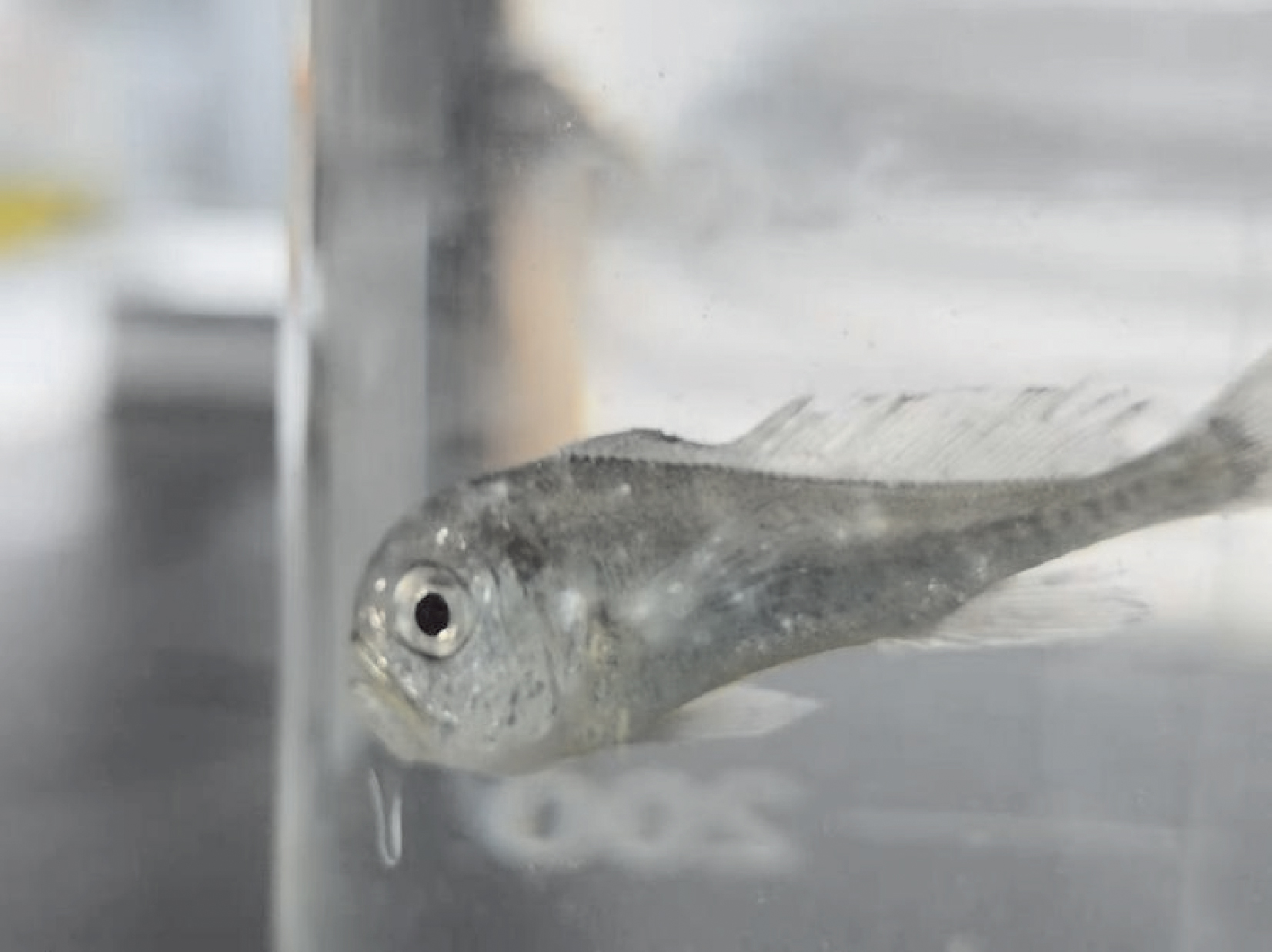
Fig.1 Small yellow croaker suffering from white spot disease
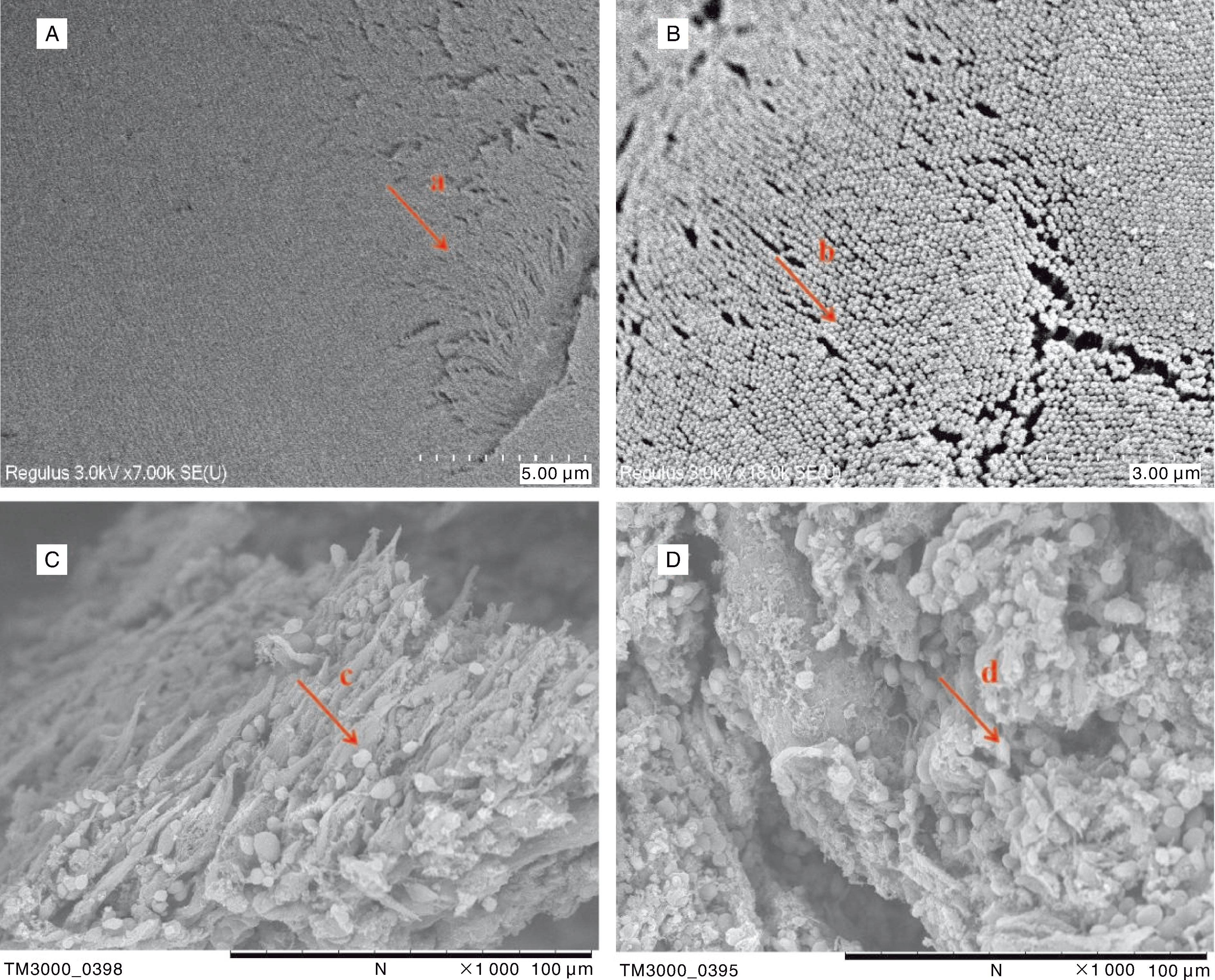
Fig.2 Scanning electron microscopy (SEM) observations of small yellow croaker intestine A and B are scanning electron microscopy images of small yellow croaker intestine from healthy group; C and D are scanning electron microscopy images of small yellow croaker intestine from infection group. Among them, a and b are the surface tissue structure of the normal intestinal villi in small yellow croaker; c and d are the attached Cryptocaryon irritans trophozoites on the intestine inner surface in small yellow croaker infected with Cryptocaryon irritans.
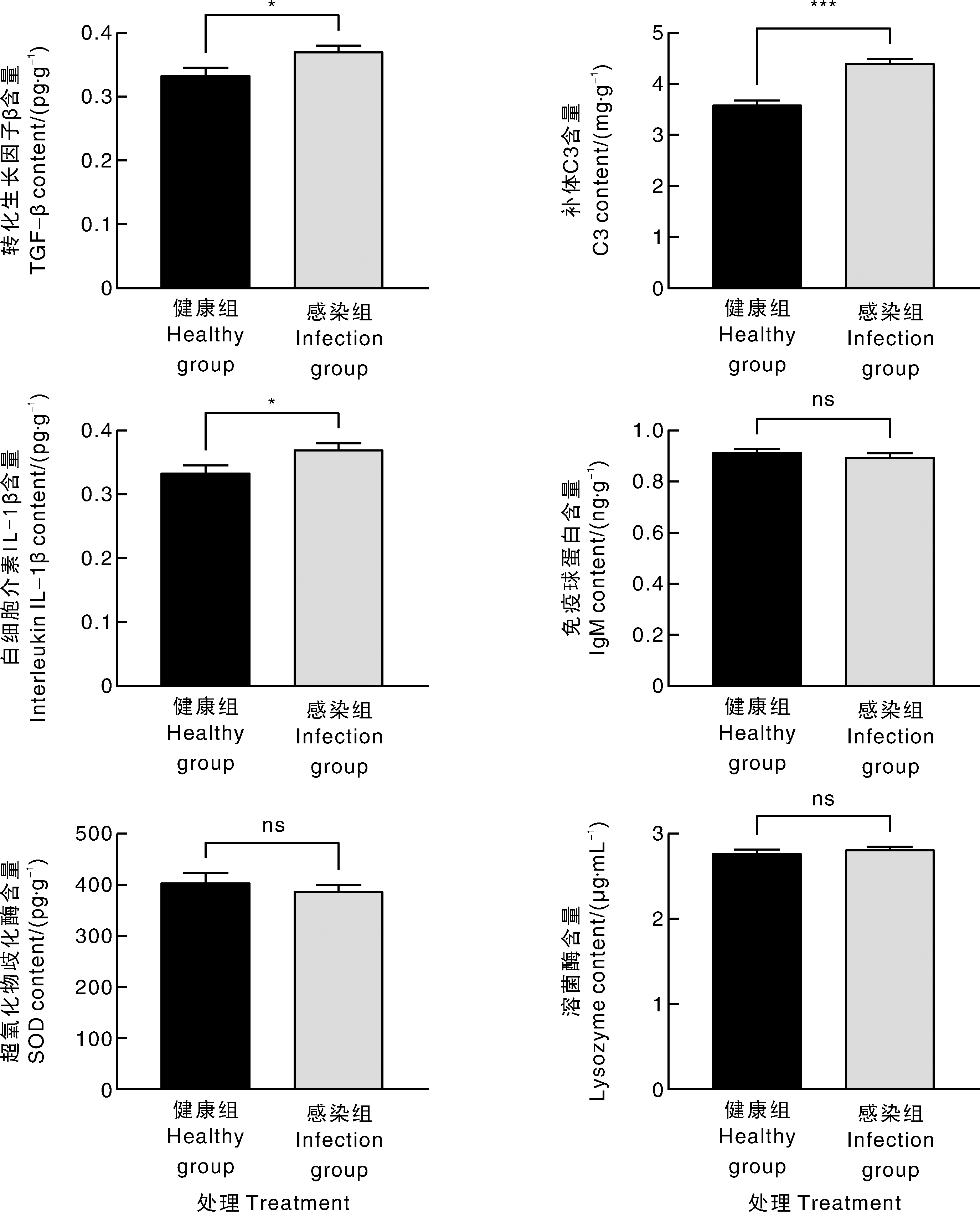
Fig.3 Contents of immune factors and antioxidative enzymes in the intestines of small yellow croaker from the healthy group and the infection group * and *** represent p<0.05 and 0.001, respectively, and ns represents no significant difference.
| 组别 Group | Chao1指数 Chao1 index | Shannon指数 Shannon index |
|---|---|---|
| 健康组Healthy group | 3 214.10±487.58 a | 7.83±1.04 a |
| 感染组Infection group | 2 731.57±465.00 b | 7.63±1.26 b |
Table 1 Chao1 and Shannon indices between the healthy group and infection group of small yellow croaker
| 组别 Group | Chao1指数 Chao1 index | Shannon指数 Shannon index |
|---|---|---|
| 健康组Healthy group | 3 214.10±487.58 a | 7.83±1.04 a |
| 感染组Infection group | 2 731.57±465.00 b | 7.63±1.26 b |
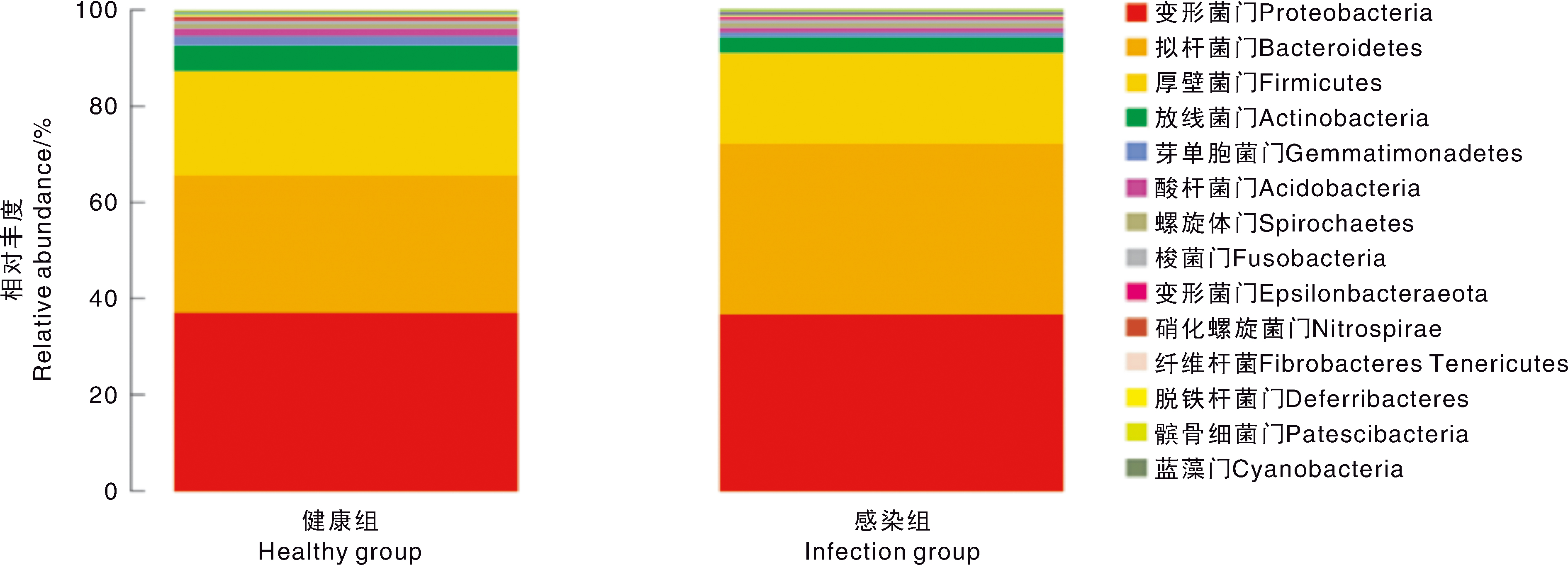
Fig.4 Composition and abundance of intestinal microbiota at the phylum level in healthy and infected small yellow croaker
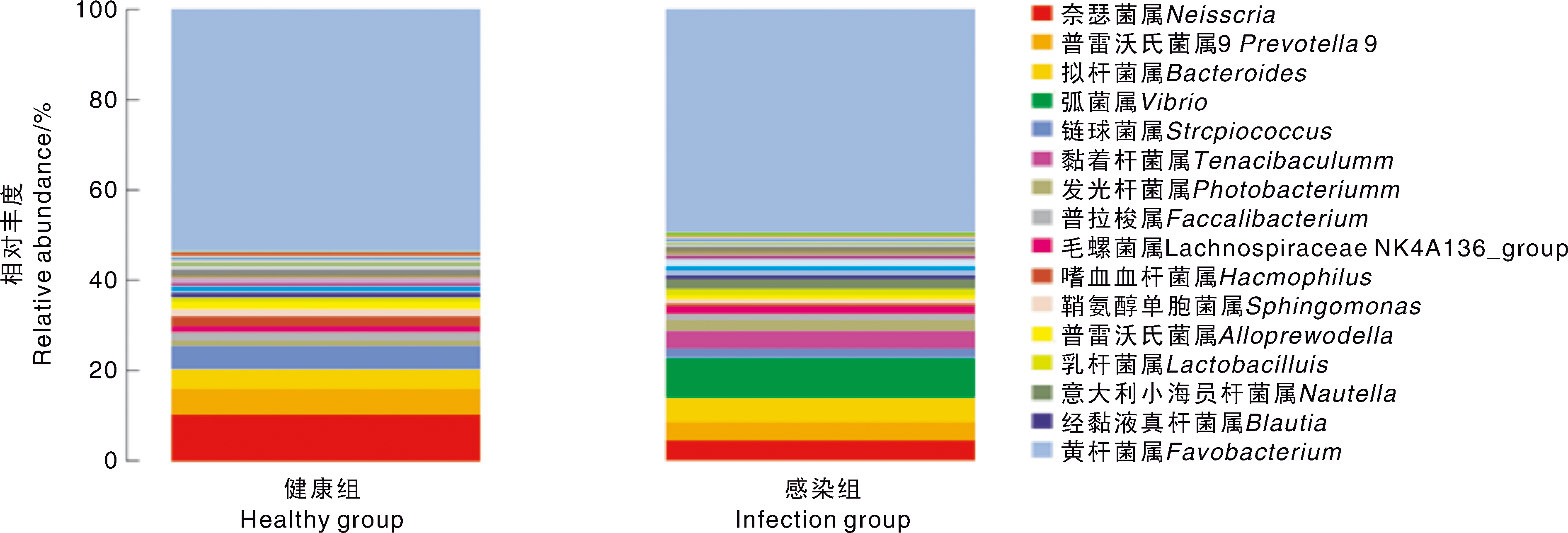
Fig.5 Composition and abundance of intestinal microbiota at the genus level in small yellow croaker from the healthy group and the infection group
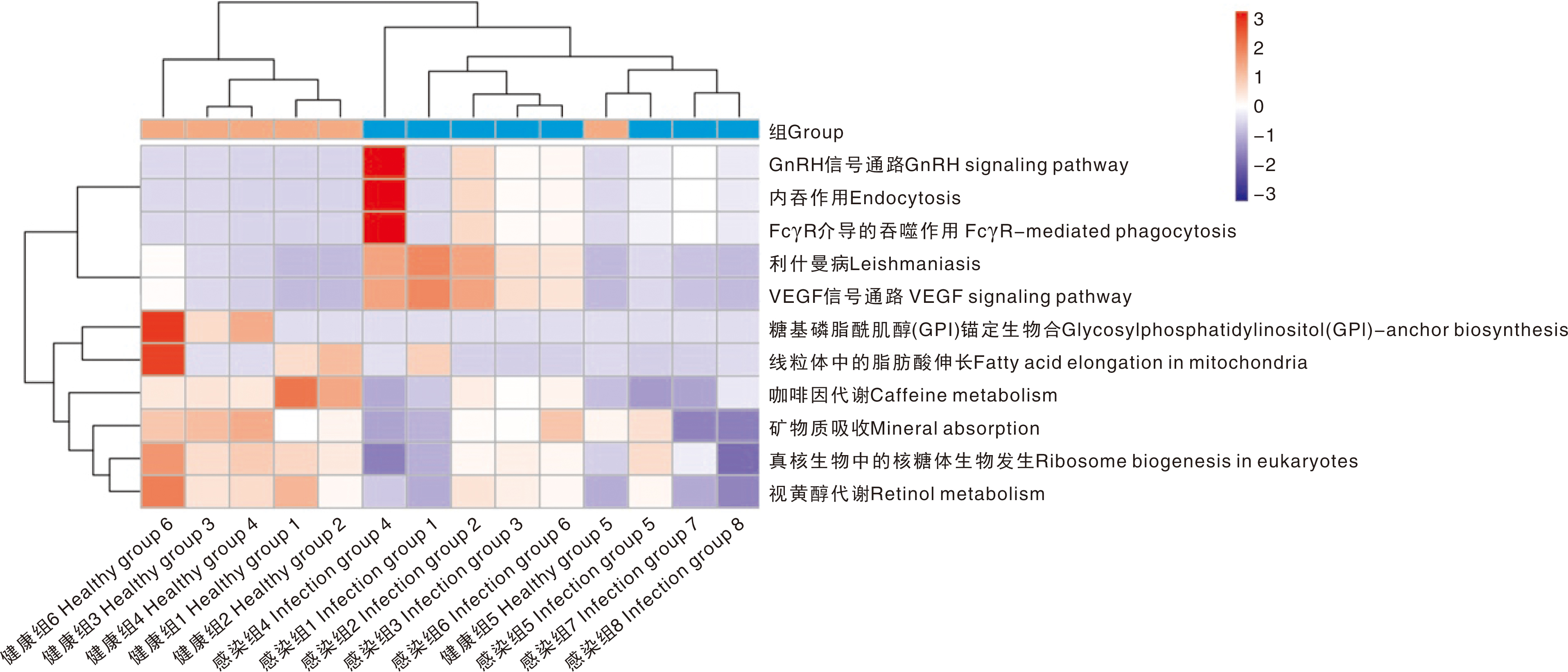
Fig.6 KEGG prediction results based on 16S rRNA of small yellow croaker from the healthy group and the infection group
| [1] | 成奇, 潘连德. 刺激隐核虫生物学和刺激隐核虫病临床诊治的研究进展[J]. 中国渔业质量与标准, 2014, 4(5): 16-23. |
| CHENG Q, PAN L D. Review on the biological characteristics of Cryptocaryon irritans and the diagnosis and treatment of cryptocaryoniosis[J]. Chinese Fishery Quality and Standards, 2014, 4(5): 16-23. (in Chinese with English abstract) | |
| [2] | LI Y W, JIANG B, MO Z Q, et al. Cryptocaryon irritans(Brown, 1951) is a serious threat to aquaculture of marine fish[J]. Reviews in Aquaculture, 2022, 14(1): 218-236. |
| [3] | ZHENG L B, QIU J Y, CHEN J, et al. Histopathological changes and piscidin 5-like location in infected Larimichthys crocea with parasite Cryptocaryon irritans[J]. Fish & Shellfish Immunology, 2020, 99: 52-58. |
| [4] | 陈爱平, 江育林, 钱冬, 等. 刺激隐核虫病[J]. 中国水产, 2011(8): 39-40. |
| CHEN A P, JIANG Y L, QIAN D, et al. Cryptocaryoniasis[J]. China Fisheries, 2011(8): 39-40. (in Chinese) | |
| [5] | 但学明, 李安兴, 林小涛, 等. 卵形鲳鯵对刺激隐核虫的免疫应答和免疫保护研究[J]. 水生生物学报, 2008, 32(1): 13-18. |
| DAN X M, LI A X, LIN X T, et al. Immune response and immunoprotection of pompanos (Trachinotus ovatus) against Cryptocaryon irritans[J]. Acta Hydrobiologica Sinica, 2008, 32(1): 13-18. (in Chinese with English abstract) | |
| [6] | JEE B Y, KIM K H, PARK S I, et al. A new strain of Cryptocaryon irritans from the cultured olive flounder Paralichthys olivaceus[J]. Diseases of Aquatic Organisms, 2000, 43(3): 211-215. |
| [7] | YIN F, GONG H, KE Q Z, et al. Stress, antioxidant defence and mucosal immune responses of the large yellow croaker Pseudosciaena crocea challenged with Cryptocaryon irritans[J]. Fish & Shellfish Immunology, 2015, 47(1): 344-351. |
| [8] | INGRAM G A. Substances involved in the natural resistance of fish to infection-a review[J]. Journal of Fish Biology, 1980, 16(1): 23-60. |
| [9] | MURRAY C K, FLECHER T C. The immunohistochemical localization of lysozyme in plaice (Pleuronectessa L) tissues[J]. Journal of Fish Biology, 1976, 9(4): 329-334. |
| [10] | LIE Ø, EVENSEN Ø, SØRENSEN A, et al. Study on lysozyme activity in some fish species[J]. Diseases of Aquatic Organisms, 1989, 6: 1-5. |
| [11] | BILLER J D, TAKAHASHI L S. Oxidative stress and fish immune system: phagocytosis and leukocyte respiratory burst activity[J]. Anais da Academia Brasileira de Ciencias, 2018, 90(4): 3403-3414. |
| [12] | NAYAK S K. Role of gastrointestinal microbiota in fish[J]. Aquaculture Research, 2010, 41(11): 1553-1573. |
| [13] | POND M J, STONE D M, ALDERMAN D J. Comparison of conventional and molecular techniques to investigate the intestinal microflora of rainbow trout (Oncorhynchus mykiss)[J]. Aquaculture, 2006, 261(1): 194-203. |
| [14] | WU S G, WANG G T, ANGERT E R, et al. Composition, diversity, and origin of the bacterial community in grass carp intestine[J]. PLoS One, 2012, 7(2): e30440. |
| [15] | YANG Y K, LIN H Z, XING Y F, et al. Response signatures of intestinal microbiota and gene transcription of the tiger grouper Epinephelus fuscoguttatus to nervous necrosis virus infection[J]. Aquaculture, 2022, 550: 737848. |
| [16] | DENG Y Q, ZHANG Y Q, CHEN H X, et al. Gut-liver immune response and gut microbiota profiling reveal the pathogenic mechanisms of Vibrio harveyi in pearl gentian grouper (Epinephelus lanceolatus♂×E. fuscoguttatus♀)[J]. Frontiers in Immunology, 2020, 11: 607754. |
| [17] | FU P P, XIONG F, FENG W W, et al. Effect of intestinal tapeworms on the gut microbiota of the common carp, Cyprinus carpio[J]. Parasites & Vectors, 2019, 12(1): 252. |
| [18] | JIANG B, LI Y W, ABDULLAHI A Y, et al. Placemat and rotational culturing: a novel method to control Cryptocaryon irritans infection by removing tomonts[J]. Aquaculture, 2016, 459: 84-88. |
| [19] | YIN F, BAO P B, LIU X, et al. Antiparasitic effect of copper alloy surface on Cryptocaryon irritans in aquaculture of Larimichthys crocea[J]. Applied and Environmental Microbiology, 2019, 85(3): e01982-18. |
| [20] | KAWANO F, HIRAZAWA N. Antiparasitic effect of in-feed inhibitors of folic acid synthesis and dihydrofolate reductase against ciliate Cryptocaryon irritans infection in the red sea bream Pagrus major and against ciliate Ichthyophthirius multifiliis infection in black pop-eyed goldfish Carassius auratus[J]. Aquaculture, 2012, 330: 1-7. |
| [21] | HUANG X H, SUN Z Y, GUO G W, et al. Cloning and characterization of a surface antigen CiSA-32.6 from Cryptocaryon irritans[J]. Experimental Parasitology, 2012, 130(3): 189-194. |
| [22] | 陈睿毅, 楼宝, 詹炜, 等. 小黄鱼亲鱼培育和催产技术的初步试验[J]. 水产科学, 2016, 35(3): 250-254. |
| CHEN R Y, LOU B, ZHAN W, et al. Broodstock cultivation and spawning induction techniques in small yellow croaker pseudosciaena Polyactis[J]. Fisheries Science, 2016, 35(3): 250-254. (in Chinese with English abstract) | |
| [23] | 沈宁远. 小黄鱼主要病原荧光定量PCR快速检测方法及病害预警模型建立[D]. 舟山: 浙江海洋大学, 2023. |
| SHEN N Y. Rapid detection of main pathogens in Larimichthys polyactis by fluorescence quantitative PCR and the establishment of a disease warning model[D]. Zhoushan: Zhejiang Ocean University, 2023. (in Chinese with English abstract) | |
| [24] | EDGAR R C. UPARSE: highly accurate OTU sequences from microbial amplicon reads[J]. Nature Methods, 2013, 10(10): 996-998. |
| [25] | DEITCH E A. Bacterial translocation or lymphatic drainage of toxic products from the gut: what is important in human beings?[J]. Surgery, 2002, 131(3): 241-244. |
| [26] | MO Z Q, WU H C, HU Y T, et al. Transcriptomic analysis reveals innate immune mechanisms of an underlying parasite-resistant grouper hybrid (Epinephelus fuscogutatus×Epinephelus lanceolatus)[J]. Fish & Shellfish Immunology, 2021, 119: 67-75. |
| [27] | 周丽颖, 钟立强, 张世勇, 等. 芽孢杆菌和乳酸菌对斑点叉尾鮰肠道菌群及代谢组学的影响[J]. 基因组学与应用生物学, 2023, 42(10): 1100-1114. |
| ZHOU L Y, ZHONG L Q, ZHANG S Y, et al. Effects of Bacillus and Lactobacillus on the intestinal microbiota and metabolomics of channel catfish(Ictalurus punctatus)[J]. Genomics and Applied Biology, 2023, 42(10): 1100-1114. (in Chinese with English abstract) | |
| [28] | 郝爽, 张振国, 尤宏争, 等. 复合益生菌对凡纳滨对虾肠道菌群结构的影响[J]. 水产科学, 2022, 41(4): 597-604. |
| HAO S, ZHANG Z G, YOU H Z, et al. Effects of compound probiotics on intestinal microflora of Pacific white shrimp Litopenaeus vannamei[J]. Fisheries Science, 2022, 41(4): 597-604. (in Chinese with English abstract) | |
| [29] | 黄雪敏, 温崇庆, 梁华芳, 等. 健康和发病凡纳滨对虾糠虾期育苗池水体的菌群结构比较[J]. 广东海洋大学学报, 2018, 38(4): 27-34. |
| HUANG X M, WEN C Q, LIANG H F, et al. Comparison of bacterial community structure in larval rearing water between healthy and diseased Litopenaeus vannamei Mysis[J]. Journal of Guangdong Ocean University, 2018, 38(4): 27-34. (in Chinese with English abstract) |
| [1] | HE Yu, LIU Feng, ZHANG Tianle, LOU Bao, WEI Fuliang, YE Ting. Histological study on the effect of high temperature stress on liver tissue in Larimichthys polyactis [J]. Acta Agriculturae Zhejiangensis, 2024, 36(1): 58-66. |
| [2] | GUO Dandan, LIU Feng, NIU Baolong, LOU Bao. Genetic diversity of wild and cultured populations of little yellow croaker (Larimichthys polyactis) based on mitochondrial Cytb gene and D-loop region [J]. Acta Agriculturae Zhejiangensis, 2022, 34(9): 1856-1865. |
| [3] | SHEN Liuhong, QIAN Bolin, YOU Liuchao, ZHANG Yue, SHEN Yu, LYU Shangkui, XIAO Jinbang, YU Shumin, SU Zhetong, DONG Ke, YANG Shilin, FENG Yulin, CAO Suizhong. Effect of Pulsatilla saponin B4 on treatment efficiency and serum inflammatory and immune factors of dairy cows with clinical mastitis [J]. Acta Agriculturae Zhejiangensis, 2021, 33(7): 1184-1191. |
| [4] | XU Minmin, HUANG Ying, LI Bo, XU Yan, ZHANG Shuai, YAO Lingyun, WANG Zheng. Effect of biochar on wheat root-associated microbial community structures [J]. Acta Agriculturae Zhejiangensis, 2021, 33(3): 516-525. |
| [5] | ZENG Xueqin, LIU Chenjian, YANG Xue, LI Xiaoran. Microbial community structure and diversity of mastitis cows by 16S rRNA high-throughput sequencing [J]. , 2019, 31(9): 1437-1445. |
| [6] | XIONG Yi;GUO Yan\|cui;ZHANG Zhi. Study on the microbial diversity of primary Korean pine forests and artificial forests [J]. , 2014, 26(1): 0-164. |
| [7] | MA Yue-chai;YANG Yu-jiao;WANG Guo-liang*. Effects of salinity challenge on the immune factors of Scylla serrata [J]. , 2010, 22(4): 0-484. |
| Viewed | ||||||
|
Full text |
|
|||||
|
Abstract |
|
|||||

