Acta Agriculturae Zhejiangensis ›› 2026, Vol. 38 ›› Issue (7): 1313-1326.DOI: 10.3969/j.issn.1004-1524.20250396
• Crop Science • Previous Articles Next Articles
Effects of slow-release fertilizer and exogenous substances application on grain filling characteristics and quality of the main crop in ratoon rice
ZHANG Danke( ), WANG Li, LI Hairun, LI Haojing, CAO Jing, XU Guowei*()
College of Agriculture ,Henan University of Science and Technology Luoyang 471003, Henan, China
-
Received:2025-05-21Online:2026-07-25Published:2026-08-20

CLC Number:
Cite this article
ZHANG Danke, WANG Li, LI Hairun, LI Haojing, CAO Jing, XU Guowei. Effects of slow-release fertilizer and exogenous substances application on grain filling characteristics and quality of the main crop in ratoon rice[J]. Acta Agriculturae Zhejiangensis, 2026, 38(7): 1313-1326.
share this article
Add to citation manager EndNote|Ris|BibTeX
URL: http://www.zjnyxb.cn/EN/10.3969/j.issn.1004-1524.20250396
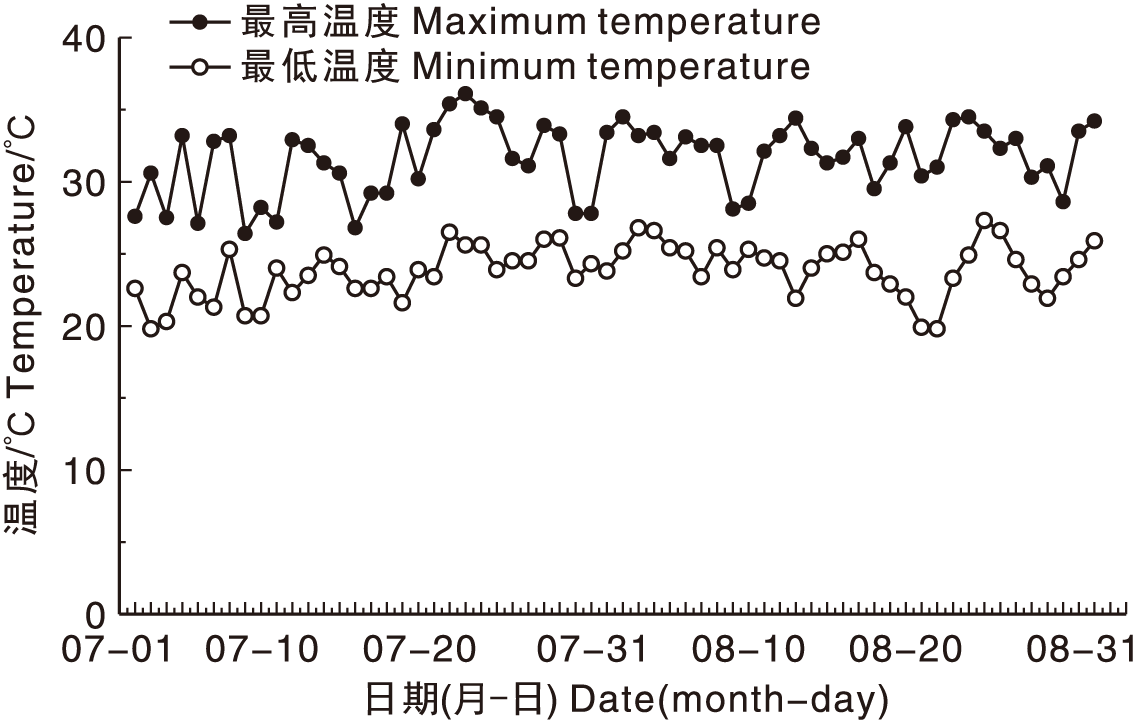
Fig.1 Temperature during grain filling in the main season of ratoon rice
| 品种 Variety | 处理 Treatment | 糙米率/% Brown rice rate/% | 精米率/% Milled rice rate/% | 整精米率/% Head rice rate/% |
|---|---|---|---|---|
| 桃优香占 | CK | 70.98 c | 65.21 c | 55.88 c |
| Taoyouxiang- | SRF | 71.15 bc | 68.16 b | 61.34 b |
| zhan | SRF+BR | 74.20 b | 71.59 a | 67.13 a |
| SRF+NAA | 75.33 a | 72.99 a | 67.77 a | |
| 徐稻3号 | CK | 69.01 b | 60.94 b | 49.37 b |
| Xudao 3 | SRF | 71.63 a | 64.69 a | 52.71 ab |
| SRF+BR | 70.76 ab | 65.61 a | 52.82 ab | |
| SRF+NAA | 72.25 a | 65.69 a | 55.95 a |
Table 1 Effects of application of slow-release fertilizer and exogenous substances on processing quality of main crop rice
| 品种 Variety | 处理 Treatment | 糙米率/% Brown rice rate/% | 精米率/% Milled rice rate/% | 整精米率/% Head rice rate/% |
|---|---|---|---|---|
| 桃优香占 | CK | 70.98 c | 65.21 c | 55.88 c |
| Taoyouxiang- | SRF | 71.15 bc | 68.16 b | 61.34 b |
| zhan | SRF+BR | 74.20 b | 71.59 a | 67.13 a |
| SRF+NAA | 75.33 a | 72.99 a | 67.77 a | |
| 徐稻3号 | CK | 69.01 b | 60.94 b | 49.37 b |
| Xudao 3 | SRF | 71.63 a | 64.69 a | 52.71 ab |
| SRF+BR | 70.76 ab | 65.61 a | 52.82 ab | |
| SRF+NAA | 72.25 a | 65.69 a | 55.95 a |
| 品种 Variety | 处理 Treatment | 垩白粒率/% Chalky grain rate/% | 垩白面积/% Chalky area/% | 垩白度/% Chalkiness degree/% |
|---|---|---|---|---|
| 桃优香占 | CK | 26.66 a | 9.47 a | 2.52 a |
| Taoyouxiangzhan | SRF | 20.67 b | 7.43 b | 1.54 b |
| SRF+BR | 15.67 d | 5.57 d | 0.87 d | |
| SRF+NAA | 17.33 c | 6.30 c | 1.09 c | |
| 徐稻3号 | CK | 32.33 a | 13.37 a | 4.31 a |
| Xudao 3 | SRF | 27.33 b | 11.50 b | 3.14 b |
| SRF+BR | 22.66 d | 8.97 c | 2.03 d | |
| SRF+NAA | 25.67 c | 10.33 b | 2.65 c |
Table 2 Effects of application of slow-release fertilizer and exogenous substances on the appearance quality of main crop rice
| 品种 Variety | 处理 Treatment | 垩白粒率/% Chalky grain rate/% | 垩白面积/% Chalky area/% | 垩白度/% Chalkiness degree/% |
|---|---|---|---|---|
| 桃优香占 | CK | 26.66 a | 9.47 a | 2.52 a |
| Taoyouxiangzhan | SRF | 20.67 b | 7.43 b | 1.54 b |
| SRF+BR | 15.67 d | 5.57 d | 0.87 d | |
| SRF+NAA | 17.33 c | 6.30 c | 1.09 c | |
| 徐稻3号 | CK | 32.33 a | 13.37 a | 4.31 a |
| Xudao 3 | SRF | 27.33 b | 11.50 b | 3.14 b |
| SRF+BR | 22.66 d | 8.97 c | 2.03 d | |
| SRF+NAA | 25.67 c | 10.33 b | 2.65 c |
| 品种 Variety | 处理 Treatment | 碱消值 Alkali spreading value | 蛋白质含量/% Protein content/% | 直链淀粉含量/% Amylose starch content/% | 胶稠度/mm Gel consistency/mm |
|---|---|---|---|---|---|
| 桃优香占 | CK | 7.99 a | 9.95 a | 21.44 a | 74.52 c |
| Taoyouxiangzhan | SRF | 7.50 c | 9.25 b | 19.74 b | 75.15 c |
| SRF+BR | 7.46 c | 8.74 d | 18.70 c | 79.24 a | |
| SRF+NAA | 7.59 b | 9.18 c | 18.46 c | 78.21 b | |
| 徐稻3号 | CK | 7.95 a | 10.19 a | 14.30 b | 57.58 d |
| Xudao 3 | SRF | 7.62 b | 9.00 b | 17.16 a | 59.77 c |
| SRF+BR | 7.47 d | 8.54 d | 13.04 c | 64.23 a | |
| SRF+NAA | 7.57 c | 8.86 c | 13.64 bc | 60.54 b |
Table 3 Effects of application of slow-release fertilizer and exogenous substances on the cooking and nutritional quality of main crop rice
| 品种 Variety | 处理 Treatment | 碱消值 Alkali spreading value | 蛋白质含量/% Protein content/% | 直链淀粉含量/% Amylose starch content/% | 胶稠度/mm Gel consistency/mm |
|---|---|---|---|---|---|
| 桃优香占 | CK | 7.99 a | 9.95 a | 21.44 a | 74.52 c |
| Taoyouxiangzhan | SRF | 7.50 c | 9.25 b | 19.74 b | 75.15 c |
| SRF+BR | 7.46 c | 8.74 d | 18.70 c | 79.24 a | |
| SRF+NAA | 7.59 b | 9.18 c | 18.46 c | 78.21 b | |
| 徐稻3号 | CK | 7.95 a | 10.19 a | 14.30 b | 57.58 d |
| Xudao 3 | SRF | 7.62 b | 9.00 b | 17.16 a | 59.77 c |
| SRF+BR | 7.47 d | 8.54 d | 13.04 c | 64.23 a | |
| SRF+NAA | 7.57 c | 8.86 c | 13.64 bc | 60.54 b |
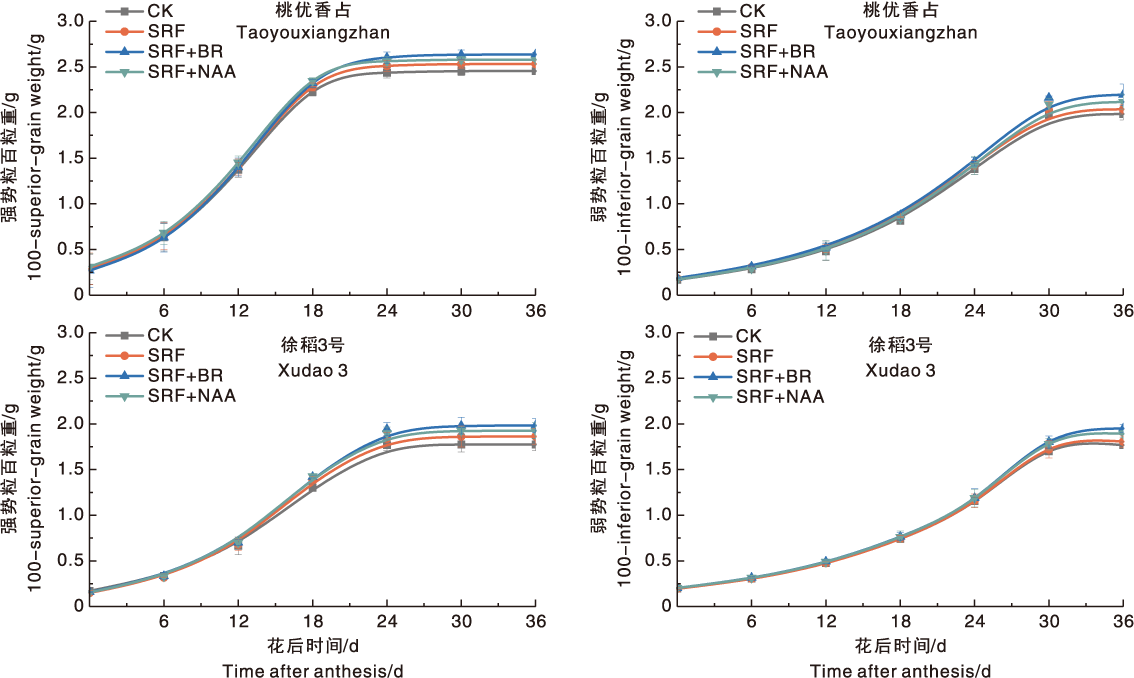
Fig.2 Effects of slow-release fertilizers and exogenous substance applications on 100-grain weight of superior and inferior grain of the main crop rice
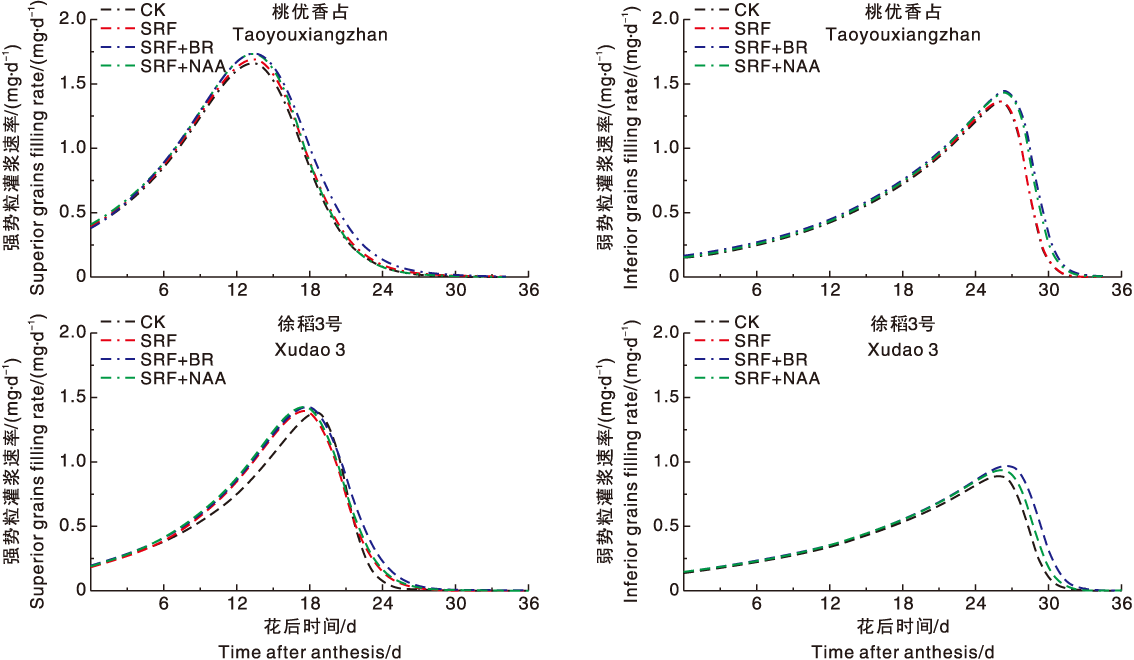
Fig.3 Effects of slow-release fertilizers and exogenous substances on the filling rate (per single grain) of main crop rice grains
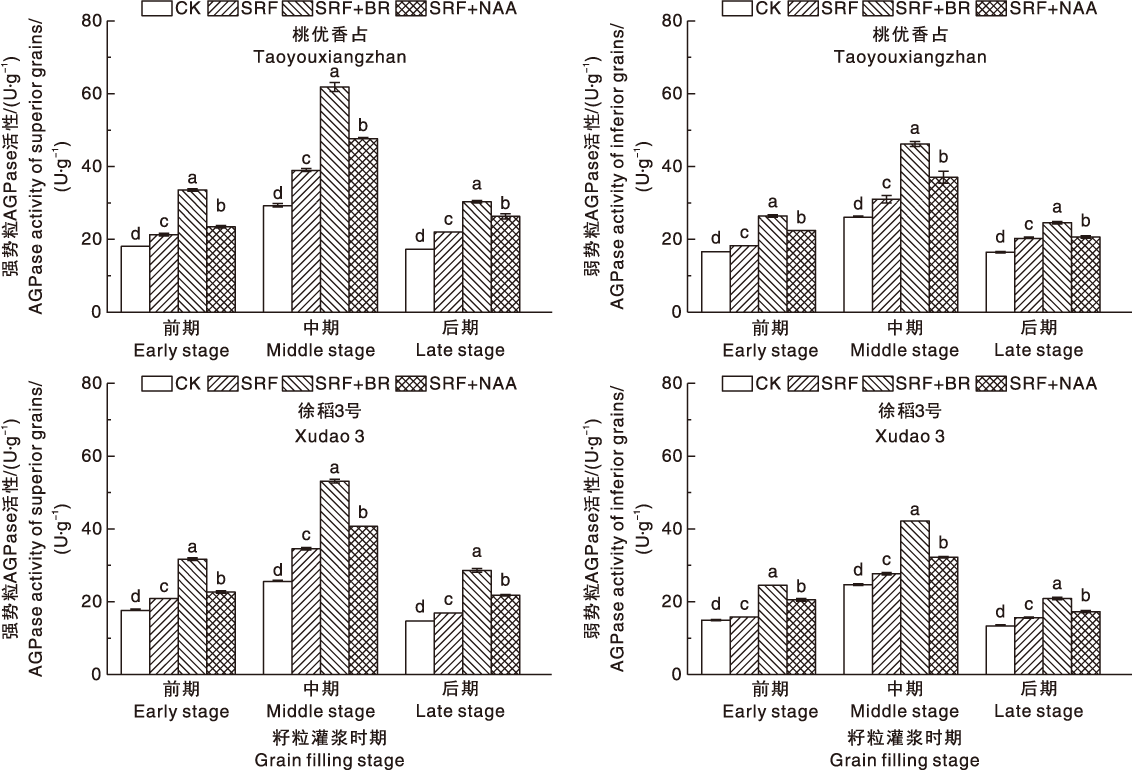
Fig.4 Effects of slow-release fertilizers and exogenous substances on ADP-glucose pyrophosphorylase (AGPase) activity of main crop rice grains Bars in the same stage marked without the same letters indicate significant difference (p<0.05) within treatments. The same as below.
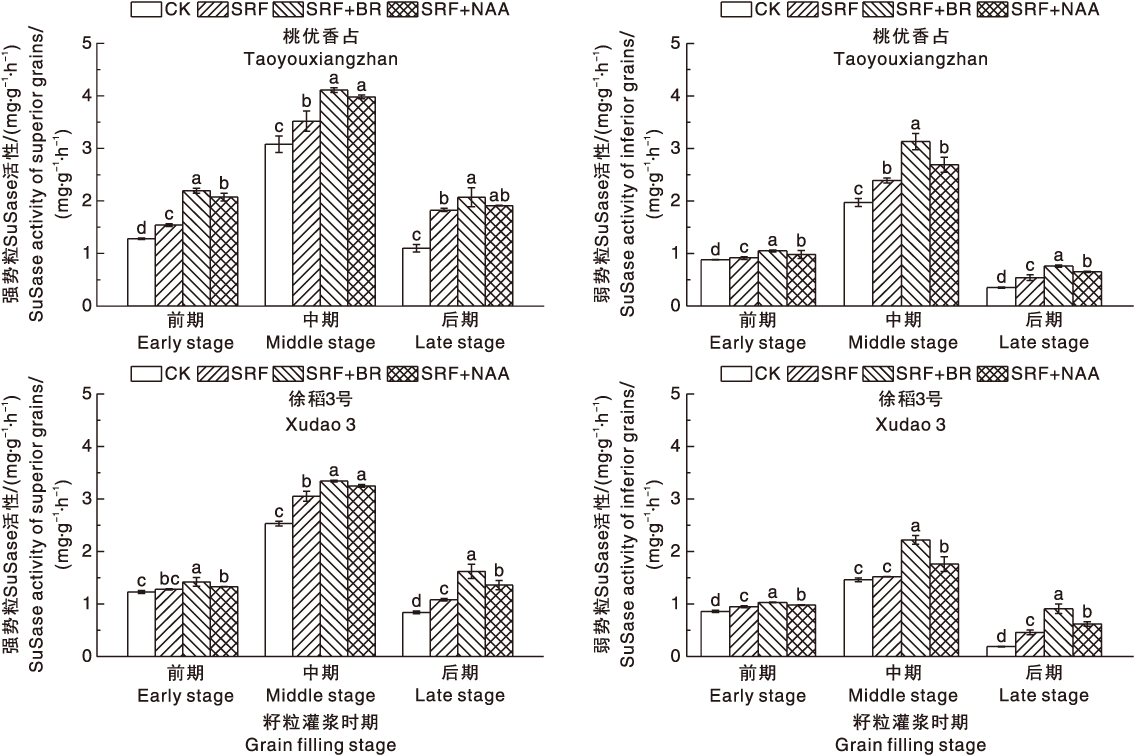
Fig.5 Effects of slow-release fertilizers and exogenous substances on sucrose synthase (SuSase) activity of main crop rice grains
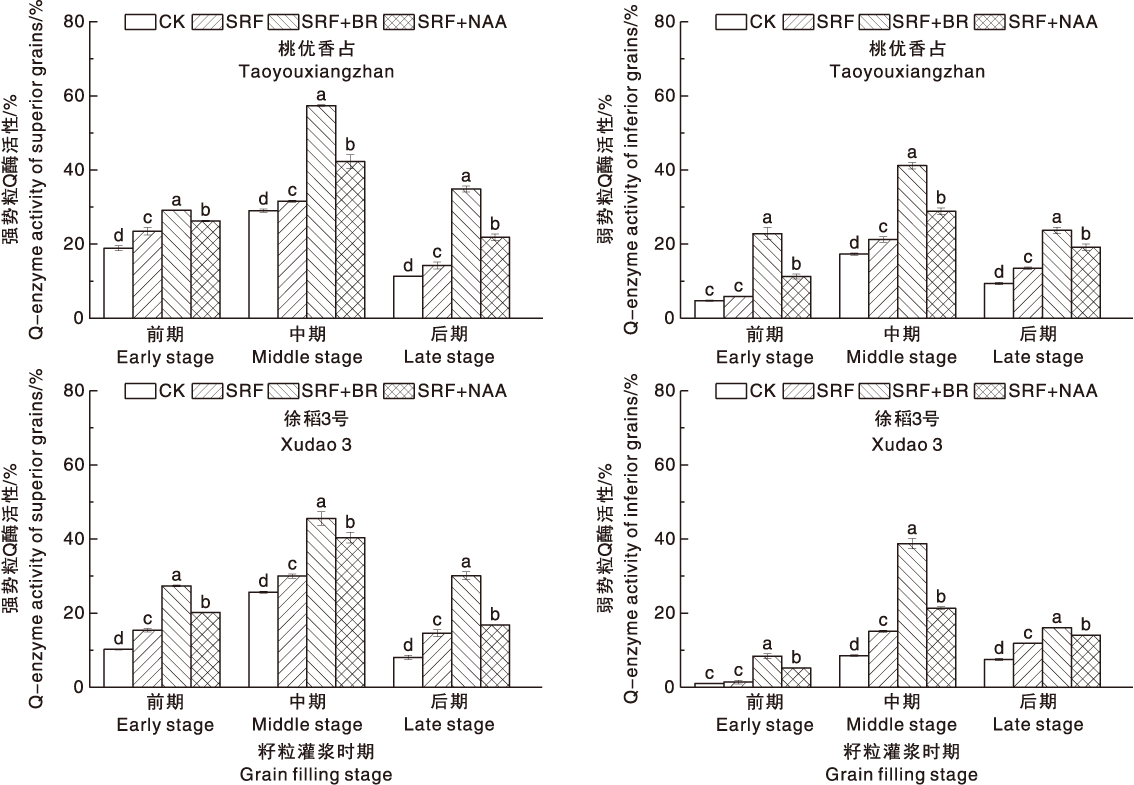
Fig.6 Effects of slow-release fertilizers and exogenous substances on starch branching enzyme (Q-enzyme) activity in grains of main crop rice
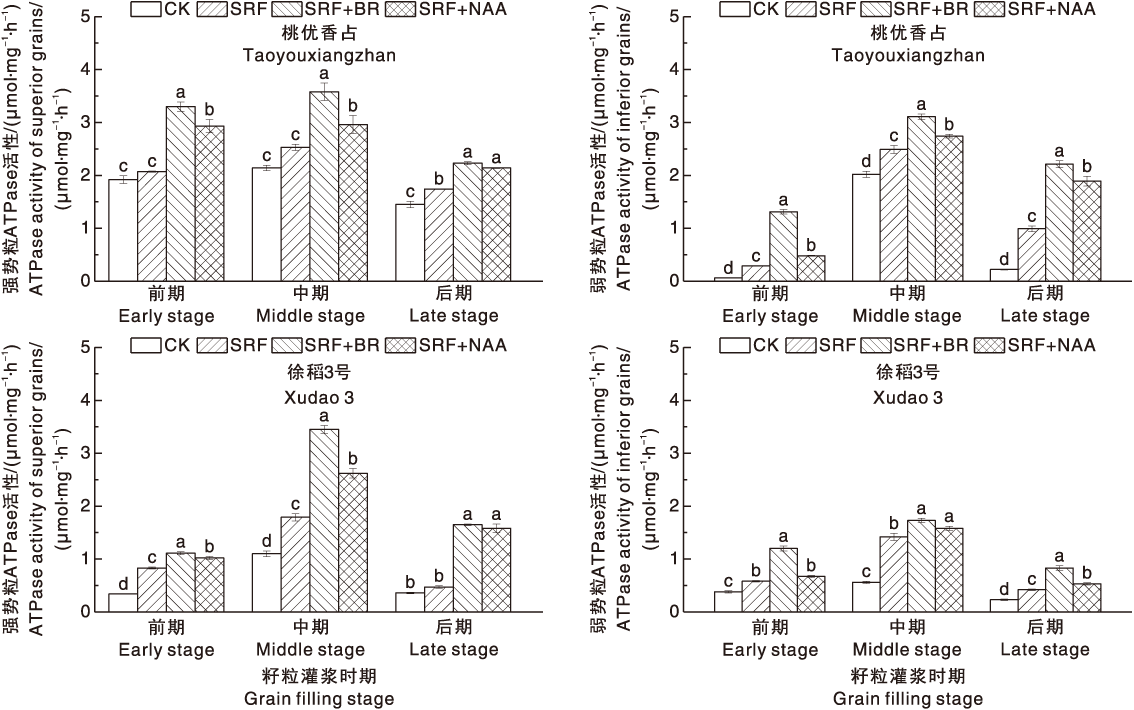
Fig.7 Effects of slow-release fertilizers and exogenous substances on adenosine triphosphatase (ATPase) activity in grains of main crop rice
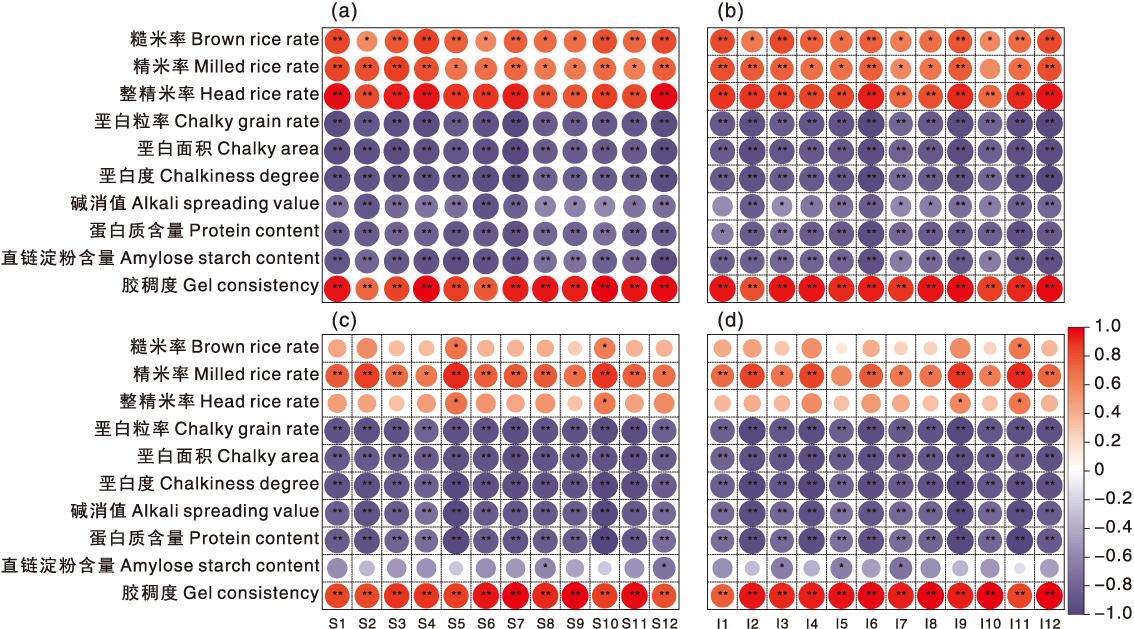
Fig.8 Relationship between the activities of key starch synthesis enzymes and quality of superior and inferior grains of the main crop rice * means that the correlation reaches a significant level of p<0.05, ** means that the correlation reaches a significant level of p<0.01. a, b and c, d are the superior and inferior grains of Taoyouxiangzhan and the superior and inferior grains of Xudao 3, respectively. S1, AGPase activity in superior grains at early filling stage; S2, SuSase activity in superior grains at early filling stage; S3, Q-enzyme activity in superior grains at early filling stage; S4, ATPase activity in superior grains at early filling stage; S5, AGPase activity in superior grains at middle filling stage; S6, SuSase activity in superior grains at middle filling stage; S7, Q-enzyme activity in superior grains at middle filling stage; S8, ATPase activity in superior grains at middle filling stage; S9, AGPase activity in superior grains at late filling stage; S10, SuSase activity in superior grains at late filling stage; S11, Q-enzyme activity in superior grains at late filling stage; S12, ATPase activity in superior grains at late filling stage; I1, AGPase activity in inferior grains at early filling stage; I2, SuSase activity in inferior grains at early filling stage; I3, Q-enzyme activity in inferior grains at early filling stage; I4, ATPase activity in inferior grains at early filling stage; I5, AGPase activity in inferior grains at middle filling stage; I6, SuSase activity in inferior grains at middle filling stage; I7, Q-enzyme activity in inferior grains at middle filling stage; I8, ATPase activity in inferior grains at middle filling stage; I9, AGPase activity in inferior grains at late filling stage; I10, SuSase activity in inferior grains at late filling stage; I11, Q-enzyme activity in inferior grains at late filling stage; I12, ATPase activity in inferior grains at late filling stage.
| [1] | Yang J Y, Hu Q, You L Z, et al. Mapping the potential northern limits and promotion extent of ratoon rice in China[J]. Applied Geography, 2023, 150: 102822. |
| [2] | 林文雄, 翁佩莹, 林文芳, 等. 中国机收再生稻研究现状与展望[J]. 应用生态学报, 2024, 35(3): 827-836. |
| Lin W X, Weng P Y, Lin W F, et al. Research status and prospect of ratoon rice in China under mechanically harvested condition[J]. Chinese Journal of Applied Ecology, 2024, 35(3): 827-836. | |
| [3] | 高欠清. 不同氮肥处理对再生稻再生芽生长发育、籽粒灌浆特性和产量的影响[D]. 武汉: 华中农业大学, 2023. |
| Gao Q Q. Effects of different nitrogen application rates on the growth of regenerated bud, grain filling characteristic and grain yield of ratoon rice[D]. Wuhan: Huazhong Agricultural University, 2023. | |
| [4] | Deng F, Yang F, Li Q P, et al. Differences in starch structural and physicochemical properties and texture characteristics of cooked rice between the main crop and ratoon rice[J]. Food Hydrocolloids, 2021, 116: 106643. |
| [5] | 田文涛, 胡玉婷, 严鹏, 等. 灌浆期高温对水稻不同粒位籽粒品质的影响[J]. 山东农业科学, 2024, 56(12): 16-25. |
| Tian W T, Hu Y T, Yan P, et al. Effects of high temperature during filling stage on grain quality at different positions in rice[J]. Shandong Agricultural Sciences, 2024, 56(12): 16-25. | |
| [6] | Zou J N, Pang Z Q, Li Z, et al. The underlying mechanism of variety-water-nitrogen-stubble damage interactions on yield formation in ratoon rice with low stubble height under mechanized harvesting[J]. Journal of Integrative Agriculture, 2024, 23(3): 806-823. |
| [7] | Yang D S, Peng S B, Zheng C, et al. Effects of nitrogen fertilization for bud initiation and tiller growth on yield and quality of rice ratoon crop in Central China[J]. Field Crops Research, 2021, 272: 108286. |
| [8] | 苏素苗, 戴志刚, 王敏羽, 等. 氮肥运筹方式及催芽氮肥用量对再生稻产量及品质的影响[J]. 植物营养与肥料学报, 2022, 28(12): 2172-2184. |
| Su S M, Dai Z G, Wang M Y, et al. Effects of nitrogen application method and bud-promoting nitrogen fertilizer rate on yield and quality of ratoon rice[J]. Plant Nutrition and Fertilizer Science, 2022, 28(12): 2172-2184. | |
| [9] | Fan X L, Zhao J, Sun X S, et al. Exogenous melatonin improves the quality performance of rice under high temperature during grain filling[J]. Agronomy, 2022, 12(4): 949. |
| [10] | Zhang C X, Li G Y, Chen T T, et al. Heat stress induces spikelet sterility in rice at anthesis through inhibition of pollen tube elongation interfering with auxin homeostasis in pollinated pistils[J]. Rice, 2018, 11: 14. |
| [11] | Yang W, Wan G F, Zhou J Q, et al. The effects of brassinosteroids on nitrogen utilization in rice[J]. Agronomy, 2024, 14(3): 604. |
| [12] | 陈燕华, 王军可, 王亚梁, 等. 灌浆期高温下外源喷施2, 4-表油菜素内酯对浙禾香2号产量及品质的影响[J]. 中国稻米, 2022, 28(3): 66-69. |
| Chen Y H, Wang J K, Wang Y L, et al. Effects of exogenous 2, 4-epibrassinolide on yield and grain quality of zhehexiang 2 under high temperature during grain filling stage[J]. China Rice, 2022, 28(3): 66-69. | |
| [13] | 冯彩军. 油菜素内酯对干旱胁迫下大麦种子萌发影响的机理研究[D]. 石河子: 石河子大学, 2022. |
| Feng C J. Study on the mechanisms underlying the effect of brassinolide on germination of barley seeds under drought stres[D]. Shihezi: Shihezi University, 2022. | |
| [14] | GB/T 17891—2017 优质稻谷[S]. |
| [15] | 江孟孟. 干湿交替灌溉与氮肥形态耦合下水稻籽粒灌浆、土壤特性与稻米品质的差异[D]. 洛阳: 河南科技大学, 2022. |
| Jiang M M. Difference of grain filling, soil characteristic and quality of rice under alternative wetting and drying irrigation and nitrogen form interaction[D]. Luoyang: Henan University of Science and Technology, 2022. | |
| [16] | 朱庆森, 曹显祖, 骆亦其. 水稻籽粒灌浆的生长分析[J]. 作物学报, 1988, 14(3): 182-193. |
| Zhu Q S, Cao X Z, Luo Y Q. Growth analysis of rice grain filling[J]. Acta Agronomica Sinica, 1988, 14(3): 182-193. | |
| [17] | 李洪亮, 孙玉友, 魏才强, 等. 天然火山石板熔岩台地土壤条件对水稻稻米品质的影响[J]. 中国农业大学学报, 2024, 29(10): 172-186. |
| Li H L, Sun Y Y, Wei C Q, et al. Effects of the soil conditions of natural volcanic slate lava platform on rice grain quality[J]. Journal of China Agricultural University, 2024, 29(10): 172-186. | |
| [18] | 李雨阳, 李浩晶, 郝威名, 等. 施磷量对不同耐低磷型水稻品质及淀粉合成酶活性的影响[J]. 中国生态农业学报(中英文), 2024, 32(5): 816-826. |
| Li Y Y, Li H J, Hao W M, et al. Effects of phosphorus fertilizer application rate on grain quality and starch syn-thase activity of different low-phosphorus-tolerant varieties of rice[J]. Chinese Journal of Eco-Agriculture, 2024, 32(5): 816-826. | |
| [19] | Yang Z L, Zhang H W, Gao Z Q, et al. QTL mapping for Q-enzyme activity during grain development in rice[J]. Indian Journal of Genetics and Plant Breeding(the), 2018, 78(2): 187. |
| [20] | Huang J W, Pan Y P, Chen H F, et al. Physiochemical mechanisms involved in the improvement of grain-filling, rice quality mediated by related enzyme activities in the ratoon cultivation system[J]. Field Crops Research, 2020, 258: 107962. |
| [21] | Jiang Z R, Chen Q L, Liu D, et al. Application of slow-controlled release fertilizer coordinates the carbon flow in carbon-nitrogen metabolism to effect rice quality[J]. BMC Plant Biology, 2024, 24: 621. |
| [22] | 张蛟, 陈澎军, 韩继军, 等. 盐逆境下施用缓释肥及其减氮处理对水稻生长、穗部性状、产量及品质的影响[J]. 江苏农业学报, 2023, 39(7): 1483-1491. |
| Zhang J, Chen P J, Han J J, et al. Effects of slow-release fertilizer and nitrogen reduction on the growth characteristics, panicle traits, yield and quality of rice under salt stress[J]. Jiangsu Journal of Agricultural Sciences, 2023, 39(7): 1483-1491. | |
| [23] | 成臣, 曾勇军, 王祺, 等. 施氮量对晚粳稻甬优1538产量、品质及氮素吸收利用的影响[J]. 水土保持学报, 2018, 32(5): 222-228. |
| Cheng C, Zeng Y J, Wang Q, et al. Effects of nitrogen application rates on Japonica rice yield, quality, and nitrogen uptake and utilization during the late-rice cropping seasons in Southern China[J]. Journal of Soil and Water Conservation, 2018, 32(5): 222-228. | |
| [24] | 马仁诗, 蒋丛泽, 高玮, 等. 不同水分条件下缓释氮肥对饲用甜高粱生长和水氮利用效率的影响[J]. 草业学报, 2023, 32(10): 71-81. |
| Ma R S, Jiang C Z, Gao W, et al. Effects of slow-release N fertilizer on growth and water-and N-use efficiencies of forage sweet sorghum under three different irrigation regimes[J]. Acta Prataculturae Sinica, 2023, 32(10): 71-81. | |
| [25] | 赵黎明, 王亚新, 蒋文鑫, 等. 植物生长调节剂对优质粳稻产量、品质与光合特性的影响[J]. 浙江农业学报, 2024, 36(5): 1003-1014. |
| Zhao L M, Wang Y X, Jiang W X, et al. Effects of plant growth regulators on yield, quality and photosynthetic characteristics of high-quality Japonica rice[J]. Acta Agriculturae Zhejiangensis, 2024, 36(5): 1003-1014. | |
| [26] | 田晓雅. 油菜素甾醇(BRs)对杂交水稻籽粒充实过程及产量、品质的生理效应研究[D]. 南京: 南京农业大学, 2015. |
| Tian X Y. Studies on physiological effects of brassinodteroids (BRs) on grain filling, yield and quality of hybrid rice[D]. Nanjing: Nanjing Agricultural University, 2015. | |
| [27] | Dun C P, Wang R, Mi K L, et al. One-time application of controlled-release bulk blending fertilizer enhances yield, quality and photosynthetic efficiency in late Japonica rice[J]. Journal of Integrative Agriculture, 2024, 23(11): 3672-3691. |
| [28] | Yang X Y, Zhang J C, Wang L S, et al. BR signalling haplotypes contribute to indica-japonica differentiation for grain yield and quality in rice[J]. Plant Biotechnology Journal, 2025, 23(5): 1618-1636. |
| [29] | Wei H Y, Chen Z F, Xing Z P, et al. Effects of slow or controlled release fertilizer types and fertilization modes on yield and quality of rice[J]. Journal of Integrative Agriculture, 2018, 17(10): 2222-2234. |
| [30] | 高健, 王亚梁, 孙磊, 等. 2, 4-表油菜素内酯缓解水稻花期高温胁迫的生理机制[J]. 中国稻米, 2019, 25(3): 70-74. |
| Gao J, Wang Y L, Sun L, et al. Physiological mechanism of brassinolide on alleviating high temperature stress of rice at flowering stage[J]. China Rice, 2019, 25(3): 70-74. | |
| [31] | 郑晨曦. 水稻苗床α-萘乙酸药害的生物修复[D]. 哈尔滨: 东北农业大学, 2022. |
| Zheng C X. Bioremediation of α-naphthaleneacetic acid damage in rice seedbeds[D]. Harbin: Northeast Agricultural University, 2022. | |
| [32] | Aryan S, Gulab G, Kakar K, et al. Auxin application at the flowering stage of rice alleviates the negative impact of heat stress on spikelet fertility and yield attributes[J]. Agriculture, 2023, 13(4): 866. |
| [33] | 吴梦寅, 蔡炜, 钟笑涵, 等. 高温胁迫对水稻籽粒灌浆与稻米品质影响及其机理研究进展[J]. 中国稻米, 2024, 30(3): 10-17. |
| Wu M Y, Cai W, Zhong X H, et al. Research advances in high temperature stress on the grain-filling and quality of rice and its mechanism[J]. China Rice, 2024, 30(3): 10-17. | |
| [34] | 李友发, 孙源泽, 董俊杰, 等. 水稻灌浆期高温下钾肥运筹对籽粒灌浆及垩白的影响[J]. 浙江农业科学, 2024, 65(1): 16-21. |
| Li Y F, Sun Y Z, Dong J J, et al. Effects of potassium fertilizer management on grain filling and chalkiness of rice under high temperature during grain filling stage[J]. Journal of Zhejiang Agricultural Sciences, 2024, 65(1): 16-21. | |
| [35] | 付景, 王亚, 杨文博, 等. 干湿交替灌溉耦合施氮量对水稻籽粒灌浆生理和根系生理的影响[J]. 作物学报, 2023, 49(3): 808-820. |
| Fu J, Wang Y, Yang W B, et al. Effects of alternate wetting and drying irrigation and nitrogen coupling on grain filling physiology and root physiology in rice[J]. Acta Agronomica Sinica, 2023, 49(3): 808-820. | |
| [36] | 于秀娟, 丛宇辰, 丛会林, 等. 气象因子与播期调控水稻籽粒灌浆关系的研究[J]. 江西农业学报, 2024, 36(3): 1-9. |
| Yu X J, Cong Y C, Cong H L, et al. Study on relationship between meteorological factors and sowing date affecting rice grain filling[J]. Acta Agriculturae Jiangxi, 2024, 36(3): 1-9. | |
| [37] | 李赞堂, 王士银, 姜雯宇, 等. 穗分化期外施24-表油菜素内酯(EBR)促进水稻源、库及籽粒灌浆的生理机制[J]. 作物学报, 2018, 44(4): 581-590. |
| Li Z T, Wang S Y, Jiang W Y, et al. Physiological mechanisms of promoting source, sink, and grain filling by 24-epibrassinolide (EBR) applied at panicle initiation stage of rice[J]. Acta Agronomica Sinica, 2018, 44(4): 581-590. | |
| [38] | 张余, 郭溶誉, 李振东, 等. 外源2, 4-表油菜素内酯对苦荞灌浆及产量形成的影响[J]. 应用与环境生物学报, 2022, 28(6): 1437-1443. |
| Zhang Y, Guo R Y, Li Z D, et al. Effect of exogenous 2, 4-epibrassinolide on grain filling and yield formation of Tartary buckwheat[J]. Chinese Journal of Applied and Environmental Biology, 2022, 28(6): 1437-1443. | |
| [39] | 李赞堂. 穗分化期外施24-表油菜素内酯(EBR)对水稻穗粒发育和籽粒灌浆的影响[D]. 北京: 中国农业科学院, 2015. |
| Li Z T. The effect of 24-epibrassinolide(EBR) application at panicle initiation stage on the panicles development and grain filling of rice[D]. Beijing: Chinese Academy of Agricultural Sciences, 2015. | |
| [40] | Zhao C, Liu G M, Chen Y, et al. Excessive nitrogen application leads to lower rice yield and grain quality by inhibiting the grain filling of inferior grains[J]. Agriculture, 2022, 12(7): 962. |
| [41] | 倪川. 缓释氮肥运筹模式对稻米品质的影响及其与籽粒碳氮代谢的关系[D]. 扬州: 扬州大学, 2024. |
| Ni C. Effect of slow-release nitrogen fertilizer management on rice quality and its relationship with grain carbon and nitrogen metabolism[D]. Yangzhou: Yangzhou University, 2024. | |
| [42] | Barbier F, Péron T, Lecerf M, et al. Sucrose is an early modulator of the key hormonal mechanisms controlling bud outgrowth in Rosa hybrida[J]. Journal of Experimental Botany, 2015, 66(9): 2569-2582. |
| [43] | 付旭. 水稻强、弱势粒胚与胚乳发育的比较研究[D]. 南京: 南京农业大学, 2020. |
| Fu X. Study on development of embryo and endosperm of superior and inferior grains in rice[D]. Nanjing: Nanjing Agricultural University, 2020. | |
| [44] | 王晓茜, 蔡创, 宋练, 等. 开放式大气CO2浓度升高和温度升高对扬稻6号稻米品质的影响[J]. 中国水稻科学, 2025, 39(1): 115-127. |
| Wang X Q, Cai C, Song L, et al. Effect of free-air CO2 Enrichment and temperature increase on grain quality of rice cultivar Yangdao 6[J]. Chinese Journal of Rice Science, 2025, 39(1): 115-127. | |
| [45] | 刘晓龙, 叶世河, 廖俊婕, 等. 灌浆初期高温胁迫对水稻籽粒活性氧积累及产量形成的影响[J]. 西北农林科技大学学报(自然科学版), 2024, 52(5): 33-47. |
| Liu X L, Ye S H, Liao J J, et al. Effect of heat stress during early filling stage on ROS accumulation and yield formation in rice grain[J]. Journal of Northwest A&F University(Natural Science Edition), 2024, 52(5): 33-47. |
| [1] | WAN Shaoyuan, LIU Xianbo, CAI Shuo, SHI Hong, CHENG Jie. Effect of irrigation and planting methods on the yield and quality of double-cropping rice [J]. Acta Agriculturae Zhejiangensis, 2025, 37(2): 257-268. |
| [2] | LI Jianqiang, WEI Qianqian, LIU Xiaoxia, ZHANG Junhua, ZHU Chunquan. Effects of optimizing fertilization methods on rice yield and soil nutrient balance [J]. Acta Agriculturae Zhejiangensis, 2025, 37(2): 438-446. |
| [3] | PAN Zhijun, WU Xiaowen, WU Chenyang, CHENG Yu, CHEN Long, ZHANG Xiaohong, ZHANG Jinshan, ZHOU Bing, JIANG Bo, ZHANG Wenjing, CHE Zhao, SONG He. Analysis of yield and utilization of temperature and light resources of different types of ratoon rice varieties in central Anhui, China [J]. Acta Agriculturae Zhejiangensis, 2024, 36(7): 1492-1501. |
| [4] | MA Yihu, ZENG Xiaoyuan, HE Xianbiao, ZHOU Naidi, CHEN Jian. Response of grain yield and quality of high quality rice to climate factors at different sowing dates in southeastern Zhejiang Province, China [J]. Acta Agriculturae Zhejiangensis, 2023, 35(4): 736-751. |
| [5] | LIU Chuang, WANG Chaojun, MA Xingguan, JIANG Yue, WU Zhibo, ZHANG Li, FU Jinxiang. Effect of organic fertilizer and magnesium ammonium phosphate made from feces and urine on Chrysanthemum coronarium [J]. Acta Agriculturae Zhejiangensis, 2023, 35(12): 2914-2922. |
| [6] | LI Baoxian, WANG Baojun, HUAI Yan, SHEN Yaqiang, ZHANG Hongmei, CHENG Wangda. Effects of integrated rice-redclaw crayfish farming system on soil nutrients, carbon pool and rice quality [J]. Acta Agriculturae Zhejiangensis, 2021, 33(4): 688-696. |
| [7] | YU Peng 1, 2, WANG Junmei 1, 2, YE Shenghai 2, ZHAI Rongrong 2, ZHU Guofu 2, JIN Qingsheng 2, ZHANG Xiaoming 2, *. Effects of seeding date on rice quality of conventional photosensitive japonica rice in Zhejiang Province [J]. , 2016, 28(5): 724-. |
| [8] | WANG Zhen;SHAO Gao-neng;WEI Xiang-jin;HU Pei-song;TANG Shao-qing;*. Mapping QTLs for starch traits and its association analysis with starch synthesis-related genes in rice (Oryza sativa L.) [J]. , 2011, 23(3): 0-445. |
| Viewed | ||||||
|
Full text |
|
|||||
|
Abstract |
|
|||||

