Acta Agriculturae Zhejiangensis ›› 2026, Vol. 38 ›› Issue (4): 680-686.DOI: 10.3969/j.issn.1004-1524.20240899
• Horticultural Science • Previous Articles Next Articles
Effect of the number of vegetative branches on the canopy and biomass of roses
LI Zhengsheng1( ), YIN Xuanpeng1, YE Yunyu1, LI Junyu2, WU Hongzhi1,*()
- 1
College of Landscape and Horticulture ,Yunnan Agricultural University Kunming 650500, China
2Yunnan Flower Promotion Center Kunming 650034, China
-
Received:2024-12-21Online:2026-04-25Published:2026-05-08 -
Contact:WU Hongzhi

CLC Number:
Cite this article
LI Zhengsheng, YIN Xuanpeng, YE Yunyu, LI Junyu, WU Hongzhi. Effect of the number of vegetative branches on the canopy and biomass of roses[J]. Acta Agriculturae Zhejiangensis, 2026, 38(4): 680-686.
share this article
Add to citation manager EndNote|Ris|BibTeX
URL: http://www.zjnyxb.cn/EN/10.3969/j.issn.1004-1524.20240899
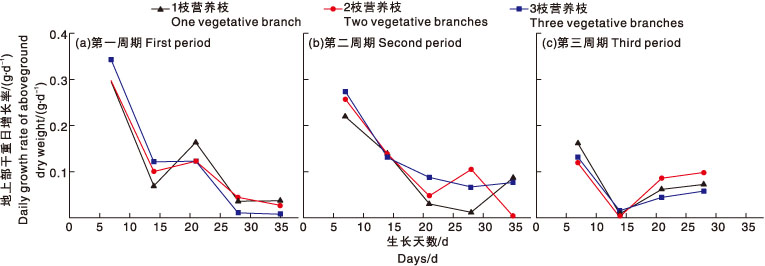
Fig.1 Daily growth rate of aboveground dry weight of rose from the first period to the third period
| 周期 Period | 营养枝数量 Number of vegetative branches | 开花枝株高/cm Plant height of commercial flower branches/cm | 开花枝叶片干重/g Leaf dry weight of commercial flower branches/g | 开花枝总干重/g Total dry weight of commercial flower branches/g |
|---|---|---|---|---|
| 第一周期First period | 1 | 132.50±5.31 b | 3.76±0.20 b | 6.73±0.30 c |
| 2 | 160.53±4.19 b | 4.11±0.19 ab | 10.44±0.52 b | |
| 3 | 210.68±7.47 a | 6.83±0.26 a | 14.98±0.33 a | |
| 第二周期Second period | 1 | 95.88±3.13 b | 2.41±0.11 b | 5.82±0.29 b |
| 2 | 151.04±6.12 b | 3.99±0.16 ab | 9.68±0.44 b | |
| 3 | 233.53±17.12 a | 6.86±0.36 a | 17.62±1.11 a | |
| 第三周期Third period | 1 | 118.45±1.75 b | 2.78±0.11 b | 7.35±0.29 c |
| 2 | 135.29±2.33 b | 3.71±0.15 ab | 10.50±0.05 b | |
| 3 | 207.25±12.35 a | 5.56±0.16 a | 14.08±0.31 a |
Table 1 Plant height, leaf dry weight, and total dry weight of commercial flower branches under different numbers of vegetative branches treatments
| 周期 Period | 营养枝数量 Number of vegetative branches | 开花枝株高/cm Plant height of commercial flower branches/cm | 开花枝叶片干重/g Leaf dry weight of commercial flower branches/g | 开花枝总干重/g Total dry weight of commercial flower branches/g |
|---|---|---|---|---|
| 第一周期First period | 1 | 132.50±5.31 b | 3.76±0.20 b | 6.73±0.30 c |
| 2 | 160.53±4.19 b | 4.11±0.19 ab | 10.44±0.52 b | |
| 3 | 210.68±7.47 a | 6.83±0.26 a | 14.98±0.33 a | |
| 第二周期Second period | 1 | 95.88±3.13 b | 2.41±0.11 b | 5.82±0.29 b |
| 2 | 151.04±6.12 b | 3.99±0.16 ab | 9.68±0.44 b | |
| 3 | 233.53±17.12 a | 6.86±0.36 a | 17.62±1.11 a | |
| 第三周期Third period | 1 | 118.45±1.75 b | 2.78±0.11 b | 7.35±0.29 c |
| 2 | 135.29±2.33 b | 3.71±0.15 ab | 10.50±0.05 b | |
| 3 | 207.25±12.35 a | 5.56±0.16 a | 14.08±0.31 a |
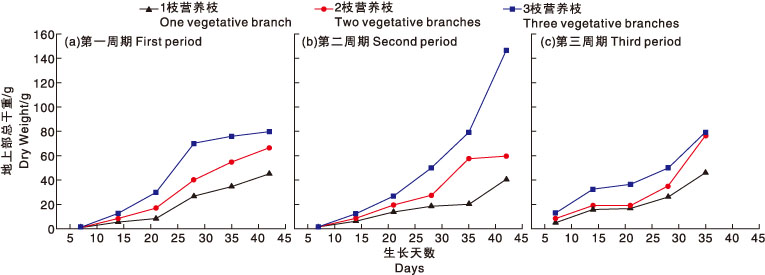
Fig.2 The aboveground dry weight of rose from the first period to the third period
| 周期 Period | 营养枝数量 Number of vegetative branches | 冠层顶部入射PAR PAR at the top of canopy | 开花枝底部入射PAR PAR at the bottom of commercial flower branches | 营养枝底部入射PAR PAR at the bottom of vegetative branches |
|---|---|---|---|---|
| 第一周期First period | 1 | 475.30±6.20 b | 108.70±3.20 a | 69.63±4.33 a |
| 2 | 500.77±4.42 a | 107.07±0.81 a | 18.57±2.66 b | |
| 3 | 500.70±2.44 a | 111.63±0.49 a | 13.70±0.98 b | |
| 第二周期Second period | 1 | 458.13±3.29 a | 222.83±4.43 a | 37.97±0.90 a |
| 2 | 508.90±2.54 a | 159.50±1.51 b | 25.93±0.83 b | |
| 3 | 438.47±36.53 a | 147.87±3.49 b | 7.43±1.39 c | |
| 第三周期Third period | 1 | 483.60±2.79 a | 202.30±1.89 a | 38.23±1.60 a |
| 2 | 491.33±1.45 a | 163.03±0.67 b | 25.23±0.34 b | |
| 3 | 494.50±5.93 a | 160.73±4.66 b | 16.43±2.14 c |
Table 2 PAR at the top of canopy, PAR at the bottom of commercial flower branches, and PAR at the bottom of vegetative branches under different numbers of vegetative branches treatments Unit: μmol·m-2·s-1
| 周期 Period | 营养枝数量 Number of vegetative branches | 冠层顶部入射PAR PAR at the top of canopy | 开花枝底部入射PAR PAR at the bottom of commercial flower branches | 营养枝底部入射PAR PAR at the bottom of vegetative branches |
|---|---|---|---|---|
| 第一周期First period | 1 | 475.30±6.20 b | 108.70±3.20 a | 69.63±4.33 a |
| 2 | 500.77±4.42 a | 107.07±0.81 a | 18.57±2.66 b | |
| 3 | 500.70±2.44 a | 111.63±0.49 a | 13.70±0.98 b | |
| 第二周期Second period | 1 | 458.13±3.29 a | 222.83±4.43 a | 37.97±0.90 a |
| 2 | 508.90±2.54 a | 159.50±1.51 b | 25.93±0.83 b | |
| 3 | 438.47±36.53 a | 147.87±3.49 b | 7.43±1.39 c | |
| 第三周期Third period | 1 | 483.60±2.79 a | 202.30±1.89 a | 38.23±1.60 a |
| 2 | 491.33±1.45 a | 163.03±0.67 b | 25.23±0.34 b | |
| 3 | 494.50±5.93 a | 160.73±4.66 b | 16.43±2.14 c |
| 周期 Period | 营养枝数量 Number of vegetative branches | 开花枝PAR截获率/% PAR interception rate of commercial flower branches/% | 营养枝PAR截获率/% PAR interception rate of vegetative branches/% | 开花枝PAR利用率/(g·MJ-1) PAR utilization rate of commercial flower branches/(g·MJ-1) | 营养枝PAR利用率/ (g·MJ-1) PAR utilization rate of vegetative branches/(g·MJ-1) |
|---|---|---|---|---|---|
| 第一周期 | 1 | 77.11±0.96 a | 35.62±5.81 b | 3.16±0.04 c | 13.49±0.40 c |
| First period | 2 | 78.62±0.10 a | 82.68±2.39 a | 4.42±0.04 b | 21.17±0.16 b |
| 3 | 77.70±0.09 a | 87.73±0.84 a | 5.33±0.03 a | 36.22±0.16 a | |
| 第二周期 | 1 | 51.34±1.31 b | 82.93±0.75 b | 2.95±0.02 b | 6.90±0.14 c |
| Second period | 2 | 68.65±0.41 a | 83.73±0.65 b | 3.90±0.02 b | 10.64±0.10 b |
| 3 | 65.72±3.36 a | 94.92±1.07 a | 11.31±0.87 a | 24.98±0.60 a | |
| 第三周期 | 1 | 58.16±0.54 b | 81.11±0.70 c | 3.19±0.02 c | 8.22±0.08 c |
| Third period | 2 | 66.82±0.14 a | 84.52±0.20 b | 5.19±0.01 b | 17.81±0.07 b |
| 3 | 67.46±1.34 a | 89.73±1.50 a | 5.36±0.06 a | 30.18±0.86 a |
Table 3 PAR interception and utilization rates of commercial flower branches and vegetative branches under different numbers of vegetative branches treatments
| 周期 Period | 营养枝数量 Number of vegetative branches | 开花枝PAR截获率/% PAR interception rate of commercial flower branches/% | 营养枝PAR截获率/% PAR interception rate of vegetative branches/% | 开花枝PAR利用率/(g·MJ-1) PAR utilization rate of commercial flower branches/(g·MJ-1) | 营养枝PAR利用率/ (g·MJ-1) PAR utilization rate of vegetative branches/(g·MJ-1) |
|---|---|---|---|---|---|
| 第一周期 | 1 | 77.11±0.96 a | 35.62±5.81 b | 3.16±0.04 c | 13.49±0.40 c |
| First period | 2 | 78.62±0.10 a | 82.68±2.39 a | 4.42±0.04 b | 21.17±0.16 b |
| 3 | 77.70±0.09 a | 87.73±0.84 a | 5.33±0.03 a | 36.22±0.16 a | |
| 第二周期 | 1 | 51.34±1.31 b | 82.93±0.75 b | 2.95±0.02 b | 6.90±0.14 c |
| Second period | 2 | 68.65±0.41 a | 83.73±0.65 b | 3.90±0.02 b | 10.64±0.10 b |
| 3 | 65.72±3.36 a | 94.92±1.07 a | 11.31±0.87 a | 24.98±0.60 a | |
| 第三周期 | 1 | 58.16±0.54 b | 81.11±0.70 c | 3.19±0.02 c | 8.22±0.08 c |
| Third period | 2 | 66.82±0.14 a | 84.52±0.20 b | 5.19±0.01 b | 17.81±0.07 b |
| 3 | 67.46±1.34 a | 89.73±1.50 a | 5.36±0.06 a | 30.18±0.86 a |
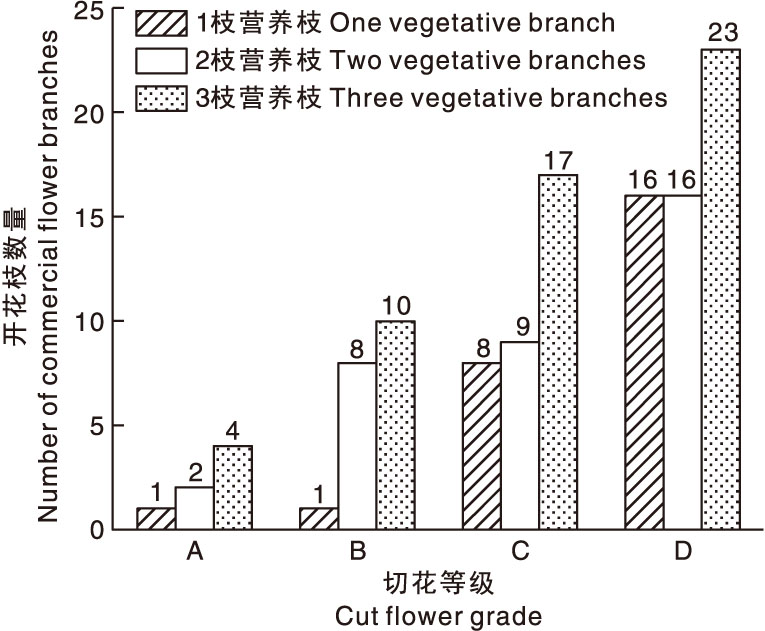
Fig.3 Effects of vegetative branch number on cut flower grade evaluation
| [1] | 李晓丽, 马策, 李振涛, 等. 月季扦插生根与插穗内源激素水平的关系[J]. 北方园艺, 2015(5): 61-63. |
| LI X L, MA C, LI Z T, et al. Relationship between cutting propagation and endogenous hormones levels of cuttings in rose[J]. Northern Horticulture, 2015(5): 61-63. | |
| [2] | MASCARINI L, LORENZO G A, VILELLA F. Leaf area index, water index, and red: far red ratio calculated by spectral reflectance and its relation to plant architecture and cut rose production[J]. Journal of the American Society for Horticultural Science, 2006, 131(3): 313-319. |
| [3] | 王彩云. 切花月季折枝及压枝修剪技术[J]. 农业科技与信息, 2008(15): 29. |
| WANG C Y. Techniques of branch folding and pruning of cut rose[J]. Agricultural Science-Technology and Information, 2008(15): 29. | |
| [4] | 王茹芸, 王利琼. 偃枝整枝法与传统修剪法对月季产量及品质影响的研究[J]. 云南农业科技, 2012(2): 7-10. |
| WANG R Y, WANG L Q. Study on the effects of pruning and pruning on the yield and quality of Chinese rose[J]. Yunnan Agricultural Science and Technology, 2012(2): 7-10. | |
| [5] | 黄承玲, 周洪英, 周艳, 等. 压枝对二年生切花月季产量和质量的影响[J]. 北方园艺, 2011(5): 97-99. |
| HUANG C L, ZHOU H Y, ZHOU Y, et al. Effect of shoot-bending on the quantity and quality of two-year cut rose[J]. Northern Horticulture, 2011(5): 97-99. | |
| [6] | BAILLE A, GUTIERREZ COLOMER R P, GONZALEZ-REAL M M. Analysis of intercepted radiation and dry matter accumulation in rose flower shoots[J]. Agricultural and Forest Meteorology, 2006, 137(1/2): 68-80. |
| [7] | KAJIHARA S, ITOU J, KATSUTANI N, et al. Partitioning of photosynthates originating from bent shoots in the arching and high-rack culture systems of cut rose production[J]. Scientia Horticulturae, 2009, 121(4): 485-489. |
| [8] | PARADISO R, PROIETTI S. Light-quality manipulation to control plant growth and photomorphogenesis in greenhouse horticulture: the state of the art and the opportunities of modern LED systems[J]. Journal of Plant Growth Regulation, 2022, 41(2): 742-780. |
| [9] | KILIC S, KARATAS A, CAVUSOGLU K, et al. Effects of different light treatments on the stomata movements of tomato (Lycopersicon esculentum Mill. cv. Joker) seedlings[J]. Journal of Animal and Veterinary Advances, 2010, 9(1): 131-135. |
| [10] | DORAIS M, GOSSELIN A. Physiological response of greenhouse vegetable crops to supplemental lighting[J]. Acta Horticulturae, 2002(580): 59-67. |
| [11] | 丁星文, 王慧纯, 李树发, 等. 温室无土栽培切花月季生长发育预测模型及其验证[J]. 西南农业学报, 2024, 37(2): 294-301. |
| DING X W, WANG H C, LI S F, et al. Development and validation of a prediction model for cut rose growth in greenhouse soilless cultivation[J]. Southwest China Journal of Agricultural Sciences, 2024, 37(2): 294-301. | |
| [12] | 程建峰, 沈允钢. 作物高光效之管见[J]. 作物学报, 2010, 36(8): 1235-1247. |
| CHENG J F, SHEN Y G. My humble opinions on high photosynthetic efficiency of crop[J]. Acta Agronomica Sinica, 2010, 36(8): 1235-1247. | |
| [13] | 王建平, 王纪章, 周静, 等. 光照对农林植物生长影响及人工补光技术研究进展[J]. 南京林业大学学报(自然科学版), 2020, 44(1): 215-222. |
| WANG J P, WANG J Z, ZHOU J, et al. Recent progress of artificial lighting technique and effect of light on plant growth[J]. Journal of Nanjing Forestry University(Natural Sciences Edition), 2020, 44(1): 215-222. | |
| [14] | 汤亮, 朱相成, 曹梦莹, 等. 水稻冠层光截获、光能利用与产量的关系[J]. 应用生态学报, 2012, 23(5): 1269-1276. |
| TANG L, ZHU X C, CAO M Y, et al. Relationships of rice canopy PAR interception and light use efficiency to grain yield[J]. Chinese Journal of Applied Ecology, 2012, 23(5): 1269-1276. | |
| [15] | 张晖, 孙淑娟. 郑州切花月季日光温室栽培[J]. 中国花卉园艺, 2010(6): 23-25. |
| ZHANG H, SUN S J. Cultivation of cut rose in sunlight greenhouse in Zhengzhou[J]. China Flowers & Horticulture, 2010(6): 23-25. | |
| [16] | KOOL M T N, LENSSEN E F A. Basal-shoot formation in young rose plants: Effects of bending practices and plant density[J]. Journal of Horticultural Science, 1997, 72(4): 635-644. |
| [17] | WARNER R M, ERWIN J E. Estimation of total canopy photosynthetic capacity of roses grown under two canopy management systems[J]. Acta Horticulturae, 2002(580): 89-93. |
| [18] | SÄRKKÄ L E, ERIKSSON C. Effects of bending and harvesting height combinations on cut rose yield in a dense plantation with high intensity lighting[J]. Scientia Horticulturae, 2003, 98(4): 433-447. |
| [19] | KIM S H, HEINRICH LIETH J. Effect of shoot-bending on productivity and economic value estimation of cut-flower roses grown in Coir and UC Mix[J]. Scientia Horticulturae, 2004, 99(3/4): 331-343. |
| [20] | 李涛, 杨其长. 设施园艺生产人工补光理论初探[J]. 农业工程技术, 2018, 38(16): 48-52. |
| LI T, YANG Q C. Preliminary study on the theory of artificial light supplement in protected horticulture production[J]. Agricultural Engineering Technology, 2018, 38(16): 48-52. | |
| [21] | HEIDARI Z, NORUZI P, REZAPOUR-FARD J, et al. Different LED light spectra’s and nano-chelated potassium affect the quality traits of Dolce Vita cut roses in soilless culture condition[J]. Scientific Reports, 2023, 13: 6769. |
| [22] | ZHANG N Y, VAN WESTREENEN A, EVERS J B, et al. Quantifying the contribution of bent shoots to plant photosynthesis and biomass production of flower shoots in rose (Rosa hybrida) using a functional-structural plant model[J]. Annals of Botany, 2020, 126(4): 587-599. |
| [1] | WANG Chao, LI Yanjie, NIU Yun, WEN Lianhao, CHEN Jingjing, WU Hongzhi, YANG Yuyong, WU Yandi. Biological characterization of black spot pathogens in Rosa chinensis and evaluation of varietal resistance [J]. Acta Agriculturae Zhejiangensis, 2025, 37(5): 1087-1096. |
| [2] | XU Jianjun, MA Yan, WU Qichao, WANG Baosheng, ZANG Dekui. Screening and analysis of genome sequence difference in wild rose [J]. Acta Agriculturae Zhejiangensis, 2022, 34(5): 1032-1038. |
| [3] | LYU Yongping, CHEN Zhi, LI Kunfeng, WANG Yiting, MOU Haojie, CHEN Jianping. Influence of light on tissue culture of rose [J]. , 2017, 29(8): 1297-1304. |
| [4] | LI Chunlan, YANG Yonghua, YANG Zhenkun, WANG Jinqiu, LIAO Weibiao. Comparison on the drought-resistance of five ornamental crabapple cultivars [J]. , 2017, 29(5): 782-790. |
| [5] | HOU Wei, MA Xu-hui, ZHANG Hao-yue, Chen Qi-yang, ZHANG Yong. Effects of shading on photosystem Ⅱ activity and antioxidant system of Rosa hybrida leaves in summer [J]. , 2016, 28(9): 1530-1537. |
| Viewed | ||||||
|
Full text |
|
|||||
|
Abstract |
|
|||||

