Acta Agriculturae Zhejiangensis ›› 2026, Vol. 38 ›› Issue (2): 383-396.DOI: 10.3969/j.issn.1004-1524.20250100
• Biosystems Engineering • Previous Articles Next Articles
Lightweight and improved apple orchard fruit recognition model CS_YOLOv7
OUYANG Yu( ), LIU Shuo(), LI Mengmin, ZHANG Peng
School of Mathematics & Computer Science ,Wuhan Polytechnic University Wuhan 430048, China
-
Received:2025-02-10Online:2026-02-25Published:2026-03-24

CLC Number:
Cite this article
OUYANG Yu, LIU Shuo, LI Mengmin, ZHANG Peng. Lightweight and improved apple orchard fruit recognition model CS_YOLOv7[J]. Acta Agriculturae Zhejiangensis, 2026, 38(2): 383-396.
share this article
Add to citation manager EndNote|Ris|BibTeX
URL: http://www.zjnyxb.cn/EN/10.3969/j.issn.1004-1524.20250100
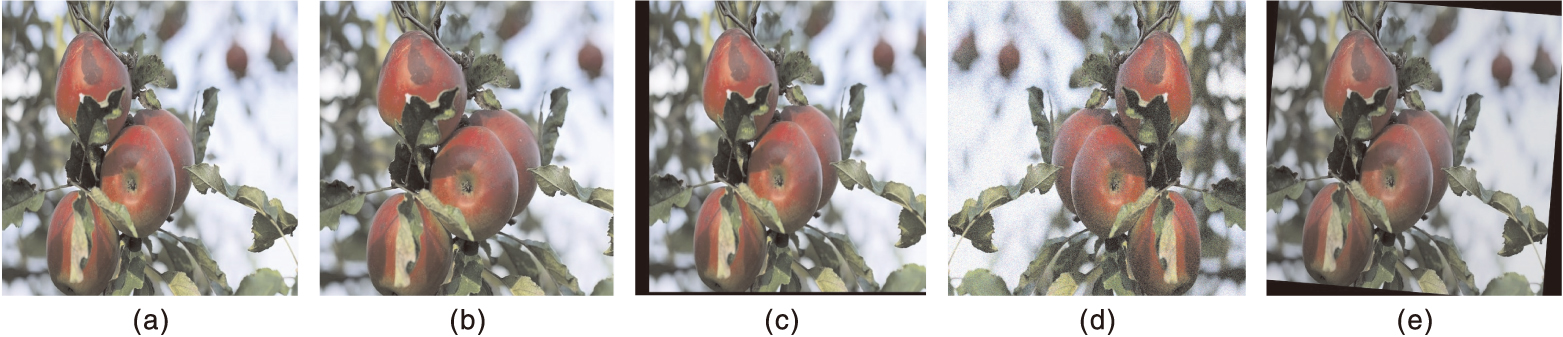
Fig.1 Examples of dataset augmentation a, Original image; b, Random cropping; c, Random translation; d, Random flipping plus Gaussian noise; e, Random rotation plus random brightness.
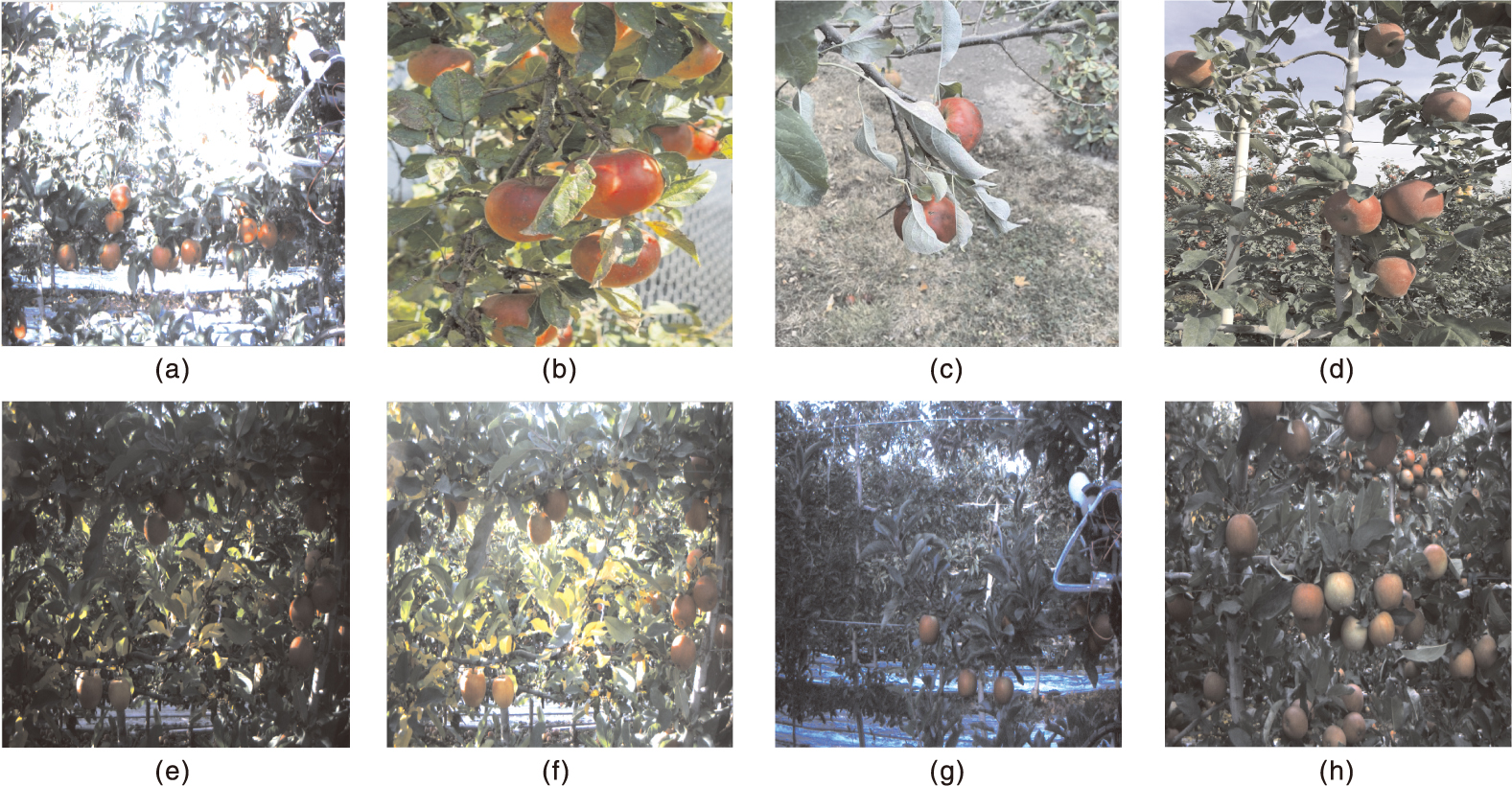
Fig.2 Examples of images under different conditions a, Backlighting; b, Frontlighting; c, Occlusion by fruit leaves; d, Occlusion by lampposts; e, Early morning sunrise scene; f, Midday strong sunlight scene; g, Sparse fruit scene; h, Dense fruit scene.
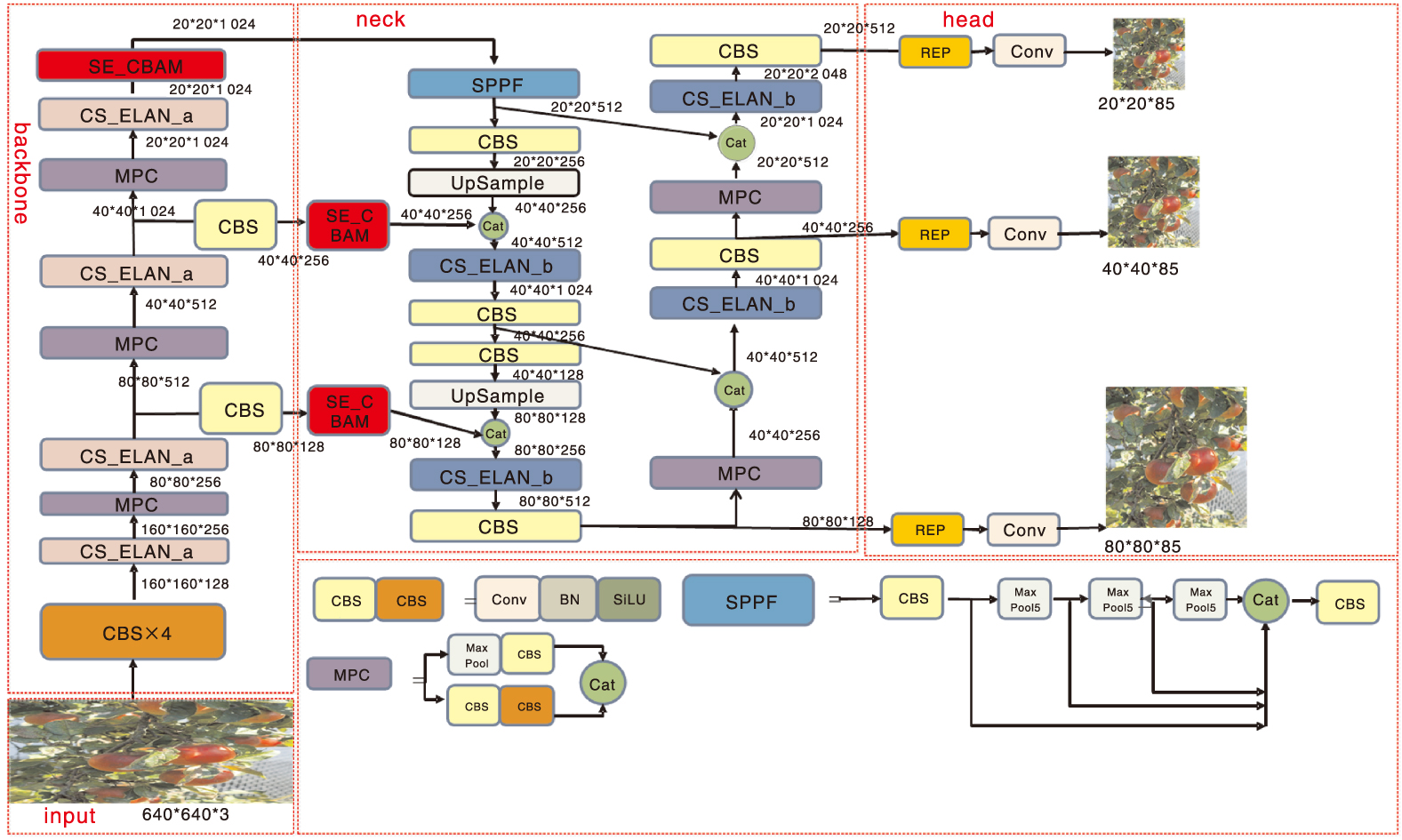
Fig.3 Overall structure of CS-YOLOv7 network model cat, Concat; Conv, Convolution; MaxPool, Max pooling; BN, Batch normalization; SiLU, Sigmoid linear unit; REP, Re-parameterized convolution; SE_CBAM, Squeeze-and-excitation_convolutional block attention module. The same as below.
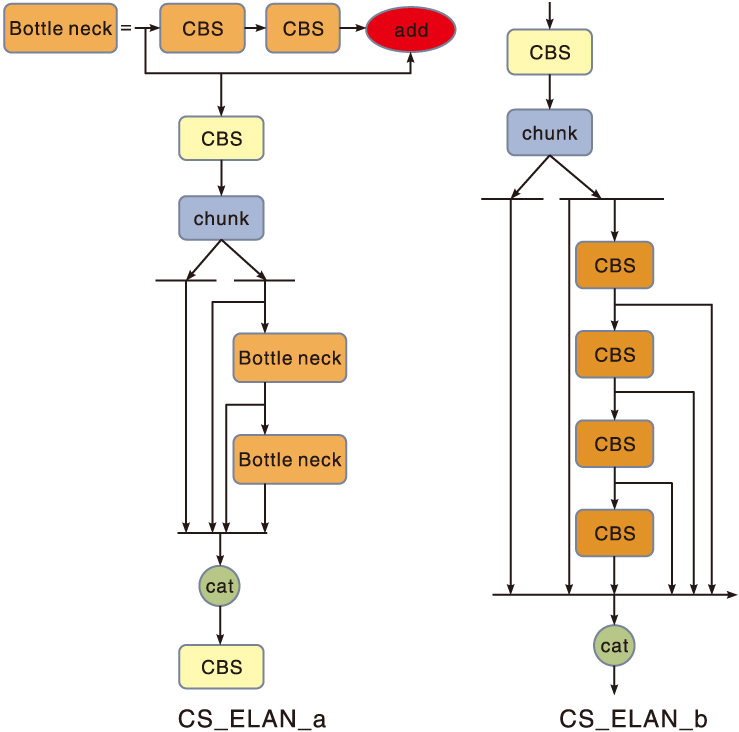
Fig.4 Structure of CS_ELAN
| 检测层大小 Detection layer size | 先验框尺寸Anchor box size | |
|---|---|---|
| 调整前Before adjustment | 调整后After adjustment | |
| 80×80 | [12, 16], [19, 36], [40, 28] | [9, 12], [15, 29], [32, 23] |
| 40×40 | [36, 75], [76, 55], [72, 146] | [29, 60], [63, 44], [59, 119] |
| 20×20 | [142, 110], [192, 243], [459, 401] | [171, 132], [231, 292], [550, 483] |
Table 1 Reunion of anchor box
| 检测层大小 Detection layer size | 先验框尺寸Anchor box size | |
|---|---|---|
| 调整前Before adjustment | 调整后After adjustment | |
| 80×80 | [12, 16], [19, 36], [40, 28] | [9, 12], [15, 29], [32, 23] |
| 40×40 | [36, 75], [76, 55], [72, 146] | [29, 60], [63, 44], [59, 119] |
| 20×20 | [142, 110], [192, 243], [459, 401] | [171, 132], [231, 292], [550, 483] |
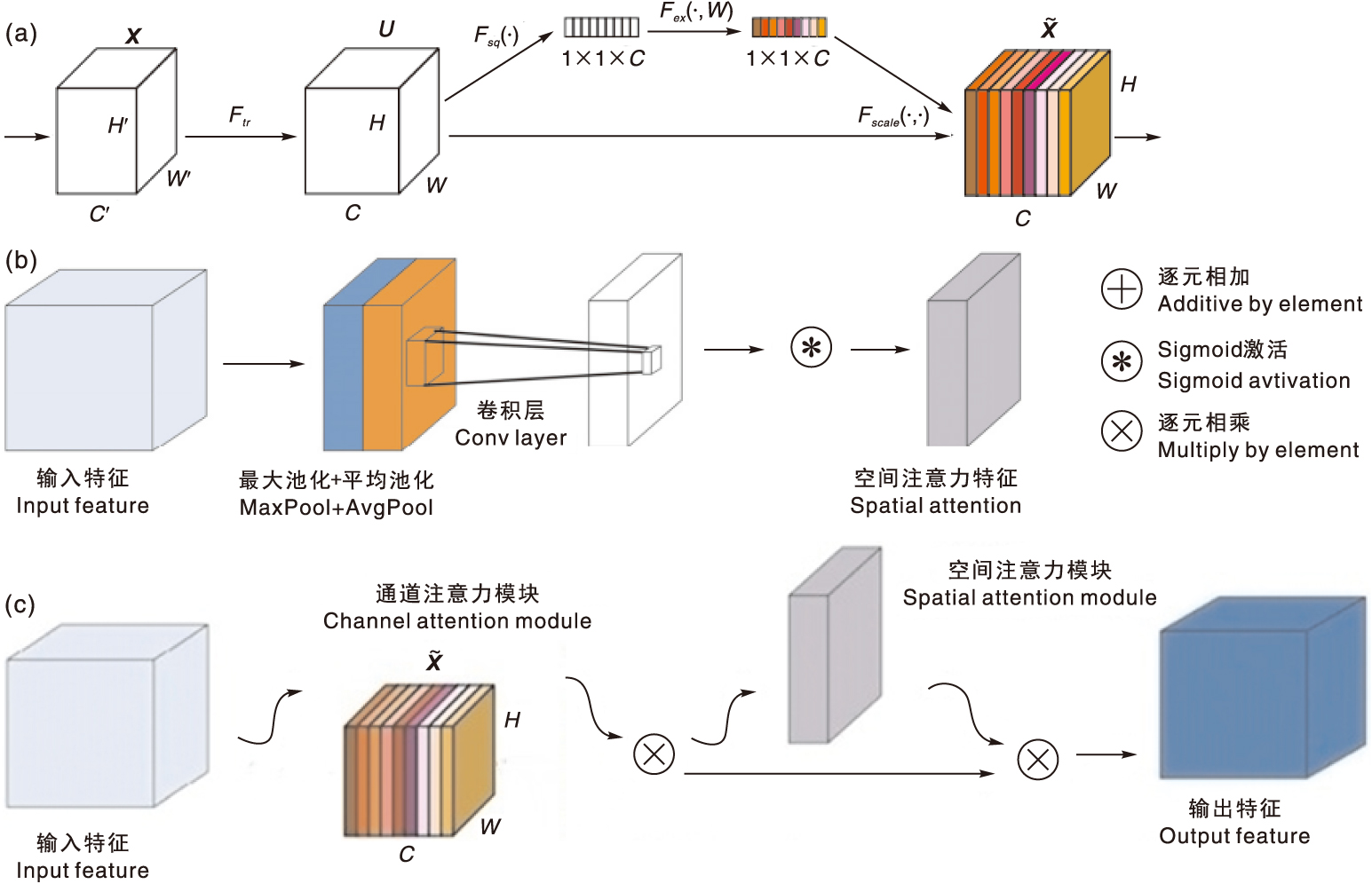
Fig.5 Structure of SE_CBAM module a, Squeeze-and-excitation channel attention module; b, Spatial attention module; c, Convolutional block attention module.
| 模型Model | P | R | mAP@0.5 |
|---|---|---|---|
| Y | 73.5 | 67.4 | 73.4 |
| G | 73.5 | 69.3 | 74.5 |
Table 2 Comparison of performance before and after the prior box reunion
| 模型Model | P | R | mAP@0.5 |
|---|---|---|---|
| Y | 73.5 | 67.4 | 73.4 |
| G | 73.5 | 69.3 | 74.5 |
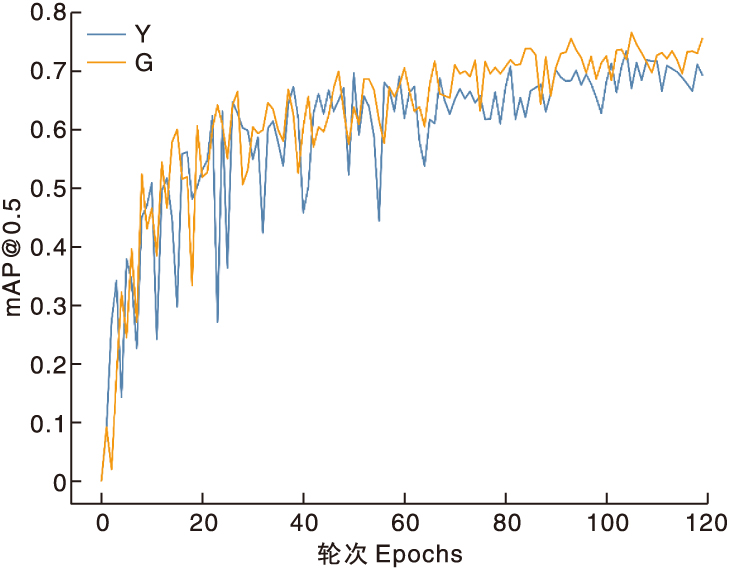
Fig.6 Comparison of iteration curves before and after the prior box reunion mAP@0.5,Mean average precision under intersection over union (IoU) of 0.5. The same as below. Y represents the model with the original anchor boxes, and G represents the model with the improved anchor boxes.
| 损失函数 Loss function | P/% | R/% | mAP@0.5/% | v/(frame·s-1) |
|---|---|---|---|---|
| CIoU | 73.5 | 69.3 | 74.5 | 106.3 |
| EIoU | 67.3 | 67.3 | 70.2 | 166.6 |
| SIoU | 68.3 | 59.3 | 65.0 | 169.4 |
| MPDIoU | 79.2 | 63.9 | 74.5 | 147.0 |
| Wise-IoU | 80.8 | 68.7 | 79.1 | 161.3 |
Table 3 Comparison of model performance under different loss functions
| 损失函数 Loss function | P/% | R/% | mAP@0.5/% | v/(frame·s-1) |
|---|---|---|---|---|
| CIoU | 73.5 | 69.3 | 74.5 | 106.3 |
| EIoU | 67.3 | 67.3 | 70.2 | 166.6 |
| SIoU | 68.3 | 59.3 | 65.0 | 169.4 |
| MPDIoU | 79.2 | 63.9 | 74.5 | 147.0 |
| Wise-IoU | 80.8 | 68.7 | 79.1 | 161.3 |
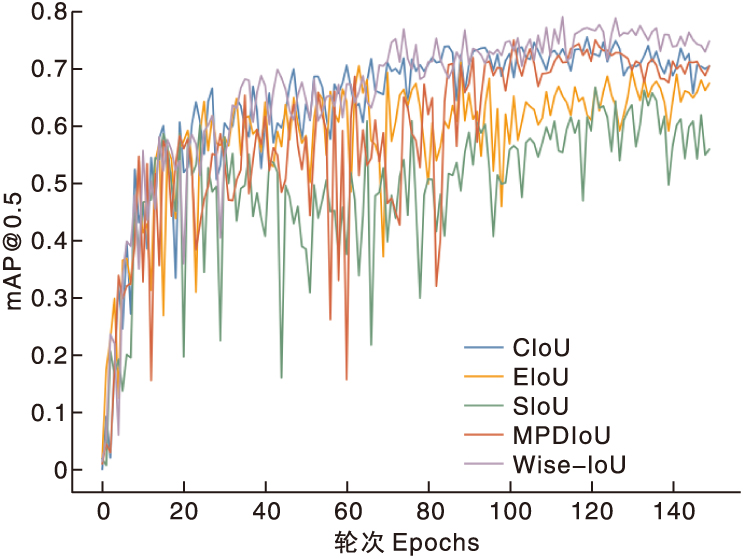
Fig.7 Iteration curves under different loss functions
| 编号 No. | 改进情况Improvement status | N | v/ (frame·s-1) | mAP@0.5/% | |||
|---|---|---|---|---|---|---|---|
| CS_ELAN+SPPF | K-means++ | Wise-IoU | SE_CBAM | ||||
| 1 | × | × | × | × | 37 196 556 | 32.6 | 78.3 |
| 2 | √ | × | × | × | 25 226 060 | 166.6 | 73.4 |
| 3 | √ | √ | × | × | 25 226 060 | 106.3 | 74.5 |
| 4 | √ | × | √ | × | 25 226 060 | 166.6 | 71.3 |
| 5 | √ | √ | √ | × | 25 226 060 | 161.3 | 79.1 |
| 6 | √ | √ | √ | √ | 25 367 426 | 151.5 | 80.0 |
Table 4 Results of ablation experiments
| 编号 No. | 改进情况Improvement status | N | v/ (frame·s-1) | mAP@0.5/% | |||
|---|---|---|---|---|---|---|---|
| CS_ELAN+SPPF | K-means++ | Wise-IoU | SE_CBAM | ||||
| 1 | × | × | × | × | 37 196 556 | 32.6 | 78.3 |
| 2 | √ | × | × | × | 25 226 060 | 166.6 | 73.4 |
| 3 | √ | √ | × | × | 25 226 060 | 106.3 | 74.5 |
| 4 | √ | × | √ | × | 25 226 060 | 166.6 | 71.3 |
| 5 | √ | √ | √ | × | 25 226 060 | 161.3 | 79.1 |
| 6 | √ | √ | √ | √ | 25 367 426 | 151.5 | 80.0 |
| 模型 | N | FLOPS/109 | v/(frame·s-1) | mAP@0.5/% | S/MB |
|---|---|---|---|---|---|
| SSD | 24 386 000 | 87.5 | 82.3 | 65.2 | 100.0 |
| Faster R-CNN | 41 753 000 | 83.8 | 55.0 | 65.7 | 314.0 |
| RetinaNet | 32 201 069 | 127.2 | 50.0 | 76.1 | 245.0 |
| YOLOv4 | 63 937 686 | 170.0 | 70.0 | 71.6 | 244.0 |
| YOLOv5x | 87 244 374 | 217.0 | 51.0 | 81.3 | 1 000.0 |
| YOLOv7 | 37 196 556 | 105.0 | 32.6 | 78.3 | 71.0 |
| YOLOv8 | 25 902 640 | 79.3 | 101.9 | 78.4 | 49.6 |
| YOLOv9 | 25 590 912 | 104.0 | 79.2 | 79.5 | 49.2 |
| Tiny-YOLO | 6 014 988 | 13.2 | 588.2 | 72.7 | 6.3 |
| MobileNet-YOLO | 24 616 556 | 41.3 | 161.0 | 78.1 | 49.7 |
| YOLOv12 | 26 454 880 | 89.7 | 107.5 | 80.2 | 53.5 |
| CS_YOLOv7 | 25 367 426 | 88.1 | 151.5 | 80.0 | 48.7 |
Table 5 Comparison of target detection effects of different models
| 模型 | N | FLOPS/109 | v/(frame·s-1) | mAP@0.5/% | S/MB |
|---|---|---|---|---|---|
| SSD | 24 386 000 | 87.5 | 82.3 | 65.2 | 100.0 |
| Faster R-CNN | 41 753 000 | 83.8 | 55.0 | 65.7 | 314.0 |
| RetinaNet | 32 201 069 | 127.2 | 50.0 | 76.1 | 245.0 |
| YOLOv4 | 63 937 686 | 170.0 | 70.0 | 71.6 | 244.0 |
| YOLOv5x | 87 244 374 | 217.0 | 51.0 | 81.3 | 1 000.0 |
| YOLOv7 | 37 196 556 | 105.0 | 32.6 | 78.3 | 71.0 |
| YOLOv8 | 25 902 640 | 79.3 | 101.9 | 78.4 | 49.6 |
| YOLOv9 | 25 590 912 | 104.0 | 79.2 | 79.5 | 49.2 |
| Tiny-YOLO | 6 014 988 | 13.2 | 588.2 | 72.7 | 6.3 |
| MobileNet-YOLO | 24 616 556 | 41.3 | 161.0 | 78.1 | 49.7 |
| YOLOv12 | 26 454 880 | 89.7 | 107.5 | 80.2 | 53.5 |
| CS_YOLOv7 | 25 367 426 | 88.1 | 151.5 | 80.0 | 48.7 |
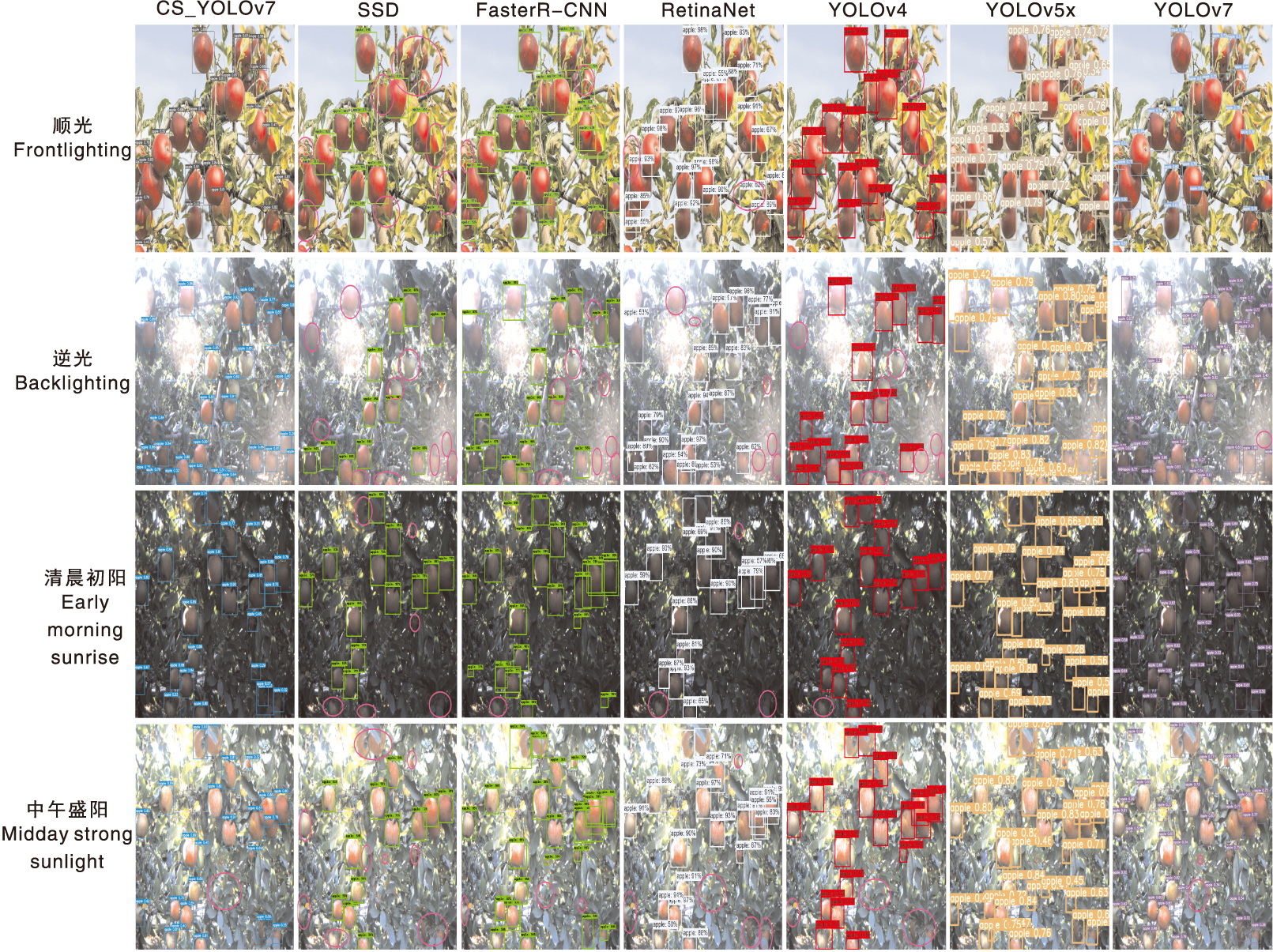
Fig.8 Identification effect of young apple fruit under different lighting conditions by different models The purple circles in the picture indicate missed or false detections of young apple fruits. The scenes “Early morning sunrise” and “Midday strong sunlight” were photographed at the same location of the fruit tree at different times.
| 数据集 Dataset | 模型 Model | P | R | mAP@0.5 |
|---|---|---|---|---|
| 子集1 | YOLOv7 | 76.0 | 78.0 | 74.0 |
| Subset | MobileNet-YOLO | 84.6 | 73.4 | 70.0 |
| YOLOv12 | 96.0 | 61.3 | 77.4 | |
| CS_YOLOv7 | 78.6 | 76.7 | 77.8 | |
| 子集2 | YOLOv7 | 85.4 | 71.4 | 67.8 |
| Subset 2 | MobileNet-YOLO | 92.0 | 69.1 | 69.2 |
| YOLOv12 | 89.5 | 60.4 | 76.9 | |
| CS_YOLOv7 | 82.7 | 77.7 | 74.1 |
Table 6 Comparison of detection effects on different datasets by different models
| 数据集 Dataset | 模型 Model | P | R | mAP@0.5 |
|---|---|---|---|---|
| 子集1 | YOLOv7 | 76.0 | 78.0 | 74.0 |
| Subset | MobileNet-YOLO | 84.6 | 73.4 | 70.0 |
| YOLOv12 | 96.0 | 61.3 | 77.4 | |
| CS_YOLOv7 | 78.6 | 76.7 | 77.8 | |
| 子集2 | YOLOv7 | 85.4 | 71.4 | 67.8 |
| Subset 2 | MobileNet-YOLO | 92.0 | 69.1 | 69.2 |
| YOLOv12 | 89.5 | 60.4 | 76.9 | |
| CS_YOLOv7 | 82.7 | 77.7 | 74.1 |
| [1] | 李寒, 陶涵虓, 崔立昊, 等. 基于SOM-K-means算法的番茄果实识别与定位方法[J]. 农业机械学报, 2021, 52(1): 23-29. |
| LI H, TAO H X, CUI L H, et al. Recognition and localization method of tomato based on SOM-K-means algorithm[J]. Transactions of the Chinese Society for Agricultural Machinery, 2021, 52(1): 23-29. | |
| [2] | 张平川, 胡彦军, 张烨, 等. 基于改进版Faster-RCNN的复杂背景下桃树黄叶病识别研究[J]. 中国农机化学报, 2024, 45(3): 219-225. |
| ZHANG P C, HU Y J, ZHANG Y, et al. Recognition of peach tree yellow leaf disease under complex background based on improved Faster-RCNN[J]. Journal of Chinese Agricultural Mechanization, 2024, 45(3): 219-225. | |
| [3] | 石展鲲, 杨风, 韩建宁, 等. 基于Faster-RCNN的自然环境下苹果识别[J]. 计算机与现代化, 2023(2): 62-65. |
| SHI Z K, YANG F, HAN J N, et al. Apples recognition in natural environment based on Faster-RCNN[J]. Computer and Modernization, 2023(2): 62-65. | |
| [4] | 司永胜, 孔德浩, 王克俭, 等. 基于CRV-YOLO的苹果中心花和边花识别方法[J]. 农业机械学报, 2024, 55(2): 278-286. |
| SI Y S, KONG D H, WANG K J, et al. Recognition of apple king flower and side flower based on CRV-YOLO[J]. Transactions of the Chinese Society for Agricultural Machinery, 2024, 55(2): 278-286. | |
| [5] | 朱琦, 周德强, 盛卫锋, 等. 基于DSCS-YOLO的苹果表面缺陷检测方法[J]. 南京农业大学学报, 2024, 47(3): 592-601. |
| ZHU Q, ZHOU D Q, SHENG W F, et al. Apple surface defect detection method based on DSCS-YOLO[J]. Journal of Nanjing Agricultural University, 2024, 47(3): 592-601. | |
| [6] | 杜娟, 崔少华, 晋美娟, 等. 改进YOLOv7的复杂道路场景目标检测算法[J]. 计算机工程与应用, 2024, 60(1): 96-103. |
| DU J, CUI S H, JIN M J, et al. Improved complex road scene object detection algorithm of YOLOv7[J]. Computer Engineering and Applications, 2024, 60(1): 96-103. | |
| [7] | 宋怀波, 马宝玲, 尚钰莹, 等. 基于YOLOv7-ECA模型的苹果幼果检测[J]. 农业机械学报, 2023, 54(6): 233-242. |
| SONG H B, MA B L, SHANG Y Y, et al. Detection of young apple fruits based on YOLOv7-ECA model[J]. Transactions of the Chinese Society of Agricultural Machinery, 2023, 54(6): 233-242. | |
| [8] | 洪孔林, 吴明晖, 高博, 等. 基于改进YOLOv7-tiny的茶叶嫩芽分级识别方法[J]. 茶叶科学, 2024, 44(1): 62-74. |
| HONG K L, WU M H, GAO B, et al. A grading identification method for tea buds based on improved YOLOv7-tiny[J]. Journal of Tea Science, 2024, 44(1): 62-74. | |
| [9] | WANG C Y, BOCHKOVSKIY A, LIAO H Y M. YOLOv7: trainable bag-of-freebies sets new state-of-the-art for real-time object detectors[C]//2023 IEEE/CVF Conference on Computer Vision and Pattern Recognition (CVPR). June 17-24, 2023, Vancouver, BC, Canada. IEEE, 2023: 7464-7475. |
| [10] | LIN T Y, DOLLÁR P, GIRSHICK R, et al. Feature pyramid networks for object detection[C]//2017 IEEE Conference on Computer Vision and Pattern Recognition (CVPR). July 21-26, 2017, Honolulu, HI, USA. IEEE, 2017: 936-944. |
| [11] | LIU S, QI L, QIN H F, et al. Path aggregation network for instance segmentation[C]//2018 IEEE/CVF Conference on Computer Vision and Pattern Recognition. June 18-23, 2018. Salt Lake City, UT. IEEE, 2018: 8759-8768. |
| [12] | VARGHESE R, M S. YOLOv8: a novel object detection algorithm with enhanced performance and robustness[C]//2024 International Conference on Advances in Data Engineering and Intelligent Computing Systems (ADICS). April 18-19, 2024, Chennai, India. IEEE, 2024: 1-6. |
| [13] | CHANDGUDE P, BHAGWAT A, AUTADE M. A novel approach for k-means++approximation using Hadoop[J]. International Journal of Scientific and Research Publications, 2015, 5(12): 186-188. |
| [14] | ZHENG Z, WANG P, LIU W, et al. Distance-IoU loss: faster and better learning for bounding box regression[J]. Proceedings of the AAAI Conference on Artificial Intelligence, 2020, 34(7): 12993-13000. |
| [15] | TONG Z J, CHEN Y H, XU Z W, et al. Wise-IoU: bounding box regression loss with dynamic focusing mechanism[EB/OL]. (2023-01-24) [2025-02-10]. https://arxiv.org/abs/2301.10051. |
| [16] | WOO S, PARK J, LEE J Y, et al. CBAM: convolutional block attention module[C]//Computer Vision - ECCV 2018. Cham: Springer, 2018: 3-19. |
| [17] | HU J, SHEN L, ALBANIE S, et al. Squeeze-and-excitation networks[J]. IEEE Transactions on Pattern Analysis and Machine Intelligence, 2020, 42(8): 2011-2023. |
| [18] | ELFWING S, UCHIBE E, DOYA K. Sigmoid-weighted linear units for neural network function approximation in reinforcement learning[EB/OL].(2017-02-10) [2025-02-10]. https://arxiv.org/abs/1702.03118. |
| [19] | ZHANG YF, REN WQ, ZHANG Z, et al. Focal and efficient IOU loss for accurate bounding box regression[J]. Neurocomputing, 2022, 506: 146-157. |
| [20] | GEVORGYAN Z, et al. Siou loss: more powerful learning for bounding box regression[EB/OL]. (2022-05-25) [2025-02-10]. https://arxiv.org/abs/2205.12740. |
| [21] | MA S L, YONG X. MPDIoU: a loss for efficient and accurate bounding box regression[EB/OL]. (2023-06-14) [2025-02-10]. https://arxiv.org/abs/2307.07662. |
| [22] | LIU W, ANGUELOV D, ERHAN D, et al. SSD: single shot MultiBox detector[C]//Computer Vision - ECCV 2016. Cham: Springer, 2016: 21-37. |
| [23] | REN S Q, HE K M, GIRSHICK R, et al. Faster R-CNN: towards real-time object detection with region proposal networks[J]. IEEE Transactions on Pattern Analysis and Machine Intelligence, 2017, 39(6): 1137-1149. |
| [24] | BOCHKOVSKIY A, WANG C Y, LIAO H Y M, et al. YOLOv4:optimal speed and accuracy of object detection[EB/OL].(2020-04-23) [2025-02-10]. https://arxiv.org/abs/2004.10934. |
| [25] | MALTA A, MENDES M, FARINHA T. Augmented reality maintenance assistant using YOLOv5[J]. Applied Sciences, 2021, 11(11): 4758. |
| [26] | WANG C Y, YEH I H, LIAO H Y M. YOLOv9: learning what you want to learn using programmable gradient information[C]//Computer Vision - ECCV 2024. Cham: Springer, 2025: 1-21. |
| [27] | TIAN Y J, YE Q X, DOERMANN D. YOLOv12:attention-centric real-time object detectors[EB/OL].[2025-02-10]. https://arxiv.org/abs/2502.12524. |
| [1] | LYU Yinchun, DUAN Enze, ZHU Yixing, ZHENG Xia, BAI Zongchun. Real-time detection of overturned meat ducks based on YOLOv8-Swin Transformer model [J]. Acta Agriculturae Zhejiangensis, 2025, 37(7): 1556-1566. |
| [2] | LI Mengmin, LIU Shuo, OUYANG Yu, ZHANG Peng. An efficient and lightweight citrus leaf disease detection model based on YOLOv8n [J]. Acta Agriculturae Zhejiangensis, 2025, 37(10): 2198-2208. |
| [3] | GUO Xiuming, WANG Dawei, LIU Shengping, ZHU Yeping, LIU Xiaohui, LIN Kejian, WANG Jiayu, LI Fei. Study on key problems for rat hole recognition and count near ground based on deep learning and its application [J]. Acta Agriculturae Zhejiangensis, 2024, 36(9): 2146-2154. |
| [4] | NING Wenkai, LI Jing, SHEN Xiaodong, WU Xin, LI Zhenfeng. Prediction of multi-source fusion of β-carotene during pumpkin drying [J]. Acta Agriculturae Zhejiangensis, 2023, 35(8): 1876-1887. |
| [5] | YAN Ning, ZHANG Han, DONG Hongtu, KANG Kai, LUO Bin. Wheat variety recognition method based on same position segmentation of transmitted light and reflected light images [J]. Acta Agriculturae Zhejiangensis, 2022, 34(3): 590-598. |
| [6] | BAO Xiaomin, SHENG Jiawen. Research on automatic identification and counting of insect pests on sticky board [J]. , 2019, 31(9): 1516-1522. |
| [7] | WU Yuanyuan, SHANG Xin, ZHANG Chengbin, XIE Xinyi. Acquisition of operation parameters of intelligent leaf vegetable harvester under natural lighting [J]. , 2017, 29(11): 1930-1937. |
| [8] | TIAN Hai-tao, ZHAO Jun, PU Fu-peng. A method for recognizing potato’s bud eye [J]. , 2016, 28(11): 1947-1953. |
| [9] | REN Lei1, ZHANG Jun2,*, LU Sheng\|min2. Research on machine vision algorithm for automatic sorting of membrane\|removed mandarin segments [J]. , 2015, 27(12): 2212-. |
| [10] | LIU Jian-jun;YAO Li-jian;PENG Zhang-lin. Detection technique for cathay hickory grade based on machine vision [J]. , 2010, 22(6): 854-858. |
| [11] | LIANG Kun;LUO Han-ya;SHEN Ming-xia;*;HE Rui-yin;ZHANG Lu. Review and prospect for the detection technique of paddy seeding quality [J]. , 2010, 22(2): 0-257. |
| Viewed | ||||||
|
Full text |
|
|||||
|
Abstract |
|
|||||

