Acta Agriculturae Zhejiangensis ›› 2026, Vol. 38 ›› Issue (6): 1187-1197.DOI: 10.3969/j.issn.1004-1524.20250569
• Animal Science • Previous Articles Next Articles
Analysis of gut bacterial community characteristics in Penaeus japonicus with different body sizes
CHEN Ting1( ), LU Yangyang2, CHEN Heping3, XIA Wuqiang1, CHEN Chen4, LIU Wei1, GUO Haipeng1,2()
- 1
Xiangshan (Ningbo University) Aquatic Breeding Industry Innovation Research Institute Xiangshan 315700, Zhejiang, China
2School of Marine Sciences ,Ningbo University Ningbo 315211, Zhejiang, China
3School of Civil & Environmental Engineering and Geography Science ,Ningbo University Ningbo 315211, Zhejiang, China
4Zhejiang Mariculture Research Institute Wenzhou 325005, Zhejiang, China
-
Received:2025-09-04Online:2026-06-25Published:2026-07-14

CLC Number:
Cite this article
CHEN Ting, LU Yangyang, CHEN Heping, XIA Wuqiang, CHEN Chen, LIU Wei, GUO Haipeng. Analysis of gut bacterial community characteristics in Penaeus japonicus with different body sizes[J]. Acta Agriculturae Zhejiangensis, 2026, 38(6): 1187-1197.
share this article
Add to citation manager EndNote|Ris|BibTeX
URL: http://www.zjnyxb.cn/EN/10.3969/j.issn.1004-1524.20250569
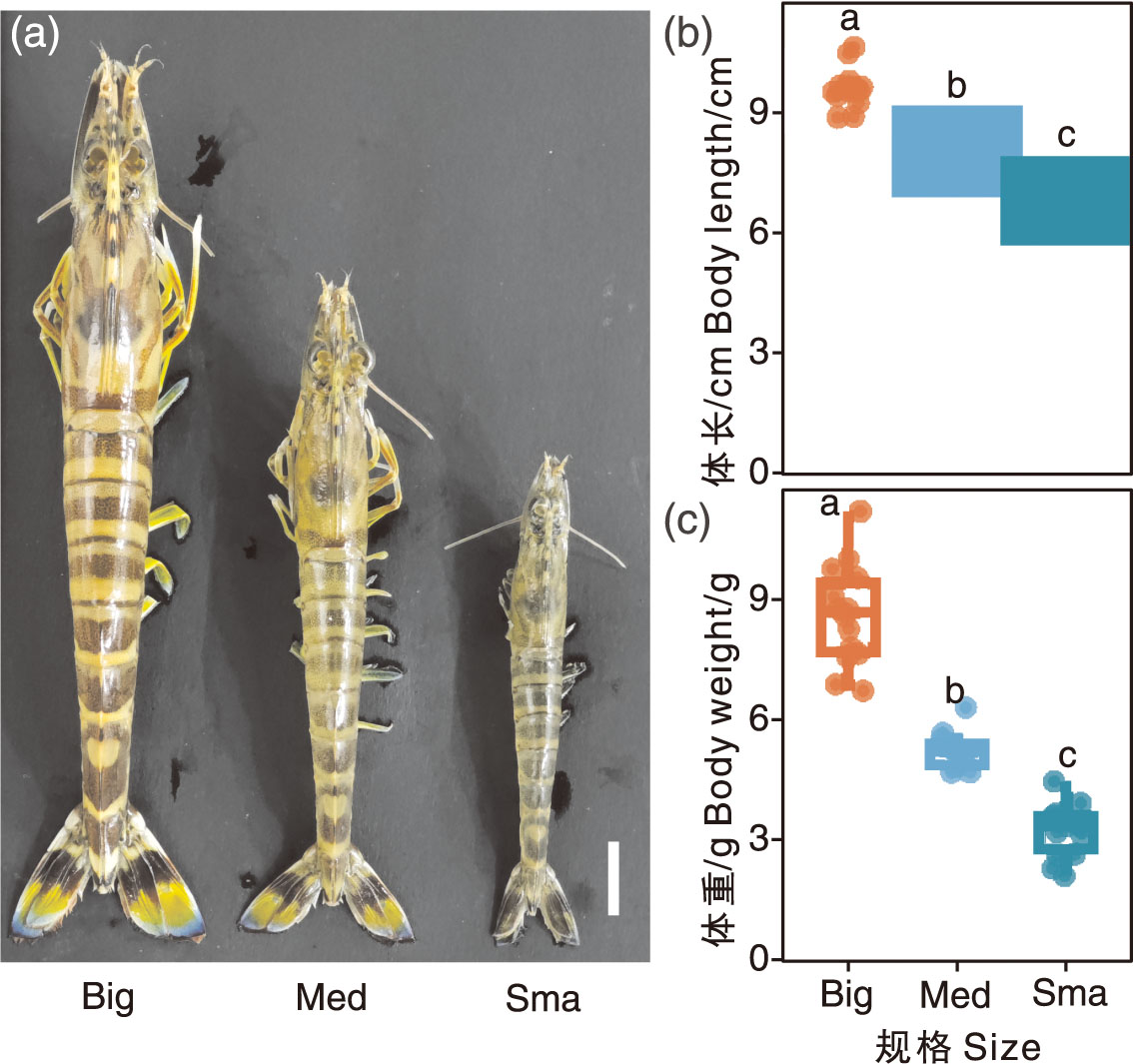
Fig.1 Body length and body weight of shrimp with different sizes from the same culture pond a, Phenotypic photographs of Penaeus japonicus with different sizes from the same culture pond; b, Body length of Penaeus japonicus with different sizes; c, Body weight of Penaeus japonicus with different sizes. Bars marked without the same different lowercase letters indicate significant (p<0.05) differences. The scale bar in figure a represents 1 cm. “Big”, “Med”, and “Sma” represent large-sized, medium-sized, and small-sized shrimp, respectively. The same as below.
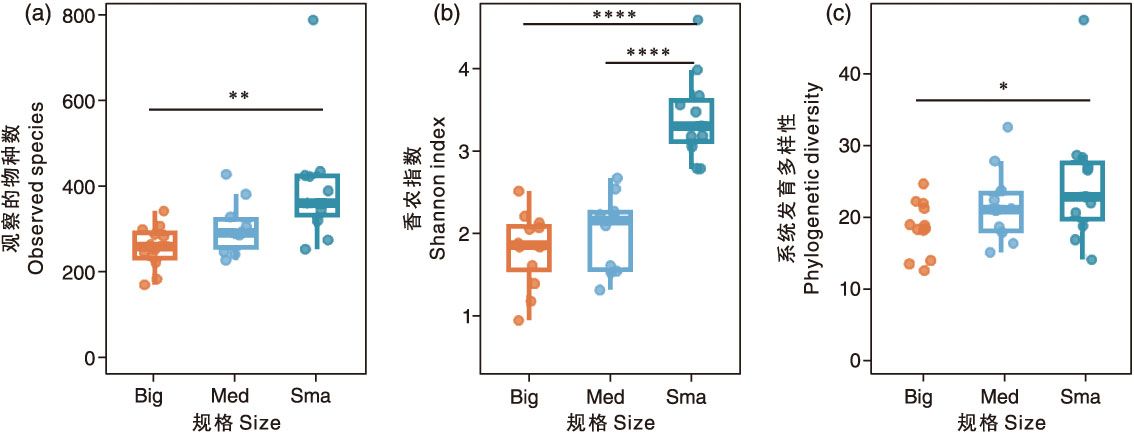
Fig.2 Alpha-diversity indices of the intestinal bacterial communities in Penaeus japonicus with different sizes * indicates p<0.05; ** indicates p<0.01; **** indicates p<0.000 1. The same as below.
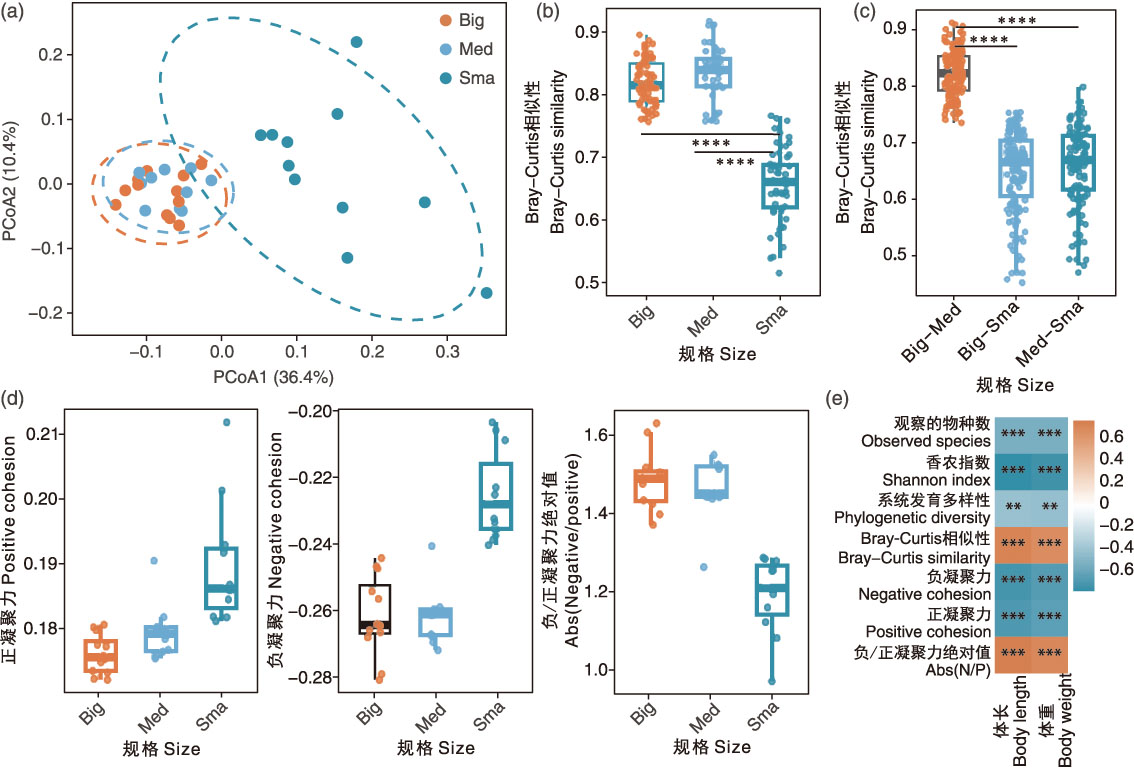
Fig.3 Gut bacterial community structure and network cohesion parameters of Penaeus japonicus with different sizes, and their correlations with body length and weight a, Principal coordinate analysis (PCoA) of the gut bacterial community; b, Intra-class similarity of the gut bacterial community; c, Inter-class similarity of the gut bacterial community; d, Network cohesion parameters of the gut bacterial community; e, Correlations between α-diversity parameters, intra-class similarity, network cohesion parameters and body length/weight of Penaeus japonicus. *** indicates p<0.001.
| 组别 Group | ANOSIM | PERMANOVA | ||
|---|---|---|---|---|
| R | p | R2 | p | |
| 整体Total | 0.467 | 0.001 | 0.377 | 0.001 |
| 大虾vs.中虾Large-sized shrimp vs. medium-sized shrimp | 0.112 | 0.096 | 0.116 | 0.090 |
| 大虾vs.小虾Large-sized shrimp vs. small-sized shrimp | 0.600 | 0.001 | 0.441 | 0.001 |
| 中虾vs.小虾Medium-sized shrimp vs. small-sized shrimp | 0.612 | 0.001 | 0.373 | 0.001 |
Table 1 ANOSIM (analysis of similarities) and PERMANOVA (permutational multivariate analysis of variance, permutation=999) analyses of gut bacterial communities in Penaeus japonicus with different sizes
| 组别 Group | ANOSIM | PERMANOVA | ||
|---|---|---|---|---|
| R | p | R2 | p | |
| 整体Total | 0.467 | 0.001 | 0.377 | 0.001 |
| 大虾vs.中虾Large-sized shrimp vs. medium-sized shrimp | 0.112 | 0.096 | 0.116 | 0.090 |
| 大虾vs.小虾Large-sized shrimp vs. small-sized shrimp | 0.600 | 0.001 | 0.441 | 0.001 |
| 中虾vs.小虾Medium-sized shrimp vs. small-sized shrimp | 0.612 | 0.001 | 0.373 | 0.001 |
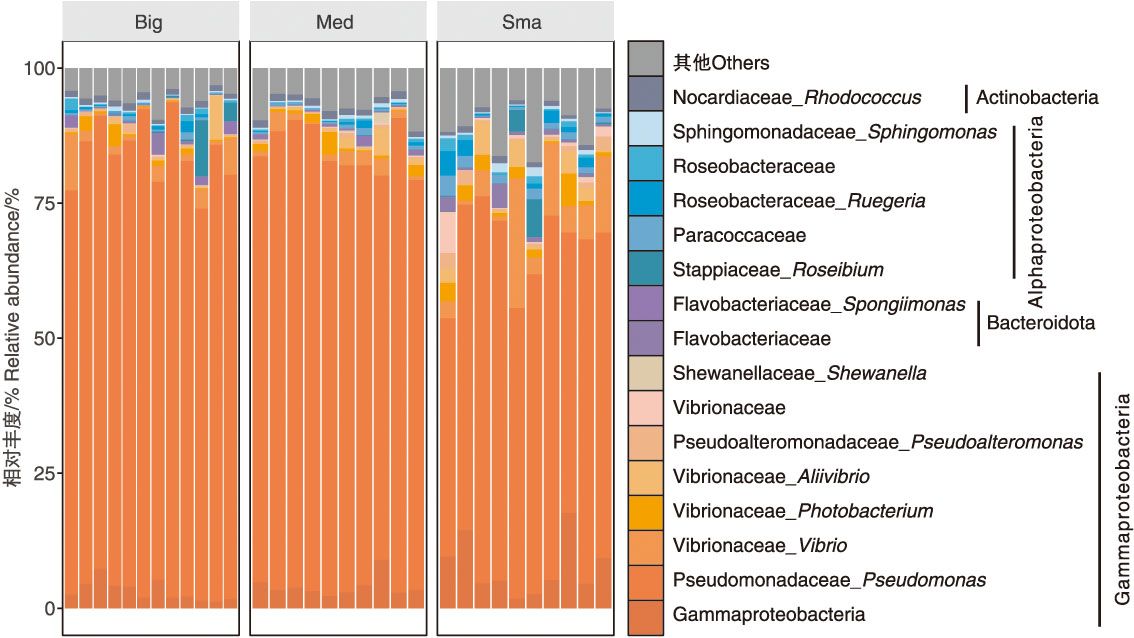
Fig.4 Gut bacterial community compositions in Penaeus japonicus with different sizes
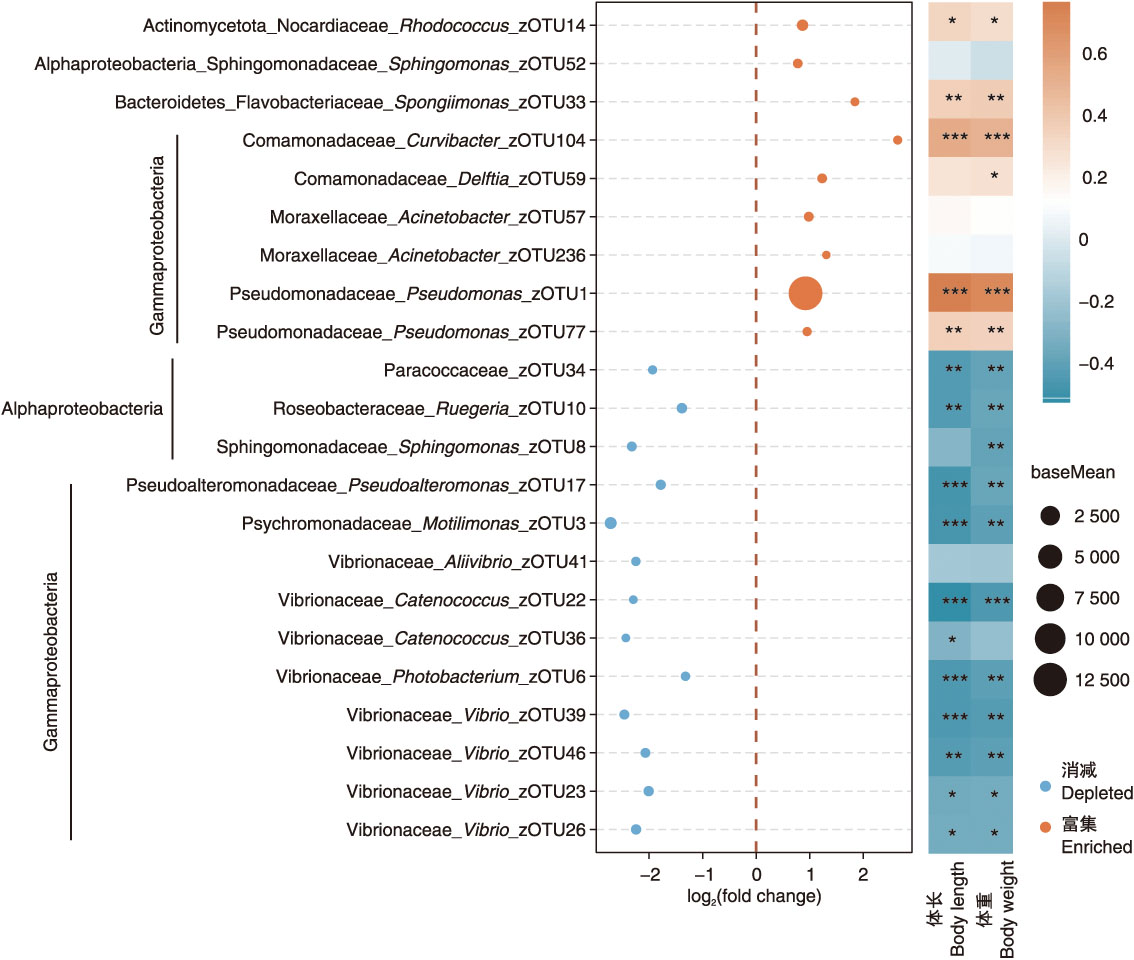
Fig.5 Differential taxa of the gut bacterial community in Penaeus japonicus with different sizes and their correlation with shrimp body length and body weight
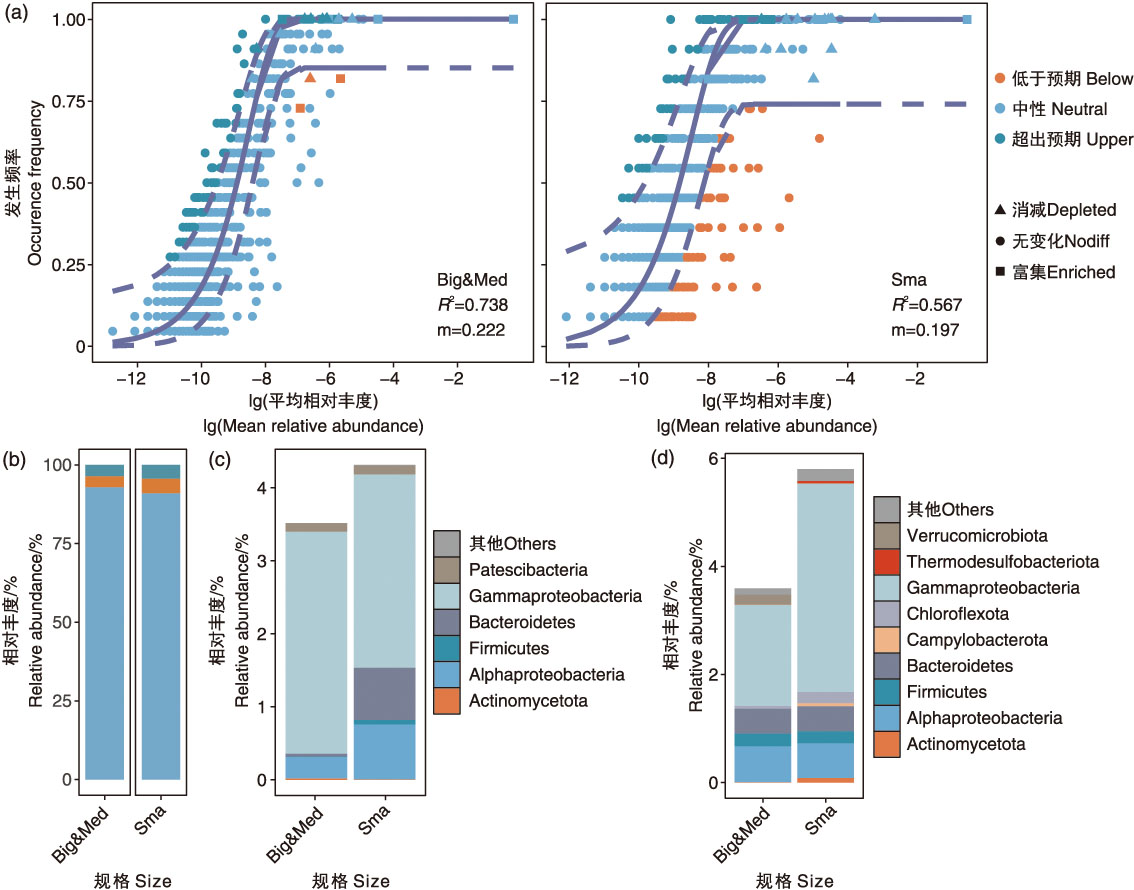
Fig.6 Neutral processes in the gut microbiota assembly of Penaeus japonicus with different sizes a, Neutral model; b, Proportion of zOTU relative abundances conforming to and deviating from the neutral model; c, Taxonomic annotation of zOTUs with abundances exceeding the model expectation (upper); d, Taxonomic annotation of zOTUs with abundances below the model expectation (below).
| [1] | WANG P P, CHEN B H, ZHENG J B, et al. Fine-scale population genetic structure and parapatric cryptic species of kuruma shrimp (Marsupenaeus japonicus), along the northwestern Pacific coast of China[J]. Frontiers in Genetics, 2020, 11: 118. |
| [2] | 农业农村部渔业渔政管理局, 全国水产技术推广总站, 中国水产学会. 2025中国渔业统计年鉴[M]. 北京: 中国农业出版社, 2025. |
| [3] | CHENG W Z, ZHANG H Q, WANG P P, et al. The multiple influences of natural farming environment on the cultured population behavior of kuruma prawn, Penaeus japonicus[J]. Animals, 2022, 12(23): 3383. |
| [4] | 陶长红, 石伟帅, 李瑞学, 等. 饲料脂肪源对网箱养殖模式下日本对虾存活、生长、营养和感官品质的影响[J]. 饲料工业, 2024, 45(18): 77-83. |
| TAO C H, SHI W S, LI R X, et al. Effects of dietary lipid sources on the survival, growth, nutrition profile and sensory quality of Penaeus japonicus under floating cage culture pattern[J]. Feed Industry, 2024, 45(18): 77-83. | |
| [5] | PATAKY Z, BOBBIONI-HARSCH E, CARPENTIER A, et al. Gut microbiota, responsible for our body weight[J]. Revue Médicale Suisse, 2009, 5(196): 662-666. |
| [6] | ZHOU M Q, WU L, SUN X, et al. Assessing the relationship between the gut microbiota and growth traits in Chinese indigenous pig breeds[J]. BMC Veterinary Research, 2025, 21(1): 284. |
| [7] | GIERYŃ SKA M, SZULC-DĄ BROWSKA L, STRUZIK J, et al. Integrity of the intestinal barrier: the involvement of epithelial cells and microbiota: a mutual relationship[J]. Animals, 2022, 12(2): 145. |
| [8] | MEDINA-FÉLIX D, GARIBAY-VALDEZ E, VARGAS-ALBORES F, et al. Fish disease and intestinal microbiota: a close and indivisible relationship[J]. Reviews in Aquaculture, 2023, 15(2): 820-839. |
| [9] | SONG M S, PAN L Q, ZHANG M Y, et al. Changes of water, sediment, and intestinal bacterial communities in Penaeus japonicus cultivation and their impacts on shrimp physiological health[J]. Aquaculture International, 2020, 28(5): 1847-1865. |
| [10] | LE B, KIM D G, PHUOC N N, et al. Dietary supplementation with Pediococcus pentosaceus enhances the innate immune response in and promotes growth of Litopenaeus vannamei shrimp[J]. Journal of Fish Diseases, 2022, 45(9): 1343-1354. |
| [11] | KEWCHAROEN W, SRISAPOOME P. Probiotic effects of Bacillus spp. from Pacific white shrimp (Litopenaeus vannamei) on water quality and shrimp growth, immune responses, and resistance to Vibrio parahaemolyticus(AHPND strains)[J]. Fish & Shellfish Immunology, 2019, 94: 175-189. |
| [12] | RINGØ E, VAN DOAN H, LEE S H, et al. Probiotics, lactic acid bacteria and bacilli: interesting supplementation for aquaculture[J]. Journal of Applied Microbiology, 2020, 129(1): 116-136. |
| [13] | CAPORASO J G, KUCZYNSKI J, STOMBAUGH J, et al. QIIME allows analysis of high-throughput community sequencing data[J]. Nature Methods, 2010, 7(5): 335-336. |
| [14] | ZHOU Y P, LIU Y X, LI X M. USEARCH 12: Open-source software for sequencing analysis in bioinformatics and microbiome[J]. iMeta, 2024, 3(5): e236. |
| [15] | SLOAN W T, LUNN M, WOODCOCK S, et al. Quantifying the roles of immigration and chance in shaping prokaryote community structure[J]. Environmental Microbiology, 2006, 8(4): 732-740. |
| [16] | 孙翰昌. 不同规格大鲵消化酶活性的比较研究[J]. 水产科学, 2014, 33(7): 459-461. |
| SUN H C. Comparison of digestive enzyme activities in giant salamander Andrias davidianus (Blarchand) with various sizes[J]. Fisheries Science, 2014, 33(7): 459-461. | |
| [17] | 印丽云, 高永利, 杨振才, 等. 不同规格近江牡蛎的排氨率和耗氧率分析[J]. 热带海洋学报, 2013, 32(1): 60-63. |
| YIN L Y, GAO Y L, YANG Z C, et al. Effects of body size on respiration and excretion of Hong Kong oyster Crassostrea hongkongensis[J]. Journal of Tropical Oceanography, 2013, 32(1): 60-63. | |
| [18] | 李明月, 高云红, 高云涛, 等. 大型围栏养殖模式下2种规格斑石鲷耐高温研究[J]. 渔业科学进展, 2022, 43(6): 69-78. |
| LI M Y, GAO Y H, GAO Y T, et al. Thermal tolerance of two sizes of spotted knifejaw(Oplegnathus punctatus) in offshore aquaculture net pen[J]. Progress in Fishery Sciences, 2022, 43(6): 69-78. | |
| [19] | ABD EL-HACK M E, EL-SAADONY M T, NADER M M, et al. Effect of environmental factors on growth performance of Nile tilapia (Oreochromis niloticus)[J]. International Journal of Biometeorology, 2022, 66(11): 2183-2194. |
| [20] | ZHOU K M, LIU P P, YAO J Y, et al. Shrimp intestinal microbiota homeostasis: dynamic interplay between the microbiota and host immunity[J]. Reviews in Aquaculture, 2025, 17: e12986. |
| [21] | WU J Y, YAN M C, SANG Y, et al. Correlation between intestinal microbiota and growth of white shrimp (Litopenaeus vannamei)[J]. Applied Ecology and Environmental Research, 2021, 19(6): 4993-5005. |
| [22] | GUO H P, DONG P S, GAO F, et al. Sucrose addition directionally enhances bacterial community convergence and network stability of the shrimp culture system[J]. npj Biofilms and Microbiomes, 2022, 8: 22. |
| [23] | ZHANG M Z, PAN L Q, FAN D P, et al. Study of fermented feed by mixed strains and their effects on the survival, growth, digestive enzyme activity and intestinal flora of Penaeus vannamei[J]. Aquaculture, 2021, 530: 735703. |
| [24] | VANDENPLAS Y, CARNIELLI V P, KSIAZYK J, et al. Factors affecting early-life intestinal microbiota development[J]. Nutrition, 2020, 78: 110812. |
| [25] | CHANG C S, KAO C Y. Current understanding of the gut microbiota shaping mechanisms[J]. Journal of Biomedical Science, 2019, 26(1): 59. |
| [26] | ALY S M, ELBANNA N I, ELATTA M A, et al. Potential of Pseudomonas putida probiotic feed mixture for improving growth, immune response, and disease resistance in Nile Tilapia compared to Saccharomyces cerevisiae probiotic[J]. North American Journal of Aquaculture, 2024, 86(1): 26-38. |
| [27] | VANDEPUTTE M, KASHEM M A, BOSSIER P, et al. Vibrio pathogens and their toxins in aquaculture: a comprehensive review[J]. Reviews in Aquaculture, 2024, 16(4): 1858-1878. |
| [28] | BURNS A R, STEPHENS W Z, STAGAMAN K, et al. Contribution of neutral processes to the assembly of gut microbial communities in the zebrafish over host development[J]. The ISME Journal, 2016, 10(3): 655-664. |
| [29] | XIONG J B, DAI W F, QIU Q F, et al. Response of host-bacterial colonization in shrimp to developmental stage, environment and disease[J]. Molecular Ecology, 2018, 27(18): 3686-3699. |
| [30] | LOUDON A H, VENKATARAMAN A, VAN TREUREN W, et al. Vertebrate hosts as islands: dynamics of selection, immigration, loss, persistence, and potential function of bacteria on salamander skin[J]. Frontiers in Microbiology, 2016, 7: 333. |
| Viewed | ||||||
|
Full text |
|
|||||
|
Abstract |
|
|||||

