Acta Agriculturae Zhejiangensis ›› 2026, Vol. 38 ›› Issue (7): 1378-1387.DOI: 10.3969/j.issn.1004-1524.20250575
• Horticultural Science • Previous Articles Next Articles
Effect of crude polysaccharides from Pleurotus eryngii on the mycelial growth of Pleurotus tuoliensis under high-temperature stress
GAO Qingyun1( ), ZHANG Jing1, XIONG Yichen1, GUO Yuxiu1, QIAN Lei1, BAN Litong1, LI Yiting1,*(), QI Xin2,*()
- 1
College of Agronomy and Resources Environment ,Tianjin Agricultural University Tianjin 300384, China
2Institute of Forestry and Fruit Tree Research ,Tianjin Academy of Agricultural Sciences Tianjin 300380, China
-
Received:2025-09-07Online:2026-07-25Published:2026-08-20

CLC Number:
Cite this article
GAO Qingyun, ZHANG Jing, XIONG Yichen, GUO Yuxiu, QIAN Lei, BAN Litong, LI Yiting, QI Xin. Effect of crude polysaccharides from Pleurotus eryngii on the mycelial growth of Pleurotus tuoliensis under high-temperature stress[J]. Acta Agriculturae Zhejiangensis, 2026, 38(7): 1378-1387.
share this article
Add to citation manager EndNote|Ris|BibTeX
URL: http://www.zjnyxb.cn/EN/10.3969/j.issn.1004-1524.20250575
| 组别 Group | 用量Dosage | |||
|---|---|---|---|---|
| 马铃薯 Potato | 葡萄糖 Dextrose | 琼脂 Agar | 杏鲍菇粗多糖 PECP | |
| CK | 200 | 20 | 20 | 0 |
| 1 | 200 | 20 | 20 | 0.5 |
| 2 | 200 | 20 | 20 | 1.0 |
| 3 | 200 | 20 | 20 | 1.5 |
| 4 | 200 | 20 | 20 | 2.0 |
| 5 | 200 | 20 | 20 | 2.5 |
Table 1 Formulation of PECP-PDA medium Unit:mg·mL-1
| 组别 Group | 用量Dosage | |||
|---|---|---|---|---|
| 马铃薯 Potato | 葡萄糖 Dextrose | 琼脂 Agar | 杏鲍菇粗多糖 PECP | |
| CK | 200 | 20 | 20 | 0 |
| 1 | 200 | 20 | 20 | 0.5 |
| 2 | 200 | 20 | 20 | 1.0 |
| 3 | 200 | 20 | 20 | 1.5 |
| 4 | 200 | 20 | 20 | 2.0 |
| 5 | 200 | 20 | 20 | 2.5 |
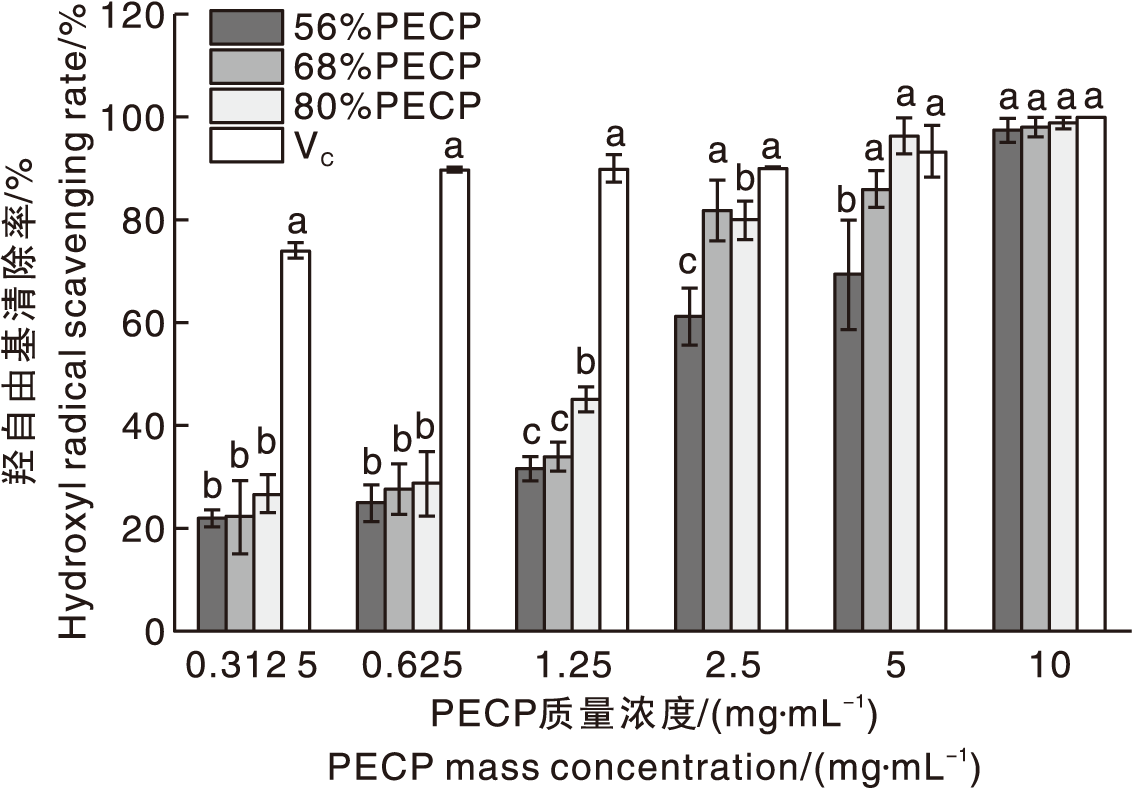
Fig.1 Hydroxyl radical scavenging rates of different PECP fractions The absence of identical lowercase letters on the same column indicates significant (p<0.05) differences between different components of the same mass concentration, as shown in Figure 2.
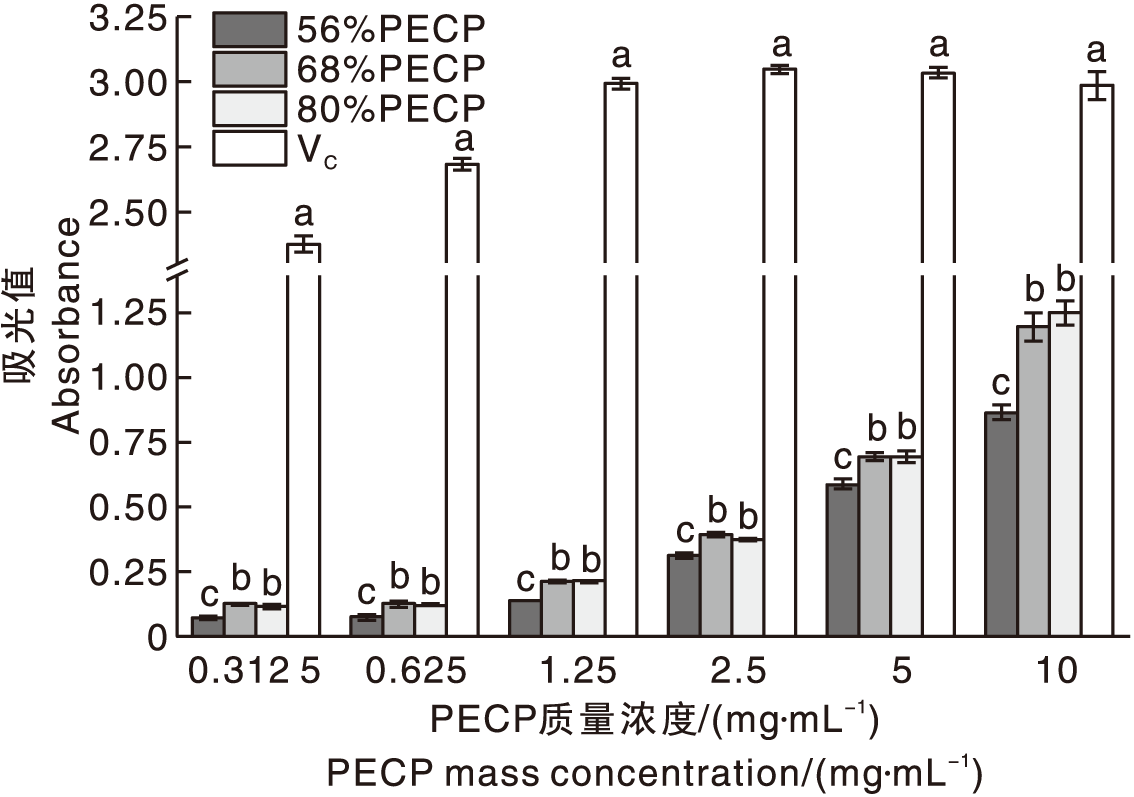
Fig.2 Total reductive of different PECP fractions
| 组别 Group | 质量浓度/ (mg·mL-1) Mass concentration /(mg·mL-1) | 密度 Density | 色泽 Color | 萌发时间/h Germination time/h | 满皿时间/d Full plate time/d | 生长速度/ (mm·d-1 Growth rate/ (mm·d-1) |
|---|---|---|---|---|---|---|
| 80% PECP | 0.5 | 较浓密Relatively dense | 浓白Dense white | 12 | 7 | 3.12±0.47 cd |
| 1.0 | 较浓密Relatively dense | 浓白Dense white | 12 | 5 | 4.93±0.43 ab | |
| 1.5 | 较浓密Relatively dense | 浓白Dense white | 14 | 6 | 3.85±0.23 c | |
| 2.0 | 浓密Dense | 浓白Dense white | 10 | 6 | 4.18±0.33 bc | |
| 2.5 | 浓密Dense | 白色White | 8 | 4 | 5.37±0.54 a | |
| 68% PECP | 0.5 | 稀疏Sparse | 白色White | 14 | 6 | 4.02±0.50 bc |
| 1.0 | 较稀疏Relatively sparse | 白色White | 13 | 8 | 2.87±0.65 d | |
| 1.5 | 浓密Dense | 浓白Dense white | 12 | 5 | 4.91±0.68 ab | |
| 2.0 | 稀疏Sparse | 白色White | 12 | 6 | 3.85±0.03 c | |
| 2.5 | 浓密Dense | 白色White | 10 | 4 | 5.31±0.16 a | |
| 56% | 0.5 | 较浓密Relatively dense | 浓白Dense white | 16 | 7 | 3.22±0.34 cd |
| PECP | 1.0 | 较稀疏Relatively sparse | 浓白Dense white | 16 | 8 | 2.52±0.95 d |
| 1.5 | 较浓密Relatively dense | 浓白Dense white | 16 | 7 | 3.50±0.28 cd | |
| 2.0 | 较浓密Relatively dense | 白色White | 14 | 7 | 3.54±0.95 cd | |
| 2.5 | 较浓密Relatively dense | 浓白Dense white | 12 | 5 | 4.52±0.34 ab | |
| CK | — | 较稀疏Relatively sparse | 白色White | 16 | 7 | 3.31±0.49 cd |
Table 2 Mycelial growth characteristics of Pleurotus tuoliensis treated with different mass concentrations of PECP at 25 ℃
| 组别 Group | 质量浓度/ (mg·mL-1) Mass concentration /(mg·mL-1) | 密度 Density | 色泽 Color | 萌发时间/h Germination time/h | 满皿时间/d Full plate time/d | 生长速度/ (mm·d-1 Growth rate/ (mm·d-1) |
|---|---|---|---|---|---|---|
| 80% PECP | 0.5 | 较浓密Relatively dense | 浓白Dense white | 12 | 7 | 3.12±0.47 cd |
| 1.0 | 较浓密Relatively dense | 浓白Dense white | 12 | 5 | 4.93±0.43 ab | |
| 1.5 | 较浓密Relatively dense | 浓白Dense white | 14 | 6 | 3.85±0.23 c | |
| 2.0 | 浓密Dense | 浓白Dense white | 10 | 6 | 4.18±0.33 bc | |
| 2.5 | 浓密Dense | 白色White | 8 | 4 | 5.37±0.54 a | |
| 68% PECP | 0.5 | 稀疏Sparse | 白色White | 14 | 6 | 4.02±0.50 bc |
| 1.0 | 较稀疏Relatively sparse | 白色White | 13 | 8 | 2.87±0.65 d | |
| 1.5 | 浓密Dense | 浓白Dense white | 12 | 5 | 4.91±0.68 ab | |
| 2.0 | 稀疏Sparse | 白色White | 12 | 6 | 3.85±0.03 c | |
| 2.5 | 浓密Dense | 白色White | 10 | 4 | 5.31±0.16 a | |
| 56% | 0.5 | 较浓密Relatively dense | 浓白Dense white | 16 | 7 | 3.22±0.34 cd |
| PECP | 1.0 | 较稀疏Relatively sparse | 浓白Dense white | 16 | 8 | 2.52±0.95 d |
| 1.5 | 较浓密Relatively dense | 浓白Dense white | 16 | 7 | 3.50±0.28 cd | |
| 2.0 | 较浓密Relatively dense | 白色White | 14 | 7 | 3.54±0.95 cd | |
| 2.5 | 较浓密Relatively dense | 浓白Dense white | 12 | 5 | 4.52±0.34 ab | |
| CK | — | 较稀疏Relatively sparse | 白色White | 16 | 7 | 3.31±0.49 cd |
| 组别 Group | 胁迫时间/h Stress time/h | 密度 Density | 色泽 Color | 满皿时间/d Full plate time/d | 生长速度/(mm·d-1) Growth rate/(mm·d-1) |
|---|---|---|---|---|---|
| PECP-HS | 2 | 浓密Dense | 浓白Dense white | 4 | 5.46±0.31 a |
| 4 | 浓密Dense | 浓白Dense white | 5 | 4.13±0.66 bc | |
| 6 | 浓密Dense | 浓白Dense white | 5 | 4.39±0.63 b | |
| 8 | 浓密Dense | 浓白Dense white | 7 | 3.38±0.26 cd | |
| 10 | 较稀疏Relatively sparse | 白色White | 5 | 4.23±0.22 bc | |
| CK-HS | 2 | 浓密Dense | 浓白Dense white | 5 | 3.71±0.79 c |
| 4 | 较稀疏Relatively sparse | 白色White | 6 | 3.63±0.43 c | |
| 6 | 浓密Dense | 浓白Dense white | 7 | 3.25±0.55 cd | |
| 8 | 稀疏Sparse | 白色White | 7 | 3.00±0.13 d | |
| 10 | 稀疏Sparse | 白色White | 8 | 2.82±0.29 d | |
| CK | — | 浓密Dense | 浓白Dense white | 6 | 3.61±0.82 c |
Table 3 Mycelial growth characteristics of Pleurotus tuoliensis treated with different mass concentrations of PECP at 37 ℃
| 组别 Group | 胁迫时间/h Stress time/h | 密度 Density | 色泽 Color | 满皿时间/d Full plate time/d | 生长速度/(mm·d-1) Growth rate/(mm·d-1) |
|---|---|---|---|---|---|
| PECP-HS | 2 | 浓密Dense | 浓白Dense white | 4 | 5.46±0.31 a |
| 4 | 浓密Dense | 浓白Dense white | 5 | 4.13±0.66 bc | |
| 6 | 浓密Dense | 浓白Dense white | 5 | 4.39±0.63 b | |
| 8 | 浓密Dense | 浓白Dense white | 7 | 3.38±0.26 cd | |
| 10 | 较稀疏Relatively sparse | 白色White | 5 | 4.23±0.22 bc | |
| CK-HS | 2 | 浓密Dense | 浓白Dense white | 5 | 3.71±0.79 c |
| 4 | 较稀疏Relatively sparse | 白色White | 6 | 3.63±0.43 c | |
| 6 | 浓密Dense | 浓白Dense white | 7 | 3.25±0.55 cd | |
| 8 | 稀疏Sparse | 白色White | 7 | 3.00±0.13 d | |
| 10 | 稀疏Sparse | 白色White | 8 | 2.82±0.29 d | |
| CK | — | 浓密Dense | 浓白Dense white | 6 | 3.61±0.82 c |
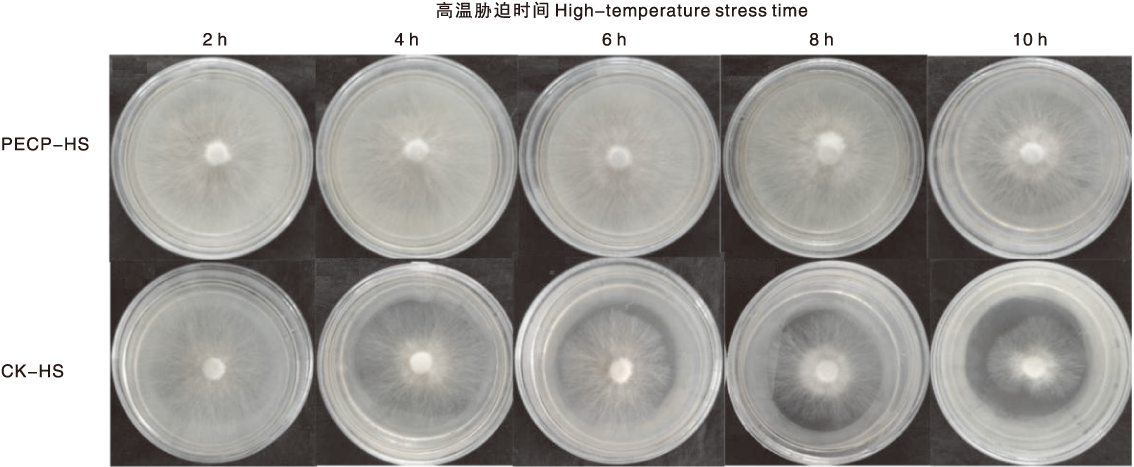
Fig.3 Mycelial growth of Pleurotus tuoliensis after high-temperature stress at 37 ℃ PECP-HS is the PECP-PDA medium under high-temperature stress, while CK-HS is the PDA medium under high-temperature stress, as shown in Figures 4-7.
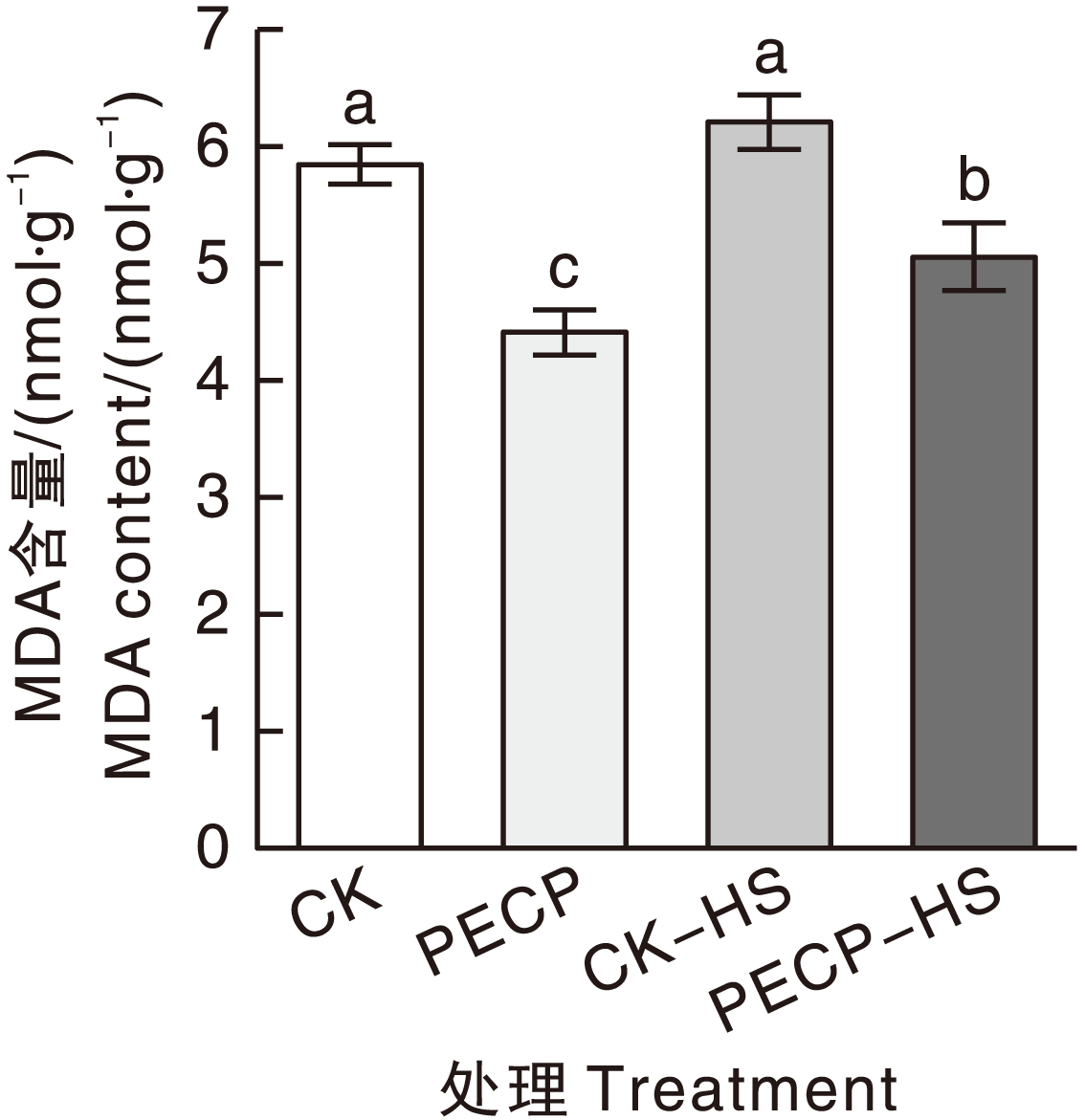
Fig.4 MDA content in mycelia under different treatments The absence of identical lowercase letters on the column indicates significant (p<0.05) differences between different treatments, as shown in Figures 5-7.
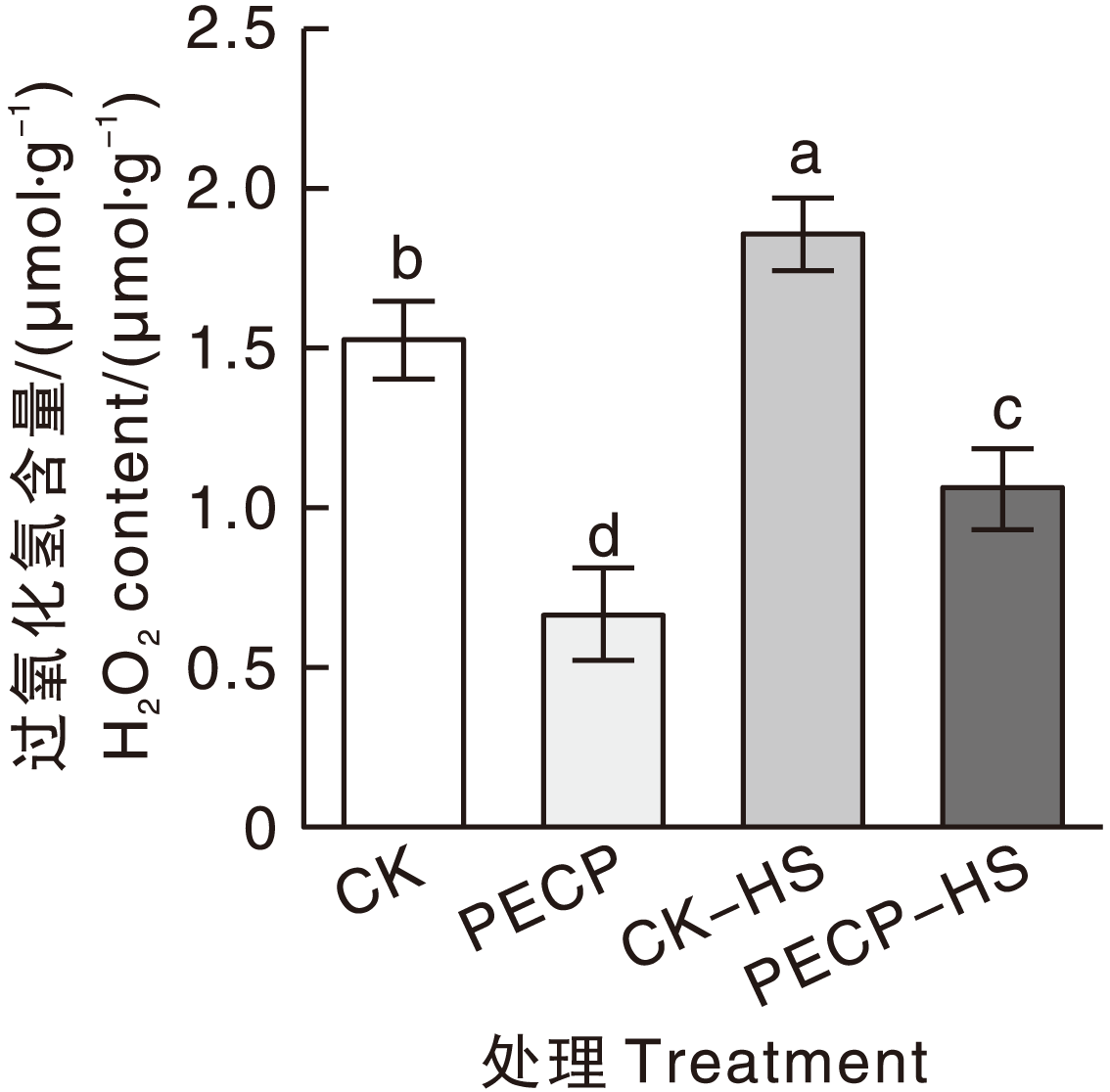
Fig.5 H2O2 content in mycelia under different treatments
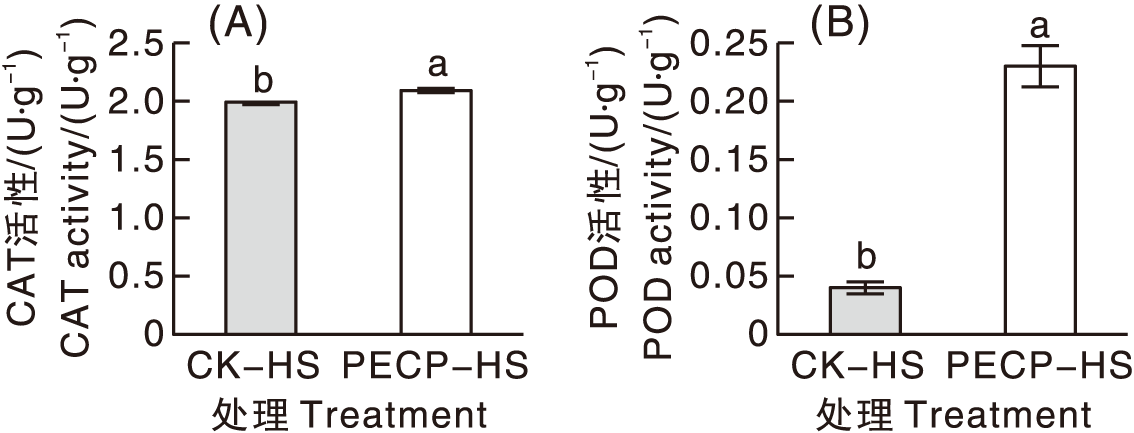
Fig.6 CAT and POD activities in mycelia under high-temperature stress
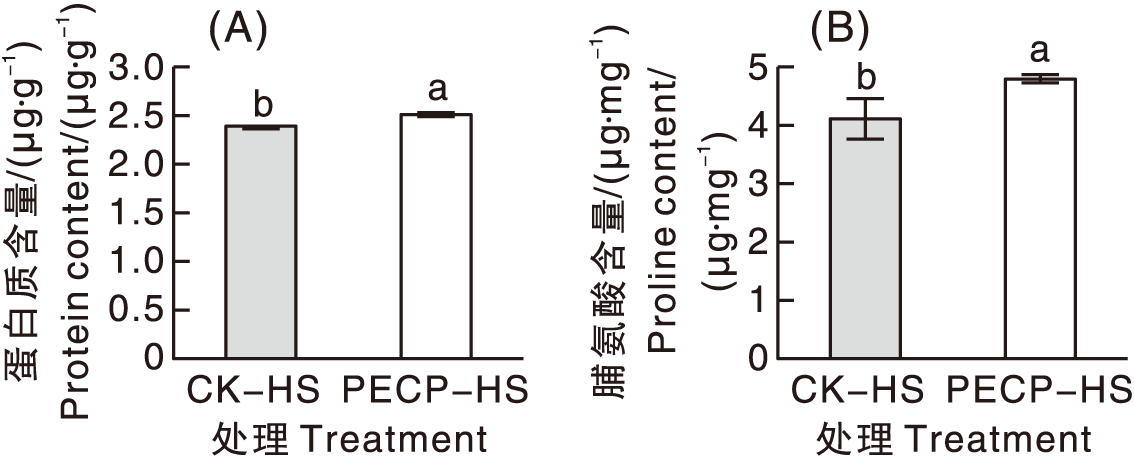
Fig.7 Content of protein and proline in mycelia under high-temperature stress
| [1] | Zhao M R, Zhang J X, Chen Q, et al. The famous cultivated mushroom Bailinggu is a separate species of the Pleurotus eryngii species complex[J]. Scientific Reports, 2016, 6: 33066. |
| [2] | 翟淼. 超氧阴离子及过氧化氢无酶型电化学传感器的研究[D]. 石家庄: 河北科技大学, 2016. |
| Zhai M. Study on non-enzymatic electrochemical sensors for superoxide anion and hydrogen peroxide[D]. Shijiazhuang: Hebei University of Science and Technology, 2016. | |
| [3] | Belhadj Slimen I, Najar T, Ghram A, et al. Reactive oxygen species, heat stress and oxidative-induced mitochondrial damage. A review[J]. International Journal of Hyperthermia, 2014, 30(7): 513-523. |
| [4] | 刘秀明, 邬向丽, 张金霞, 等. 白灵侧耳栽培种质对高温胁迫的反应研究[J]. 菌物学报, 2015, 34(4): 640-646. |
| Liu X M, Wu X L, Zhang J X, et al. Heat stress response of cultivated Pleurotus eryngii var. tuoliensis germplasms[J]. Mycosystema, 2015, 34(4): 640-646. | |
| [5] | Long J G, Wang X M, Gao H X, et al. Malonaldehyde acts as a mitochondrial toxin: Inhibitory effects on respiratory function and enzyme activities in isolated rat liver mitochondria[J]. Life Sciences, 2006, 79(15): 1466-1472. |
| [6] | 卢方, 马银鹏, 王雷, 等. 食用菌高温胁迫应答相关研究进展[J]. 北方园艺, 2025(6): 136-141. |
| Lu F, Ma Y P, Wang L, et al. Research progress on response of edible fungi to high temperature stress[J]. Northern Horticulture, 2025(6): 136-141. | |
| [7] | 张君, 姜宇, 孙水娟, 等. 高温胁迫对香菇菌丝生理特性的影响[J]. 北方园艺, 2024(22): 95-100. |
| Zhang J, Jiang Y, Sun S J, et al. Effects of heat stress on physiological characteristics of Lentinus edodes mycelium[J]. Northern Horticulture, 2024(22): 95-100. | |
| [8] | Qiu D W, Dong Y J, Zhang Y, et al. Plant immunity inducer development and application[J]. Molecular Plant-Microbe Interactions, 2017, 30(5): 355-360. |
| [9] | 宁玉波, 王红艳, 乔康, 等. 灵芝多糖对番茄抗灰霉病的诱导效应[J]. 中国农业科学, 2016, 49(11): 2103-2112. |
| Ning Y B, Wang H Y, Qiao K, et al. Induced resistance by polysaccharides isolated from Ganoderma lucidum in tomato against gray mold[J]. Scientia Agricultura Sinica, 2016, 49(11): 2103-2112. | |
| [10] | 肖文斐, 柴伟国, 裘劼人, 等. 基于蛋白质组解析大球盖菇多糖促进猕猴桃生长及抗高温的分子机制[J]. 核农学报, 2022, 36(1): 94-104. |
| Xiao W F, Chai W G, Qiu J R, et al. Proteomic analysis reveals mechanisms of Stropharia rugosoannulata polysaccharides promoting kiwifruit growth and high temperature resistance[J]. Journal of Nuclear Agricultural Sciences, 2022, 36(1): 94-104. | |
| [11] | 周莎莎, 王刚正, 罗义, 等. 生长素及其类似物增强香菇耐高温性的研究[J]. 菌物学报, 2018, 37(12): 1723-1730. |
| Zhou S S, Wang G Z, Luo Y, et al. Auxin and auxin analogues enhancing the thermotolerance of Lentinula edodes[J]. Mycosystema, 2018, 37(12): 1723-1730. | |
| [12] | 药欣荣, 高巍, 张金霞, 等. 高温胁迫下糙皮侧耳胞内钙离子对热激蛋白基因表达的调控[J]. 食用菌学报, 2019, 26(2): 17-23. |
| Yao X R, Gao W, Zhang J X, et al. The regulation of cytosolic Ca2+ on gene expression of heat shock proteins in Pleurotus ostreatus under heat stress[J]. Acta Edulis Fungi, 2019, 26(2): 17-23. | |
| [13] | 雷敏. 热胁迫下糙皮侧耳菌丝体海藻糖代谢调控研究[D]. 北京: 中国农业大学, 2018. |
| Lei M. Study on the regulation of trehalose metabolism in the mycelium of Pleurotus ostreatus under heat stress[D]. Beijing: China Agricultural University, 2018. | |
| [14] | Li Y T, Meng S L, Shi M, et al. Bioactivity evaluation of crude polysaccharide from rice bran fermented by Preussiaaemulans and the changes in its nutritional contents: bioactivity of fermented rice bran[J]. Journal of Food Biochemistry, 2016, 40(5): 664-672. |
| [15] | Dai Y, Wang L, Chen X Y, et al. Lentinula edodes sing polysaccharide: extraction, characterization, bioactivities, and emulsifying applications[J]. Foods, 2023, 12(17): 3289. |
| [16] | Xiang Q J, Zhang H J, Chen X Q, et al. Enhanced effects of iron on mycelial growth, metabolism and in vitro antioxidant activity of polysaccharides from Lentinula edodes[J]. Bioengineering, 2022, 9(10): 581. |
| [17] | Arshad M N, Naegele J R. Correction notice: measurements of proline and malondialdehyde contents and antioxidant enzyme activities in leaves of drought stressed cotton[J]. Bio-protocol, 2023, 5(13): e4752. |
| [18] | 侯潞丹. 一氧化氮调控能量代谢缓解糙皮侧耳热胁迫损伤的研究[D]. 北京: 中国农业科学院, 2021. |
| Hou L D. Nitric oxide regulates energy metabolism to alleviate heat stress damage of Pleurotus ostreatus[D]. Beijing: Chinese Academy of Agricultural Sciences, 2021. | |
| [19] | 孟利娟. 一氧化氮和海藻糖对白灵侧耳高温响应抗氧化途径的影响研究[D]. 北京: 中国农业科学院, 2015. |
| Meng L J.Studies of nitric oxide and trehalose on the effects of antioxidative responses under heat stress in Pleurotus eryngii var. tuoliensis[D]. Beijing: Chinese Academy of Agricultural Sciences, 2015. | |
| [20] | 周莎莎. 外源生长素及其类似物对香菇耐热性及相关基因表达的影响[D]. 武汉: 华中农业大学, 2019. |
| Zhou S S. Effects of exogenous auxin and its analogues on thermotolerance and expression of genes related to heat stress in Lentinula edodes[D]. Wuhan: Huazhong Agricultural University, 2019. | |
| [21] | Liu X M, Huang C Y, Chen Q, et al. Alleviative effects of exogenous trehalose on oxidative damage metabolism in Pleurotus pulmonarius under heat stress[J]. Acta Horticulturae Sinica, 2013, 40(8): 1501-1508. |
| [22] | 李依霖, 姜明, 谭明琪. 食用菌多糖的药用价值研究进展[J]. 宁夏农林科技, 2020, 61(5): 24-26. |
| Li Y L, Jiang M, Tan M Q. Research progress on pharmacological value of polysaccharides from edible fungi[J]. Ningxia Journal of Agriculture and Forestry Science and Technology, 2020, 61(5): 24-26. | |
| [23] | 宋立立, 张兆英. 食用菌多糖的生物活性研究现状[J]. 中国食用菌, 2019, 38(2): 14-16. |
| Song L L, Zhang Z Y. The status of biological activity of mushroom polysaccharides[J]. Edible Fungi of China, 2019, 38(2): 14-16. | |
| [24] | 王晗. 杏鲍菇多糖的制备、结构鉴定及抗炎活性研究[D]. 南京: 南京财经大学, 2023. |
| Wang H. Study on preparation, structure identification and anti-inflammatory activity of Pleurotus eryngii polysaccharide[D]. Nanjing: Nanjing University of Finance & Economics, 2023. | |
| [25] | Jaffali C, Synytsya A, Khadhri A, et al. Structure and strain specificity for polysaccharides from king oyster mushroom (Pleurotus eryngii) fruiting bodies[J]. International Journal of Biological Macromolecules, 2025, 295: 139286. |
| [26] | Chou C H, Sung T J, Hu Y N, et al. Chemical analysis, moisture-preserving, and antioxidant activities of polysaccharides from Pholiota nameko by fractional precipitation[J]. International Journal of Biological Macromolecules, 2019, 131: 1021-1031. |
| [27] | Chen N, Jiang T Y, Xu J X, et al. The relationship between polysaccharide structure and its antioxidant activity needs to be systematically elucidated[J]. International Journal of Biological Macromolecules, 2024, 270: 132391. |
| [28] | Phil L, Naveed M, Mohammad I S, et al. Chitooligosaccharide: an evaluation of physicochemical and biological properties with the proposition for determination of thermal degradation products[J]. Biomedicine & Pharmacotherapy, 2018, 102: 438-451. |
| [29] | Zhu Z Y, Guo M Z, Liu F, et al. Preparation and inhibition on α-d-glucosidase of low molecular weight polysaccharide from Cordyceps militaris[J]. International Journal of Biological Macromolecules, 2016, 93: 27-33. |
| [30] | Zhang Z S, Wang X M, Zhao M X, et al. Free-radical degradation by Fe2+/Vc/H2O2 and antioxidant activity of polysaccharide from Tremella fuciformis[J]. Carbohydrate Polymers, 2014, 112: 578-582. |
| [31] | Li X, Peng B, Chi-Keung Cheung P, et al. Depolymerized non-digestible sulfated algal polysaccharides produced by hydrothermal treatment with enhanced bacterial fermentation characteristics[J]. Food Hydrocolloids, 2022, 130: 107687. |
| [32] | Zhu B W, Ni F, Xiong Q, et al. Marine oligosaccharides originated from seaweeds: source, preparation, structure, physiological activity and applications[J]. Critical Reviews in Food Science and Nutrition, 2021, 61(1): 60-74. |
| [33] | Malinowska E, Lapienis G, Szczepańska A, et al. Selenium-enriched polysaccharides from Lentinula edodes mycelium: biosynthesis, chemical characterisation, and assessment of antioxidant properties[J]. Polymers, 2025, 17(6): 719. |
| [34] | Nadarajah K K. ROS homeostasis in abiotic stress tolerance in plants[J]. International Journal of Molecular Sciences, 2020, 21(15): 5208. |
| [35] | Hasanuzzaman M, Parvin K, Bardhan K, et al. Biostimulants for the regulation of reactive oxygen species metabolism in plants under abiotic stress[J]. Cells, 2021, 10(10): 2537. |
| [36] | Ban Q Y, Wang X W, Pan C, et al. Comparative analysis of the response and gene regulation in cold resistant and susceptible tea plants[J]. PLoS One, 2017, 12(12): e0188514. |
| [37] | Xiang H T, Wang T T, Zheng D F, et al. ABA pretreatment enhances the chilling tolerance of a chilling-sensitive rice cultivar[J]. Brazilian Journal of Botany, 2017, 40(4): 853-860. |
| [1] | ZHU Changsong, NA Qiting, ZHANG Mengzhuo, CAO Hui, LIU Shiying, ZHANG Zhengke, MENG Lanhuan. Effect of SlCHRC gene on tomato floral thermotolerance under high-temperature environment [J]. Acta Agriculturae Zhejiangensis, 2026, 38(1): 67-75. |
| [2] | SUN Fengting, WANG Xu, HAN Xinyu, XU Zhenlan, WU Shenggan, HUANG Hao, TANG Tao, SHENG Qing, WANG Qiang, SHEN Guoqiang, ZHAO Xueping. Effect of sodium nitrophenolate on flavonoid content and antioxidant activity in Dendrobium officinale [J]. Acta Agriculturae Zhejiangensis, 2025, 37(4): 934-942. |
| [3] | XIA Si, FANG Xiangjun, WU Weijie, LIU Ruiling, CHEN Huizhi, NIU Ben, GAO Haiyan. Preparation of fermented Chinese bayberry (Myrica rubra) pulp and its functional activity and flavor quality [J]. Acta Agriculturae Zhejiangensis, 2025, 37(3): 667-678. |
| [4] | LIU Yali, YANG Fusheng, SONG Banggui, DU Xue, YU Qili, CHEN Fei, CHEN Guohong. Effects of steviol glycosides on the growth of yellow-feathered broilers [J]. Acta Agriculturae Zhejiangensis, 2025, 37(10): 2049-2056. |
| [5] | ZHAO Xiaoliang, LU Yun, KANG Xingxing, LONG Zeyu, ZHENG Xiaojie. Extraction, structural characterization and antioxidant activity of polysaccharide from Dendrobium officinale in Yandang Mountain, China [J]. Acta Agriculturae Zhejiangensis, 2024, 36(8): 1898-1908. |
| [6] | LIU Chenxing, CAO Yan, XIA Qile. Study on the extraction processing and antioxidant activities of saponins from Polygonatum cyrtonema Hua roots [J]. Acta Agriculturae Zhejiangensis, 2024, 36(5): 1144-1152. |
| [7] | CHEN Kaini, XI Yuhang, ZHANG Xing, ZHANG Hui. Effects of controlled heat treatment on physicochemical characteristics and antioxidant activity of bamboo shoot protein [J]. Acta Agriculturae Zhejiangensis, 2024, 36(11): 2584-2595. |
| [8] | HE Yu, LIU Feng, ZHANG Tianle, LOU Bao, WEI Fuliang, YE Ting. Histological study on the effect of high temperature stress on liver tissue in Larimichthys polyactis [J]. Acta Agriculturae Zhejiangensis, 2024, 36(1): 58-66. |
| [9] | LI Xiao, YAN Tingyu, NIU Lili, ZHAI Panpan, ZHANG Huafeng, YANG Xiaohua, PENG Yuanjin. Chemical composition, antioxidant capacity and protective activity against DNA damage of organic selenium-enriched matcha [J]. Acta Agriculturae Zhejiangensis, 2023, 35(9): 2222-2232. |
| [10] | XIAO Lihan, XIN Meiguo, LU Wenjing, YE Qin, ZHANG Cen, XIAO Chaogeng, CHEN Di. Effects of different storage conditions on quality of royal jelly from three pollen sources [J]. Acta Agriculturae Zhejiangensis, 2023, 35(5): 1161-1167. |
| [11] | MA Bo, TAO Zhen, ZHOU Rui, WANG Xue, LYU Qianqian, SUN Shihong, WANG Han, GAO Jinqiu, ZHANG Chuhan, CHEN Fengqing. Study on optimization of extraction conditions and activity of functional components from Dieffenbachia picta [J]. Acta Agriculturae Zhejiangensis, 2023, 35(2): 383-393. |
| [12] | SUN Fengting, XU Zhenlan, ZHU Zuoyi, ZHANG Chunrong, TANG Tao, ZHAO Xueping, SHENG Qing, WANG Qiang. Determination of flavonoids in Dendrobium officinale Kimura et Migo and study on its bioavailability [J]. Acta Agriculturae Zhejiangensis, 2023, 35(11): 2710-2719. |
| [13] | SHAO Yuchen, MU Honglei, CHEN Hangjun, YIN Junyi, FANG Xiangjun, WU Weijie, LIU Ruiling, HAN Yanchao, GAO Haiyan. Effects of intestinal conditions and particle size on in vitro digestion of processed Carya cathayensis Sarg. [J]. Acta Agriculturae Zhejiangensis, 2022, 34(8): 1734-1742. |
| [14] | LIU Jing, HU Xiao, YANG Xianqing, CHEN Shengjun, WU Yanyan, LI Laihao, QI Bo, DENG Jianchao. Extraction and antioxidant activity of enzymolysis products of Gracilaria lemaneiformis protein [J]. Acta Agriculturae Zhejiangensis, 2022, 34(5): 1061-1072. |
| [15] | LI Xue, ZHANG Yu, WANG Junhong, ZHU Zuoyi, SUN Suling, LIU Zhi, ZHU Shenlong, SHEN Guoxin, Agusti ROMERO, WANG Wei. UPLC-FLD determination and antioxidant activity of polyphenols in virgin olive oil [J]. Acta Agriculturae Zhejiangensis, 2021, 33(5): 907-915. |
| Viewed | ||||||
|
Full text |
|
|||||
|
Abstract |
|
|||||

