Acta Agriculturae Zhejiangensis ›› 2026, Vol. 38 ›› Issue (1): 105-113.DOI: 10.3969/j.issn.1004-1524.20241081
• Plant Protection • Previous Articles Next Articles
Isolation, identification and control of the pathogen causing leaf spot disease on hydrangea
CHEN Jingjing1( ), ZHANG Yu1, WEN Lianhao1, LIU Guangyan1, ZHOU Mei1, LI Zhengmin1, XIONG Haiyan1, YANG Zhenyi2, YANG Zenghua2, TONG Yi2, WANG Chao1,*()
- 1. Yunnan Province Engineering Research Center for Functional Flower Resources and Industrialization, Southwest Research Center for Landscape Architecture Engineering (State Forestry and Grassland Administration), Yunnan Province South and Southeast Asia Joint R&D Center of Economic Forest Full Industry Chain, Key Laboratory of Forest Disaster Warning and Control in Universities of Yunnan Province, College of Landscape and Horticulture, Southwest Forestry University, Kunming 650224, China
2. Kunming Yang Chinese Rose Gardening Co., Ltd., Kunming 652501, China
-
Received:2024-12-11Online:2026-01-25Published:2026-02-11

CLC Number:
Cite this article
CHEN Jingjing, ZHANG Yu, WEN Lianhao, LIU Guangyan, ZHOU Mei, LI Zhengmin, XIONG Haiyan, YANG Zhenyi, YANG Zenghua, TONG Yi, WANG Chao. Isolation, identification and control of the pathogen causing leaf spot disease on hydrangea[J]. Acta Agriculturae Zhejiangensis, 2026, 38(1): 105-113.
share this article
Add to citation manager EndNote|Ris|BibTeX
URL: http://www.zjnyxb.cn/EN/10.3969/j.issn.1004-1524.20241081
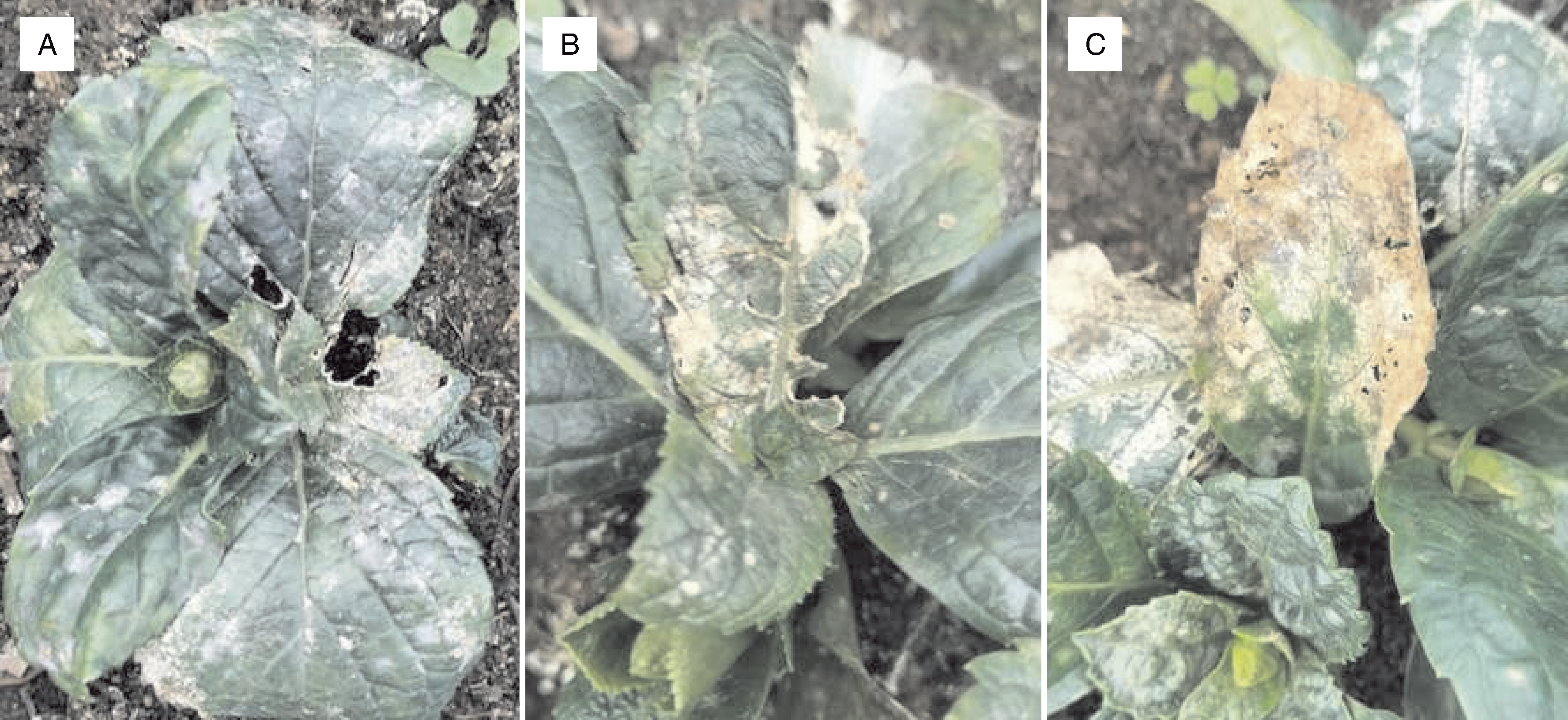
Fig.1 Photos of early (A, B) and late (C) symptoms of hydrangea leaf spot disease
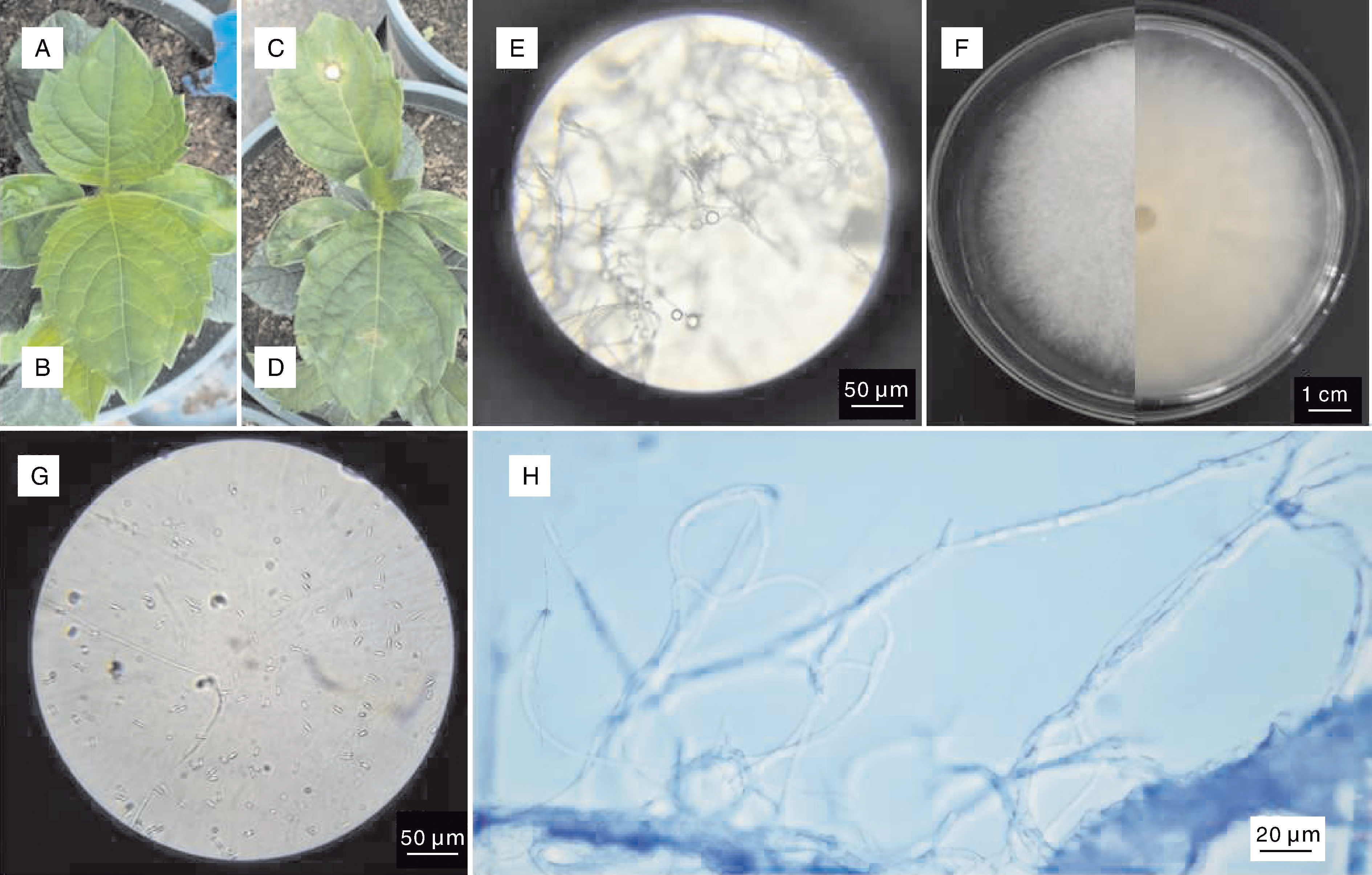
Fig.2 Morphological identification and pathogenicity of pathogen A,C, Results before and after in vivo inoculation, respectively; B, D, Results without in vivo inoculation; E, H, Mycelium; F, Characteristics of colony cultured on PDA medium for 7 days; G, Basidiospore.
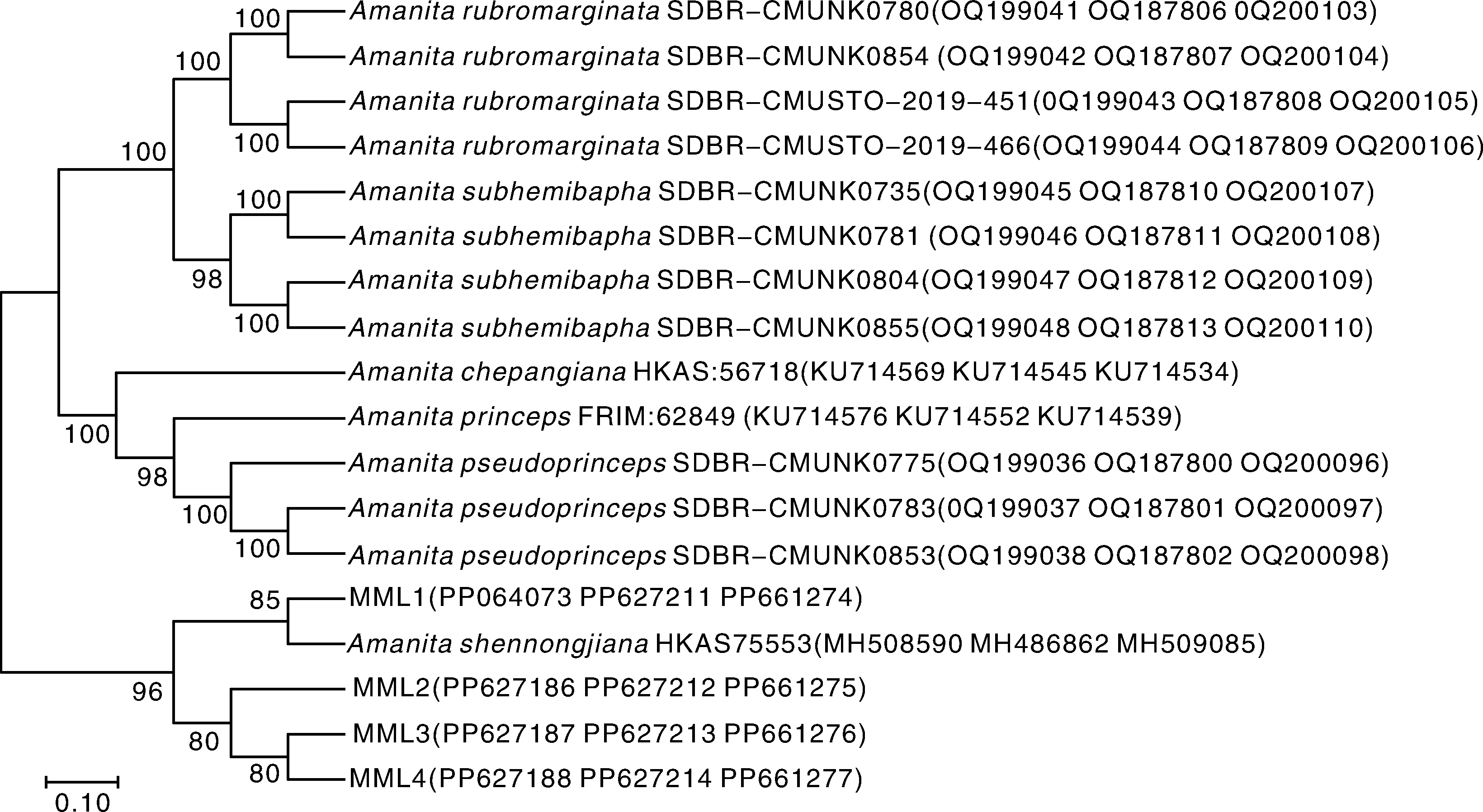
Fig.3 The constructed phylogenetic tree of isolated strains based on sequences of ITS, LSU and TEF1 genes
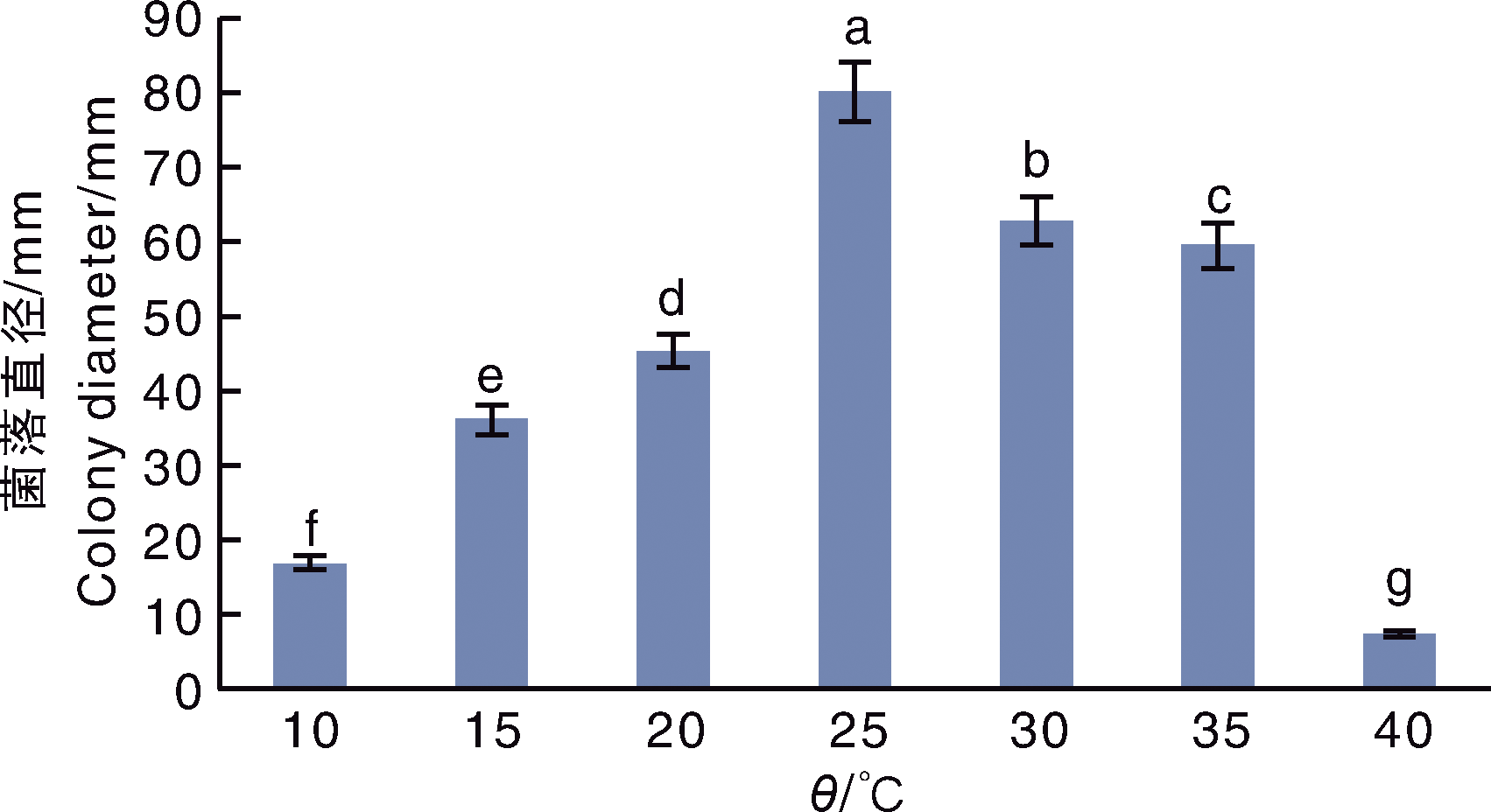
Fig.4 Effect of different temperature on mycelial growth rate of pathogen Bars marked without the same letters indicate significant difference at p<0.05. The same as below.
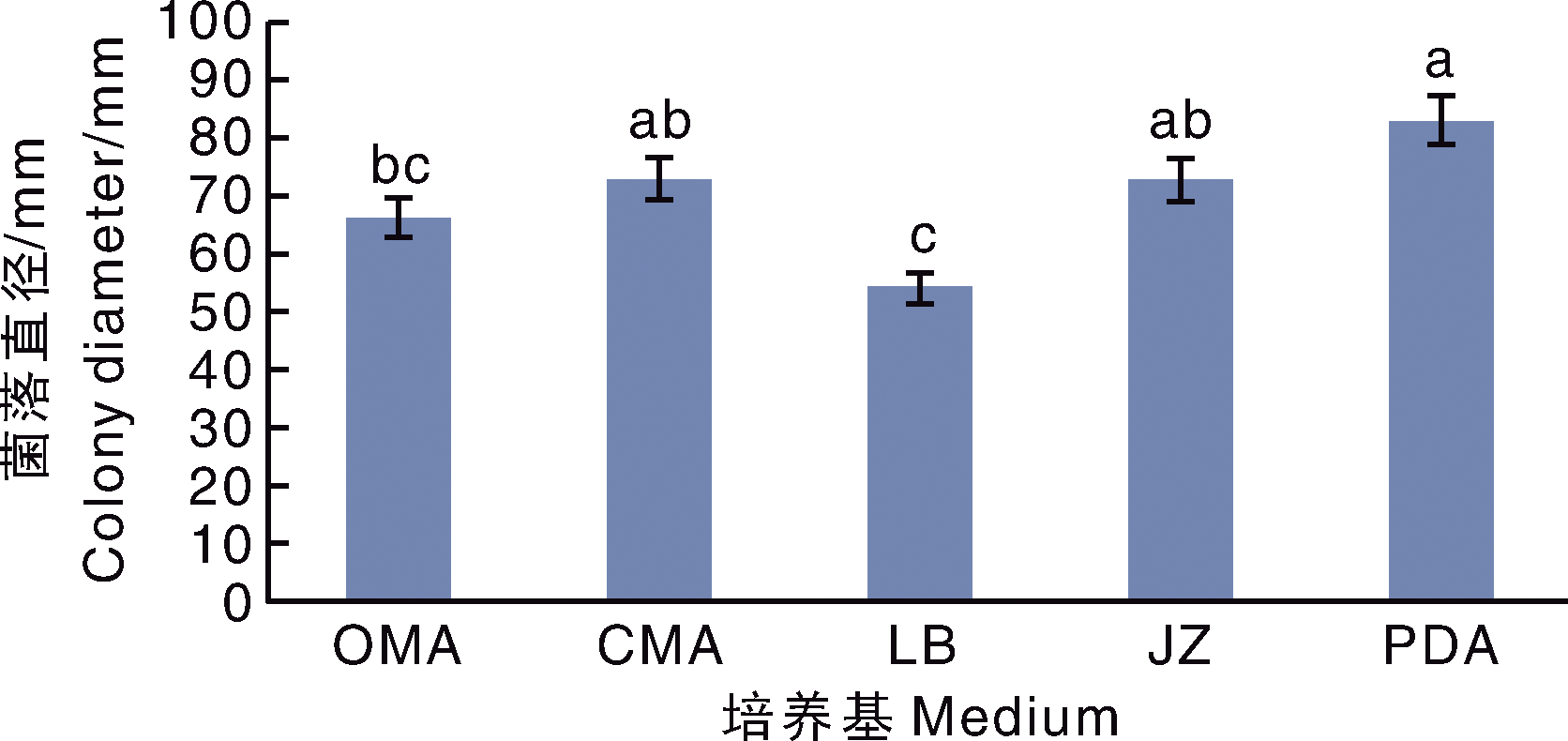
Fig.5 Effect of different culture media on mycelial growth of pathogen OMA, Oatmeal agar medium; CMA, Cornmeal agar medium; LB, LB medium; JZ, Leaf extract agar medium; PDA, Potato dextrose agar medium.
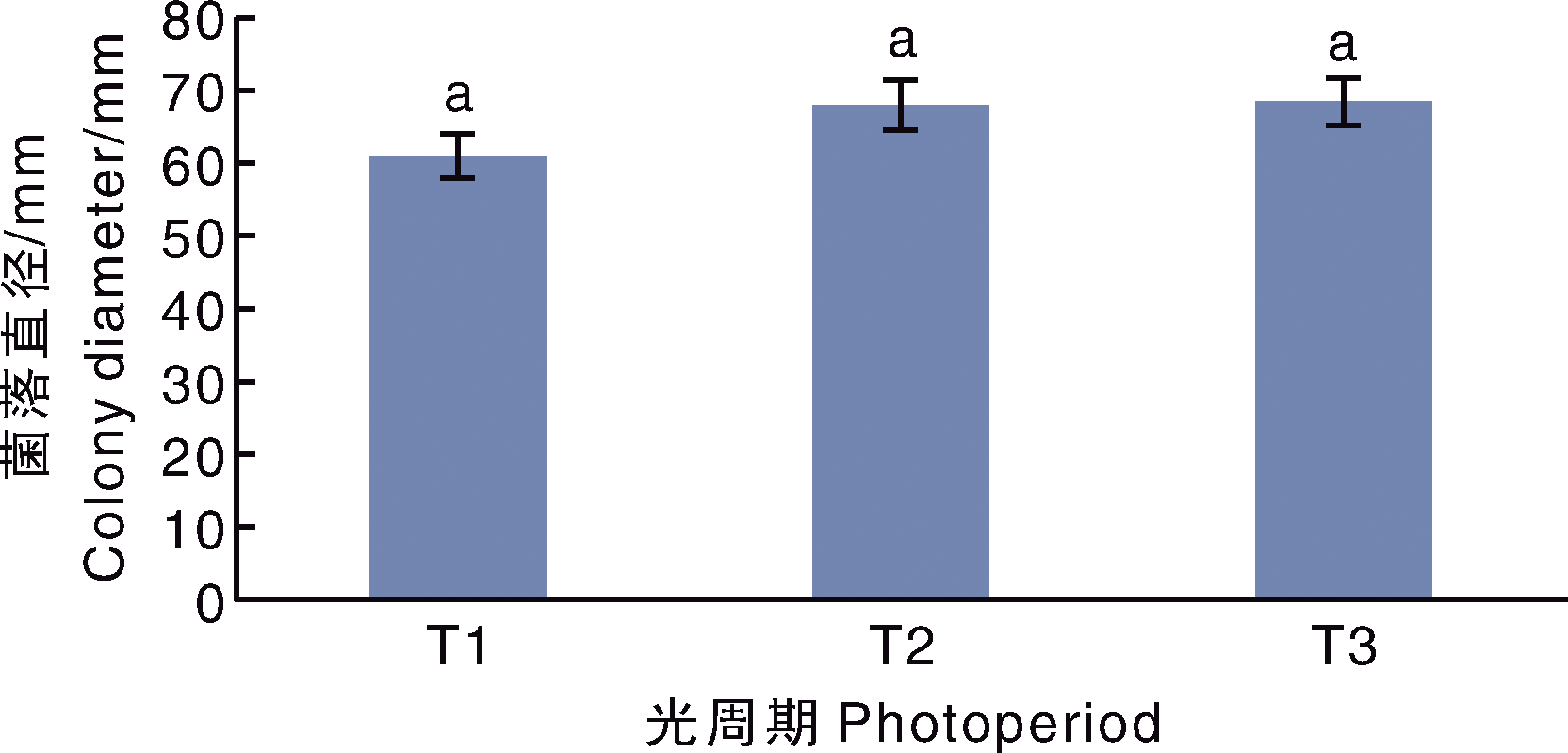
Fig.6 Effect of different photoperiods on mycelial growth rate of pathogen T1,24 h light per day; T2, 12 h light and 12 h dark per day; T3, 24 h dark per day.
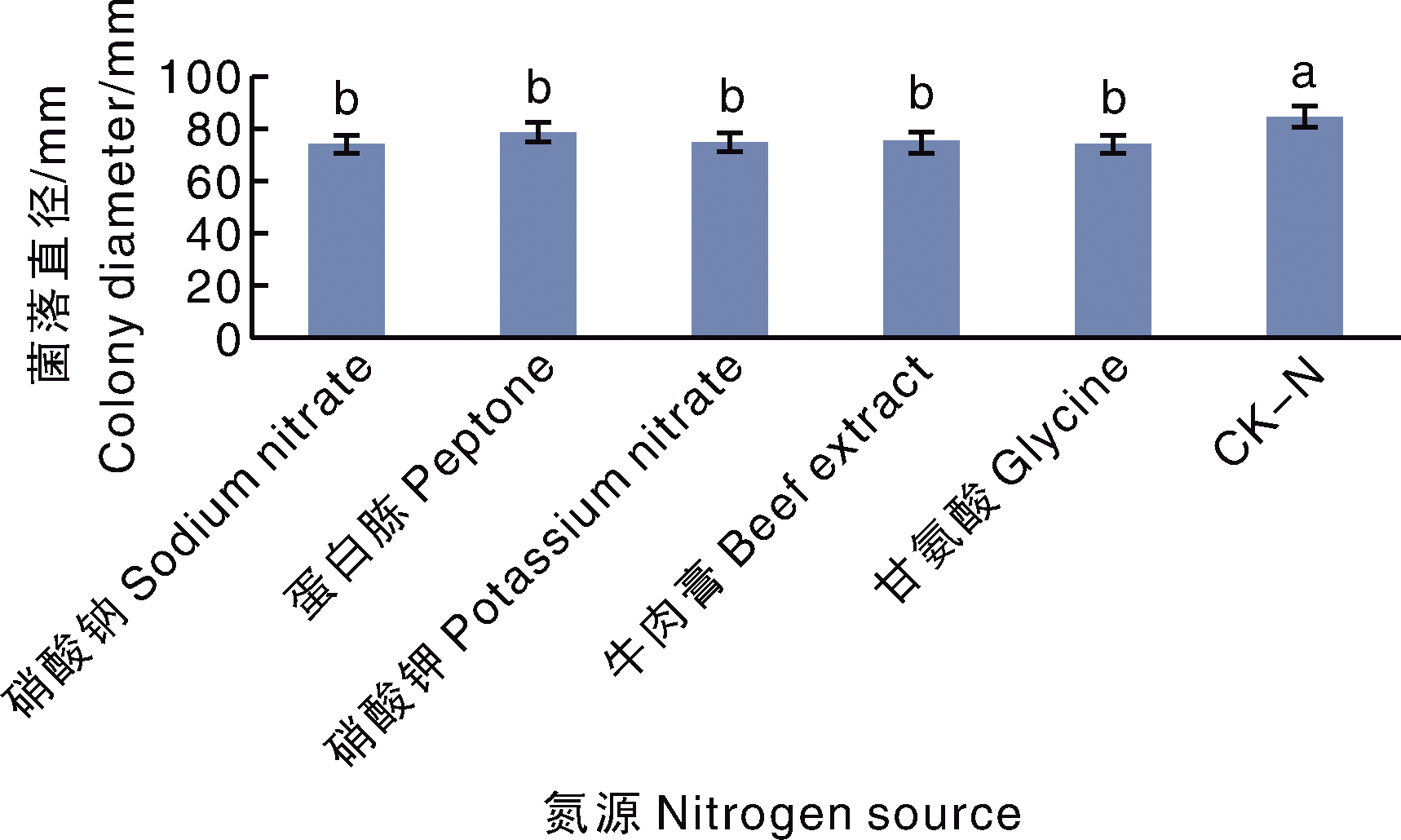
Fig.7 Effect of different nitrogen sources on mycelial growth of pathogen
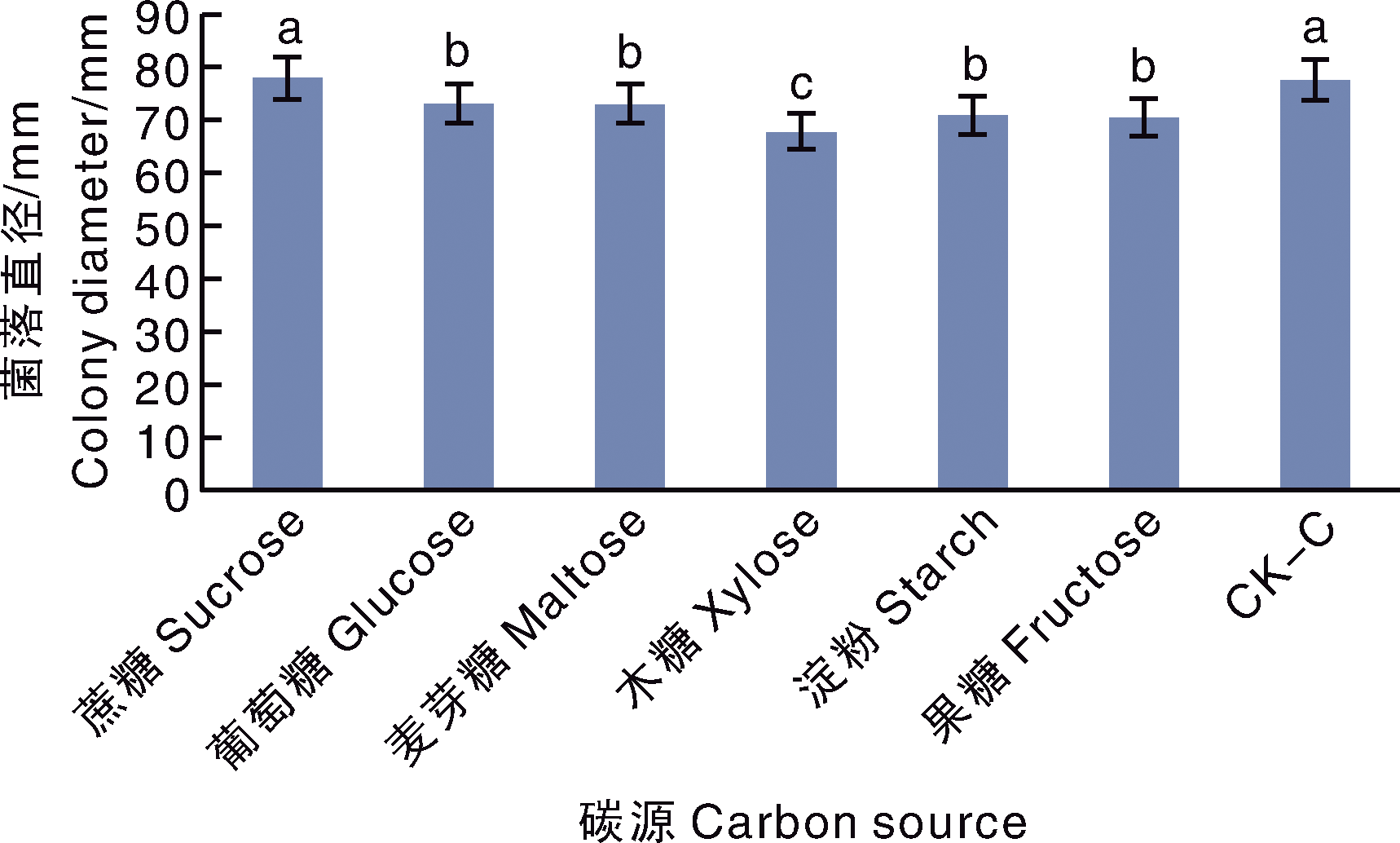
Fig.8 Effect of different carbon sources on mycelial growth of pathogen
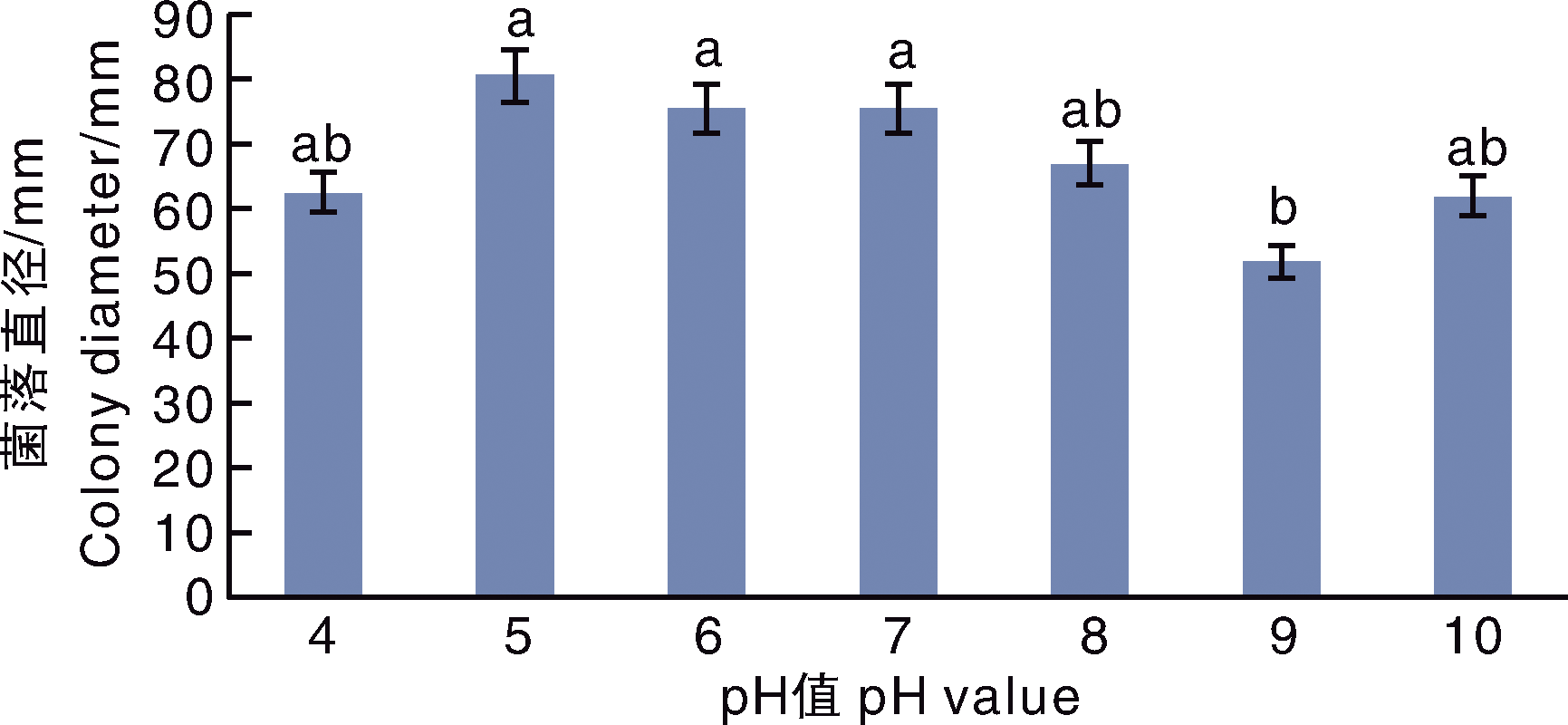
Fig.9 Effect of different pH values on mycelial growth of pathogen
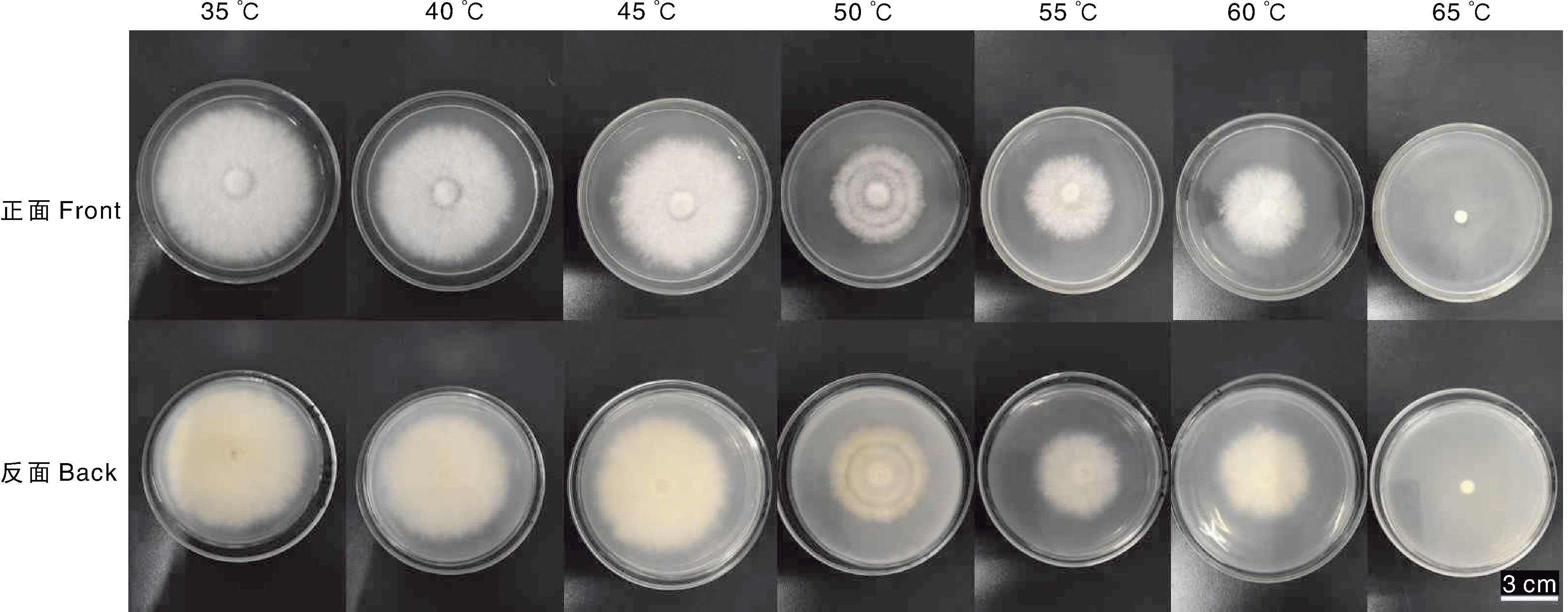
Fig.10 Lethal temperature of pathogen
| 杀菌剂 Fungicide | 回归方程 Regression equation | 相关系数 Correlation coefficient(r) | EC50/(mg·L-1) |
|---|---|---|---|
| 80%代森锰锌80% Mancozeb | y=3.26x-1.63 | 0.73 | 2.379 5 |
| 10%多抗霉素10% Polyoxin | y=0.30x+4.40 | 0.77 | 2.284 7 |
| 80%乙蒜素80% Ethylicin | y=4.09x-4.12 | 0.98 | 1.948 9 |
| 80%波尔多液80% Bordeaux mixture | y=0.27x+4.05 | 0.80 | 1.591 8 |
| 50%啶酰菌胺50% Boscalid | y=0.44x+4.18 | 0.93 | 2.717 2 |
| 80%嘧霉胺80% Pyrimethanil | y=0.38x+5.50 | 0.75 | 2.497 5 |
| 没食子酸丙酯Propyl gallate | y=1.04x+2.07 | 0.89 | 6.326 2 |
Table 1 Toxicity of fungicides against pathogen
| 杀菌剂 Fungicide | 回归方程 Regression equation | 相关系数 Correlation coefficient(r) | EC50/(mg·L-1) |
|---|---|---|---|
| 80%代森锰锌80% Mancozeb | y=3.26x-1.63 | 0.73 | 2.379 5 |
| 10%多抗霉素10% Polyoxin | y=0.30x+4.40 | 0.77 | 2.284 7 |
| 80%乙蒜素80% Ethylicin | y=4.09x-4.12 | 0.98 | 1.948 9 |
| 80%波尔多液80% Bordeaux mixture | y=0.27x+4.05 | 0.80 | 1.591 8 |
| 50%啶酰菌胺50% Boscalid | y=0.44x+4.18 | 0.93 | 2.717 2 |
| 80%嘧霉胺80% Pyrimethanil | y=0.38x+5.50 | 0.75 | 2.497 5 |
| 没食子酸丙酯Propyl gallate | y=1.04x+2.07 | 0.89 | 6.326 2 |
| [1] | 刘文达. 绣球花在园林景观中的应用探究[J]. 南方农业, 2020, 14(21): 43-44. |
| LIU W D. Application of Hydrangea in landscape architecture[J]. South China Agriculture, 2020, 14(21): 43-44. | |
| [2] | 朱嘉润, 王凤兰, 李永红, 等. 华南地区绣球花栽培技术及园林应用[J]. 现代农业科技, 2024(5): 81-84. |
| ZHU J R, WANG F L, LI Y H, et al. Cultivation techniques and garden application of Hydrangea in South China[J]. Modern Agricultural Science and Technology, 2024(5): 81-84. | |
| [3] | KUMLA J, SUWANNARACH N, LIU Y S, et al. Survey of edible Amanita in northern Thailand and their nutritional value, total phenolic content, antioxidant and α-glucosidase inhibitory activities[J]. Journal of Fungi, 2023, 9(3): 343. |
| [4] | 杨婷, 曹春玲, 周逸文, 等. 绣球叶斑病病原菌的分离与鉴定[J]. 植物病理学报, 2025, 55(2): 352-355. |
| YANG T, CAO C L, ZHOU Y W, et al. Isolation and identification of the pathogen causing leaf spot on Hydrangea macrophylla[J]. Acta Phytopathologica Sinica, 2024, 55(2): 352-355. | |
| [5] | HU Y F, LUO X X, XU Z H, et al. First report of anthracnose caused by Colletotrichum siamense on Hydrangea macrophylla in China[J]. Plant Disease, 2023, 107(9):2853. |
| [6] | FANG T J, SHANG W J, BAI L C, et al. First report of Golovinomyces orontii causing Hydrangea macrophylla powdery mildew in Qinghai-Tibet Plateau, China[J]. Plant Disease, 2021, 105(9):2730. |
| [7] | GU X, LIU W, JI K W, et al. First Reports of Cladosporium tenuissimum causing leaf spots on Hydrangea macrophylla in Anhui Province in China[J]. Plant Disease, 2024, 108(5):1392. |
| [8] | MMBAGA M T, LI Y, KIM M S. First report of Myrothecium roridum causing leaf spot on garden Hydrangea in the United States[J]. Plant Disease, 2010, 94(10): 1266. |
| [9] | GARIBALDI A, GILARDI G, MINERDI D, et al. First report of leaf spot caused by Phoma exigua on Hydrangea macrophylla in Italy[J]. Plant Disease, 2006, 90(8): 1113. |
| [10] | PARK M J, CHO S E, PARK J H, et al. First report of powdery mildew caused by Oidium hortensiae on mophead Hydrangea in Korea[J]. Plant Disease, 2012, 96(7): 1072. |
| [11] | GARIBALDI A, GILARDI G, FRATI S, et al. First report of leaf spot caused by Alternaria alternata on Hydrangea macrophylla in Italy[J]. Plant Disease, 2007, 91(6): 767. |
| [12] | GARIBALDI A, BERTETTI D, GULLINO M L. First report of a leaf spot caused by Alternaria compacta on Hydrangea anomala subsp. petiolaris in Italy[J]. Plant Disease, 2008, 92(1): 173. |
| [13] | 杨苗, 张杰, 白嘉伟, 等. 雾灵山国家级自然保护区大型真菌物种多样性[J]. 生物多样性, 2021, 29(9): 1229-1235. |
| YANG M, ZHANG J, BAI J W, et al. Species diversity of macrofungi in the Wuling Mountain National Nature Reserve[J]. Biodiversity Science, 2021, 29(9): 1229-1235. | |
| [14] | 刘升乔, 邓洪平, 胡亚萍, 等. 湖北竹溪大型真菌资源及生态分布研究[J]. 西南大学学报(自然科学版), 2021, 43(6): 52-59. |
| LIU S Q, DENG H P, HU Y P, et al. Study on ecological distribution of macrofungus resources in Zhuxi Hubei[J]. Journal of Southwest University(Natural Science Edition), 2021, 43(6): 52-59. | |
| [15] | GUO J X, BOWATTE S, HOU F J. Diversity of endophytic bacteria and fungi in seeds of Elymus nutans growing in four locations of Qinghai Tibet Plateau, China[J]. Plant and Soil, 2021, 459(1): 49-63. |
| [16] | 张纹浩. 中国西南地区鹅膏属物种资源研究[D]. 昆明: 昆明医科大学, 2023. |
| ZHANG W H. The species resources of Amanita in southwestern China[D]. Kunming: Kunming Medical University, 2023. | |
| [17] | 王凡, 卞晓春, 刘陈玮, 等. 南通市蚕豆赤斑病病原菌鉴定及其抑菌药剂筛选[J]. 江苏农业学报, 2024, 40(10): 1810-1817. |
| WANG F, BIAN X C, LIU C W, et al. Identification and screening of antifungal agents for the pathogen causing broad bean chocolate spot in Nantong City[J]. Jiangsu Journal of Agricultural Sciences, 2024, 40(10): 1810-1817. | |
| [18] | 程亮, 秦健, 黎炎, 等. 冬瓜苗期立枯病病原鉴定及防治药剂筛选[J]. 中国蔬菜, 2024(6): 74-80. |
| CHENG L, QIN J, LI Y, et al. Identification of pathogen causing damping off at seeding stage of wax gourd and screening of control fungicides[J]. China Vegetables, 2024(6): 74-80. |
| [1] | SHEN Guoqiang, WANG Mingde, GUAN Yawen, WU Jun, WANG Hanrong. Identification, biological characteristics and control agents screening of pathogens of curvular leaf spot disease of sorghum [J]. Acta Agriculturae Zhejiangensis, 2025, 37(7): 1492-1500. |
| [2] | WANG Chao, LI Yanjie, NIU Yun, WEN Lianhao, CHEN Jingjing, WU Hongzhi, YANG Yuyong, WU Yandi. Biological characterization of black spot pathogens in Rosa chinensis and evaluation of varietal resistance [J]. Acta Agriculturae Zhejiangensis, 2025, 37(5): 1087-1096. |
| [3] | JI Mengting, CHEN Changjiang, ZHU Ling, ZHAN Menglin, XIAO Shun, CAI Xueqing. Identification of etiological bacterium causing leaf spot disease on Ficus carica [J]. Acta Agriculturae Zhejiangensis, 2025, 37(5): 1097-1106. |
| [4] | HE Jiawei, Huang Leqin, LU Zhenyu, FANG Jin, LEI Ziyang, ZHANG Huijuan, JIANG Ming. Isolation and identification of the pathogen causing leaf spot disease on a rare and endangered plant species Rhododendron huadingense [J]. Acta Agriculturae Zhejiangensis, 2024, 36(4): 837-845. |
| [5] | LUO Zhihan, LIU Pengfei, YU Jun, QI He, CHEN Xiaoguang, LOU Binggan. Identification and biological characteristics of pathogen causing branch dieback on Styphnolobium japonicum (L.) Schott [J]. Acta Agriculturae Zhejiangensis, 2024, 36(3): 579-588. |
| [6] | WANG Shizhen, HUANG Jun, LI Mingjiang, HUANG Yingjie, ZHANG Juan. Identification and biological characteristics of phytopathogen in Osmanthus fragrans in Zhejiang Province of China [J]. Acta Agriculturae Zhejiangensis, 2024, 36(12): 2763-2773. |
| [7] | PAN Changmang, WANG Yushan, HUANG Qiuyue, HE Jianqing, BASANG Wangmu, ZHANG Gejie. Identification and biological characteristics of Hericium cirrhatum [J]. Acta Agriculturae Zhejiangensis, 2024, 36(10): 2229-2237. |
| [8] | FENG Lianrong, ZHANG Yan, ZHAO Xinwen, SONG Lizhi, LIANG Dejun. Isolation, identification and biological characteristics of a wild Flammulina filiformis strain [J]. Acta Agriculturae Zhejiangensis, 2023, 35(5): 1088-1096. |
| [9] | SUN Shanshan, CHEMI Lhamo, LI Qiang, ZENG Nanfang, ZHENG Cheng, ZHANG Baiyu, YAN Qigui. Construction and biological characteristics of a recombinant pseudorabies virus expressing GP5-M of PRRSV NADC30-like virus strain [J]. Acta Agriculturae Zhejiangensis, 2023, 35(11): 2555-2567. |
| [10] | WANG Zhipeng, ZHAO Jian, HUANG Pan, CUI Xuemei, NAN Li, SONG Houhui, BAO Guolian, LIU Yan. Isolation, identification and biological characteristics of rabbit-derived Escherichia coli bacteriophage [J]. Acta Agriculturae Zhejiangensis, 2022, 34(8): 1599-1608. |
| [11] | YANG Ling, SHA Nanjing, PAN Pengju, WU Bozhi. Identification and main biological characteristics of pathogen of Clematis leaf blight in Yunnan [J]. Acta Agriculturae Zhejiangensis, 2022, 34(7): 1449-1456. |
| [12] | REN Qianqian, ZHANG Jingwei, SUN Jixia, LUO Zhenzhen, DING Zhaotang, ZHANG Deshun, ZHANG Yingjie, GUO Duitian, GUO Wenjiao. Analysis and comprehensive evaluation of 25 Hydrangea germplasm resources [J]. Acta Agriculturae Zhejiangensis, 2021, 33(6): 1012-1024. |
| [13] | CHEN Runchen, WANG Yining, LIU Xiaowen, WANG Hongyan, DING Qiang, WANG Honglei. Identification, artificial cultivation and nutritional analysis of wild Pholiota adiposa [J]. Acta Agriculturae Zhejiangensis, 2021, 33(12): 2330-2338. |
| [14] | REN Qianqian, SUN Jixia, ZHANG Deshun, DING Zhaotang, ZHANG Yingjie, ZHANG Jingwei. Physiological response and drought resistance evaluation of different Hydrangea varieties under drought stress [J]. Acta Agriculturae Zhejiangensis, 2021, 33(10): 1852-1860. |
| [15] | LI Xuqing, YAN Jianli, RUAN Songlin. Identification and biological characteristics of anthracnose pathogen on Tetrastigma hemsleyanum [J]. , 2020, 32(11): 2009-2019. |
| Viewed | ||||||
|
Full text |
|
|||||
|
Abstract |
|
|||||

