Acta Agriculturae Zhejiangensis ›› 2026, Vol. 38 ›› Issue (3): 520-531.DOI: 10.3969/j.issn.1004-1524.20250200
• Plant Protection • Previous Articles Next Articles
Antifungal effects and mechanism of sodium dehydroacetate and natamycin against Magnaporthe oryzae
XIA Jiuzhi1,2( ), ZHANG Zhen2, CHAI Rongyao2, WANG Yanli2, LI Ling1,*(), WANG Jiaoyu2,*()
- 1.
College of Advanced Agricultural Sciences ,Zhejiang A&F University Hangzhou 311300, China
2.State Key Laboratory for Quality and Safety of Agro-products ,Institute of Plant Protection and Microbiology, Zhejiang Academy of Agricultural Sciences Hangzhou 310021, China
-
Received:2025-03-12Online:2026-03-25Published:2026-04-17

CLC Number:
Cite this article
XIA Jiuzhi, ZHANG Zhen, CHAI Rongyao, WANG Yanli, LI Ling, WANG Jiaoyu. Antifungal effects and mechanism of sodium dehydroacetate and natamycin against Magnaporthe oryzae[J]. Acta Agriculturae Zhejiangensis, 2026, 38(3): 520-531.
share this article
Add to citation manager EndNote|Ris|BibTeX
URL: http://www.zjnyxb.cn/EN/10.3969/j.issn.1004-1524.20250200
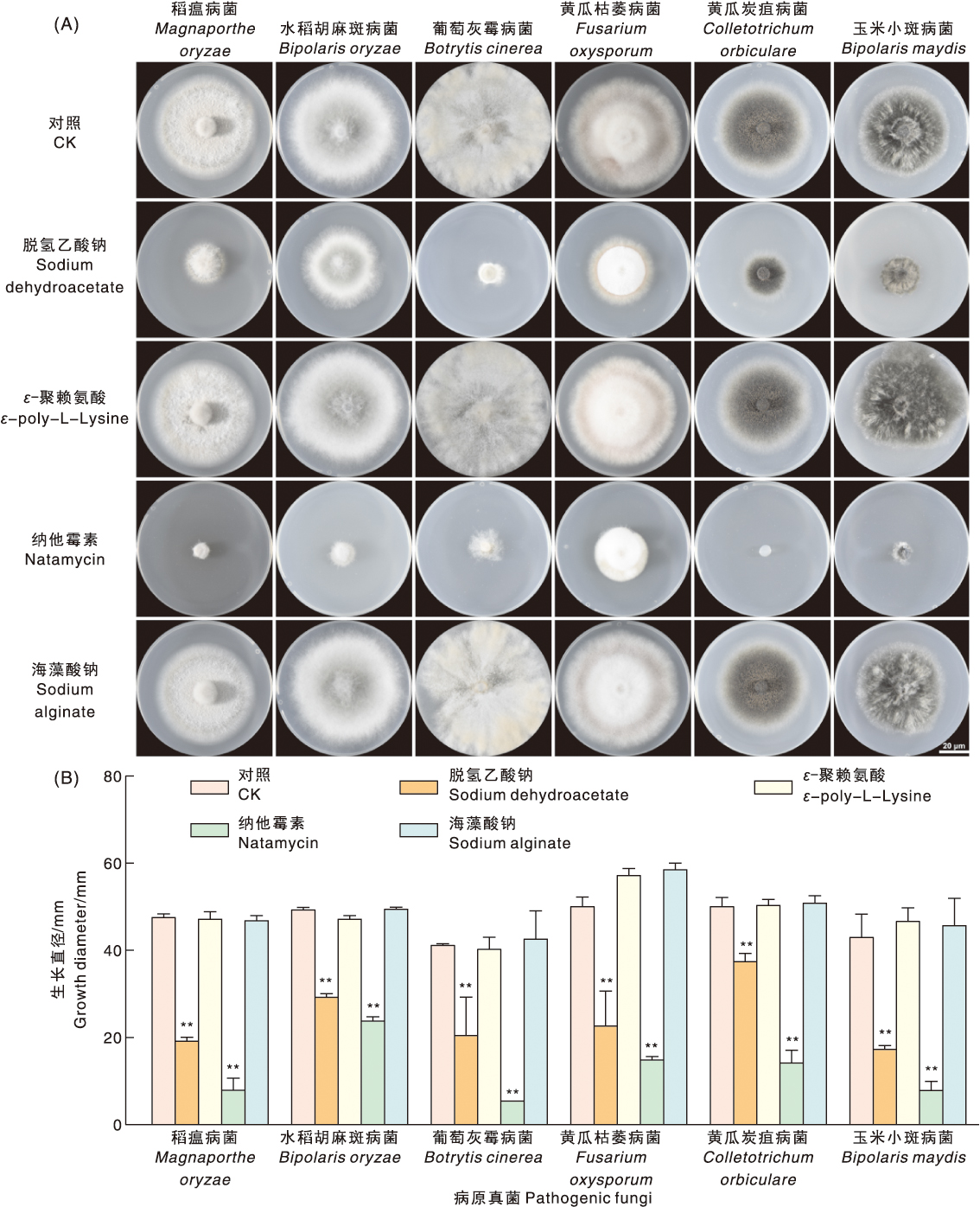
Fig.1 Inhibitory effects of different food preservatives on the mycelial growth of plant pathogenic fungi Asterisks represent significant differences(*, p<0.05; **, p<0.01), Scale=20 μm. The same as below.
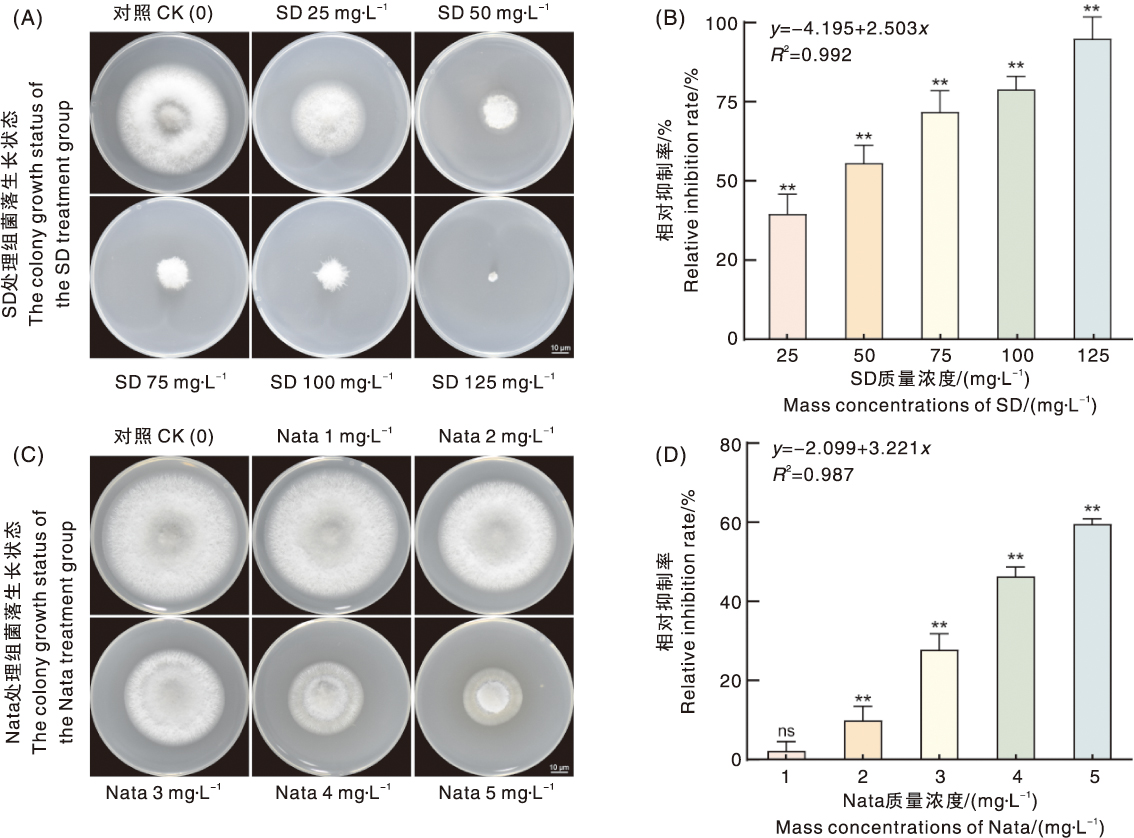
Fig.2 Inhibitory effects of sodium dehydroacetate(SD)and natamycin(Nata)on mycelia growth of Magnaporthe oryzae
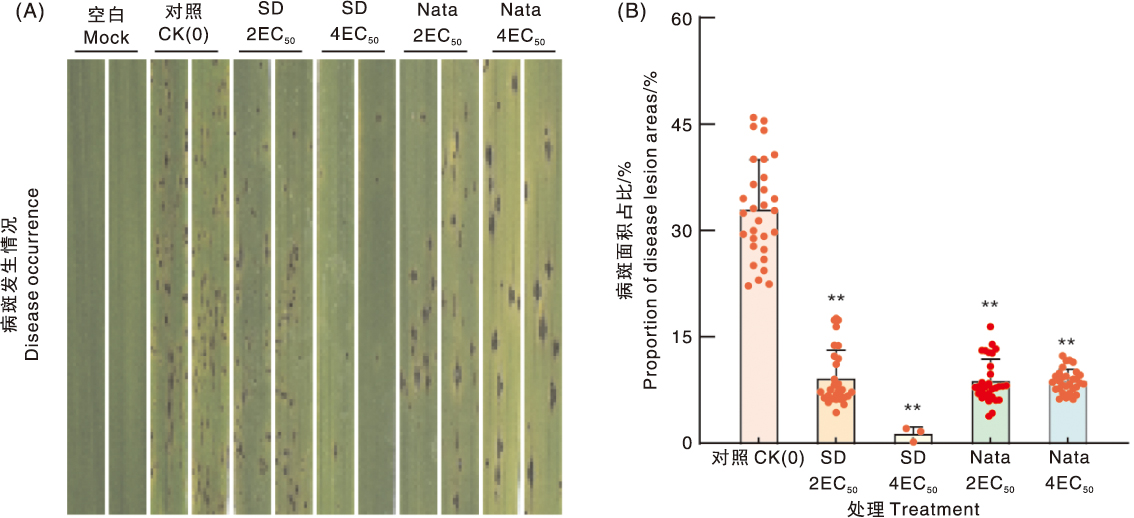
Fig.3 Pot control efficacy of sodium dehydroacetate (SD) and natamycin (Nata) spray treatments against rice blast
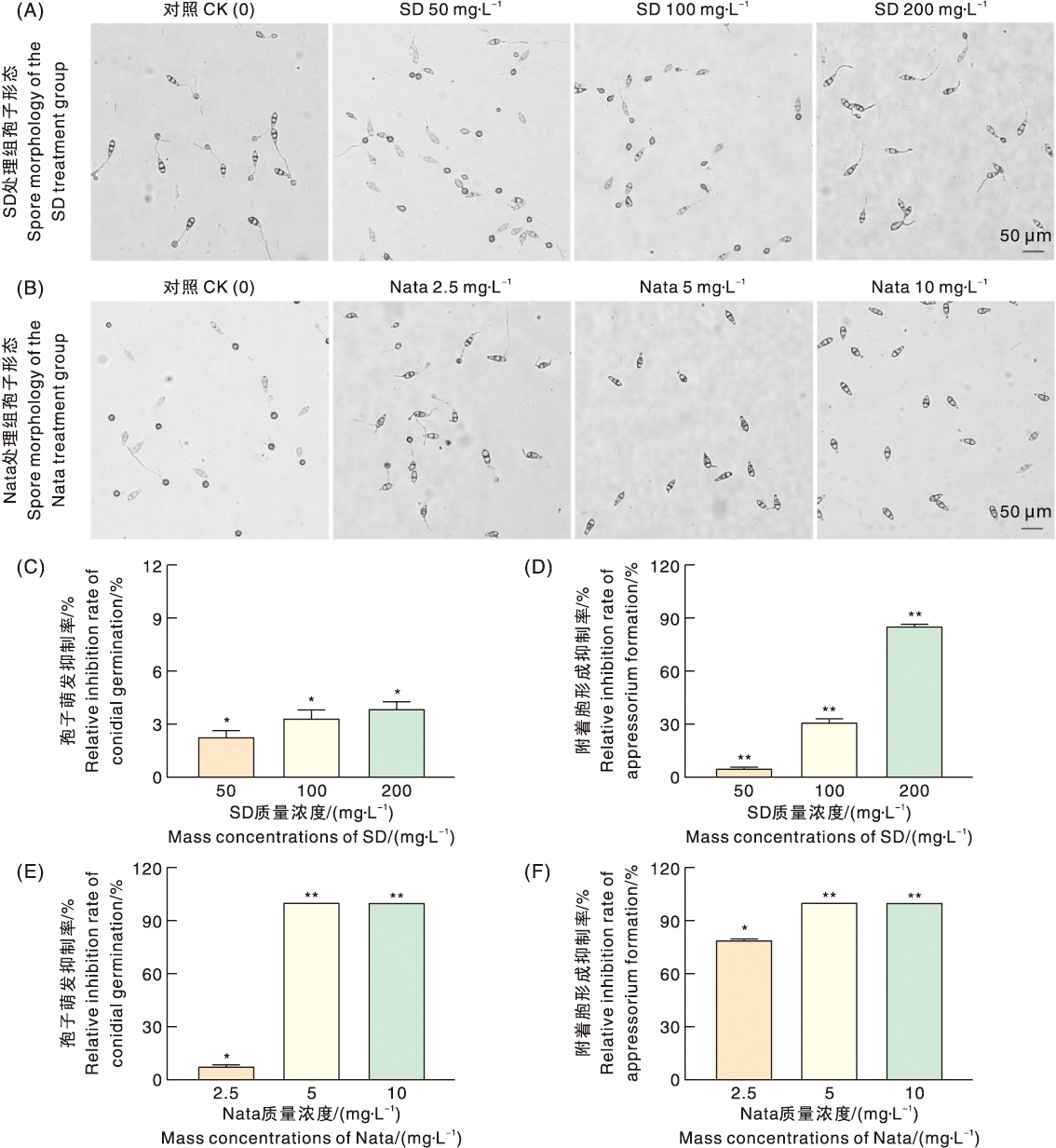
Fig.4 Effects of sodium dehydroacetate (SD) and natamycin (Nata) on spore germination and appressorium formation of Magnaporthe oryzae
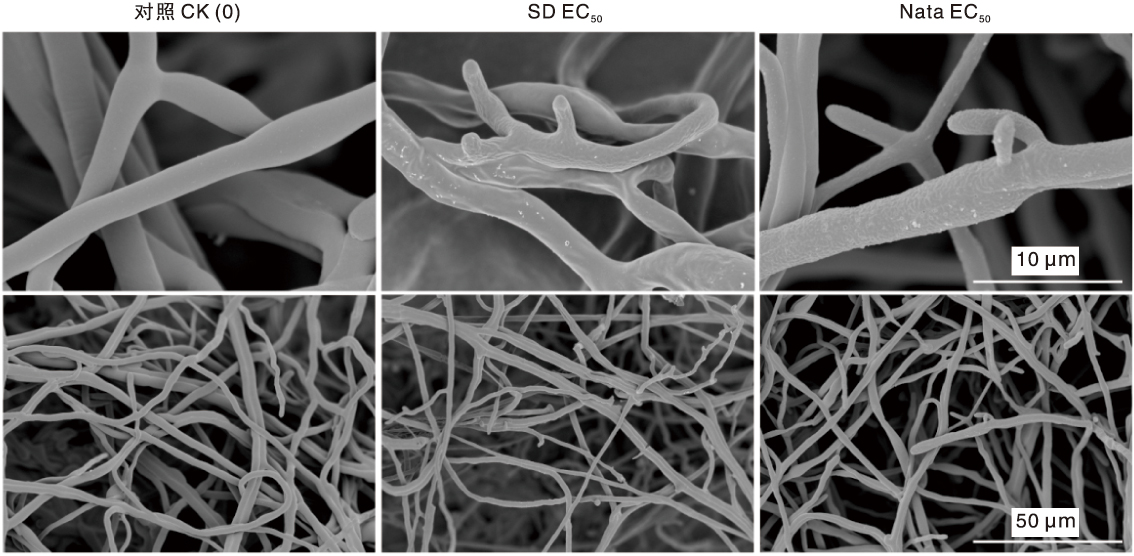
Fig.5 Morphological changes in the mycelium of Magnaporthe oryzae under sodium dehydroacetate (SD)and natamycin (Nata) treatments
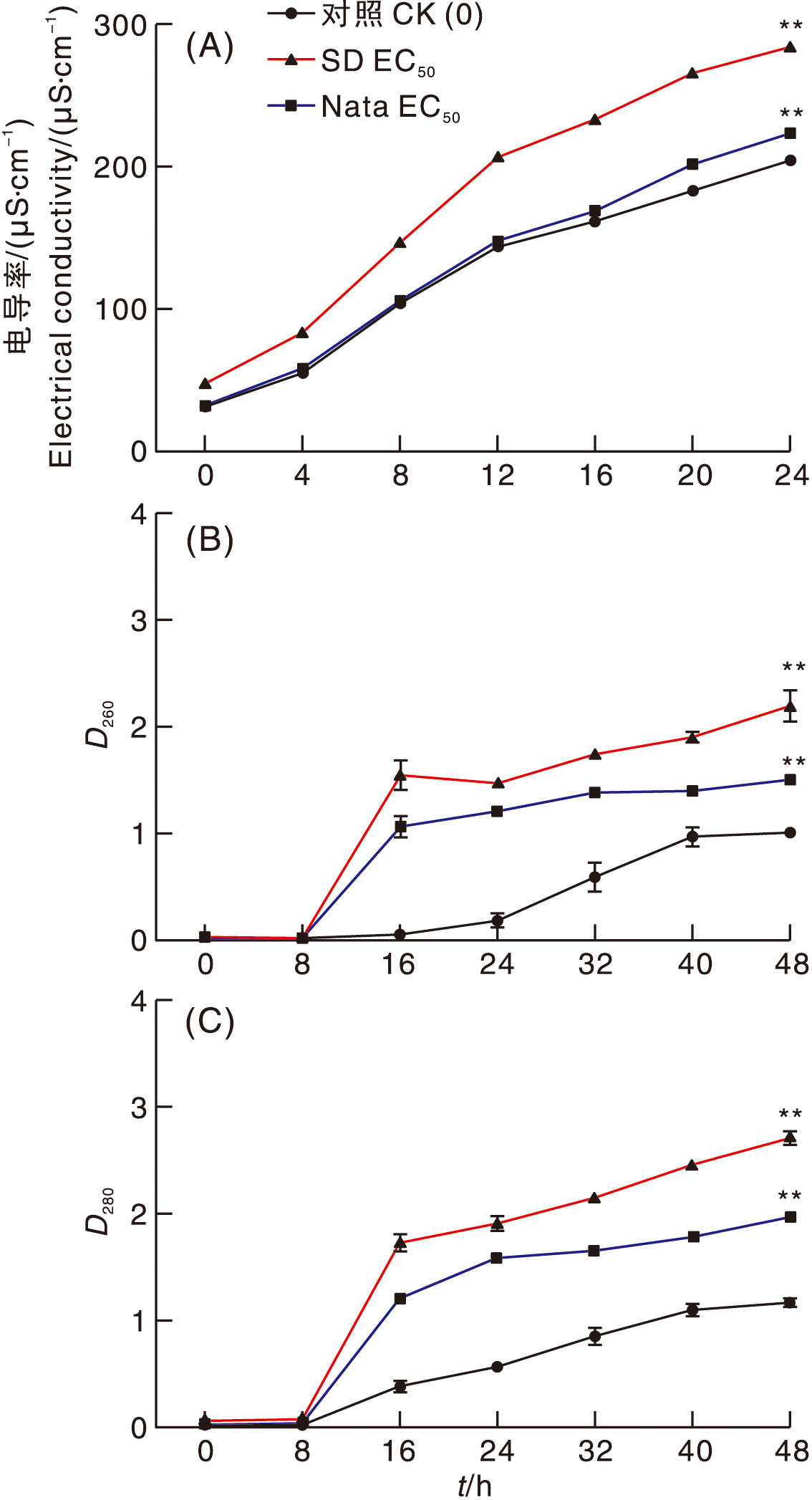
Fig.6 Cell membrane permeability of Magnaporthe oryzae under sodium dehydroacetate (SD) and natamycin (Nata) treatments
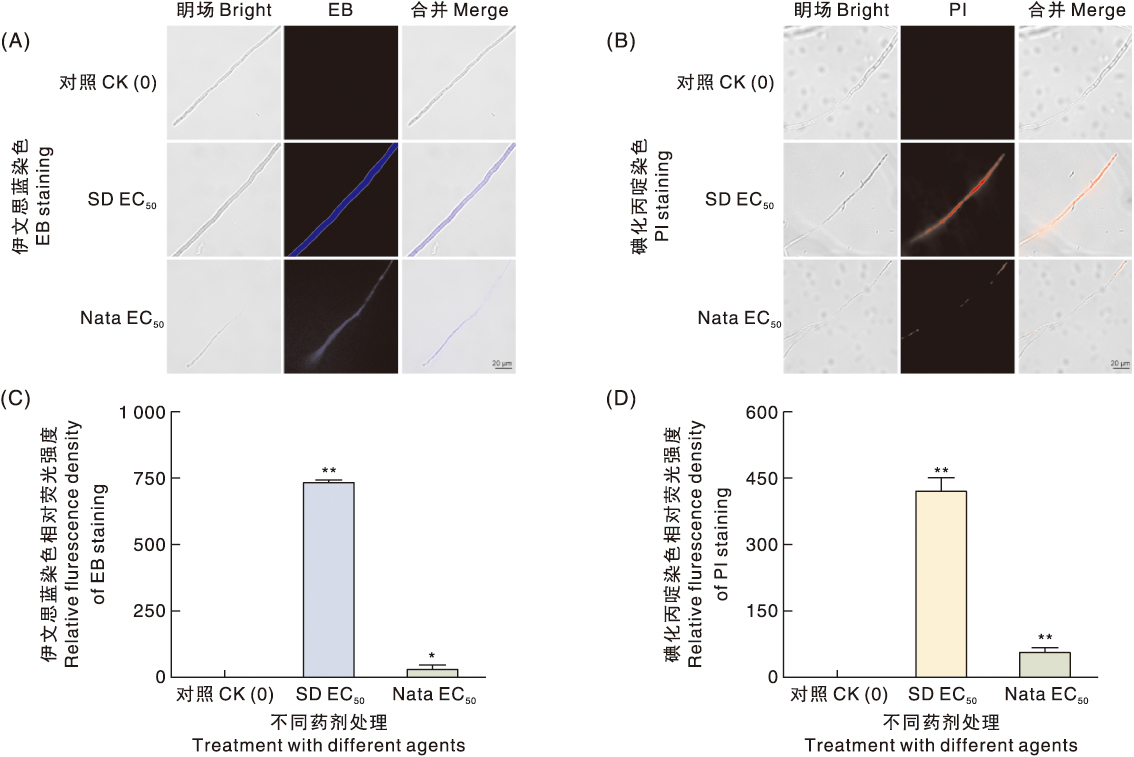
Fig.7 Effects of sodium dehydroacetate (SD) and natamycin (Nata) on cell membrane integrity of Magnaporthe oryzae
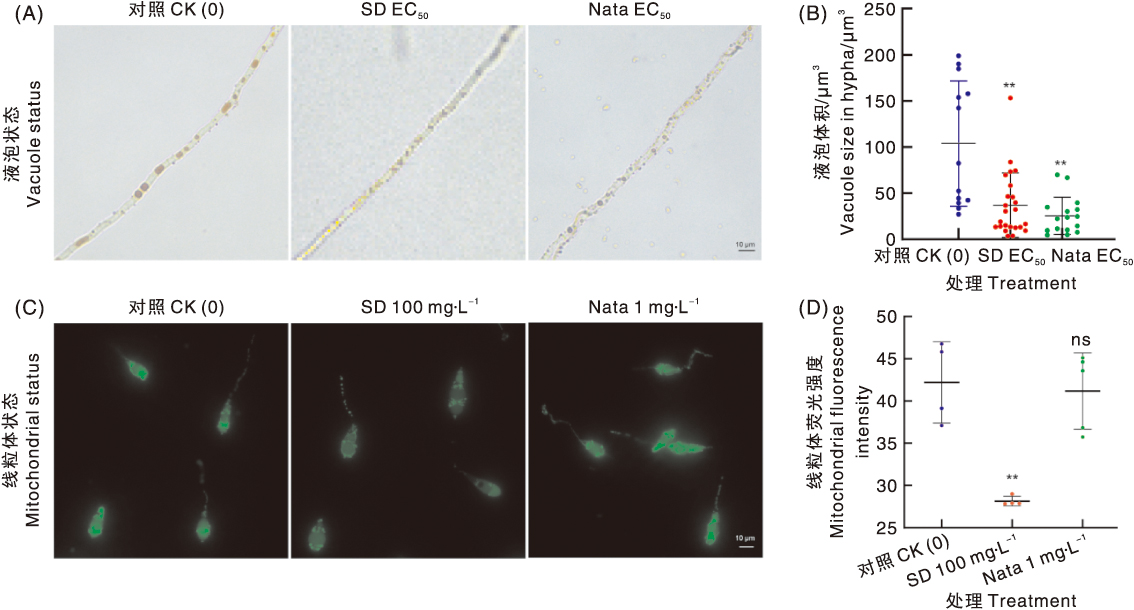
Fig.8 Vacuole status and mitochondrial activity of Magnaporthe oryzae under sodium dehydroacetate (SD) and natamycin (Nata) treatments
| [1] | 郭韬, 余泓, 邱杰, 等. 中国水稻遗传学研究进展与分子设计育种[J]. 中国科学(生命科学), 2019, 49(10): 1185-1212. |
| GUO T, YU H, QIU J, et al. Advances in rice genetics and breeding by molecular design in China[J]. Scientia Sinica(Vitae), 2019, 49(10): 1185-1212. | |
| [2] | ASHKANI S, RAFII M Y, SHABANIMOFRAD M, et al. Molecular progress on the mapping and cloning of functional genes for blast disease in rice (Oryza sativa L.): current status and future considerations[J]. Critical Reviews in Biotechnology, 2016, 36(2): 353-367. |
| [3] | LEI L Y, XIONG Z X, LI J L, et al. Biological control of Magnaporthe oryzae using natively isolated Bacillus subtilis G5 from Oryza officinalis roots[J]. Frontiers in Microbiology, 2023, 14: 1264000. |
| [4] | 杨婕, 杨长登, 曾宇翔, 等. 水稻稻瘟病抗性基因挖掘与利用研究进展[J]. 中国水稻科学, 2024, 38(6): 591-603. |
| YANG J, YANG C D, ZENG Y X, et al. Research progress in mining and utilization of rice blast resistance genes[J]. Chinese Journal of Rice Science, 2024, 38(6): 591-603. | |
| [5] | 李进林, 李颖薇, 禤小春. 水稻病虫害专业化统防统治技术与绿色防控技术协同发展策略[J]. 农村科学实验, 2025(2): 91-93. |
| LI J L, LI Y W, XUAN X C. Collaborative development strategy of specialized unified prevention and control technology and green prevention and control technology for rice pests and diseases[J]. Rural Scientific Experiment, 2025(2): 91-93. | |
| [6] | 袁治理, 叶文武, 侯毅平, 等. 我国绿色农药研究现状及发展建议[J]. 中国科学(生命科学), 2023, 53(11): 1643-1662. |
| YUAN Z L, YE W W, HOU Y P, et al. Current situation and the development of green pesticides in China[J]. Scientia Sinica(Vitae), 2023, 53(11): 1643-1662. | |
| [7] | SHARMA R, MAHARSHI R, GAUR R, et al. Management of post-harvest diseases of Kinnow fruits through plant growth regulator and food preservative[J]. Annals of Plant Protection Sciences, 2011, 19(1): 122-125. |
| [8] | 雷国风, 李至敏, 王小琴, 等. 柑橘果实采后绿霉病防治研究进展[J]. 江苏农业科学, 2018, 46(21): 27-30. |
| LEI G F, LI Z M, WANG X Q, et al. Research progress on control of green mold of postharvest citrus fruits[J]. Jiangsu Agricultural Sciences, 2018, 46(21): 27-30. | |
| [9] | 段小芳. 肉桂醛和脱氢乙酸钠对柑橘采后酸腐病和绿霉病的防治[D]. 湘潭: 湘潭大学, 2016. |
| DUAN X F. Control of postharvest sour rot and green mold of citrus fruit by application of cinnamaldehyde and sodium dehydroacetate[D]. Xiangtan: Xiangtan University, 2016. | |
| [10] | 刘欣洁. ε-聚赖氨酸复配对番茄灰霉病防治的增效作用研究[D]. 杨凌: 西北农林科技大学, 2017. |
| LIU X J. Synergistic effect of ε-poly-L-lysine compound to control tomato gray mold[D]. Yangling: Northwest A&F University, 2017. | |
| [11] | 陈方圆, 戴久竣, 徐家延, 等. 纳他霉素抑菌机制及在食品保鲜中的应用研究进展[J]. 食品科技, 2021, 46(9): 47-51. |
| CHEN F Y, DAI J J, XU J Y, et al. Research progress of antimicrobial mechanism of natamycin and its application in food preservation[J]. Food Science and Technology, 2021, 46(9): 47-51. | |
| [12] | 曹金迪. 纳他霉素和海藻酸钠复合处理对甜樱桃采后链格孢霉菌的抑制和贮藏效果研究[D]. 杨凌: 西北农林科技大学, 2024. |
| CAO J D. Study on the inhibition and storage effect of natamycin and sodium alginate compound treatment on Alternaria alternata of sweet cherry after harvest[D]. Yangling: Northwest A&F University, 2024. | |
| [13] | 沈萍, 陈向东. 微生物学实验[M]. 4版. 北京: 高等教育出版社, 2007. |
| [14] | 谢海伟, 吴琳芝, 黄欲菲, 等. 食品保鲜剂研究进展[J]. 安徽农业科学, 2019, 47(15): 13-17. |
| XIE H W, WU L Z, HUANG Y F, et al. Research progress of food preservatives[J]. Journal of Anhui Agricultural Sciences, 2019, 47(15): 13-17. | |
| [15] | 王志伟, 李洋. 脱氢乙酸钠、丙酸钙及山梨酸钾对丰镇月饼保鲜效果的研究[J]. 中国食品添加剂, 2023, 34(3): 230-236. |
| WANG Z W, LI Y. Fresh-keeping effects of sodium dehydroacetate, calcium propionate and potassium sorbate on Fengzhen moon cakes[J]. China Food Additives, 2023, 34(3): 230-236. | |
| [16] | 雷雅馨, 张琪, 黄帅, 等. 纳他霉素抑制无核白葡萄干霉变效果及机制[J]. 食品工业科技, 2025, 46(18): 223-231. |
| LEI Y X, ZHANG Q, HUANG S, et al. Effect and mechanism of natamycin on inhibiting mold in seedless white raisins[J]. Science and Technology of Food Industry, 2025, 46(18): 223-231. | |
| [17] | 陈鑫. 脱氢乙酸钠对湘西椪柑采后致病菌意大利青霉的抑制研究[D]. 湘潭: 湘潭大学, 2022. |
| CHEN X. Inhibition of sodium dehydroacetate on postharvest pathogen Penicillium italicum[D]. Xiangtan: Xiangtan University, 2022. | |
| [18] | 刘佳怡, 王嘉欣, 宋海超, 等. 纳他霉素对芒果采后胶孢炭疽菌的抑菌效果及机理[J]. 植物学报, 2019, 54(4): 455-463. |
| LIU J Y, WANG J X, SONG H C, et al. Antifungal activity and mechanisms of natamycin against Colletotrichum gloeosporioides in postharvest mango fruit[J]. Bulletin of Botany, 2019, 54(4): 455-463. | |
| [19] | 盛悦, 王航一, 万家静, 等. 稻瘟病菌防控及基于细胞膜损伤的抑菌机制研究进展[J]. 杭州师范大学学报(自然科学版), 2023, 22(6): 616-620. |
| SHENG Y, WANG H Y, WAN J J, et al. Review on prevention and control of Magnaporthe oryzae and its antibacterial mechanism based on cell membrane damage[J]. Journal of Hangzhou Normal University (Natural Science Edition), 2023, 22(6): 616-620. | |
| [20] | 肖媛. ε-聚赖氨酸对柑橘青霉病菌及酸腐病菌的抑制作用研究[D]. 长沙: 湖南大学, 2020. |
| XIAO Y. Antifungal activity of ε-polylysine against pathogenic fungi of blue mold and sour rot of Citrus[D]. Changsha: Hunan University, 2020. | |
| [21] | 李冰, 王成树. 细胞自噬及其调控病原真菌致病毒力的研究进展[J]. 菌物研究, 2021, 19(2): 63-69. |
| LI B, WANG C S. Cell autophagy and its effects on regulating the infection process of pathogenic fungi[J]. Journal of Fungal Research, 2021, 19(2): 63-69. | |
| [22] | TE WELSCHER Y M, JONES L, VAN LEEUWEN M R, et al. Natamycin inhibits vacuole fusion at the priming phasevia a specific interaction with ergosterol[J]. Antimicrobial Agents and Chemotherapy, 2010, 54(6): 2618-2625. |
| [23] | BERNARDI P, GERLE C, HALESTRAP A P, et al. Identity, structure, and function of the mitochondrial permeability transition pore: controversies, consensus, recent advances, and future directions[J]. Cell Death & Differentiation, 2023, 30(8): 1869-1885. |
| [24] | 谭小丽, 龙春燕, 李路, 等. 脱氢乙酸钠抑制指状青霉的作用机制[J]. 食品科学, 2022, 43(23): 19-26. |
| TAN X L, LONG C Y, LI L, et al. Antifungal mechanism of sodium dehydroacetate against Penicillium digitatum[J]. Food Science, 2022, 43(23): 19-26. |
| [1] | WU Jiaqi, ZHU Xueming, BAO Jiandong, WANG Caoyi, ZHOU Xiaoyu, LI Lin, LIN Fucheng. Research progress on biological control of rice blast [J]. Acta Agriculturae Zhejiangensis, 2025, 37(3): 736-744. |
| [2] | HAO Zhongna, QIU Haiping, CHAI Rongyao, HAN Zhanyu, ZHANG Zhen, WANG Yanli, WANG Jiaoyu, LIU Xin. Analysis of rice blast resistance in rice varieties from regional trials in Zhejiang Province of China from 2014 to 2023 [J]. Acta Agriculturae Zhejiangensis, 2025, 37(12): 2449-2457. |
| [3] | HUANG Changli, ZHU Xueming, LI Lin, BAO Jiandong, YU Xiaoping, LIN Fucheng. Functional study of MoZds1 in the rice blast fungus [J]. Acta Agriculturae Zhejiangensis, 2024, 36(3): 559-568. |
| [4] | WU Jian, WANG Jiangong, CHU Weixiong. Effect of natamycin treatment on grape quality in e-commerce logistics process [J]. Acta Agriculturae Zhejiangensis, 2021, 33(5): 916-922. |
| [5] | ZHAO Xiuping, WANG Shuang, YAN Xingyi, DUAN Qiang, ZHANG Shuai, CHEN Yongsheng, LI Guorui. Expression, purification and bioinformatics analysis of Magnaporthe oryzae MGG-01005 [J]. Acta Agriculturae Zhejiangensis, 2021, 33(3): 470-478. |
| [6] | HU Liwen, ZHANG Yong, SHI Zhen, FU Jie, SUN Wei, DENG Junliang, REN Zhihua, ZUO Zhicai, CAO Suizhong, HU Yanchun. Inhibition effect of Ageratina adenophorais methanol extracts against Microsporidium gypsum and its mechanism [J]. , 2019, 31(9): 1555-1562. |
| [7] | WANG Daoze, HONG Wenying, WU Yanjun, CHEN Rui, HU Xuanxiang. The impacts of cultivated rice varieties and climates on rice blast disease epidemics [J]. , 2017, 29(5): 791-798. |
| [8] | XU Liaoyuan1, ZHAO Liwen1, HU Yufeng2, QIU Haiping3, CHAI Rongyao3, ZHANG Zhen3,*. Development of a qPCR detection method for monitoring conidial density of rice blast fungus in the air [J]. , 2016, 28(8): 1368-. |
| [9] | ZHAO Xiao\|yan1,2, YE Sheng\|hai2, LI Xiao\|hua2, YU Peng1,2, CHEN Lei2, ZHAI Rong\|rong2, JIN Qing\|sheng2, ZHANG Xiao\|ming2,*. Detecting the rice blast resistance genes and brown planthopper resistance genes by gene functional marker [J]. , 2015, 27(3): 327-. |
| [10] | ZHU Xiao\|li1,2,3, TAO Yue\|zhi2, ZHOU Bo3,*. Distribution pattern of multiple alleles of rice blast resistance genes and its application in gene cloning#br# [J]. , 2015, 27(10): 1789-. |
| [11] | ZENG Zhengming;KUANG Haochi*;LUO Juntao;CHEN Guangzhen;FU Jun;YANG Yang;HE Xingcai. Preliminary study on accelerated improvement of rice blast resistance of Luhui 602 using molecular markerassisted selection [J]. , 2012, 24(1): 0-70. |
| [12] | XIA Xiao-dong;YUAN Xiao-ping;YU Han-yong;WANG Yi-ping;XU Qun;LOU Bing-gan;*. Resistance evaluation of primary core collection of Chinese rice germplasm to rice blast and rice bacterial blight [J]. , 2010, 22(2): 0-214. |
| Viewed | ||||||
|
Full text |
|
|||||
|
Abstract |
|
|||||

