Acta Agriculturae Zhejiangensis ›› 2026, Vol. 38 ›› Issue (6): 1126-1140.DOI: 10.3969/j.issn.1004-1524.20260104
• Future Foods and Health • Previous Articles Next Articles
Effects of thyme extract on antioxidant capacity and flavor of beef
ZHONG Hangyu1,2( ), LU Wenjing2, CHEN Di2, ZHANG Cen2, WANG Yiran2, HE Jianlan3, HUANG Yuke4, XU Guangzhi1,*(), XIAO Chaogeng2,*()
- 1
College of Food Science and Health ,Zhejiang A & F University Hangzhou 311300, China
2Zhejiang-Russia Joint Laboratory on Green Manufacturing of Nutritious and Healthy Foods ,Institute of Food Science, Zhejiang Academy of Agricultural Sciences Hangzhou 310021, China
3Sichuan Yuanfang Food Co. ,Ltd. Bazhong 636600, Sichuan, China
4Wenzhou Dingnuo Food Co. ,Ltd. Wenzhou 325000, Zhejiang, China
-
Received:2025-02-10Online:2026-06-25Published:2026-07-14

CLC Number:
Cite this article
ZHONG Hangyu, LU Wenjing, CHEN Di, ZHANG Cen, WANG Yiran, HE Jianlan, HUANG Yuke, XU Guangzhi, XIAO Chaogeng. Effects of thyme extract on antioxidant capacity and flavor of beef[J]. Acta Agriculturae Zhejiangensis, 2026, 38(6): 1126-1140.
share this article
Add to citation manager EndNote|Ris|BibTeX
URL: http://www.zjnyxb.cn/EN/10.3969/j.issn.1004-1524.20260104
| 水平 Level | 因素Factor | ||
|---|---|---|---|
| (A)提取物质 量分数/% Mass fraction of extract/% | (B)处理 时间/min Treatment time/min | (C)液料比/ (mL·g-1) Liquid-to-solid ratio/(mL·g-1) | |
| -1 | 0.10 | 20 | 2∶1 |
| 0 | 0.15 | 30 | 3∶1 |
| 1 | 0.20 | 40 | 4∶1 |
Table 1 Factors and levels for response surface experiments
| 水平 Level | 因素Factor | ||
|---|---|---|---|
| (A)提取物质 量分数/% Mass fraction of extract/% | (B)处理 时间/min Treatment time/min | (C)液料比/ (mL·g-1) Liquid-to-solid ratio/(mL·g-1) | |
| -1 | 0.10 | 20 | 2∶1 |
| 0 | 0.15 | 30 | 3∶1 |
| 1 | 0.20 | 40 | 4∶1 |
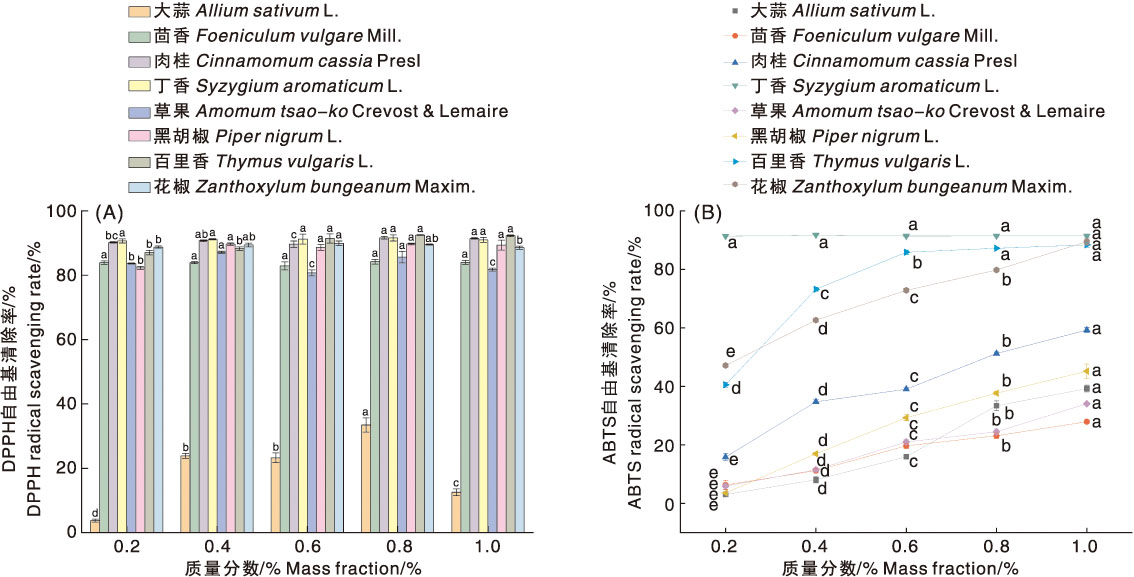
Fig.1 DPPH radical scavenging rate (A) and ABTS radical scavenging rate (B) of different spice extracts Bars or dots of the same color without the same lowercase letter indicate significant (p<0.05) differences among different concentrations.
| 处理 Processing conditions | L* | a* | b* |
|---|---|---|---|
| 纯水Distilled water | 33.43±1.02 d | 1.16±0.05 e | 6.94±0.23 a |
| 大蒜Allium sativum L. | 38.33±0.48 ab | 1.75±0.07 c | 6.27±0.43 ab |
| 茴香Foeniculum vulgare Mill. | 37.64±0.39 bc | 2.07±0.06 b | 5.17±0.42 cde |
| 肉桂Cinnamomum cassia Presl | 39.33±1.26 a | 1.81±0.11 bc | 5.69±0.11 bc |
| 丁香Syzygium aromaticum L. | 37.31±1.94 bc | 2.40±0.27 a | 5.73±0.69 bc |
| 草果Amomum tsao-ko Crevost & Lemaire | 36.19±0.68 c | 1.56±0.20 cd | 4.59±0.80 e |
| 黑胡椒Piper nigrum L. | 38.29±0.49 ab | 1.45±0.12 de | 5.45±0.28 cd |
| 百里香Thymus vulgaris L. | 36.49±0.68 c | 2.44±0.36 a | 4.94±0.35 de |
| 花椒Zanthoxylum bungeanum Maxim. | 37.71±0.43 bc | 1.22±0.05 e | 5.09±0.15 cde |
Table 2 Effects of different spice extracts on the color difference of beef
| 处理 Processing conditions | L* | a* | b* |
|---|---|---|---|
| 纯水Distilled water | 33.43±1.02 d | 1.16±0.05 e | 6.94±0.23 a |
| 大蒜Allium sativum L. | 38.33±0.48 ab | 1.75±0.07 c | 6.27±0.43 ab |
| 茴香Foeniculum vulgare Mill. | 37.64±0.39 bc | 2.07±0.06 b | 5.17±0.42 cde |
| 肉桂Cinnamomum cassia Presl | 39.33±1.26 a | 1.81±0.11 bc | 5.69±0.11 bc |
| 丁香Syzygium aromaticum L. | 37.31±1.94 bc | 2.40±0.27 a | 5.73±0.69 bc |
| 草果Amomum tsao-ko Crevost & Lemaire | 36.19±0.68 c | 1.56±0.20 cd | 4.59±0.80 e |
| 黑胡椒Piper nigrum L. | 38.29±0.49 ab | 1.45±0.12 de | 5.45±0.28 cd |
| 百里香Thymus vulgaris L. | 36.49±0.68 c | 2.44±0.36 a | 4.94±0.35 de |
| 花椒Zanthoxylum bungeanum Maxim. | 37.71±0.43 bc | 1.22±0.05 e | 5.09±0.15 cde |
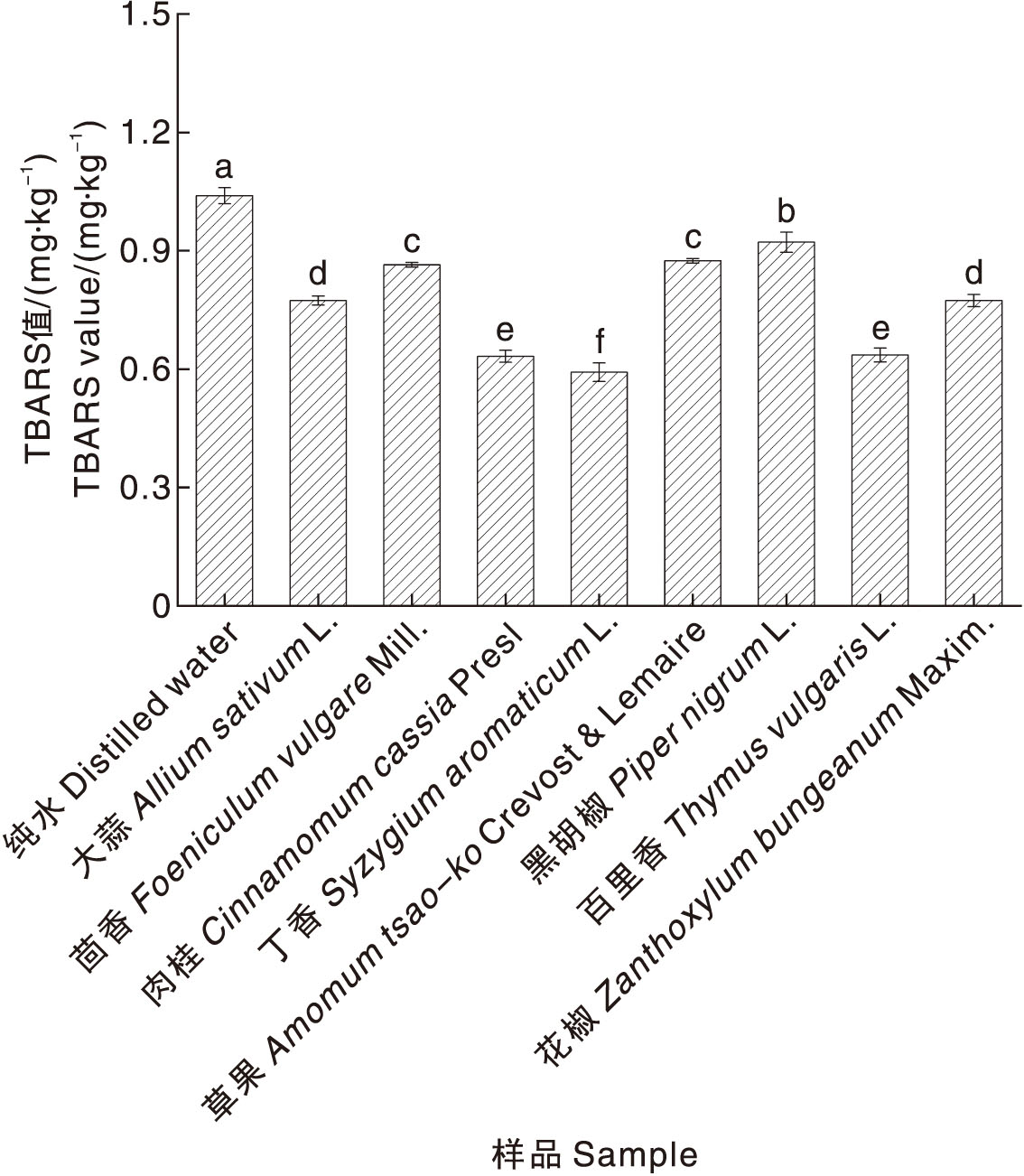
Fig.2 Effects of different spice extracts on TBARS values of beef Data marked without the same lowercase letter indicates significant difference(p<0.05). The same as below.
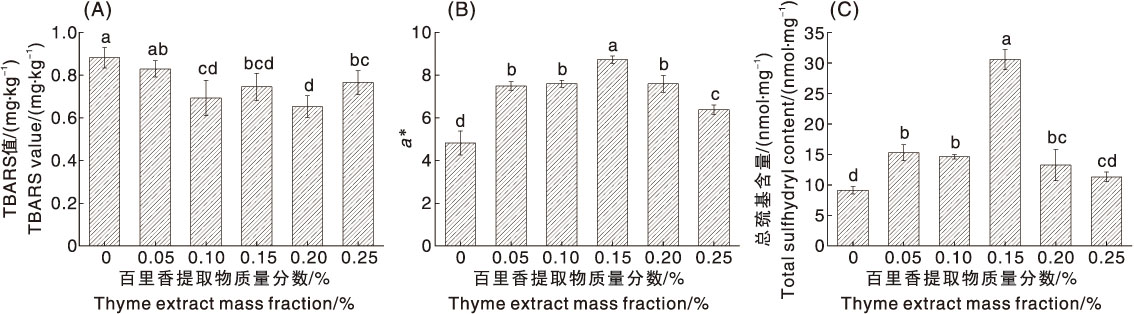
Fig.3 Effects of thyme extract mass fraction on TBARS value, redness-greenness (a*) and total sulfhydryl content of beef
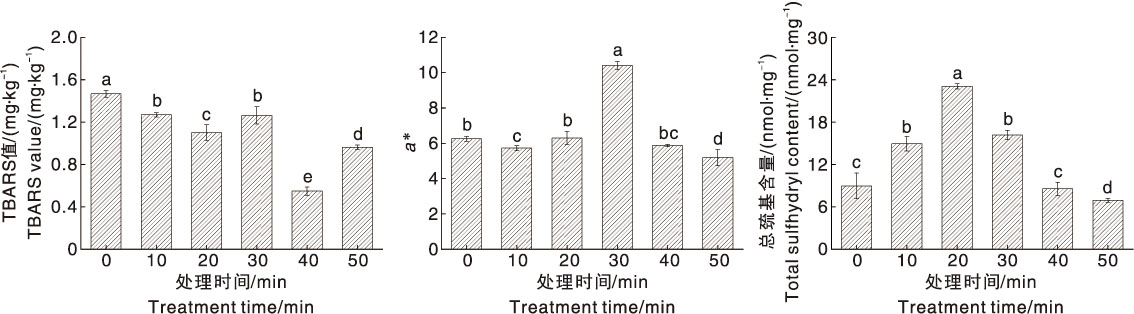
Fig.4 Effects of treatment time on TBARS value, redness-greenness (a*) and total sulfhydryl content of beef
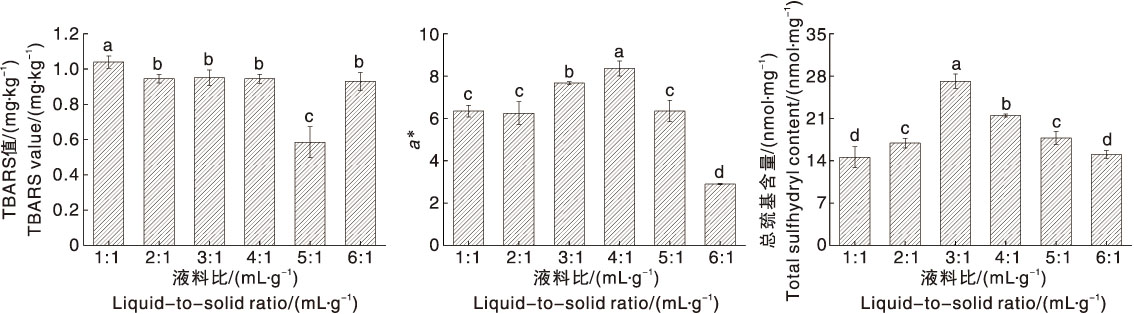
Fig.5 Effects of liquid-to-solid ratio on TBARS value, redness-greenness (a*) and total sulfhydryl content of beef
| 序号 Number | A/% | B/min | C/(mL·g-1) | TBARS/(mg·kg-1) | a* | TSH/(nmol·mg-1) |
|---|---|---|---|---|---|---|
| 1 | 0.15 | 20 | 2∶1 | 1.62±0.08 bc | 4.37±0.02 bcde | 17.30±1.17 g |
| 2 | 0.15 | 20 | 4∶1 | 1.66±0.02 abc | 3.75±0.20 efg | 21.82±2.33 de |
| 3 | 0.10 | 30 | 4∶1 | 1.49±0.06 cd | 4.69±0.30 bc | 21.28±1.14 e |
| 4 | 0.15 | 30 | 3∶1 | 0.83±0.24 f | 6.98±0.58 a | 33.23±0.83 b |
| 5 | 0.15 | 30 | 3∶1 | 0.85±0.14 f | 6.68±0.75 a | 30.45±1.13 c |
| 6 | 0.20 | 30 | 2∶1 | 1.24±0.19 e | 3.27±0.32 g | 23.75±1.17 d |
| 7 | 0.15 | 30 | 3∶1 | 0.68±0.06 f | 6.81±0.12 a | 34.11±1.05 b |
| 8 | 0.15 | 40 | 2∶1 | 1.36±0.10 de | 3.95±0.22 defg | 17.77±0.91 fg |
| 9 | 0.15 | 40 | 4∶1 | 1.88±0.20 a | 4.56±0.38 bcd | 15.92±1.89 gh |
| 10 | 0.20 | 20 | 3∶1 | 1.56±0.02 bcd | 4.93±0.46 b | 19.67±1.42 ef |
| 11 | 0.10 | 30 | 2∶1 | 1.22±0.12 e | 3.85±0.45 efg | 18.99±2.68 f |
| 12 | 0.20 | 30 | 4∶1 | 1.24±0.16 e | 3.74±0.42 efg | 16.26±0.88 gh |
| 13 | 0.15 | 30 | 3∶1 | 0.82±0.18 f | 6.29±1.08 a | 36.97±0.99 a |
| 14 | 0.20 | 40 | 3∶1 | 1.67±0.28 abc | 3.47±0.48 fg | 14.63±1.50 h |
| 15 | 0.10 | 20 | 3∶1 | 1.73±0.18 ab | 4.00±0.14 cdef | 17.94±1.18 fg |
| 16 | 0.10 | 40 | 3∶1 | 1.54±0.02 bcd | 4.75±0.25 b | 18.05±1.05 fg |
| 17 | 0.15 | 30 | 3∶1 | 0.74±0.24 f | 6.39±0.41 a | 33.58±1.80 b |
Table 3 Results of the response surface test
| 序号 Number | A/% | B/min | C/(mL·g-1) | TBARS/(mg·kg-1) | a* | TSH/(nmol·mg-1) |
|---|---|---|---|---|---|---|
| 1 | 0.15 | 20 | 2∶1 | 1.62±0.08 bc | 4.37±0.02 bcde | 17.30±1.17 g |
| 2 | 0.15 | 20 | 4∶1 | 1.66±0.02 abc | 3.75±0.20 efg | 21.82±2.33 de |
| 3 | 0.10 | 30 | 4∶1 | 1.49±0.06 cd | 4.69±0.30 bc | 21.28±1.14 e |
| 4 | 0.15 | 30 | 3∶1 | 0.83±0.24 f | 6.98±0.58 a | 33.23±0.83 b |
| 5 | 0.15 | 30 | 3∶1 | 0.85±0.14 f | 6.68±0.75 a | 30.45±1.13 c |
| 6 | 0.20 | 30 | 2∶1 | 1.24±0.19 e | 3.27±0.32 g | 23.75±1.17 d |
| 7 | 0.15 | 30 | 3∶1 | 0.68±0.06 f | 6.81±0.12 a | 34.11±1.05 b |
| 8 | 0.15 | 40 | 2∶1 | 1.36±0.10 de | 3.95±0.22 defg | 17.77±0.91 fg |
| 9 | 0.15 | 40 | 4∶1 | 1.88±0.20 a | 4.56±0.38 bcd | 15.92±1.89 gh |
| 10 | 0.20 | 20 | 3∶1 | 1.56±0.02 bcd | 4.93±0.46 b | 19.67±1.42 ef |
| 11 | 0.10 | 30 | 2∶1 | 1.22±0.12 e | 3.85±0.45 efg | 18.99±2.68 f |
| 12 | 0.20 | 30 | 4∶1 | 1.24±0.16 e | 3.74±0.42 efg | 16.26±0.88 gh |
| 13 | 0.15 | 30 | 3∶1 | 0.82±0.18 f | 6.29±1.08 a | 36.97±0.99 a |
| 14 | 0.20 | 40 | 3∶1 | 1.67±0.28 abc | 3.47±0.48 fg | 14.63±1.50 h |
| 15 | 0.10 | 20 | 3∶1 | 1.73±0.18 ab | 4.00±0.14 cdef | 17.94±1.18 fg |
| 16 | 0.10 | 40 | 3∶1 | 1.54±0.02 bcd | 4.75±0.25 b | 18.05±1.05 fg |
| 17 | 0.15 | 30 | 3∶1 | 0.74±0.24 f | 6.39±0.41 a | 33.58±1.80 b |
| 来源 Source | F值F value | p值p value | ||||
|---|---|---|---|---|---|---|
| TBARS | a* | TSH | TBARS | a* | TSH | |
| 模型Model | 51.89 | 22.28 | 22.76 | <0.000 1 | 0.000 2 | 0.000 2 |
| A | 1.78 | 3.54 | 0.11 | 0.223 4 | 0.102 0 | 0.747 6 |
| B | 0.35 | 0.10 | 3.16 | 0.571 4 | 0.758 1 | 0.118 5 |
| C | 16.86 | 1.69 | 0.18 | 0.004 5 | 0.234 5 | 0.677 1 |
| AB | 4.41 | 9.78 | 1.56 | 0.074 0 | 0.016 7 | 0.251 3 |
| AC | 3.57 | 0.27 | 5.64 | 0.100 8 | 0.616 7 | 0.049 3 |
| BC | 11.28 | 3.03 | 2.39 | 0.012 1 | 0.125 3 | 0.165 9 |
| A2 | 53.30 | 57.56 | 50.25 | 0.000 2 | 0.000 1 | 0.000 2 |
| B2 | 283.87 | 36.22 | 80.10 | <0.000 1 | 0.000 5 | <0.000 1 |
| C2 | 55.42 | 69.59 | 41.75 | 0.000 1 | <0.000 1 | 0.000 3 |
| 失拟项Lack of fit | 0.99 | 2.19 | 0.49 | |||
| 回归系数R2 | 0.985 2 | 0.966 3 | 0.967 0 | |||
| 调整后的回归系数 | 0.966 2 | 0.922 8 | 0.924 5 | |||
| 变异系数/% CV/% | 5.49 | 7.28 | 8.94 | |||
Table 4 Analysis of variance of the regression model
| 来源 Source | F值F value | p值p value | ||||
|---|---|---|---|---|---|---|
| TBARS | a* | TSH | TBARS | a* | TSH | |
| 模型Model | 51.89 | 22.28 | 22.76 | <0.000 1 | 0.000 2 | 0.000 2 |
| A | 1.78 | 3.54 | 0.11 | 0.223 4 | 0.102 0 | 0.747 6 |
| B | 0.35 | 0.10 | 3.16 | 0.571 4 | 0.758 1 | 0.118 5 |
| C | 16.86 | 1.69 | 0.18 | 0.004 5 | 0.234 5 | 0.677 1 |
| AB | 4.41 | 9.78 | 1.56 | 0.074 0 | 0.016 7 | 0.251 3 |
| AC | 3.57 | 0.27 | 5.64 | 0.100 8 | 0.616 7 | 0.049 3 |
| BC | 11.28 | 3.03 | 2.39 | 0.012 1 | 0.125 3 | 0.165 9 |
| A2 | 53.30 | 57.56 | 50.25 | 0.000 2 | 0.000 1 | 0.000 2 |
| B2 | 283.87 | 36.22 | 80.10 | <0.000 1 | 0.000 5 | <0.000 1 |
| C2 | 55.42 | 69.59 | 41.75 | 0.000 1 | <0.000 1 | 0.000 3 |
| 失拟项Lack of fit | 0.99 | 2.19 | 0.49 | |||
| 回归系数R2 | 0.985 2 | 0.966 3 | 0.967 0 | |||
| 调整后的回归系数 | 0.966 2 | 0.922 8 | 0.924 5 | |||
| 变异系数/% CV/% | 5.49 | 7.28 | 8.94 | |||
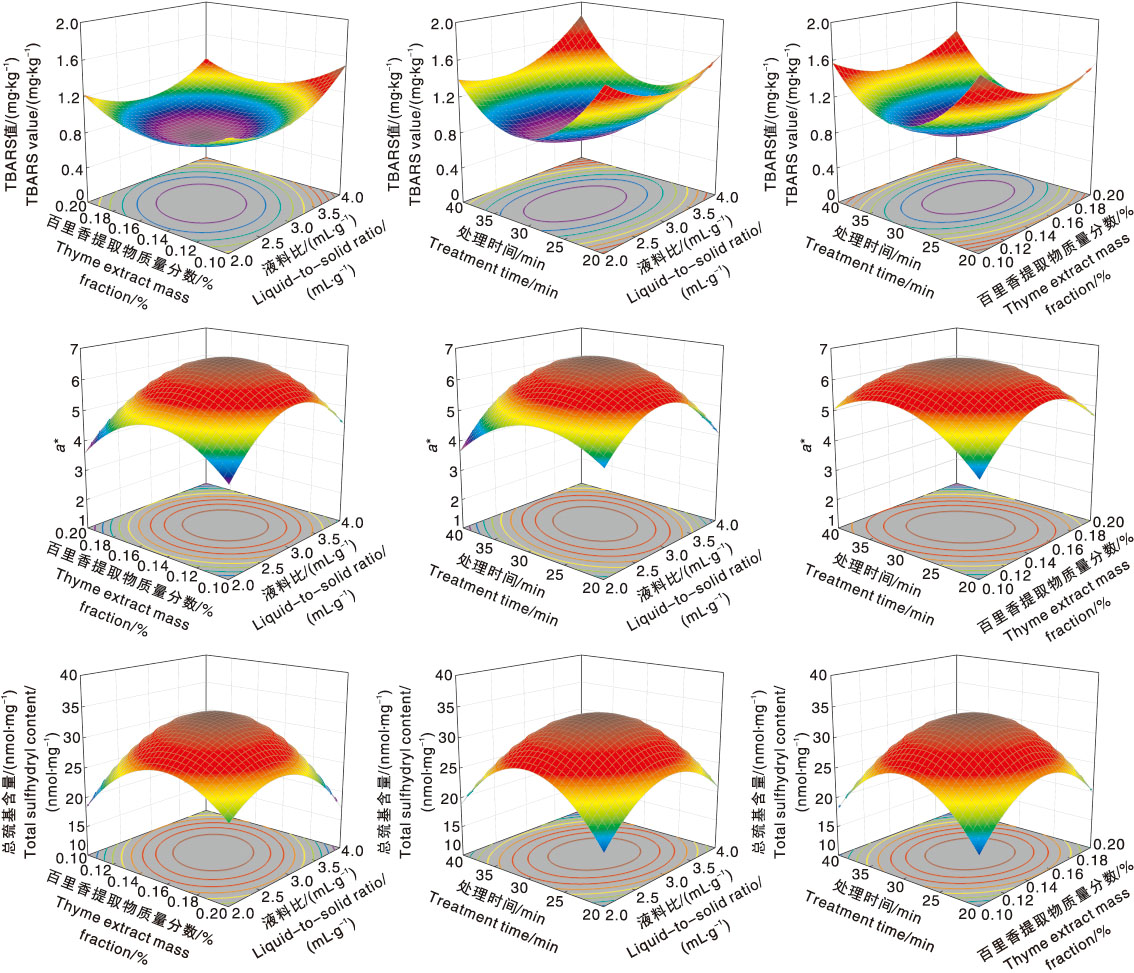
Fig.6 Response surface plots for the effects of interactions between different factors on TBARS value, redness-greenness (a*) and total sulfhydryl content of beef
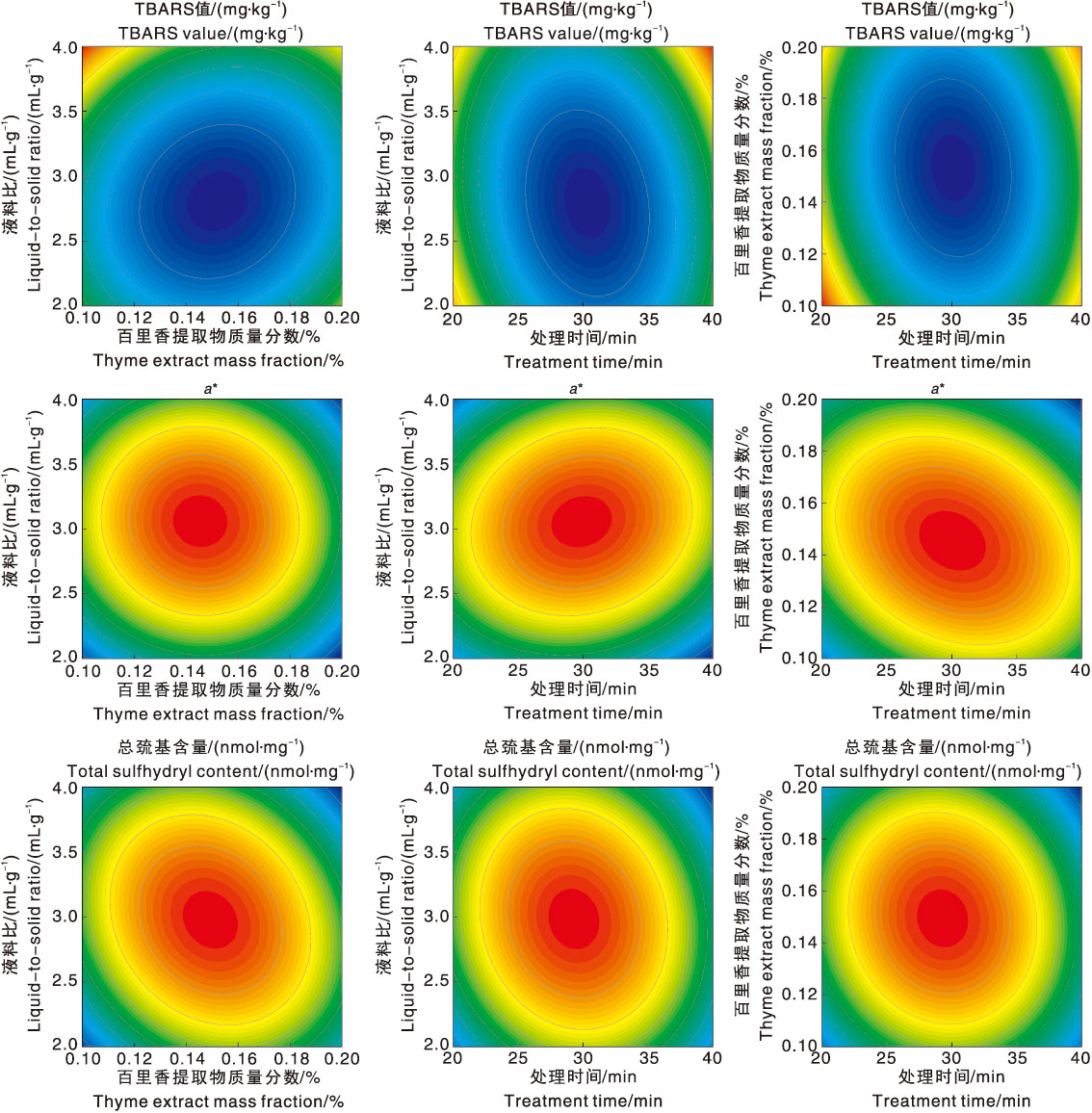
Fig.7 Contour plots for the influence of interactions between different factors on TBARS value, redness-greenness (a*) and total sulfhydryl content of beef
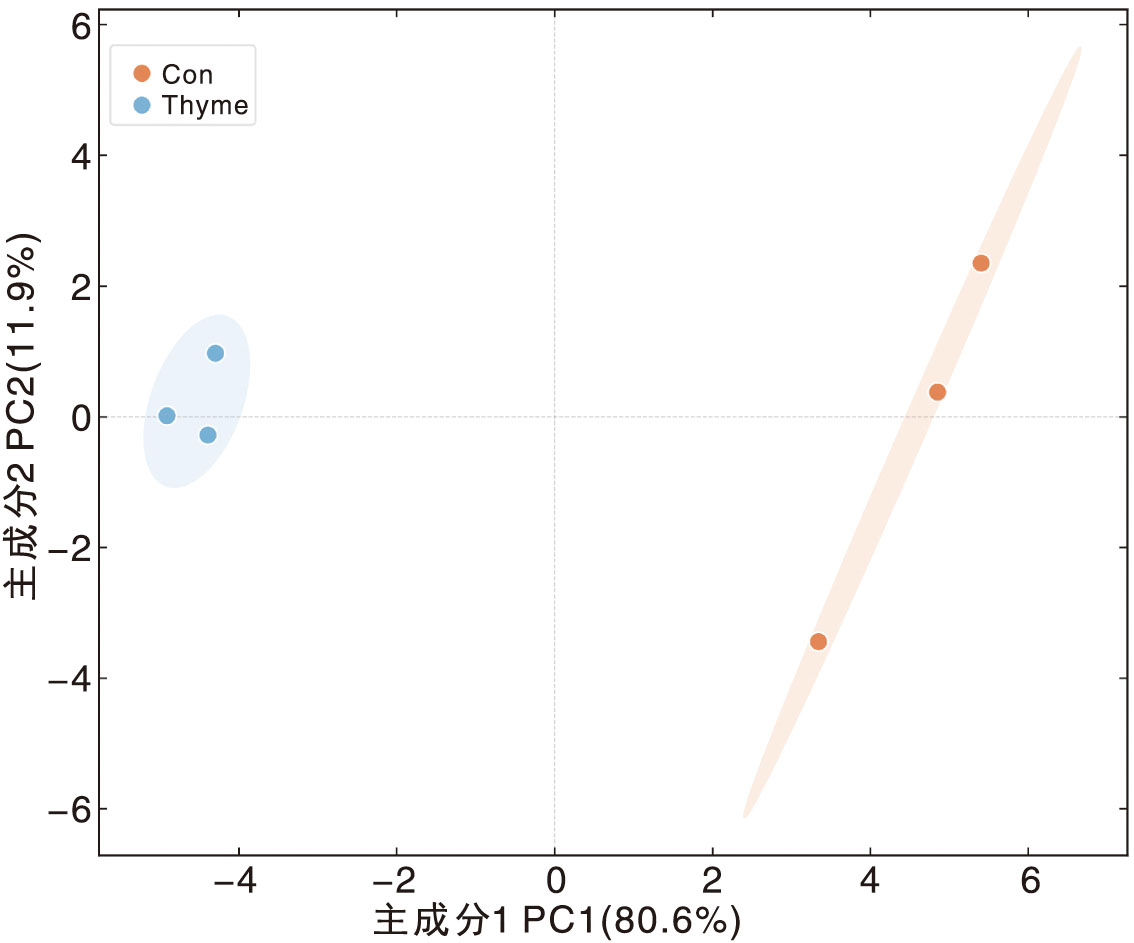
Fig.8 Response surface plots for the effects of interactions between different factors on TBARS value, redness-greenness (a*) and total sulfhydryl content of beef Con, Blank control group; Thyme, Thyme extract treatment group.
| 类别 Category | 物质 Substance | 化合物含量Compound content | |
|---|---|---|---|
| 对照组 Control group | 百里香提取物处理组 Thyme extract treatment group | ||
| 醛类 Aldehydes | 庚醛Heptanal | 1.20±0.56 | — |
| 苯甲醛Benzaldehyde | 3.15±0.60 | 2.56±0.17 | |
| 辛醛Octanal | 3.62±1.24 | — | |
| 壬醛Nonanal | 44.70±0.59 | 7.55±0.70 | |
| 豆蔻醛Myristaldehyde | 0.24±0.01 | 0.17±0.01 | |
| 癸醛Decanal | 2.21±0.41 | 1.29±0.24 | |
| 己醛Hexanal | 32.35±0.53 | 12.58±1.00 | |
| 醛类总量Total aldehydes | 87.49±3.56 | 24.15±1.87 | |
| 醇类 Alcohols | 3-甲基-1-丁醇3-Methyl-1-butanol | 9.29±0.84 | — |
| [R-(R*,R*)]-2,3-丁二醇[R-(R*,R*)]-2,3-Butanediol | 11.71±0.88 | — | |
| 正己醇1-Hexanol | 2.66±1.18 | 8.59±0.74 | |
| 1-辛烯-3-醇1-Octen-3-ol | 1.52±0.37 | — | |
| 2-乙基-己醇2-Ethyl-1-hexanol | 2.44±0.43 | 3.73±0.77 | |
| 正辛醇1-Octanol | 2.17±0.95 | 2.30±0.45 | |
| 醇类总量Total alcohols | 29.79±4.54 | 14.62±0.78 | |
| 酮类 Ketones | 2,3-丁二酮2,3-Butanedione | — | 3.09±0.63 |
| 乙酰丙酮Acetylacetone | 8.63±0.09 | 2.87±0.30 | |
| 2,3-庚烷二酮2,3-Heptanedione | 0.49±0.07 | — | |
| 苯乙酮Acetophenone | 1.08±0.35 | 0.72±0.07 | |
| 丙酮Acetone | 0.08±0.02 | — | |
| 2,2,5-三甲基-3,4-己二酮2,2,5-Trimethyl-3,4-hexanedione | 0.09±0.03 | — | |
| 酮类总量Total ketones | 10.38±0.39 | 6.69±0.98 | |
| 酯类Esters | 丁酸3-甲基乙酯3-Methylbutyl butyrate | 0.75±0.47 | 0.94±0.14 |
| 烃类 | 乙苯Ethylbenzene | 1.60±0.20 | — |
| Hydrocarbons | 苯乙烯Styrene | 6.51±0.88 | 4.94±0.98 |
| 3,3-二甲基己烷3,3-Dimethylhexane | 0.20±0.03 | 0.09±0.01 | |
| 烃类总量Total hydrocarbons | 8.31±1.06 | 5.03±0.98 | |
| 酸类Acids | 4-甲基-2-氧代戊酸4-Methyl-2-oxopentanoic acid | 0.42±0.05 | 0.18±0.01 |
| 萜类Terpenes | 香芹酚Carvacrol | — | 0.56±0.11 |
| 对聚伞花素p-Cymene | — | 0.36±0.12 | |
| 萜类总量Total terpenes | — | 0.93±0.23 | |
Table 5 Changes of volatile compounds in beef before and after treatment with thyme extract
| 类别 Category | 物质 Substance | 化合物含量Compound content | |
|---|---|---|---|
| 对照组 Control group | 百里香提取物处理组 Thyme extract treatment group | ||
| 醛类 Aldehydes | 庚醛Heptanal | 1.20±0.56 | — |
| 苯甲醛Benzaldehyde | 3.15±0.60 | 2.56±0.17 | |
| 辛醛Octanal | 3.62±1.24 | — | |
| 壬醛Nonanal | 44.70±0.59 | 7.55±0.70 | |
| 豆蔻醛Myristaldehyde | 0.24±0.01 | 0.17±0.01 | |
| 癸醛Decanal | 2.21±0.41 | 1.29±0.24 | |
| 己醛Hexanal | 32.35±0.53 | 12.58±1.00 | |
| 醛类总量Total aldehydes | 87.49±3.56 | 24.15±1.87 | |
| 醇类 Alcohols | 3-甲基-1-丁醇3-Methyl-1-butanol | 9.29±0.84 | — |
| [R-(R*,R*)]-2,3-丁二醇[R-(R*,R*)]-2,3-Butanediol | 11.71±0.88 | — | |
| 正己醇1-Hexanol | 2.66±1.18 | 8.59±0.74 | |
| 1-辛烯-3-醇1-Octen-3-ol | 1.52±0.37 | — | |
| 2-乙基-己醇2-Ethyl-1-hexanol | 2.44±0.43 | 3.73±0.77 | |
| 正辛醇1-Octanol | 2.17±0.95 | 2.30±0.45 | |
| 醇类总量Total alcohols | 29.79±4.54 | 14.62±0.78 | |
| 酮类 Ketones | 2,3-丁二酮2,3-Butanedione | — | 3.09±0.63 |
| 乙酰丙酮Acetylacetone | 8.63±0.09 | 2.87±0.30 | |
| 2,3-庚烷二酮2,3-Heptanedione | 0.49±0.07 | — | |
| 苯乙酮Acetophenone | 1.08±0.35 | 0.72±0.07 | |
| 丙酮Acetone | 0.08±0.02 | — | |
| 2,2,5-三甲基-3,4-己二酮2,2,5-Trimethyl-3,4-hexanedione | 0.09±0.03 | — | |
| 酮类总量Total ketones | 10.38±0.39 | 6.69±0.98 | |
| 酯类Esters | 丁酸3-甲基乙酯3-Methylbutyl butyrate | 0.75±0.47 | 0.94±0.14 |
| 烃类 | 乙苯Ethylbenzene | 1.60±0.20 | — |
| Hydrocarbons | 苯乙烯Styrene | 6.51±0.88 | 4.94±0.98 |
| 3,3-二甲基己烷3,3-Dimethylhexane | 0.20±0.03 | 0.09±0.01 | |
| 烃类总量Total hydrocarbons | 8.31±1.06 | 5.03±0.98 | |
| 酸类Acids | 4-甲基-2-氧代戊酸4-Methyl-2-oxopentanoic acid | 0.42±0.05 | 0.18±0.01 |
| 萜类Terpenes | 香芹酚Carvacrol | — | 0.56±0.11 |
| 对聚伞花素p-Cymene | — | 0.36±0.12 | |
| 萜类总量Total terpenes | — | 0.93±0.23 | |
| [1] | 孟新涛, 潘俨, 邹淑萍, 等. 不同储藏条件下鲜牛肉特征风味动态变化分析[J]. 食品工业科技, 2021, 42(15): 289-298. |
| MENG X T, PAN Y, ZOU S P, et al. Characterization of volatile component changes in fresh beef during storage under different storage conditions[J]. Science and Technology of Food Industry, 2021, 42(15): 289-298. | |
| [2] | JIAO Y, QUEK S Y, GU M H, et al. Polyphenols from thinned young kiwifruit as natural antioxidant: protective effects on beef oxidation, physicochemical and sensory properties during storage[J]. Food Control, 2020, 108: 106870. |
| [3] | 石子悦, 刘旺, 黄莹, 等. 酚类抗氧化剂及其代谢产物对鱼类的毒性研究进展[J]. 环境监控与预警, 2020, 12(5): 49-57. |
| SHI Z Y, LIU W, HUANG Y, et al. Research progress on the toxicity of synthetic phenolic antioxidants and their metabolites to fish[J]. Environmental Monitoring and Forewarning, 2020, 12(5): 49-57. | |
| [4] | HÉŚM, DZIEDZIC K, GÓRECKA D, et al. Aloe vera(L.) Webb.: natural sources of antioxidants: a review[J]. Plant Foods for Human Nutrition, 2019, 74(3): 255-265. |
| [5] | 刘瑶瑶, 邹宇晓, 郑雪君, 等. 天然香辛料在肉制品绿色加工中的研究进展[J]. 中国调味品, 2022, 47(7): 215-220. |
| LIU Y Y, ZOU Y X, ZHENG X J, et al. Research progress of natural spices in green processing of meat products[J]. China Condiment, 2022, 47(7): 215-220. | |
| [6] | 韩磊, 贾娟. 天然香辛料在肉类及其制品中的应用研究进展[J]. 现代食品, 2025, 31(5): 24-26. |
| HAN L, JIA J. Research progress on the application of natural spices in meat and its products[J]. Modern Food, 2025, 31(5): 24-26. | |
| [7] | GHAFOOR K, YÜKSEL B, AL JUHAIMI F, et al. Effect of frying on physicochemical and sensory properties of potato chips fried in palm oil supplemented with thyme and rosemary extracts[J]. Journal of Oleo Science, 2020, 69(10): 1219-1230. |
| [8] | 郭艳华, 许江扬, 程德翔. 天然生姜复合物体外抗自由基活性研究[J]. 食品科学, 2009, 30(22): 96-100. |
| GUO Y H, XU J Y, CHENG D X. In vitro antioxidant activity of natural ginger extract complex[J]. Food Science, 2009, 30(22): 96-100. | |
| [9] | YU M, HE S D, TANG M M, et al. Antioxidant activity and sensory characteristics of Maillard reaction products derived from different peptide fractions of soybean meal hydrolysate[J]. Food Chemistry, 2018, 243: 249-257. |
| [10] | 周新宇, 吕重宁, 秦汝兰. 刺玫果中花色苷提取工艺优化及抗氧化性分析[J]. 食品工业科技, 2022, 43(4): 178-186. |
| ZHOU X Y, LV C N, QIN R L. Optimization of extraction technique and antioxidant activity of anthocyanins from Rosa davurica pall[J]. Science and Technology of Food Industry, 2022, 43(4): 178-186. | |
| [11] | SUN C N, LIU Y N, LIU S Y, et al. Identification and molecular mechanism of novel antioxidant peptide from fish sauce: a combined quantum chemistry and molecular simulation[J]. Food Chemistry, 2025, 463: 141108. |
| [12] | FERNÁNDEZ-LÓPEZ J, SEVILLA L, SAYAS-BARBERÁ E, et al. Evaluation of the antioxidant potential of hyssop (Hyssopus officinalis L.) and rosemary (Rosmarinus officinalis L.) extracts in cooked pork meat[J]. Journal of Food Science, 2003, 68(2): 660-664. |
| [13] | NIAN L Y, CAO A L, CAI L Y, et al. Effect of vacuum impregnation of red sea bream (Pagrosomus major) with herring AFP combined with CS@Fe3O4nanoparticles during freeze-thaw cycles[J]. Food Chemistry, 2019, 291: 139-148. |
| [14] | CAO Y G, MA W H, HUANG J R, et al. Effects of sodium pyrophosphate coupled with catechin on the oxidative stability and gelling properties of myofibrillar protein[J]. Food Hydrocolloids, 2020, 104: 105722. |
| [15] | ELLMAN G L. Reprint of: tissue sulfhydryl groups[J]. Archives of Biochemistry and Biophysics, 2022, 726: 109245. |
| [16] | 吴倩蓉, 周慧敏, 李素, 等. 风干肠贮藏过程中挥发性风味物质的变化及异味物质分析[J]. 食品科学, 2019, 40(20): 208-216. |
| WU Q R, ZHOU H M, LI S, et al. Changes in volatile flavour compounds during storage and analysis of off-flavour substances in air-dried sausage[J]. Food Science, 2019, 40(20): 208-216. | |
| [17] | 潘俊, 周继伟, 牛之瑞, 等. 浓香型天然香辛料抗氧化及酶抑制活性研究[J]. 食品安全质量检测学报, 2025, 16(14): 181-188. |
| PAN J, ZHOU J W, NIU Z R, et al. Study on the antioxidant and enzyme inhibition activities of strong fragrance natural spices[J]. Journal of Food Safety & Quality, 2025, 16(14): 181-188. | |
| [18] | 贾娜, 孙钦秀, 李博文, 等. 香辛料提取物对酱牛肉的护色效果[J]. 食品与发酵工业, 2014, 40(6): 193-198. |
| JIA N, SUN Q X, LI B W, et al. Color protection effect of spices extracts on marinated beef[J]. Food and Fermentation Industries, 2014, 40(6): 193-198. | |
| [19] | 徐岳鑫. 丁香提取物对调理猪肉饼品质的影响[D]. 南京: 南京农业大学, 2015. |
| XU Y X. Effect of clove extract on pork patties quality[D]. Nanjing: Nanjing Agricultural University, 2015. | |
| [20] | 陈洪生, 刁静静, 孔保华, 等. 丁香提取物对冷藏肉饼品质的控制作用[J]. 天然产物研究与开发, 2017, 29(3): 482-488. |
| CHEN H S, DIAO J J, KONG B H, et al. Effectiveness of clove extracts on inhibiting the quality deterioration of pork patties stored at 4 ℃[J]. Natural Product Research and Development, 2017, 29(3): 482-488. | |
| [21] | 顾苑婷, 牟琴, 黄燕, 等. 迷迭香和百里香提取物对冷藏猪肉丸品质的影响[J]. 食品科技, 2021, 46(4): 103-109. |
| GU Y T, MOU Q, HUANG Y, et al. Effects of rosemary and thyme extracts on the quality of chilled pork balls[J]. Food Science and Technology, 2021, 46(4): 103-109. | |
| [22] | 李佳, 张富新, 张拥军. 百里香提取物在中式香肠中的抗菌及抗氧化性能的研究[J]. 中国食品学报, 2007, 7(3): 107-111. |
| LI J, ZHANG F X, ZHANG Y J. Studies on the antibiotic and antioxidant properties of thymus extraction applied in Chinese sausage[J]. Journal of Chinese Institute of Food Science and Technology, 2007, 7(3): 107-111. | |
| [23] | MAHGOUB S, QATTAN S Y A, BARAKAT R, et al. Effect of rosemary and thyme (Rosemarinus officinalis L. and Thymus vulgaris L.) ethanolic extracts on foodborne pathogens, physicochemical properties and improving the safety of cottage cheese with antioxidant, and antibacterial activities[J]. Applied Food Research, 2025, 5(1): 101020. |
| [24] | 徐永霞, 姜程程, 刘滢, 等. 带鱼脱腥工艺及脱腥前后的理化性质[J]. 食品与发酵工业, 2013, 39(12): 68-72. |
| XU Y X, JIANG C C, LIU Y, et al. Studies on deodorization technology of strip fish and physicochemical properties before and after deodorization[J]. Food and Fermentation Industries, 2013, 39(12): 68-72. | |
| [25] | 张海燕, 吴燕燕, 李来好, 等. 响应面法优化海鲈鱼片脱腥工艺[J]. 食品与发酵工业, 2019, 45(11): 143-149. |
| ZHANG H Y, WU Y Y, LI L H, et al. Optimized deodorization process of Lateolabrax japonicas fillets by response surface methodology[J]. Food and Fermentation Industries, 2019, 45(11): 143-149. | |
| [26] | 李露, 张普香, 韩朋岑, 等. 酶法水解牦牛皮蛋白制备抗氧化肽工艺的优化[J]. 食品工业科技, 2021, 42(24): 188-196. |
| LI L, ZHANG P X, HAN P C, et al. Process of the preparation of antioxidant peptides by enzymatic hydrolysis of yak hide protein[J]. Science and Technology of Food Industry, 2021, 42(24): 188-196. | |
| [27] | 温建丰, 杨文鸽, 徐大伦. 响应面法优化花蟹肉制备抗氧化肽的酶解工艺[J]. 核农学报, 2013, 27(12): 1881-1886. |
| WEN J F, YANG W G, XU D L. Optimization of enzymatic condition of Portunus pelagicus meat for preparing antioxidant peptids by response surface methodology[J]. Journal of Nuclear Agricultural Sciences, 2013, 27(12): 1881-1886. | |
| [28] | YANG J, WU S L, MAI R J, et al. Formation of amino acid-derived volatile compounds in dry-cured mackerel (Scomberomorus niphonius): metabolic pathways involving microorganisms, precursors, and intermediates[J]. Food Chemistry, 2021, 364: 130163. |
| [29] | ZHAO D D, HU J, CHEN W X. Analysis of the relationship between microorganisms and flavour development in dry-cured grass carp by high-throughput sequencing, volatile flavour analysis and metabolomics[J]. Food Chemistry, 2022, 368: 130889. |
| [30] | 葛迎港, 崔柯鑫, 陈慧, 等. 3种抗氧化剂处理对干制鲅鱼脂肪氧化和挥发性风味成分的影响[J]. 肉类研究, 2023, 37(4): 21-28. |
| GE Y G, CUI K X, CHEN H, et al. Comparative effects of three antioxidants on lipid oxidation and volatile flavor components of dry-cured Spanish mackerel[J]. Meat Research, 2023, 37(4): 21-28. | |
| [31] | 陈奕颖, 刘金松, 刘玉兰, 等. 6种植物精油体外抑菌活性及抗氧化能力的比较研究[J]. 中国粮油学报, 2024, 39(5): 148-155. |
| CHEN Y Y, LIU J S, LIU Y L, et al. Comparative study on in vitro antibacterial activity and antioxidant capacity of six plant essential oils[J]. Journal of the Chinese Cereals and Oils Association, 2024, 39(5): 148-155. | |
| [32] | HUANG L, DING B, ZHANG H, et al. Textural and sensorial quality protection in frozen dumplings through the inhibition of lipid and protein oxidation with clove and rosemary extracts[J]. Journal of the Science of Food and Agriculture, 2019, 99(10): 4739-4747. |
| [33] | 黄丕苗, 王智荣, 陈湑慧, 等. 迷迭香提取物对白鲢鱼肉腥味的影响及其脱腥条件优化[J]. 食品与发酵工业, 2021, 47(6): 176-183. |
| HUANG P M, WANG Z R, CHEN X H, et al. Effect of rosemary extract on the fishy odour of silver carp and the optimization of deodorizing conditions[J]. Food and Fermentation Industries, 2021, 47(6): 176-183. |
| [1] | KANG Ying, YE Tao, BAI Xueying, ZHANG Xuejiao. Study on the preparation of dual-protein yogurt by co-fermentation with Weissella confusa and its storage stability [J]. Acta Agriculturae Zhejiangensis, 2026, 38(6): 1099-1111. |
| [2] | QIN Xiang, DENG Xianghong, HUANG Zhanrui, YUAN Chi, CHEN Hao, HU Lianhua, HE Wanying, ZHAO Liangzhong. Optimization and quality analysis of pulsed vacuum marination for quail eggs [J]. Acta Agriculturae Zhejiangensis, 2026, 38(5): 998-1007. |
| [3] | ZHU Xiao, ZHU Ying, LI Hongjun, CHEN Shanfeng. Preparation and quality of oat chickpea compound rice by squeezing [J]. Acta Agriculturae Zhejiangensis, 2025, 37(5): 1149-1158. |
| [4] | ZHU Yuanyuan, HAN Yanchao, LIU Ruiling, DENG Shanggui, CHEN Huizhi, FANG Xiangjun, WU Weijie, GAO Haiyan. Process optimization and quality analysis of crab flavor sausage [J]. Acta Agriculturae Zhejiangensis, 2025, 37(4): 920-933. |
| [5] | QIAO Huiru, FANG Xiangjun, WU Weijie, LIU Ruiling, CHEN Hangjun, DENG Shanggui, SHA Hao, GAO Haiyan. Process optimization and quality analysis of composite lactic acid bacteria fermented beverage with blueberries and Dendrobium officinale leaves [J]. Acta Agriculturae Zhejiangensis, 2025, 37(3): 654-666. |
| [6] | ZHAO Xiaoliang, LU Yun, KANG Xingxing, LONG Zeyu, ZHENG Xiaojie. Extraction, structural characterization and antioxidant activity of polysaccharide from Dendrobium officinale in Yandang Mountain, China [J]. Acta Agriculturae Zhejiangensis, 2024, 36(8): 1898-1908. |
| [7] | YANG Zihan, WU Weijie, GAO Yuan, LIU Ruiling, SHENTU Xuping, GAO Haiyan, CHEN Hangjun. Preparation and efficacy evaluation of lotus root relieving alcoholism functional gel fudge [J]. Acta Agriculturae Zhejiangensis, 2024, 36(2): 404-415. |
| [8] | ZHANG Xiwen, GUO Xiaonong, WANG Zexing, WANG Yaling. Optimization of fermentation process of quinoa straw fermented feed with different compound probiotics [J]. Acta Agriculturae Zhejiangensis, 2023, 35(12): 2818-2829. |
| [9] | PAN Xujie, LIU Ruiling, DENG Shanggui, WU Weijie, CHEN Hangjun, GAO Haiyan. Optimization of process conditions and volatile flavor components analysis of bayberry pulp fermented by lactic acid bacteria [J]. Acta Agriculturae Zhejiangensis, 2022, 34(7): 1502-1512. |
| [10] | ZHOU Qiang, HAN Yanchao, WU Weijie, DING Yuting, SHAO Ping, TONG Chuan, GAO Haiyan. Optimization of preparation process of walnut (Carya cathayensis Sarg.) oil gel [J]. Acta Agriculturae Zhejiangensis, 2021, 33(12): 2390-2396. |
| [11] | FAN Ming, XIANG Lu, LIU Zhe, LU Shengmin. Optimization of ultrasonic-assisted technology on mulberry residue extracts with in vitro hypoglycemic activity [J]. , 2019, 31(3): 480-486. |
| [12] | YU Xiang1, LI Yuanshi2, LIU Dong3, WANG Ruiting2, TIE Jinxin1, MA Lin1,*. Isolation and identification of an aromaproducing strain and optimization of its fermentation condition [J]. , 2016, 28(4): 670-. |
| Viewed | ||||||
|
Full text |
|
|||||
|
Abstract |
|
|||||

