Acta Agriculturae Zhejiangensis ›› 2026, Vol. 38 ›› Issue (6): 1099-1111.DOI: 10.3969/j.issn.1004-1524.20250709
• Future Foods and Health • Previous Articles Next Articles
Study on the preparation of dual-protein yogurt by co-fermentation with Weissella confusa and its storage stability
KANG Ying( ), YE Tao, BAI Xueying, ZHANG Xuejiao*()
Hunan Provincial Key Laboratory of Soybean Products Processing and Safety Control ,College of Food Science and Chemical Engineering, Shaoyang University Shaoyang 422000, Hunan, China
-
Received:2025-11-23Online:2026-06-25Published:2026-07-14

CLC Number:
Cite this article
KANG Ying, YE Tao, BAI Xueying, ZHANG Xuejiao. Study on the preparation of dual-protein yogurt by co-fermentation with Weissella confusa and its storage stability[J]. Acta Agriculturae Zhejiangensis, 2026, 38(6): 1099-1111.
share this article
Add to citation manager EndNote|Ris|BibTeX
URL: http://www.zjnyxb.cn/EN/10.3969/j.issn.1004-1524.20250709
| 等级(评分) Grade (socre) | 组织状态 Texture | 滋味 Taste | 气味 Odor | 颜色 Color |
|---|---|---|---|---|
| 优秀(≥80) Excellent (≥80) | 组织状态均匀,无乳清析出,凝块完整,无油脂上浮 Uniform texture, no whey separation, intact curd, no fat floating | 酸甜适中,无颗粒感和黏口感,整体味感协调、柔和 Well-balanced sour and sweet taste, no graininess or stickiness, harmonious and mild overall flavor | 奶香浓郁,无豆腥味,整体气味协调 Rich milk aroma, no beany flavor, harmonious overall odor | 色泽均匀,呈乳白色,有光泽 Uniform color, milky white in appearance, with luster |
| 良好(60~79 ) Good (60-79) | 组织状态均匀,少量乳清析出,凝块完整,轻微油脂上浮 Uniform texture, a small amount of whey separation, intact curd, slight fat floating | 酸甜感较协调,轻微颗粒感和黏口感,整体味感较协调 Relatively balanced sour and sweet taste, slight graininess and stickiness, fairly harmonious overall flavor | 奶香较淡,轻微豆腥味,整体气味较协调 Light milk aroma, slight beany flavor, fairly harmonious overall odor | 淡黄色,色泽均匀有光泽 Pale yellow, uniform color with luster |
| 一般(40~59) Acceptable (40-59) | 组织状态粗糙,乳清较多,有气泡和轻微开裂,油脂上浮较重 Coarse texture, considerable whey separation, with bubbles and slight cracking, obvious fat floating | 偏酸或偏甜,颗粒感和黏口感较重,整体味感不协调 Sour- or sweet-biased taste, obvious graininess and stickiness, discordant overall flavor | 无奶香味,豆腥味较重,整体气味尚可接受 No milk aroma, obvious beany flavor, overall odor acceptable | 色泽异常,光泽稍差 Abnormal color, slightly poor luster |
| 差(≤39) Poor (≤39) | 组织状态粗糙,有大量气泡且乳清析出严重,油脂上浮严重 Coarse texture, numerous bubbles, severe whey separation, serious fat floating | 过酸或过甜,颗粒感和黏口感严重,整体味感极不协调,口感粗糙 Overly sour or sweet taste, severe graininess and stickiness, extremely discordant overall flavor, coarse mouthfeel | 无奶香味,豆腥味严重,整体气味不协调 No milk aroma, severe beany flavor, discordant overall odor | 颜色不均,色泽异常,无光泽 Uneven color, abnormal hue, no luster |
Table 1 Sensory evaluation criteria for dual-protein yogurt
| 等级(评分) Grade (socre) | 组织状态 Texture | 滋味 Taste | 气味 Odor | 颜色 Color |
|---|---|---|---|---|
| 优秀(≥80) Excellent (≥80) | 组织状态均匀,无乳清析出,凝块完整,无油脂上浮 Uniform texture, no whey separation, intact curd, no fat floating | 酸甜适中,无颗粒感和黏口感,整体味感协调、柔和 Well-balanced sour and sweet taste, no graininess or stickiness, harmonious and mild overall flavor | 奶香浓郁,无豆腥味,整体气味协调 Rich milk aroma, no beany flavor, harmonious overall odor | 色泽均匀,呈乳白色,有光泽 Uniform color, milky white in appearance, with luster |
| 良好(60~79 ) Good (60-79) | 组织状态均匀,少量乳清析出,凝块完整,轻微油脂上浮 Uniform texture, a small amount of whey separation, intact curd, slight fat floating | 酸甜感较协调,轻微颗粒感和黏口感,整体味感较协调 Relatively balanced sour and sweet taste, slight graininess and stickiness, fairly harmonious overall flavor | 奶香较淡,轻微豆腥味,整体气味较协调 Light milk aroma, slight beany flavor, fairly harmonious overall odor | 淡黄色,色泽均匀有光泽 Pale yellow, uniform color with luster |
| 一般(40~59) Acceptable (40-59) | 组织状态粗糙,乳清较多,有气泡和轻微开裂,油脂上浮较重 Coarse texture, considerable whey separation, with bubbles and slight cracking, obvious fat floating | 偏酸或偏甜,颗粒感和黏口感较重,整体味感不协调 Sour- or sweet-biased taste, obvious graininess and stickiness, discordant overall flavor | 无奶香味,豆腥味较重,整体气味尚可接受 No milk aroma, obvious beany flavor, overall odor acceptable | 色泽异常,光泽稍差 Abnormal color, slightly poor luster |
| 差(≤39) Poor (≤39) | 组织状态粗糙,有大量气泡且乳清析出严重,油脂上浮严重 Coarse texture, numerous bubbles, severe whey separation, serious fat floating | 过酸或过甜,颗粒感和黏口感严重,整体味感极不协调,口感粗糙 Overly sour or sweet taste, severe graininess and stickiness, extremely discordant overall flavor, coarse mouthfeel | 无奶香味,豆腥味严重,整体气味不协调 No milk aroma, severe beany flavor, discordant overall odor | 颜色不均,色泽异常,无光泽 Uneven color, abnormal hue, no luster |
| 牛奶与豆 浆配比 Milk-to- soymilk ratio | 酸度/°T Titratable acidity/°T | 持水性/% Water holding capacity/% | 感官评分 Sensory score |
|---|---|---|---|
| 9∶1 | 71.33±0.47 c | 94.85±0.01 d | 81.00±1.48 d |
| 8∶2 | 72.00±0.82 bc | 96.46±0.01 c | 82.40±1.20 c |
| 7∶3 | 73.00±0.00 ab | 98.29±0.01 b | 83.40±1.20 c |
| 6∶4 | 74.33±0.47 a | 99.92±0.00 a | 87.60±1.43 a |
| 5∶5 | 66.67±0.47 d | 99.93±0.00 a | 85.40±0.80 b |
| 4∶6 | 65.33±0.47 d | 99.95±0.00 a | 83.90±1.97 c |
| 3∶7 | 62.00±0.82 e | 99.97±0.00 a | 79.80±1.33 d |
| 2∶8 | 59.00±0.82 f | 99.98±0.00 a | 73.10±1.70 e |
| 1∶9 | 55.33±0.94 g | 99.99±0.00 a | 71.80±1.25 f |
Table 2 Effect of milk-to-soymilk ratio on the quality of dual-protein yogurt
| 牛奶与豆 浆配比 Milk-to- soymilk ratio | 酸度/°T Titratable acidity/°T | 持水性/% Water holding capacity/% | 感官评分 Sensory score |
|---|---|---|---|
| 9∶1 | 71.33±0.47 c | 94.85±0.01 d | 81.00±1.48 d |
| 8∶2 | 72.00±0.82 bc | 96.46±0.01 c | 82.40±1.20 c |
| 7∶3 | 73.00±0.00 ab | 98.29±0.01 b | 83.40±1.20 c |
| 6∶4 | 74.33±0.47 a | 99.92±0.00 a | 87.60±1.43 a |
| 5∶5 | 66.67±0.47 d | 99.93±0.00 a | 85.40±0.80 b |
| 4∶6 | 65.33±0.47 d | 99.95±0.00 a | 83.90±1.97 c |
| 3∶7 | 62.00±0.82 e | 99.97±0.00 a | 79.80±1.33 d |
| 2∶8 | 59.00±0.82 f | 99.98±0.00 a | 73.10±1.70 e |
| 1∶9 | 55.33±0.94 g | 99.99±0.00 a | 71.80±1.25 f |
| 蔗糖添 加量/% Sucrose addition amount/% | 酸度/°T Titratable acidity/°T | 持水性/% Water holding capacity/% | 感官评分 Sensory score |
|---|---|---|---|
| 2 | 67.00±0.82 b | 99.40±0.01 b | 64.90±1.58 g |
| 3 | 67.33±0.47 b | 99.73±0.01 ab | 67.00±1.67 f |
| 4 | 68.67±1.70 ab | 99.78±0.01 ab | 71.30±1.62 e |
| 5 | 69.00±0.82 ab | 99.83±0.01 a | 76.60±1.28 c |
| 6 | 70.00±0.82 a | 99.90±0.01 a | 83.70±1.42 a |
| 7 | 66.67±0.94 b | 99.86±0.01 a | 80.10±1.45 b |
| 8 | 63.33±1.25 c | 99.80±0.01 ab | 76.90±1.16 c |
| 9 | 61.67±1.25 c | 99.75±0.01 ab | 73.90±1.51 d |
Table 3 Effect of sucrose addition amount on the quality of dual-protein yogurt
| 蔗糖添 加量/% Sucrose addition amount/% | 酸度/°T Titratable acidity/°T | 持水性/% Water holding capacity/% | 感官评分 Sensory score |
|---|---|---|---|
| 2 | 67.00±0.82 b | 99.40±0.01 b | 64.90±1.58 g |
| 3 | 67.33±0.47 b | 99.73±0.01 ab | 67.00±1.67 f |
| 4 | 68.67±1.70 ab | 99.78±0.01 ab | 71.30±1.62 e |
| 5 | 69.00±0.82 ab | 99.83±0.01 a | 76.60±1.28 c |
| 6 | 70.00±0.82 a | 99.90±0.01 a | 83.70±1.42 a |
| 7 | 66.67±0.94 b | 99.86±0.01 a | 80.10±1.45 b |
| 8 | 63.33±1.25 c | 99.80±0.01 ab | 76.90±1.16 c |
| 9 | 61.67±1.25 c | 99.75±0.01 ab | 73.90±1.51 d |
| 菌液接 种量/% Inoculum size/% | 酸度/°T Titratable acidity/°T | 持水性/% Water holding capacity/% | 感官评分 Sensory score |
|---|---|---|---|
| 1 | 63.33±0.47 d | 99.88±0.01 a | 72.50±1.20 d |
| 2 | 68.33±0.47 c | 99.88±0.01 a | 80.40±1.11 b |
| 3 | 71.00±0.82 b | 99.90±0.01 a | 83.70±1.19 a |
| 4 | 72.33±0.47 b | 99.91±0.01 a | 77.80±1.40 c |
| 5 | 72.67±0.47 b | 99.91±0.01 a | 78.00±0.77 bc |
| 6 | 76.33±1.25 a | 99.94±0.01 a | 78.80±1.25 b |
Table 4 Effect of inoculum size on the quality of dual-protein yogurt
| 菌液接 种量/% Inoculum size/% | 酸度/°T Titratable acidity/°T | 持水性/% Water holding capacity/% | 感官评分 Sensory score |
|---|---|---|---|
| 1 | 63.33±0.47 d | 99.88±0.01 a | 72.50±1.20 d |
| 2 | 68.33±0.47 c | 99.88±0.01 a | 80.40±1.11 b |
| 3 | 71.00±0.82 b | 99.90±0.01 a | 83.70±1.19 a |
| 4 | 72.33±0.47 b | 99.91±0.01 a | 77.80±1.40 c |
| 5 | 72.67±0.47 b | 99.91±0.01 a | 78.00±0.77 bc |
| 6 | 76.33±1.25 a | 99.94±0.01 a | 78.80±1.25 b |
| 发酵温度/℃ Fermentation temperature/℃ | 酸度/°T Titratable acidity/°T | 持水性/% Water holding capacity/% | 感官评分 Sensory score |
|---|---|---|---|
| 30 | 65.33±0.47 d | 99.85±0.01 a | 81.35±2.97 ab |
| 32 | 71.33±0.47 c | 99.72±0.01 a | 82.85±1.96 a |
| 34 | 82.00±0.81 a | 98.96±0.01 a | 75.95±2.52 b |
| 36 | 81.00±1.41 a | 95.77±0.01 b | 69.85±1.93 c |
| 38 | 77.33±0.47 b | 92.67±0.01 c | 66.65±2.31 d |
| 40 | 75.67±1.70 b | 69.92±0.01 d | 57.85±2.13 e |
| 42 | 66.00±0.82 d | 60.15±0.01 e | 52.35±1.68 f |
| 44 | 60.67±0.94 e | 49.00±0.01 f | 43.55±2.90 g |
Table 5 Effect of fermentation temperature on the quality of dual-protein yogurt
| 发酵温度/℃ Fermentation temperature/℃ | 酸度/°T Titratable acidity/°T | 持水性/% Water holding capacity/% | 感官评分 Sensory score |
|---|---|---|---|
| 30 | 65.33±0.47 d | 99.85±0.01 a | 81.35±2.97 ab |
| 32 | 71.33±0.47 c | 99.72±0.01 a | 82.85±1.96 a |
| 34 | 82.00±0.81 a | 98.96±0.01 a | 75.95±2.52 b |
| 36 | 81.00±1.41 a | 95.77±0.01 b | 69.85±1.93 c |
| 38 | 77.33±0.47 b | 92.67±0.01 c | 66.65±2.31 d |
| 40 | 75.67±1.70 b | 69.92±0.01 d | 57.85±2.13 e |
| 42 | 66.00±0.82 d | 60.15±0.01 e | 52.35±1.68 f |
| 44 | 60.67±0.94 e | 49.00±0.01 f | 43.55±2.90 g |
| 菌液配比 Ratio of bacterial liquids | 酸度/°T Titratable acidity/°T | 持水性/% Water holding capacity/% | 感官评分/分 Sensory score/score |
|---|---|---|---|
| 3∶1 | 60.33±0.47 d | 99.85±0.00 a | 75.20±1.16 d |
| 2∶1 | 66.33±0.94 c | 99.83±0.00 a | 79.80±0.75 c |
| 1∶1 | 70.33±0.47 b | 99.70±0.00 a | 83.40±1.20 ab |
| 1∶2 | 73.33±0.47 a | 97.64±0.00 b | 85.20±1.08 a |
| 1∶3 | 72.00±0.82 a | 98.00±0.00 b | 80.10±1.04 bc |
Table 6 Effect of ratio of bacterial liquids on the quality of dual-protein yogurt
| 菌液配比 Ratio of bacterial liquids | 酸度/°T Titratable acidity/°T | 持水性/% Water holding capacity/% | 感官评分/分 Sensory score/score |
|---|---|---|---|
| 3∶1 | 60.33±0.47 d | 99.85±0.00 a | 75.20±1.16 d |
| 2∶1 | 66.33±0.94 c | 99.83±0.00 a | 79.80±0.75 c |
| 1∶1 | 70.33±0.47 b | 99.70±0.00 a | 83.40±1.20 ab |
| 1∶2 | 73.33±0.47 a | 97.64±0.00 b | 85.20±1.08 a |
| 1∶3 | 72.00±0.82 a | 98.00±0.00 b | 80.10±1.04 bc |
| 试验号No. | A | B | C | Y |
|---|---|---|---|---|
| 1 | 0 | 0 | 0 | 90.00 |
| 2 | 1 | 0 | -1 | 50.33 |
| 3 | -1 | 0 | 1 | 71.67 |
| 4 | 0 | 1 | 1 | 71.67 |
| 5 | 0 | -1 | -1 | 74.33 |
| 6 | 1 | -1 | 0 | 54.33 |
| 7 | -1 | 0 | -1 | 77.00 |
| 8 | 1 | 1 | 0 | 51.00 |
| 9 | 0 | 0 | 0 | 88.00 |
| 10 | -1 | 1 | 0 | 71.33 |
| 11 | 1 | 0 | 1 | 53.00 |
| 12 | 0 | 0 | 0 | 87.00 |
| 13 | -1 | -1 | 0 | 76.33 |
| 14 | 0 | 1 | -1 | 80.33 |
| 15 | 0 | -1 | 1 | 92.00 |
| 16 | 0 | 0 | 0 | 85.67 |
| 17 | 0 | 0 | 0 | 86.67 |
Table 7 Response surface test design and results
| 试验号No. | A | B | C | Y |
|---|---|---|---|---|
| 1 | 0 | 0 | 0 | 90.00 |
| 2 | 1 | 0 | -1 | 50.33 |
| 3 | -1 | 0 | 1 | 71.67 |
| 4 | 0 | 1 | 1 | 71.67 |
| 5 | 0 | -1 | -1 | 74.33 |
| 6 | 1 | -1 | 0 | 54.33 |
| 7 | -1 | 0 | -1 | 77.00 |
| 8 | 1 | 1 | 0 | 51.00 |
| 9 | 0 | 0 | 0 | 88.00 |
| 10 | -1 | 1 | 0 | 71.33 |
| 11 | 1 | 0 | 1 | 53.00 |
| 12 | 0 | 0 | 0 | 87.00 |
| 13 | -1 | -1 | 0 | 76.33 |
| 14 | 0 | 1 | -1 | 80.33 |
| 15 | 0 | -1 | 1 | 92.00 |
| 16 | 0 | 0 | 0 | 85.67 |
| 17 | 0 | 0 | 0 | 86.67 |
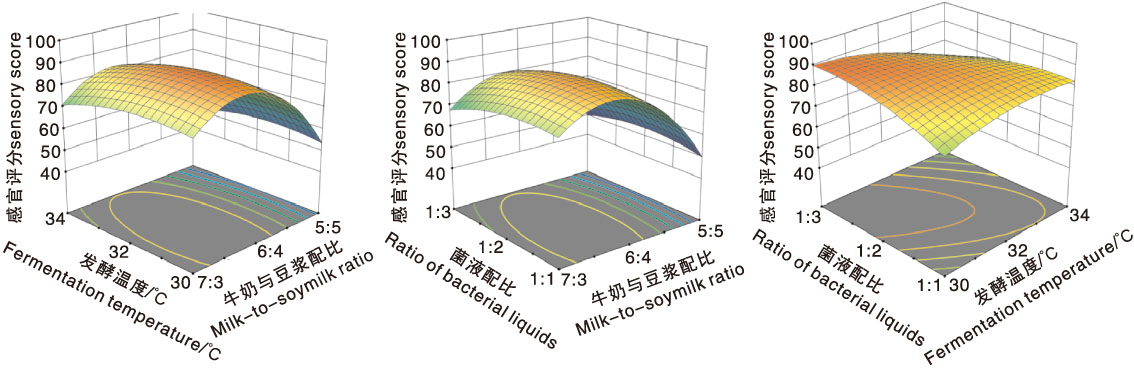
Fig.1 Response surface plots of the effect of interaction of factors on the sensory score of dual-protein yogurt
| 储藏时间/d Storage time/d | pH值pH value | 酸度/°T Titratable acidity/°T | ||
|---|---|---|---|---|
| SYF | CN | SYF | CN | |
| 1 | 4.50±0.01 a | 4.45±0.01 a | 74.67±0.47 e | 68.33±0.47 d |
| 7 | 4.43±0.01 b | 4.38±0.01 b | 78.33±0.94 d | 70.00±0.82 d |
| 14 | 4.37±0.01 c | 4.28±0.01 c | 80.33±0.47 c | 72.33±0.47 c |
| 21 | 4.34±0.01 d | 4.24±0.01 d | 82.00±0.82 b | 74.00±0.82 b |
| 28 | 4.32±0.01 e | 4.20±0.01 e | 83.67±0.47 a | 75.67±0.47 a |
Table 8 Changes in pH value and titratable acidity of samples during storage
| 储藏时间/d Storage time/d | pH值pH value | 酸度/°T Titratable acidity/°T | ||
|---|---|---|---|---|
| SYF | CN | SYF | CN | |
| 1 | 4.50±0.01 a | 4.45±0.01 a | 74.67±0.47 e | 68.33±0.47 d |
| 7 | 4.43±0.01 b | 4.38±0.01 b | 78.33±0.94 d | 70.00±0.82 d |
| 14 | 4.37±0.01 c | 4.28±0.01 c | 80.33±0.47 c | 72.33±0.47 c |
| 21 | 4.34±0.01 d | 4.24±0.01 d | 82.00±0.82 b | 74.00±0.82 b |
| 28 | 4.32±0.01 e | 4.20±0.01 e | 83.67±0.47 a | 75.67±0.47 a |
| 储藏时间 Storage time/d | 样品 Sample | 硬度/g Hardness/g | 黏附性/(g·s) Adhesiveness/ (g·s) | 回复性/% Resilience/% | 内聚性 Cohesiveness | 弹性/% Springiness/% | 胶着性 Gumminess | 咀嚼性 Chewiness | 持水性/% Water holding capacity/% |
|---|---|---|---|---|---|---|---|---|---|
| 1 | SYF | 36.47± 0.36 d | -85.31± 0.30 d | 14.39± 1.01 a | 0.62± 0.01 a | 82.59± 0.13 d | 27.33± 0.48 b | 22.70± 0.36 c | 85.13± 0.38 a |
| CN | 31.42± 0.47 e | -75.32± 0.45 d | 12.09± 0.77 a | 0.58± 0.01 a | 77.37± 0.24 c | 22.80± 0.22 b | 17.84± 0.58 c | 45.42± 0.56 a | |
| 7 | SYF | 46.98± 0.80 b | -94.96± 0.77 b | 12.94± 0.55 ab | 0.62± 0.01 a | 83.54± 0.95 b | 28.75± 0.56 a | 23.59± 0.55 b | 83.04± 0.85 b |
| CN | 41.37± 0.66 a | -88.28± 0.83 a | 10.03± 0.26 b | 0.58± 0.01 a | 80.82± 0.55 a | 24.50± 0.39 a | 19.62± 0.51 a | 40.80± 0.81 b | |
| 14 | SYF | 49.04± 1.01 a | -98.96± 0.73 a | 12.44± 0.43 b | 0.61± 0.01 a | 85.74± 0.20 a | 28.75± 0.56 a | 25.38± 0.76 a | 81.90± 0.65 c |
| CN | 38.30± 0.60 b | -83.65± 0.50 b | 8.99± 0.19 b | 0.57± 0.01 a | 79.68± 0.78 b | 24.50± 0.39 a | 18.60± 0.35 b | 38.05± 0.45 c | |
| 21 | SYF | 45.63± 0.67 b | -93.56± 0.53 bc | 12.14± 0.65 b | 0.59± 0.01 b | 83.07± 0.46 c | 27.04± 0.64 b | 22.32± 0.22 c | 80.32± 0.64 d |
| CN | 36.12± 0.42 c | -78.71± 0.41 c | 7.91± 0.46 c | 0.55± 0.01 b | 76.60± 0.36 d | 22.47± 0.18 c | 17.32± 0.64 c | 33.73± 0.68 d | |
| 28 | SYF | 43.48± 0.40 c | -92.21± 0.18 c | 11.18± 0.39 c | 0.58± 0.01 b | 81.94± 0.34 e | 26.22± 0.35 c | 21.63± 0.31 d | 78.89± 0.68 e |
| CN | 33.95± 0.28 d | -75.82± 0.18 d | 6.66± 0.16 d | 0.53± 0.01 b | 74.73± 0.23 e | 21.72± 0.52 d | 16.48± 0.03 d | 31.47± 0.73 e |
Table 9 Changes in texture and water-holding capacity of samples during storage
| 储藏时间 Storage time/d | 样品 Sample | 硬度/g Hardness/g | 黏附性/(g·s) Adhesiveness/ (g·s) | 回复性/% Resilience/% | 内聚性 Cohesiveness | 弹性/% Springiness/% | 胶着性 Gumminess | 咀嚼性 Chewiness | 持水性/% Water holding capacity/% |
|---|---|---|---|---|---|---|---|---|---|
| 1 | SYF | 36.47± 0.36 d | -85.31± 0.30 d | 14.39± 1.01 a | 0.62± 0.01 a | 82.59± 0.13 d | 27.33± 0.48 b | 22.70± 0.36 c | 85.13± 0.38 a |
| CN | 31.42± 0.47 e | -75.32± 0.45 d | 12.09± 0.77 a | 0.58± 0.01 a | 77.37± 0.24 c | 22.80± 0.22 b | 17.84± 0.58 c | 45.42± 0.56 a | |
| 7 | SYF | 46.98± 0.80 b | -94.96± 0.77 b | 12.94± 0.55 ab | 0.62± 0.01 a | 83.54± 0.95 b | 28.75± 0.56 a | 23.59± 0.55 b | 83.04± 0.85 b |
| CN | 41.37± 0.66 a | -88.28± 0.83 a | 10.03± 0.26 b | 0.58± 0.01 a | 80.82± 0.55 a | 24.50± 0.39 a | 19.62± 0.51 a | 40.80± 0.81 b | |
| 14 | SYF | 49.04± 1.01 a | -98.96± 0.73 a | 12.44± 0.43 b | 0.61± 0.01 a | 85.74± 0.20 a | 28.75± 0.56 a | 25.38± 0.76 a | 81.90± 0.65 c |
| CN | 38.30± 0.60 b | -83.65± 0.50 b | 8.99± 0.19 b | 0.57± 0.01 a | 79.68± 0.78 b | 24.50± 0.39 a | 18.60± 0.35 b | 38.05± 0.45 c | |
| 21 | SYF | 45.63± 0.67 b | -93.56± 0.53 bc | 12.14± 0.65 b | 0.59± 0.01 b | 83.07± 0.46 c | 27.04± 0.64 b | 22.32± 0.22 c | 80.32± 0.64 d |
| CN | 36.12± 0.42 c | -78.71± 0.41 c | 7.91± 0.46 c | 0.55± 0.01 b | 76.60± 0.36 d | 22.47± 0.18 c | 17.32± 0.64 c | 33.73± 0.68 d | |
| 28 | SYF | 43.48± 0.40 c | -92.21± 0.18 c | 11.18± 0.39 c | 0.58± 0.01 b | 81.94± 0.34 e | 26.22± 0.35 c | 21.63± 0.31 d | 78.89± 0.68 e |
| CN | 33.95± 0.28 d | -75.82± 0.18 d | 6.66± 0.16 d | 0.53± 0.01 b | 74.73± 0.23 e | 21.72± 0.52 d | 16.48± 0.03 d | 31.47± 0.73 e |
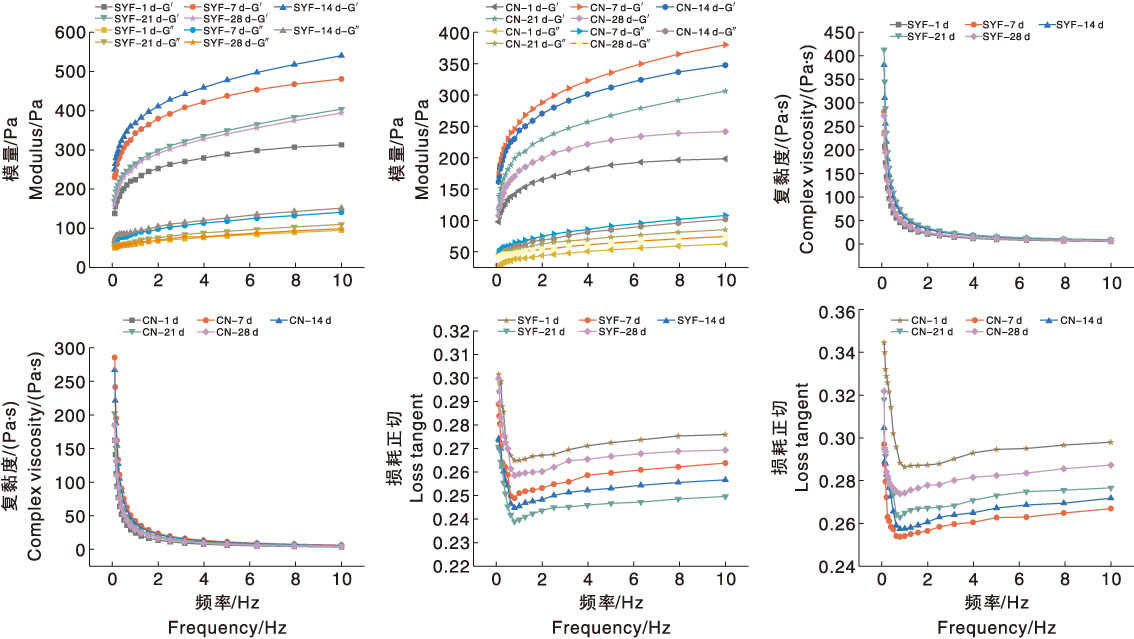
Fig.2 Changes in the rheological properties of samples during storage G', Storage modulus; G″, Loss modulus.
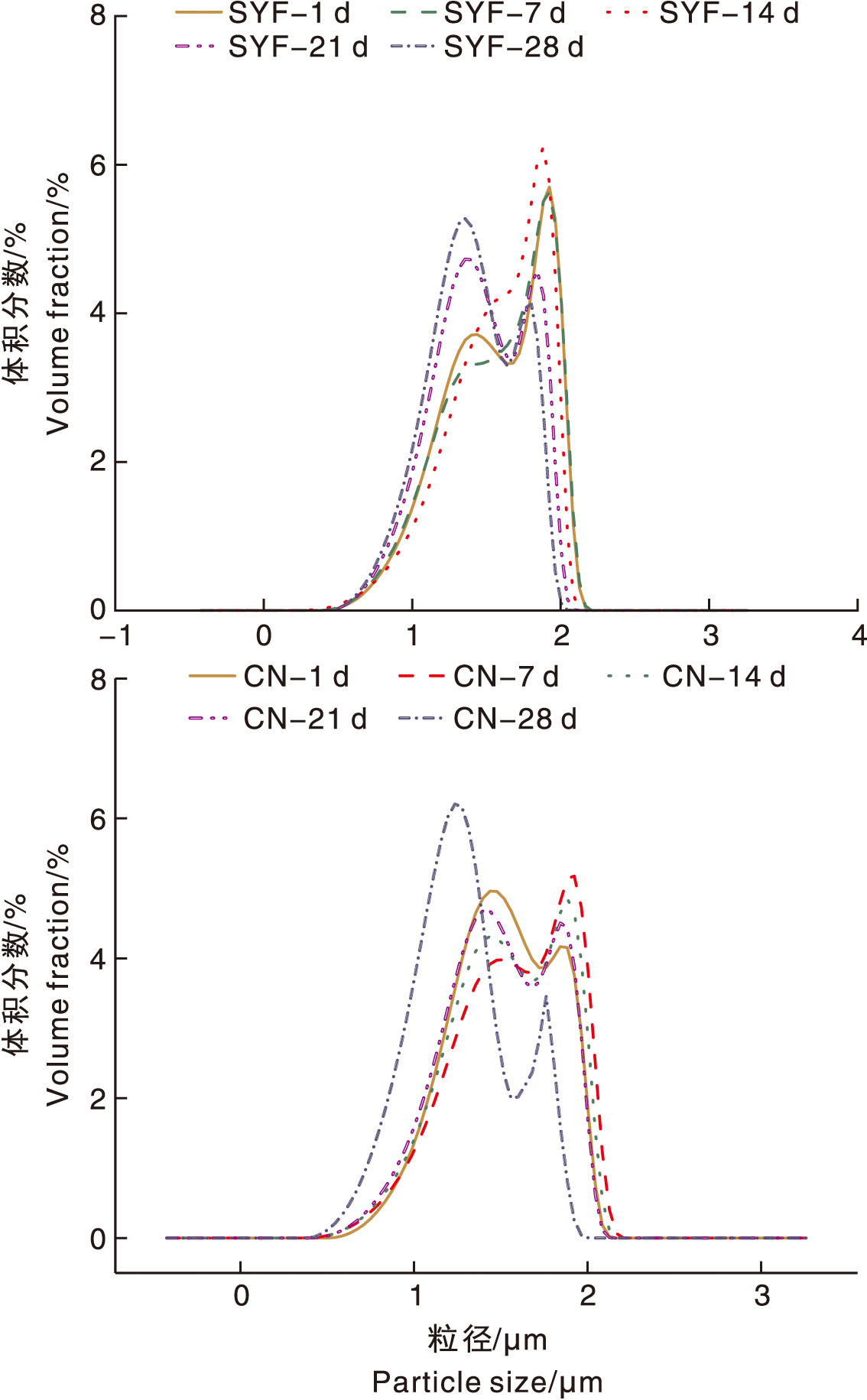
Fig.3 Changes in particle size of samples during storage The particle sizes are shown after conversion into common logarithmic values.
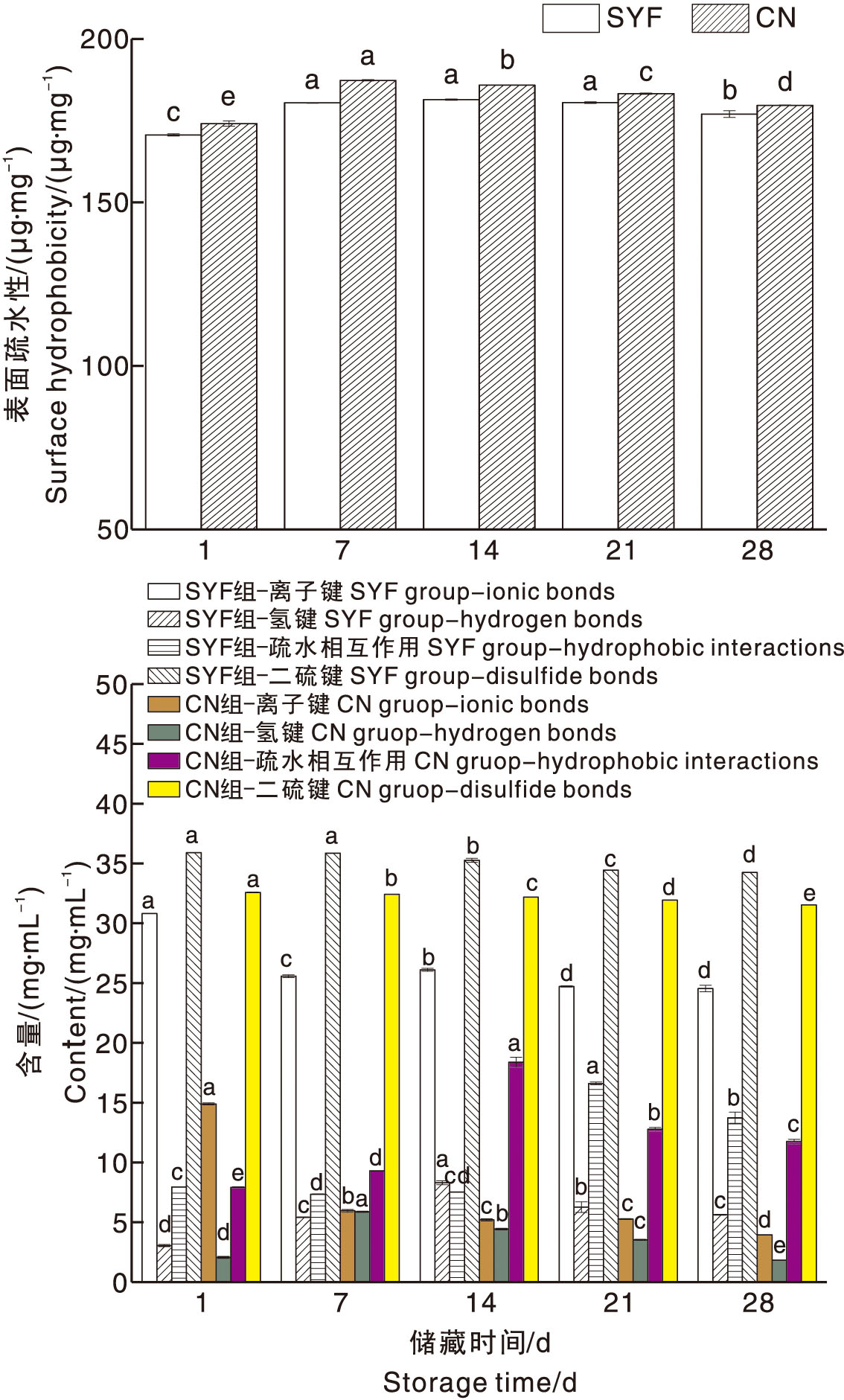
Fig.4 Changes of surface hydrophobicity (top) and intermolecular forces (bottom) of samples during storage Bars marked without the same letters indicate signifiant (p<0.05) difference within treatments under the same index.
| 储藏时间 Storage time/d | 样品 Sample | 活菌数/ (CFU·mL-1) Viable cell count/ (CFU·mL-1) | 感官评分 Sensory score | ||||
|---|---|---|---|---|---|---|---|
| 颜色 Color | 气味 Odor | 滋味 Taste | 组织状态 Texture | 总分 Total | |||
| 1 | SYF | 9.4×10⁸ | 17.60±1.02 a | 16.90±0.94 b | 26.60±1.28 a | 26.30±1.34 ab | 87.40±1.85 ab |
| CN | 1.3×10⁴ | 16.40±0.92 abc | 16.80±0.98 a | 24.90±0.70 b | 24.20±0.98 ab | 82.30±1.79 b | |
| 7 | SYF | 2.8×10⁸ | 17.70±1.42 a | 17.30±1.00 a | 27.20±1.08 a | 26.80±1.08 a | 89.00±2.15 a |
| CN | 9.6×10³ | 17.40±0.92 a | 17.10±0.70 a | 26.30±0.90 a | 24.90±0.47 a | 85.70±1.35 a | |
| 14 | SYF | 3.1×10⁷ | 17.60±0.66 a | 17.20±0.47 ab | 26.00±0.77 b | 26.00±1.26 ab | 86.80±1.54 b |
| CN | 7.1×10³ | 16.70±0.90 ab | 17.00±0.89 a | 23.40±0.92 c | 23.10±1.37 bc | 80.20±1.47 b | |
| 21 | SYF | 2.1×10⁷ | 17.30±0.78 b | 16.80±0.87 bc | 25.30±1.10 b | 25.30±0.90 b | 84.70±1.00 c |
| CN | 5.1×10³ | 15.50±0.81 c | 15.80±0.74 b | 23.10±0.94 c | 22.00±1.41 c | 76.40±1.28 c | |
| 28 | SYF | 8.3×10⁶ | 16.80±0.87 c | 16.40±0.80 c | 23.90±0.94 c | 23.80±0.75 c | 80.90±1.04 d |
| CN | 1.4×10³ | 15.70±0.90 bc | 15.50±0.81 b | 21.40±1.11 d | 19.30±1.49 d | 71.90±0.94 d | |
Table 10 Changes in viable cell count and sensory score of samples during storage
| 储藏时间 Storage time/d | 样品 Sample | 活菌数/ (CFU·mL-1) Viable cell count/ (CFU·mL-1) | 感官评分 Sensory score | ||||
|---|---|---|---|---|---|---|---|
| 颜色 Color | 气味 Odor | 滋味 Taste | 组织状态 Texture | 总分 Total | |||
| 1 | SYF | 9.4×10⁸ | 17.60±1.02 a | 16.90±0.94 b | 26.60±1.28 a | 26.30±1.34 ab | 87.40±1.85 ab |
| CN | 1.3×10⁴ | 16.40±0.92 abc | 16.80±0.98 a | 24.90±0.70 b | 24.20±0.98 ab | 82.30±1.79 b | |
| 7 | SYF | 2.8×10⁸ | 17.70±1.42 a | 17.30±1.00 a | 27.20±1.08 a | 26.80±1.08 a | 89.00±2.15 a |
| CN | 9.6×10³ | 17.40±0.92 a | 17.10±0.70 a | 26.30±0.90 a | 24.90±0.47 a | 85.70±1.35 a | |
| 14 | SYF | 3.1×10⁷ | 17.60±0.66 a | 17.20±0.47 ab | 26.00±0.77 b | 26.00±1.26 ab | 86.80±1.54 b |
| CN | 7.1×10³ | 16.70±0.90 ab | 17.00±0.89 a | 23.40±0.92 c | 23.10±1.37 bc | 80.20±1.47 b | |
| 21 | SYF | 2.1×10⁷ | 17.30±0.78 b | 16.80±0.87 bc | 25.30±1.10 b | 25.30±0.90 b | 84.70±1.00 c |
| CN | 5.1×10³ | 15.50±0.81 c | 15.80±0.74 b | 23.10±0.94 c | 22.00±1.41 c | 76.40±1.28 c | |
| 28 | SYF | 8.3×10⁶ | 16.80±0.87 c | 16.40±0.80 c | 23.90±0.94 c | 23.80±0.75 c | 80.90±1.04 d |
| CN | 1.4×10³ | 15.70±0.90 bc | 15.50±0.81 b | 21.40±1.11 d | 19.30±1.49 d | 71.90±0.94 d | |
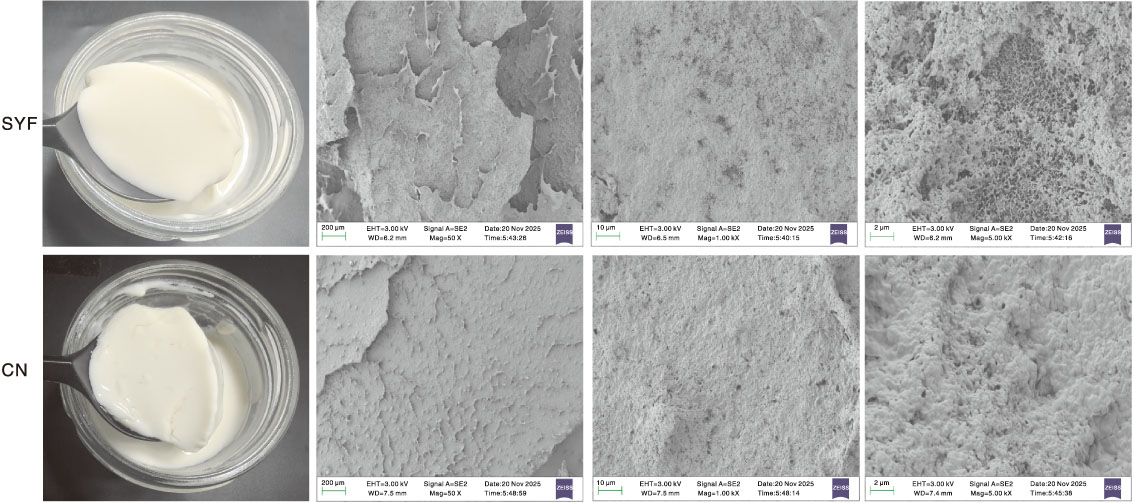
Fig.5 Appearance photos and scanning electron microscope images of different samples
| [1] | REN W W, LIANG H S, LI B, et al. Towards ideal plant-based yogurts: evaluating component and processing effects on mouthfeel and stability[J]. Journal of Future Foods, 2025, 5(5): 455-469. |
| [2] | 惠丹阳. 大豆蛋白部分替代牛乳蛋白对酸奶品质的影响研究[D]. 湘潭: 湘潭大学, 2023. |
| HUI D Y. Study on the effect of partial substitution of soy protein for cow’s milk protein on the quality of yogurt[D]. Xiangtan: Xiangtan University, 2023. | |
| [3] | YANG M, TANG Y H, LI H F, et al. Exploring the effect of milk protein concentrate on the physicochemical and digestive properties of fermentation-induced mung bean protein gels[J]. International Journal of Biological Macromolecules, 2025, 318: 145090. |
| [4] | MÉNDEZ-GALARRAGA M P, CURUTCHET A, ARZUAGA M R. Hybrid yogurts: exploring the functional, sensory and nutritional potential of dairy-plant protein combinations[J]. Food Reviews International, 2025, 41(7): 2150-2166. |
| [5] | EREM E, KILIC-AKYILMAZ M. The role of fermentation with lactic acid bacteria in quality and health effects of plant-based dairy analogues[J]. Comprehensive Reviews in Food Science and Food Safety, 2024, 23(4): e13402. |
| [6] | ZANG J W, LIN T, SHI Y B, et al. Recent advances in exopolysaccharide-protein interactions in fermented dairy- and plant-based yogurts: mechanisms, influencing factors, health benefits, analytical techniques, and future directions[J]. Comprehensive Reviews in Food Science and Food Safety, 2025, 24(4): e70219. |
| [7] | WANG X J, LAI J H, YE C, et al. Modulation of gut microbiota and storage stability of yogurt fortified with novel EPS-producing Lactiplantibacillus plantarum DPA1C[J]. Food Research International, 2025, 222: 117154. |
| [8] | LIU M W, LI X, YE T, et al. Safety evaluation of Weissella confusa SY628 and the effect of its fermentation on the taste and quality of soy yogurt[J]. Frontiers in Microbiology, 2025, 16: 1567399. |
| [9] | JIAN C, YANG X Z, TUCCILLO F, et al. Impact of fermentation conditions and dextran structure on the rheological and textural properties of a novel high-protein, high-fiber and low-fat plant-based cheese[J]. Food Hydrocolloids, 2025, 164: 111209. |
| [10] | 邹方红. 融合魏斯氏菌SW1生理生化特性及在乳制品中的应用研究[D]. 济南: 山东师范大学, 2024. |
| ZOU F H. Physiological and biochemical characteristics of Weissella confusa SW1 and its application in dairy products[D]. Jinan: Shandong Normal University, 2024. | |
| [11] | 李筱, 刘牧雯, 钟蓉莲, 等. 融合魏斯氏菌发酵制备凝固型大豆酸奶及其稳定性分析[J]. 食品与发酵工业, 2025, 51(15): 118-124. |
| LI X, LIU M W, ZHONG R L, et al. Preparation and stability analysis of set-style soybean yogurt fermented by Weissella confusa strain[J]. Food and Fermentation Industries, 2025, 51(15): 118-124. | |
| [12] | BOUROUIS I, MCCLEMENTS D J, CHEN C S, et al. Formulations and evaluations of structural and physico-chemical properties of soy yogurts: effect of incorporating soy protein isolate/chitosan complexed microgels[J]. LWT, 2024, 206: 116569. |
| [13] | 卢一帆. 大豆/牛奶双蛋白酸奶的制备及品质评价[D]. 杨凌: 西北农林科技大学, 2023. |
| LU Y F. Preparation and quality evaluation of soybean/milk dual protein yogurt[D]. Yangling: Northwest A & F University, 2023. | |
| [14] | LIU X, ZHANG Z W, CHEN Y J, et al. Chain reactions of temperature-induced egg white protein amorphous aggregates: formation, structure and material composition of thermal gels[J]. Food Chemistry, 2024, 460: 140785. |
| [15] | LI S Y, HU M, WEN W, et al. Effect of different strains on quality characteristics of soy yogurt: physicochemical, nutritional, safety features, sensory, and formation mechanism[J]. Food Chemistry, 2024, 22: 101359. |
| [16] | 张敏华, 丁长河, 李睿尧, 等. 不同功能糖对低温搅拌型酸奶质量及发酵过程的影响[J]. 食品工业科技, 2025, 46(15): 167-177. |
| ZHANG M H, DING C H, LI R Y, et al. Effects of different functional sugars on the quality and fermentation process of low-temperature stirred yogurt[J]. Science and Technology of Food Industry, 2025, 46(15): 167-177. | |
| [17] | 汤晓娟. 产胞外多糖酸面团发酵及其冷冻面团抗冻机理研究[D]. 无锡: 江南大学, 2019. |
| TANG X J. Sourdough fermented by exopolysaccharide forming strain: application and mechanism studies in frozen dough[D]. Wuxi: Jiangnan University, 2019. | |
| [18] | TIWARI S, KAVITAKE D, DEVI P B, et al. Bacterial exopolysaccharides for improvement of technological, functional and rheological properties of yoghurt[J]. International Journal of Biological Macromolecules, 2021, 183: 1585-1595. |
| [19] | GE Z W, BAO X, FENG X, et al. In situ exopolysaccharides from Lactobacillus helveticus MB2-1 in Sayram ketteki yoghurt: set yoghurts properties and interactions with sodium caseinate[J]. International Journal of Biological Macromolecules, 2022, 216: 871-881. |
| [20] | WANG Y, LEI A L, ZHAN Z Y, et al. Effect of transglutaminase treatment on the physicochemical properties and structural characteristics of soy protein isolate/konjac glucomannan complex[J]. Food Chemistry, 2025, 470: 142642. |
| [21] | REN Y M, SHEN X, YANG X Y, et al. Analysis of the effect of lactobacillus exopolysaccharide on the rheological properties of fermented soybean protein gel: using acid-induced soybean protein as the model[J]. Food Hydrocolloids, 2025, 159: 110662. |
| [22] | ZHAO J, BHANDARI B, GAIANI C, et al. Physicochemical and microstructural properties of fermentation-induced almond emulsion-filled gels with varying concentrations of protein, fat and sugar contents[J]. Current Research in Food Science, 2021, 4: 577-587. |
| [23] | WANG X L, KONG X Z, ZHANG C M, et al. Comparison of physicochemical properties and volatile flavor compounds of plant-based yoghurt and dairy yoghurt[J]. Food Research International, 2023, 164: 112375. |
| [24] | 赖鲸慧. 不同乳酸菌胞外多糖特性比较及在凝固型酸奶中的应用研究[D]. 雅安: 四川农业大学, 2022. |
| LAI J H. Comparison of exopolysaccharide properties from different lactic acid bacteria and the application in set yoghurt[D]. Ya’an: Sichuan Agricultural University, 2022. | |
| [25] | MA R Y, MIAO N, ZHANG Q Y, et al. A new attempt to develop fermented milk with low whey protein allergenic potential using a top-down method[J]. Food Bioscience, 2023, 53: 102594. |
| [26] | LI T Q, ZHANG J C, HU A N, et al. Effect of transglutaminase and laccase on pea protein gel properties compared to that of soybean[J]. Food Hydrocolloids, 2024, 156: 110314. |
| [27] | LI J H, WEI Y X, GU L P, et al. Enhancing stability of fermented egg white gels: influence of guar and xanthan gum addition order during yogurt-like fermentation[J]. International Journal of Biological Macromolecules, 2025, 292: 139260. |
| [28] | PANG Z H, DEETH H, SHARMA R, et al. Effect of addition of gelatin on the rheological and microstructural properties of acid milk protein gels[J]. Food Hydrocolloids, 2015, 43: 340-351. |
| [29] | WANG Y Q, FU Y M, LI W, et al. Modulation of soy protein immunoreactivity by different matrix structures of lactic acid bacterium-induced soy protein gels: epitope destruction during in vitro gastroduodenal digestion and absorption[J]. Food Research International, 2023, 173: 113281. |
| [30] | WANG Y, DONG X Q, ZHANG Y G, et al. Effect of the combined addition of hyaluronic acid and gellan gum on the physicochemical and digestive properties of tofu[J]. International Journal of Biological Macromolecules, 2025, 311: 143735. |
| [31] | AL NOMAN M A, SLAGHUIS H, VOS A, et al. Hybrid yoghurt: enhancing consumer acceptance by combining dairy and plant-based derivatives[J]. The Journal of Dairy Research, 2024, 91(4): 498-504. |
| [32] | PENG X H, LIU Y T, LI J N, et al. Natural polysaccharides mediated “low-molecular-bridging” network in fermented soybean protein gels: interaction, microstructure, and rheological properties[J]. Food Research International, 2025, 220: 117113. |
| [1] | SHI Qiwei, WU Shaofu, TAO Juanhua, WU Lianghuan, MA Qingxu, LIU Xiu, HAN Kefeng. Effects of exogenous organic materials amendments on soil aggregate stability and accumulation of organic carbon and total nitrogen in yellow clayey paddy soil [J]. Acta Agriculturae Zhejiangensis, 2026, 38(4): 720-730. |
| [2] | YANG Chenchen, TAO Wenyang, XING Jianrong, ZHOU Wanyi, WANG Mengzhu, LI Ming, YANG Ying, ZHAO Yuping. Effect of proanthocyanidin on the stability of Dendrobium officinale anthocyanins and its copigmentation mechanism [J]. Acta Agriculturae Zhejiangensis, 2026, 38(3): 471-480. |
| [3] | CAO Yongqing, YAO Xiaohua, WANG Kailiang, REN Huadong. Interannual stability of main traits for Camellia oleifera Abel. [J]. Acta Agriculturae Zhejiangensis, 2025, 37(8): 1624-1633. |
| [4] | REN Jindong, CHEN Honglin, NIU Baolong, XU Xiaojun, LOU Bao. Mining new housekeeping genes of Macrobrachium rosenbergii based on transcriptome analysis [J]. Acta Agriculturae Zhejiangensis, 2025, 37(7): 1424-1429. |
| [5] | XIONG Rui, OUYANG Ning, OU Xi, ZHONG Kangyu, ZHOU Wentao, WANG Hongrui, LONG Pan, XU Ying, FU Zhiqiang. Effect of straw returning and tillage method on soil aggregates and carbon, nitrogen content in double-season rice [J]. Acta Agriculturae Zhejiangensis, 2024, 36(6): 1347-1356. |
| [6] | CUI Ningbo, WANG Siman, FAN Yueyuan. Study on import stability of feed grain in China under “dual circulation” pattern [J]. Acta Agriculturae Zhejiangensis, 2024, 36(3): 681-689. |
| [7] | LIU Wei, TAO Jianping. How does livestock and poultry restricted zone policy affect stability of China’s hog market? [J]. Acta Agriculturae Zhejiangensis, 2023, 35(5): 1195-1210. |
| [8] | ZHANG Chunrong, GUO Qian, KONG Liping, WU Yuanyuan, LIN Qin, XU Zhenlan, ZHAO Xueping, TANG Tao. Residue behavior and dietary exposure risk assessment of azoxystrobin in waxberry [J]. Acta Agriculturae Zhejiangensis, 2023, 35(4): 942-951. |
| [9] | TANG Xiao, MA Ming. Antibacterial activity and stability of Extracts of four common rice dumplings leaves [J]. Acta Agriculturae Zhejiangensis, 2022, 34(6): 1287-1397. |
| [10] | LI Juan, ZHUANG Jincai, ZHENG Jingjing. Land-shareholding double-layer multi-party interest game cooperation mechanism under background of integration of urban and rural factors [J]. Acta Agriculturae Zhejiangensis, 2022, 34(11): 2567-2582. |
| [11] | ZHANG Qiqi, WAN Yingxiu, CAO Wenxin, LI Yan, LIU Fangfang, LI Yao, ZHANG Pingzhi. Analysis and evaluation of wheat quality traits in Anhui Province, China [J]. Acta Agriculturae Zhejiangensis, 2022, 34(10): 2079-2087. |
| [12] | TANG Xiaoshu, HU Bo, CHEN Xuemei, ZHANG Baixi. Study on black chokeberry juicing processing and its quality evaluation [J]. Acta Agriculturae Zhejiangensis, 2021, 33(12): 2406-2414. |
| [13] | CHEN Zhang, WU Huajian, MAO Tianjiao, HAN Yeqin, SUN Pei, WEI Jianzhong, LI Dongfeng, LI Yu. Screening of strain for inactivated vaccine of Streptococcus suis type 2 [J]. , 2020, 32(1): 57-64. |
| [14] | ZHAO Jianxia, SHEN Yingyue, FENG Weilin, JIN Qunli, SONG Tingting, FAN Lijun, CAI Weiming. Screening of internal reference gene of Agaricus bisporus [J]. , 2019, 31(8): 1312-1320. |
| [15] | WU Qiongjuan, YANG Zhipeng, YAO Yanbin, LU Ping, WEI Jianzhong, SUN Pei, LI Yu. Screening of strains for inactivated vaccine of Erysipelothrix rhusiopathiae [J]. , 2018, 30(9): 1467-1475. |
| Viewed | ||||||
|
Full text |
|
|||||
|
Abstract |
|
|||||

