Acta Agriculturae Zhejiangensis ›› 2026, Vol. 38 ›› Issue (6): 1258-1270.DOI: 10.3969/j.issn.1004-1524.20250732
• Biosystem Engineering • Previous Articles Next Articles
Recognition method for blueberry ripeness and fruit clusters based on YOLO-AIFI
LI Gonglei1( ), HUANG Keyue1, LIU Yinghao1, ZHANG Chenwen1, LI Zitong1, WU Delin1,2,*()
- 1
School of Engineering ,Anhui Agricultural University Hefei 230036, China
2Anhui Provincial Engineering Research Center of Intelligent Agricultural Machinery Hefei 230036, China
-
Received:2025-12-03Online:2026-06-25Published:2026-07-14

CLC Number:
Cite this article
LI Gonglei, HUANG Keyue, LIU Yinghao, ZHANG Chenwen, LI Zitong, WU Delin. Recognition method for blueberry ripeness and fruit clusters based on YOLO-AIFI[J]. Acta Agriculturae Zhejiangensis, 2026, 38(6): 1258-1270.
share this article
Add to citation manager EndNote|Ris|BibTeX
URL: http://www.zjnyxb.cn/EN/10.3969/j.issn.1004-1524.20250732
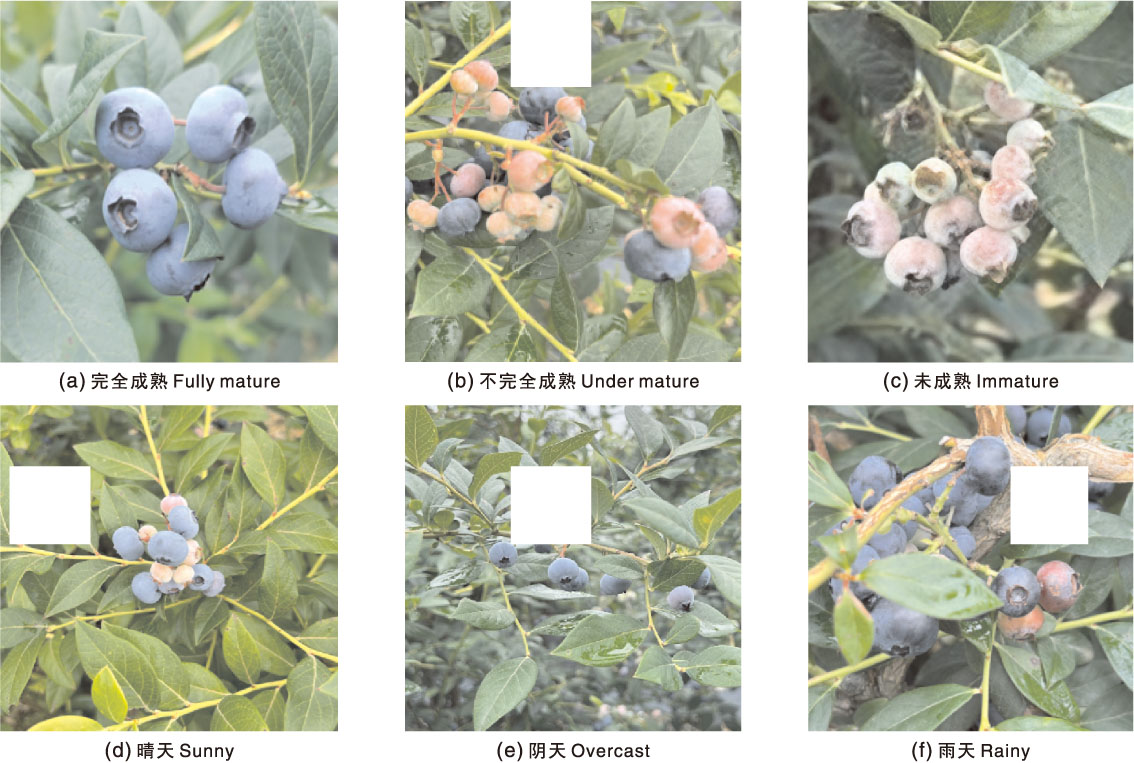
Fig.1 Sample images of blueberries under different maturity levels and weather conditions
| 成熟度 Maturity | 样本数量 Quantity of total samples | 训练集样本数量 Quantity of samples on training set | 验证集样本数量 Quantity of samples on validation set |
|---|---|---|---|
| 完全成熟 Fully mature | 1 470 | 1 029 | 441 |
| 不完全成熟 Under mature | 976 | 683 | 293 |
| 未成熟 Immature | 900 | 630 | 270 |
Table 1 Sample quantity distribution
| 成熟度 Maturity | 样本数量 Quantity of total samples | 训练集样本数量 Quantity of samples on training set | 验证集样本数量 Quantity of samples on validation set |
|---|---|---|---|
| 完全成熟 Fully mature | 1 470 | 1 029 | 441 |
| 不完全成熟 Under mature | 976 | 683 | 293 |
| 未成熟 Immature | 900 | 630 | 270 |
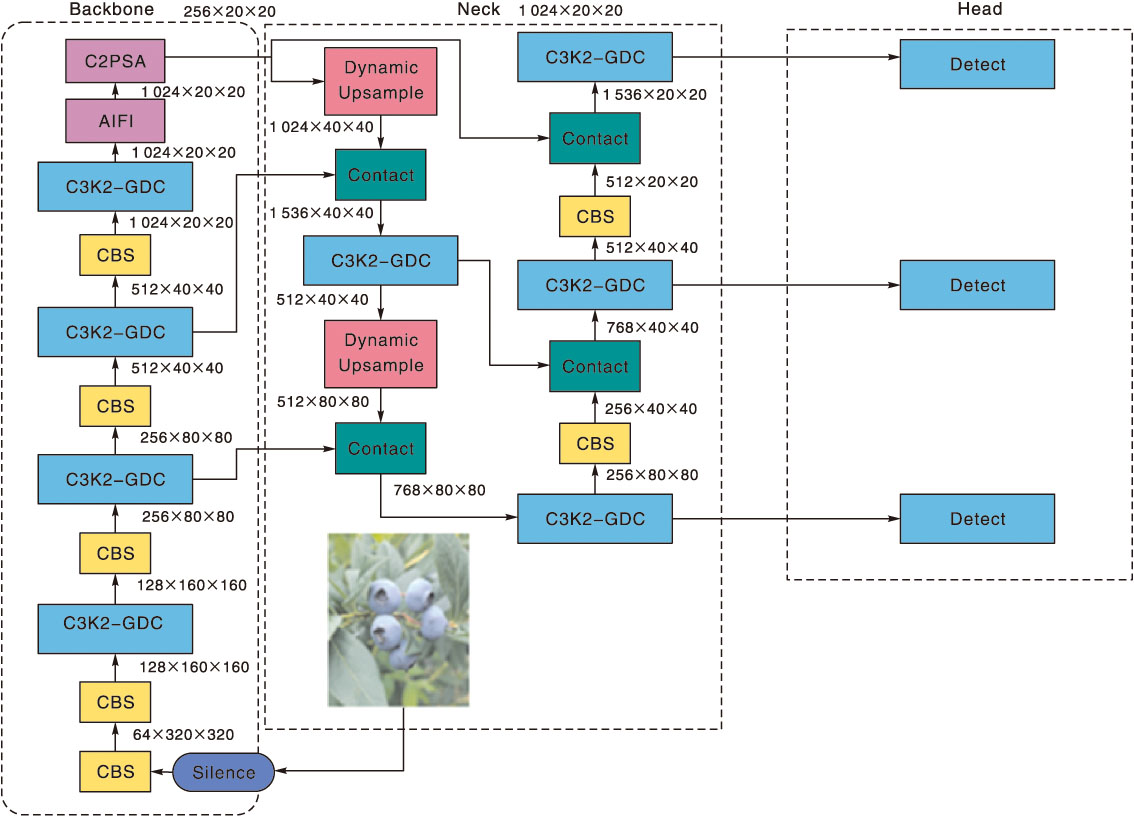
Fig.2 Schematic diagram of the architecture for the YOLO-AIFI model CBS, Convolutional module; C3K2-GDC, Dynamic ghost convolution module; AIFI, Attention-based intra-scale feature interaction; Contact, Feature concatenation layer; C2PSA, Module combining C2 feature extraction and PSA (polarized self-attention) attention mechanism. The same as below.
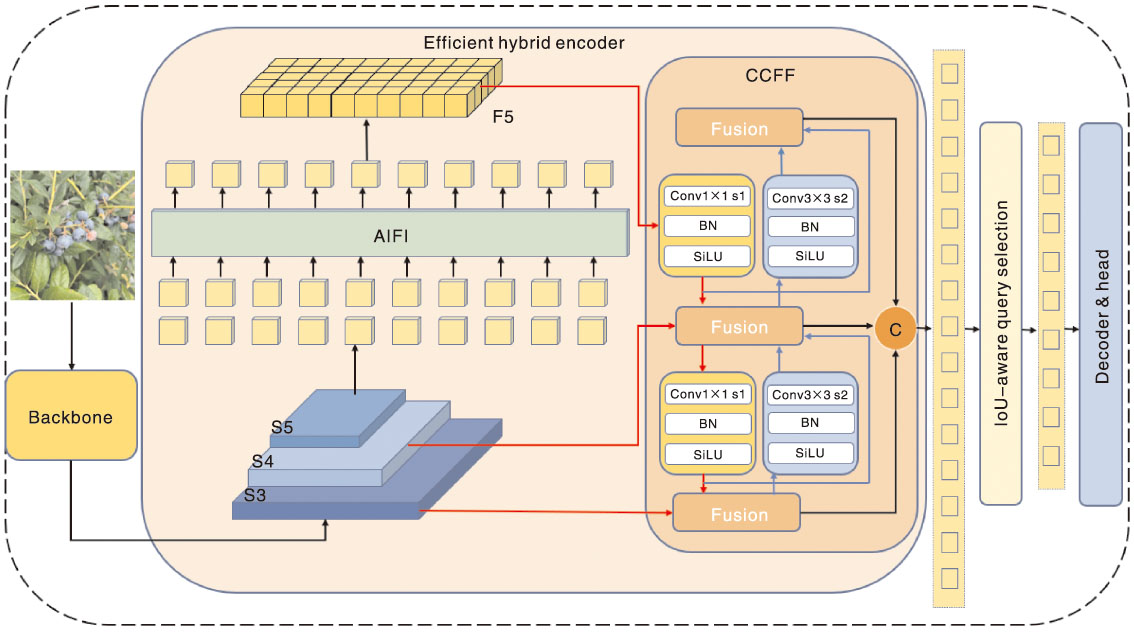
Fig.3 Schematic diagram of the network architecture of AIFI module SiLU is the activation function. CCFF, Cross-scale cross-layer feature fusion; Fusion, Feature fusion module; Conv, Convolution layer; BN, Batch normalization; IoU-aware query selection, Intersection-over-union-aware query selection; Decoder & head, Decoder and prediction head.
| 模型Model | P/% | R/% | mAP@0.5/% | FPS | FLOPs/109 |
|---|---|---|---|---|---|
| YOLOv5n | 78.0 | 70.2 | 75.8 | 420 | 4.2 |
| YOLOv8n | 80.0 | 73.5 | 77.9 | 430 | 8.0 |
| YOLOv7-tiny | 79.0 | 72.1 | 76.5 | 450 | 6.7 |
| YOLOv10n | 81.0 | 74.8 | 79.2 | 438 | 8.1 |
| YOLO11n | 82.0 | 75.5 | 79.7 | 442 | 7.9 |
| YOLOv12n | 83.0 | 76.0 | 80.3 | 440 | 7.4 |
| YOLO-AIFI | 85.0 | 78.9 | 82.5 | 410 | 8.7 |
Table 2 Performance comparison of different models
| 模型Model | P/% | R/% | mAP@0.5/% | FPS | FLOPs/109 |
|---|---|---|---|---|---|
| YOLOv5n | 78.0 | 70.2 | 75.8 | 420 | 4.2 |
| YOLOv8n | 80.0 | 73.5 | 77.9 | 430 | 8.0 |
| YOLOv7-tiny | 79.0 | 72.1 | 76.5 | 450 | 6.7 |
| YOLOv10n | 81.0 | 74.8 | 79.2 | 438 | 8.1 |
| YOLO11n | 82.0 | 75.5 | 79.7 | 442 | 7.9 |
| YOLOv12n | 83.0 | 76.0 | 80.3 | 440 | 7.4 |
| YOLO-AIFI | 85.0 | 78.9 | 82.5 | 410 | 8.7 |
| GDC | DU | AIFI | P/% | R/% | mAP@0.5/% | FPS | FLOPs/109 |
|---|---|---|---|---|---|---|---|
| × | × | × | 76.0 | 72.8 | 73.1 | 450 | 6.5 |
| √ | × | × | 77.0 | 73.9 | 76.8 | 440 | 6.6 |
| × | √ | × | 79.0 | 74.5 | 77.2 | 430 | 7.4 |
| × | × | √ | 79.0 | 76.8 | 79.1 | 385 | 7.7 |
| √ | √ | × | 80.0 | 75.8 | 78.9 | 425 | 6.3 |
| √ | × | √ | 81.0 | 77.5 | 79.5 | 380 | 8.9 |
| × | √ | √ | 83.0 | 78.5 | 80.6 | 370 | 7.9 |
| √ | √ | √ | 85.0 | 78.9 | 82.5 | 410 | 8.7 |
Table 3 Results of ablation experiments
| GDC | DU | AIFI | P/% | R/% | mAP@0.5/% | FPS | FLOPs/109 |
|---|---|---|---|---|---|---|---|
| × | × | × | 76.0 | 72.8 | 73.1 | 450 | 6.5 |
| √ | × | × | 77.0 | 73.9 | 76.8 | 440 | 6.6 |
| × | √ | × | 79.0 | 74.5 | 77.2 | 430 | 7.4 |
| × | × | √ | 79.0 | 76.8 | 79.1 | 385 | 7.7 |
| √ | √ | × | 80.0 | 75.8 | 78.9 | 425 | 6.3 |
| √ | × | √ | 81.0 | 77.5 | 79.5 | 380 | 8.9 |
| × | √ | √ | 83.0 | 78.5 | 80.6 | 370 | 7.9 |
| √ | √ | √ | 85.0 | 78.9 | 82.5 | 410 | 8.7 |
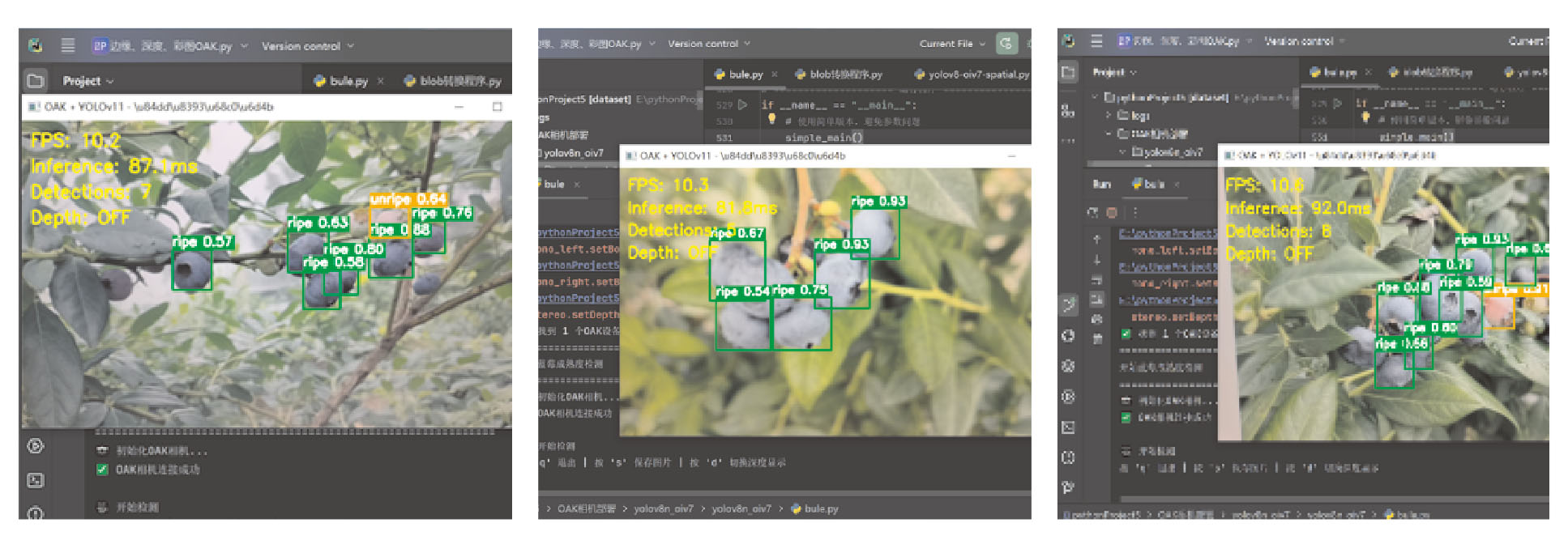
Fig.4 Actual deployment detection performance of the YOLO-AIFl model
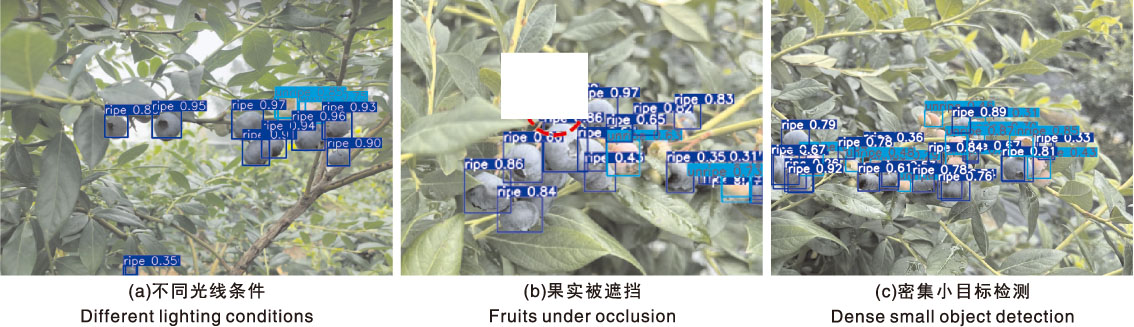
Fig.5 Actual detection performance of the YOLO-AIFI model in different scenarios
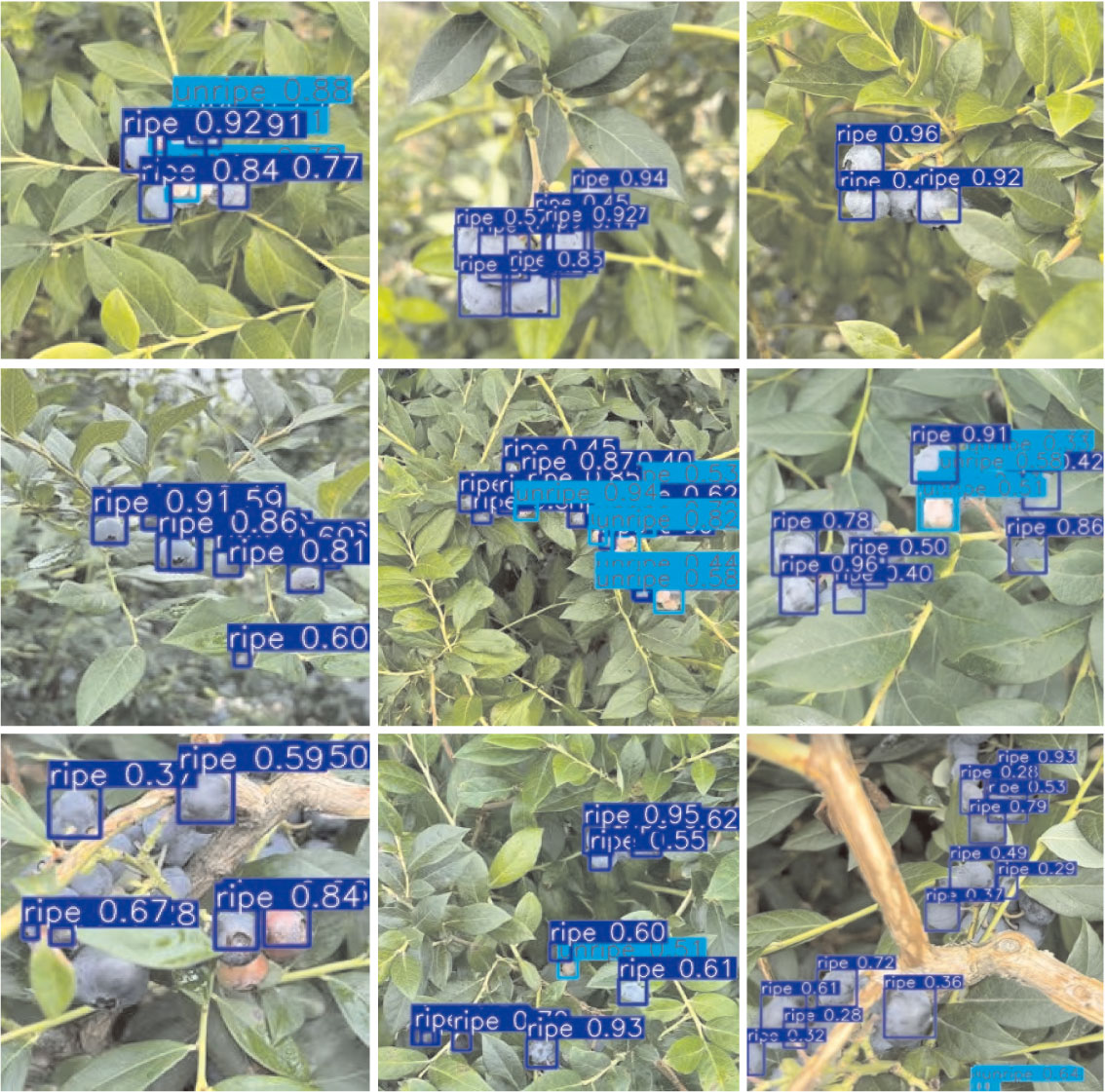
Fig.6 Detection performance under different weather conditions and scenarios Rows 1 to 3 sequentially show the detection results under sunny, cloudy, and rainy conditions, respectively.
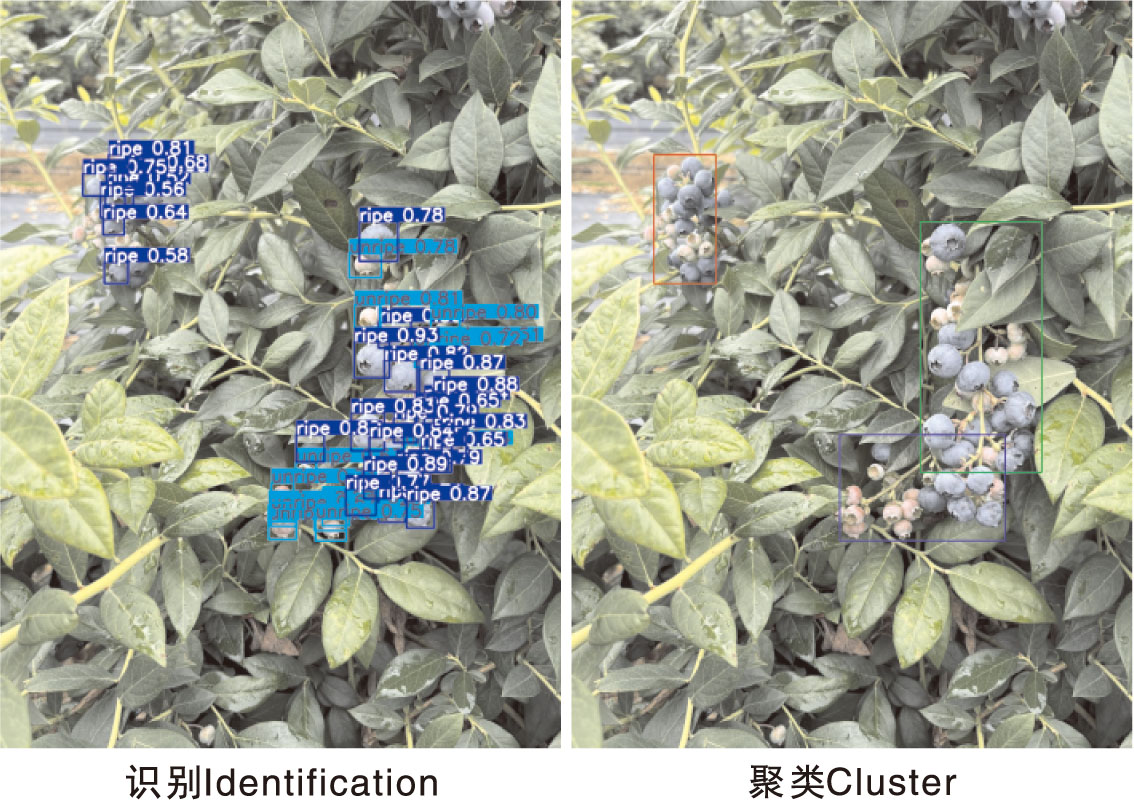
Fig.7 Example of blueberry fruit clustering effect based on k-means
| [1] | 金永学, 冯建国, 郑淘, 等. 蓝莓的功能成分、保健作用及其开发利用[J]. 食品与机械, 2020, 36(5): 231-236. |
| JIN Y X, FENG J G, ZHENG T, et al. Functional components, health function and utilization of blueberry[J]. Food & Machinery, 2020, 36(5): 231-236. | |
| [2] | 王亚敏. 上海地区蓝莓限根基质栽培技术应用初探[J]. 上海农业科技, 2024(6): 110-111. |
| WANG Y M. Preliminary study on the application of blueberry root-limiting substrate cultivation techniques in Shanghai[J]. Shanghai Agricultural Science and Technology, 2024(6): 110-111. | |
| [3] | THOTA J, KIM E, FREIVALDS A, et al. Development and evaluation of attachable anti-vibration handle[J]. Applied Ergonomics, 2022, 98: 103571. |
| [4] | 鲍玉冬, 李志鹏, 郭艳玲, 等. 振动式蓝莓采摘机对果实收获的影响试验[J]. 湖南农业大学学报(自然科学版), 2014, 40(1): 96-100. |
| BAO Y D, LI Z P, GUO Y L, et al. Effects of vibrating based picking machine on blueberry fruit harvest[J]. Journal of Hunan Agricultural University(Natural Sciences), 2014, 40(1): 96-100. | |
| [5] | 王海滨, 沈钦星, 马鹏伟, 等. 基于改进YOLOv9的蓝莓果实成熟度检测方法[J]. 林业科学, 2026, 62(1): 144-155. |
| WANG H B, SHEN Q X, MA P W, et al. Fruit ripeness detection method of blueberry based on improved YOLOv9[J]. Scientia Silvae Sinicae, 2026, 62(1): 144-155. | |
| [6] | 汪天韵, 王吉平, 袁昕, 等. 智能蓝莓采摘机器人设计与应用[J]. 工程机械, 2025, 56(6): 150-153. |
| WANG T Y, WANG J P, YUAN X, et al. Design and application of intelligent blueberry picking robot[J]. Construction Machinery and Equipment, 2025, 56(6): 150-153. | |
| [7] | 李晴. 基于深度学习的蓝莓成熟度识别和产量估计研究[D]. 大理: 大理大学, 2025. |
| LI Q. Research on blueberry maturity recognition and yield estimation based on deep learning[D]. Dali: Dali University, 2025. | |
| [8] | REN S Q, HE K M, GIRSHICK R, et al. Faster R-CNN: towards real-time object detection with region proposal networks[J]. IEEE Transactions on Pattern Analysis and Machine Intelligence, 2017, 39(6): 1137-1149. |
| [9] | 王颖. 基于深度学习的巨峰葡萄果穗分割和成熟度评估研究[D]. 杭州: 浙江农林大学, 2024. |
| WANG Y. Research on Kyoho grape ear segmentation and maturity evaluation based on deep learning[D]. Hangzhou: Zhejiang A & F University, 2024. | |
| [10] | 刘玉耀, 彭琼尹. 基于改进Faster R-CNN模型的丁岙杨梅成熟度检测方法[J]. 湖北农业科学, 2025, 64(4): 7-13. |
| LIU Y Y, PENG Q Y. Improved Faster R-CNN model-based maturity detection method for Ding’ao bayberry[J]. Hubei Agricultural Sciences, 2025, 64(4): 7-13. | |
| [11] | 张文静, 赵性祥, 丁睿柔, 等. 基于Faster R-CNN算法的番茄识别检测方法[J]. 山东农业大学学报(自然科学版), 2021, 52(4): 624-630. |
| ZHANG W J, ZHAO X X, DING R R, et al. A detection and recognition method for tomato on faster R-CNN algorithm[J]. Journal of Shandong Agricultural University(Natural Science Edition), 2021, 52(4): 624-630. | |
| [12] | 朱铭敏, 张国平, 谭建军, 等. 基于YOLOv5s的轻量级茶叶嫩芽终端检测模型[J]. 浙江农业学报, 2024, 36(6): 1413-1424. |
| ZHU M M, ZHANG G P, TAN J J, et al. A lightweight tea buds terminal detection model based on YOLOv5s[J]. Acta Agriculturae Zhejiangensis, 2024, 36(6): 1413-1424. | |
| [13] | 刘睿, 王丽娟, 王秋皓, 等. 基于改进YOLOv8s的茶叶病虫害检测[J]. 浙江农业学报, 2025, 37(9): 1933-1942. |
| LIU R, WANG L J, WANG Q H, et al. Detection of pest and disease in tea based on improved YOLOv8s[J]. Acta Agriculturae Zhejiangensis, 2025, 37(9): 1933-1942. | |
| [14] | WANG C Y, WANG C F, WANG L L, et al. A lightweight cherry tomato maturity real-time detection algorithm based on improved YOLOV5n[J]. Agronomy, 2023, 13(8): 2106. |
| [15] | LV Q R, SUN F C, BIAN Y C, et al. A lightweight citrus object detection method in complex environments[J]. Agriculture, 2025, 15(10): 1046. |
| [16] | XU Y L, LI H X, ZHOU Y, et al. GLL-YOLO: a lightweight network for detecting the maturity of blueberry fruits[J]. Agriculture, 2025, 15(17): 1877. |
| [17] | 张海庆. 基于深度学习的小目标检测识别方法[J]. 光学与光电技术, 2025, 23(5): 50-57. |
| ZHANG H Q. A small object detection and recognition method based on deep learning[J]. Optics & Optoelectronic Technology, 2025, 23(5): 50-57. | |
| [18] | YANG W J, MA X X, AN H. Blueberry ripeness detection model based on enhanced detail feature and content-aware reassembly[J]. Agronomy, 2023, 13(6): 1613. |
| [19] | FENG W Z, LIU M D, SUN Y, et al. The use of a blueberry ripeness detection model in dense occlusion scenarios based on the improved YOLOv9[J]. Agronomy, 2024, 14(8): 1860. |
| [20] | LIU Y, ZHENG H T, ZHANG Y H, et al. “Is this blueberry ripe ”: a blueberry ripeness detection algorithm for use on picking robots[J]. Frontiers in Plant Science, 2023, 14: 1198650. |
| [21] | 朱灵龙, 王亚刚, 陈怡. 融合Transformer与卷积神经网络的图像分类算法[J]. 电子科技, 2025, 38(10): 96-105. |
| ZHU L L, WANG Y G, CHEN Y. Research on image classification algorithm combining transformer with CNN[J]. Electronic Science and Technology, 2025, 38(10): 96-105. | |
| [22] | 张仁冬, 叶树林, 胡宏升. 深度卷积神经网络中的共享特征层设计与优化[J]. 佛山科学技术学院学报(自然科学版), 2025, 43(5): 32-38. |
| ZHANG R D, YE S L, HU H S. Design and optimization of shared feature layer in deep convolutional neural networks[J]. Journal of Foshan University(Natural Science Edition), 2025, 43(5): 32-38. | |
| [23] | 周燕, 韦勤彬, 廖俊玮, 等. 基于增强多层次特征融合的自然场景文本检测[J]. 佛山科学技术学院学报(自然科学版), 2024, 42(3): 1-13. |
| ZHOU Y, WEI Q B, LIAO J W, et al. Natural scene text detection based on enhanced multi-level feature fusion[J]. Journal of Foshan University(Natural Science Edition), 2024, 42(3): 1-13. | |
| [24] | YOU H H, LI Z Y, WEI Z C, et al. A blueberry maturity detection method integrating attention-driven multi-scale feature interaction and dynamic upsampling[J]. Horticulturae, 2025, 11(6): 600. |
| [25] | XIAO F, WANG H B, XU Y Q, et al. A lightweight detection method for blueberry fruit maturity based on an improved YOLOv5 algorithm[J]. Agriculture, 2024, 14(1): 36. |
| [26] | YU B, CHAN Z, PAVLENKO P, et al. YOLo-blueberry: a lightweight and accurate multi-scale detection model for blueberry maturity recognition[EB/OL]. (2025-05-21) [2025-12-03]. https://www.preprints.org/manuscript/202505.1707. |
| [27] | DENG F Q, HE Z H, FU L H, et al. A new maturity recognition algorithm for Xinhui citrus based on improved YOLOv8[J]. Frontiers in Plant Science, 2025, 16: 1472230. |
| [28] | YE B F, XUE R Z, XU H Q. ASD-YOLO: a lightweight network for coffee fruit ripening detection in complex scenarios[J]. Frontiers in Plant Science, 2025, 16: 1484784. |
| [29] | NGUYEN H D, MCHENRY B, NGUYEN T, et al. Accurate crop yield estimation of blueberries using deep learning and smart drones[EB/OL]. (2025-01-04) [2025-12-03]. https://arxiv.org/abs/2501.02344. |
| [30] | 杨震宇, 汪小旵, 祁子涵, 等. 基于改进YOLOv8的草莓识别与果梗采摘关键点检测[J]. 农业工程学报, 2024, 40(18): 167-175. |
| YANG Z Y, WANG X C, QI Z H, et al. Recognizing strawberry to detect the key points for peduncle picking using improved YOLOv8 model[J]. Transactions of the Chinese Society of Agricultural Engineering, 2024, 40(18): 167-175. | |
| [31] | HUANG B Q, XIE Z Y, HOMANN H, et al. Research on blueberry maturity detection based on receptive field attention convolution and adaptive spatial feature fusion[J]. Applied Sciences, 2025, 15(11): 6356. |
| [1] | ZHANG Guo, ZHOU Qinghui, HE Shengxi. An improved instance segmentation algorithm for apple picking robots based on SOLOv2 [J]. Acta Agriculturae Zhejiangensis, 2026, 38(3): 588-599. |
| [2] | TANG Aoran, JIN Xiu, WANG Tan, RAO Yuan, LI Jiajia, ZHANG Wu. Physiological plant height measurement method based on the reconstruction of the main stem skeleton for curved soybean plants [J]. Acta Agriculturae Zhejiangensis, 2025, 37(2): 466-479. |
| [3] | GUO Xiuming, WANG Dawei, LIU Shengping, ZHU Yeping, LIU Xiaohui, LIN Kejian, WANG Jiayu, LI Fei. Study on key problems for rat hole recognition and count near ground based on deep learning and its application [J]. Acta Agriculturae Zhejiangensis, 2024, 36(9): 2146-2154. |
| [4] | ZHU Mingmin, ZHANG Guoping, TAN Jianjun, SUN Lingjiao, ZHU Li, JIAO Jie. A lightweight tea buds terminal detection model based on YOLOv5s [J]. Acta Agriculturae Zhejiangensis, 2024, 36(6): 1413-1424. |
| [5] | LI Dahua, KONG Shu, LI Dong, YU Xiao. Lightweight detection model of citrus leaf disease based on improved SSD [J]. Acta Agriculturae Zhejiangensis, 2024, 36(3): 662-670. |
| [6] | LI Qi, LI Yuzhe. Detection of piggery cleaning target under low-light condition [J]. Acta Agriculturae Zhejiangensis, 2023, 35(9): 2240-2249. |
| [7] | LI Rongpeng, MAMAT Sawut, SHENG Yanfang, HE Xugang. Identification and application of walnut disease based on CA-MobileNet-V2 [J]. Acta Agriculturae Zhejiangensis, 2023, 35(12): 2977-2987. |
| [8] | WANG Yingyun, LONG Yan, YANG Zhiyou, HUANG Lyuwen. Semantic segmentation method of apple leaf disease based on improved U-Net network [J]. Acta Agriculturae Zhejiangensis, 2023, 35(11): 2731-2741. |
| [9] | ZHOU Pinzhi, PEI Yuekun, WEI Ran, ZHANG Yongfei, GU Yu. Real-time detection of orchard cherry based on YOLOV4 model [J]. Acta Agriculturae Zhejiangensis, 2022, 34(11): 2522-2532. |
| [10] | ZHANG Ning, WU Huarui, HAN Xiao, MIAO Yisheng. Tomato disease recognition scheme based on multi-scale and attention mechanism [J]. Acta Agriculturae Zhejiangensis, 2021, 33(7): 1329-1338. |
| Viewed | ||||||
|
Full text |
|
|||||
|
Abstract |
|
|||||

