Acta Agriculturae Zhejiangensis ›› 2026, Vol. 38 ›› Issue (8): 1539-1550.DOI: 10.3969/j.issn.1004-1524.20250442
• Animal Science • Previous Articles Next Articles
Effects of fermented feed on the growth performance and intestinal bacterial flora of juvenile Litopenaeus vannamei
CHEN Jinfei( ), LI Pengquan, CHEN Chen*(), LI Tengteng, JI Dewei, QI Piaopiao, ZHOU Qiang
Zhejiang Key Laboratory of Coastal Biological Germplasm Resources Conservation and Utilization ,Sino-Thai Joint Laboratory of Marine Science and Technology, Wenzhou Key Laboratory of Marine Biological Genetics and Breeding, Zhejiang Mariculture Research Institute Wenzhou 325000, Zhejiang, China
-
Received:2025-06-17Online:2026-08-25Published:2026-09-14

CLC Number:
Cite this article
CHEN Jinfei, LI Pengquan, CHEN Chen, LI Tengteng, JI Dewei, QI Piaopiao, ZHOU Qiang. Effects of fermented feed on the growth performance and intestinal bacterial flora of juvenile Litopenaeus vannamei[J]. Acta Agriculturae Zhejiangensis, 2026, 38(8): 1539-1550.
share this article
Add to citation manager EndNote|Ris|BibTeX
URL: http://www.zjnyxb.cn/EN/10.3969/j.issn.1004-1524.20250442
| 试验组 Experimental group | 菌种 Strain | 含量Content | |
|---|---|---|---|
| 发酵前/104 Before fermentation /104 | 发酵后/107 After fermentation /107 | ||
| YB | 枯草芽孢杆菌Bacillus subtilis | 7.54±1.14 | 7.65±0.95 |
| RS | 嗜酸乳杆菌Lactobacillus acidophilus | 4.25±0.61 | 6.81±0.81 |
| YR | 复合益生菌Compound probiotics | 8.99±1.16 | 56.62±6.10 |
| KB | — | 0 | 0 |
Table 1 Content of target bacteria in feed (n=3) Unit: CFU·g-1
| 试验组 Experimental group | 菌种 Strain | 含量Content | |
|---|---|---|---|
| 发酵前/104 Before fermentation /104 | 发酵后/107 After fermentation /107 | ||
| YB | 枯草芽孢杆菌Bacillus subtilis | 7.54±1.14 | 7.65±0.95 |
| RS | 嗜酸乳杆菌Lactobacillus acidophilus | 4.25±0.61 | 6.81±0.81 |
| YR | 复合益生菌Compound probiotics | 8.99±1.16 | 56.62±6.10 |
| KB | — | 0 | 0 |
| 试验组 Experimental group | 终体重/g Final body weight /g | 增重率/% Weight gain rate/% | 成活率/% Survival rate/% | 特定生长率/% Specific growth rate/% | 饲料系数 Feed conversion ratio |
|---|---|---|---|---|---|
| RS | 1.062±0.045 a | 157.55±11.29 a | 92.39±3.00 a | 2.95±0.14 a | 3.56±0.45 c |
| YB | 1.043±0.038 a | 152.72±9.49 a | 89.36±9.17 a | 2.90±0.11 a | 3.94±0.56 bc |
| YR | 1.041±0.030 a | 152.41±7.18 a | 84.72±9.91 a | 2.89±0.11 a | 4.53±1.22 b |
| KB | 0.971±0.100 a | 135.42±24.63 a | 78.69±14.36 b | 2.66±0.33 a | 6.24±2.25 a |
Table 2 Growth of Litopenaeus vannamei in different feed treatment groups
| 试验组 Experimental group | 终体重/g Final body weight /g | 增重率/% Weight gain rate/% | 成活率/% Survival rate/% | 特定生长率/% Specific growth rate/% | 饲料系数 Feed conversion ratio |
|---|---|---|---|---|---|
| RS | 1.062±0.045 a | 157.55±11.29 a | 92.39±3.00 a | 2.95±0.14 a | 3.56±0.45 c |
| YB | 1.043±0.038 a | 152.72±9.49 a | 89.36±9.17 a | 2.90±0.11 a | 3.94±0.56 bc |
| YR | 1.041±0.030 a | 152.41±7.18 a | 84.72±9.91 a | 2.89±0.11 a | 4.53±1.22 b |
| KB | 0.971±0.100 a | 135.42±24.63 a | 78.69±14.36 b | 2.66±0.33 a | 6.24±2.25 a |
| 试验组 Experimental group | 细菌总数Total number of bacteria | |||||
|---|---|---|---|---|---|---|
| 3 d | 6 d | 12 d | 19 d | 25 d | 32 d | |
| RS | 3 950±526 b | 3 545±304 c | 57 750±7 632 ab | 39 375±4 715 b | 58 100±8 102 b | 46 100±5 553 a |
| YB | 7 625±822 a | 5 750±2 253 bc | 55 500±10 630 ab | 27 000±5 492 b | 56 000±5 354 b | 51 725±9 397 a |
| YR | 7 250±835 a | 7 275±2 634 ab | 46 750±13 175 b | 24 250±2 872 b | 45 575±11 189 b | 52 250±3 594 a |
| KB | 3 000±424 c | 8 575±1 069 a | 70 500±8 544 a | 657 500±86 554 a | 160 500±29 558 a | 50 500±7 234 a |
| SLS | 210±15 d | 530±15 d | 570±70 c | 365±35 c | 1 140±60 c | 620±40 b |
Table 3 Total number of bacteria in aquaculture water Unit: CFU·mL-1
| 试验组 Experimental group | 细菌总数Total number of bacteria | |||||
|---|---|---|---|---|---|---|
| 3 d | 6 d | 12 d | 19 d | 25 d | 32 d | |
| RS | 3 950±526 b | 3 545±304 c | 57 750±7 632 ab | 39 375±4 715 b | 58 100±8 102 b | 46 100±5 553 a |
| YB | 7 625±822 a | 5 750±2 253 bc | 55 500±10 630 ab | 27 000±5 492 b | 56 000±5 354 b | 51 725±9 397 a |
| YR | 7 250±835 a | 7 275±2 634 ab | 46 750±13 175 b | 24 250±2 872 b | 45 575±11 189 b | 52 250±3 594 a |
| KB | 3 000±424 c | 8 575±1 069 a | 70 500±8 544 a | 657 500±86 554 a | 160 500±29 558 a | 50 500±7 234 a |
| SLS | 210±15 d | 530±15 d | 570±70 c | 365±35 c | 1 140±60 c | 620±40 b |
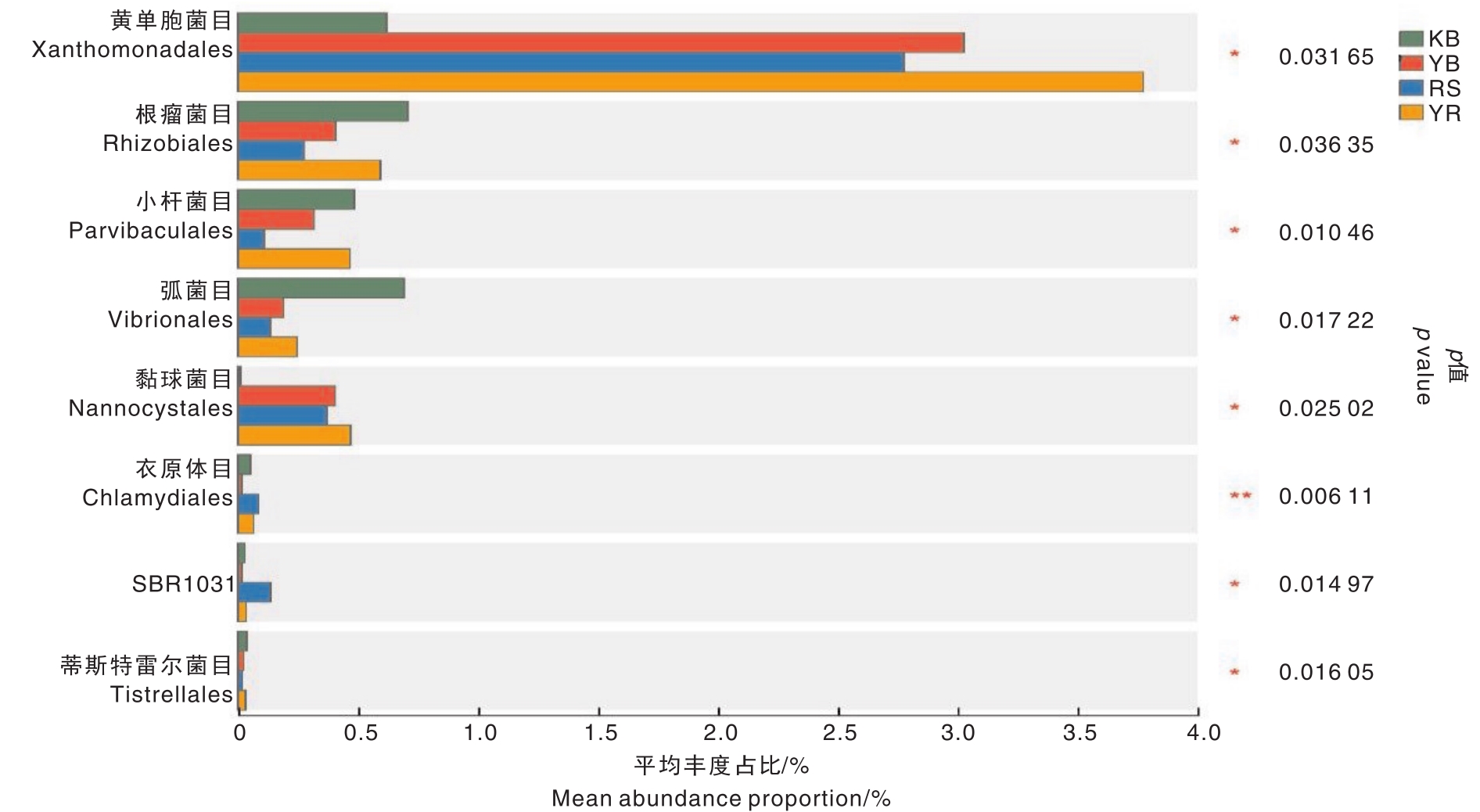
Fig.1 Significance test plot for differences in aquaculture water bacterial communities among different feed groups KB, Control group (basal diet treated with high-temperature and high-pressure sterilization); RS, Lactobacillus acidophilus fermented feed group; YB, Bacillus subtilis fermented feed group; YR, Compound probiotic fermented feed group. The same as below.
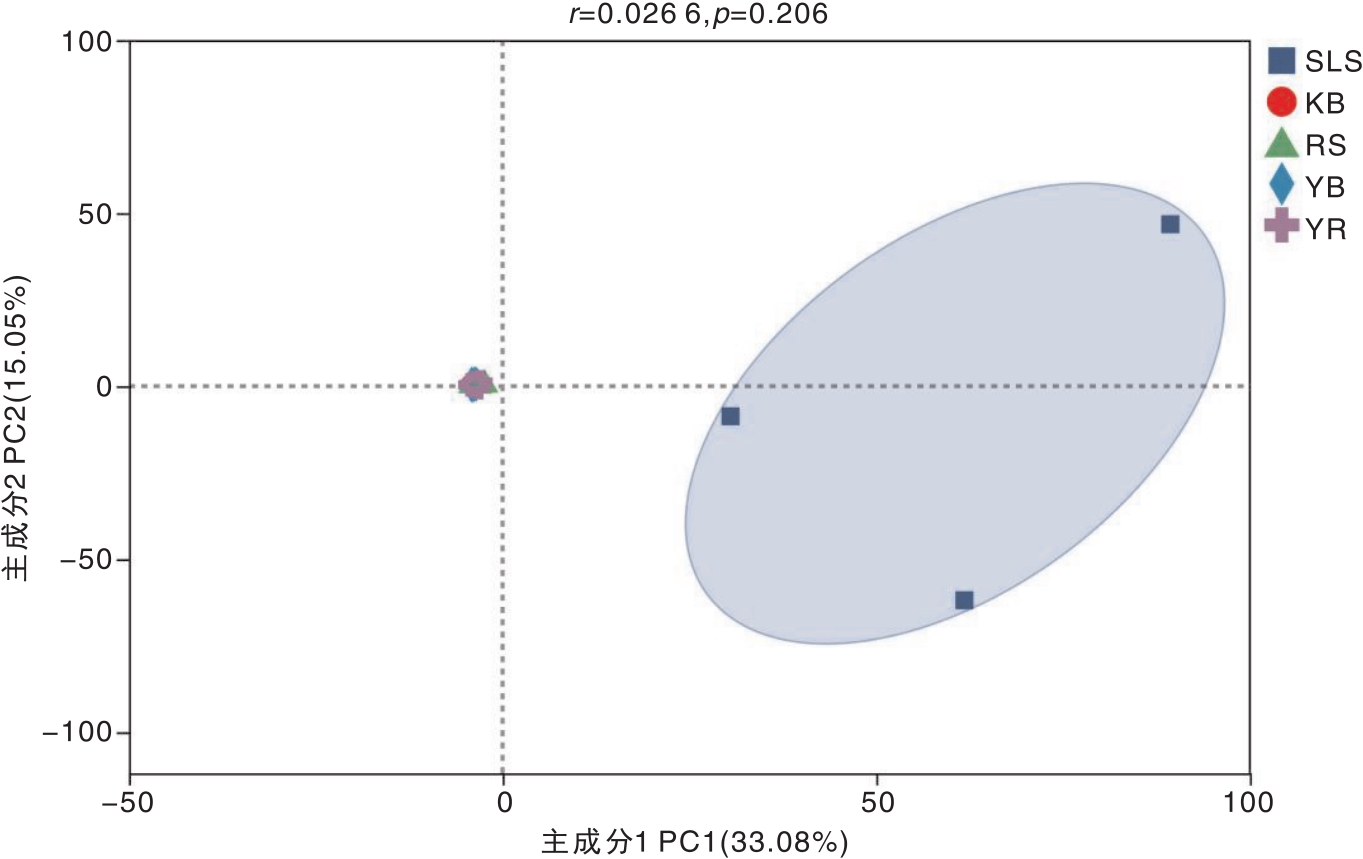
Fig.2 Principal component analysis of microbial communities at the genus level from different feed groups and sand-filtered seawater group SLS, Sand-filtered seawater group.
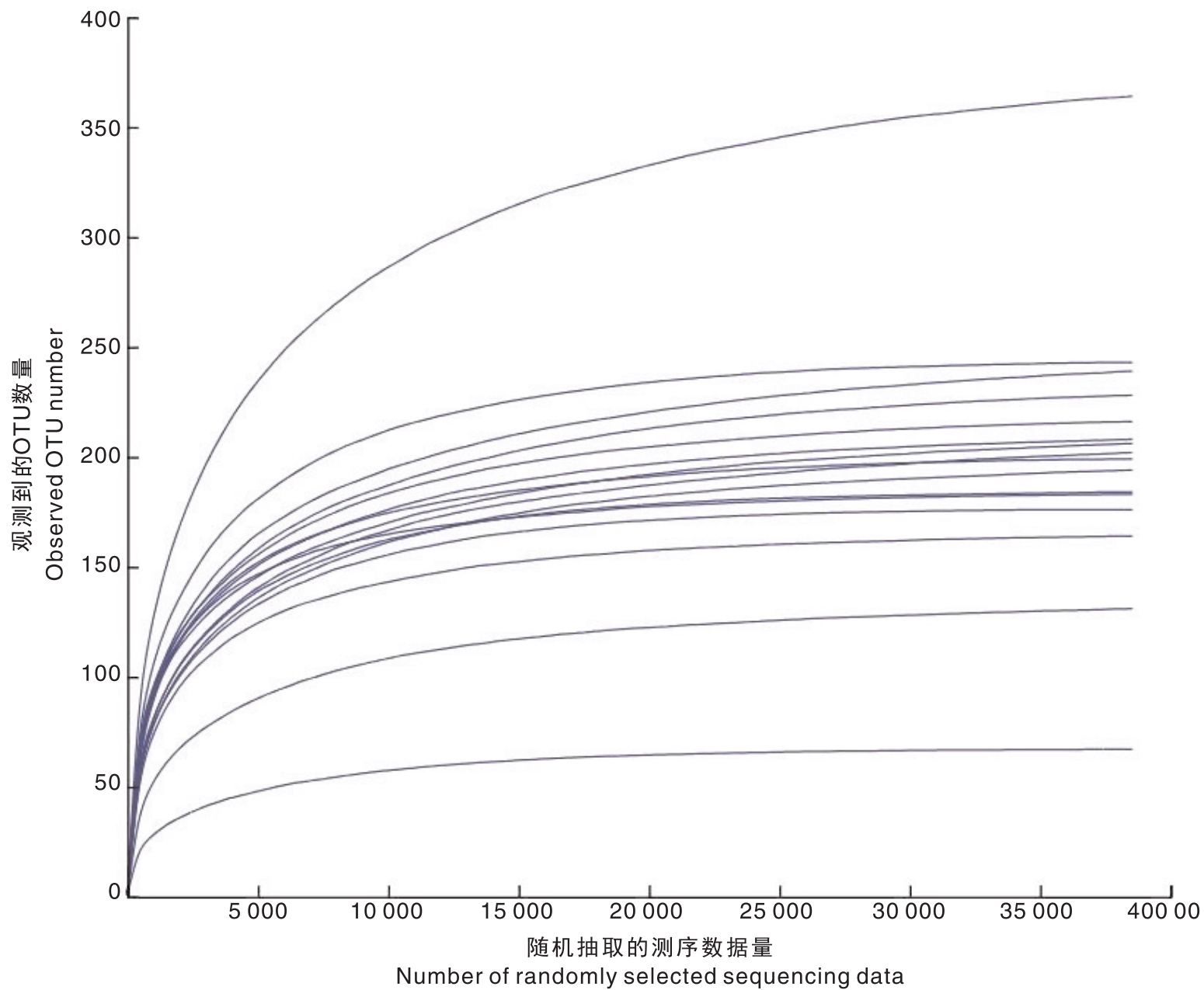
Fig.3 Rarefaction curves of the observed OTU number at the ASV level for the gut microorganisms of juvenile Litopenaeus vannamei in different feed groups
| 样本 Sample | ACE指数 ACE index | Chao1指数 Chao1 index | 香农指数 Shannon index | 辛普森指数 Simpson index | 覆盖度/% Coverage/% |
|---|---|---|---|---|---|
| RS | 258.8±80.9 a | 256.4±78.5 a | 3.5±0.3 a | 0.10±0.01 a | 99.95±0.02 a |
| YB | 176.0±35.0 a | 175.6±34.4 a | 3.2±0.4 a | 0.10±0.01 a | 99.98±0.01 a |
| YR | 198.9±12.0 a | 199.0±12.6 a | 3.3±0.4 a | 0.10±0.10 a | 99.98±0.02 a |
| KB | 183.9±84.7 a | 182.9±83.7 a | 2.9±0.9 a | 0.20±0.20 a | 99.98±0.02 a |
Table 4 Statistics of intestinal microbial α diversity indices of juvenile Litopenaeus vannamei in different feed groups(n=4)
| 样本 Sample | ACE指数 ACE index | Chao1指数 Chao1 index | 香农指数 Shannon index | 辛普森指数 Simpson index | 覆盖度/% Coverage/% |
|---|---|---|---|---|---|
| RS | 258.8±80.9 a | 256.4±78.5 a | 3.5±0.3 a | 0.10±0.01 a | 99.95±0.02 a |
| YB | 176.0±35.0 a | 175.6±34.4 a | 3.2±0.4 a | 0.10±0.01 a | 99.98±0.01 a |
| YR | 198.9±12.0 a | 199.0±12.6 a | 3.3±0.4 a | 0.10±0.10 a | 99.98±0.02 a |
| KB | 183.9±84.7 a | 182.9±83.7 a | 2.9±0.9 a | 0.20±0.20 a | 99.98±0.02 a |
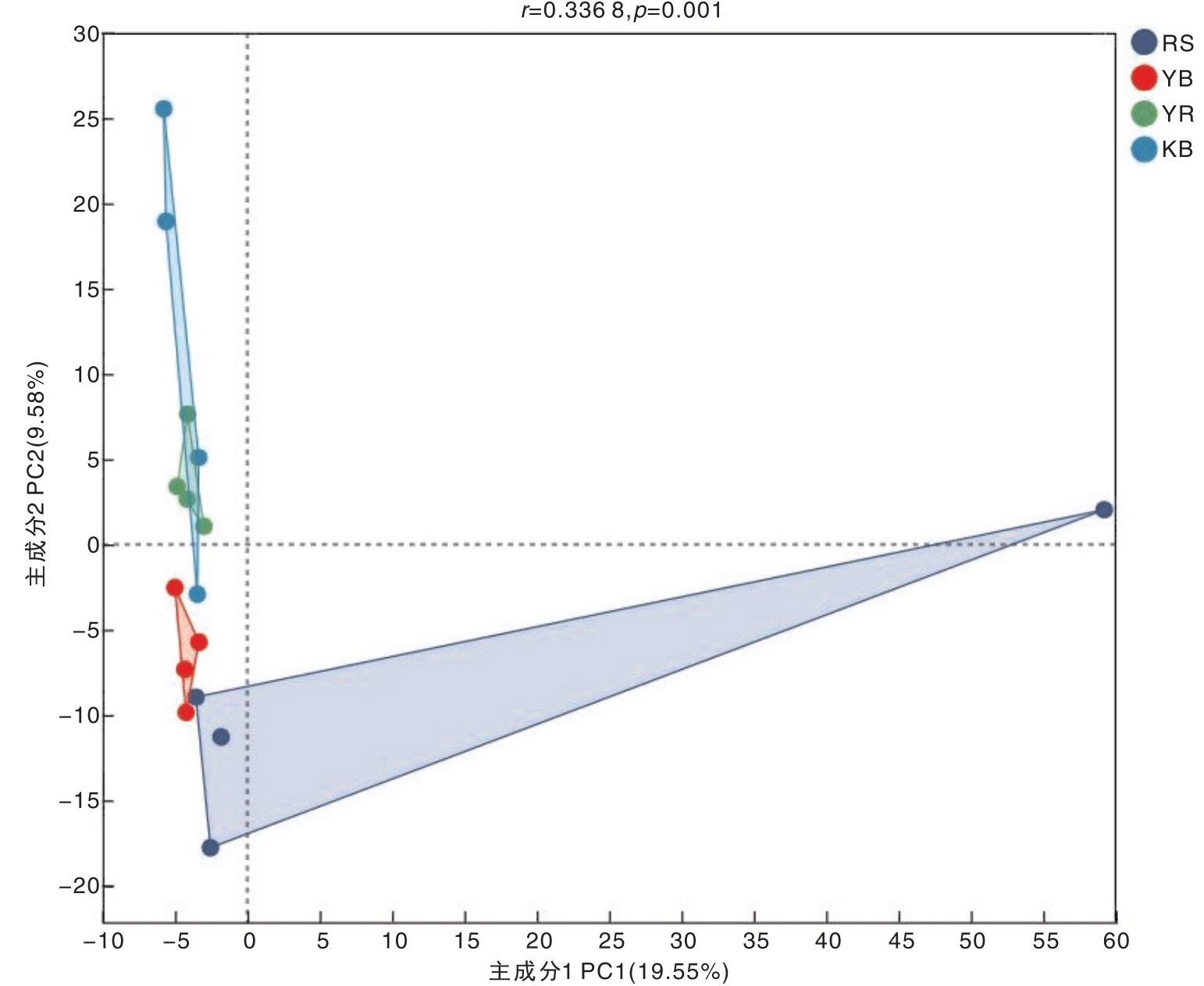
Fig.4 Principal component analysis of gut microorganisms of juvenile Litopenaeus vannamei in different feed groups
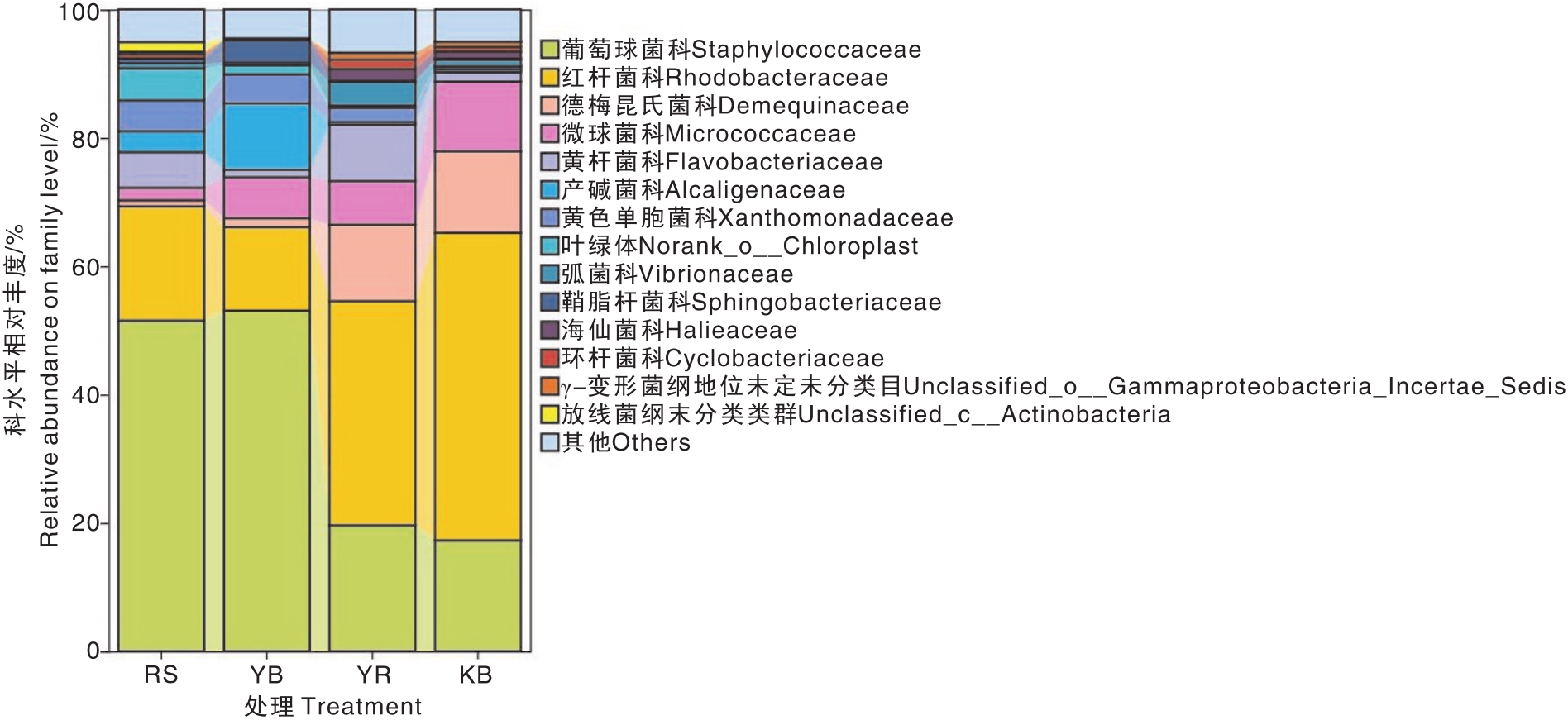
Fig.5 Relative abundance of intestinal flora of juvenile Litopenaeus vannamei in different feed groups
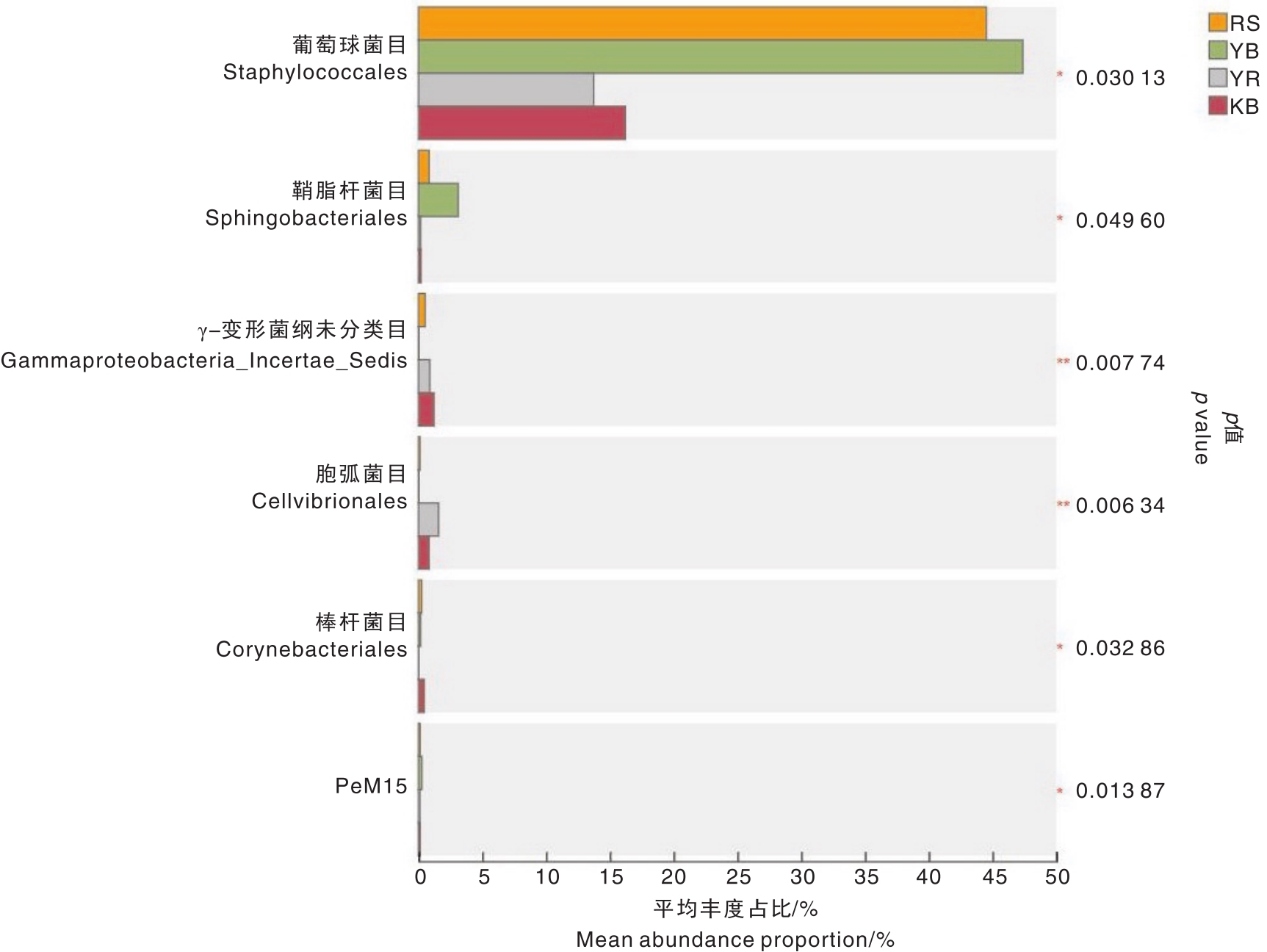
Fig.6 Significance tests of differences in intestinal bacterial communities among different feed groups for juvenile Litopenaeus vannamei
| [1] | 岳冬冬, 李欣童, 李梦龙. 中国对虾类产品进口贸易现状与对策建议[J]. 渔业信息与战略, 2024, 39(2): 83-90. |
| Yue D D, LI X T, LI M L. Current situation and price competitiveness of prawn products import trade in China[J]. Fishery Information & Strategy, 2024, 39(2): 83-90. | |
| [2] | 张美玲. 大棚土池南美白对虾虾苗标粗培育试验[J]. 水产养殖, 2025, 46(1): 56-58. |
| Zhang M L. Experiment on coarse cultivation of Penaeus vannamei seedlings in greenhouse soil pond[J]. Journal of Aquaculture, 2025, 46(1): 56-58. | |
| [3] | Anwar A Zainuddin, Djawad M I, et al. The effects of fermented raintree (Samanea saman) seed meal substitution in feed the digestive enzyme activity of Pacific white shrimp Litopenaeus vannamei[J]. IOP Conference Series: Earth and Environmental Science, 2024, 1410(1): 012018. |
| [4] | 陈娟, 刘军, 张云鹏, 等. 微生物降解菜籽粕中抗营养因子的研究[J]. 粮食与饲料工业, 2010(7): 40-42. |
| Chen J, Liu J, Zhang Y P, et al. Microbial degradation of anti-nutrition factors contained in rapeseed meal[J]. Cereal & Feed Industry, 2010(7): 40-42. | |
| [5] | 王雪良. 酵母β-葡聚糖对中华绒螯蟹免疫功能的影响[D]. 苏州: 苏州大学, 2008. |
| Wang X L. Effects of yeast β-glucan on immune function of Eriocheir sinensis[D]. Suzhou: Soochow University, 2008. | |
| [6] | 张国桃, 于馨, 潘鲁青. 复合益生菌发酵饲料工艺优化与饲喂对虾效果的研究[J]. 渔业科学进展, 2025, 46(3): 202-211. |
| Zhang G T, Yu X, Pan L Q. Optimization process of compound probiotic fermented feed and feeding effect on shrimp[J]. Progress in Fishery Sciences, 2025, 46(3): 202-211. | |
| [7] | 任秦, 齐飞, 蔡琳雅, 等. 发酵饲料在水产养殖中的应用研究进展[J]. 饲料工业, 2025, 46(9): 62-68. |
| Ren Q, Qi F, Cai L Y, et al. Research progress on application of fermented feed in aquaculture[J]. Feed Industry, 2025, 46(9): 62-68. | |
| [8] | Missotten J A, Michiels J, Degroote J, et al. Fermented liquid feed for pigs: an ancient technique for the future[J]. Journal of Animal Science and Biotechnology, 2015, 6(1): 4. |
| [9] | 沙玉杰. 乳酸菌对凡纳滨对虾益生机理的研究[D]. 青岛: 中国科学院研究生院(海洋研究所), 2016. |
| Sha Y J. Studies on probiotic mechanism of lactic acid bacteria in Litopenaeus vannamei[D]. Qingdao: Graduate University of Chinese Academy of Sciences (Institute of Oceanology), 2016. | |
| [10] | 闫亚楠, 刘艳玲, 翁红波, 等. 发酵饲料在南美白对虾养殖中的应用[J]. 水产养殖, 2021, 42(1): 9-13. |
| Yan Y N, Liu Y L, Weng H B, et al. Application of fermentation feed in the culture of Penaeus vannamei[J]. Journal of Aquaculture, 2021, 42(1): 9-13. | |
| [11] | da Silva B C, do Nascimento Vieira F, Mouriño J L P, et al. Salts of organic acids selection by multiple characteristics for marine shrimp nutrition[J]. Aquaculture, 2013, 384: 104-110. |
| [12] | 陈伟军, 陈铭钒, 李栋, 等. 饲料中添加丁酸梭菌对珍珠龙胆石斑鱼生长性能以及肠道抗氧化能力、菌群及代谢的影响[J]. 动物营养学报, 2025, 37(4): 2558-2575. |
| Chen W J, Chen M F, Li D, et al. Effects of dietary Clostridium butyricum addition on growth performance, intestinal antioxidant capacity, microbiota and metabolism of hybrid grouper[J]. Chinese Journal of Animal Nutrition, 2025, 37(4): 2558-2575. | |
| [13] | 袁春营, 孟阳, 毕建才, 等. 发酵饲料对南美白对虾消化酶活性与肠道菌群的影响[J]. 饲料工业, 2018, 39(24): 24-28. |
| Yuan C Y, Meng Y, Bi J C, et al. Effects of fermented feed on digestive enzyme activities and intestinal microflora of Penaeus vannamei[J]. Feed Industry, 2018, 39(24): 24-28. | |
| [14] | Jiang K, Tang B, Wang Q, et al. The bio-processing of soybean dregs by solid state fermentation using a poly γ-glutamic acid producing strain and its effect as feed additive[J]. Bioresource Technology, 2019, 291: 121841. |
| [15] | 宣秋希, 乔琳, 侯晓林, 等. 固态生料发酵棉籽粕菌种筛选及发酵工艺的研究[J]. 动物营养学报, 2022, 34(5): 3376-3391. |
| Xuan Q X, Qiao L, Hou X L, et al. Screening of strains for solid-state fermentation of raw cottonseed meal and study on fermentation technology[J]. Chinese Journal of Animal Nutrition, 2022, 34(5): 3376-3391. | |
| [16] | Foysal M J, Nguyen T T T, Chaklader M R, et al. Marked variations in gut microbiota and some innate immune responses of fresh water crayfish, marron (Cherax cainii, Austin 2002) fed dietary supplementation of Clostridium butyricum[J]. PeerJ, 2019, 7: e7553. |
| [17] | Dong P S, Guo H P, Huang L, et al. Glucose addition improves the culture performance of Pacific white shrimp by regulating the assembly of Rhodobacteraceae taxa in gut bacterial community[J]. Aquaculture, 2023, 567: 739254. |
| [18] | Henriksen N N S E, Lindqvist L L, Wibowo M, et al. Role is in the eye of the beholder: the multiple functions of the antibacterial compound tropodithietic acid produced by marine Rhodobacteraceae[J]. FEMS Microbiology Reviews, 2022, 46(3): fuac007. |
| [19] | 宋立立, 张晨旭, 张连水. 枯草芽孢杆菌在发酵饲料中的应用研究进展[J]. 中国饲料, 2021(9): 17-21. |
| Song L L, Zhang C X, Zhang L S. Research progress on application of Bacillus subtilis in fermented feed[J]. China Feed, 2021(9): 17-21. | |
| [20] | Gao X X, Zhao J X, Zhang H, et al. Modulation of gut health using probiotics: the role of probiotic effector molecules[J]. Journal of Future Foods, 2022, 2(1): 1-12. |
| [21] | 巩华, 赖迎迢, 江小燕, 等. 使用发酵豆粕对池塘养殖南美白对虾的生产效果考察[J]. 广东饲料, 2024, 33(9): 27-30. |
| Gong H, Lai Y T, Jiang X Y, et al. Production effect of fermented soybean meal on pond cultured south American white shrimp[J]. Guangdong Feed, 2024, 33(9): 27-30. | |
| [22] | 韩旭凯. 一株饲用枯草芽孢杆菌的体外研究[D]. 上海: 华东理工大学, 2020. |
| Han X K. In vitro study on a strain of Bacillus subtilis for feeding[D]. Shanghai: East China University of Science and Technology, 2020. | |
| [23] | Han B, Long W Q, He J Y, et al. Effects of dietary Bacillus licheniformis on growth performance, immunological parameters, intestinal morphology and resistance of juvenile Nile tilapia (Oreochromis niloticus) to challenge infections[J]. Fish & Shellfish Immunology, 2015, 46(2): 225-231. |
| [24] | 高繁, 干恩磊, 刘巍, 等. 凡纳滨对虾肠道红杆菌科细菌富集碳源筛选及其定向分离[J]. 微生物学报, 2022, 62(5): 1805-1818. |
| GAO F, GAN E L, LIU W, et al. Screening of carbon sources for enrichment and directional isolation of Rhodobacteraceae from the gut of Litopenaeus vannamei[J]. Acta Microbiologica Sinica, 2022, 62(5): 1805-1818. | |
| [25] | Cantillo García K, Calderón Duran O, Acosta Pérez T, et al. A rare case of meningitis caused by Alcaligenes faecalis in an immunocompetent patient[J]. Case Reports in Medicine, 2022: 1559360. |
| [1] | ZHANG Ruonan, MEN Xiaoming, QIN Kaipeng, WANG Binbin, WU Jie, DING Xiangbin, XU Ziwei, QI Keke. Comparative study on growth performance, carcass quality, meat performance and profitability of different crossbreed combinations of Lvjiahei pigs [J]. Acta Agriculturae Zhejiangensis, 2025, 37(6): 1203-1211. |
| [2] | LI Fei, SU Tiantian, SU Kangjie, XU Ke, MA Li, LIU Ziming. Effects of Spirulina platensis and Haematococcus pluvialis on the growth performance, antioxidant enzymes, phosphatase, and heat shock protein of zebrafish (Danio rerio) [J]. Acta Agriculturae Zhejiangensis, 2024, 36(7): 1511-1518. |
| [3] | DONG Biao, JI Rongchao, ZHANG Gansheng, WANG Jian. Study on correlation of polymorphism of A-FABP gene exon 2 with growth performance and meat quality in Muscovy duck [J]. Acta Agriculturae Zhejiangensis, 2024, 36(11): 2456-2464. |
| [4] | XIA Lunbin, MA Longlong, QIAO Deliang, HE Yanfei, JIANG Ping. Effects of Hyriopsis cumingii polysaccharides on growth performance, antioxidant activity and immune function in growing broiler [J]. Acta Agriculturae Zhejiangensis, 2023, 35(3): 547-555. |
| [5] | LI Hongyi, ZHOU Runsheng, LIANG Xiaoling, ZHANG Chuyue, LYU Qixin, YANG Changhua, ZHANG Mao. Effect of dietary calcium and phosphorus level on Magang geese growth performance and liver gene expression [J]. Acta Agriculturae Zhejiangensis, 2023, 35(11): 2533-2542. |
| [6] | AN Yawen, YANG Xiaodong, GAO Zhixiong, GUO Shaoqian, GAO Aiwu, YANG Jinli, WANG Hairong. Effects of adding Sophora alopecuroides to high grain diet on growth and serum biochemical indexes of lambs [J]. Acta Agriculturae Zhejiangensis, 2022, 34(5): 908-914. |
| [7] | WU Tao, WEI Yuming, JIANG Xiaofan, HUANG Jie, YANG Farong, CHEN Guoshun, CAI Yuan, JIAO Ting, ZHAO Shenguo. Effects of Chenopodium quinoa in diets on growth performance, slaughter performance, organ index and intestinal morphology of Luhua chickens [J]. Acta Agriculturae Zhejiangensis, 2022, 34(2): 255-265. |
| [8] | CAI Yilong, ZHANG Libing, HU Gaoyu, XIAO Guoqiang, CAI Jingbo, ZHANG Xiang. Effects of different diets on growth performance and environmental water quality of Scylla paramamosain cultured in carb apartment [J]. Acta Agriculturae Zhejiangensis, 2022, 34(11): 2404-2415. |
| [9] | JIANG Xiaofan, WU Tao, WEI Yuming, YANG Farong, CHEN Guoshun, JIAO Ting, CAI Yuan, ZHAO Shengguo. Effects of dietary oregano essential oil on growth performance, slaughter performance, organ indexes and intestinal morphology of Luhua chickens [J]. Acta Agriculturae Zhejiangensis, 2022, 34(1): 41-49. |
| [10] | LIU Jiangying, ZHU Jianjin, JIANG Rong, LIU Ziwei. Effect of multi-strain co-fermented feed on anti-Salmonella infection in broilers [J]. , 2019, 31(2): 229-234. |
| [11] | LIU Hong\|lu, FAN Lei, DAI Xi\|xi, ZHANG Fei\|yan, PAN Kang\|cheng*. Effects of Saccharomyces cerevisiae selenium and Clostridium butyricum additive on growth, antioxidant ability and intestinal microflora#br# [J]. , 2015, 27(9): 1529-. |
| [12] | ZHOU Fan1, WANG Ya\|qin2, LIN Ling3, MA Wen\|jun1, DING Xue\|yan1,*, HE Feng1, XUE Hui\|li1. Effects of dietary protein levels on growth performance and digestive enzyme activities of Chinese soft\|shelled turtle Pelodiscus sinensis juvenile [J]. , 2014, 26(6): 1442-. |
| [13] | CHEN Shao\|meng;LU Fu\|zeng;*;HUA Wei\|dong;XYU Ru\|hai;CHU Xiao\|hong;DAI Li\|he;HU Jin\|ping;SONG Wei\|long. Effect of spraying Chinese herbal medicine in the pigpen on the diarrhea occurrence of early weanling piglets [J]. , 2013, 25(6): 0-1227. |
| [14] | ZHANG Yong-jing;XU Wei-na;LIU Wen-bin*;LI Gui-feng;XIA Wei;SHAO Xian-ping. Effects of dietary Pb on growth performance and enzyme activities of Jian carp [J]. , 2012, 24(2): 0-227. |
| [15] | WEN Jing;SUN Jian-an;ZHOU Xu-xia;LI Wei-fen;*. Effects of Enterococcus faecium on growth performance, immune and antioxidant function of piglets [J]. , 2011, 23(1): 70-73. |
| Viewed | ||||||
|
Full text |
|
|||||
|
Abstract |
|
|||||

