浙江农业学报 ›› 2026, Vol. 38 ›› Issue (3): 460-470.DOI: 10.3969/j.issn.1004-1524.20250230
长三角地区奶牛泌乳持续力的遗传参数及其与生产繁殖性状的遗传相关性
李天秀1,2( ), 卢徐斌2,3, 杨章平2,3, 肖卫明2, 周福振2, 董新星1, 尹彤2,*(), 严达伟1,*()
- 1.
云南农业大学 动物科学技术学院 云南 昆明 650201
2.浙江省奶牛遗传改良与乳品质研究重点实验室 浙江 温州 325000
3.扬州大学 动物科学与技术学院 江苏 扬州 225009
-
收稿日期:2025-03-24出版日期:2026-03-25发布日期:2026-04-17 -
作者简介:李天秀,主要从事奶牛遗传育种研究。E-mail:2668684815@qq.com -
通讯作者:*尹彤,E-mail:lizyincast@gmail.com;严达伟,E-mail:1302648630@qq.com -
基金资助:浙江省温州市泰顺县农业科技项目(2024TSXM0046)
Estimation of genetic parameters for lactation persistency in dairy cows in the Yangtze River Delta region and analysis of its genetic correlations with production and fertility traits
LI Tianxiu1,2(), LU Xubin2,3, YANG Zhangping2,3, XIAO Weiming2, ZHOU Fuzhen2, DONG Xinxing1, YIN Tong2,*(), YAN Dawei1,*()
- 1.
Faculty of Animal Science and Technology ,Yunnan Agricultural University Kunming 650201, China
2.Key Laboratory of Dairy Cattle Genetic Improvement and Milk Quality Research ,Zhejiang Province Wenzhou 325000, Zhejiang, China
3.College of Animal Science and Technology ,Yangzhou University Yangzhou 225009, Jiangsu, China
-
Received:2025-03-24Published:2026-03-25Online:2026-04-17

摘要:
本研究旨在探究长三角地区头胎奶牛305 d产奶量和泌乳持续力的遗传参数,以及泌乳持续力与305 d产奶量、青年牛首配受孕率和成年母牛首配受孕率的遗传相关性。采用2个非参数模型、3个参数模型拟合泌乳曲线,预测305 d产奶量,计算泌乳持续力。利用单性状动物模型对头胎奶牛的日产奶量、305 d产奶量、泌乳持续力和繁殖性状进行方差组分估计;利用双性状模型估计泌乳持续力与305 d产奶量、繁殖性状的遗传相关性。研究结果显示:移动均值的泌乳曲线拟合效果最佳;日产奶量(泌乳天数为5~305 d)的遗传力为0.156~0.465;不同拟合模型的305 d产奶量遗传力为0.405~0.437,泌乳持续力的遗传力为0.113~0.238;青年牛首配受孕率和成年母牛首配受孕率的遗传力分别为0.067±0.041和0.023±0.032。泌乳持续力与305 d产奶量、青年牛首配受孕率、成年母牛首配受孕率之间的遗传相关系数分别为0.318~0.808、-0.241~0.408和0.118~0.721;305 d产奶量、成年母牛首配受孕率与泌乳持续力均呈正遗传相关。结果可为奶牛繁殖性能的遗传改良提供参考,为选育优质高产、高繁殖力的奶牛提供方向。
中图分类号:
引用本文
李天秀, 卢徐斌, 杨章平, 肖卫明, 周福振, 董新星, 尹彤, 严达伟. 长三角地区奶牛泌乳持续力的遗传参数及其与生产繁殖性状的遗传相关性[J]. 浙江农业学报, 2026, 38(3): 460-470.
LI Tianxiu, LU Xubin, YANG Zhangping, XIAO Weiming, ZHOU Fuzhen, DONG Xinxing, YIN Tong, YAN Dawei. Estimation of genetic parameters for lactation persistency in dairy cows in the Yangtze River Delta region and analysis of its genetic correlations with production and fertility traits[J]. Acta Agriculturae Zhejiangensis, 2026, 38(3): 460-470.
| 牧场 Farm | 样本数 Number of samples | 日产奶量/(kg·d-1) Daily milk yield/(kg·d-1) | 最大值/(kg·d-1) Maximum/(kg·d-1) | 最小值/(kg·d-1) Minimum/(kg·d-1) |
|---|---|---|---|---|
| 1 | 229 797 | 32.26±6.74 | 76.72 | 2.01 |
| 2 | 73 627 | 30.74±7.90 | 79.97 | 2.20 |
| 3 | 72 210 | 31.89±6.87 | 78.75 | 2.80 |
| 4 | 66 582 | 36.62±7.86 | 65.33 | 3.12 |
| 合计Total | 442 216 | 32.60±7.36 | 79.97 | 2.01 |
表1 初产牛日产奶量的描述性统计
Table 1 Descriptive statistics of daily milk yield in the initial lactation period
| 牧场 Farm | 样本数 Number of samples | 日产奶量/(kg·d-1) Daily milk yield/(kg·d-1) | 最大值/(kg·d-1) Maximum/(kg·d-1) | 最小值/(kg·d-1) Minimum/(kg·d-1) |
|---|---|---|---|---|
| 1 | 229 797 | 32.26±6.74 | 76.72 | 2.01 |
| 2 | 73 627 | 30.74±7.90 | 79.97 | 2.20 |
| 3 | 72 210 | 31.89±6.87 | 78.75 | 2.80 |
| 4 | 66 582 | 36.62±7.86 | 65.33 | 3.12 |
| 合计Total | 442 216 | 32.60±7.36 | 79.97 | 2.01 |
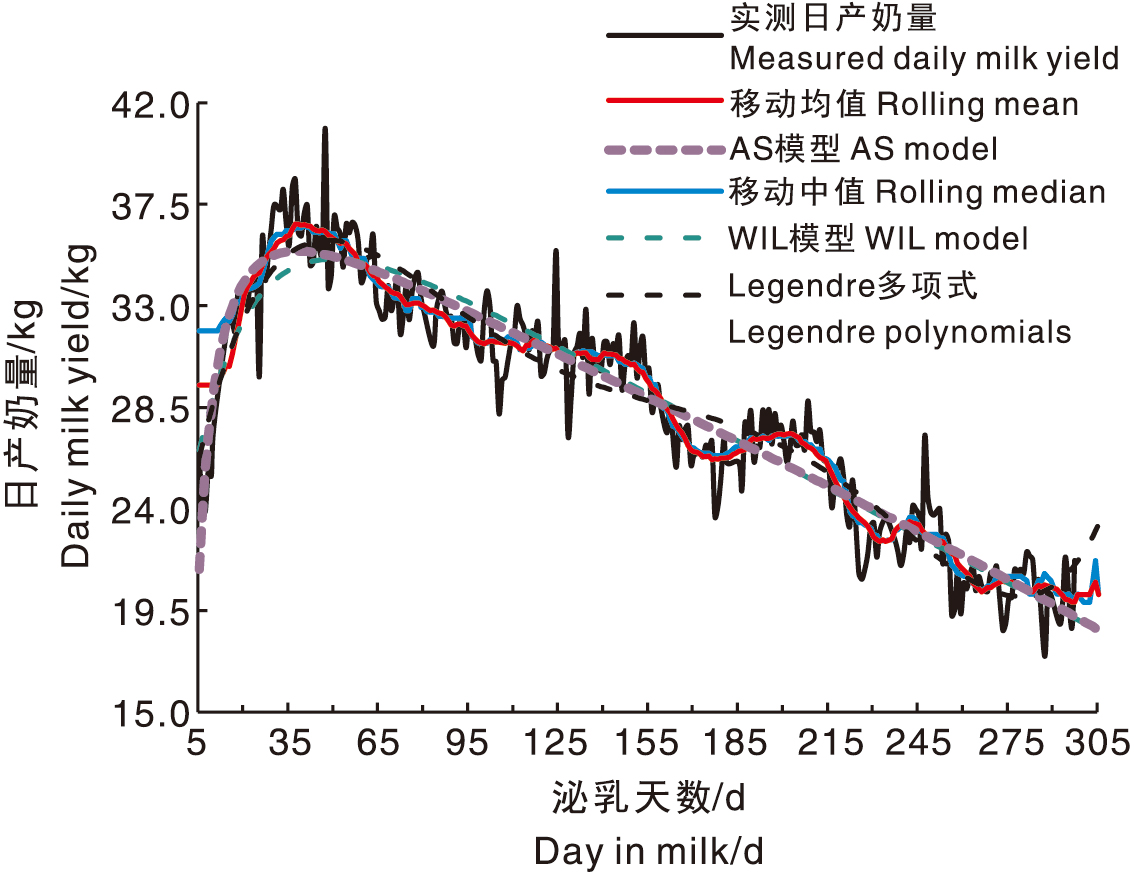
图1 不同模型拟合的泌乳曲线 WIL,Wilmink;AS,Ali and Schaeffer。下同。
Fig.1 Lactation curves fitted by different models WIL, Wilmink; AS, Ali and Schaeffer. The same as below.
| 类型 Type | 模型 Model | 决定系数 R2 | 准确性 Accuracy | 均方误差 Mean square error |
|---|---|---|---|---|
| 非参数模型 Nonparametric model | 移动中值Rolling median | 0.830 | 0.471 | 8.268 |
| 移动均值Rolling mean | 0.839 | 0.486 | 7.796 | |
| 参数模型 Parametric model | Legendre多项式Legendre polynomials | 0.812 | 0.446 | 9.118 |
| AS模型AS model | 0.798 | 0.425 | 9.957 | |
| WIL模型WIL model | 0.755 | 0.386 | 11.715 |
表2 不同模型对头胎奶牛泌乳曲线的拟合效果
Table 2 Fitting effects of different models on the lactation curve of primiparous dairy cows
| 类型 Type | 模型 Model | 决定系数 R2 | 准确性 Accuracy | 均方误差 Mean square error |
|---|---|---|---|---|
| 非参数模型 Nonparametric model | 移动中值Rolling median | 0.830 | 0.471 | 8.268 |
| 移动均值Rolling mean | 0.839 | 0.486 | 7.796 | |
| 参数模型 Parametric model | Legendre多项式Legendre polynomials | 0.812 | 0.446 | 9.118 |
| AS模型AS model | 0.798 | 0.425 | 9.957 | |
| WIL模型WIL model | 0.755 | 0.386 | 11.715 |
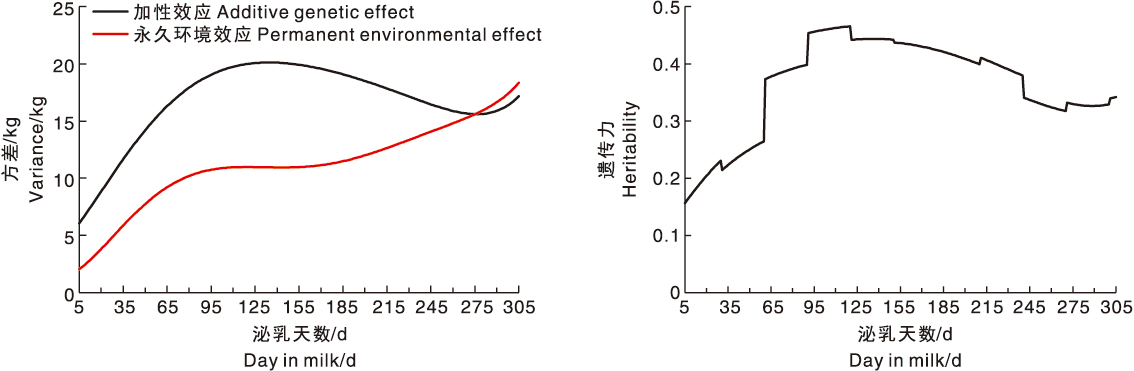
图2 日产奶量方差组分和遗传力随泌乳天数的变化
Fig.2 Changes in variance components of daily milk yield and heritability along with day in milk
| 类型 Type | 模型 Model | 305 d产奶量/kg 305-day milk yield/kg | 遗传力 Heritability |
|---|---|---|---|
| 非参数模型 Nonparametric model | 移动中值Rolling median | 9 951.552±1 716.171 | 0.412±0.112 |
| 移动均值Rolling mean | 9 925.346±1 681.566 | 0.405±0.111 | |
| 参数模型 Parametric model | Legendre多项式Legendre polynomials | 9 909.985±1 692.761 | 0.437±0.114 |
| AS模型AS model | 9 901.119±1 691.612 | 0.410±0.111 | |
| WIL模型WIL model | 9 900.558±1 683.969 | 0.427±0.113 |
表3 不同模型估计的305 d产奶量遗传力
Table 3 Heritabilities of 305-day milk yield predicted by different models
| 类型 Type | 模型 Model | 305 d产奶量/kg 305-day milk yield/kg | 遗传力 Heritability |
|---|---|---|---|
| 非参数模型 Nonparametric model | 移动中值Rolling median | 9 951.552±1 716.171 | 0.412±0.112 |
| 移动均值Rolling mean | 9 925.346±1 681.566 | 0.405±0.111 | |
| 参数模型 Parametric model | Legendre多项式Legendre polynomials | 9 909.985±1 692.761 | 0.437±0.114 |
| AS模型AS model | 9 901.119±1 691.612 | 0.410±0.111 | |
| WIL模型WIL model | 9 900.558±1 683.969 | 0.427±0.113 |
| 模型 Model | 移动中值 Rolling median | 移动均值 Rolling mean | Legendre多项式 Legendre polynomials | AS模型 AS model | WIL模型 WIL model |
|---|---|---|---|---|---|
| 移动中值Rolling median | 0.999±0.001 | 0.998±0.022 | 0.999±0.001 | 0.999±0.020 | |
| 移动均值Rolling mean | 0.999±0.001 | 0.998±0.026 | 0.999±0.020 | 0.999±0.020 | |
| Legendre多项式Legendre polynomials | 0.985±0.004 | 0.985±0.004 | 0.998±0.022 | 0.998±0.027 | |
| AS模型AS model | 0.994±0.002 | 0.994±0.002 | 0.977±0.005 | 0.999±0.020 | |
| WIL模型WIL model | 0.996±0.002 | 0.996±0.002 | 0.980±0.004 | 0.993±0.003 |
表4 不同模型305 d产奶量间的遗传相关系数与表型相关系数
Table 4 Genetic and phenotypic correlation coefficients of 305-day milk yield predicted by different models
| 模型 Model | 移动中值 Rolling median | 移动均值 Rolling mean | Legendre多项式 Legendre polynomials | AS模型 AS model | WIL模型 WIL model |
|---|---|---|---|---|---|
| 移动中值Rolling median | 0.999±0.001 | 0.998±0.022 | 0.999±0.001 | 0.999±0.020 | |
| 移动均值Rolling mean | 0.999±0.001 | 0.998±0.026 | 0.999±0.020 | 0.999±0.020 | |
| Legendre多项式Legendre polynomials | 0.985±0.004 | 0.985±0.004 | 0.998±0.022 | 0.998±0.027 | |
| AS模型AS model | 0.994±0.002 | 0.994±0.002 | 0.977±0.005 | 0.999±0.020 | |
| WIL模型WIL model | 0.996±0.002 | 0.996±0.002 | 0.980±0.004 | 0.993±0.003 |
| 遗传力 Heritability | 移动中值 Rolling median | 移动均值 Rolling mean | Legendre多项式 Legendre polynomials | AS模型 AS model | WIL模型 WIL model |
|---|---|---|---|---|---|
| LP1 | 0.133±0.059 | 0.147±0.064 | 0.136±0.060 | 0.113±0.054 | 0.122±0.057 |
| LP2 | 0.128±0.054 | 0.129±0.056 | 0.156±0.060 | 0.139±0.058 | 0.129±0.059 |
| LP3 | 0.198±0.069 | 0.198±0.068 | 0.203±0.067 | 0.228±0.076 | 0.190±0.071 |
| LP4 | 0.168±0.066 | 0.180±0.069 | 0.125±0.059 | 0.150±0.063 | 0.158±0.065 |
| LP5 | 0.216±0.072 | 0.216±0.072 | 0.215±0.019 | 0.238±0.079 | 0.211±0.076 |
表5 不同模型泌乳持续力的遗传力
Table 5 Heritabilities of lactation persistence calculated by different models
| 遗传力 Heritability | 移动中值 Rolling median | 移动均值 Rolling mean | Legendre多项式 Legendre polynomials | AS模型 AS model | WIL模型 WIL model |
|---|---|---|---|---|---|
| LP1 | 0.133±0.059 | 0.147±0.064 | 0.136±0.060 | 0.113±0.054 | 0.122±0.057 |
| LP2 | 0.128±0.054 | 0.129±0.056 | 0.156±0.060 | 0.139±0.058 | 0.129±0.059 |
| LP3 | 0.198±0.069 | 0.198±0.068 | 0.203±0.067 | 0.228±0.076 | 0.190±0.071 |
| LP4 | 0.168±0.066 | 0.180±0.069 | 0.125±0.059 | 0.150±0.063 | 0.158±0.065 |
| LP5 | 0.216±0.072 | 0.216±0.072 | 0.215±0.019 | 0.238±0.079 | 0.211±0.076 |
| 遗传力Heritability | LP1 | LP2 | LP3 | LP4 | LP5 |
|---|---|---|---|---|---|
| LP1 | 0.979±0.260 | 0.888±0.276 | 0.999±0.146 | 0.871±0.252 | |
| LP2 | 0.797±0.013 | 0.991±0.177 | 0.999±0.147 | 0.974±0.228 | |
| LP3 | 0.620±0.018 | 0.877±0.011 | 0.905±0.207 | 0.999±0.070 | |
| LP4 | 0.895±0.009 | 0.721±0.015 | 0.695±0.016 | 0.896±0.317 | |
| LP5 | 0.574±0.018 | 0.849±0.012 | 0.993±0.003 | 0.664±0.017 |
表6 移动均值模型各泌乳持续力性状间的遗传相关性与表型相关性
Table 6 Genetic and phenotypic correlation coefficients of lactation persistence between the rolling mean model
| 遗传力Heritability | LP1 | LP2 | LP3 | LP4 | LP5 |
|---|---|---|---|---|---|
| LP1 | 0.979±0.260 | 0.888±0.276 | 0.999±0.146 | 0.871±0.252 | |
| LP2 | 0.797±0.013 | 0.991±0.177 | 0.999±0.147 | 0.974±0.228 | |
| LP3 | 0.620±0.018 | 0.877±0.011 | 0.905±0.207 | 0.999±0.070 | |
| LP4 | 0.895±0.009 | 0.721±0.015 | 0.695±0.016 | 0.896±0.317 | |
| LP5 | 0.574±0.018 | 0.849±0.012 | 0.993±0.003 | 0.664±0.017 |
| 性状 Trait | 持续力 Persistency | 移动中值 Rolling median | 移动均值 Rolling mean | Legendre多项式 Legendre polynomials | AS模型 AS model | WIL模型 WIL model |
|---|---|---|---|---|---|---|
| 305 d产奶量 305-day milk yield | LP1 | 0.599±0.310 | 0.597±0.298 | 0.497±0.284 | 0.436±0.396 | 0.318±0.486 |
| LP2 | 0.696±0.214 | 0.717±0.290 | 0.619±0.209 | 0.668±0.218 | 0.383±0.346 | |
| LP3 | 0.736±0.154 | 0.746±0.150 | 0.730±0.147 | 0.763±0.133 | 0.676±0.186 | |
| LP4 | 0.524±0.663 | 0.503±0.253 | 0.658±0.487 | 0.603±0.255 | 0.565±0.244 | |
| LP5 | 0.756±0.140 | 0.765±0.136 | 0.753±0.133 | 0.808±0.112 | 0.743±0.151 | |
| 青年牛首配受孕率 First insemination conception rate in heifers | LP1 | 0.006±0.323 | 0.009±0.318 | -0.026±0.031 | -0.201±0.309 | -0.241±0.303 |
| LP2 | 0.206±0.322 | 0.239±0.317 | 0.289±0.285 | 0.157±0.320 | -0.205±0.306 | |
| LP3 | 0.367±0.251 | 0.339±0.265 | 0.381±0.249 | 0.350±0.263 | 0.059±0.312 | |
| LP4 | -0.096±0.303 | -0.076±0.298 | -0.091±0.342 | -0.145±0.302 | -0.074±0.311 | |
| LP5 | 0.400±0.231 | 0.407±0.232 | 0.408±0.232 | 0.303±0.279 | 0.123±0.309 | |
| 成年母牛首配受孕率 First insemination conception rate in cows | LP1 | 0.575±0.264 | 0.537±0.214 | 0.254±0.383 | 0.566±0.199 | 0.391±0.312 |
| LP2 | 0.373±0.297 | 0.478±0.241 | 0.376±0.292 | 0.666±0.207 | 0.383±0.309 | |
| LP3 | 0.221±0.326 | 0.269±0.311 | 0.131±0.348 | 0.467±0.247 | 0.265±0.317 | |
| LP4 | 0.687±0.185 | 0.721±0.169 | 0.704±0.223 | 0.325±0.310 | 0.326±0.310 | |
| LP5 | 0.195±0.322 | 0.248±0.309 | 0.118±0.335 | 0.383±0.213 | 0.170±0.285 |
表7 泌乳持续力与305 d产奶量、青年牛和成年母牛首配受孕率的遗传相关系数
Table 7 Genetic correlation coefficients between lactation persistency with 305-day milk yield and first insemination conception rate in heifers and cows
| 性状 Trait | 持续力 Persistency | 移动中值 Rolling median | 移动均值 Rolling mean | Legendre多项式 Legendre polynomials | AS模型 AS model | WIL模型 WIL model |
|---|---|---|---|---|---|---|
| 305 d产奶量 305-day milk yield | LP1 | 0.599±0.310 | 0.597±0.298 | 0.497±0.284 | 0.436±0.396 | 0.318±0.486 |
| LP2 | 0.696±0.214 | 0.717±0.290 | 0.619±0.209 | 0.668±0.218 | 0.383±0.346 | |
| LP3 | 0.736±0.154 | 0.746±0.150 | 0.730±0.147 | 0.763±0.133 | 0.676±0.186 | |
| LP4 | 0.524±0.663 | 0.503±0.253 | 0.658±0.487 | 0.603±0.255 | 0.565±0.244 | |
| LP5 | 0.756±0.140 | 0.765±0.136 | 0.753±0.133 | 0.808±0.112 | 0.743±0.151 | |
| 青年牛首配受孕率 First insemination conception rate in heifers | LP1 | 0.006±0.323 | 0.009±0.318 | -0.026±0.031 | -0.201±0.309 | -0.241±0.303 |
| LP2 | 0.206±0.322 | 0.239±0.317 | 0.289±0.285 | 0.157±0.320 | -0.205±0.306 | |
| LP3 | 0.367±0.251 | 0.339±0.265 | 0.381±0.249 | 0.350±0.263 | 0.059±0.312 | |
| LP4 | -0.096±0.303 | -0.076±0.298 | -0.091±0.342 | -0.145±0.302 | -0.074±0.311 | |
| LP5 | 0.400±0.231 | 0.407±0.232 | 0.408±0.232 | 0.303±0.279 | 0.123±0.309 | |
| 成年母牛首配受孕率 First insemination conception rate in cows | LP1 | 0.575±0.264 | 0.537±0.214 | 0.254±0.383 | 0.566±0.199 | 0.391±0.312 |
| LP2 | 0.373±0.297 | 0.478±0.241 | 0.376±0.292 | 0.666±0.207 | 0.383±0.309 | |
| LP3 | 0.221±0.326 | 0.269±0.311 | 0.131±0.348 | 0.467±0.247 | 0.265±0.317 | |
| LP4 | 0.687±0.185 | 0.721±0.169 | 0.704±0.223 | 0.325±0.310 | 0.326±0.310 | |
| LP5 | 0.195±0.322 | 0.248±0.309 | 0.118±0.335 | 0.383±0.213 | 0.170±0.285 |
| [1] | WALSH S W, WILLIAMS E J, EVANS A C O. A review of the causes of poor fertility in high milk producing dairy cows[J]. Animal Reproduction Science, 2011, 123(3/4): 127-138. |
| [2] | FAUST M A, MCDANIEL B T, ROBISON O W. Genetics of reproduction in primiparous holsteins[J]. Journal of Dairy Science, 1989, 72(1): 194-201. |
| [3] | VEERKAMP R F, KOENEN E P C, DE JONG G. Genetic correlations among body condition score, yield, and fertility in first-parity cows estimated by random regression models[J]. Journal of Dairy Science, 2001, 84(10): 2327-2335. |
| [4] | ABE H, MASUDA Y, SUZUKI M. Relationships between reproductive traits of heifers and cows and yield traits for Holsteins in Japan[J]. Journal of Dairy Science, 2009, 92(8): 4055-4062. |
| [5] | BASCOM S S, YOUNG A J. A summary of the reasons why farmers cull cows[J]. Journal of Dairy Science, 1998, 81(8): 2299-2305. |
| [6] | GHIASI H, PAKDEL A, NEJATI-JAVAREMI A, et al. Genetic variance components for female fertility in Iranian Holstein cows[J]. Livestock Science, 2011, 139(3): 277-280. |
| [7] | SUN C, SU G. Comparison on models for genetic evaluation of non-return rate and success in first insemination of the Danish Holstein cows[J]. Livestock Science, 2010, 127(2/3): 205-210. |
| [8] | JAMROZIK J, FATEHI J, KISTEMAKER G J, et al. Estimates of genetic parameters for Canadian Holstein female reproduction traits[J]. Journal of Dairy Science, 2005, 88(6): 2199-2208. |
| [9] | JAMROZIK J, JANSEN G B, SCHAEFFER L R, et al. Analysis of persistency of lactation calculated from a random regression test day model[J]. Interbull Bulletin, 1998: 64-69. |
| [10] | COLE J B, NULL D J. Genetic evaluation of lactation persistency for five breeds of dairy cattle[J]. Journal of Dairy Science, 2009, 92(5): 2248-2258. |
| [11] | MUIR B L, FATEHI J, SCHAEFFER L R. Genetic relationships between persistency and reproductive performance in first-lactation Canadian Holsteins[J]. Journal of Dairy Science, 2004, 87(9): 3029-3037. |
| [12] | VERGANI A M, BAGNATO A, MASSEROLI M. Predicting bovine daily milk yield by leveraging genomic breeding values[J]. Computers and Electronics in Agriculture, 2024, 219: 108777. |
| [13] | LISEUNE A, SALAMONE M, VAN DEN POEL D, et al. Predicting the milk yield curve of dairy cows in the subsequent lactation period using deep learning[J]. Computers and Electronics in Agriculture, 2021, 180: 105904. |
| [14] | WOOD P D P. Algebraic model of the lactation curve in cattle[J]. Nature, 1967, 216(5111): 164-165. |
| [15] | MACCIOTTA N P P, VICARIO D, CAPPIO-BORLINO A. Detection of different shapes of lactation curve for milk yield in dairy cattle by empirical mathematical models[J]. Journal of Dairy Science, 2005, 88(3): 1178-1191. |
| [16] | NELDER J A. Inverse polynomials, a useful group of multi-factor response functions[J]. Biometrics, 1966, 22(1): 128-141. |
| [17] | POPPE M, VEERKAMP R F, VAN PELT M L, et al. Exploration of variance, autocorrelation, and skewness of deviations from lactation curves as resilience indicators for breeding[J]. Journal of Dairy Science, 2020, 103(2): 1667-1684. |
| [18] | KONG L N, LI J B, LI R L, et al. Estimation of 305-day milk yield from test-day records of Chinese Holstein cattle[J]. Journal of Applied Animal Research, 2018, 46(1): 791-797. |
| [19] | 栗敏杰, 任小丽, 闫磊, 等. 荷斯坦奶牛泌乳曲线拟合分析[J]. 家畜生态学报, 2020, 41(9): 34-38. |
| LI M J, REN X L, YAN L, et al. Fitting analysis of lactation curve of Holsteins[J]. Acta Ecologae Animalis Domastici, 2020, 41(9): 34-38. | |
| [20] | 毛永江, 张亚琴, 许兆君, 等. 中国荷斯坦牛泌乳曲线拟合研究[J]. 畜牧兽医学报, 2011, 42(9): 1239-1248. |
| MAO Y J, ZHANG Y Q, XU Z J, et al. Fitting of lactation curves for Chinese Holstein[J]. Acta Veterinaria et Zootechnica Sinica, 2011, 42(9): 1239-1248. | |
| [21] | 任小丽, 刘澳星, 李想, 等. 用随机回归模型估计宁夏地区荷斯坦牛头胎测定日产奶量遗传参数[J]. 中国农业科学, 2017, 50(10): 1888-1895. |
| REN X L, LIU A X, LI X, et al. Genetic parameters estimation of test day milk yield in Holstein heifers in Ningxia using a random regression test-day model[J]. Scientia Agricultura Sinica, 2017, 50(10): 1888-1895. | |
| [22] | 张健, 卢金, 杨润清. 基于随机回归模型估计奶牛产奶量的遗传参数[J]. 东北农业大学学报, 2007, 38(6): 805-808. |
| ZHANG J, LU J, YANG R Q. Estimation of genetic parameters for milk yield of cattle by random regression model[J]. Journal of Northeast Agricultural University, 2007, 38(6): 805-808. | |
| [23] | ZHANG H L, WANG A, XIAO W M, et al. Genetic parameters and genome-wide association analyses for lifetime productivity in Chinese Holstein cattle[J]. Journal of Dairy Science, 2024, 107(11): 9638-9655. |
| [24] | R: a language and environment for statistical computing[J]. Computing, 2011, 1: 12-21. |
| [25] | WIGGANS G R. Procedures for calculating lactation records[EB/OL]. [2025-03-15]. https://queries.uscdcb.com/publish/dhi/handbook/calclac.pdf. |
| [26] | ZEILEIS A, GROTHENDIECK G. zoo: S3 infrastructure for regular and irregular time series[J]. Journal of Statistical Software, 2005, 14(6): 1-27. |
| [27] | INNES D J, POT L J, SEYMOUR D J, et al. Fitting mathematical functions to extended lactation curves and forecasting late-lactation milk yields of dairy cows[J]. Journal of Dairy Science, 2024, 107(1): 342-358. |
| [28] | YAMAZAKI T, HAGIYA K, TAKEDA H, et al. Genetic correlations among female fertility, 305-day milk yield and persistency during the first three lactations of Japanese Holstein cows[J]. Livestock Science, 2014, 168: 26-31. |
| [29] | WAHINYA P K, JEYARUBAN M G, SWAN A A, et al. Genetic parameters for test-day milk yield, lactation persistency, and fertility in low-, medium-, and high-production systems in Kenya[J]. Journal of Dairy Science, 2020, 103(11): 10399-10413. |
| [30] | CARDONA-CIFUENTES D, LÓPEZ-HERRERA A, GONZÁLES-HERRERA L G, et al. Comparison of three methodologies for the genetic study of lactation persistency in Holstein cattle from Antioquia[J]. Tropical Animal Health and Production, 2021, 53(1): 179. |
| [31] | JAKOBSEN J H, MADSEN P, JENSEN J, et al. Genetic parameters for milk production and persistency for Danish holsteins estimated in random regression models using REML[J]. Journal of Dairy Science, 2002, 85(6): 1607-1616. |
| [32] | MISZTAL I, TSURUTA S, LOURENCO D, et al. Manual for BLUPF90 family of programs[EB/OL]. (2014-05-12)[2025-03-15]. https://www.researchgate.net/publication/331812692_Manual_for_BLUPF90_family_of_programs. |
| [33] | 刘灿风, 王澳, 马龙刚, 等. 宁夏地区荷斯坦牛泌乳曲线拟合及其影响因素分析[J]. 中国畜牧杂志, 2023, 59(3): 95-102. |
| LIU C F, WANG A, MA L G, et al. Fitting lactation curve of Holstein cattle in Ningxia and analysis of its influencing factors[J]. Chinese Journal of Animal Science, 2023, 59(3): 95-102. | |
| [34] | ANGELES-HERNANDEZ J C, ALBARRAN-PORTILLO B, GOMEZ GONZALEZ A V, et al. Comparison of mathematical models applied to f1 dairy sheep lactations in organic farm and environmental factors affecting lactation curve parameter[J]. Asian-Australasian Journal of Animal Sciences, 2013, 26(8): 1119-1126. |
| [35] | VAL-ARREOLA D, KEBREAB E, DIJKSTRA J, et al. Study of the lactation curve in dairy cattle on farms in central Mexico[J]. Journal of Dairy Science, 2004, 87(11): 3789-3799. |
| [36] | KHEIRABADI K. Estimates of genetic trends for daily milk yield and somatic cell score of primiparous Holstein cattle in Iran[J]. Journal of Applied Animal Research, 2019, 47(1): 467-473. |
| [37] | AERTS J, PIWCZYŃSKI DJ, GHIASI H, et al. Genetic parameters estimation of milking traits in Polish Holstein-friesians based on automatic milking system data[J]. Animals, 2021, 11(7): 1943. |
| [38] | 王磊, 张海亮, 王澳, 等. 我国南方湿热环境典型牧场奶牛泌乳性能分析[J]. 中国畜牧杂志, 2024, 60(9): 129-136. |
| WANG L, ZHANG H L, WANG A, et al. Analysis of lactation performance of dairy cows in typical pasture in hot and humid environment in southern China[J]. Chinese Journal of Animal Science, 2024, 60(9): 129-136. | |
| [39] | 刘钉钉, 卢徐斌, 赵静雯, 等. 影响江苏某牛场荷斯坦牛日产奶量和乳成分因素分析[J]. 中国牛业科学, 2022, 48(1): 1-5. |
| LIU D D, LU X B, ZHAO J W, et al. Analysis of factors affecting daily milk production and milk composition of Holstein cattle in a farm in Jiangsu[J]. China Cattle Science, 2022, 48(1): 1-5. | |
| [40] | TAMBOLI P, BHARADWAJ A, CHAURASIYA A, et al. Genetic parameters for first lactation and lifetime traits of nili-Ravi buffaloes[J]. Frontiers in Veterinary Science, 2021, 8: 557468. |
| [41] | STEFANI G, EL FARO L, SANTANA M L Jr, et al. Association of longevity with type traits, milk yield and udder health in Holstein cows[J]. Livestock Science, 2018, 218: 1-7. |
| [42] | IRANO N, BIGNARDI A B, EL FARO L, et al. Genetic association between milk yield, stayability, and mastitis in Holstein cows under tropical conditions[J]. Tropical Animal Health and Production, 2014, 46(3): 529-535. |
| [43] | GENGLER N. Persistency of lactation yields: a review[J]. Interbull Bulletin, 1996, 12: 87-96 |
| [44] | COBUCI J A, EUCLYDES R F, COSTA C N, et al. Analysis of persistency in the lactation of Holstein cows using test-day yield and random regression model[J]. Revista Brasilerira Zootecnia, 2004, 33(3): 546-554. |
| [45] | LIU A X, LUND M S, WANG Y C, et al. Variance components and correlations of female fertility traits in Chinese Holstein population[J]. Journal of Animal Science and Biotechnology, 2017, 8(1): 56. |
| [46] | 陈紫薇, 师睿, 罗汉鹏, 等. 宁夏地区荷斯坦牛青年牛繁殖性状遗传参数估计[J]. 畜牧兽医学报, 2021, 52(2): 344-351. |
| CHEN Z W, SHI R, LUO H P, et al. Estimation of genetic parameters of reproductive traits of Holstein heifers in Ningxia[J]. Acta Veterinaria et Zootechnica Sinica, 2021, 52(2): 344-351. | |
| [47] | JAMROZIK J, SCHAEFFER L R, DEKKERS J C M. Genetic evaluation of dairy cattle using test day yields and random regression model[J]. Journal of Dairy Science, 1997, 80(6): 1217-1226. |
| [48] | YAMAZAKI T, HAGIYA K, TAKEDA H, et al. Genetic correlations between milk production traits and somatic cell scores on test day within and across first and second lactations in Holstein cows[J]. Livestock Science, 2013, 152(2/3): 120-126. |
| [1] | 张悦宇, 黄美琦, 张琳, 齐颖, 李秋玲. bta-miR-146b对热应激奶牛乳腺上皮细胞乳蛋白合成信号通路的影响[J]. 浙江农业学报, 2025, 37(6): 1212-1220. |
| [2] | 向进, 王春源, 吴燕, 谭元成, 杨酸, 张依裕. 柯乐猪CRISP3基因SNP鉴定及其对繁殖性状的影响[J]. 浙江农业学报, 2024, 36(6): 1270-1278. |
| [3] | 杨存明, 刘静, 张梦华, 张晓雪, 刘桂芬, 何军敏, 毛静艺, 李雪, 唐丽, 张文静, 潘林香, 田可川, 黄锡霞. 鲁中肉羊不同生长阶段体尺体重的遗传参数估计[J]. 浙江农业学报, 2024, 36(1): 48-57. |
| [4] | 杨酸, 郭小江, 杨红文, 熊力, 李晨, 谭元成, 王春源, 张依裕. 柯乐猪PRLR基因多态性与繁殖性状的关联性[J]. 浙江农业学报, 2023, 35(3): 556-564. |
| [5] | 李娅楠, 冶文兴, 朱相德, 陈林, 徐晓锋, 张力莉. 基于LC-MS/MS技术研究稻草替代部分玉米青贮对奶牛血浆代谢产物的影响[J]. 浙江农业学报, 2023, 35(2): 266-274. |
| [6] | 李艳艳, 卜建华, 韩丽云, 王川川, 母童. 奶牛乳脂代谢关键候选基因的鉴定与功能分析[J]. 浙江农业学报, 2023, 35(12): 2794-2808. |
| [7] | 吕倩, 骆巧, 罗雪, 陈久兵, 马莉, 罗正中, 姚学萍, 余树民, 沈留红, 曹随忠. 基于高通量测序技术分析奶牛场垫沙和橡胶垫卧床中的菌群差异[J]. 浙江农业学报, 2022, 34(7): 1377-1385. |
| [8] | 杨思瑞, 杨卓, 火苗, 张洁, 张力莉, 李胜利, 徐晓锋. 荷斯坦奶牛不同群体牛舍土壤细菌菌群结构差异分析[J]. 浙江农业学报, 2022, 34(2): 275-283. |
| [9] | 沈留红, 程李杰, 尤留超, 雍康, 罗正中, 陈久兵, 骆巧, 余树民, 曹随忠. 热应激与喷淋-风扇系统对不同泌乳阶段奶牛生理和生产性能的影响[J]. 浙江农业学报, 2021, 33(9): 1602-1610. |
| [10] | 赵洪喜, 刘继兵. 宁夏部分地区奶牛球虫感染情况调查与遗传进化分析[J]. 浙江农业学报, 2021, 33(8): 1379-1384. |
| [11] | 沈留红, 钱柏霖, 尤留超, 张钺, 莘余, 吕尚揆, 肖劲邦, 余树民, 苏柘僮, 董可, 杨世林, 冯育林, 曹随忠. 白头翁皂苷B4对临床型奶牛乳房炎疗效和血清炎性因子、免疫因子的影响[J]. 浙江农业学报, 2021, 33(7): 1184-1191. |
| [12] | 吴佳, 陈朗, 姜涛, 黄国明, 李倬, 李耀东, 张丽, 刘丽霞. 奶牛CSF3基因遗传多态性筛查及其生物信息学分析[J]. 浙江农业学报, 2020, 32(6): 986-993. |
| [13] | 李秋玲, 齐颖, 王琛, 张一名, 王新妤, 尚校兰, 贾永红, 李美茹, 储明星. 热应激对中国荷斯坦牛乳腺组织基因表达及信号通路的影响[J]. 浙江农业学报, 2020, 32(5): 770-778. |
| [14] | 曾学琴, 柳陈坚, 杨雪, 李晓然. 高通量测序法检测奶牛乳房炎关联微生物群落结构及多样性[J]. 浙江农业学报, 2019, 31(9): 1437-1445. |
| [15] | 朱颍琨, 肖劲邦, 钱柏霖, 姜思汛, 尤留超, 张钺, 刘红, 马莉, 曹随忠, 余树民, 沈留红. 泌乳初期奶牛相关脂肪因子及生理生化指标与脂肪肝的相关性[J]. 浙江农业学报, 2019, 31(5): 722-729. |
| 阅读次数 | ||||||
|
全文 |
|
|||||
|
摘要 |
|
|||||

