浙江农业学报 ›› 2026, Vol. 38 ›› Issue (7): 1366-1377.DOI: 10.3969/j.issn.1004-1524.20250541
辣椒根际合成菌群的构建及其促生效果评价
姜贵武( ), 张琳, 徐伟慧*(), 王志刚
齐齐哈尔大学 生命科学与农林学院 ,黑龙江省农业微生物制剂产业化工程技术研究中心,黑龙江省农用生物制剂产业化协同创新中心,黑龙江省高浓度有机废液生物转化及产业化概念验证中心 黑龙江 齐齐哈尔 161006
-
收稿日期:2025-08-18出版日期:2026-07-25发布日期:2026-08-20 -
作者简介:姜贵武,主要从事资源利用研究。E-mail: 846678365@qq.com -
通讯作者:*徐伟慧,E-mail: xwh800206@163.com -
基金资助:黑龙江省重点研发计划(GA23B018);中国科学院科研项目
Construction of a synthetic community from the pepper rhizosphere and evaluation of its growth-promoting effects
JIANG Guiwu(), ZHANG Lin, XU Weihui*(), WANG Zhigang
Heilongjiang Provincial Engineering Technology Research Center of Agromicrobial Preparation Industrialization ,Heilongjiang Provincial Collaborative Innovation Center of Agrobiological Preparation Industrialization, Heilongjiang Provincial Concept Verification Center of High Concentration Organic Waste Liquid Biotransformation and Industrialization, College of Life Science and Agriculture and Forestry, Qiqihar University Qiqihar 161006, Heilongjiang, China
-
Received:2025-08-18Published:2026-07-25Online:2026-08-20

摘要: 辣椒(Capsicum annuum L.)生产长期受到过量施肥与土传病害的双重制约。传统化学改良剂虽常用于缓解这类问题,但长期施用易引起土壤微生态失衡及理化性质退化等次生问题。鉴于此,本研究构建了辣椒根际功能型合成菌群,并对其促生效果进行评价,旨在为该菌群在辣椒绿色生产中的应用提供理论依据。本研究以实验室前期从辣椒根际分离鉴定的12株具有固氮、溶磷、解钾及产吲哚乙酸等促生特性的植物根际促生菌为基础,基于功能互补原则,从中筛选并构建了4个合成菌群(Syncom 1~4),并通过盆栽试验系统评价了其对辣椒生长的促进作用。结果表明,Syncom 4表现出最优的促生效果。与单菌处理相比,Syncom 4形成生物膜的能力显著(p<0.01或p<0.001)增强,且菌株间无拮抗作用。该菌群促进了辣椒幼苗根毛发育,提高了植株生物量。此外,Syncom 4显著降低了根际土壤pH值和有效钾含量。16S rRNA扩增子测序结果显示,Syncom 4处理改变了辣椒根内及根际细菌的群落结构,并在辣椒根内和根际中富集了一些通常与植物促生和生物防治相关的菌属,如假单胞菌属(Pseudomonas)、肠杆菌属(Enterobacter)、芽孢杆菌属(Bacillus)、黄杆菌属(Flavobacterium)和微杆菌属(Microbacterium)等。综上,Syncom 4对辣椒幼苗具有良好的促生效果,为辣椒复合微生物肥料的开发提供了菌种资源与技术支持。
中图分类号:
引用本文
姜贵武, 张琳, 徐伟慧, 王志刚. 辣椒根际合成菌群的构建及其促生效果评价[J]. 浙江农业学报, 2026, 38(7): 1366-1377.
JIANG Guiwu, ZHANG Lin, XU Weihui, WANG Zhigang. Construction of a synthetic community from the pepper rhizosphere and evaluation of its growth-promoting effects[J]. Acta Agriculturae Zhejiangensis, 2026, 38(7): 1366-1377.
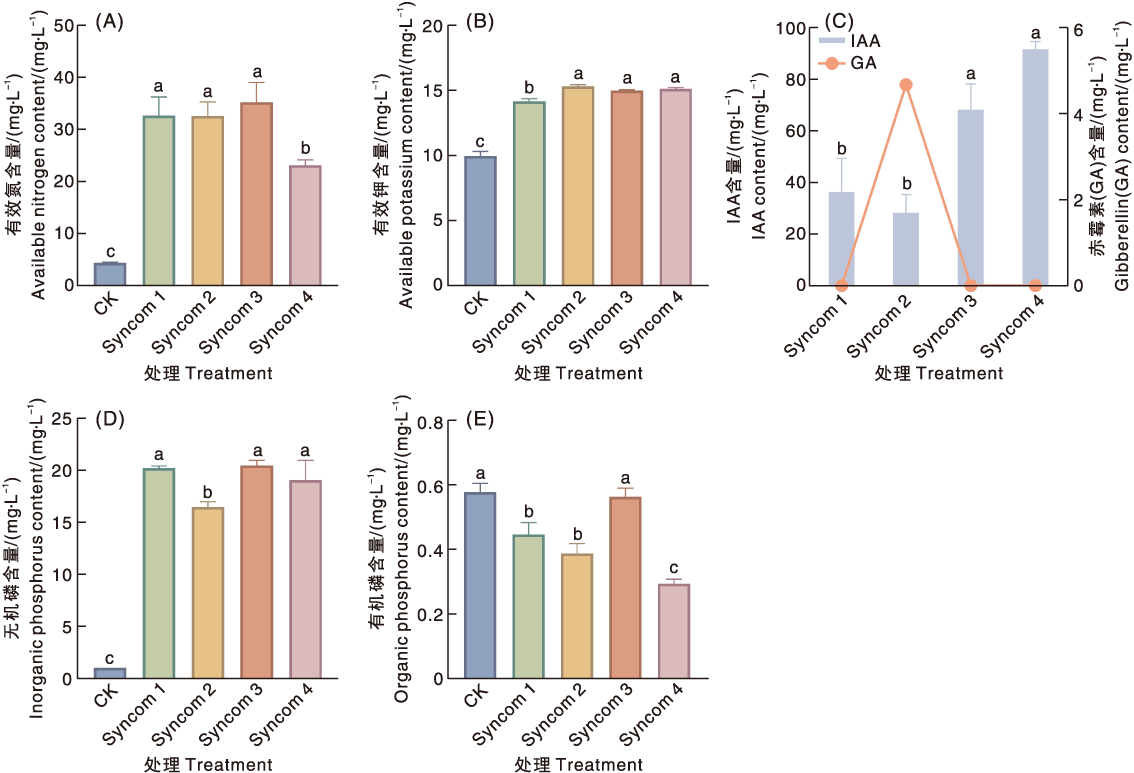
图1 合成菌群的促生能力 CK为不接任何促生菌的培养基,分别与接菌之后的培养基一同处理后,测其各项促生指标。柱上无相同小写字母表示处理之间存在显著(p<0.05)差异,图2同。
Fig.1 Growth-promoting ability of synthetic bacterial communities CK was treated with either medium without any promoting bacteria or with medium containing the bacterial inoculum, followed by measurement of all relevant growth-promoting parameters. The absence of identical lowercase letters on the columns indicates significant (p<0.05) differences between treatments. The same as Figure 2.
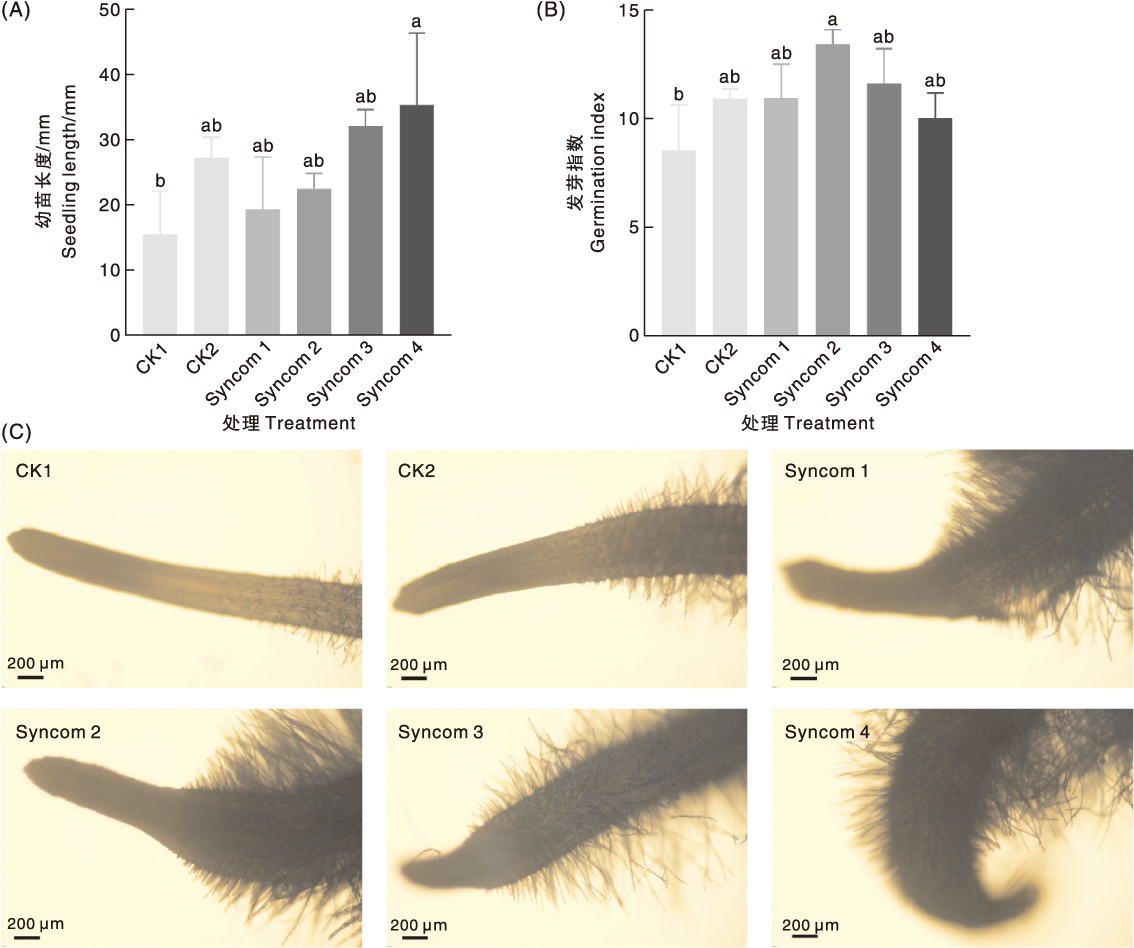
图2 合成菌群对辣椒种子萌发的影响 A,幼苗长度;B,发芽指数;C,合成菌群对辣椒根毛的影响。
Fig.2 Effect of synthetic bacterial community on seed germination of pepper A, Seedling length; B, Germination index; C, Effect of synthetic bacterial community on root hair of pepper.
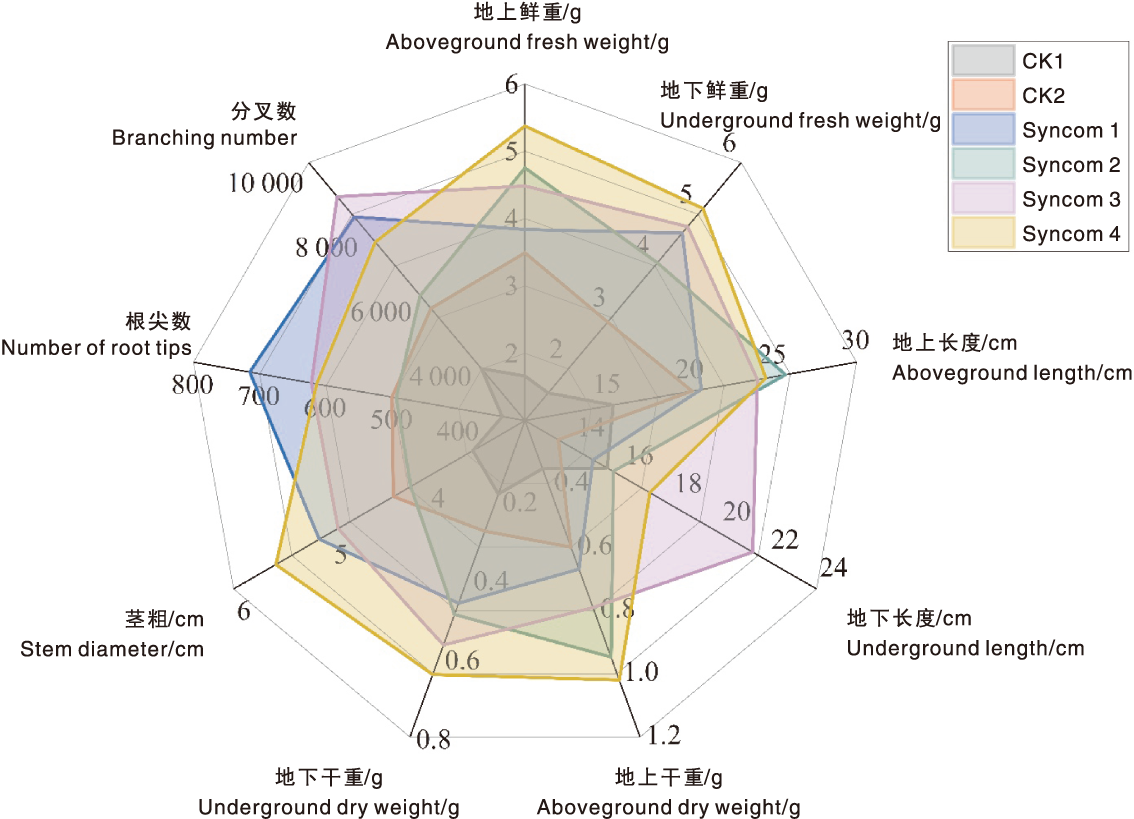
图3 合成菌群对辣椒植株的促生效应
Fig.3 Promoting effect of synthetic bacterial community on pepper plants
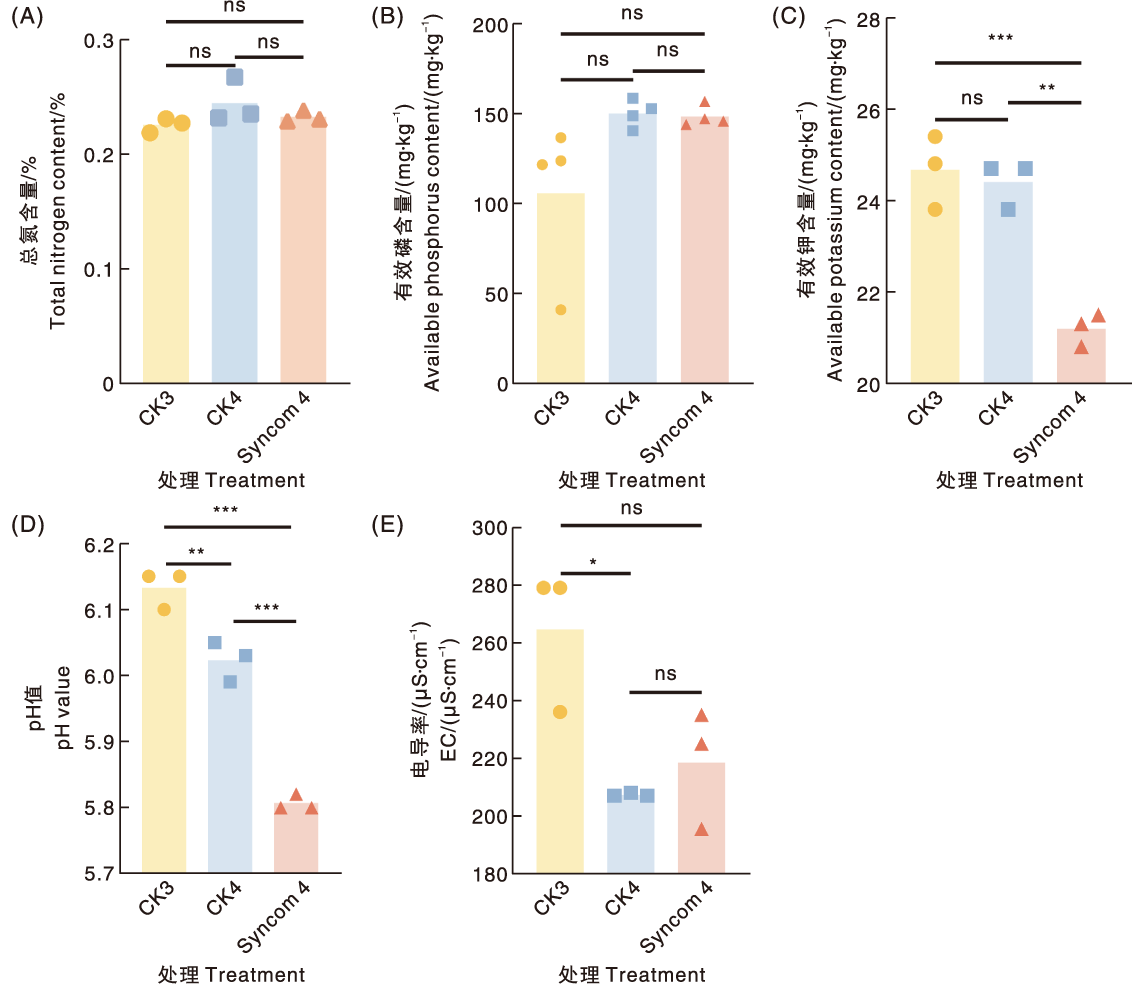
图4 Syncom 4对辣椒根际土壤理化性质的影响 *表示差异显著(p<0.05)、**和***表示差异极显著(**,p<0.01;***,p<0.001), ns表示无显著差异。图5~6同。
Fig.4 Effects of Syncom 4 the physicochemical properties of pepper rhizosphere soil * indicates statistically significant (p<0.05) differences; **,*** indicate highly significant (**, p<0.01; ***, p<0.001) differences; ns indicates no significant difference. Figures 5-6 are identical.
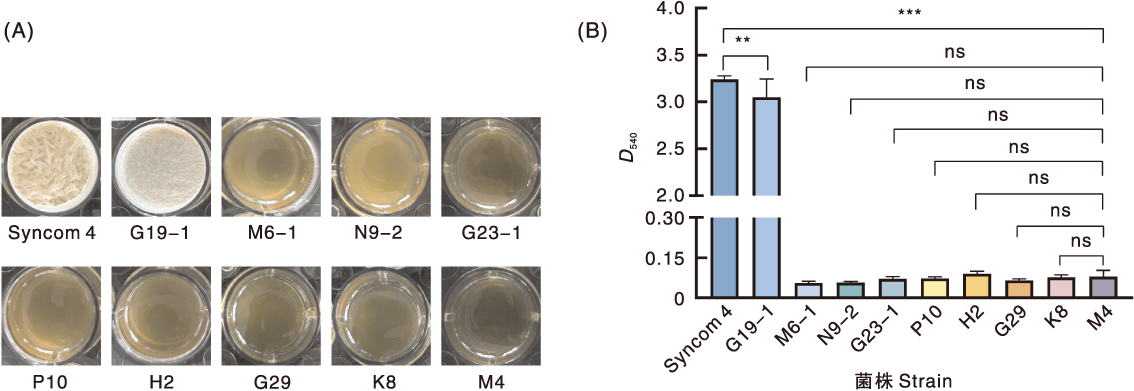
图5 Syncom 4及其成员的生物膜形成能力 A,体外培养后形成的生物膜代表照片;B,生物膜形成量的D540定量结果。
Fig.5 Biofilm formation ability of Syncom 4 and its members A, Representative photographs of biofilms formed after in vitro culture; B, Quantitative results of D540 absorbance for biofilm formation.
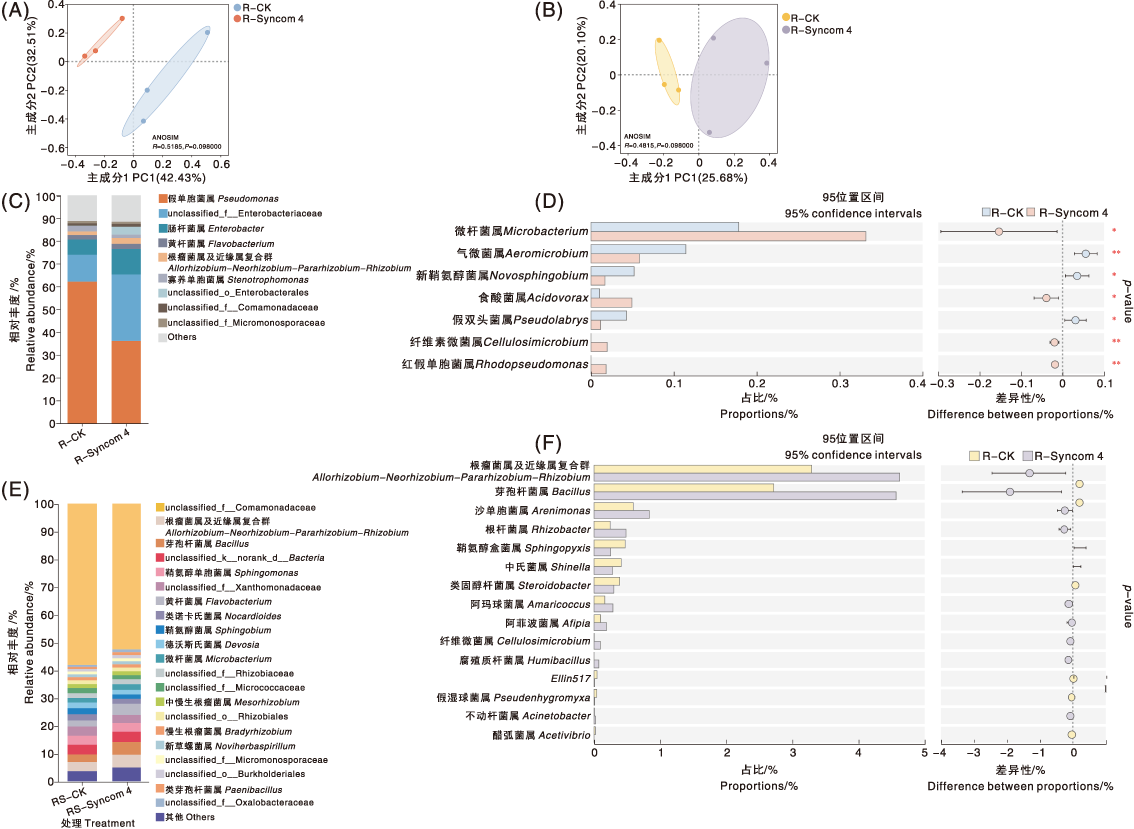
图6 Syncom 4对辣椒根内和根际细菌群落的影响 A,辣椒根内细菌β多样性;B,辣椒根际细菌β多样性;C,辣椒根内属水平的比较分析;D,辣椒根际属水平的比较分析;E,辣椒根内属水平群落组成;F,辣椒根际属水平群落组成。*(p<0.05)、**(p<0.01)表示显著富集。
Fig.6 Effects of Syncom 4 on bacterial communities in root and rhizosphere of pepper A, The β diversity of bacteria in pepper roots; B, The β diversity of bacteria in the rhizosphere of pepper; C, Comparative analysis of genus-level composition in pepper roots; D, Comparative analysis of bacterial genus in pepper rhizosphere between two groups; E, Community composition at genus level in roots; F, Community composition at genus level in the rhizosphere of pepper. *(p<0.05) and **(p<0.01) indicate statistically significant enrichment.
| [1] | Mohd Ali M, Khalid N I, Wondi M H, et al. Exploring the nutritional values, volatile compounds, health benefits, and potential food products of chilli (Capsicum annuum): a comprehensive review[J]. Food Chemistry, 2025, 490: 145091. |
| [2] | Zhang H L, Liu Z L, Zheng C C, et al. Root system architecture plasticity with beneficial rhizosphere microbes: current findings and future perspectives[J]. Microbiological Research, 2025, 292: 128028. |
| [3] | Lugtenberg B J J, Chin-A-Woeng T F C, Bloemberg G V. Microbe-plant interactions: principles and mechanisms[J]. Antonie van Leeuwenhoek, 2002, 81(1): 373-383. |
| [4] | Crowther T W, Van Den Hoogen J, Wan J, et al. The global soil community and its influence on biogeochemistry[J]. Science, 2019, 365(6455): eaav0550. |
| [5] | 韦中, 杨天杰, 任鹏, 等. 合成菌群在根际免疫研究中的现状与未来[J]. 南京农业大学学报, 2021, 44(4): 597-603. |
| Wei Z, Yang T J, Ren P, et al. Advances and perspectives on synthetic microbial community in the study of rhizosphere immunity[J]. Journal of Nanjing Agricultural University, 2021, 44(4): 597-603. | |
| [6] | Vorholt J A, Vogel C, Carlström C I, et al. Establishing causality: opportunities of synthetic communities for plant microbiome research[J]. Cell Host & Microbe, 2017, 22(2): 142-155. |
| [7] | Liu H X, Li S M, Luo Y M, et al. Biological control of Ralstonia wilt, Phytophthora blight, Meloidogyne root-knot on bell pepper by the combination of Bacillus subtilis AR12, Bacillus subtilis SM21 and Chryseobacterium sp. R89[J]. European Journal of Plant Pathology, 2014, 139(1): 107-116. |
| [8] | Durán P, Thiergart T, Garrido-Oter R, et al. Microbial interKingdom interactions in roots promote Arabidopsis survival[J]. Cell, 2018, 175(4): 973-983.e14. |
| [9] | 张琳, 余红凤, 毕钰, 等. 辣椒根际促生菌的筛选及促生效应分析[J]. 农业生物技术学报, 2024, 32(9): 2124-2136. |
| Zhang L, Yu H F, Bi Y, et al. Screening of rhizosphere growth-promoting bacteria of pepper(Capsicum annuum)and analysis of their beneficial effects[J]. Journal of Agricultural Biotechnology, 2024, 32(9): 2124-2136. | |
| [10] | 路垚, 刘雅辉, 孙建平, 等. 耐低温降解纤维素菌株的筛选及复合菌系构建[J]. 安徽农业科学, 2022, 50(10): 6-10. |
| Lu Y, Liu Y H, Sun J P, et al. Screening of low temperature cellulose degradation strains and construction of complex microbial system[J]. Journal of Anhui Agricultural Sciences, 2022, 50(10): 6-10. | |
| [11] | 杨晓燕, 叶伟伟, 魏善强, 等. 一株巨大芽孢杆菌发酵培养基的优化及解磷效果研究[J]. 中国农学通报, 2022, 38(15): 105-112. |
| Yang X Y, Ye W W, Wei S Q, et al. Bacillus megaterium: fermentation medium optimization and phosphate solubilization effect[J]. Chinese Agricultural Science Bulletin, 2022, 38(15): 105-112. | |
| [12] | Chen D A, Wei X W, Zhang M, et al. Isolation, identification and phosphate solubilizing capacity of organophosphorus solubilizing bacteria in rhizosphere soil of Camellia oleifera[J]. Agricultural Science & Technology, 2020, 21(1): 41-47. |
| [13] | 王珣珏, 黄巧云, 蔡鹏, 等. 解钾菌解钾效率检测方法的比较[J]. 华中农业大学学报, 2016, 35(1): 81-85. |
| Wang X J, Huang Q Y, Cai P, et al. Comparing different methods of detecting potassium solubilizing efficiency with potassium solubilizing bacteria[J]. Journal of Huazhong Agricultural University, 2016, 35(1): 81-85. | |
| [14] | 张垚, 张芝, 王志刚, 等. 辣椒根际促生菌筛选鉴定及其促生效应初探[J]. 浙江农业科学, 2022, 63(5): 958-963. |
| Zhang Y, Zhang Z, Wang Z G, et al. Screening, identification of growth-promoting rhizobacteria in pepper and preliminary study on its promoting effect[J]. Journal of Zhejiang Agricultural Sciences, 2022, 63(5): 958-963. | |
| [15] | 吴玥, 王秋颖, 关体坤, 等. 磷铁尾矿中高效解磷菌筛选、鉴定及解磷特性[J]. 北京农学院学报, 2022, 37(4): 6-12. |
| Wu Y, Wang Q Y, Guan T K, et al. Isolation, identification and phosphate solubilizing characteristics of a phosphate solubilizing bacterium from ferrophosphate tailings[J]. Journal of Beijing University of Agriculture, 2022, 37(4): 6-12. | |
| [16] | Rajawat M V S, Singh S, Tyagi S P, et al. A modified plate assay for rapid screening of potassium-solubilizing bacteria[J]. Pedosphere, 2016, 26(5): 768-773. |
| [17] | 刘悦, 徐伟慧, 王志刚. 大豆根际促生菌的筛选鉴定与促生效应[J]. 浙江农业学报, 2023, 35(12): 2775-2784. |
| Liu Y, Xu W H, Wang Z G. Screening and identification of soybean rhizosphere growth-promoting bacteria and their growth-promoting effects[J]. Acta Agriculturae Zhejiangensis, 2023, 35(12): 2775-2784. | |
| [18] | 李福艳, 刘晓玉, 颜静婷, 等. 三株产吲哚乙酸根际促生芽孢杆菌的筛选鉴定及其促生作用[J]. 浙江农业学报, 2021, 33(5): 873-884. |
| Li F Y, Liu X Y, Yan J T, et al. Isolation and identification of three indole-3-acetic acid producing plant-growth-promoting rhizosphere Bacillus sp. and their growth-promoting effects[J]. Acta Agriculturae Zhejiangensis, 2021, 33(5): 873-884. | |
| [19] | 刘宗超, 蔡兴, 文田耀, 等. 石墨消解仪-凯氏定氮法测定土壤中全氮量[J]. 化学分析计量, 2022, 31(12): 55-58. |
| Liu Z C, Cai X, Wen T Y, et al. Determination of total nitrogen in soil by graphite digester-Kjeldahl method[J]. Chemical Analysis and Meterage, 2022, 31(12): 55-58. | |
| [20] | 程晓梅, 王斐, 孙楠, 等. 云南大理烟区土壤有效磷时空变化及分区施磷策略[J]. 植物营养与肥料学报, 2023, 29(6): 1103-1111. |
| Cheng X M, Wang F, Sun N, et al. The spatiotemporal variation of soil available phosphorus and phosphorus application strategy in tobacco field of Dali, Yunnan Province[J]. Plant Nutrition and Fertilizer Science, 2023, 29(6): 1103-1111. | |
| [21] | 王景艳, 寇伟锋, 姜超强, 等. 不同树龄石榴园土壤养分调查与评价[J]. 安徽农业科学, 2023, 51(17): 125-128. |
| Wang J Y, Kou W F, Jiang C Q, et al. Investigation and evaluation of soil nutrients in pomegranate orchard with different tree ages[J]. Journal of Anhui Agricultural Sciences, 2023, 51(17): 125-128. | |
| [22] | 黄东慧, 钟鹏, 王建丽, 等. 环境条件对Bacillus altitudinis LZP02生物膜形成的影响[J]. 浙江农业学报, 2022, 34(7): 1466-1473. |
| Huang D H, Zhong P, Wang J L, et al. Effects of environmental conditions on biofilm formation of Bacillus altitudinis LZP02[J]. Acta Agriculturae Zhejiangensis, 2022, 34(7): 1466-1473. | |
| [23] | Bulgarelli D, Garrido-Oter R, Münch P C, et al. Structure and function of the bacterial root microbiota in wild and domesticated barley[J]. Cell Host & Microbe, 2015, 17(3): 392-403. |
| [24] | Batista B D, Singh B K. Realities and hopes in the application of microbial tools in agriculture[J]. Microbial Biotechnology, 2021, 14(4): 1258-1268. |
| [25] | Qiu Z G, Egidi E, Liu H W, et al. New frontiers in agriculture productivity: optimised microbial inoculants and in situ microbiome engineering[J]. Biotechnology Advances, 2019, 37(6): 107371. |
| [26] | Korir H, Mungai N W, Thuita M, et al. Co-inoculation effect of rhizobia and plant growth promoting rhizobacteria on common bean growth in a low phosphorus soil[J]. Frontiers in Plant Science, 2017, 8: 141. |
| [27] | Trivedi P, Mattupalli C, EversolE K, et al. Enabling sustainable agriculture through understanding and enhancement of microbiomes[J]. New Phytologist, 2021, 230(6): 2129-2147. |
| [28] | Hays S G, Patrick W G, Ziesack M, et al. Better together: engineering and application of microbial symbioses[J]. Current Opinion in Biotechnology, 2015, 36: 40-49. |
| [29] | Parnell J J, Berka R, Young H A, et al. From the lab to the farm: an industrial perspective of plant beneficial microorganisms[J]. Frontiers in Plant Science, 2016, 7: 1110. |
| [30] | Singh B K, Trivedi P. Microbiome and the future for food and nutrient security[J]. Microbial Biotechnology, 2017, 10(1): 50-53. |
| [31] | Niu B, Paulson J N, Zheng X Q, et al. Simplified and representative bacterial community of maize roots[J]. Proceedings of the National Academy of Sciences of the United States of America, 2017, 114(12): 2450-2459. |
| [32] | De Souza R S C, Armanhi J S L, ArrudA P. From microbiome to traits: designing synthetic microbial communities for improved crop resiliency[J]. Frontiers in Plant Science, 2020, 11: 1179. |
| [33] | Santhanam R, Menezes R C, Grabe V, et al. A suite of complementary biocontrol traits allows a native consortium of root-associated bacteria to protect their host plant from a fungal sudden-wilt disease[J]. Molecular Ecology, 2019, 28(5): 1154-1169. |
| [34] | Sardans J, Peñuelas J. Plant-soil interactions in Mediterranean forest and shrublands: impacts of climatic change[J]. Plant and Soil, 2013, 365(1): 1-33. |
| [35] | Chen D L, Saeed M, Ali M N H A, et al. Plant growth promoting rhizobacteria (PGPR) and arbuscular mycorrhizal fungi combined application reveals enhanced soil fertility and rice production[J]. Agronomy, 2023, 13(2): 550. |
| [36] | Yaghoubi Khanghahi M, Pirdashti H, Rahimian H, et al. Potassium solubilising bacteria (KSB) isolated from rice paddy soil: from isolation, identification to K use efficiency[J]. Symbiosis, 2018, 76(1): 13-23. |
| [37] | Hall-Stoodley L, Costerton J W, Stoodley P. Bacterial biofilms: from the natural environment to infectious diseases[J]. Nature Reviews Microbiology, 2004, 2(2): 95-108. |
| [38] | Hansen S K, Rainey P B, Haagensen J A J, et al. Evolution of species interactions in a biofilm community[J]. Nature, 2007, 445(7127): 533-536. |
| [39] | Nadell C D, Drescher K, Foster K R. Spatial structure, cooperation and competition in biofilms[J]. Nature Reviews Microbiology, 2016, 14(9): 589-600. |
| [40] | Burmølle M, Ren D W, Bjarnsholt T, et al. Interactions in multispecies biofilms: do they actually matter?[J]. Trends in Microbiology, 2014, 22(2): 84-91. |
| [41] | Arnaouteli S, Bamford N C, Stanley-Wall N R, et al. Bacillus subtilis biofilm formation and social interactions[J]. Nature Reviews Microbiology, 2021, 19(9): 600-614. |
| [42] | Yang N, Nesme J, Røder H L, et al. Emergent bacterial community properties induce enhanced drought tolerance in Arabidopsis[J]. npj Biofilms and Microbiomes, 2021, 7: 82. |
| [43] | Ahmad Ansari F, Ahmad I. Fluorescent Pseudomonas-FAP2 and Bacillus licheniformis interact positively in biofilm mode enhancing plant growth and photosynthetic attributes[J]. Scientific Reports, 2019, 9: 4547. |
| [44] | Büttner H, Niehs S P, Vandelannoote K, et al. Bacterial endosymbionts protect beneficial soil fungus from nematode attack[J]. Proceedings of the National Academy of Sciences of the United States of America, 2021, 118(37): e2110669118. |
| [45] | Zhou X, Wang J T, Liu F, et al. Cross-Kingdom synthetic microbiota supports tomato suppression of Fusarium wilt disease[J]. Nature Communications, 2022, 13: 7890. |
| [46] | Kaur S, Egidi E, Qiu Z G, et al. Synthetic community improves crop performance and alters rhizosphere microbial communities[J]. Journal of Sustainable Agriculture and Environment, 2022, 1(2): 118-131. |
| [47] | Zhang Y, Gao X, Shen Z Z, et al. Pre-colonization of PGPR triggers rhizosphere microbiota succession associated with crop yield enhancement[J]. Plant and Soil, 2019, 439(1): 553-567. |
| [48] | Wang Z, Solanki M K, Kumar A, et al. Promoting plant resilience against stress by engineering root microenvironment with Streptomyces inoculants[J]. Microbiological Research, 2023, 277: 127509. |
| [49] | Sun X L, Xu Z H, Xie J Y, et al. Bacillus velezensis stimulates resident rhizosphere Pseudomonas stutzeri for plant health through metabolic interactions[J]. The ISME Journal, 2022, 16(3): 774-787. |
| [50] | Mishra P, Mishra J, Arora N K. Salt tolerant Pseudomonas taiwanensis PWR-1 in combination with a reduced dose of mineral fertilizers improves the nutritional and antioxidant properties of wheatgrass grown in saline soil[J]. World Journal of Microbiology and Biotechnology, 2023, 40(1): 11. |
| [51] | Kim K, Jang Y J, Lee S M, et al. Alleviation of salt stress by Enterobacter sp. EJ01 in tomato and Arabidopsis is accompanied by up-regulation of conserved salinity responsive factors in plants[J]. Molecules and Cells, 2014, 37(2): 109-117. |
| [52] | Song H R, Wu G W, Wang H S, et al. Rhizosphere inoculation of PGPR strain Bacillus cereus BC56 enhances salt tolerance of cucumber[J]. Plant Growth Regulation, 2024, 103(3): 509-523. |
| [53] | Kim H, Woo O G, Bin Kim J, et al. Flavobacterium sp. strain GJW24 ameliorates drought resistance in Arabidopsis and Brassica[J]. Frontiers in Plant Science, 2023, 14: 1257137. |
| [54] | Hahm M S, Son J S, Hwang Y J, et al. Alleviation of salt stress in pepper (Capsicum annum L.) plants by plant growth-promoting rhizobacteria[J]. Journal of Microbiology and Biotechnology, 2017, 27(10): 1790-1797. |
| [1] | 李雯冰, 李世豪, 李欣逸, 曹悦, 刘冰茜, 王梦, 李晓岩. 芽孢杆菌生物膜形成中群体感应信号分子的动态调控[J]. 浙江农业学报, 2026, 38(7): 1507-1516. |
| [2] | 付康, 张灿, 赵薇, 马宁, 俞晓平, 孙凯. 辣椒斑驳病毒RT-LAMP-LFD快速检测方法的建立[J]. 浙江农业学报, 2026, 38(2): 310-316. |
| [3] | 温枭雄, 舒琴, 鲍梦楠, 闫佳会. 青海省循化县辣椒脉斑驳病毒分离物的全基因组序列克隆与序列分析[J]. 浙江农业学报, 2025, 37(3): 612-620. |
| [4] | 郭赛赛, 聂智星, 傅鸿妃, 王同林, 邵志勇, 王宏, 郑积荣. 37份辣椒种质资源的表型性状及SRAP遗传多样性分析[J]. 浙江农业学报, 2025, 37(2): 300-310. |
| [5] | 刘亚婷, 吴立东, 邱胤晖, 陈国钰, 钟柳青. 辣椒炭疽病病原菌分离鉴定及防治药剂筛选[J]. 浙江农业学报, 2025, 37(11): 2315-2324. |
| [6] | 张婷, 王雪艳, 郭勤卫, 李朝森, 刘慧琴, 项小敏, 韦静, 赵东风, 万红建. 基于农艺性状的辣椒种质资源遗传多样性[J]. 浙江农业学报, 2024, 36(2): 325-333. |
| [7] | 温婉宁, 王晨, 胡连花, 房志家, 邓旗, 孙力军. 海蛾水提取物对小鼠系统低度炎症的干预作用[J]. 浙江农业学报, 2024, 36(12): 2784-2793. |
| [8] | 王雪艳, 谢利芬, 张婷, 方萍萍, 韦静, 李朝森, 刘慧琴, 项小敏, 赵东风, 郭勤卫. 鲜辣型辣椒品种筛选及相关性分析[J]. 浙江农业学报, 2024, 36(11): 2490-2500. |
| [9] | 张余, 金明伟, 任丽, 章毅颖, 赵洪, 刘昆, 邓姗, 褚云霞, 李寿国, 张靖立, 黄静艳, 陈海荣. 辣椒CaERF70的表达特征和转录自激活活性分析[J]. 浙江农业学报, 2024, 36(10): 2247-2256. |
| [10] | 郭娜纳, 李伟, 黄立娟, 张涛, 魏兵强. 辣椒抗番茄斑萎病毒研究进展[J]. 浙江农业学报, 2024, 36(10): 2416-2425. |
| [11] | 王宇, 汪泓, 肖玖军, 李可相, 邢丹, 张永亮, 陈阳, 张蓝月. 基于优化植被指数组合的多品种辣椒叶片叶绿素数值估测[J]. 浙江农业学报, 2023, 35(9): 2109-2120. |
| [12] | 罗海林, 袁雷, 闫佳会, 郭青云. 侵染青海辣椒的辣椒隐症病毒2基因组克隆与分析[J]. 浙江农业学报, 2023, 35(6): 1368-1374. |
| [13] | 柴冠群, 周玮, 梁红, 范菲菲, 朱大雁, 范成五. 叶面喷施锌肥和柠檬酸对辣椒产量、品质与Cd吸收转运的影响[J]. 浙江农业学报, 2023, 35(5): 1069-1079. |
| [14] | 朱丽, 薛新如, 梁宗旭, 许琳玉, 余国峰, 唐懿, 李焕秀. 辣椒种质资源辣椒素含量与农艺性状的相关性[J]. 浙江农业学报, 2023, 35(4): 862-872. |
| [15] | 刘悦, 徐伟慧, 王志刚. 大豆根际促生菌的筛选鉴定与促生效应[J]. 浙江农业学报, 2023, 35(12): 2775-2784. |
| 阅读次数 | ||||||
|
全文 |
|
|||||
|
摘要 |
|
|||||

