浙江农业学报 ›› 2025, Vol. 37 ›› Issue (12): 2583-2592.DOI: 10.3969/j.issn.1004-1524.20240803
基于德尔菲法及层次分析法构建鲜食番茄品质评价体系
王同林1( ), 邵志勇1, 聂智星1, 郭赛赛1, 刘丽红2, 汪俏梅2, 郑积荣1,*()
- 1.杭州市农业科学研究院,浙江 杭州 310024
2.浙江大学 园艺系/农业农村部园艺植物生长发育与品质控制重点开放实验室, 浙江 杭州 310058
-
收稿日期:2024-09-12出版日期:2025-12-25发布日期:2026-01-09 -
作者简介:王同林(1992—),男,山东夏津人,硕士,农艺师,主要从事番茄育种工作。E-mail:tlwang@zju.edu.cn -
通讯作者:*郑积荣,E-mail: topzheng2003@163.com -
基金资助:浙江省“十四五”农业新品种选育重大科技专项课题(2021C02065-1);杭州市农业科学研究院科技创新与示范推广基金项目(2025HNCT-02)
Construction of a quality evaluation system for fresh-eating tomatoes based on Delphi method and analytic hierarchy process
WANG Tonglin1(), SHAO Zhiyong1, NIE Zhixing1, GUO Saisai1, LIU Lihong2, WANG Qiaomei2, ZHENG Jirong1,*()
- 1. Hangzhou Academy of Agricultural Sciences, Hangzhou 310024, China
2. Department of Horticulture, Zhejiang University/Key Laboratory of Horticultural Plant Growth and Quality Control, Ministry of Agriculture and Rural Affairs, Hangzhou 310058, China
-
Received:2024-09-12Online:2025-12-25Published:2026-01-09

摘要:
由于育种目标过度偏向外观与耐贮运性,当前鲜食番茄外观艳丽,但果肉硬、味道淡、营养寡,究其原因是缺乏综合性的品质评价体系。为了更全面科学地评价番茄品质,本文创新性地引入了在临床医学、教育等领域行之有效的评价体系构建策略。首先对鲜食番茄品质的定义及构成进行了系统性综述,基于德尔菲法对国内27名从事番茄育种及品质研究领域的专家,进行了2轮意见征询,形成了1套包含3个品质维度(风味品质、营养品质、商品品质)、15个品质指标的鲜食番茄评价框架。2轮专家函询的积极系数分别为85.2%和86.0%,专家权威系数平均值为0.9,表明了专家们对本研究的高度重视和专业权威性,结合层次分析法对15个品质指标进行了权重分配[酸甜味8.16%、香味5.91%、鲜味6.47%、负面味道7.49%、汁水量6.43%、化渣度6.47%、质地6.41%、可溶性固形物含量6.87%、类胡萝卜素含量6.82%、维生素C(VC)含量6.58%、硬度6.15%、果形7.24%、果面光泽度6.92%、果实着色均匀程度6.59%、萼片有无及大小状态5.49%],为番茄品质育种及研究工作提供参考。
中图分类号:
引用本文
王同林, 邵志勇, 聂智星, 郭赛赛, 刘丽红, 汪俏梅, 郑积荣. 基于德尔菲法及层次分析法构建鲜食番茄品质评价体系[J]. 浙江农业学报, 2025, 37(12): 2583-2592.
WANG Tonglin, SHAO Zhiyong, NIE Zhixing, GUO Saisai, LIU Lihong, WANG Qiaomei, ZHENG Jirong. Construction of a quality evaluation system for fresh-eating tomatoes based on Delphi method and analytic hierarchy process[J]. Acta Agriculturae Zhejiangensis, 2025, 37(12): 2583-2592.
| 判断依据 Judgment basis | 大 Large | 中 Medium | 小 Small |
|---|---|---|---|
| 实践经验Practical experience | 0.5 | 0.4 | 0.3 |
| 理论分析Theoretical analysis | 0.3 | 0.2 | 0.1 |
| 同行了解Peer understanding | 0.1 | 0.1 | 0.1 |
| 直观感受Intuitive feeling | 0.1 | 0.1 | 0.1 |
表1 专家对调查指标判断依据及影响程度赋分表
Table 1 Scoring table of experts’ judgment basis and influence degree of survey indicators
| 判断依据 Judgment basis | 大 Large | 中 Medium | 小 Small |
|---|---|---|---|
| 实践经验Practical experience | 0.5 | 0.4 | 0.3 |
| 理论分析Theoretical analysis | 0.3 | 0.2 | 0.1 |
| 同行了解Peer understanding | 0.1 | 0.1 | 0.1 |
| 直观感受Intuitive feeling | 0.1 | 0.1 | 0.1 |
| 维度层 Dimension | 要素层 Element | 指标层 Indicator | 指标内容解释 Explanation of indicator content |
|---|---|---|---|
| 风味品质 Flavor | 味道 Taste | 酸甜味 Sweet and sour taste | 果肉入口后的主要味觉体验 The main taste experience after the fruit pulp enters the mouth |
| quality | 香味 Aroma | 果肉咀嚼过程中鼻腔感受到特异果香 During the process of chewing fruit pulp, the nasal cavity feels a unique fruity aroma | |
| 鲜味 Umami | 果肉入口后有甜而不腻、清爽增香的感觉 After the fruit pulp pulp enters the mouth, it gives a sweet but not greasy, refreshing and fragrant feeling | ||
| 负面味道 Negative taste | 果肉入口后产生苦、涩及其他令人厌恶的感受 After the fruit pulp enters the mouth, it produces bitterness, astringency, and other unpleasant feelings | ||
| 口感 Mouthfeel | 汁水量 Juice content | 果肉经轻度咀嚼,汁水从中涌出的量 The amount of juice that emerges from lightly chewed fruit pulp | |
| 化渣度 The degree of fruit digest residue | 果肉经咀嚼之后,不会在口腔中留下明显的果渣的程度 The degree of the fruit pulp, after being chewed, with not obvious fruit residue left in the mouth | ||
| 质地 Texture | 在咀嚼过程中,口腔对果肉的触觉感受 The tactile sensation of the flesh in the mouth during chewing | ||
| 营养品质 Nutritional quality | 营养 Nutrition | 可溶性固形物含量 Total soluble solid content | 果肉中所有溶解于水的化合物的总称,包括糖、酸、维生素、矿物质等(其中糖酸占绝大部分) The general term for all compounds dissolved in water in fruit pulp, including sugars, acids, vitamins, minerals, etc. (with sugars and acids accounting for the vast majority) |
| 功能 Function | 类胡萝卜素含量 Carotenoid content | 单位质量果肉的类胡萝卜素含量 Carotenoid content per unit mass of fruit pulp | |
| VC含量VC content | 单位质量果肉的VC含量VC content per unit mass of fruit pulp | ||
| 其他功能物质含量 Content of other functional substances | 单位质量果肉中GABA、花青素、黄酮、氨基酸等物质含量 Content of GABA, anthocyanins, flavonoids, amino acids and other substances in the unit mass of fruit pulp | ||
| 商品品质 Commercial quality | 耐贮运性 Storage and transportation resistance | 硬度 Firmness | 果实赤道位置硬度,硬度指标直接影响贮运性和货架期 The firmness of fruits at the equatorial position directly affects their storage and shelf life |
| 外观 Appearance | 果形 Fruit shape | 果实外形表现,包含圆润程度、充盈程度、楞沟深浅等 Fruit appearance, including roundness, fullness, depth of grooves, etc | |
| 果面光泽度 Fruit glossiness | 果实表面光滑、整洁的程度 The smoothness and neatness of the fruit surface | ||
| 果实大小Fruit size | 单个番茄果实质量Individual tomato fruit quality | ||
| 果实着色均匀程度 Fruit color uniformity | 果实通体颜色均匀程度 The uniformity of the overall color of the fruit | ||
| 果梗洼疤痕大小 Scar size of fruit stem depression | 果实果梗端形成的木质化疤痕的面积及程度等 The area and degree of lignified scars formed at the end of the fruit stalk, etc | ||
| 萼片有无及大小状态 Sepals presence and size status | 果实萼片的有无、大小、卷曲状态、新鲜程度 The presence, size, curled state, and freshness of fruit sepals |
表2 鲜食番茄品质评价模型初稿
Table 2 First draft of quality evaluation model for fresh-eating tomato
| 维度层 Dimension | 要素层 Element | 指标层 Indicator | 指标内容解释 Explanation of indicator content |
|---|---|---|---|
| 风味品质 Flavor | 味道 Taste | 酸甜味 Sweet and sour taste | 果肉入口后的主要味觉体验 The main taste experience after the fruit pulp enters the mouth |
| quality | 香味 Aroma | 果肉咀嚼过程中鼻腔感受到特异果香 During the process of chewing fruit pulp, the nasal cavity feels a unique fruity aroma | |
| 鲜味 Umami | 果肉入口后有甜而不腻、清爽增香的感觉 After the fruit pulp pulp enters the mouth, it gives a sweet but not greasy, refreshing and fragrant feeling | ||
| 负面味道 Negative taste | 果肉入口后产生苦、涩及其他令人厌恶的感受 After the fruit pulp enters the mouth, it produces bitterness, astringency, and other unpleasant feelings | ||
| 口感 Mouthfeel | 汁水量 Juice content | 果肉经轻度咀嚼,汁水从中涌出的量 The amount of juice that emerges from lightly chewed fruit pulp | |
| 化渣度 The degree of fruit digest residue | 果肉经咀嚼之后,不会在口腔中留下明显的果渣的程度 The degree of the fruit pulp, after being chewed, with not obvious fruit residue left in the mouth | ||
| 质地 Texture | 在咀嚼过程中,口腔对果肉的触觉感受 The tactile sensation of the flesh in the mouth during chewing | ||
| 营养品质 Nutritional quality | 营养 Nutrition | 可溶性固形物含量 Total soluble solid content | 果肉中所有溶解于水的化合物的总称,包括糖、酸、维生素、矿物质等(其中糖酸占绝大部分) The general term for all compounds dissolved in water in fruit pulp, including sugars, acids, vitamins, minerals, etc. (with sugars and acids accounting for the vast majority) |
| 功能 Function | 类胡萝卜素含量 Carotenoid content | 单位质量果肉的类胡萝卜素含量 Carotenoid content per unit mass of fruit pulp | |
| VC含量VC content | 单位质量果肉的VC含量VC content per unit mass of fruit pulp | ||
| 其他功能物质含量 Content of other functional substances | 单位质量果肉中GABA、花青素、黄酮、氨基酸等物质含量 Content of GABA, anthocyanins, flavonoids, amino acids and other substances in the unit mass of fruit pulp | ||
| 商品品质 Commercial quality | 耐贮运性 Storage and transportation resistance | 硬度 Firmness | 果实赤道位置硬度,硬度指标直接影响贮运性和货架期 The firmness of fruits at the equatorial position directly affects their storage and shelf life |
| 外观 Appearance | 果形 Fruit shape | 果实外形表现,包含圆润程度、充盈程度、楞沟深浅等 Fruit appearance, including roundness, fullness, depth of grooves, etc | |
| 果面光泽度 Fruit glossiness | 果实表面光滑、整洁的程度 The smoothness and neatness of the fruit surface | ||
| 果实大小Fruit size | 单个番茄果实质量Individual tomato fruit quality | ||
| 果实着色均匀程度 Fruit color uniformity | 果实通体颜色均匀程度 The uniformity of the overall color of the fruit | ||
| 果梗洼疤痕大小 Scar size of fruit stem depression | 果实果梗端形成的木质化疤痕的面积及程度等 The area and degree of lignified scars formed at the end of the fruit stalk, etc | ||
| 萼片有无及大小状态 Sepals presence and size status | 果实萼片的有无、大小、卷曲状态、新鲜程度 The presence, size, curled state, and freshness of fruit sepals |
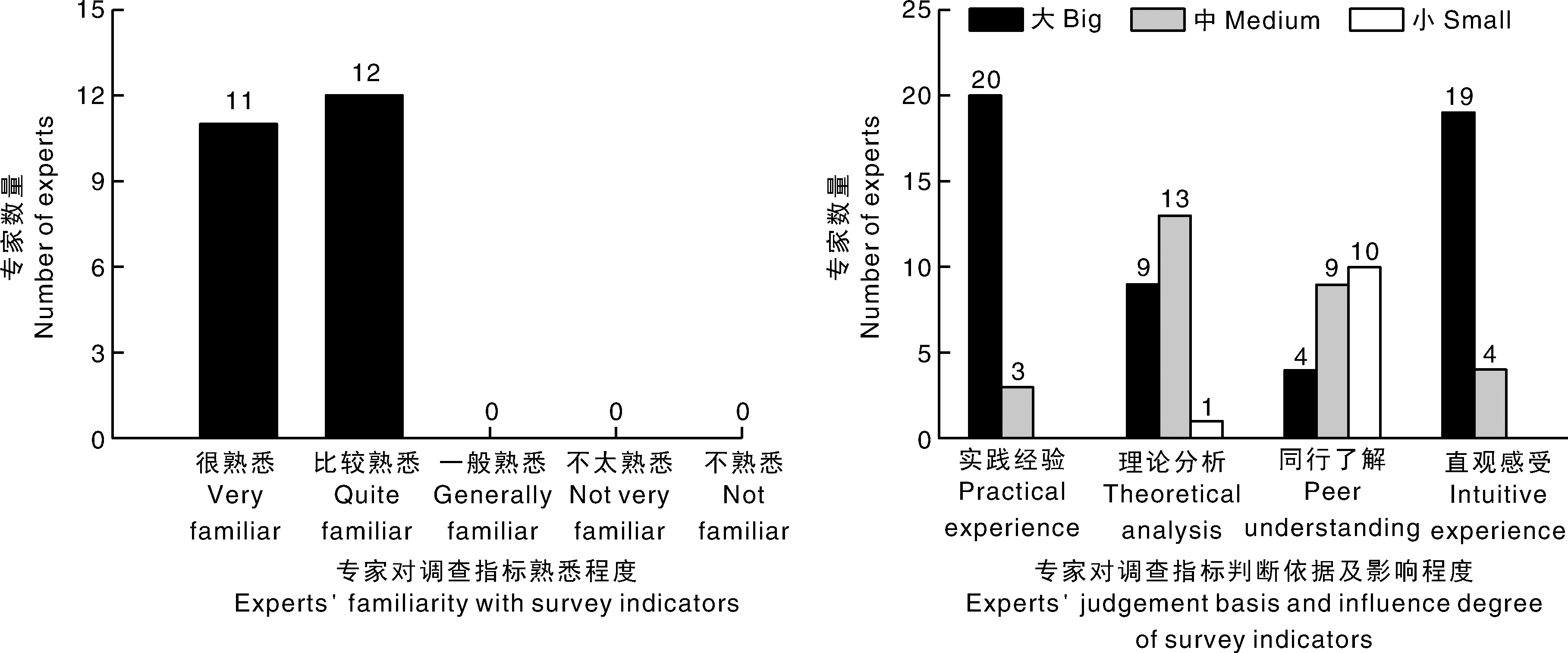
图1 专家评价依据
Fig.1 Expert evaluation basis
| 维度层 Dimension | 指标层 Indicator | 第一次问卷结果 First questionnaire results | 第二次问卷结果 Second questionnaire results | ||||
|---|---|---|---|---|---|---|---|
| SD | CV | SD | CV | ||||
| (A1)风味品质 | (B1)酸甜味Sweet and sour taste | 4.91 | 0.29 | 0.059 | 4.89 | 0.31 | 0.063 |
| Flavor quality | (B2)香味Aroma | 3.57 | 1.12 | 0.314 | 3.54 | 0.66 | 0.187 |
| (B3)鲜味Umami | 3.78 | 1.04 | 0.276 | 3.88 | 0.97 | 0.249 | |
| (B4)负面味道Negative taste | 4.30 | 1.06 | 0.247 | 4.49 | 0.99 | 0.220 | |
| (B5)汁水量Juice content | 4.04 | 0.88 | 0.217 | 3.85 | 0.75 | 0.194 | |
| (B6)化渣度The degree of fruit digest residue | 4.04 | 0.88 | 0.217 | 3.88 | 0.79 | 0.205 | |
| (B7)质地Texture | 3.78 | 0.74 | 0.195 | 3.84 | 0.56 | 0.147 | |
| (A2)营养品质 | (B8)可溶性固形物含量Total soluble solid content | 4.30 | 0.88 | 0.203 | 4.12 | 0.62 | 0.151 |
| Nutritional quality | (B9)类胡萝卜素含量Carotenoid content | 3.96 | 0.82 | 0.208 | 4.09 | 0.84 | 0.206 |
| (B10)VC含量VC content | 3.83 | 0.72 | 0.187 | 3.94 | 0.76 | 0.193 | |
| (B11)其他功能物质含量 | 3.04 | 1.02 | 0.336 | 3.20 | 1.06 | 0.330 | |
| Content of other functional substances | |||||||
| (A3)商品品质 | (B12)硬度Firmness | 3.65 | 0.93 | 0.256 | 3.68 | 0.65 | 0.177 |
| Commercial quality | (B13)果形Fruit shape | 4.30 | 0.97 | 0.226 | 4.34 | 0.73 | 0.167 |
| (B14)果面光泽度Fruit glossiness | 3.96 | 0.93 | 0.235 | 4.15 | 0.59 | 0.142 | |
| (B15)果实大小Fruit size | 2.83 | 1.03 | 0.364 | 2.92 | 0.69 | 0.238 | |
| (B16)果实着色均匀程度Fruit color uniformity | 3.96 | 0.93 | 0.235 | 3.95 | 0.69 | 0.174 | |
| (B17)果梗洼疤痕大小Scar size of fruit stem depression | 2.91 | 0.90 | 0.309 | 2.97 | 0.73 | 0.247 | |
| (B18)萼片有无及大小状态 | 3.26 | 1.05 | 0.323 | 3.29 | 0.78 | 0.238 | |
| Sepals presence and size status | |||||||
表3 专家重要性打分结果
Table 3 Scoring results of expert importance
| 维度层 Dimension | 指标层 Indicator | 第一次问卷结果 First questionnaire results | 第二次问卷结果 Second questionnaire results | ||||
|---|---|---|---|---|---|---|---|
| SD | CV | SD | CV | ||||
| (A1)风味品质 | (B1)酸甜味Sweet and sour taste | 4.91 | 0.29 | 0.059 | 4.89 | 0.31 | 0.063 |
| Flavor quality | (B2)香味Aroma | 3.57 | 1.12 | 0.314 | 3.54 | 0.66 | 0.187 |
| (B3)鲜味Umami | 3.78 | 1.04 | 0.276 | 3.88 | 0.97 | 0.249 | |
| (B4)负面味道Negative taste | 4.30 | 1.06 | 0.247 | 4.49 | 0.99 | 0.220 | |
| (B5)汁水量Juice content | 4.04 | 0.88 | 0.217 | 3.85 | 0.75 | 0.194 | |
| (B6)化渣度The degree of fruit digest residue | 4.04 | 0.88 | 0.217 | 3.88 | 0.79 | 0.205 | |
| (B7)质地Texture | 3.78 | 0.74 | 0.195 | 3.84 | 0.56 | 0.147 | |
| (A2)营养品质 | (B8)可溶性固形物含量Total soluble solid content | 4.30 | 0.88 | 0.203 | 4.12 | 0.62 | 0.151 |
| Nutritional quality | (B9)类胡萝卜素含量Carotenoid content | 3.96 | 0.82 | 0.208 | 4.09 | 0.84 | 0.206 |
| (B10)VC含量VC content | 3.83 | 0.72 | 0.187 | 3.94 | 0.76 | 0.193 | |
| (B11)其他功能物质含量 | 3.04 | 1.02 | 0.336 | 3.20 | 1.06 | 0.330 | |
| Content of other functional substances | |||||||
| (A3)商品品质 | (B12)硬度Firmness | 3.65 | 0.93 | 0.256 | 3.68 | 0.65 | 0.177 |
| Commercial quality | (B13)果形Fruit shape | 4.30 | 0.97 | 0.226 | 4.34 | 0.73 | 0.167 |
| (B14)果面光泽度Fruit glossiness | 3.96 | 0.93 | 0.235 | 4.15 | 0.59 | 0.142 | |
| (B15)果实大小Fruit size | 2.83 | 1.03 | 0.364 | 2.92 | 0.69 | 0.238 | |
| (B16)果实着色均匀程度Fruit color uniformity | 3.96 | 0.93 | 0.235 | 3.95 | 0.69 | 0.174 | |
| (B17)果梗洼疤痕大小Scar size of fruit stem depression | 2.91 | 0.90 | 0.309 | 2.97 | 0.73 | 0.247 | |
| (B18)萼片有无及大小状态 | 3.26 | 1.05 | 0.323 | 3.29 | 0.78 | 0.238 | |
| Sepals presence and size status | |||||||
| 品质指标 | B1 | B2 | B3 | B4 | B5 | B6 | B7 | B8 | B9 | B10 | B12 | B13 | B14 | B16 | B18 |
|---|---|---|---|---|---|---|---|---|---|---|---|---|---|---|---|
| Indicators | |||||||||||||||
| B1 | 1 | 1.380 | 1.261 | 1.089 | 1.270 | 1.261 | 1.274 | 1.188 | 1.196 | 1.241 | 1.328 | 1.127 | 1.179 | 1.239 | 1.487 |
| B2 | 0.725 | 1 | 0.914 | 0.789 | 0.92 | 0.914 | 0.923 | 0.861 | 0.867 | 0.899 | 0.962 | 0.816 | 0.854 | 0.898 | 1.078 |
| B3 | 0.793 | 1.095 | 1 | 0.864 | 1.007 | 1.001 | 1.010 | 0.943 | 0.949 | 0.984 | 1.053 | 0.894 | 0.935 | 0.983 | 1.180 |
| B4 | 0.918 | 1.267 | 1.158 | 1 | 1.166 | 1.158 | 1.170 | 1.091 | 1.098 | 1.139 | 1.219 | 1.035 | 1.082 | 1.137 | 1.366 |
| B5 | 0.788 | 1.087 | 0.993 | 0.858 | 1 | 0.994 | 1.003 | 0.936 | 0.942 | 0.977 | 1.046 | 0.888 | 0.929 | 0.976 | 1.172 |
| B6 | 0.793 | 1.094 | 0.999 | 0.863 | 1.006 | 1 | 1.010 | 0.942 | 0.948 | 0.984 | 1.053 | 0.893 | 0.935 | 0.982 | 1.179 |
| B7 | 0.785 | 1.083 | 0.990 | 0.855 | 0.997 | 0.990 | 1 | 0.933 | 0.939 | 0.974 | 1.042 | 0.885 | 0.926 | 0.972 | 1.168 |
| B8 | 0.841 | 1.161 | 1.061 | 0.916 | 1.068 | 1.061 | 1.072 | 1 | 1.007 | 1.044 | 1.117 | 0.948 | 0.992 | 1.042 | 1.252 |
| B9 | 0.836 | 1.154 | 1.054 | 0.91 | 1.061 | 1.054 | 1.065 | 0.993 | 1 | 1.037 | 1.110 | 0.942 | 0.986 | 1.035 | 1.243 |
| B10 | 0.806 | 1.112 | 1.016 | 0.878 | 1.023 | 1.017 | 1.027 | 0.958 | 0.964 | 1 | 1.070 | 0.908 | 0.950 | 0.998 | 1.199 |
| B12 | 0.753 | 1.039 | 0.949 | 0.82 | 0.956 | 0.950 | 0.959 | 0.895 | 0.901 | 0.934 | 1 | 0.849 | 0.888 | 0.933 | 1.120 |
| B13 | 0.887 | 1.225 | 1.119 | 0.967 | 1.127 | 1.119 | 1.131 | 1.055 | 1.062 | 1.101 | 1.179 | 1 | 1.046 | 1.099 | 1.320 |
| B14 | 0.848 | 1.171 | 1.069 | 0.924 | 1.077 | 1.070 | 1.080 | 1.008 | 1.015 | 1.052 | 1.126 | 0.956 | 1 | 1.051 | 1.262 |
| B16 | 0.807 | 1.114 | 1.018 | 0.879 | 1.025 | 1.018 | 1.028 | 0.959 | 0.966 | 1.002 | 1.072 | 0.910 | 0.952 | 1 | 1.201 |
| B18 | 0.672 | 0.928 | 0.848 | 0.732 | 0.854 | 0.848 | 0.856 | 0.799 | 0.804 | 0.834 | 0.893 | 0.758 | 0.793 | 0.833 | 1 |
表4 AHP层次分析判断矩阵
Table 4 AHP judgment matrix
| 品质指标 | B1 | B2 | B3 | B4 | B5 | B6 | B7 | B8 | B9 | B10 | B12 | B13 | B14 | B16 | B18 |
|---|---|---|---|---|---|---|---|---|---|---|---|---|---|---|---|
| Indicators | |||||||||||||||
| B1 | 1 | 1.380 | 1.261 | 1.089 | 1.270 | 1.261 | 1.274 | 1.188 | 1.196 | 1.241 | 1.328 | 1.127 | 1.179 | 1.239 | 1.487 |
| B2 | 0.725 | 1 | 0.914 | 0.789 | 0.92 | 0.914 | 0.923 | 0.861 | 0.867 | 0.899 | 0.962 | 0.816 | 0.854 | 0.898 | 1.078 |
| B3 | 0.793 | 1.095 | 1 | 0.864 | 1.007 | 1.001 | 1.010 | 0.943 | 0.949 | 0.984 | 1.053 | 0.894 | 0.935 | 0.983 | 1.180 |
| B4 | 0.918 | 1.267 | 1.158 | 1 | 1.166 | 1.158 | 1.170 | 1.091 | 1.098 | 1.139 | 1.219 | 1.035 | 1.082 | 1.137 | 1.366 |
| B5 | 0.788 | 1.087 | 0.993 | 0.858 | 1 | 0.994 | 1.003 | 0.936 | 0.942 | 0.977 | 1.046 | 0.888 | 0.929 | 0.976 | 1.172 |
| B6 | 0.793 | 1.094 | 0.999 | 0.863 | 1.006 | 1 | 1.010 | 0.942 | 0.948 | 0.984 | 1.053 | 0.893 | 0.935 | 0.982 | 1.179 |
| B7 | 0.785 | 1.083 | 0.990 | 0.855 | 0.997 | 0.990 | 1 | 0.933 | 0.939 | 0.974 | 1.042 | 0.885 | 0.926 | 0.972 | 1.168 |
| B8 | 0.841 | 1.161 | 1.061 | 0.916 | 1.068 | 1.061 | 1.072 | 1 | 1.007 | 1.044 | 1.117 | 0.948 | 0.992 | 1.042 | 1.252 |
| B9 | 0.836 | 1.154 | 1.054 | 0.91 | 1.061 | 1.054 | 1.065 | 0.993 | 1 | 1.037 | 1.110 | 0.942 | 0.986 | 1.035 | 1.243 |
| B10 | 0.806 | 1.112 | 1.016 | 0.878 | 1.023 | 1.017 | 1.027 | 0.958 | 0.964 | 1 | 1.070 | 0.908 | 0.950 | 0.998 | 1.199 |
| B12 | 0.753 | 1.039 | 0.949 | 0.82 | 0.956 | 0.950 | 0.959 | 0.895 | 0.901 | 0.934 | 1 | 0.849 | 0.888 | 0.933 | 1.120 |
| B13 | 0.887 | 1.225 | 1.119 | 0.967 | 1.127 | 1.119 | 1.131 | 1.055 | 1.062 | 1.101 | 1.179 | 1 | 1.046 | 1.099 | 1.320 |
| B14 | 0.848 | 1.171 | 1.069 | 0.924 | 1.077 | 1.070 | 1.080 | 1.008 | 1.015 | 1.052 | 1.126 | 0.956 | 1 | 1.051 | 1.262 |
| B16 | 0.807 | 1.114 | 1.018 | 0.879 | 1.025 | 1.018 | 1.028 | 0.959 | 0.966 | 1.002 | 1.072 | 0.910 | 0.952 | 1 | 1.201 |
| B18 | 0.672 | 0.928 | 0.848 | 0.732 | 0.854 | 0.848 | 0.856 | 0.799 | 0.804 | 0.834 | 0.893 | 0.758 | 0.793 | 0.833 | 1 |
| 维度层 Dimension | 指标层 Indicator | 指标内容解释 Explanation of indicator content | 权重 Weight/% |
|---|---|---|---|
| 风味品质 Flavor quality | 酸甜味 Sweet and sour taste | 果肉入口后的主要味觉体验 The main taste experience after the fruit pulp enters the mouth | 8.16 |
| 香味 Aroma | 果肉咀嚼过程中鼻腔感受到特异果香 During the process of chewing fruit pulp, the nasal cavity feels a unique fruity aroma | 5.91 | |
| 鲜味 Umami | 果肉入口后有甜而不腻、清爽增香的感觉 After the fruit pulp enters the mouth, it gives a sweet but not greasy, refreshing and fragrant feeling | 6.47 | |
| 负面味道 Negative taste | 果肉入口后产生苦、涩及其他令人厌恶的感受 After the fruit pulp enters the mouth, it produces bitterness, astringency, and other unpleasant feelings | 7.49 | |
| 汁水量 Juice content | 果肉经轻度咀嚼,汁水从中涌出的量 The amount of juice that emerges from lightly chewed fruit pulp | 6.43 | |
| 化渣度 The degree of fruit digest residue | 果肉经咀嚼之后,不会在口腔中留下明显的果渣的程度 The degree of the fruit pulp, after being chewed, with not obvious fruit residue left in the mouth | 6.47 | |
| 质地 Texture | 在咀嚼过程中,口腔对果肉的触觉感受 The tactile sensation of the flesh in the mouth during chewing | 6.41 | |
| 营养品质 Nutritional quality | 可溶性固形物含量 Total soluble solid content | 果肉中所有溶解于水的化合物的总称,包括糖、酸、维生素、矿物质等 (其中糖酸占绝大部分) The general term for all compounds dissolved in water in fruit pulp, including sugars, acids, vitamins, minerals, etc. (with sugars and acids accounting for the vast majority) | 6.87 |
| 类胡萝卜素含量 Carotenoid content | 单位质量果肉的类胡萝卜素含量 Carotenoid content per unit mass of fruit pulp | 6.82 | |
| VC含量 VC content | 单位质量果肉的VC含量 VC content per unit mass of fruit pulp | 6.58 | |
| 商品品质 Commercial quality | 硬度 Firmness | 果实赤道位置硬度,硬度指标直接影响贮运性和货架期 The firmness of fruits at the equatorial position directly affects their storage and shelf life | 6.15 |
| 果形 Fruit shape | 果实外形表现,包含圆润程度、充盈程度、楞沟深浅等 Fruit appearance, including roundness, fullness, depth of grooves, etc | 7.24 | |
| 果面光泽度 Fruit glossiness | 果实表面光滑、整洁的程度 The smoothness and neatness of the fruit surface | 6.92 | |
| 果实着色均匀程度 Fruit color uniformity | 果实通体颜色均匀程度 The uniformity of the overall color of the fruit | 6.59 | |
| 萼片有无及大小状态 Sepals presence and size status | 果实萼片的有无、大小、卷曲状态、新鲜程度 The presence, size, curled state, and freshness of fruit sepals | 5.49 |
表5 番茄品质评价体系
Table 5 Tomato quality evaluation system
| 维度层 Dimension | 指标层 Indicator | 指标内容解释 Explanation of indicator content | 权重 Weight/% |
|---|---|---|---|
| 风味品质 Flavor quality | 酸甜味 Sweet and sour taste | 果肉入口后的主要味觉体验 The main taste experience after the fruit pulp enters the mouth | 8.16 |
| 香味 Aroma | 果肉咀嚼过程中鼻腔感受到特异果香 During the process of chewing fruit pulp, the nasal cavity feels a unique fruity aroma | 5.91 | |
| 鲜味 Umami | 果肉入口后有甜而不腻、清爽增香的感觉 After the fruit pulp enters the mouth, it gives a sweet but not greasy, refreshing and fragrant feeling | 6.47 | |
| 负面味道 Negative taste | 果肉入口后产生苦、涩及其他令人厌恶的感受 After the fruit pulp enters the mouth, it produces bitterness, astringency, and other unpleasant feelings | 7.49 | |
| 汁水量 Juice content | 果肉经轻度咀嚼,汁水从中涌出的量 The amount of juice that emerges from lightly chewed fruit pulp | 6.43 | |
| 化渣度 The degree of fruit digest residue | 果肉经咀嚼之后,不会在口腔中留下明显的果渣的程度 The degree of the fruit pulp, after being chewed, with not obvious fruit residue left in the mouth | 6.47 | |
| 质地 Texture | 在咀嚼过程中,口腔对果肉的触觉感受 The tactile sensation of the flesh in the mouth during chewing | 6.41 | |
| 营养品质 Nutritional quality | 可溶性固形物含量 Total soluble solid content | 果肉中所有溶解于水的化合物的总称,包括糖、酸、维生素、矿物质等 (其中糖酸占绝大部分) The general term for all compounds dissolved in water in fruit pulp, including sugars, acids, vitamins, minerals, etc. (with sugars and acids accounting for the vast majority) | 6.87 |
| 类胡萝卜素含量 Carotenoid content | 单位质量果肉的类胡萝卜素含量 Carotenoid content per unit mass of fruit pulp | 6.82 | |
| VC含量 VC content | 单位质量果肉的VC含量 VC content per unit mass of fruit pulp | 6.58 | |
| 商品品质 Commercial quality | 硬度 Firmness | 果实赤道位置硬度,硬度指标直接影响贮运性和货架期 The firmness of fruits at the equatorial position directly affects their storage and shelf life | 6.15 |
| 果形 Fruit shape | 果实外形表现,包含圆润程度、充盈程度、楞沟深浅等 Fruit appearance, including roundness, fullness, depth of grooves, etc | 7.24 | |
| 果面光泽度 Fruit glossiness | 果实表面光滑、整洁的程度 The smoothness and neatness of the fruit surface | 6.92 | |
| 果实着色均匀程度 Fruit color uniformity | 果实通体颜色均匀程度 The uniformity of the overall color of the fruit | 6.59 | |
| 萼片有无及大小状态 Sepals presence and size status | 果实萼片的有无、大小、卷曲状态、新鲜程度 The presence, size, curled state, and freshness of fruit sepals | 5.49 |
| [1] | 程远, 万红建, 刘超超, 等. 十六个樱桃番茄品种果实风味品质相关指标比较分析[J]. 浙江农业学报, 2018, 30(11): 1859-1869. |
| CHENG Y, WAN H J, LIU C C, et al. Comparative analysis of flavor/nutrient determination parameters in 16 different cherry tomato varieties[J]. Acta Agriculturae Zhejiangensis, 2018, 30(11): 1859-1869. (in Chinese with English abstract) | |
| [2] | 叶志彪. 园艺产品品质分析[M]. 北京: 中国农业出版社, 2011. |
| [3] | 周艳超, 薛坤, 葛海燕, 等. 基于主成分与聚类分析的樱桃番茄品质综合评价[J]. 浙江农业学报, 2021, 33(12): 2320-2329. |
| ZHOU Y C, XUE K, GE H Y, et al. Comprehensive evaluation of cherry tomato quality based on principal component analysis and cluster analysis[J]. Acta Agriculturae Zhejiangensis, 2021, 33(12): 2320-2329. (in Chinese with English abstract) | |
| [4] | 张璐瑶, 沈晖, 田军仓. 基于模糊综合评价法的压砂地欧李品种筛选[J]. 北方园艺, 2019(3): 189-196. |
| ZHANG L Y, SHEN H, TIAN J C. Screening of Cerasus humilis in gravel-mulched field based on fuzzy comprehensive evaluation method[J]. Northern Horticulture, 2019(3): 189-196. (in Chinese with English abstract) | |
| [5] | 李波, 邢经伟, 姚名泽, 等. 深埋秸秆量和滴灌量对温室番茄品质、产量及IWUE的影响[J]. 沈阳农业大学学报, 2019, 50(1): 51-59. |
| LI B, XING J W, YAO M Z, et al. Effects of the amounts of deep-buried straw and drip irrigation on quality, yield and IWUE of tomato in greenhouse[J]. Journal of Shenyang Agricultural University, 2019, 50(1): 51-59. (in Chinese with English abstract) | |
| [6] | 陈维强, 吴璠, 蒋月超, 等. 德尔菲法及层次分析法构建手术室护士急救能力评价指标体系研究[J]. 罕少疾病杂志, 2024, 31(8): 153-155. |
| CHEN W Q, WU F, JIANG Y C, et al. Construct the evaluation index system of the operation RoomNurse’s first-aid capability based on Delphi method and analytic hierarchy process[J]. Journal of Rare and Uncommon Diseases, 2024, 31(8): 153-155. (in Chinese with English abstract) | |
| [7] | 郁琴芳, 陈嘉媛, 宋萑. 教师家校合作素养指标建设的德尔菲法调查研究[J]. 教师教育研究, 2022, 34(6): 44-52. |
| YU Q F, CHEN J Y, SONG H. A Delphi study on the evaluation index system establishment of home-school cooperation competency of teachers[J]. Teacher Education Research, 2022, 34(6): 44-52. (in Chinese with English abstract) | |
| [8] | 营星星. 人工智能辅助医院财务管理的实效及其优化: 基于层次分析法的实证研究[J]. 会计之友, 2023(1): 118-125. |
| YING X X. Effectiveness and optimization of artificial intelligence-assisted hospital financial management:An empirical study based on analytic hierarchy process[J]. Friends of Accounting, 2023(1): 118-125. (in Chinese) | |
| [9] | 郭秀花. 实用医学调查分析技术[M]. 北京: 人民军医出版社, 2005. |
| [10] | 姚转香. 基于层次分析法的城市轨道交通运营安全评价研究[J]. 黑龙江科学, 2024, 15(16): 106-108. |
| YAO Z X. Research on operation safety evaluation of urban rail transit based on analytic hierarchy process[J]. Heilongjiang Science, 2024, 15(16): 106-108. (in Chinese with English abstract) | |
| [11] | 贺珍. 问卷设计五原则[J]. 秘书之友, 2018(9): 16-18. |
| HE Z. Five principles of questionnaire design[J]. Secretary’s Companion, 2018(9): 16-18. (in Chinese) | |
| [12] | 谭跃进. 定量分析方法[M]. 3版. 北京: 中国人民大学出版社, 2012. |
| [13] | 赵博, 崔萌萌, 缪佩, 等. 萼片对番茄果实发育及品质形成的影响[J]. 中国农业大学学报, 2015, 20(2): 93-100. |
| ZHAO B, CUI M M, MIAO P, et al. Effects of Calyx on tomato fruit development and quality formation[J]. Journal of China Agricultural University, 2015, 20(2): 93-100. (in Chinese with English abstract) | |
| [14] | 孙崇德. 园艺产品品质与营养健康[M]. 杭州: 浙江大学出版社, 2021. |
| [15] | 尚乐乐, 宋建文, 王嘉颖, 等. 番茄果实品质形成及其分子机理研究进展[J]. 中国蔬菜, 2019(4): 21-28. |
| SHANG L L, SONG J W, WANG J Y, et al. Research progress on quality formation and molecular mechanism of tomato fruit[J]. China Vegetables, 2019(4): 21-28. (in Chinese with English abstract) | |
| [16] | 张晓鸣. 食品风味化学[M]. 北京: 中国轻工业出版社, 2018. |
| [17] | KLEE H J, TIEMAN D M. Genetic challenges of flavor improvement in tomato[J]. Trends in Genetics, 2013, 29(4): 257-262. |
| [18] | 汪俏梅, 苗慧莹. 蔬菜营养与功能[M]. 北京: 化学工业出版社, 2022. |
| [19] | 汪俏梅. 园艺产品营养与功能[M]. 北京: 化学工业出版社, 2021. |
| [20] | LU Y, ZHU H L. The regulation of nutrient and flavor metabolism in tomato fruit[J]. Vegetable Research, 2022, 2(1): 1-14. |
| [21] | 胡珂, 李娜. 倍受青睐的抗氧化家族: 类胡萝卜素[J]. 大学化学, 2010, 25(S1): 94-98. |
| HU K, LI N. Carotenoids: a favored antioxidant family[J]. University Chemistry, 2010, 25(S1): 94-98. (in Chinese) | |
| [22] | 周相助, 刘明月, 严逸男, 等. 番茄花萼形态多样性、相关性分析及因子模型构建[J]. 热带作物学报, 2018, 39(2): 280-286. |
| ZHOU X Z, LIU M Y, YAN Y N, et al. Morphological diversity, correlation analysis and mathematic model construction of tomato sepals[J]. Chinese Journal of Tropical Crops, 2018, 39(2): 280-286. (in Chinese with English abstract) | |
| [23] | 刘继斐. 评价指标相关性的处理方法研究[J]. 管理科学文摘, 2006(12): 50-51. |
| LIU J F. Research on the processing method of correlation of evaluation indexes[J]. Digest of Management Science, 2006(12): 50-51. (in Chinese) |
| [1] | 许卫猛, 徐妍, 陈国立. 基于多种分析方法的糯玉米品质综合评价[J]. 浙江农业学报, 2025, 37(9): 1840-1848. |
| [2] | 朱为静, 吴佳, 洪春来, 朱凤香, 洪磊东, 张涛, 张硕, 诸惠芬. 秸秆覆盖对土壤水热肥及蟠桃产量和品质的影响[J]. 浙江农业学报, 2025, 37(9): 1924-1932. |
| [3] | 贺世雄, 杨蕾, 齐安民, 程籍, 王敏, 李英奎, 洪林. 中间砧对3种杂柑叶片光合特性、理化指标和果实品质的影响[J]. 浙江农业学报, 2025, 37(8): 1680-1693. |
| [4] | 张顺昌, 徐继根, 符成悦, 蒲占湑, 胡丽鹏, 吴昊, 李俊兵, 辛亮, 雷元军. 喷施氨基酸钙对红美人杂柑果皮龟裂与品质的影响[J]. 浙江农业学报, 2025, 37(8): 1706-1715. |
| [5] | 严福林, 郎云虎, 简应权, 陈雄飞, 魏巍, 王志威, 安江勇, 任得强, 丁宁, 魏升华. 八爪金龙药材产量与品质对土壤理化性状的响应[J]. 浙江农业学报, 2025, 37(8): 1766-1775. |
| [6] | 王呈阳, 刘洁雅, 吴敏怡, 谢博伊, 洪德成, 冷锋, 吴国泉. 钙处理对涝害下寒香蜜葡萄果实品质的影响[J]. 浙江农业学报, 2025, 37(7): 1451-1458. |
| [7] | 张若楠, 门小明, 秦凯鹏, 王彬彬, 吴杰, 丁向彬, 徐子伟, 齐珂珂. 绿嘉黑猪的不同杂交组合生长性能、胴体品质、产肉性能和收益比较研究[J]. 浙江农业学报, 2025, 37(6): 1203-1211. |
| [8] | 项缨, 丛建民, 潘丹红, 陶永刚. 春大棚有机种植不同品种番茄的生育进程分析和综合评价研究[J]. 浙江农业学报, 2025, 37(6): 1252-1261. |
| [9] | 刘文琦, 胡齐赞, 岳智臣, 陶鹏, 雷娟利, 李必元, 赵彦婷, 王华森. 夏季高温对叶用芥菜外观与营养品质的影响[J]. 浙江农业学报, 2025, 37(6): 1262-1271. |
| [10] | 张程程, 范涛, 章检明, 赵风亮, 忻晓庭, 牛海月, 刘大群. 缙云梅干菜腌制过程中细菌群落与品质的变化[J]. 浙江农业学报, 2025, 37(6): 1336-1343. |
| [11] | 岳丽, 庄红梅, 祖力皮牙·买买提, 王佳敏, 毛红艳, 张英仙, 尼格尔热依·亚迪卡尔, 于明. 基于主成分分析与聚类分析的芜菁肉质根质地品质综合评价[J]. 浙江农业学报, 2025, 37(5): 1057-1071. |
| [12] | 许竹溦, 雷俊, 邵晓伟, 陈润兴, 姜欢, 汪寿根, 余文慧. 基于层次分析法与模糊综合评价法的衢州鲜食大豆低聚糖种质资源评价研究[J]. 浙江农业学报, 2025, 37(4): 754-766. |
| [13] | 李艳翠, 李福强, 周波. 不同生育期亏缺灌溉对蒙古黄芪光合特性、产量与品质的影响[J]. 浙江农业学报, 2025, 37(4): 779-789. |
| [14] | 王丽, 陈立明, 王鹏飞, 张彬, 穆霄鹏. 有机肥配施菌肥对欧李果实品质和土壤性质的影响[J]. 浙江农业学报, 2025, 37(4): 820-830. |
| [15] | 朱媛媛, 韩延超, 刘瑞玲, 邓尚贵, 陈慧芝, 房祥军, 吴伟杰, 郜海燕. 蟹风味香肠的工艺优化与品质分析[J]. 浙江农业学报, 2025, 37(4): 920-933. |
| 阅读次数 | ||||||
|
全文 |
|
|||||
|
摘要 |
|
|||||

