Acta Agriculturae Zhejiangensis ›› 2026, Vol. 38 ›› Issue (8): 1628-1635.DOI: 10.3969/j.issn.1004-1524.20250661
• Plant Protection • Previous Articles Next Articles
Identification and whole-genome sequence analysis of antagonistic bacterium XL-09 against Sclerotinia sclerotiorum in broccoli
WEI Haizhong1( ), PAN Liqin1, ZHAO Wenxuan2, LI Yanan2, ZHANG Huijuan2, JIANG Ming2,*()
- 1
College of Agriculture and Bioengineering ,Taizhou Vocational College of Science and Technology Taizhou 318020, Zhejiang, China
2School of Life Sciences ,Taizhou University Taizhou 318000, Zhejiang, China
-
Received:2025-10-20Online:2026-08-25Published:2026-09-14

CLC Number:
Cite this article
WEI Haizhong, PAN Liqin, ZHAO Wenxuan, LI Yanan, ZHANG Huijuan, JIANG Ming. Identification and whole-genome sequence analysis of antagonistic bacterium XL-09 against Sclerotinia sclerotiorum in broccoli[J]. Acta Agriculturae Zhejiangensis, 2026, 38(8): 1628-1635.
share this article
Add to citation manager EndNote|Ris|BibTeX
URL: http://www.zjnyxb.cn/EN/10.3969/j.issn.1004-1524.20250661
| 序号 Number | 试验名称 Test name | 结果 Result | 序号 Number | 试验名称 Test name | 结果 Result |
|---|---|---|---|---|---|
| 1 | D-木糖D-Xylose | + | 9 | 蔗糖Sucrose | + |
| 2 | L-阿拉伯糖L-Arabinose | + | 10 | 柠檬酸盐Citrate | + |
| 3 | 半乳糖Galactose | - | 11 | 接触酶Catalase | + |
| 4 | 淀粉Starch | + | 12 | 硝酸盐还原Nitrate reduction | + |
| 5 | D-甘露醇D-Mannitol | + | 13 | 明胶液化Gelatin liquefaction | + |
| 6 | 果糖Fructose | + | 14 | 酪氨酸水解Tyrosine hydrolysis | - |
| 7 | 乳糖Lactose | - | 15 | V-P测定Voges-Proskauer test | + |
| 8 | D-葡萄糖D-Glucose | + | 16 | 苯丙氨酸脱氨酶Phenylalanine deaminase | - |
Table 1 Physiological and biochemical characteristics of XL-09 strain
| 序号 Number | 试验名称 Test name | 结果 Result | 序号 Number | 试验名称 Test name | 结果 Result |
|---|---|---|---|---|---|
| 1 | D-木糖D-Xylose | + | 9 | 蔗糖Sucrose | + |
| 2 | L-阿拉伯糖L-Arabinose | + | 10 | 柠檬酸盐Citrate | + |
| 3 | 半乳糖Galactose | - | 11 | 接触酶Catalase | + |
| 4 | 淀粉Starch | + | 12 | 硝酸盐还原Nitrate reduction | + |
| 5 | D-甘露醇D-Mannitol | + | 13 | 明胶液化Gelatin liquefaction | + |
| 6 | 果糖Fructose | + | 14 | 酪氨酸水解Tyrosine hydrolysis | - |
| 7 | 乳糖Lactose | - | 15 | V-P测定Voges-Proskauer test | + |
| 8 | D-葡萄糖D-Glucose | + | 16 | 苯丙氨酸脱氨酶Phenylalanine deaminase | - |
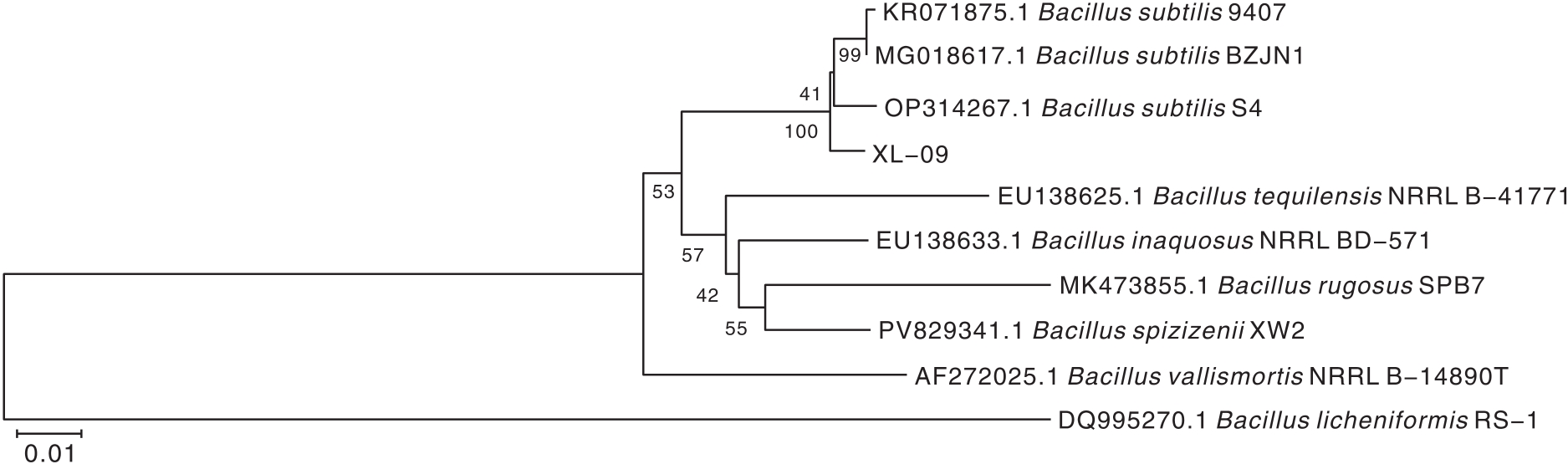
Fig.1 Phylogenetic tree constructed based on the sequences of gyrA genes
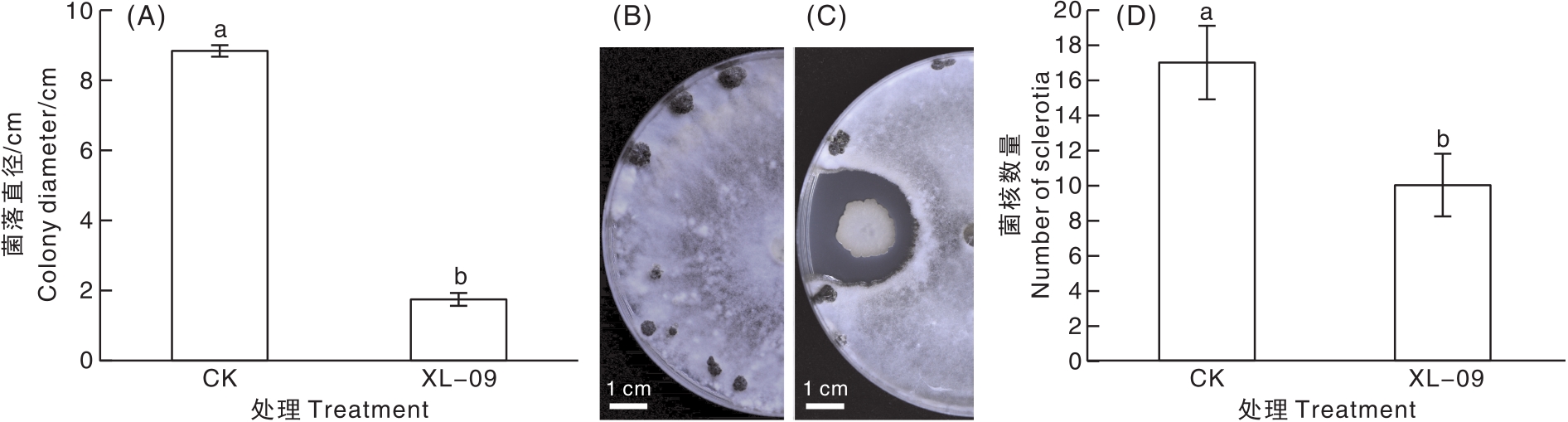
Fig.2 Growth of Sclerotinia sclerotiorum under different treatments A, Colony diameter at 5 days of culture ; B, Colony growth of the control group at 5 days of culture ; C, Colony growth of XL-09 treatment at 5 days of culture; D, Number of sclerotia at 25 days of culture. No same lowercase letters on the column indicate significant (p<0.05) difference. The same as Fig. 3.
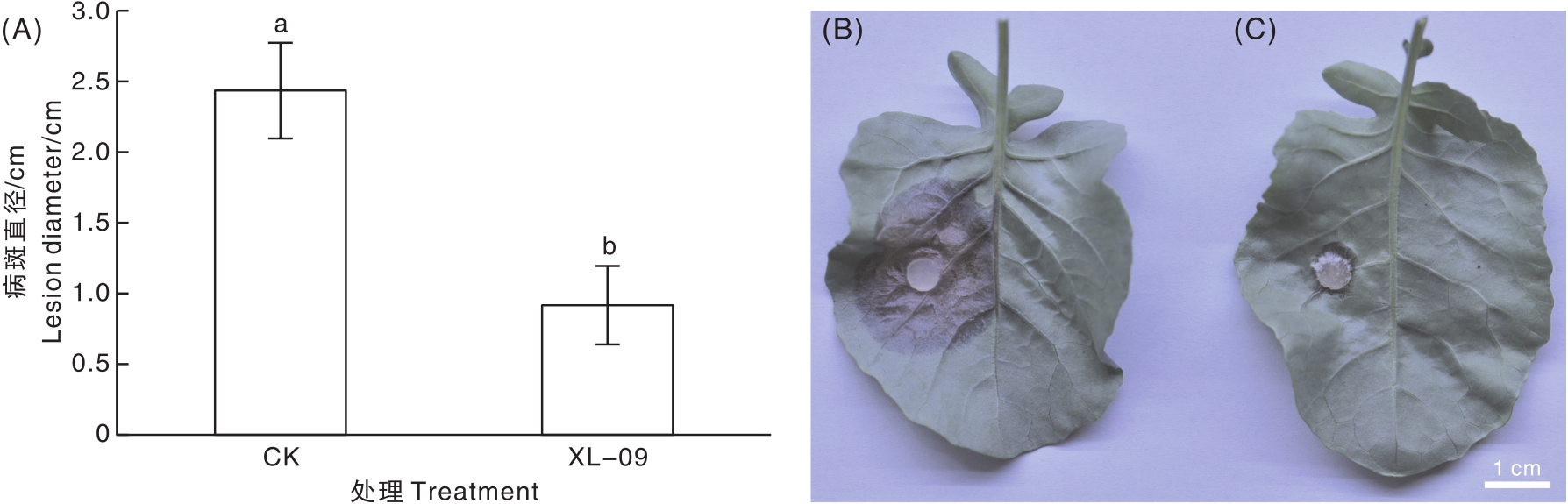
Fig.3 Disease resistance of broccoli under different treatments A, Lesion diameter of broccoli leaves ; B and C are the phenotypic photos of control and treatment, respectively.
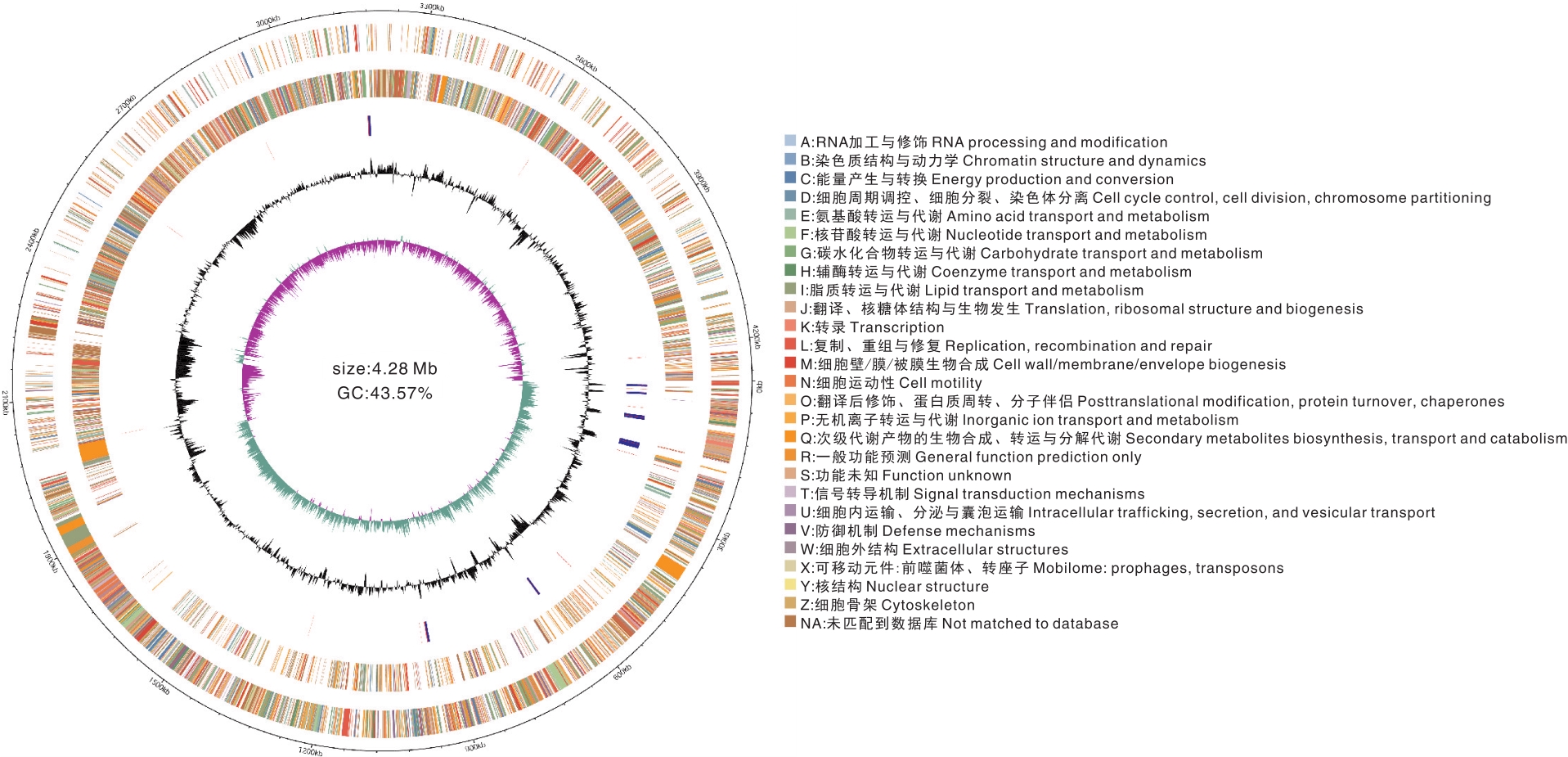
Fig.4 Circos plot of the Bacillus subtilis strain XL-09 genome The circle diagram from the outside to the inside is the genome coordinate, the gene on the positive chain of the genome sequence, the gene on the negative chain of the genome sequence, the rRNA and tRNA on the genome sequence, the GC content curve of the genome sequence, and the GC bias curve of the genome sequence.
| 次生代谢产物 Secondary metabolite | 基因名称 Gene name | 基因簇大小/kb Gene cluster size/kb |
|---|---|---|
| 产孢致死因子 Sporulation lethal factor | skfA、skfB、skfC、ybdM | 22.1 |
| 表面活性素 Surfactin | nasC、nasB、yciC、yckB、srfAA、srfAB、srfAC、srfAD、gabR_1、sfp、tcyA、bsdB、pip_2 | 63.4 |
| 芽孢杆菌素 Bacillocin | pbpX、tdh、miaB、pksB、pksC、pksD、pksE、acpK、pksF、pksG、pksH、pksI、pksJ、pksL、pksM_1、pksM_ 2、pksN、pksR、pksS_1、aprX | 105.4 |
| 芬荠素 Fengycin | gtaB_1、accD5、crt、yngG、cfiB、fadD3、bcd、ppsE、ppsD、ppsC、ppsB、ppsA、ggt、adhT | 77.0 |
| 枯草三十七肽 Sublancin | sunS、lagD、sunA、speG | 20.2 |
| 杆菌素Corynebactin | pncA、yueD、mbtH、dhbF、dhbB、dhbE、dhbC、dhbA、besA、yumC | 47.1 |
| 枯草杆菌肽A Subtilosin A | narG、sboA、albA、albE、albF | 21.6 |
| 芽孢菌溶素 Bacilysin | bacG、bacF_2、bacD、bacC_1、rocC_2、rocA、rfbC、rmlD、rfbB、rmlA、murG_2、arnB | 41.4 |
| 泰乐菌素 Tylosin | gntZ、ahpC_2、ahpF、yydH、moaA_2、fdhA | 21.7 |
Table 2 Secondary metabolite gene clusters of XL-09 strain
| 次生代谢产物 Secondary metabolite | 基因名称 Gene name | 基因簇大小/kb Gene cluster size/kb |
|---|---|---|
| 产孢致死因子 Sporulation lethal factor | skfA、skfB、skfC、ybdM | 22.1 |
| 表面活性素 Surfactin | nasC、nasB、yciC、yckB、srfAA、srfAB、srfAC、srfAD、gabR_1、sfp、tcyA、bsdB、pip_2 | 63.4 |
| 芽孢杆菌素 Bacillocin | pbpX、tdh、miaB、pksB、pksC、pksD、pksE、acpK、pksF、pksG、pksH、pksI、pksJ、pksL、pksM_1、pksM_ 2、pksN、pksR、pksS_1、aprX | 105.4 |
| 芬荠素 Fengycin | gtaB_1、accD5、crt、yngG、cfiB、fadD3、bcd、ppsE、ppsD、ppsC、ppsB、ppsA、ggt、adhT | 77.0 |
| 枯草三十七肽 Sublancin | sunS、lagD、sunA、speG | 20.2 |
| 杆菌素Corynebactin | pncA、yueD、mbtH、dhbF、dhbB、dhbE、dhbC、dhbA、besA、yumC | 47.1 |
| 枯草杆菌肽A Subtilosin A | narG、sboA、albA、albE、albF | 21.6 |
| 芽孢菌溶素 Bacilysin | bacG、bacF_2、bacD、bacC_1、rocC_2、rocA、rfbC、rmlD、rfbB、rmlA、murG_2、arnB | 41.4 |
| 泰乐菌素 Tylosin | gntZ、ahpC_2、ahpF、yydH、moaA_2、fdhA | 21.7 |
| [1] | Andrés C M C, Pérez de la Lastra J M, Munguira E B, et al. The multifaceted health benefits of broccoli-a review of glucosinolates, phenolics and antimicrobial peptides[J]. Molecules, 2025, 30(11): 2262. |
| [2] | Syed R U, Moni S S, Break M K B, et al. Broccoli: a multi-faceted vegetable for health: an in-depth review of its nutritional attributes, antimicrobial abilities, and anti-inflammatory properties[J]. Antibiotics, 2023, 12(7): 1157. |
| [3] | Greer S F, Surendran A, Grant M, et al. The current status, challenges, and future perspectives for managing diseases of brassicas[J]. Frontiers in Microbiology, 2023, 14: 1209258. |
| [4] | Branca F, Bahcevandziev K, Perticone V, et al. Sources of resistance to downy mildew (Peronospora parasitica(Pers. (ex Fr.) Fr.) in Sicilian germplasm of cauliflower and broccoli[J]. Biodiversity & Conservation, 2005, 14(4): 841-848. |
| [5] | Hossain M M, Sultana F, Li W Q, et al. Sclerotinia sclerotiorum(lib.) de bary: insights into the pathogenomic features of a global pathogen[J]. Cells, 2023, 12(7): 1063. |
| [6] | Antwi-Boasiako A, Wang Y, Dapaah H K, et al. Mitigating against Sclerotinia diseases in legume crops: a comprehensive review[J]. Agronomy, 2022, 12(12): 3140. |
| [7] | O’Sullivan C A, Belt K, Thatcher L F. Tackling control of a cosmopolitan phytopathogen: Sclerotinia[J]. Frontiers in Plant Science, 2021, 12: 707509. |
| [8] | Viancelli A, Comelli C, Nogara C M, et al. The impact of pesticides: assessing residue persistence, environmental contamination, and human health risks[J]. Journal of Toxicological Studies, 2024, 2(2): 1667. |
| [9] | Villavicencio-Vásquez M, Espinoza-Lozano F, Espinoza-Lozano L, et al. Biological control agents: mechanisms of action, selection, formulation and challenges in agriculture[J]. Frontiers in Agronomy, 2025, 7: 1578915. |
| [10] | Semenzato G, Fani R. Endophytic bacteria: a sustainable strategy for enhancing medicinal plant cultivation and preserving microbial diversity[J]. Frontiers in Microbiology, 2024, 15: 1477465. |
| [11] | Ali M A, Ahmed T, Ibrahim E, et al. A review on mechanisms and prospects of endophytic bacteria in biocontrol of plant pathogenic fungi and their plant growth-promoting activities[J]. Heliyon, 2024, 10(11): e31573. |
| [12] | Vandana U K, Rajkumari J, Singha L P, et al. The endophytic microbiome as a hotspot of synergistic interactions, with prospects of plant growth promotion[J]. Biology, 2021, 10(2): 101. |
| [13] | 李亚莉, 齐立本. 南瓜白粉病拮抗内生细菌Bacillus cereus B4-2的分离鉴定及生防效果[J]. 中国瓜菜, 2024(8): 51-56. |
| Li Y L, Qi L B. Isolation and identification of endophytic Bacillus cereus B4-2 against pumpkin powdery mildew and effect of biological control[J]. China Cucurbits and Vegetables, 2024(8): 51-56. | |
| [14] | 巫瑞, 袁美静, 康晓玲, 等. 月季炭疽病内生拮抗细菌的筛选鉴定及抑菌作用[J]. 南方农业学报, 2024, 55(4): 1046-1059. |
| Wu R, Yuan M J, Kang X L, et al. Screening, identification and bacteriostasic activity of antagonistic endophytic bacteria against Rosa chinensis Jacp.anthracnose[J]. Journal of Southern Agriculture, 2024, 55(4): 1046-1059. | |
| [15] | 周萍, 张弛, 荀以仁, 等. 青稞内生细菌RKZ-05对禾谷镰刀菌的拮抗作用及其分子鉴定[J]. 江苏农业科学, 2023, 51(22): 113-120. |
| Zhou P, Zhang C, Xun Y R, et al. Antagonism of endophytic bacteria RKZ-05 from highland barley against Fusarium graminearum and its molecular identification[J]. Jiangsu Agricultural Sciences, 2023, 51(22): 113-120. | |
| [16] | 李丽丽, 曾广宇, 王继春, 等. 油茶根腐病内生拮抗促生细菌筛选及诱导系统抗性研究[J]. 中国油料作物学报, 2024, 46(6): 1390-1397. |
| Li L L, Zeng G Y, Wang J C, et al. Screening and systematic resistance induction of endogenous antagonistic growth-promoting bacteria against Camellia oleifera root rot[J]. Chinese Journal of Oil Crop Sciences, 2024, 46(6): 1390-1397. | |
| [17] | 李宁, 周和平, 许旭, 等. 油菜内生拮抗细菌SF4对油菜菌核病菌的抑制作用研究[J]. 安徽农业大学学报, 2013, 40(6): 969-974. |
| Li N, Zhou H P, Xu X, et al. Inhibitory effects of antagonistic endophytic bacterium SF4 in oilseed rape against Sclerotinia sclerotiorum[J]. Journal of Anhui Agricultural University, 2013, 40(6): 969-974. | |
| [18] | 李梦霖, 阮羽萱, 杜可心, 等. 2株油菜菌核病拮抗内生细菌的筛选鉴定及其拮抗活性初步分析[J]. 江苏农业科学, 2019, 47(13): 121. |
| Li M L, Ruan Y X, Du K X, et al. Screening, identification and anti-fungus activity analysis of two endophytic bacterium antagonizing to Sclerotinia sclerotiorum[J]. Jiangsu Agricultural Sciences, 2019, 47(13): 121. | |
| [19] | 涂勇强, 陈梦雅, 余永廷, 等. 内生菌产抑制油菜菌核病菌生长的活性物质发酵条件研究[J]. 湖南农业科学, 2019(12): 6-10. |
| Tu Y Q, Chen M Y, Yu Y T, et al. Fermentation conditions of active substances produced by endophytic bacteria to inhibit the growth of Sclerotia in rape[J]. Hunan Agricultural Sciences, 2019(12): 6-10. | |
| [20] | Soylu S, Kara M, Uysal A, et al. Determination of antagonistic potential of endophytic bacteria isolated from lettuce against lettuce white mould disease caused by Sclerotinia sclerotiorum[J]. Zemdirbyste-Agriculture, 2021, 108(4): 303-312. |
| [21] | 布坎南(R.E.Buchanan). 伯杰细菌鉴定手册: 第八版[M]. 中国科学院微生物研究所《伯杰细菌鉴定手册》译组, 译. 8版. 北京: 科学出版社, 1984. |
| [22] | 东秀珠, 蔡妙英. 常见细菌系统鉴定手册[M]. 北京: 科学出版社, 2001. |
| [23] | Roberts M S, Nakamura L K, Cohan F M. Bacillus mojavensis sp. nov., distinguishable from Bacillus subtilis by sexual isolation, divergence in DNA sequence, and differences in fatty acid composition[J]. International Journal of Systematic Bacteriology, 1994, 44(2): 256-264. |
| [24] | Oukala N, Aissat K, Pastor V. Bacterial endophytes: the hidden actor in plant immune responses against biotic stress[J]. Plants, 2021, 10(5): 1012. |
| [25] | 易冬银, 袁善奎, 毕扬, 等. 油菜菌核病生防细菌ACQ-03的分离鉴定及其活性研究[J]. 中国生物防治学报, 2025, 41(4): 939-948. |
| Yi D Y, Yuan S K, Bi Y, et al. Isolation and identification of biocontrol bacterium ACQ-03 against Sclerotinia sclerotiorum on oilseed rape and its biological activity[J]. Chinese Journal of Biological Control, 2025, 41(4): 939-948. | |
| [26] | Janda J M, Abbott S L. 16S rRNA gene sequencing for bacterial identification in the diagnostic laboratory: pluses, perils, and pitfalls[J]. Journal of Clinical Microbiology, 2007, 45(9): 2761-2764. |
| [27] | 曹凤明, 杨小红, 马鸣超, 等. 枯草芽孢杆菌近缘种群鉴定方法研究进展[J]. 微生物学通报, 2014, 41(5): 968-974. |
| Cao F M, Yang X H, Ma M C, et al. Advances in the identification of Bacillus subtilis and closely related species[J]. Microbiology China, 2014, 41(5): 968-974. | |
| [28] | Liu Y, Štefanič P, Miao Y Z, et al. Housekeeping gene gyrA, a potential molecular marker for Bacillus ecology study[J]. AMB Express, 2022, 12(1): 133. |
| [29] | Gao J L, Khan M S, Sun Y C, et al. Characterization of an endophytic antagonistic bacterial strain Bacillus halotolerans LBG-1-13 with multiple plant growth-promoting traits, stress tolerance, and its effects on lily growth[J]. BioMed Research International, 2022, 2022: 5960004. |
| [30] | He Y, Miao X Y, Xia Y D, et al. The research of antagonistic endophytic bacterium Bacillus velezensis CSUFT-BV4 for growth promotion and induction of resistance to anthracnose in Camellia oleifera[J]. Microorganisms, 2024, 12(4): 763. |
| [31] | Farzand A, Moosa A, Zubair M, et al. Suppression of Sclerotinia sclerotiorum by the induction of systemic resistance and regulation of antioxidant pathways in tomato using fengycin produced by Bacillus amyloliquefaciens FZB42[J]. Biomolecules, 2019, 9(10): 613. |
| [32] | Gregan K C. Antifungal and antibacterial properties of surfactin produced by Bacillus subtilis cultured on molasses[J]. Global Journal of Biological and Biomedical Research, 2016, 4(11): 289-294. |
| [1] | FENG Yue, HE Weijun, CAO Jing, SUN Ting, GU Honghui, CHEN Jun, WU Qibao, ZHANG Wenyu, WU Zaogui. Construction and validation of a simulation model for the floral initiation stage of Brassica oleracea var. italica [J]. Acta Agriculturae Zhejiangensis, 2026, 38(7): 1355-1365. |
| [2] | CHEN Mengwei, ZHANG Chenglei, LIANG Xu, XIE Yongdong, YIN Xinxing. Effects of CaCl2 on growth and active substance content in broccoli sprouts [J]. Acta Agriculturae Zhejiangensis, 2026, 38(6): 1198-1208. |
| [3] | MA Qiyang, HUANG Xuelian. Genome-wide analysis of the TCP gene family in Astragalus membranaceus (Fisch.) Bunge and its response to abiotic stress [J]. Acta Agriculturae Zhejiangensis, 2026, 38(2): 269-283. |
| [4] | YIN Minghua, KANG Haiyan, ZHONG Keqing, WU Lijuan, HU Liexin, WU Chunfa, GONG Shuifei. Structural characterization and phylogenetic analysis of the chloroplast genome of Cyclocarya paliurus (Batal.) Iljinskaja leaves [J]. Acta Agriculturae Zhejiangensis, 2026, 38(2): 284-300. |
| [5] | TAO Peng, DING Xiaoya, YUE Zhichen, ZHAO Yanting, LEI Juanli, HU Qizan, ZANG Yunxiang, LI Biyuan. Genome-wide association study and candidate gene prediction of pectin content of pumpkin (Cucurbita moschata) [J]. Acta Agriculturae Zhejiangensis, 2025, 37(6): 1244-1251. |
| [6] | QIAN Mingzhu, WANG Shenfeng, CHANG Xiaoran, HU Junying, ZHU Hongbiao, WANG Xinping. Characterization and analysis of the complete genome sequence of two strains of bovine enterovirus in Henan Province of China [J]. Acta Agriculturae Zhejiangensis, 2025, 37(3): 548-558. |
| [7] | WEN Xiaoxiong, SHU Qin, BAO Mengnan, YAN Jiahui. Identification and complete genome sequence cloning of the chili veinal mottle virus in Qinghai Province of China [J]. Acta Agriculturae Zhejiangensis, 2025, 37(3): 612-620. |
| [8] | YANG Xueyu, NIU Li, TAN Lin, DENG Yulian, BAO Qiang, HU Qiulong. Optimization of the culture conditions of Bacillus subtilis subsp. inaquosorum kc-16 [J]. Acta Agriculturae Zhejiangensis, 2025, 37(12): 2563-2573. |
| [9] | WANG Jiansheng, SHEN Yusen, YU Huifang, SHENG Xiaoguang, SONG Mengfei, GU Honghui. Research progress of broccoli breeding in China [J]. Acta Agriculturae Zhejiangensis, 2024, 36(8): 1934-1944. |
| [10] | HU Tiejun. Effects of chemical fertilizer reduction combined with microbial fertilizer application on yield, quality, and soil properties of broccoli [J]. Acta Agriculturae Zhejiangensis, 2024, 36(7): 1657-1665. |
| [11] | LUAN Haiye, ZHU Linjie, LI Yu, MENG Wei, LIU Yuqian, XU Xiao, LIU Fangfang, SHEN Huiquan. Genome-wide association analysis of barley grain related traits [J]. Acta Agriculturae Zhejiangensis, 2024, 36(5): 997-1002. |
| [12] | HUA Tao, CHANG Chen, LI Qianwen, ZHANG Daohua, TANG Bo. Genetic variation of complete genomes of porcine parvovirus types 1 through 7 [J]. Acta Agriculturae Zhejiangensis, 2024, 36(10): 2193-2203. |
| [13] | MA Lijun, WU Nana, XU Bingliang, LIU Jia, ZHANG Shuwu. Determination of antifungal spectrum and evaluation of antifungal activity of Trichoderma viride B3 strain [J]. Acta Agriculturae Zhejiangensis, 2024, 36(10): 2257-2263. |
| [14] | LI Xuesong, SUN Dafeng, LIU Shaoxiong, ZHANG Junbo, YUE Wansong, LI Jianying, HUA Rong. Development of SSR molecular markers and application of fingerprint database based on whole genome of Stropharia rugosoannulata [J]. Acta Agriculturae Zhejiangensis, 2024, 36(1): 84-93. |
| [15] | ZOU Wenteng, LIU Zhenhong, YANG Jingxuan, LU Yangyang, PENG Kaisong. Genome-wide analysis of pathogenicity and drug resistance of Micropterus salmoides-derived Aeromonas veronii strain AV040 [J]. Acta Agriculturae Zhejiangensis, 2023, 35(9): 2068-2078. |
| Viewed | ||||||
|
Full text |
|
|||||
|
Abstract |
|
|||||

