Acta Agriculturae Zhejiangensis ›› 2026, Vol. 38 ›› Issue (1): 136-147.DOI: 10.3969/j.issn.1004-1524.20240955
• Environmental Science • Previous Articles Next Articles
Effects of new-type fertilizers on soil nutrients, microbial community, and yield of rice and wheat in the typical ancient course area of Yellow River, China
LI Chuanzhe1( ), DONG Qingjun1, JI Li1, WANG Jidong2, CHEN Chuan1, ZHANG Ankang1, ZHANG Yongchun2, SHAO Wenqi1,*()
- 1. Huaiyin Institute of Agricultural Sciences of Xuhuai Area in Jiangsu, Huai’an 223001, Jiangsu, China
2. Institute of Agricultural Resources and Environment, Jiangsu Academy of Agricultural Sciences, Nanjing 210014, China
-
Received:2024-11-07Online:2026-01-25Published:2026-02-11

CLC Number:
Cite this article
LI Chuanzhe, DONG Qingjun, JI Li, WANG Jidong, CHEN Chuan, ZHANG Ankang, ZHANG Yongchun, SHAO Wenqi. Effects of new-type fertilizers on soil nutrients, microbial community, and yield of rice and wheat in the typical ancient course area of Yellow River, China[J]. Acta Agriculturae Zhejiangensis, 2026, 38(1): 136-147.
share this article
Add to citation manager EndNote|Ris|BibTeX
URL: http://www.zjnyxb.cn/EN/10.3969/j.issn.1004-1524.20240955
| 处理 Treatment | 有机质含量/(g·kg-1) Organic matter content/ (g·kg-1) | 全氮含量/(g·kg-1) Total nitrogen content/ (g·kg-1) | 有效磷含量/(mg·kg-1) Available phosphorus content/ (mg·kg-1) | 速效钾含量/(mg·kg-1) Available potassium content/ (mg·kg-1) | pH值 pH value |
|---|---|---|---|---|---|
| CK | 6.45±0.28 b | 0.60±0.01 b | 2.73±0.06 c | 46.53±1.09 b | 7.73±0.01 a |
| NM | 4.99±0.13 c | 0.37±0.01 c | 2.05±0.04 d | 40.37±1.06 d | 7.54±0.05 c |
| F | 7.54±0.37 a | 0.61±0.01 b | 8.40±0.13 a | 50.50±0.39 a | 7.61±0.01 b |
| FE | 7.88±0.08 a | 0.68±0.01 a | 4.87±0.12 b | 43.06±0.12 c | 7.60±0.02 b |
Table 1 Soil physicochemical properties under different treatments
| 处理 Treatment | 有机质含量/(g·kg-1) Organic matter content/ (g·kg-1) | 全氮含量/(g·kg-1) Total nitrogen content/ (g·kg-1) | 有效磷含量/(mg·kg-1) Available phosphorus content/ (mg·kg-1) | 速效钾含量/(mg·kg-1) Available potassium content/ (mg·kg-1) | pH值 pH value |
|---|---|---|---|---|---|
| CK | 6.45±0.28 b | 0.60±0.01 b | 2.73±0.06 c | 46.53±1.09 b | 7.73±0.01 a |
| NM | 4.99±0.13 c | 0.37±0.01 c | 2.05±0.04 d | 40.37±1.06 d | 7.54±0.05 c |
| F | 7.54±0.37 a | 0.61±0.01 b | 8.40±0.13 a | 50.50±0.39 a | 7.61±0.01 b |
| FE | 7.88±0.08 a | 0.68±0.01 a | 4.87±0.12 b | 43.06±0.12 c | 7.60±0.02 b |
| 处理 Treatment | AG | BG | CB | XYL | NAG | LAP | PHOS |
|---|---|---|---|---|---|---|---|
| CK | 55.92±9.52 a | 70.65±3.99 b | 2.98±1.70 b | 33.70±15.40 ab | 0.97±0.71 a | 15.87±4.38 bc | 465.40±20.84 a |
| NM | 67.04±10.97 a | 110.51±10.51 a | 7.13±0.53 a | 43.67±3.79 a | 2.35±0.58 a | 19.84±3.08 ab | 492.73±28.09 a |
| F | 12.07±1.44 b | 44.71±5.51 c | 4.00±0.46 b | 25.63±5.99 bc | 2.47±2.48 a | 22.49±0.46 a | 355.01±30.81 b |
| FE | 14.82±0.90 b | 47.23±6.36 c | 2.52±0.13 b | 14.15±2.89 c | 2.05±0.50 a | 13.13±2.95 c | 332.10±9.98 b |
Table 2 Soil enzymes activity under different treatments nmol·g-1·h-1
| 处理 Treatment | AG | BG | CB | XYL | NAG | LAP | PHOS |
|---|---|---|---|---|---|---|---|
| CK | 55.92±9.52 a | 70.65±3.99 b | 2.98±1.70 b | 33.70±15.40 ab | 0.97±0.71 a | 15.87±4.38 bc | 465.40±20.84 a |
| NM | 67.04±10.97 a | 110.51±10.51 a | 7.13±0.53 a | 43.67±3.79 a | 2.35±0.58 a | 19.84±3.08 ab | 492.73±28.09 a |
| F | 12.07±1.44 b | 44.71±5.51 c | 4.00±0.46 b | 25.63±5.99 bc | 2.47±2.48 a | 22.49±0.46 a | 355.01±30.81 b |
| FE | 14.82±0.90 b | 47.23±6.36 c | 2.52±0.13 b | 14.15±2.89 c | 2.05±0.50 a | 13.13±2.95 c | 332.10±9.98 b |
| 处理 Treatment | Chao1指数 Chao1 index | Shannon指数 Shannon index | Simpson指数 Simpson index | 覆盖率/% Coverage/% |
|---|---|---|---|---|
| CK | 6 556.47±47.23 b | 7.42±0.12 a | 0.997 6±0.000 1 a | 98.17±0.12 a |
| NM | 6 442.17±50.72 c | 7.49±0.04 a | 0.998 5±0.000 1 a | 98.29±0.18 a |
| F | 6 763.60±82.97 a | 7.54±0.10 a | 0.998 4±0.000 1 a | 98.17±0.15 a |
| FE | 6 634.20±101.09 ab | 7.53±0.07 a | 0.998 6±0.000 1 a | 98.14±0.16 a |
Table 3 Alpha diversity of soil bacteria under different treatments
| 处理 Treatment | Chao1指数 Chao1 index | Shannon指数 Shannon index | Simpson指数 Simpson index | 覆盖率/% Coverage/% |
|---|---|---|---|---|
| CK | 6 556.47±47.23 b | 7.42±0.12 a | 0.997 6±0.000 1 a | 98.17±0.12 a |
| NM | 6 442.17±50.72 c | 7.49±0.04 a | 0.998 5±0.000 1 a | 98.29±0.18 a |
| F | 6 763.60±82.97 a | 7.54±0.10 a | 0.998 4±0.000 1 a | 98.17±0.15 a |
| FE | 6 634.20±101.09 ab | 7.53±0.07 a | 0.998 6±0.000 1 a | 98.14±0.16 a |
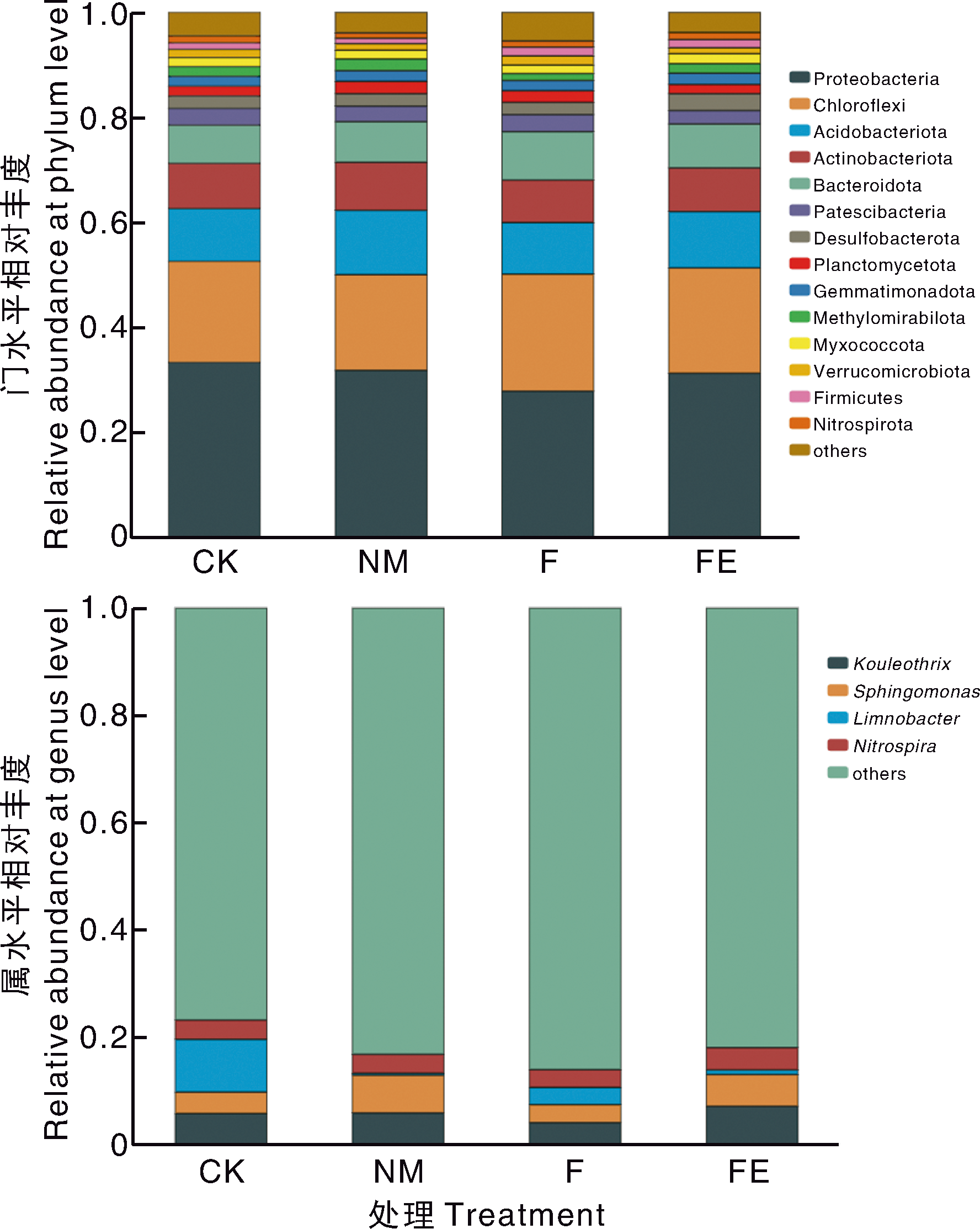
Fig.1 Soil bacterial community composition at phylum and genus level under different treatments
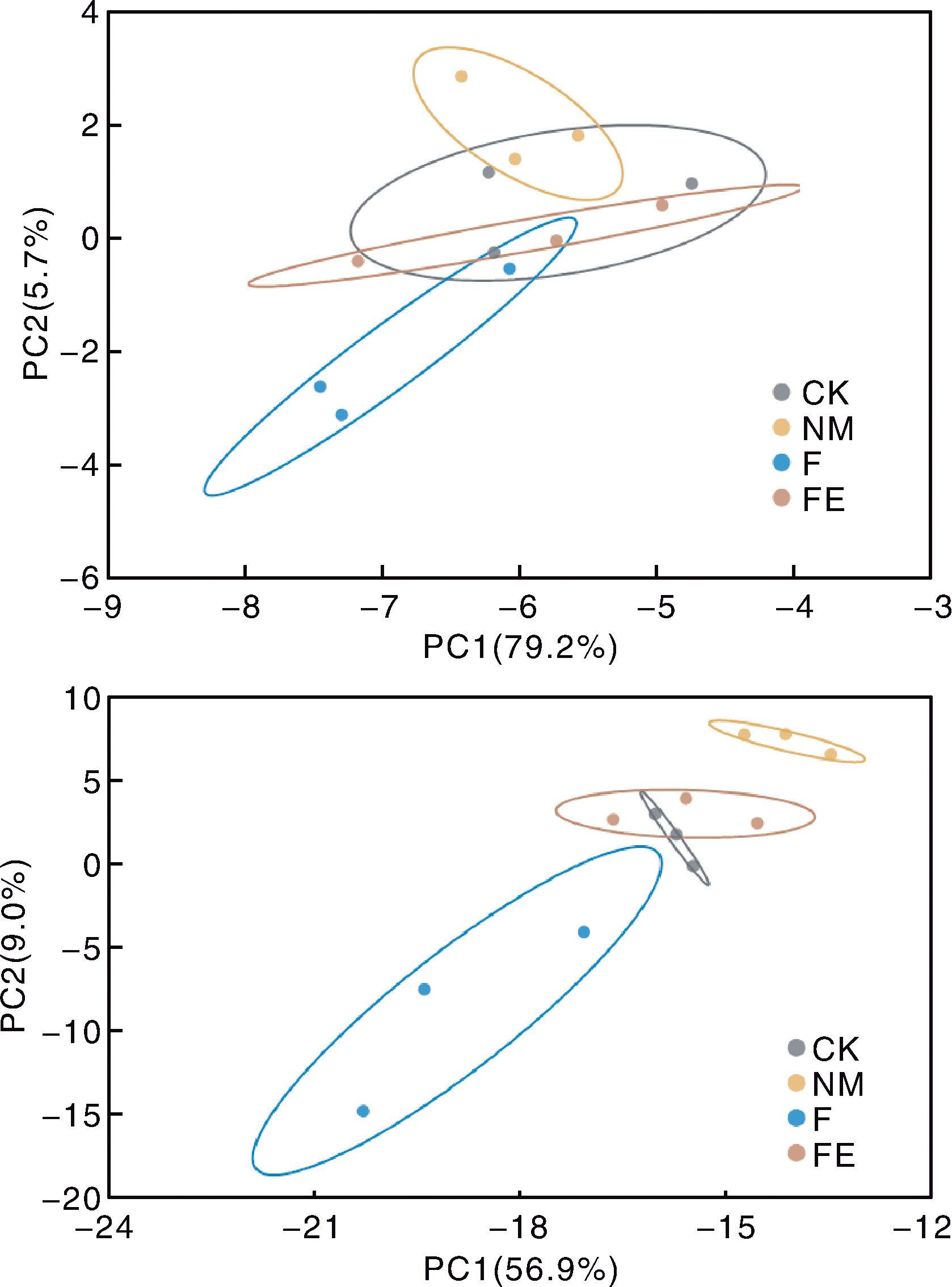
Fig.2 Principal component analysis of soil bacterial community composition at phylum (top) and genus (bottom) level
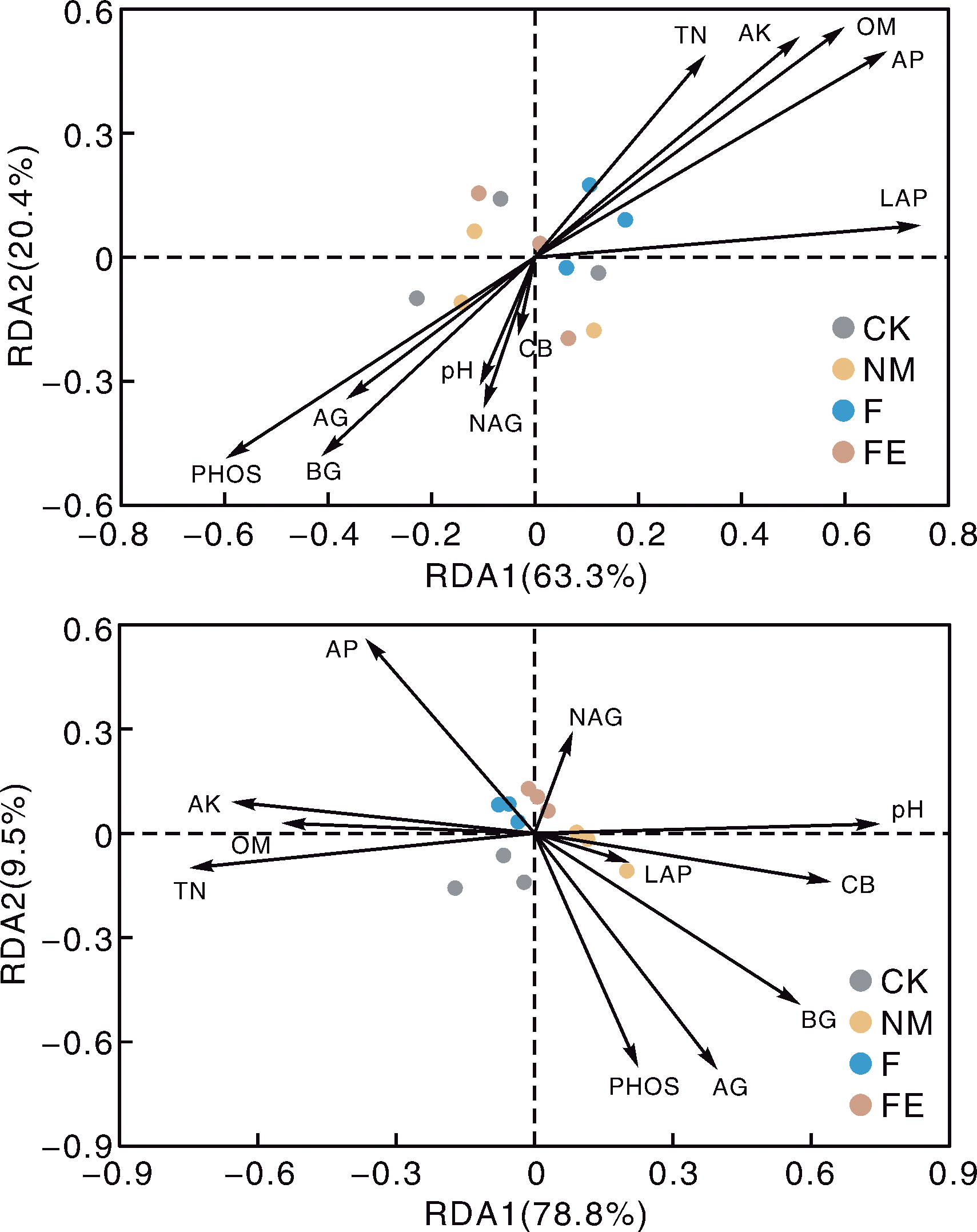
Fig.3 Redundancy analysis (RDA) of soil bacterial community composition at phylum (top) and genus (bottom) level and soil factors pH, pH value; OM, Organic matter content; TN, Total nitrogen content; AP, Available phosphorus content; AK, Available potassium content; AG, α-Glucosidase activity; BG, β-Glucosidase activity; CB, β-D-Cellobiohydrolase activity; XYL, Xylosidase activity; NAG, β-1,4-N-Acetyl-glucosaminidase activity; LAP, Leucine aminopeptidase activity; PHOS, Acid phosphatase activity. The same as below.
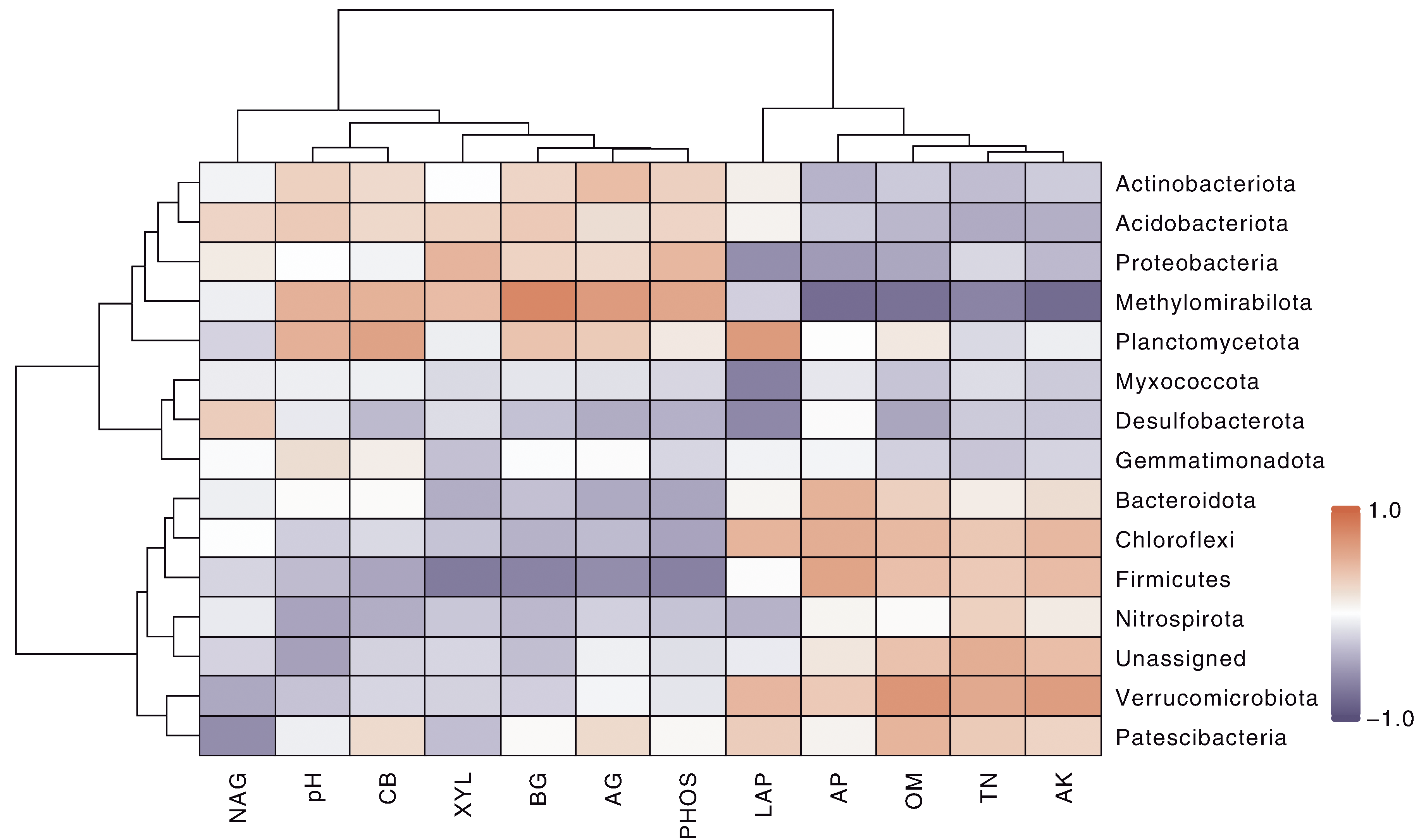
Fig.4 Spearman’s correlation heatmap within soil factors and bacterial community composition
| 作物 Crop | 处理 Treatment | 有效穗数/(104 hm-2) Effective panicle number/(104 hm-2) | 穗粒数 Grain number per spike | 千粒重/g 1 000-grain weight/g | 产量(kg·hm-2) Yield/(kg·hm-2) |
|---|---|---|---|---|---|
| 水稻Rice | CK | 270.27±5.44 b | 98.96±0.94 a | 26.73±0.14 b | 7 148.6±122.9 c |
| NM | 277.47±4.10 ab | 101.09±5.03 a | 26.81±0.48 b | 7 513.6±133.6 b | |
| F | 283.21±3.84 a | 100.74±0.44 a | 26.88±0.06 b | 7 669.3±86.4 b | |
| FE | 282.81±1.22 a | 100.74±1.82 a | 27.64±0.42 a | 7 873.2±72.2 a | |
| 小麦Wheat | CK | 340.97±2.74 c | 29.68±1.17 a | 48.87±0.96 b | 4 944.4±191.8 c |
| NM | 375.79±8.37 b | 28.13±1.01 b | 48.60±0.37 b | 5 135.2±132.7 bc | |
| F | 435.82±8.24 a | 26.97±0.54 c | 45.72±1.33 c | 5 371.4±85.7 ab | |
| FE | 372.19±4.54 b | 28.11±0.26 b | 52.22±0.06 a | 5 463.4±107.9 a |
Table 4 Rice and wheat yield and their components under different treatments
| 作物 Crop | 处理 Treatment | 有效穗数/(104 hm-2) Effective panicle number/(104 hm-2) | 穗粒数 Grain number per spike | 千粒重/g 1 000-grain weight/g | 产量(kg·hm-2) Yield/(kg·hm-2) |
|---|---|---|---|---|---|
| 水稻Rice | CK | 270.27±5.44 b | 98.96±0.94 a | 26.73±0.14 b | 7 148.6±122.9 c |
| NM | 277.47±4.10 ab | 101.09±5.03 a | 26.81±0.48 b | 7 513.6±133.6 b | |
| F | 283.21±3.84 a | 100.74±0.44 a | 26.88±0.06 b | 7 669.3±86.4 b | |
| FE | 282.81±1.22 a | 100.74±1.82 a | 27.64±0.42 a | 7 873.2±72.2 a | |
| 小麦Wheat | CK | 340.97±2.74 c | 29.68±1.17 a | 48.87±0.96 b | 4 944.4±191.8 c |
| NM | 375.79±8.37 b | 28.13±1.01 b | 48.60±0.37 b | 5 135.2±132.7 bc | |
| F | 435.82±8.24 a | 26.97±0.54 c | 45.72±1.33 c | 5 371.4±85.7 ab | |
| FE | 372.19±4.54 b | 28.11±0.26 b | 52.22±0.06 a | 5 463.4±107.9 a |
| [1] | 李传哲, 章欢, 姚文静, 等. 生物炭配施氮肥对典型黄河故道区土壤理化性质和冬小麦产量的影响[J]. 应用生态学报, 2020, 31(10): 3424-3432. |
| LI C Z, ZHANG H, YAO W J, et al. Effects of biochar application combined with nitrogen fertilizer on soil physicochemical properties and winter wheat yield in the typical ancient region of Yellow River, China[J]. Chinese Journal of Applied Ecology, 2020, 31(10): 3424-3432. | |
| [2] | YAHAYA S M, AHMAD MAHMUD A, ABDULLAHI M, et al. Recent advances in the chemistry of nitrogen, phosphorus and potassium as fertilizers in soil: a review[J]. Pedosphere, 2023, 33(3): 385-406. |
| [3] | 郝胜磊, 蔡廷瑶, 冯小杰, 等. 新型肥料对全球三大粮食作物产量和土壤生物学活性影响的Meta分析[J]. 植物营养与肥料学报, 2021, 27(9): 1496-1505. |
| HAO S L, CAI T Y, FENG X J, et al. Effects of new fertilizers on the yield and soil biological activity of three major food crops: a global meta-analysis[J]. Journal of Plant Nutrition and Fertilizers, 2021, 27(9): 1496-1505. | |
| [4] | 丁文成, 何萍, 周卫. 我国新型肥料产业发展战略研究[J]. 植物营养与肥料学报, 2023, 29(2): 201-221. |
| DING W C, HE P, ZHOU W. Development strategies of the new-type fertilizer industry in China[J]. Journal of Plant Nutrition and Fertilizers, 2023, 29(2): 201-221. | |
| [5] | 鲁凯珩, 金杰人, 肖明. 微生物肥料在盐碱土壤中的应用展望[J]. 微生物学通报, 2019, 46(7): 1695-1705. |
| LU K H, JIN J R, XIAO M. Prospect of microbial fertilizer in saline soil[J]. Microbiology China, 2019, 46(7): 1695-1705. | |
| [6] | 伍少福, 韩科峰, 吴良欢. 生物有机肥加专用肥对葡萄园土壤养分、微生物和产量的影响[J]. 园艺学报, 2024, 51(5): 1099-1112. |
| WU S F, HAN K F, WU L H. Effects of biological-organic fertilizer combined with specialized fertilizer on soil nutrients, microbial diversity and yield in vineyards[J]. Acta Horticulturae Sinica, 2024, 51(5): 1099-1112. | |
| [7] | WANG L, ZHANG H, XU C, et al. Long-term nitrogen fertilization and sweetpotato cultivation in the wheat-sweetpotato rotation system decrease alkaline phosphomonoesterase activity by regulating soil phoD-harboring bacteria communities[J]. Science of The Total Environment, 2023, 900: 165916. |
| [8] | RASHID M I, MUJAWAR L H, SHAHZAD T, et al. Bacteria and fungi can contribute to nutrients bioavailability and aggregate formation in degraded soils[J]. Microbiological Research, 2016, 183: 26-41. |
| [9] | JURASINSKI G, RETZER V, BEIERKUHNLEIN C. Inventory, differentiation, and proportional diversity: a consistent terminology for quantifying species diversity[J]. Oecologia, 2009, 159(1): 15-26. |
| [10] | ABDELKRIM S, JEBARA S H, JEBARA M. Antioxidant systems responses and the compatible solutes as contributing factors to lead accumulation and tolerance in Lathyrus sativus inoculated by plant growth promoting rhizobacteria[J]. Ecotoxicology and Environmental Safety, 2018, 166: 427-436. |
| [11] | 刘希港, 李楠, 季托, 等. 微生物菌剂和玉米蛋白酵素对番茄叶片生理特性和产量的影响[J]. 应用生态学报, 2023, 34(11): 3039-3044. |
| LIU X G, LI N, JI T, et al. Effects of microbial agents and corn protein ferment on physiological characteristics in leaves and yield of tomato[J]. Chinese Journal of Applied Ecology, 2023, 34(11): 3039-3044. | |
| [12] | 许芳. 辅酶Q10提取方法研究和高产光合菌的选育[D]. 北京: 北京化工大学, 2008. |
| XU F. Methods of extracting of CoQ10 and selection of high yield PSB[D]. Beijing: Beijing University of Chemical Technology, 2008. | |
| [13] | 索全义, 徐鲁明, 张建平, 等. 辅酶Q10污泥施用对作物和土壤效应的研究[J]. 内蒙古农业科技, 2015, 43(2): 12-15. |
| SUO Q Y, XU L M, ZHANG J P, et al. Research on the effects of coenzyme Q10 sludge applied on the soil and crop[J]. Inner Mongolia Agricultural Science and Technology, 2015, 43(2): 12-15. | |
| [14] | PUISSANT J, JONES B, GOODALL T, et al. The pH optimum of soil exoenzymes adapt to long term changes in soil pH[J]. Soil Biology and Biochemistry, 2019, 138: 107601. |
| [15] | 鲁如坤. 土壤农业化学分析方法[M]. 北京: 中国农业科技出版社, 1999: 25-96. |
| [16] | 李东, 田秋香, 赵小祥, 等. 贡嘎山树线过渡带土壤胞外酶活性及其化学计量比特征[J]. 植物生态学报, 2022, 46(2): 232-242. |
| LI D, TIAN Q X, ZHAO X X, et al. Soil extracellular enzyme activities and their stoichiometric ratio in the alpine treeline ecotones in Gongga Mountain, China[J]. Chinese Journal of Plant Ecology, 2022, 46(2): 232-242. | |
| [17] | YANG J S, ZHAO S S, ZHI W B, et al. Improvement of silage characteristics of Lactobacillus salivarius HMC4 and improvement of silage quality of king grass[J]. Frontiers in Microbiology, 2024, 15: 1468577. |
| [18] | EDGAR R C. UPARSE: highly accurate OTU sequences from microbial amplicon reads[J]. Nature Methods, 2013, 10(10): 996-998. |
| [19] | FINN D R. A metagenomic alpha-diversity index for microbial functional biodiversity[J]. FEMS Microbiology Ecology, 2024, 100(3): fiae019. |
| [20] | LI W X, ZHANG F Y, CUI G H, et al. Effects of bio-organic fertilizer on soil fertility, microbial community composition, and potato growth[J]. ScienceAsia, 2021, 47(3): 347. |
| [21] | 臧小平, 周兆禧, 林兴娥, 等. 不同用量有机肥对芒果果实品质及土壤肥力的影响[J]. 中国土壤与肥料, 2016(1): 98-101. |
| ZANG X P, ZHOU Z X, LIN X E, et al. Effects of different organic manure application rate on mango fruit quality and soil fertility[J]. Soil and Fertilizer Sciences in China, 2016(1): 98-101. | |
| [22] | 张晓丽, 王国丽, 常芳弟, 等. 生物菌剂对根际盐碱土壤理化性质和微生物区系的影响[J]. 生态环境学报, 2022, 31(10): 1984-1992. |
| ZHANG X L, WANG G L, CHANG F D, et al. Effects of microbial agents on physicochemical properties and microbial flora of rhizosphere saline-alkali soil[J]. Ecology and Environmental Sciences, 2022, 31(10): 1984-1992. | |
| [23] | GRZYB A, WOLNA-MARUWKA A, NIEWIADOMSKA A. The significance of microbial transformation of nitrogen compounds in the light of integrated crop management[J]. Agronomy, 2021, 11(7): 1415. |
| [24] | 虞轶俊, 徐青山, 张均华, 等. 土壤培肥技术对土壤健康的影响途径与作用机制[J]. 中国土壤与肥料, 2024(2): 220-227. |
| YU Y J, XU Q S, ZHANG J H, et al. The influence and mechanism of soil fertilization technology on soil health[J]. Soil and Fertilizer Sciences in China, 2024(2): 220-227. | |
| [25] | MÜHLBACHOVÁ G, RŬŽEK P, KUSÁ H, et al. Winter wheat straw decomposition under different nitrogen fertilizers[J]. Agriculture, 2021, 11(2): 83. |
| [26] | WONG J W C, KARTHIKEYAN O P, SELVAM A. Biological nutrient transformation during composting of pig manure and paper waste[J]. Environmental Technology, 2017, 38(6): 754-761. |
| [27] | 梁天, 张晓东, 张玉, 等. 不同C/N条件下菌酶制剂对牛粪堆肥进程的影响[J]. 中国农学通报, 2022, 38(31): 77-82. |
| LIANG T, ZHANG X D, ZHANG Y, et al. Effect of bacterial enzyme preparation on composting of cow manure under different C/N conditions[J]. Chinese Agricultural Science Bulletin, 2022, 38(31): 77-82. | |
| [28] | YAN P, WU L Q, WANG D H, et al. Soil acidification in Chinese tea plantations[J]. Science of The Total Environment, 2020, 715: 136963. |
| [29] | 刘聪, 万翠翠, 宋旭, 等. 复合菌剂对新疆辣椒的促生效果和根际真核生物群落结构的影响[J]. 应用生态学报, 2024, 35(6): 1599-1607. |
| LIU C, WAN C C, SONG X, et al. Effects of effective microorganisms on growth promotion and the rhizosphere eukaryotic community structure of pepper in Xinjiang, China[J]. Chinese Journal of Applied Ecology, 2024, 35(6): 1599-1607. | |
| [30] | VEPSÄLÄINEN M, KUKKONEN S, VESTBERG M, et al. Application of soil enzyme activity test kit in a field experiment[J]. Soil Biology and Biochemistry, 2001, 33(12/13): 1665-1672. |
| [31] | 许立阳, 王亚男, 曾希柏, 等. 微生物菌肥对瘠薄稻田土壤养分及水稻生长的影响[J]. 农业环境科学学报, 2024, 43(10): 2350-2362. |
| XU L Y, WANG Y N, ZENG X B, et al. Microbial fertilizer effects on soil nutrients and rice growth in barren paddy fields[J]. Journal of Agro-Environment Science, 2024, 43(10): 2350-2362. | |
| [32] | 曲成闯, 陈效民, 张志龙, 等. 生物有机肥提高设施土壤生产力减缓黄瓜连作障碍的机制[J]. 植物营养与肥料学报, 2019, 25(5): 814-823. |
| QU C C, CHEN X M, ZHANG Z L, et al. Mechanism of bio-organic fertilizer on improving soil productivity for continuous cucumber in greenhouse[J]. Journal of Plant Nutrition and Fertilizers, 2019, 25(5): 814-823. | |
| [33] | LIU X, CHEN Q, ZHANG H C, et al. Effects of exogenous organic matter addition on agricultural soil microbial communities and relevant enzyme activities in Southern China[J]. Scientific Reports, 2023, 13: 8045. |
| [34] | 黄阔, 江其鹏, 姚晓远, 等. 微生物菌剂对烟草根结线虫及根际微生物群落多样性的影响[J]. 中国烟草科学, 2019, 40(5): 36-43. |
| HUANG K, JIANG Q P, YAO X Y, et al. Effects of microbial agents on tobacco root-knot nematode and diversity of rhizosphere microbial communities[J]. Chinese Tobacco Science, 2019, 40(5): 36-43. | |
| [35] | BURNS K N, KLUEPFEL D A, STRAUSS S L, et al. Vineyard soil bacterial diversity and composition revealed by 16S rRNA genes: differentiation by geographic features[J]. Soil Biology and Biochemistry, 2015, 91: 232-247. |
| [36] | LIU X Z, MA Y Y, MANEVSKI K, et al. Biochar and alternate wetting-drying cycles improving rhizosphere soil nutrients availability and tobacco growth by altering root growth strategy in Ferralsol and Anthrosol[J]. Science of The Total Environment, 2022, 806: 150513. |
| [37] | JANUSZ G, PAWLIK A, ŚWIDERSKA-BUREK U, et al. Laccase properties, physiological functions, and evolution[J]. International Journal of Molecular Sciences, 2020, 21(3): 966. |
| [38] | 邢亚薇, 李春越, 刘津, 等. 长期施肥对黄土旱塬农田土壤微生物丰度的影响[J]. 应用生态学报, 2019, 30(4): 1351-1358. |
| XING Y W, LI C Y, LIU J, et al. Effects of long-term fertilization on soil microbial abundance in farmland of the Loess Plateau, China[J]. Chinese Journal of Applied Ecology, 2019, 30(4): 1351-1358. | |
| [39] | 王娟娟, 朱紫娟, 钱晓晴, 等. 全年稻麦秸秆还田对稻田土壤细菌群落结构的影响[J]. 中国土壤与肥料, 2022(4): 57-65. |
| WANG J J, ZHU Z J, QIAN X Q, et al. Effects of year-round rice-wheat straw return on soil bacterial community structure in paddy fields[J]. Soil and Fertilizer Sciences in China, 2022(4): 57-65. | |
| [40] | SHA M H, XU J, ZHENG Z C, et al. Enhanced atmospheric nitrogen deposition triggered little change in soil microbial diversity and structure in a desert ecosystem[J]. Global Ecology and Conservation, 2021, 31: e01879. |
| [41] | 赵阳安, 芦光新, 邓晔, 等. 根瘤菌拌种对两种苜蓿生长及根际微生物多样性的影响[J]. 草地学报, 2022, 30(2): 370-378. |
| ZHAO Y A, LU G X, DENG Y, et al. Effect of Rhizobium seed dressing on growth of two alfalfa and rhizosphere microbial diversity[J]. Acta Agrestia Sinica, 2022, 30(2): 370-378. | |
| [42] | SUN L, XUN W B, HUANG T, et al. Alteration of the soil bacterial community during parent material maturation driven by different fertilization treatments[J]. Soil Biology and Biochemistry, 2016, 96: 207-215. |
| [43] | AHSAN T, TIAN P C, GAO J, et al. Effects of microbial agent and microbial fertilizer input on soil microbial community structure and diversity in a peanut continuous cropping system[J]. Journal of Advanced Research, 2024, 64: 1-13. |
| [44] | 谢亚军, 陈晓萍, 倪亮, 等. 基于辅酶Q10发酵液的有机液肥对小白菜生长和土壤酶活性的影响[J]. 浙江大学学报(农业与生命科学版), 2011, 37(5): 545-550. |
| XIE Y J, CHEN X P, NI L, et al. Effects of organic liquid fertilizer made by coenzyme Q10 fermentation broth on pakchoi (Brassica campestris) growth and soil enzyme activities[J]. Journal of Zhejiang University (Agriculture and Life Sciences), 2011, 37(5): 545-550. |
| [1] | WEI Xinhang, ZHOU Quan, LI Yani, CHEN Weiliang, MAO Bizeng. Effect of bio-organic fertilizer on microbial community structure in rhizosphere of Curcuma wenyujin [J]. Acta Agriculturae Zhejiangensis, 2025, 37(4): 892-900. |
| [2] | YUE Zongwei, LI Jiaxiao, SUN Xiangyang, LIU Guoliang, LI Suyan, WANG Chenchen, ZHA Guichao, WEI Ningxian. Effects of chemical fertilizer combined with organic fertilizer on soil properties, cherry fruit quality and yield [J]. Acta Agriculturae Zhejiangensis, 2023, 35(9): 2192-2201. |
| [3] | WU Chuanmei, HE Ji, WU Wenshan, CAI Jun, XIANG Yangzhou. Effects of intercropping on stoichiometric characteristics and nutrients contribution rate of soil aggregates in Rosa roxbunghii Tratt. orchard [J]. Acta Agriculturae Zhejiangensis, 2023, 35(5): 1132-1143. |
| [4] | LU Shuai, LUO Xiaogang, LIU Quanwei, ZHANG Yi, MENG Yanghao, LI Jie, ZHANG Jinglai. Effect of organic-inorganic compound fertilizer on wheat growth, nutrients and heavy metal content of soil and wheat [J]. Acta Agriculturae Zhejiangensis, 2023, 35(4): 922-930. |
| [5] | FENG Lin, ZHOU Quan, CHEN Weiliang, MAO Bizeng. Development and application of bio-organic fertilizers for prevention and control of bacterial wilt of Curcuma wenyujin [J]. Acta Agriculturae Zhejiangensis, 2023, 35(3): 630-638. |
| [6] | YANG Shengzhu, LI Xiang, LI Chaowen, CHEN Hainian, LIU Li, LU Yingang, CAO Zhuoyang. Characteristics of soil nutrients and enzyme activities in rhizosphere of tobacco affected by bacterial wilt in Guizhou Province, China [J]. Acta Agriculturae Zhejiangensis, 2023, 35(1): 146-155. |
| [7] | RU Chao, YU Jihua, WU Yue, FENG Zhi, GOU Zhaohui, JIN Ning, WANG Shuya, LIU Zeci, LYU Jian. Effect of reducing chemical fertilizer and applying bio-organic fertilizer on yield and quality of Chinese cabbage in open field [J]. Acta Agriculturae Zhejiangensis, 2022, 34(8): 1626-1637. |
| [8] | SUN Wenyan, LIU Xiaogang, ZHANG Wenhui, LI Huiyong, WU Lang, YANG Qiliang, XIONG Guomei. Optimization of drip fertigation scheme for Coffea arabica based on soil quality index [J]. Acta Agriculturae Zhejiangensis, 2022, 34(3): 566-573. |
| [9] | ZHANG Jianli, WANG Zhenhua, CHEN Rui, WANG Dongwang, LIANG Yonghui, LIU Ruhua. Effect of water-fertilizer interaction on yield, quality and soil nutrients of drip irrigated jujube [J]. Acta Agriculturae Zhejiangensis, 2022, 34(11): 2428-2437. |
| [10] | GAO Zhiyuan, YANG Shuna, WANG Zhaoli, WANG Zhihao, XI Xinyan, HE Juan, JIA Huijuan. Effects of different fumigation on continuous cropping soil in peach orchard [J]. Acta Agriculturae Zhejiangensis, 2022, 34(10): 2251-2258. |
| [11] | LI Ju, XIE Bojie, WEI Shouhui, ZHANG Guobin, WU Yue, TANG Zhongqi, XIAO Xuemei, YU Jihua. Effects of combined application of organic fertilizer and chemical fertilizer on nutritional quality and volatile compounds of cauliflower [J]. Acta Agriculturae Zhejiangensis, 2021, 33(7): 1199-1211. |
| [12] | HUANG Shuchao, HOU Dong, YUE Hongzhong, KONG Weiping, ZHANG Dongqin, LI Yali, HAN Dongrong, XIE Bojie. Effects of three growth promoting bacteria and their mixed microbial agents on growth and quality of lettuce [J]. Acta Agriculturae Zhejiangensis, 2021, 33(7): 1212-1221. |
| [13] | FAN Linjuan, LIU Zirong, XU Xueliang, WANG Fenshan, PENG Deliang, YAO Yingjuan. Effects of six kinds of nematicides on soil microbial population, enzymes activities and nutrients in replanted Chinese yam field [J]. Acta Agriculturae Zhejiangensis, 2021, 33(3): 506-515. |
| [14] | SUI Xiran, WANG Yan, LIU Yungen, ZHANG Yajie, WU Lifang. Responses of soil nutrients and microbial community to altitude in typical Pinus yunnanensis forest at rocky desertification region [J]. Acta Agriculturae Zhejiangensis, 2021, 33(12): 2348-2357. |
| [15] | XIONG Tinghao, HUANG Yiguo, ZHOU Xuan, LU Yanhong, ZI Tao, HU Yuqian, SONG Haixing. Evaluation on soil nutrients and heavy metals pollution risk in main producing areas of rapeseed in Hunan Province, China [J]. Acta Agriculturae Zhejiangensis, 2021, 33(10): 1904-1912. |
| Viewed | ||||||
|
Full text |
|
|||||
|
Abstract |
|
|||||

