Acta Agriculturae Zhejiangensis ›› 2026, Vol. 38 ›› Issue (6): 1164-1176.DOI: 10.3969/j.issn.1004-1524.20250338
• Crop Science • Previous Articles Next Articles
Effects of exopolysaccharides on rice seed germination and sugar metabolism under cadmium stress
JIANG Nana( ), DENG Xinyaoa, ZHONG Mina,b, CHENG Xina,b,*()
a. College of Biological Science and Engineering; b. Institute of Applied Microbiology ,Jiangxi Agricultural University Nanchang 330045, China
-
Received:2025-04-25Online:2026-06-25Published:2026-07-14

CLC Number:
Cite this article
JIANG Nan, DENG Xinyao, ZHONG Min, CHENG Xin. Effects of exopolysaccharides on rice seed germination and sugar metabolism under cadmium stress[J]. Acta Agriculturae Zhejiangensis, 2026, 38(6): 1164-1176.
share this article
Add to citation manager EndNote|Ris|BibTeX
URL: http://www.zjnyxb.cn/EN/10.3969/j.issn.1004-1524.20250338
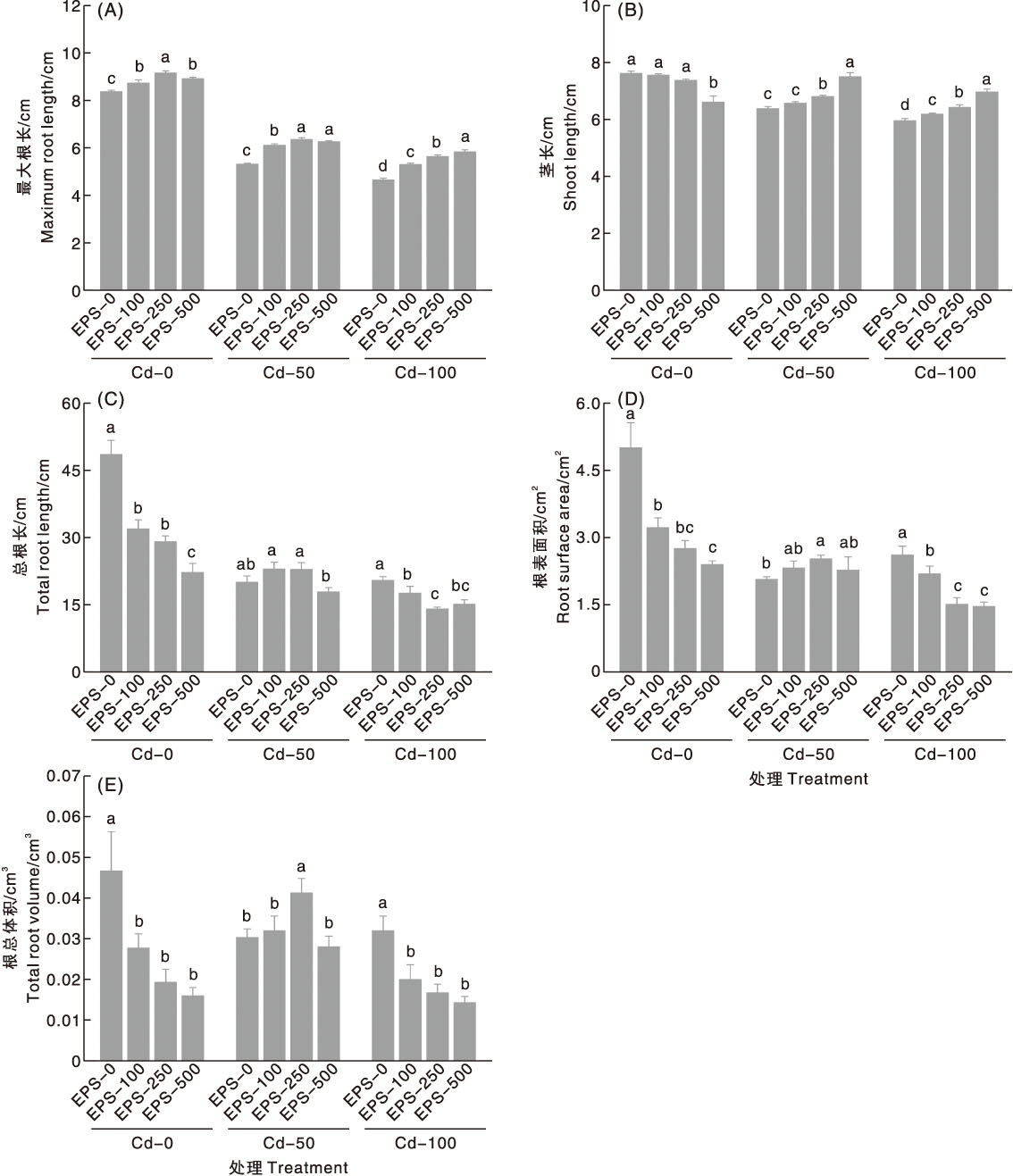
Fig.1 Effect of exopolysaccharides(EPS) on rice seed germination under cadmium stress Bars under the same cadmium concentration treatment marked without the same lowercase letter indicates significant (p<0.05) differences. The same as Fig.2.
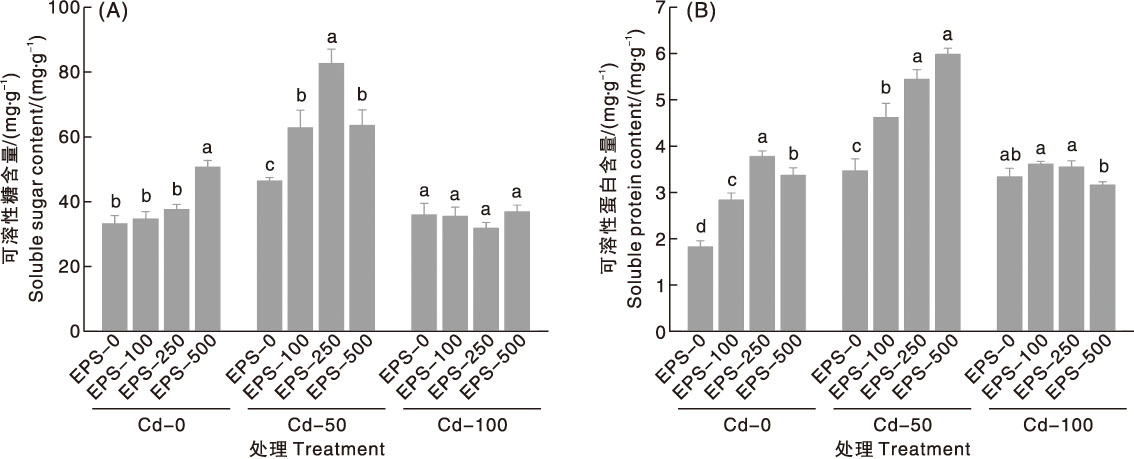
Fig.2 Effects of exopolysaccharides(EPS) on the content of soluble sugars and proteins in rice seedling roots under cadmium stress
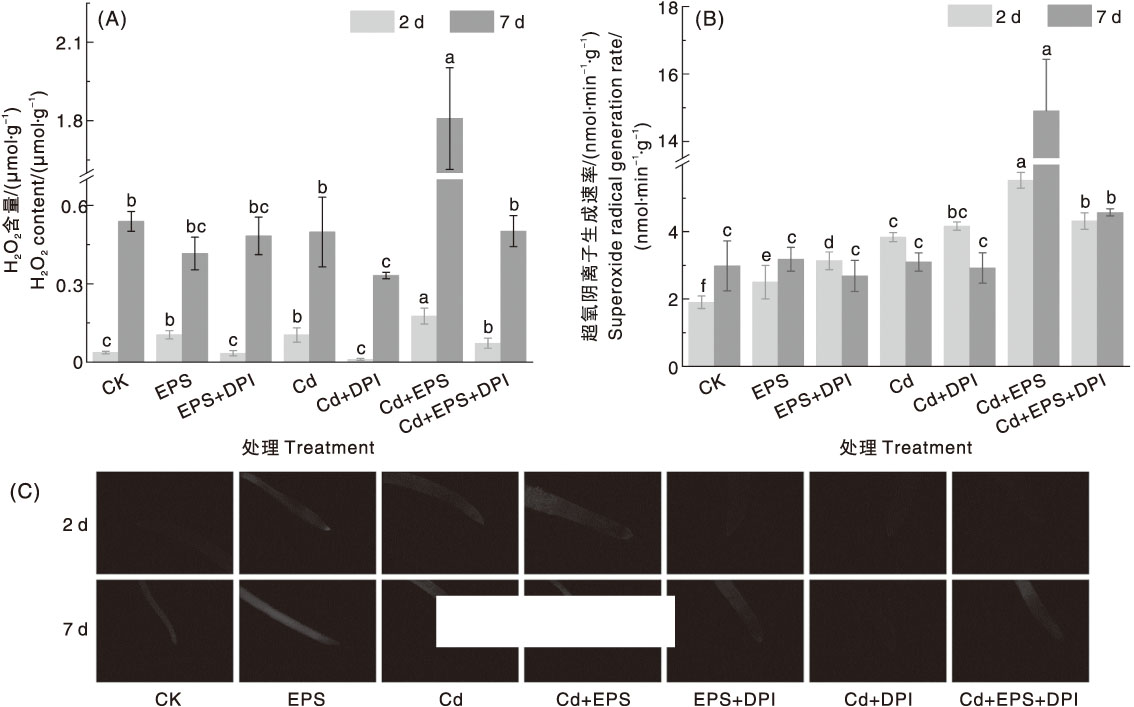
Fig.3 Changes of reactive oxygen species content in rice seed under different treatments EPS, Exopolysaccharides; DPI, Diphenyleneiodonium chloride. Bars of the same treatment time marked without the same lowercase letter indicates significant (p<0.05) differences. The same as Fig.4-7.
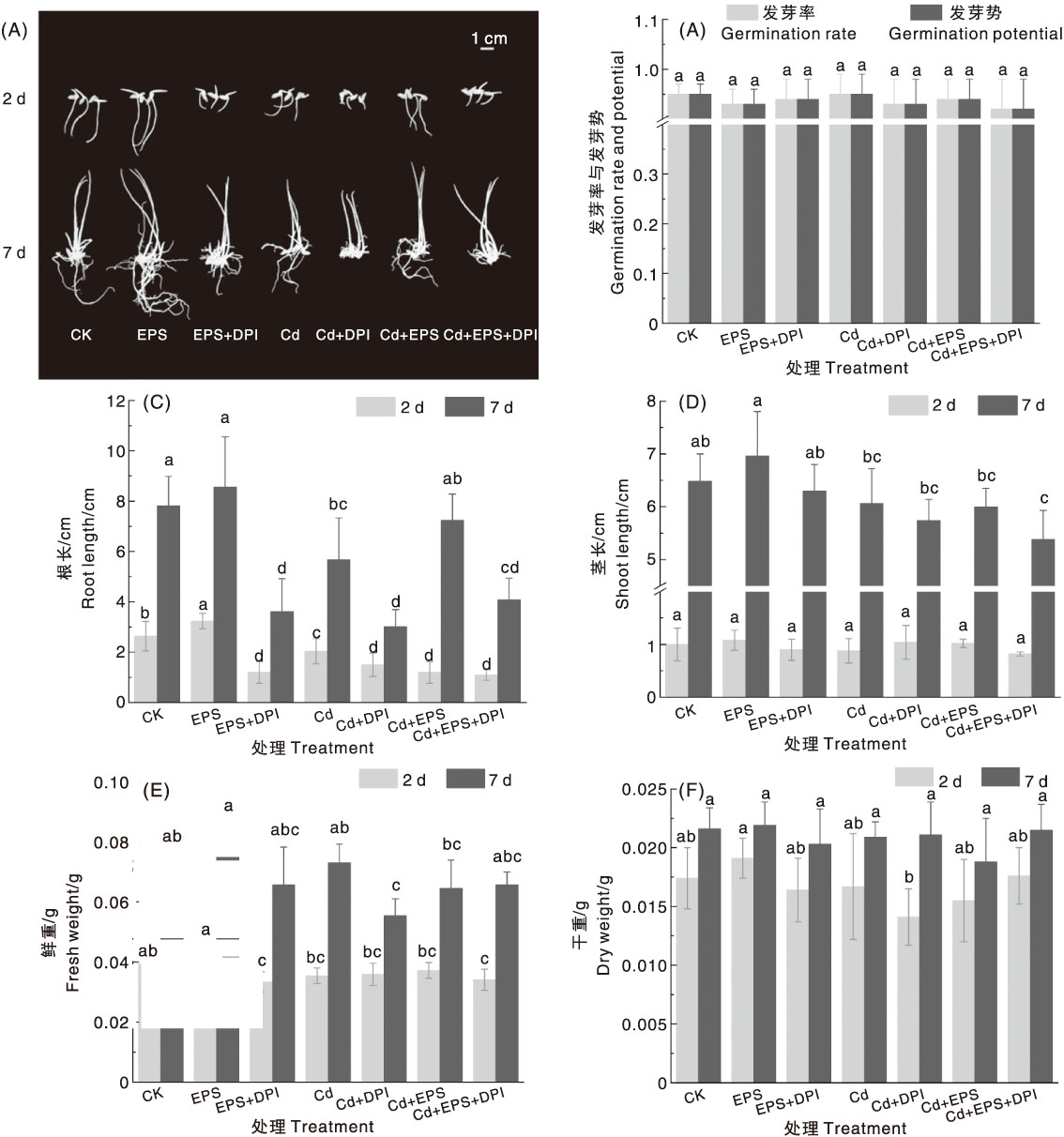
Fig.4 Germination and growth of rice seed under different treatments
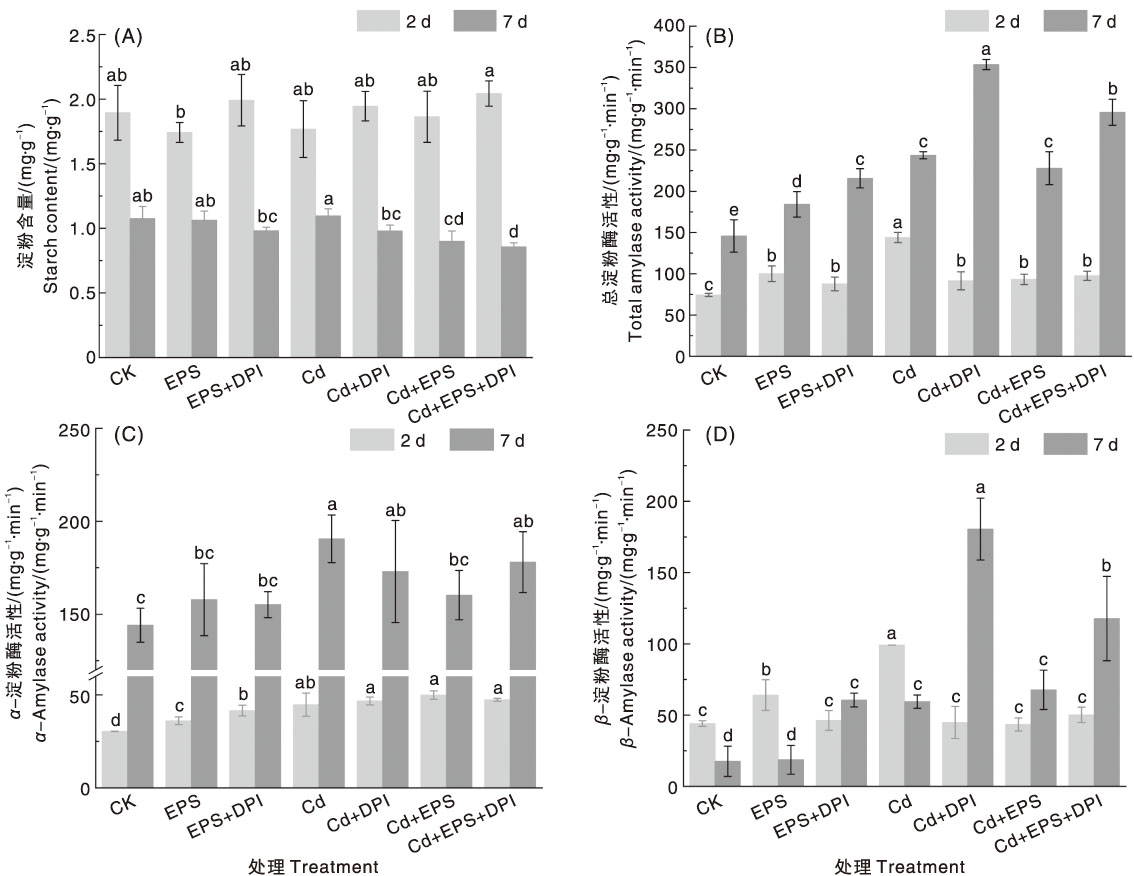
Fig.5 Starch content and amylase activity during rice seed germination under different treatments
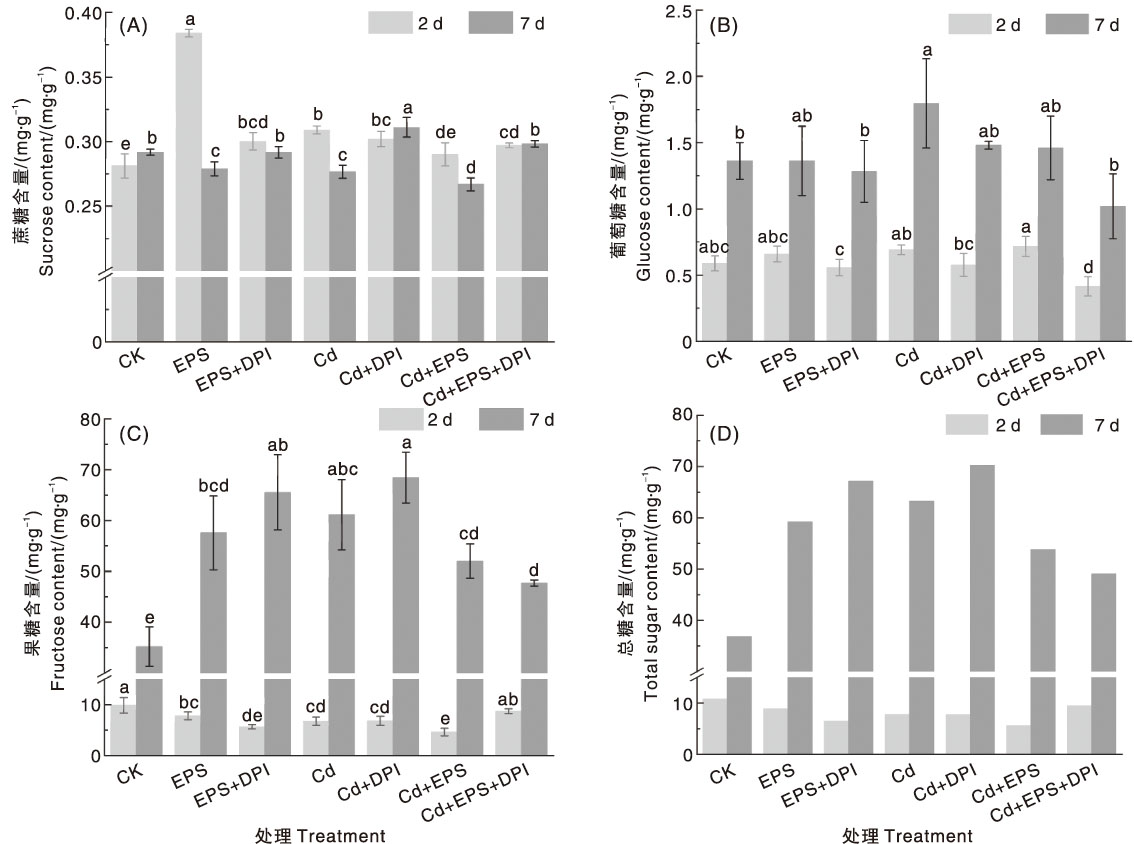
Fig.6 Changes in soluble sugar content during rice seed germination under different treatments The total sugar content is the sum up of content of sucrose, glucose and fructose.
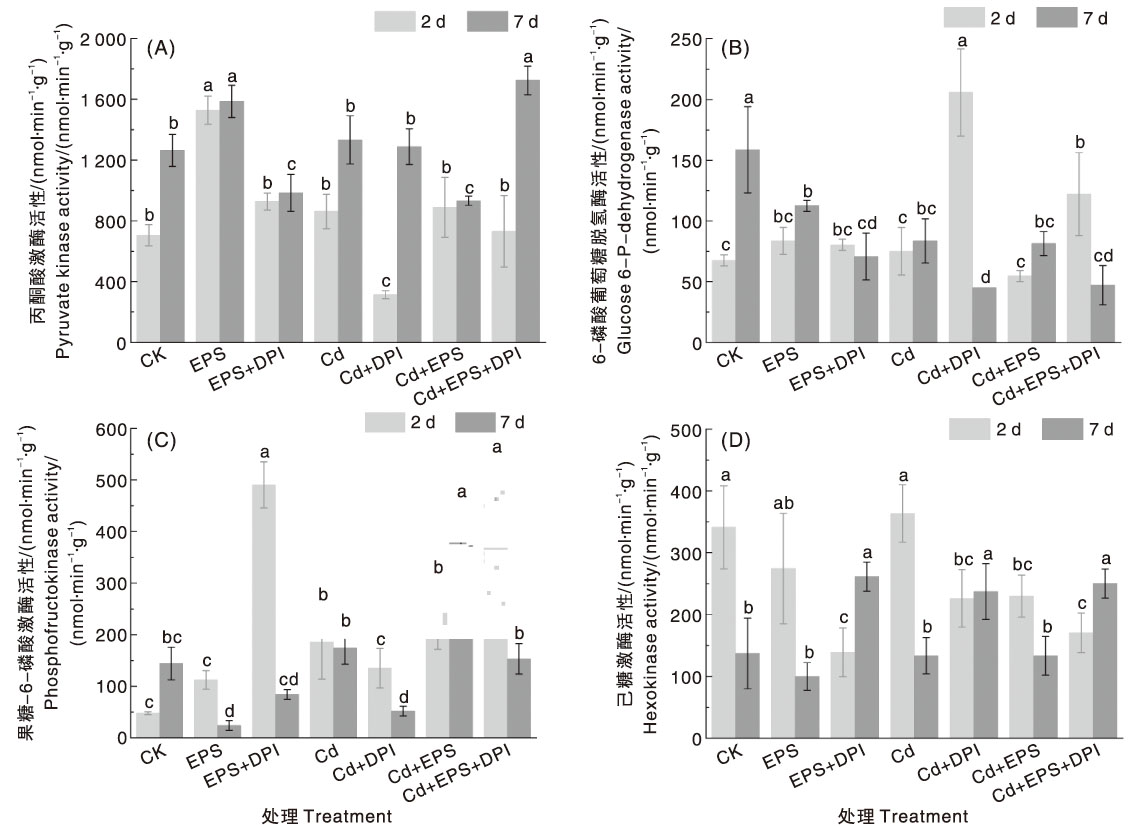
Fig.7 Changes in key enzyme activities of sugar metabolism pathways during rice seed germination under different treatments
| [1] | RIZWAN M, ALI S, ADREES M, et al. Cadmium stress in rice: toxic effects, tolerance mechanisms, and management: a critical review[J]. Environmental Science and Pollution Research, 2016, 23(18): 17859-17879. |
| [2] | LI T Y, CHANG Q, YUAN X Y, et al. Cadmium transfer from contaminated soils to the human body through rice consumption in southern Jiangsu Province, China[J]. Environmental Science: Processes & Impacts, 2017, 19(6): 843-850. |
| [3] | WEITBRECHT K, MÜLLER K, LEUBNER-METZGER G. First off the mark: early seed germination[J]. Journal of Experimental Botany, 2011, 62(10): 3289-3309. |
| [4] | WANG W, YU L, ZHANG X, et al. Effects of cadmium stress on seed germination and physiological-biochemical characteristics in okra: a comparative study of red and green varieties[J]. PeerJ, 2025, 13: e19498. |
| [5] | MARTA B, SZAFRAŃSKA K, POSMYK M M. Exogenous melatonin improves antioxidant defense in cucumber seeds (Cucumis sativus L.) germinated under chilling stress[J]. Frontiers in Plant Science, 2016, 7: 575. |
| [6] | MENG H B, HUA S J, SHAMSI I H, et al. Cadmium-induced stress on the seed germination and seedling growth of Brassica napus L., and its alleviation through exogenous plant growth regulators[J]. Plant Growth Regulation, 2009, 58(1): 47-59. |
| [7] | 赵泽文, 杨政宁, 万琳, 等. 菌糠多糖对铜离子胁迫下水稻种子萌发的影响[J]. 农业环境科学学报, 2020, 39(3): 473-481. |
| ZHAO Z W, YANG Z N, WAN L, et al. Effects of spent mushroom substrate polysaccharide on rice seed germination under copper stress[J]. Journal of Agro-Environment Science, 2020, 39(3): 473-481. | |
| [8] | WEI H Y, LI Y, WEI L, et al. Exploring the mechanism of exopolysaccharides in mitigating cadmium toxicity in rice through analyzing the changes of antioxidant system[J]. Journal of Hazardous Materials, 2024, 461: 132678. |
| [9] | 张文平, 杨臻, 吴佩佳, 等. 乳酸菌胞外多糖对逆境胁迫下水稻种子萌发及幼苗生长的影响[J]. 核农学报, 2019, 33(1): 138-147. |
| ZHANG W P, YANG Z, WU P J, et al. Effect of exopolysaccharides of lactic acid bacteria on seed germination and seedling growth of rice under different stress[J]. Journal of Nuclear Agricultural Sciences, 2019, 33(1): 138-147. | |
| [10] | ZHANG W P, ZHAO Y J, ZHAO Z W, et al. Structural characterization and induced copper stress resistance in rice of exopolysaccharides from Lactobacillus plantarum LPC-1[J]. International Journal of Biological Macromolecules, 2020, 152: 1077-1088. |
| [11] | CHEN Y F, DANGOL S, WANG J, et al. Focal accumulation of ROS can block Pyricularia oryzae effector BAS4-expression and prevent infection in rice[J]. International Journal of Molecular Sciences, 2020, 21(17): 6196. |
| [12] | 李合生. 植物生理生化实验原理和技术[M]. 北京: 高等教育出版社, 2000. |
| [13] | 哈森其木格, 贺锋嘎. 间苯二酚分光光度法测定芥菜多糖中的果糖含量[J]. 光谱学与光谱分析, 2002, 22(3): 446-448. |
| Hasenqimeng, HE F G. Resorcinol-spectrophotometric method for the determination of fructose in mustard leaf’s amylose[J]. Spectroscopy and Spectral Analysis, 2002, 22(3): 446-448. | |
| [14] | 张志良, 瞿伟菁. 植物生理学实验指导[M]. 3版. 北京: 高等教育出版社, 2003. |
| [15] | SAIDI I, CHTOUROU Y, DJEBALI W. Selenium alleviates cadmium toxicity by preventing oxidative stress in sunflower (Helianthus annuus) seedlings[J]. Journal of Plant Physiology, 2014, 171(5): 85-91. |
| [16] | 李忠光, 龚明. 植物中超氧阴离子自由基测定方法的改进[J]. 云南植物研究, 2005, 27(2): 211-216. |
| LI Z G, GONG M. Improvement of measurement method for superoxide anion radical in plant[J]. Acta Botanica Yunnanica, 2005, 27(2): 211-216. | |
| [17] | TANG Q Y, ZHANG C X. Data Processing System (DPS) software with experimental design, statistical analysis and data mining developed for use in entomological research[J]. Insect Science, 2013, 20(2): 254-260. |
| [18] | DU L, WU D M, YANG X, et al. Joint toxicity of cadmium (Ⅱ) and microplastic leachates on wheat seed germination and seedling growth[J]. Environmental Geochemistry and Health, 2024, 46(5): 166. |
| [19] | 韩宝贺, 朱宏, 张艺馨. 镉对三种草坪草种子萌发与生长的影响[J]. 中国草地学报, 2014, 36(3): 98-103. |
| HAN B H, ZHU H, ZHANG Y X. Effect of cadmium stress on the seed germination and growth of three turfgrasses[J]. Chinese Journal of Grassland, 2014, 36(3): 98-103. | |
| [20] | 张珂, 厉萌萌, 刘德权, 等. 镉胁迫对小麦、玉米种子萌发及幼苗生长的影响[J]. 种子, 2019, 38(5): 90-94. |
| ZHANG K, LI M M, LIU D Q, et al. Effects of cadmium stress on seed germination and seedling growth of wheat and maize[J]. Seed, 2019, 38(5): 90-94. | |
| [21] | HUANG L, LI W C, TAM N F Y, et al. Effects of root morphology and anatomy on cadmium uptake and translocation in rice (Oryza sativa L.)[J]. Journal of Environmental Sciences, 2019, 75: 296-306. |
| [22] | 王丙烁, 黄益宗, 李娟, 等. 镉胁迫下不同改良剂对水稻种子萌发和镉吸收积累的影响[J]. 农业环境科学学报, 2019, 38(4): 746-755. |
| WANG B S, HUANG Y Z, LI J, et al. Effects of different amendments on seed germination and cadmium uptake and accumulation in rice seedlings under cadmium stress[J]. Journal of Agro-Environment Science, 2019, 38(4): 746-755. | |
| [23] | 张琳, 崔红米, 王建军, 等. 镉胁迫对不结球白菜VC合成L-半乳糖途径基因表达及抗氧化系统的影响[J]. 植物生理学报, 2015, 51(7): 1099-1108. |
| ZHANG L, CUI H M, WANG J J, et al. Effects of cadmium stress on genes expression in L-galactose pathway involved in VC biosynthesis and antioxidant system of Brassica campestris ssp. chinensis[J]. Plant Physiology Communications, 2015, 51(7): 1099-1108. | |
| [24] | HE J Y, ZHU C, REN Y F, et al. Root morphology and cadmium uptake kinetics of the cadmium-sensitive rice mutant[J]. Biologia Plantarum, 2007, 51(4): 791-794. |
| [25] | NABAEI M, AMOOAGHAIE R, GHORBANPOUR M, et al. Crosstalk between melatonin and nitric oxide restrains Cadmium-induced oxidative stress and enhances vinblastine biosynthesis in Catharanthus roseus(L) G Don[J]. Plant Cell Reports, 2024, 43(6): 139. |
| [26] | ZANDALINAS S I, MITTLER R. ROS-induced ROS release in plant and animal cells[J]. Free Radical Biology and Medicine, 2018, 122: 21-27. |
| [27] | SIES H, JONES D P. Reactive oxygen species (ROS) as pleiotropic physiological signalling agents[J]. Nature Reviews Molecular Cell Biology, 2020, 21(7): 363-383. |
| [28] | GUO Z T, ZHAO J J, WANG M P, et al. Sulfur dioxide promotes seed germination by modulating reactive oxygen species production in maize[J]. Plant Science, 2021, 312: 111027. |
| [29] | LI Z, GAO Y, ZHANG Y C, et al. Reactive oxygen species and gibberellin acid mutual induction to regulate tobacco seed germination[J]. Frontiers in Plant Science, 2018, 9: 1279. |
| [30] | QIN Y, ZHU H, ZHANG M, et al. GC-MS analysis of membrane-graded fulvic acid and its activity on promoting wheat seed germination[J]. Molecules, 2016, 21(10): 1363. |
| [31] | 陈艳琦, 刘家源, 刘文科, 等. LED红蓝光光强对紫花苜蓿生长产量与品质的影响[J]. 中国草地学报, 2023, 45(8): 23-30. |
| CHEN Y Q, LIU J Y, LIU W K, et al. Effects of LED red and blue light intensity on the growth, yield and quality of Medicago sativa[J]. Chinese Journal of Grassland, 2023, 45(8): 23-30. | |
| [32] | 程昕昕, 刘言龙, 牛永胜, 等. 普甜玉米种子萌发期糖代谢和水解酶活性动态变化[J]. 广西植物, 2015, 35(3): 348-353. |
| CHENG X X, LIU Y L, NIU Y S, et al. Dynamic analysis for glucose mobilization and hydrolytic enzyme activity at different germination stages in sweet corn[J]. Guihaia, 2015, 35(3): 348-353. | |
| [33] | 魏鹏超. 干旱处理对沙葱种子萌发过程中糖代谢调控机制的影响[D]. 呼和浩特: 内蒙古农业大学, 2023. |
| WEI P C. Effects of drought treatment on the regulation mechanism of sugar metabolism in Allium mongolicum seed during germination[D]. Hohhot: Inner Mongolia Agricultural University, 2023. | |
| [34] | SCHWENDER J, OHLROGGE J B. Probing in vivo metabolism by stable isotope labeling of storage lipids and proteins in developing Brassica napus embryos[J]. Plant Physiology, 2002, 130(1): 347-361. |
| [35] | DONG W K, MA X, JIANG H Y, et al. Physiological and transcriptome analysis of Poa pratensis var. anceps cv. Qinghai in response to cold stress[J]. BMC Plant Biology, 2020, 20: 362. |
| [36] | ZHANG J T, ZHANG Y, DU Y Y, et al. Dynamic metabonomic responses of tobacco (Nicotiana tabacum) plants to salt stress[J]. Journal of Proteome Research, 2011, 10(4): 1904-1914. |
| [1] | QIN Haisang, LI Jianqiang, LIU Zhaojun, WU Yuhang, GU Jie, ZHANG Ge, JIANG Yuanrong, LI Jinjun, WANG Xin, KUANG Jian, BIAN Xiangyu, SHI Fangshu, CHEN Yin, WEN Zhengshun, LI Xiaoqiong. Effects of purified rice bran on antioxidant capacity and gut microbiota in D-galactose-induced subacute aging mice [J]. Acta Agriculturae Zhejiangensis, 2026, 38(5): 845-856. |
| [2] | KOU Shaokang, CHEN Hengyao, PAN Shiyuan, ZHANG Jiangnan, CHENG Wenbo, CHU Hongyan, ZHANG Lei, ZHANG Erqin. Expression of pseudorabies virus gD protein in rice cells and optimization of purification condition [J]. Acta Agriculturae Zhejiangensis, 2026, 38(5): 867-875. |
| [3] | CHENG Kai, LI Feiyue, HE Lili, YANG Chenghu, WANG Yuying, LYU Haohao, YANG Shengmao, LIU Yuxue. Preparation of nitrogen-doped rice straw biochar activated by sodium bicarbonate and its adsorption of cadmium [J]. Acta Agriculturae Zhejiangensis, 2026, 38(5): 944-954. |
| [4] | WU Yong, XU Zaimeng, LU Chenni, ZHU Yuxiang, ZHU Riqing, SUN Da, SHI Yanping, CHEN Gui. Phosphorus uptake and utilization characteristics of conventional japonica rice on major paddy soils in northern Zhejiang of China [J]. Acta Agriculturae Zhejiangensis, 2026, 38(3): 417-427. |
| [5] | XIA Jiuzhi, ZHANG Zhen, CHAI Rongyao, WANG Yanli, LI Ling, WANG Jiaoyu. Antifungal effects and mechanism of sodium dehydroacetate and natamycin against Magnaporthe oryzae [J]. Acta Agriculturae Zhejiangensis, 2026, 38(3): 520-531. |
| [6] | ZHANG Yue, WANG Jingran, ZHOU Qiang, CHEN Meiling, WANG Yanhong. Effects of exogenous spraying of folic acid on the folic acid content and quality of rice [J]. Acta Agriculturae Zhejiangensis, 2026, 38(2): 197-205. |
| [7] | XU Yan, LI Sujuan, CHEN Guang, XU Shengchun, WANG Jian. Identification of common genes for salt and cadmium tolerance in soybean [J]. Acta Agriculturae Zhejiangensis, 2026, 38(1): 1-16. |
| [8] | LIU Junli, JIANG Jianfeng, DONG Xiangwei, YANG Haijun, BAO Xiaoqi, FU Chenxi, GUO Bin, TONG Wenbin. The influence of Rhizophagus irregularis on the growth and gene expression of tomato under cadmium stress [J]. Acta Agriculturae Zhejiangensis, 2026, 38(1): 54-66. |
| [9] | YUAN Zengyan, REN Xinxin, SONG Xiaofeng, ZHU Yunhao. Antifungal activity of chitooligosaccharide-nano silver and its effects on safflower seed germination and seedling growth [J]. Acta Agriculturae Zhejiangensis, 2026, 38(1): 76-84. |
| [10] | PEI Huimin, WU Mingming, ZHAI Rongrong, YE Jing, JIN Yue, ZHU Yi, HOU Jianjun, ZHU Guofu, YE Shenghai. Research progress on gene function and breeding of low-cadmium rice cultivars [J]. Acta Agriculturae Zhejiangensis, 2025, 37(9): 2012-2020. |
| [11] | TAN Shiyi, YU Guohong, XUE Xianglei, ZHAO Yinglei, XU Baoyu, ZHANG Chenghao. Design and experiment of tray handling device for industrialized rice seedling raising [J]. Acta Agriculturae Zhejiangensis, 2025, 37(7): 1545-1555. |
| [12] | ZHANG Zhi, HE Haohao, YU Miao, XU Jianfeng. Effects of chemical fertilizer reduction combined with soil conditioner on soil acidity, soil nutrients and rice yield [J]. Acta Agriculturae Zhejiangensis, 2025, 37(6): 1301-1308. |
| [13] | LIN Xiaobing, LI Jiang, CHENG Yanhong, WANG Binqiang, HE Shaolang, HUANG Shangshu, HUANG Qianru. Effects of organic materials on soil microbial biomass, mineral nitrogen content and rice yield [J]. Acta Agriculturae Zhejiangensis, 2025, 37(6): 1309-1318. |
| [14] | SU Yang, SHANG Xiaolan, QIAN Zhongming, WU Lingen, HUANG Jiaqi, ZHUANG Haifeng, ZHAO Yufei, DANG Hongyang, XU Lijun. Effects of synergistic enhancement of straw returning to the field with decomposition agent and biochar on soil quality and rice growth [J]. Acta Agriculturae Zhejiangensis, 2025, 37(5): 1139-1148. |
| [15] | ZHU Xiao, ZHU Ying, LI Hongjun, CHEN Shanfeng. Preparation and quality of oat chickpea compound rice by squeezing [J]. Acta Agriculturae Zhejiangensis, 2025, 37(5): 1149-1158. |
| Viewed | ||||||
|
Full text |
|
|||||
|
Abstract |
|
|||||

