Acta Agriculturae Zhejiangensis ›› 2026, Vol. 38 ›› Issue (5): 845-856.DOI: 10.3969/j.issn.1004-1524.20250344
• Animal Science • Previous Articles Next Articles
Effects of purified rice bran on antioxidant capacity and gut microbiota in D-galactose-induced subacute aging mice
QIN Haisang1,2( ), LI Jianqiang2, LIU Zhaojun2, WU Yuhang2, GU Jie3, ZHANG Ge3, JIANG Yuanrong3, LI Jinjun2, WANG Xin2, KUANG Jian2, BIAN Xiangyu2, SHI Fangshu2, CHEN Yin1, WEN Zhengshun1,4,*(), LI Xiaoqiong2,*()
- 1
Food and Pharmacy College ,Zhejiang Ocean University Zhoushan 316022, Zhejiang, China
2State Key Laboratory for Quality and Safety of Agro-Products ,Institute of Food Science, Zhejiang Academy of Agricultural Sciences Hangzhou 310021, China
3Wilmar (Shanghai) Biotechnology Research & Development Center Co. ,Ltd. Shanghai 200137, China
4Xianghu Laboratory Hangzhou 311231, China
-
Received:2025-04-28Online:2026-05-25Published:2026-06-02

CLC Number:
Cite this article
QIN Haisang, LI Jianqiang, LIU Zhaojun, WU Yuhang, GU Jie, ZHANG Ge, JIANG Yuanrong, LI Jinjun, WANG Xin, KUANG Jian, BIAN Xiangyu, SHI Fangshu, CHEN Yin, WEN Zhengshun, LI Xiaoqiong. Effects of purified rice bran on antioxidant capacity and gut microbiota in D-galactose-induced subacute aging mice[J]. Acta Agriculturae Zhejiangensis, 2026, 38(5): 845-856.
share this article
Add to citation manager EndNote|Ris|BibTeX
URL: http://www.zjnyxb.cn/EN/10.3969/j.issn.1004-1524.20250344
| 样品 Sample | csta/% | cpro/% | cfat/% | cash/% | cTDF/% | cWEA/% | cara/% | cFTP/ (mg·g-1) | cBTP/ (mg·g-1) |
|---|---|---|---|---|---|---|---|---|---|
| RB | 19.35±0.31 | 19.42±0.34 | 2.47±0.09 | 12.56±0.14 | 38.00±0.56 | 0.20±0.02 | 16.49±0.12 | 2.05±0.04 | 6.51±0.20 |
| PRB | 2.12±0.33 | 26.48±0.55 | 2.00±0.36 | 8.72±0.17 | 64.01±0.27 | 0.24±0.05 | 20.18±0.39 | 2.69±0.06 | 6.53±0.07 |
Table 1 Comparison of rice bran traits before and after purification
| 样品 Sample | csta/% | cpro/% | cfat/% | cash/% | cTDF/% | cWEA/% | cara/% | cFTP/ (mg·g-1) | cBTP/ (mg·g-1) |
|---|---|---|---|---|---|---|---|---|---|
| RB | 19.35±0.31 | 19.42±0.34 | 2.47±0.09 | 12.56±0.14 | 38.00±0.56 | 0.20±0.02 | 16.49±0.12 | 2.05±0.04 | 6.51±0.20 |
| PRB | 2.12±0.33 | 26.48±0.55 | 2.00±0.36 | 8.72±0.17 | 64.01±0.27 | 0.24±0.05 | 20.18±0.39 | 2.69±0.06 | 6.53±0.07 |
| 原料 Ingredient | 各组每1 kg饲料的原料构成Ingredient composition of feed per kilogram for each group | ||||
|---|---|---|---|---|---|
| CON | MOD | PRBL | PRBM | PRBH | |
| 酪蛋白Casein | 123.8 | 123.8 | 123.8 | 123.8 | 123.8 |
| L-胱氨酸L-Cystine | 1.8 | 1.8 | 1.8 | 1.8 | 1.8 |
| 玉米淀粉Corn starch | 383.2 | 383.2 | 323.7 | 264.2 | 204.7 |
| 麦芽糊精10 Maltodextrin 10 | 125 | 125 | 125 | 125 | 125 |
| 蔗糖Sucrose | 100 | 100 | 100 | 100 | 100 |
| 纯化米糠Purified rice bran | 0 | 0 | 100 | 200 | 300 |
| 纤维素BW200 Cellulose BW200 | 121.5 | 121.5 | 81 | 40.5 | 0 |
| 大豆油Soybean oil | 40 | 40 | 40 | 40 | 40 |
| 猪油Lard | 57.2 | 57.2 | 57.2 | 57.2 | 57.2 |
| 混合矿物质 S10022M Mineral mix S10022M | 35 | 35 | 35 | 35 | 35 |
| 混合维生素 V10037 Vitamin mix V10037 | 10 | 10 | 10 | 10 | 10 |
| 酒石酸氢胆碱Choline bitartrate | 2.5 | 2.5 | 2.5 | 2.5 | 2.5 |
| 合计 Total | 1 000 | 1 000 | 1 000 | 1 000 | 1 000 |
Table 2 Diet composition of mice in each group Unit: g
| 原料 Ingredient | 各组每1 kg饲料的原料构成Ingredient composition of feed per kilogram for each group | ||||
|---|---|---|---|---|---|
| CON | MOD | PRBL | PRBM | PRBH | |
| 酪蛋白Casein | 123.8 | 123.8 | 123.8 | 123.8 | 123.8 |
| L-胱氨酸L-Cystine | 1.8 | 1.8 | 1.8 | 1.8 | 1.8 |
| 玉米淀粉Corn starch | 383.2 | 383.2 | 323.7 | 264.2 | 204.7 |
| 麦芽糊精10 Maltodextrin 10 | 125 | 125 | 125 | 125 | 125 |
| 蔗糖Sucrose | 100 | 100 | 100 | 100 | 100 |
| 纯化米糠Purified rice bran | 0 | 0 | 100 | 200 | 300 |
| 纤维素BW200 Cellulose BW200 | 121.5 | 121.5 | 81 | 40.5 | 0 |
| 大豆油Soybean oil | 40 | 40 | 40 | 40 | 40 |
| 猪油Lard | 57.2 | 57.2 | 57.2 | 57.2 | 57.2 |
| 混合矿物质 S10022M Mineral mix S10022M | 35 | 35 | 35 | 35 | 35 |
| 混合维生素 V10037 Vitamin mix V10037 | 10 | 10 | 10 | 10 | 10 |
| 酒石酸氢胆碱Choline bitartrate | 2.5 | 2.5 | 2.5 | 2.5 | 2.5 |
| 合计 Total | 1 000 | 1 000 | 1 000 | 1 000 | 1 000 |
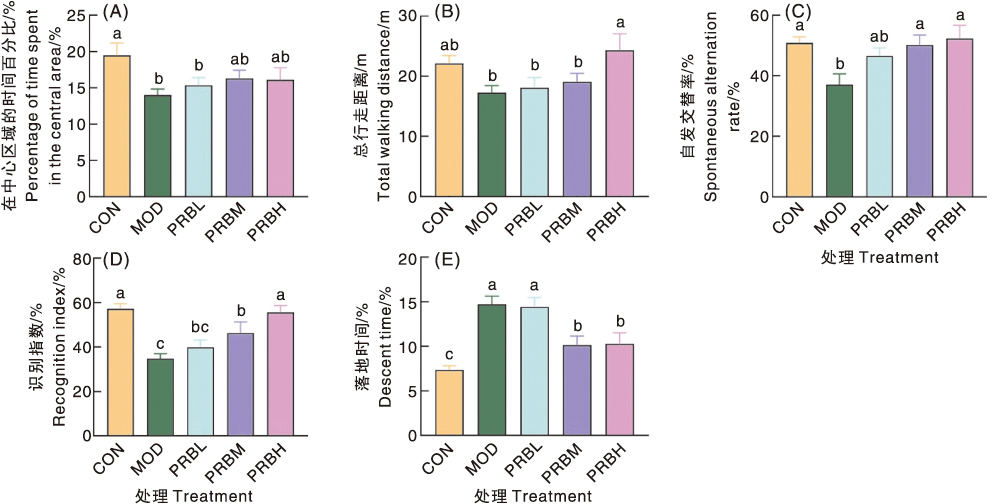
Fig.1 Effect of different treatments on behavioral performance of mice Panels A and B show the results of the open field test; Panel C shows the results of the Y-maze test; Panel D shows the results of the novel object recognition test; Panel E shows the results of the pole climbing test. Bars marked without the same letters indicate significant differences at p<0.05.
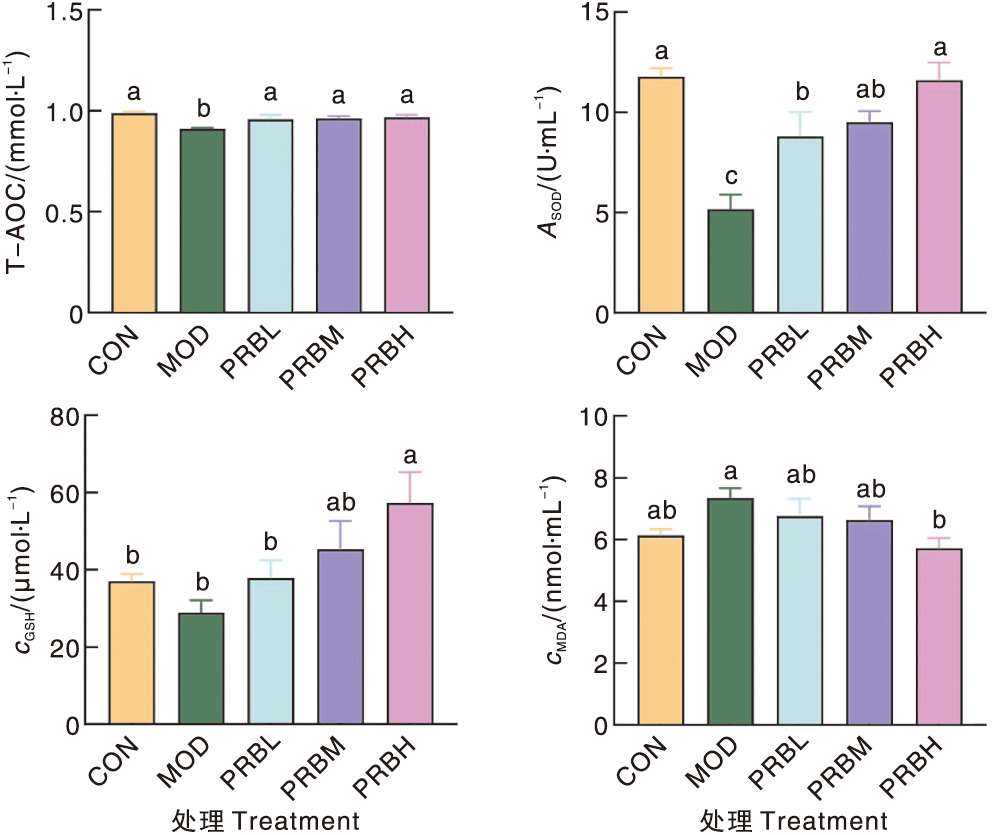
Fig.2 Effect of different treatments on oxidative stress in serum of mice T-AOC, Total antioxidant capacity; ASOD, Superoxide dismutase activity; cGSH, Glutathione content; cMDA, Malondialdehyde content.
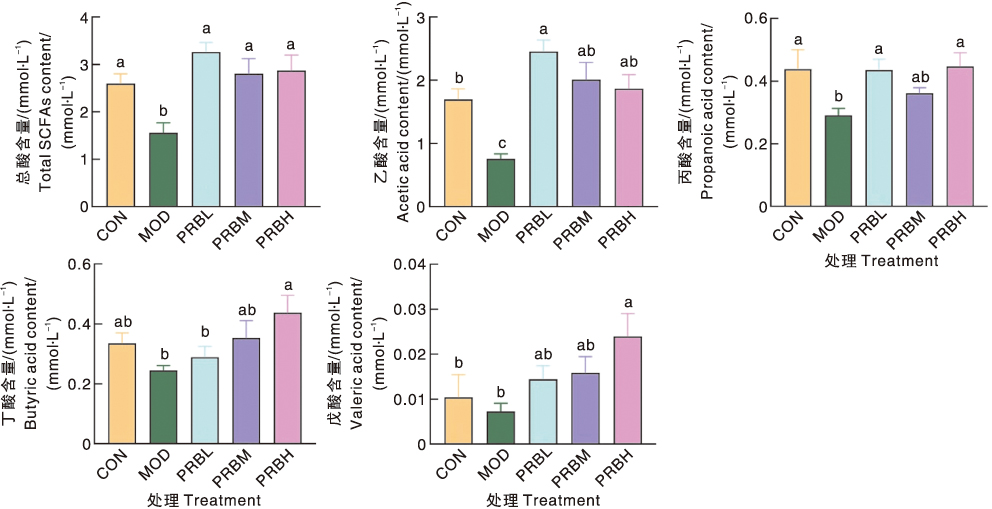
Fig.3 Effect of different treatments on short-chain fatty acids contents in feces of mice
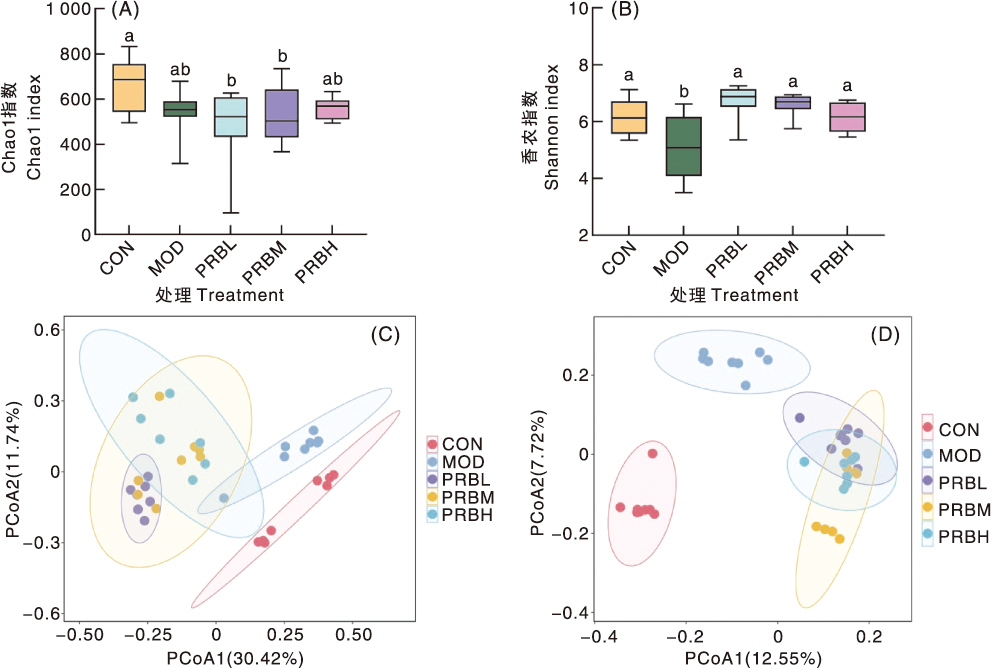
Fig.4 Effect of different treatments on intestinal microbial diversity of mice A, Chao1 index; B, Shannon index; C, Bray _ Curtis _ PCoA; D, Jaccard _ PCoA. PCoA, Principal coordinates analysis; PCoA1, Principal coordinate 1; PCoA2, Principal coordinate 2.
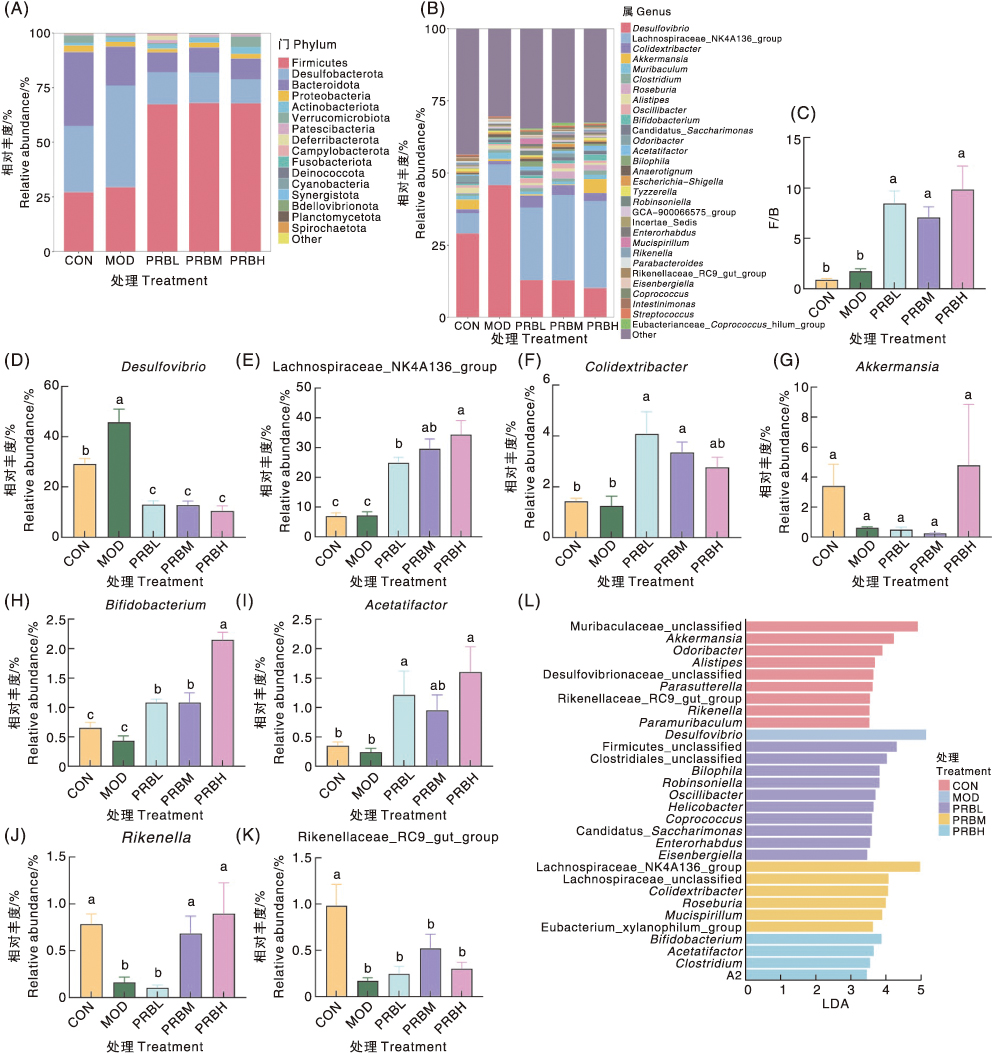
Fig.5 Effect of different treatments on intestinal flora of mice A, Relative abundance of the dominant phyla at the phylum level; B, Relative abundance of the dominant genera at the genus level; C, Ratio of the relative abundance of Firmicutes to Bacteroidota (F/B) under different treatments; D-K show the relative abundances of Desulfovibrio, Lachnospiraceae_NK4A136_group, Colidextribacter, Akkermansia, Bifidobacterium, Acetatifactor, Rikenella and Rikenellaceae_RC9_gut_group under different treatments in sequence; L, Linear discriminant analysis (LDA) scores of the biomarker microbes at the genus level under different treatments.
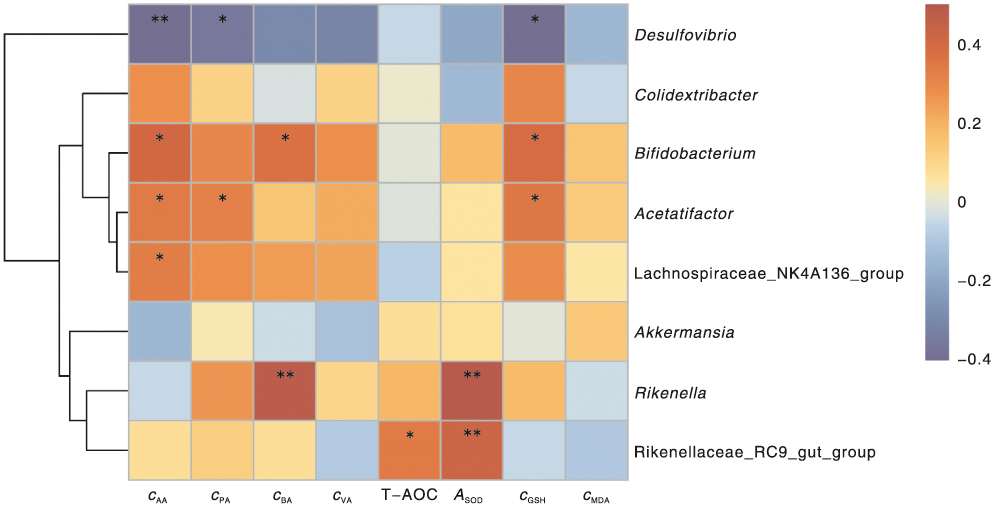
Fig.6 Spearman correlation analysis of the relative abundance of gut microbiota (genus level) with short-chain fatty acids contents and antioxidant indices of mice cAA, Acetic acid content; cPA, Propanoic acid content; cBA, Butyric acid content; cVA, Valeric acid content; T-AOC, Total antioxidant capacity; ASOD, Superoxide dismutase activity; cGSH, Glutathione content; cMDA, Malondialdehyde content. “*” and “**” indicate significant correlation at p<0.05 and p<0.01 level, respectively.
| [1] | BORREGO-RUIZ A, BORREGO J J. Influence of human gut microbiome on the healthy and the neurodegenerative aging[J]. Experimental Gerontology, 2024, 194: 112497. |
| [2] | WATKINS B A, MITCHELL A E, SHIN A C, et al. Dietary flavonoid actions on senescence, aging, and applications for health[J]. The Journal of Nutritional Biochemistry, 2025, 139: 109862. |
| [3] | 唐彩云, 张风姣, 刘金光, 等. 米糠蛋白的提取、特性、功能复合物及应用研究进展[J]. 食品工业科技, 2024, 45(12): 367-378. |
| TANG C Y, ZHANG F J, LIU J G, et al. Research progress on extraction, properties, functional complexes and application of rice bran protein[J]. Science and Technology of Food Industry, 2024, 45(12): 367-378. | |
| [4] | LIN Y T, ZHANG S L, HUANG Y F, et al. Enhancing rice bran soluble dietary fiber yield through sequential ultrasound-xylanase treatment[J]. Foods, 2025, 14(3): 388. |
| [5] | WANG S R, CUI Y J, SUN Y, et al. Insight into the effects of soybean isoflavone on the functional properties of rice bran protein: focus on non-covalent interaction[J]. LWT, 2025, 217: 117346. |
| [6] | SAJI N, FRANCIS N, SCHWARZ L J, et al. The antioxidant and anti-inflammatory properties of rice bran phenolic extracts[J]. Foods, 2020, 9(6): 829. |
| [7] | BAIXINHO J P, CARDEIRA M, BENTO-SILVA A, et al. Optimization of supercritical fluid extraction for the recovery of γ-oryzanol-rich extracts with improved bioactivity from rice bran[J]. Antioxidants, 2025, 14(2): 206. |
| [8] | WEI X, WANG J H, WANG Y X, et al. Dietary fiber and polyphenols from whole grains: effects on the gut and health improvements[J]. Food & Function, 2024, 15(9): 4682-4702. |
| [9] | CRONIN P, JOYCE S A, O’TOOLE P W, et al. Dietary fibre modulates the gut microbiota[J]. Nutrients, 2021, 13(5): 1655. |
| [10] | CHENG B, FENG H Y, LI C, et al. The mutual effect of dietary fiber and polyphenol on gut microbiota: implications for the metabolic and microbial modulation and associated health benefits[J]. Carbohydrate Polymers, 2025, 358: 123541. |
| [11] | 马宗会, 殷宝茹, 张海, 等. 食品级米糠的研究进展及前景展望[J]. 粮油食品科技, 2021, 29(5): 11-20. |
| MA Z H, YIN B R, ZHANG H, et al. Research progress and outlook of food grade rice bran[J]. Science and Technology of Cereals, Oils and Foods, 2021, 29(5): 11-20. | |
| [12] | ZHAO G H, ZHANG R F, DONG L H, et al. The effects of different enzymes on the liberation of bound phenolics from rice bran dietary fibre and their antioxidant activities[J]. Food Bioscience, 2023, 56: 103449. |
| [13] | RATHI A, GUPTA N, DHRUW V, et al. Valorization of rice milled by-products (rice husk and de-oiled rice bran) into α-amylase with its process optimization, partial purification and kinetic study[J]. Process Biochemistry, 2022, 120: 101-113. |
| [14] | YAO Z T, ZHANG G, WANG X, et al. Microbiota responses to different brans are conserved within individuals and associated with processing parameters[J]. Food Bioscience, 2024, 60: 104197. |
| [15] | PAN J N, CHEN F, YU L L, et al. Ampelopsis grossedentata tea polysaccharide alleviates D-galactose-induced aging in mice and regulates gut microbiota[J]. Food Bioscience, 2025, 63: 105635. |
| [16] | ZHANG T Y, ZHANG Y, JI A D, et al. Peony seed oil inhibited neuroinflammation by PPAR/RXR signaling pathway in D-gal induced mice[J]. Food Science & Nutrition, 2025, 13(3): e70000. |
| [17] | LI P X, MA Y Z, WANG X T, et al. The protective effect of PL 1-3 on D-galactose-induced aging mice[J]. Frontiers in Pharmacology, 2023, 14: 1304801. |
| [18] | NAZRI N S, MOHD YUSOFF N N, VANOH D. Dietary protein intake and its association with physical fitness test among older adults with pre-sarcopenia and sarcopenia: a cross-sectional study[J]. Nutrition and Health, 2025, 31(3): 1125-1134. |
| [19] | KUK M U, LEE Y H, KIM D, et al. Sauchinone ameliorates senescence through reducing mitochondrial ROS production[J]. Antioxidants, 2025, 14(3): 259. |
| [20] | VITHEEJONGJAROEN P, KASORN A, PUTTARAT N, et al. Bifidobacterium animalis MSMC83 improves oxidative stress and gut microbiota in D-galactose-induced rats[J]. Antioxidants, 2022, 11(11): 2146. |
| [21] | PAN W, WANG Y W, BAI X Y, et al. Deubiquitinating enzyme USP30 negatively regulates mitophagy and accelerates myocardial cell senescence through antagonism of Parkin[J]. Cell Death Discovery, 2021, 7: 187. |
| [22] | 马勤, 童鑫, 张名位, 等. 米糠酚类物质对高脂诱导的小鼠糖代谢异常及氧化应激的改善作用[J]. 中国食品学报, 2024, 24(1): 119-125. |
| MA Q, TONG X, ZHANG M W, et al. Effect of rice bran phenolic extracts on abnormal glucose metabolism and oxidative stress induced by high-fat diet in mice[J]. Journal of Chinese Institute of Food Science and Technology, 2024, 24(1): 119-125. | |
| [23] | MORITANI C, KAWAKAMI K, FUJITA A, et al. Anti-oxidative activity of hydrolysate from rice bran protein in HepG2 cells[J]. Biological & Pharmaceutical Bulletin, 2017, 40(7): 984-991. |
| [24] | LUBOS E, LOSCALZO J, HANDY D E. Glutathione peroxidase-1 in health and disease: from molecular mechanisms to therapeutic opportunities[J]. Antioxidants & Redox Signaling, 2011, 15(7): 1957-1997. |
| [25] | SUWANNACHOT P, THAWORNCHINSOMBUT S, JONGJAREONRAK A, et al. Supplementation with rice bran hydrolysates reduces oxidative stress and improves lipid profiles in adult dogs[J]. The Journal of Veterinary Medical Science, 2023, 85(7): 727-734. |
| [26] | 李向菲, 沈丹, 黄俊凯, 等. 米糠功能活性成分及其功效的研究进展[J]. 食品工业科技, 2022, 43(13): 466-474. |
| LI X F, SHEN D, HUANG J K, et al. Research progress on functional active components and its efficacy in rice bran[J]. Science and Technology of Food Industry, 2022, 43(13): 466-474. | |
| [27] | TIAN W H, WU B Y, SUN L P, et al. Protective effect against d-gal-induced aging mice and components of polypeptides and polyphenols in defatted walnut kernel during simulated gastrointestinal digestion[J]. Journal of Food Science, 2021, 86(6): 2736-2752. |
| [28] | LIU Y, FANG M L, TU X H, et al. Dietary polyphenols as anti-aging agents: targeting the hallmarks of aging[J]. Nutrients, 2024, 16(19): 3305. |
| [29] | VAISERMAN A, ROMANENKO M, PIVEN L, et al. Differences in the gut Firmicutes to Bacteroidetes ratio across age groups in healthy Ukrainian population[J]. BMC Microbiology, 2020, 20(1): 221. |
| [30] | ZHOU H Y, HUANG D D, SUN Z T, et al. Effects of intestinal Desulfovibrio bacteria on host health and its potential regulatory strategies: a review[J]. Microbiological Research, 2024, 284: 127725. |
| [31] | PARK J Y, SEO H, KANG C S, et al. Dysbiotic change in gastric microbiome and its functional implication in gastric carcinogenesis[J]. Scientific Reports, 2022, 12: 4285. |
| [32] | JIAN H F, LIU Y T, WANG X M, et al. Akkermansia muciniphila as a next-generation probiotic in modulating human metabolic homeostasis and disease progression: a role mediated by gut-liver-brain axes[J]. International Journal of Molecular Sciences, 2023, 24(4): 3900. |
| [33] | FANG Z F, LI L Z, LU W W, et al. Bifidobacterium affected the correlation between gut microbial composition, SCFA metabolism, and immunity in mice with DNFB-induced atopic dermatitis[J]. Food Bioscience, 2021, 41: 100648. |
| [34] | NEYRINCK A M, POSSEMIERS S, DRUART C, et al. Prebiotic effects of wheat Arabinoxylan related to the increase in bifidobacteria, Roseburia and Bacteroides/Prevotella in diet-induced obese mice[J]. PLoS One, 2011, 6(6): e20944. |
| [35] | 施宇萌, 梁富强, 郭锐林, 等. 米糠不溶性膳食纤维结合酚结构特性及其对肠道菌群的影响[J]. 食品工业科技, 2023, 44(10): 1-10. |
| SHI Y M, LIANG F Q, GUO R L, et al. Structural characteristics of rice bran insoluble dietary fiber bound phenolic and its effect on gut microbiota[J]. Science and Technology of Food Industry, 2023, 44(10): 1-10. |
| [1] | ZHANG Hao, TAN Feng, ZHOU Yu, WANG Dachen, ZHOU Hongping, JIANG Hongzhe. Research progress of hyperspectral imaging technology in the in-situ sensing of crop quality and safety [J]. Acta Agriculturae Zhejiangensis, 2026, 38(5): 1035-1047. |
| [2] | JIANG Hao, ZHOU Wanyi, TAO Wenyang, WANG Mengzhu, XING Jianrong, YANG Ying, ZENG Chuisheng. Evaluation of the functional activity of Cornus officinalis extract in alleviating acute kidney injury in mice [J]. Acta Agriculturae Zhejiangensis, 2026, 38(5): 876-885. |
| [3] | WANG Ting, FAN Yuxin, WANG Hui, DU Jingshan, SHI Qiuhuan, WANG Yujie, SHEN Hongtao, WANG Yanfang, XI Jiaqin, LIU Ling. Influence of Bacillus methylotrophicus on contents and coordination of chemical composition based on the primary-cured greenish tobacco [J]. Acta Agriculturae Zhejiangensis, 2025, 37(9): 1969-1980. |
| [4] | WU Xingfeng, XIAO Yingping, LYU Wentao, MA Lingyan, CHEN Qu, WEN Yang, XU E. Clostridium butyricum affects muscle fiber type in mice by modulating colonic microbial structure and short-chain fatty acids content [J]. Acta Agriculturae Zhejiangensis, 2025, 37(3): 568-578. |
| [5] | QI Tianpeng, LIU Li, XIA Meiwen, LYU Sunjian, XU Haisheng. Effects of lactic acid bacteria and bacteriophage on physiology, biochemistry and gut microbiota of Chinese soft-shelled turtle (Pelodiscus sinensis) [J]. Acta Agriculturae Zhejiangensis, 2025, 37(1): 39-48. |
| [6] | LYU Guoying, WANG Mengyu, ZHANG Zuofa. Impact of Hericium erinaceus polysaccharide on intestinal flora in mice [J]. Acta Agriculturae Zhejiangensis, 2024, 36(12): 2794-2802. |
| [7] | ZONG Zihao, HE Dingsheng, NIU Ben, HUANG Jun, FANG Xiangjun, WU Weijie, CHEN Hangjun, GAO Haiyan. Effect of different hollow packaging on storage and transportation quality of bayberry harvested in rainy days [J]. Acta Agriculturae Zhejiangensis, 2024, 36(1): 196-204. |
| [8] | ZHANG Chaozheng, ZHANG Xupeng, CHEN Danling. Does labor force aging and cultivated land fragmentation increase rice production cost?: based on microscopic investigation in southeast Hubei Province, China [J]. Acta Agriculturae Zhejiangensis, 2023, 35(5): 1211-1222. |
| [9] | CHENG Weisong, ZHENG Suwen, GAO Huajie, BAI Yunli, YE Chunhui. Will aging make farmers flow agricultural land smoothly? [J]. Acta Agriculturae Zhejiangensis, 2022, 34(7): 1545-1557. |
| [10] | FENG Juan, ZHU Tingheng, LUO Chunping, YANG Jiayue, ZHU Siyu, LI Tong. Isolation and identification of polylactic acid degrading microorganisms from mealworm(Tenebrio molitor)gut [J]. Acta Agriculturae Zhejiangensis, 2022, 34(6): 1277-1287. |
| [11] | CHEN Dailiang, HAN Yanchao, WU Weijie, DENG Shanggui, CHEN Hangjun, GAO Haiyan. Effect of special cushioning packaging on storage quality of Agaricus bisporus [J]. Acta Agriculturae Zhejiangensis, 2022, 34(4): 801-807. |
| [12] | ZHANG Yingping, TANG Honggang, LI Huanhuan, ZHANG Jin, CHEN Lihong, YANG Yeshuang, WANG Fulong, CHEN Yifan, ZHU Renjun. Effect of colorant and packaging on quality of Chinese sausage during storage [J]. Acta Agriculturae Zhejiangensis, 2022, 34(2): 360-369. |
| [13] | LIU Enling, LUO Xiaofeng, DU Sanxia, YAN Aqian, WANG Xiangli. Aging, planting purpose and rice farmers' chemical pesticide reduction [J]. Acta Agriculturae Zhejiangensis, 2022, 34(12): 2789-2799. |
| [14] | LIN Yuqing, LU Shengmin, ZHOU Wanyi, XING Jianrong, YANG Ying. Preliminary investigation about structure and probiotic properties of polysaccharides from Dendrobium officinale leaves [J]. Acta Agriculturae Zhejiangensis, 2022, 34(11): 2504-2511. |
| [15] | LONG Ming, ZHANG Peng, LIU Yuanlin, BAI Xiaoqin, ZHANG Fumei, TIAN Xiaojing, CAO Hong, ZHOU Xueyan, MA Zhongren, LUO Li, SONG Li, Nurul Izza NORDIN. Identification of functional effects of bovine whey protein based on odor information of mouse feces [J]. Acta Agriculturae Zhejiangensis, 2021, 33(4): 714-723. |
| Viewed | ||||||
|
Full text |
|
|||||
|
Abstract |
|
|||||

