Acta Agriculturae Zhejiangensis ›› 2026, Vol. 38 ›› Issue (3): 551-558.DOI: 10.3969/j.issn.1004-1524.20250024
• Environmental Science • Previous Articles Next Articles
Effect of antibiotic stress on antibiotic resistance genes in soils with different fertilization histories
ZHU Sengen1( ), CHENG Jianhua2,*(), ZHU Xingna3, LI Jianxin4, TANG Xiangyu2
- 1.
Zhejiang Honggaitou Agricultural Science and Technology Co. ,Ltd. Jiangshan 324109, Zhejiang, China
2.School of Forestry and Biotechnology ,Zhejiang A&F University Hangzhou 311300, China
3.School of Modern Agriculture ,Jiaxing Vocational & Technical College Jiaxing 314036, Zhejiang, China
4.Forestry Bureau of Jiangshan County Jiangshan 324100, Zhejiang, China
-
Received:2025-01-06Online:2026-03-25Published:2026-04-17

CLC Number:
Cite this article
ZHU Sengen, CHENG Jianhua, ZHU Xingna, LI Jianxin, TANG Xiangyu. Effect of antibiotic stress on antibiotic resistance genes in soils with different fertilization histories[J]. Acta Agriculturae Zhejiangensis, 2026, 38(3): 551-558.
share this article
Add to citation manager EndNote|Ris|BibTeX
URL: http://www.zjnyxb.cn/EN/10.3969/j.issn.1004-1524.20250024
| 样本 Sample | pH值 pH value | 有机碳含量/(mg·g-1) Organic carbon content/(mg·g-1) | 总氮含量/(mg·g-1) Total nitrogen content/(mg·g-1) | 抗生素残留量/(μg·kg-1) Antibiotic residue/(μg·kg-1) | ||||
|---|---|---|---|---|---|---|---|---|
| SD | SMT | SMZ | OTC | DOXC | ||||
| CM | 5.57 | 22.23 | 1.32 | 6.23 | 2.98 | 1.51 | 5.25 | 7.36 |
| PM | 6.45 | 24.08 | 1.42 | 10.68 | 19.57 | 3.44 | 28.91 | 16.26 |
| NPK | 4.58 | 13.40 | 1.29 | 0.18 | — | 0.28 | 1.38 | 0.14 |
Table 1 Basic physicochemical properties and antibiotic residue content of the original soil sample
| 样本 Sample | pH值 pH value | 有机碳含量/(mg·g-1) Organic carbon content/(mg·g-1) | 总氮含量/(mg·g-1) Total nitrogen content/(mg·g-1) | 抗生素残留量/(μg·kg-1) Antibiotic residue/(μg·kg-1) | ||||
|---|---|---|---|---|---|---|---|---|
| SD | SMT | SMZ | OTC | DOXC | ||||
| CM | 5.57 | 22.23 | 1.32 | 6.23 | 2.98 | 1.51 | 5.25 | 7.36 |
| PM | 6.45 | 24.08 | 1.42 | 10.68 | 19.57 | 3.44 | 28.91 | 16.26 |
| NPK | 4.58 | 13.40 | 1.29 | 0.18 | — | 0.28 | 1.38 | 0.14 |
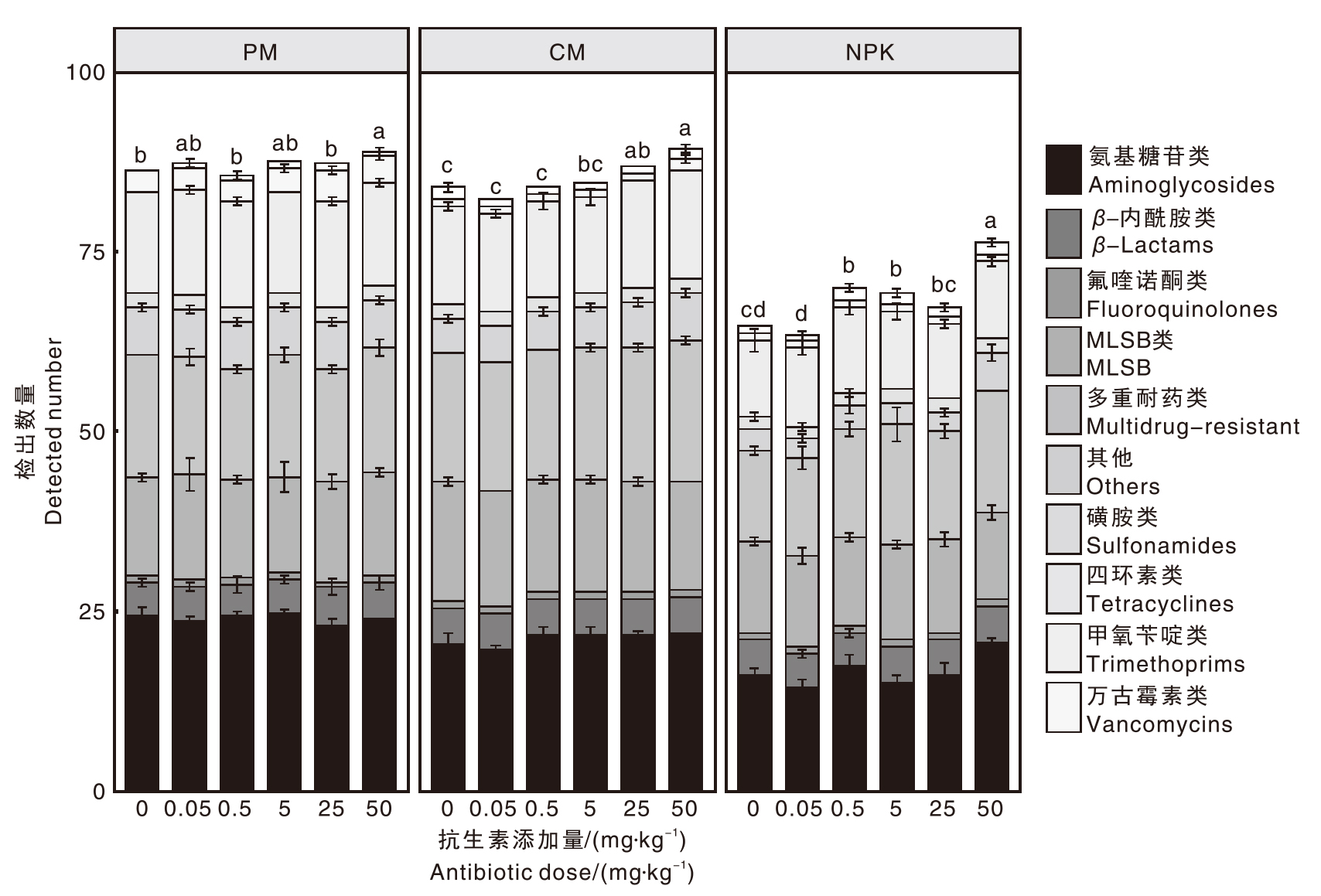
Fig.1 The number of detected antibiotic resistance genes in soils with different antibiotic addition levels PM, CM, and NPK represent the soil of upland farmlands under long-term (more than 5 years) application of pig manure, chicken manure, and chemical fertilizers, respectively. The same as below. Bars marked without the same letters indicate significan difference at p<0.05. MLSB, Macrolide-lincosamide-streptogramin B.
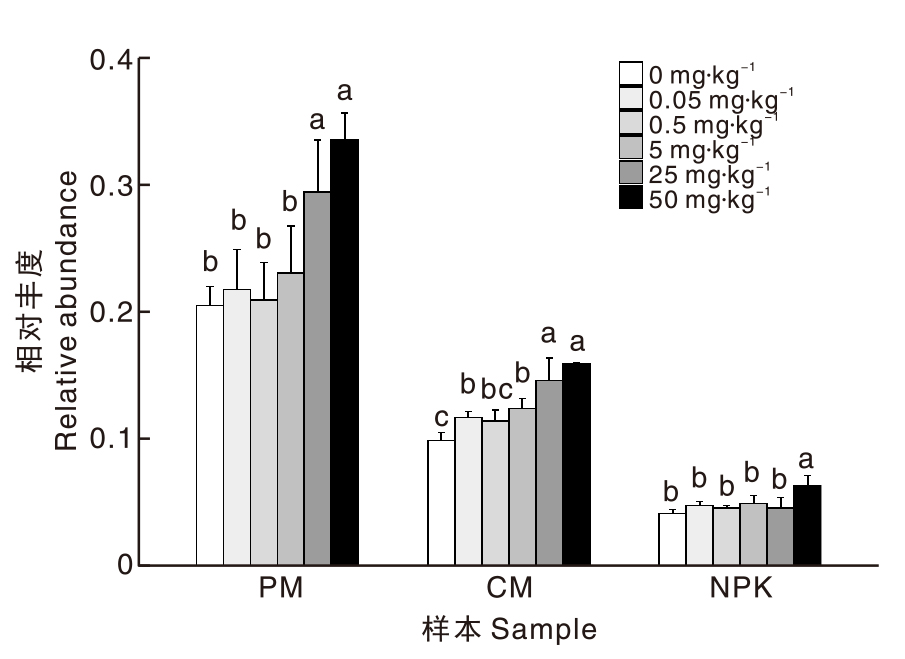
Fig.2 Relative abundance of detected antibiotic resistance genes in soils with different antibiotic addition levels Bars marked without the same letters indicate significan difference at p<0.05 for the same sample.
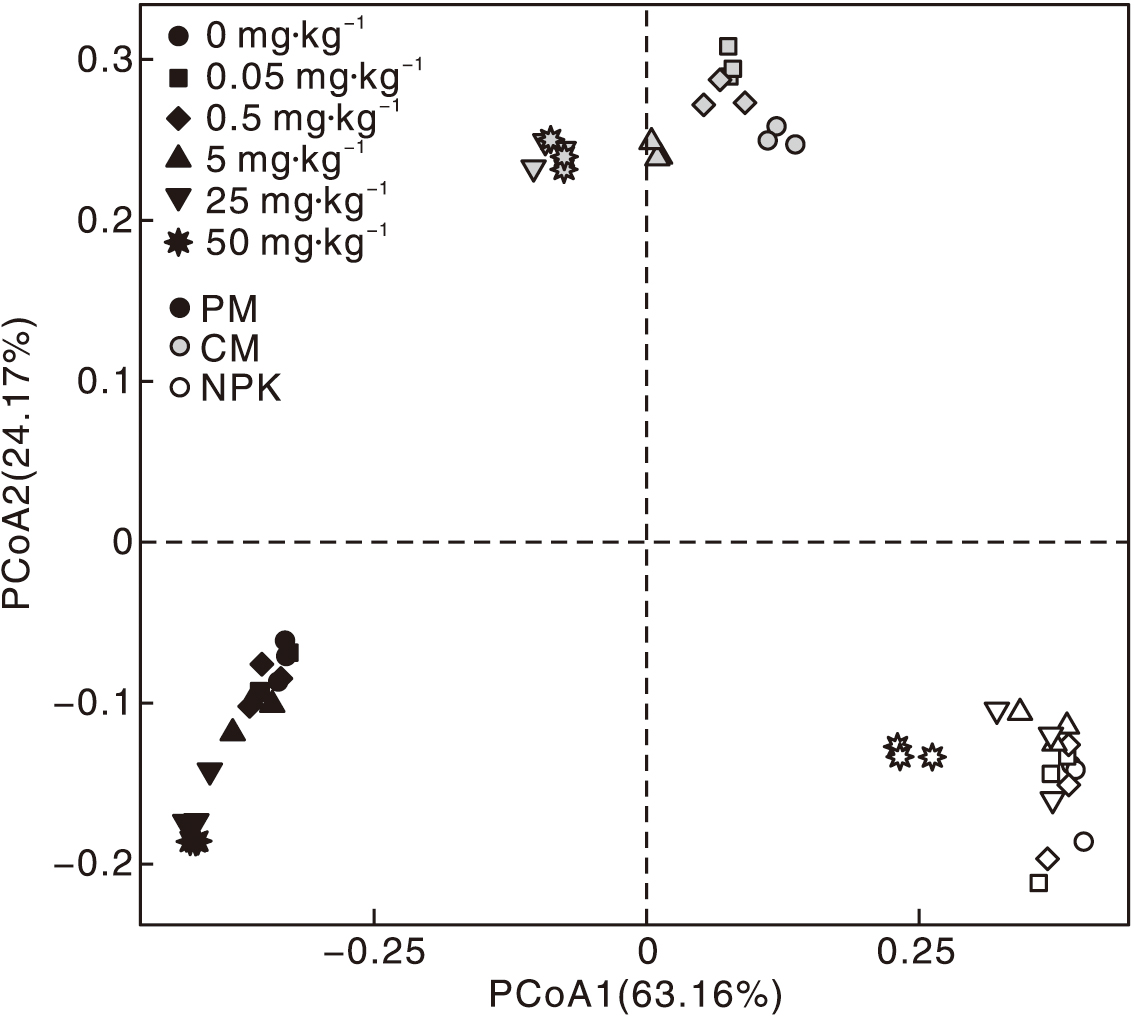
Fig.3 Distribution pattern of antibiotic resistance genes in soil based on principal coordinate analysis
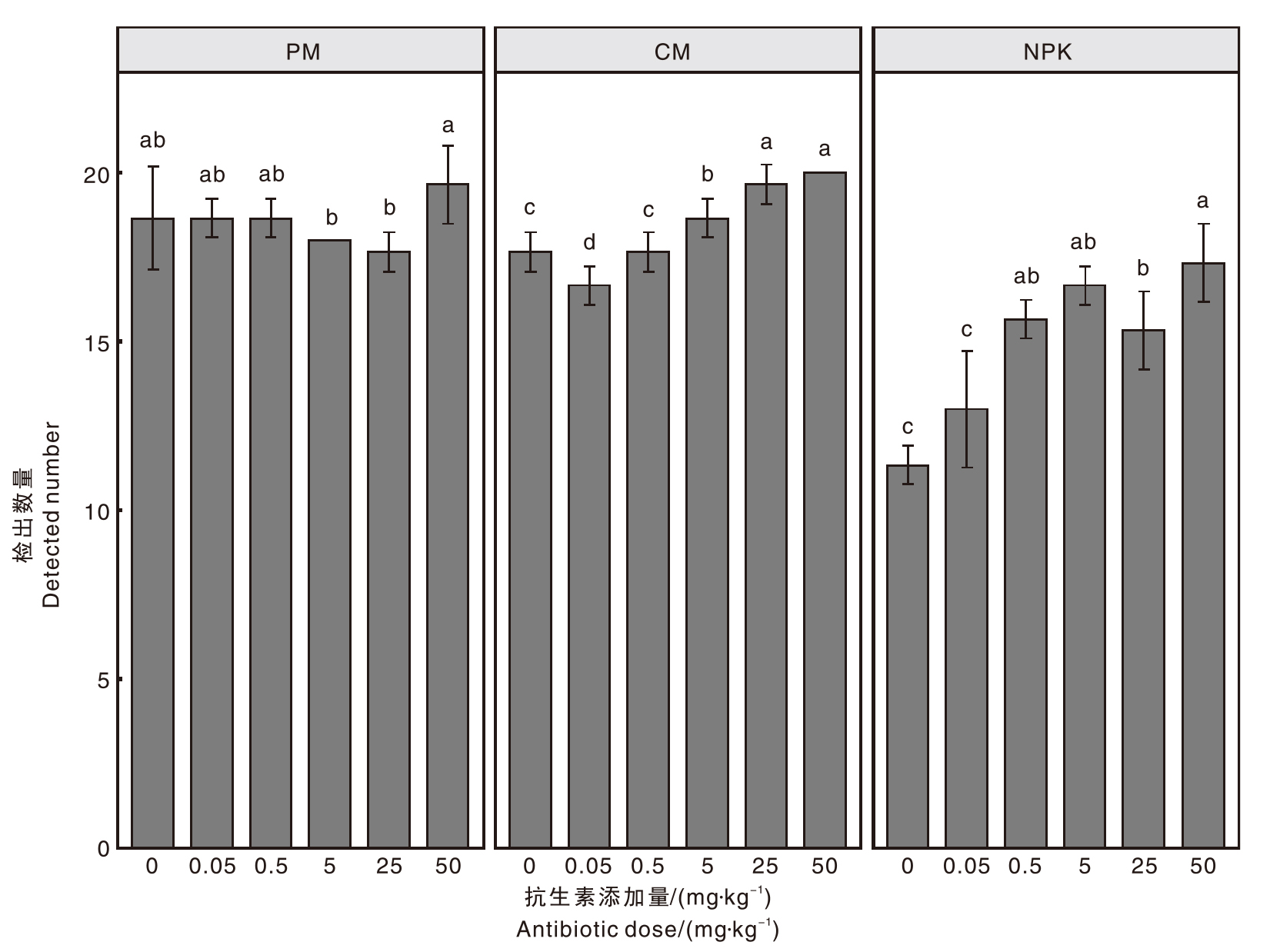
Fig.4 The number of detected mobile genetic elements in soils with different antibiotic addition levels
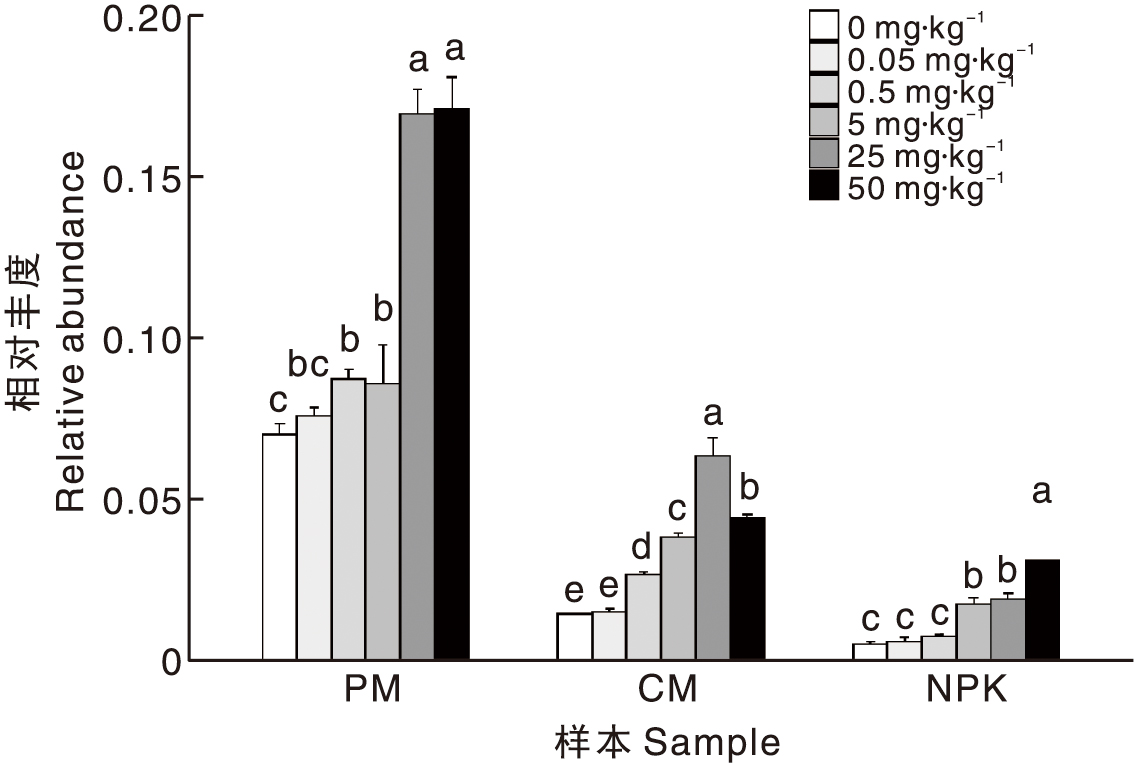
Fig.5 Relative abundance of detected mobile genetic elements in soils with different antibiotic addition levels
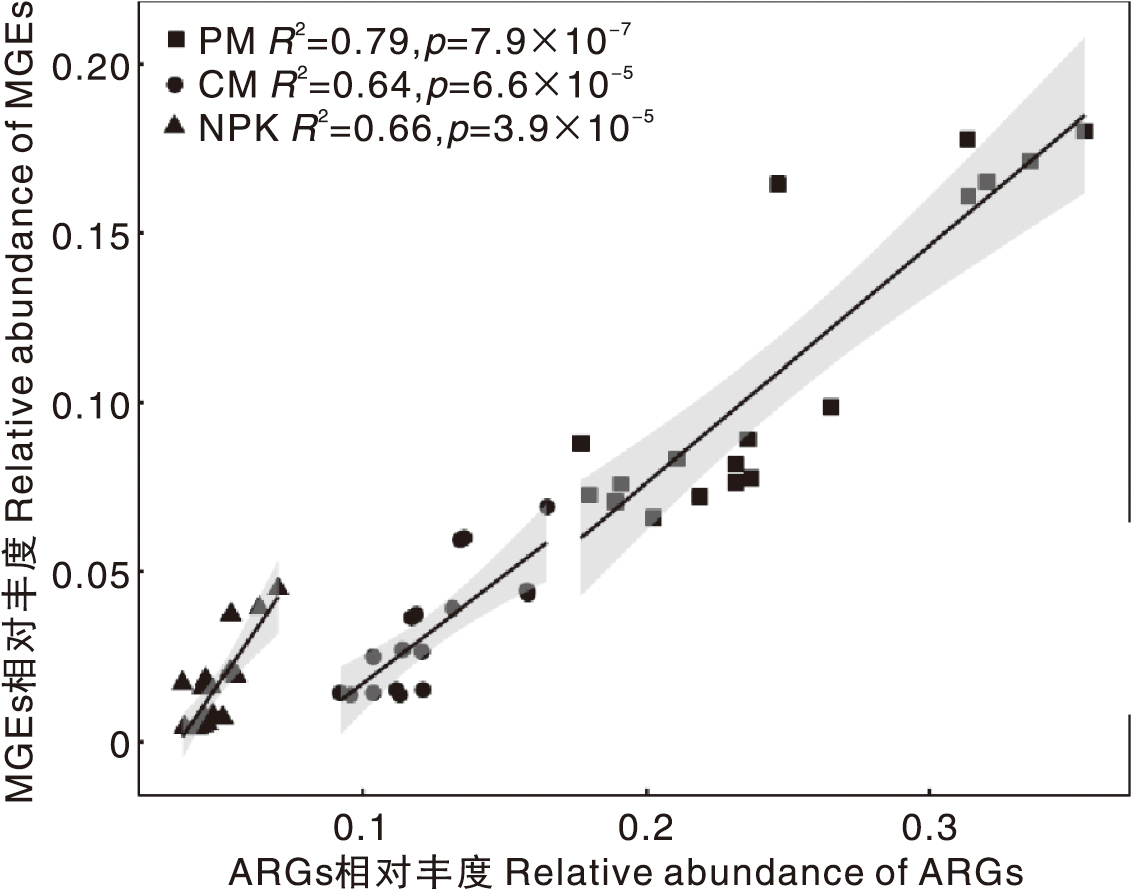
Fig.6 Correlation between the relative abundance of antibiotic resistance genes (ARGs) and mobile genetic elements (MGEs) in soil samples
| [1] | 朱永官, 陈青林, 苏建强, 等. 环境中抗生素与抗性基因组的研究[J]. 科学观察, 2017, 12(6): 60-62. |
| ZHU Y G, CHEN Q L, SU J Q, et al. Study on antibiotics and resistance genome in environment[J]. Science Focus, 2017, 12(6): 60-62. | |
| [2] | LAU C H, TIEN Y C, STEDTFELD R D, et al. Impacts of multi-year field exposure of agricultural soil to macrolide antibiotics on the abundance of antibiotic resistance genes and selected mobile genetic elements[J]. Science of the Total Environment, 2020, 727: 138520. |
| [3] | ZHU Y G, JOHNSON T A, SU J Q, et al. Diverse and abundant antibiotic resistance genes in Chinese swine farms[J]. Proceedings of the National Academy of Sciences of the United States of America, 2013, 110(9): 3435-3440. |
| [4] | 黄丹, 叶茂, 朱国繁, 等. 抗生素/抗性细菌/抗性基因在土壤-植物系统中迁移转化及阻控消减的研究进展[J]. 土壤, 2020, 52(5): 891-900. |
| HUANG D, YE M, ZHU G F, et al. Migration and risk control of antibiotic and antibiotic resistance bacteria/genes in soil-plant system: a review[J]. Soils, 2020, 52(5): 891-900. | |
| [5] | FORSBERG K J, REYES A, WANG B, et al. The shared antibiotic resistome of soil bacteria and human pathogens[J]. Science, 2012, 337(6098):1107-1111. |
| [6] | ZHANG Y J, HU H W, CHEN Q L, et al. Transfer of antibiotic resistance from manure-amended soils to vegetable microbiomes[J]. Environment International, 2019, 130: 104912. |
| [7] | HEUER H, SMALLA K. Manure and sulfadiazine synergistically increased bacterial antibiotic resistance in soil over at least two months[J]. Environmental Microbiology, 2007, 9(3): 657-666. |
| [8] | CHEN Q L, AN X L, LI H, et al. Long-term field application of sewage sludge increases the abundance of antibiotic resistance genes in soil[J]. Environment International, 2016, 92/93: 1-10. |
| [9] | SUN S L, LU C, LIU J, et al. Antibiotic resistance gene abundance and bacterial community structure in soils altered by ammonium and nitrate concentrations[J]. Soil Biology and Biochemistry, 2020, 149: 107965. |
| [10] | KYSELKOVÁ M, KOTRBOVÁ L, BHUMIBHAMON G, et al. Tetracycline resistance genes persist in soil amended with cattle feces independently from chlortetracycline selection pressure[J]. Soil Biology and Biochemistry, 2015, 81: 259-265. |
| [11] | XU M, STEDTFELD R D, WANG F, et al. Composting increased persistence of manure-borne antibiotic resistance genes in soils with different fertilization history[J]. Science of the Total Environment, 2019, 689: 1172-1180. |
| [12] | 叶红玉, 徐志荣, 王浙明, 等. 浙江省畜禽养殖业废水污染特征及环境风险评估研究[J]. 环境科学与管理, 2015, 40(6): 165-169. |
| YE H Y, XU Z R, WANG Z M, et al. Wastewater pollution characteristics of livestock and poultry breeding in Zhejiang Province and its environmental risk assessment[J]. Environmental Science and Management, 2015, 40(6): 165-169. | |
| [13] | ZHANG Y J, HU H W, GOU M, et al. Temporal succession of soil antibiotic resistance genes following application of swine, cattle and poultry manures spiked with or without antibiotics[J]. Environmental Pollution, 2017, 231: 1621-1632. |
| [14] | XIE W Y, YUAN S T, XU M G, et al. Long-term effects of manure and chemical fertilizers on soil antibiotic resistome[J]. Soil Biology and Biochemistry, 2018, 122: 111-119. |
| [15] | HAN X M, HU H W, CHEN Q L, et al. Antibiotic resistance genes and associated bacterial communities in agricultural soils amended with different sources of animal manures[J]. Soil Biology and Biochemistry, 2018, 126: 91-102. |
| [16] | PENG S, FENG Y Z, WANG Y M, et al. Prevalence of antibiotic resistance genes in soils after continually applied with different manure for 30 years[J]. Journal of Hazardous Materials, 2017, 340: 16-25. |
| [17] | QIAN X, GU J, SUN W, et al. Diversity, abundance, and persistence of antibiotic resistance genes in various types of animal manure following industrial composting[J]. Journal of Hazardous Materials, 2018, 344: 716-722. |
| [18] | ZHANG Z Y, ZHANG Q, WANG T Z, et al. Assessment of global health risk of antibiotic resistance genes[J]. Nature Communications, 2022, 13: 1553. |
| [19] | 沈聪, 张俊华, 刘吉利, 等. 宁夏养鸡场粪污和周边土壤中抗生素及抗生素抗性基因分布特征[J]. 环境科学, 2022, 43(8): 4166-4178. |
| SHEN C, ZHANG J H, LIU J L, et al. Distribution characteristics of antibiotics and antibiotic resistance genes in manure and surrounding soil of poultry farm in Ningxia[J]. Environmental Science, 2022, 43(8): 4166-4178. |
| [1] | SUN Da, MAO Binyu, HUANG Danyi, CUI Hongchun, XIA Bing, ZHENG Xuxia. Study on the quality of West Lake Longjing tea in different regions based on soil properties [J]. Acta Agriculturae Zhejiangensis, 2026, 38(6): 1087-1098. |
| [2] | WANG Rongli, XU Zixin, ZHANG Zhenwu, WU Huixin, XING Chenghua. Effects of nitrogen reduction combined with biochar application on the growth and soil enzyme activity of alfalfa in southern red soil [J]. Acta Agriculturae Zhejiangensis, 2026, 38(6): 1236-1245. |
| [3] | WANG Feng, CHAI Weigang, ZHU Shijun, LIU Jian, YAO Hongyan, JIN Shuquan. Effect of different organic materials and application depth on soil improvement and crop growth in coastal farmland [J]. Acta Agriculturae Zhejiangensis, 2026, 38(6): 1246-1257. |
| [4] | LI Yang, LIU Zhanqun, HE Runping, ZHAO Fei, XING Kun, YANG Cundi, PU Xiulan. Effects of microbial fertilizer on soil nutrients, melon quality, pest and disease control efficacy [J]. Acta Agriculturae Zhejiangensis, 2026, 38(5): 909-918. |
| [5] | LYU Yongjie, SUN Wanchun, MA Junwei, ZHU Xiaofang, YE Jing, YU Qiaogang, WANG Qiang, CHEN Zhaoming, CHEN Zhengdao, ZHOU Jun, HE Xinhua, WANG Feng. Acidification characteristics of red and yellow cultivated soils in southern China and their impacts on soil fertility and enzyme activity: a case study of the soil acidification amelioration demonstration zone in Jinyun County of China [J]. Acta Agriculturae Zhejiangensis, 2026, 38(5): 965-978. |
| [6] | MAO Xiaomei, JU Xinghui, ZHU Lijing, YANG Jian. Effects of crop rotation and microbial agent application on the rhizosphere soil microbial community of protected tomato [J]. Acta Agriculturae Zhejiangensis, 2026, 38(5): 979-990. |
| [7] | ZHANG Donghe, CUI Jiawei, MIAO Chen, LI Xiaofeng, ZHAN Xiuping, WANG Qixu, LI Jianyong, DING Xiaotao. Effects of different photoperiods on growth, quality, and photosynthetic parameters of pakchoi in plant factory [J]. Acta Agriculturae Zhejiangensis, 2026, 38(4): 655-668. |
| [8] | SHI Qiwei, WU Shaofu, TAO Juanhua, WU Lianghuan, MA Qingxu, LIU Xiu, HAN Kefeng. Effects of exogenous organic materials amendments on soil aggregate stability and accumulation of organic carbon and total nitrogen in yellow clayey paddy soil [J]. Acta Agriculturae Zhejiangensis, 2026, 38(4): 720-730. |
| [9] | YING Mengfei, GUAN Yilun, JIN Zewen, ZHAO Kun, PING Lifeng, CHAI Yanjun, LI Yan, SHEN Yue, YAN Jun. Long-term effects of combined application of biochar and biogas slurry on nitrogen transformation in acidic red soil [J]. Acta Agriculturae Zhejiangensis, 2026, 38(4): 731-744. |
| [10] | WU Yong, XU Zaimeng, LU Chenni, ZHU Yuxiang, ZHU Riqing, SUN Da, SHI Yanping, CHEN Gui. Phosphorus uptake and utilization characteristics of conventional japonica rice on major paddy soils in northern Zhejiang of China [J]. Acta Agriculturae Zhejiangensis, 2026, 38(3): 417-427. |
| [11] | TANG Ning’an, HU Mengxi, FAN Min, FANG Jianfeng, FU Li, JIANG Yujie, JIANG Mingbei. Ecological stoichiometric characteristics of soil carbon, nitrogen, and phosphorus in the western region of Hangzhou City, China [J]. Acta Agriculturae Zhejiangensis, 2026, 38(3): 559-567. |
| [12] | LIU Jiaming, WANG Nan, MA Zhimei, LYU Weiguang, ZHENG Xianqing, SONG Ke, ZHANG Hanlin, ZHANG Haiyun, ZHANG Yue, ZHANG Juanqin. Effect and mechanisms of remediation on salinized greenhouse soil by earthworm-straw [J]. Acta Agriculturae Zhejiangensis, 2026, 38(2): 327-338. |
| [13] | YANG Yushan, ZHANG Miaomiao, LYU Zengwei, CHEN Xue, HUANG Qiuliang, LIU Haoyang, CAO Minghui, HUANG Zhenbei, ZHANG Guofang. Effects of intercropping with soybean and alfalfa on the rhizosphere soil microbial community structure of Paeonia rockii [J]. Acta Agriculturae Zhejiangensis, 2026, 38(2): 351-363. |
| [14] | BA Shihao, TONG Wenbin, YANG Haijun, JIANG Jianfeng, LI Zichuan, WU Chunyan, TANG Xu, CHAI Yanjun, LI Yan. Effect of biogas slurry application with chemical fertilizer reduction on water bamboo production and soil improvement [J]. Acta Agriculturae Zhejiangensis, 2026, 38(1): 126-135. |
| [15] | LI Chuanzhe, DONG Qingjun, JI Li, WANG Jidong, CHEN Chuan, ZHANG Ankang, ZHANG Yongchun, SHAO Wenqi. Effects of new-type fertilizers on soil nutrients, microbial community, and yield of rice and wheat in the typical ancient course area of Yellow River, China [J]. Acta Agriculturae Zhejiangensis, 2026, 38(1): 136-147. |
| Viewed | ||||||
|
Full text |
|
|||||
|
Abstract |
|
|||||

