Acta Agriculturae Zhejiangensis ›› 2026, Vol. 38 ›› Issue (2): 327-338.DOI: 10.3969/j.issn.1004-1524.20250118
• Environmental Science • Previous Articles Next Articles
Effect and mechanisms of remediation on salinized greenhouse soil by earthworm-straw
LIU Jiaming1,2( ), WANG Nan3, MA Zhimei2, LYU Weiguang2,4,5, ZHENG Xianqing2,6,7, SONG Ke2,5,7, ZHANG Hanlin2,4,5, ZHANG Haiyun2,4,5, ZHANG Yue2,4,5,*(), ZHANG Juanqin2,4,5
1. School of Chemical and Environmental Engineering ,Shanghai Institute of Technology Shanghai 201418, China 2. Institute of Ecological and Environmental Protection ,Shanghai Academy of Agricultural Sciences Shanghai 201403, China 3. Shanghai Shangrealizai Agricultural Development Co. ,Ltd. Shanghai 202183, China 4. Shanghai Key Laboratory of Facility Horticulture Technology Shanghai 201403, China 5. Shanghai Agricultural Environmental Protection Monitoring Station Shanghai 201403, China 6. Shanghai Agricultural Environment and Cultivated Land Conservation Scientific Observation and Experiment Station ,Ministry of Agriculture and Rural Affairs Shanghai 201403, China 7. Shanghai Low Carbon Agricultural Engineering Technology Research Center Shanghai 201403, China
-
Received:2025-02-17Online:2026-02-25Published:2026-03-24

CLC Number:
Cite this article
LIU Jiaming, WANG Nan, MA Zhimei, LYU Weiguang, ZHENG Xianqing, SONG Ke, ZHANG Hanlin, ZHANG Haiyun, ZHANG Yue, ZHANG Juanqin. Effect and mechanisms of remediation on salinized greenhouse soil by earthworm-straw[J]. Acta Agriculturae Zhejiangensis, 2026, 38(2): 327-338.
share this article
Add to citation manager EndNote|Ris|BibTeX
URL: http://www.zjnyxb.cn/EN/10.3969/j.issn.1004-1524.20250118
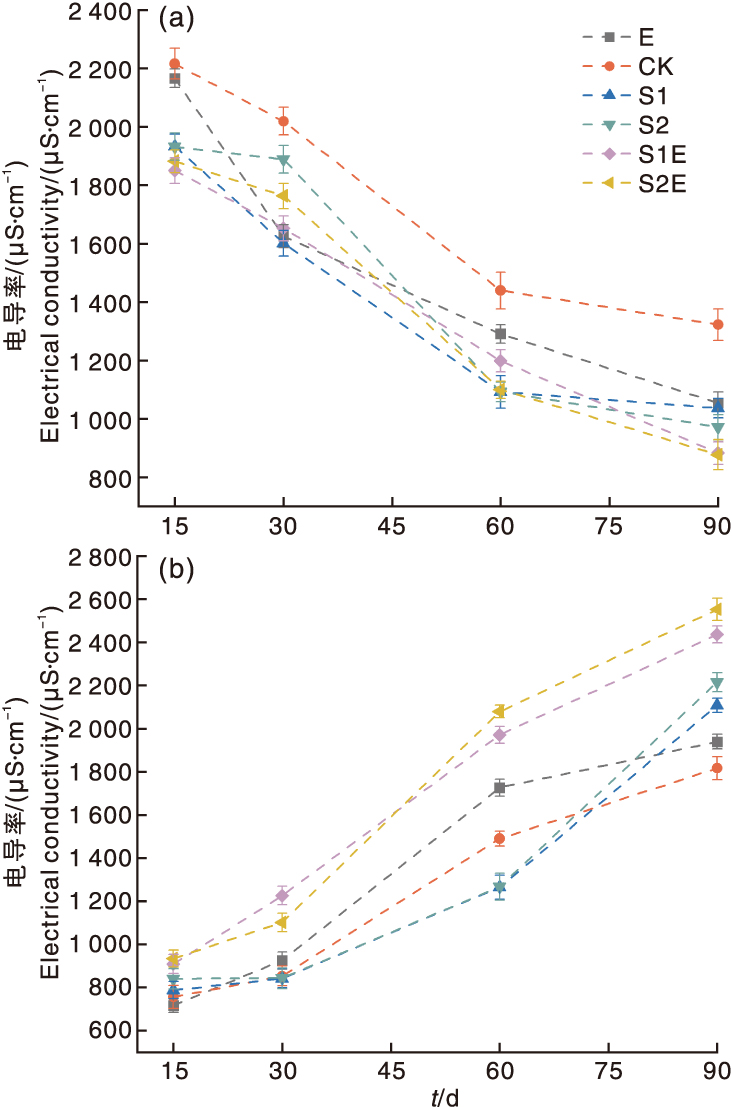
Fig.1 Dynamic of electrical conductivity (EC) in topsoil (0-20 cm) (a) and soil column leachate (b) under different treatments
| 样本 Sample | ACE指数 ACE index | Chao1指数 Chao1 index | 香农指数 Shannon index | 辛普森指数 Simpson index |
|---|---|---|---|---|
| CK_30 | 2 596.97±130.86 b | 2 550.50±119.45 b | 6.75±0.07 c | 0.003 3±0.000 5 bc |
| E_30 | 2 351.07±74.72 b | 2 286.94±70.41 b | 6.62±0.05 d | 0.002 8±0.000 4 cd |
| S1_30 | 2 409.49±286.14 b | 2 352.81±254.80 b | 6.61±0.05 d | 0.003 6±0.000 7 b |
| S2_30 | 2 452.36±98.73 b | 2 375.82±82.17 b | 6.37±0.03 e | 0.005 3±0.000 3 a |
| S1E_30 | 2 672.06±291.80 b | 2 612.60±284.23 b | 6.87±0.08 b | 0.002 2±0.000 2 de |
| S2E_30 | 3 047.98±129.26 a | 2 960.46±113.92 a | 6.99±0.01 a | 0.002 0±0.000 1 e |
| CK_60 | 2 670.53±164.72 bc | 2 605.02±143.90 b | 6.81±0.02 ab | 0.003 1±0.000 1 b |
| E_60 | 2 431.99±91.36 c | 2 363.28±92.77 c | 6.64±0.10 c | 0.003 5±0.000 8 b |
| S1_60 | 3 251.13±56.54 a | 3 149.65±63.22 a | 6.90±0.02 a | 0.002 5±0.000 1 b |
| S2_60 | 2 754.01±70.96 b | 2 662.33±58.14 b | 6.43±0.10 d | 0.005 3±0.001 0 a |
| S1E_60 | 2 777.83±246.77 b | 2 702.45±240.17 b | 6.73±0.02 bc | 0.003 4±0.000 4 b |
| S2E_60 | 2 732.12±61.47 b | 2 653.02±61.48 b | 6.72±0.07 bc | 0.003 2±0.000 4 b |
| CK_90 | 3 173.01±369.21 a | 3 105.98±363.12 a | 6.95±0.10 a | 0.003 0±0.000 3 a |
| E_90 | 2 555.83±162.09 b | 2 508.36±153.87 b | 6.75±0.07 a | 0.003 1±0.000 5 a |
| S1_90 | 2 913.72±191.76 ab | 2 834.26±173.95 ab | 6.70±0.07 a | 0.004 9±0.001 3 a |
| S2_90 | 2 932.50±94.65 ab | 2 847.32±86.48 ab | 6.77±0.01 a | 0.004 0±0.000 2 a |
| S1E_90 | 3 266.39±531.59 a | 3 160.03±514.47 a | 6.84±0.28 a | 0.003 3±0.003 1 a |
| S2E_90 | 3 417.69±238.20 a | 3 292.91±220.01 a | 6.87±0.28 a | 0.002 7±0.003 7 a |
Table 1 Alpha diversity of soil microbes under different treatments
| 样本 Sample | ACE指数 ACE index | Chao1指数 Chao1 index | 香农指数 Shannon index | 辛普森指数 Simpson index |
|---|---|---|---|---|
| CK_30 | 2 596.97±130.86 b | 2 550.50±119.45 b | 6.75±0.07 c | 0.003 3±0.000 5 bc |
| E_30 | 2 351.07±74.72 b | 2 286.94±70.41 b | 6.62±0.05 d | 0.002 8±0.000 4 cd |
| S1_30 | 2 409.49±286.14 b | 2 352.81±254.80 b | 6.61±0.05 d | 0.003 6±0.000 7 b |
| S2_30 | 2 452.36±98.73 b | 2 375.82±82.17 b | 6.37±0.03 e | 0.005 3±0.000 3 a |
| S1E_30 | 2 672.06±291.80 b | 2 612.60±284.23 b | 6.87±0.08 b | 0.002 2±0.000 2 de |
| S2E_30 | 3 047.98±129.26 a | 2 960.46±113.92 a | 6.99±0.01 a | 0.002 0±0.000 1 e |
| CK_60 | 2 670.53±164.72 bc | 2 605.02±143.90 b | 6.81±0.02 ab | 0.003 1±0.000 1 b |
| E_60 | 2 431.99±91.36 c | 2 363.28±92.77 c | 6.64±0.10 c | 0.003 5±0.000 8 b |
| S1_60 | 3 251.13±56.54 a | 3 149.65±63.22 a | 6.90±0.02 a | 0.002 5±0.000 1 b |
| S2_60 | 2 754.01±70.96 b | 2 662.33±58.14 b | 6.43±0.10 d | 0.005 3±0.001 0 a |
| S1E_60 | 2 777.83±246.77 b | 2 702.45±240.17 b | 6.73±0.02 bc | 0.003 4±0.000 4 b |
| S2E_60 | 2 732.12±61.47 b | 2 653.02±61.48 b | 6.72±0.07 bc | 0.003 2±0.000 4 b |
| CK_90 | 3 173.01±369.21 a | 3 105.98±363.12 a | 6.95±0.10 a | 0.003 0±0.000 3 a |
| E_90 | 2 555.83±162.09 b | 2 508.36±153.87 b | 6.75±0.07 a | 0.003 1±0.000 5 a |
| S1_90 | 2 913.72±191.76 ab | 2 834.26±173.95 ab | 6.70±0.07 a | 0.004 9±0.001 3 a |
| S2_90 | 2 932.50±94.65 ab | 2 847.32±86.48 ab | 6.77±0.01 a | 0.004 0±0.000 2 a |
| S1E_90 | 3 266.39±531.59 a | 3 160.03±514.47 a | 6.84±0.28 a | 0.003 3±0.003 1 a |
| S2E_90 | 3 417.69±238.20 a | 3 292.91±220.01 a | 6.87±0.28 a | 0.002 7±0.003 7 a |
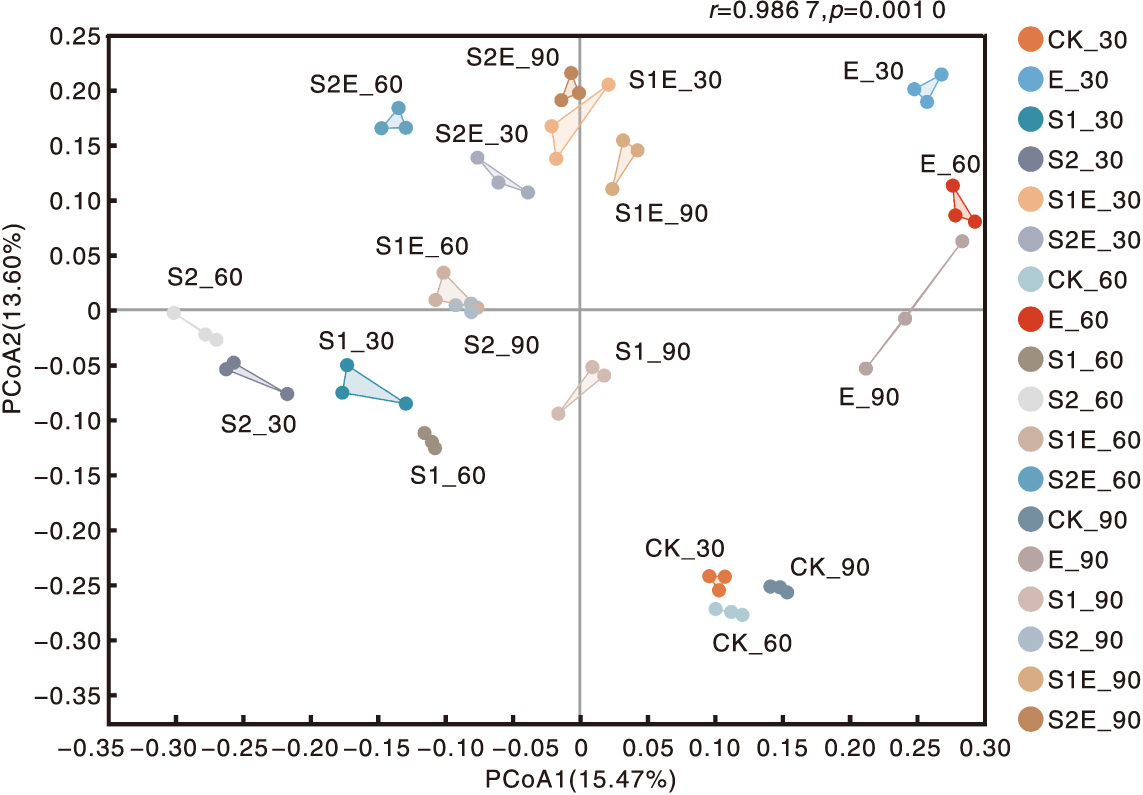
Fig.2 Principal coordinates analysis (PCoA) results of microbes in topsoil (0-20 cm)
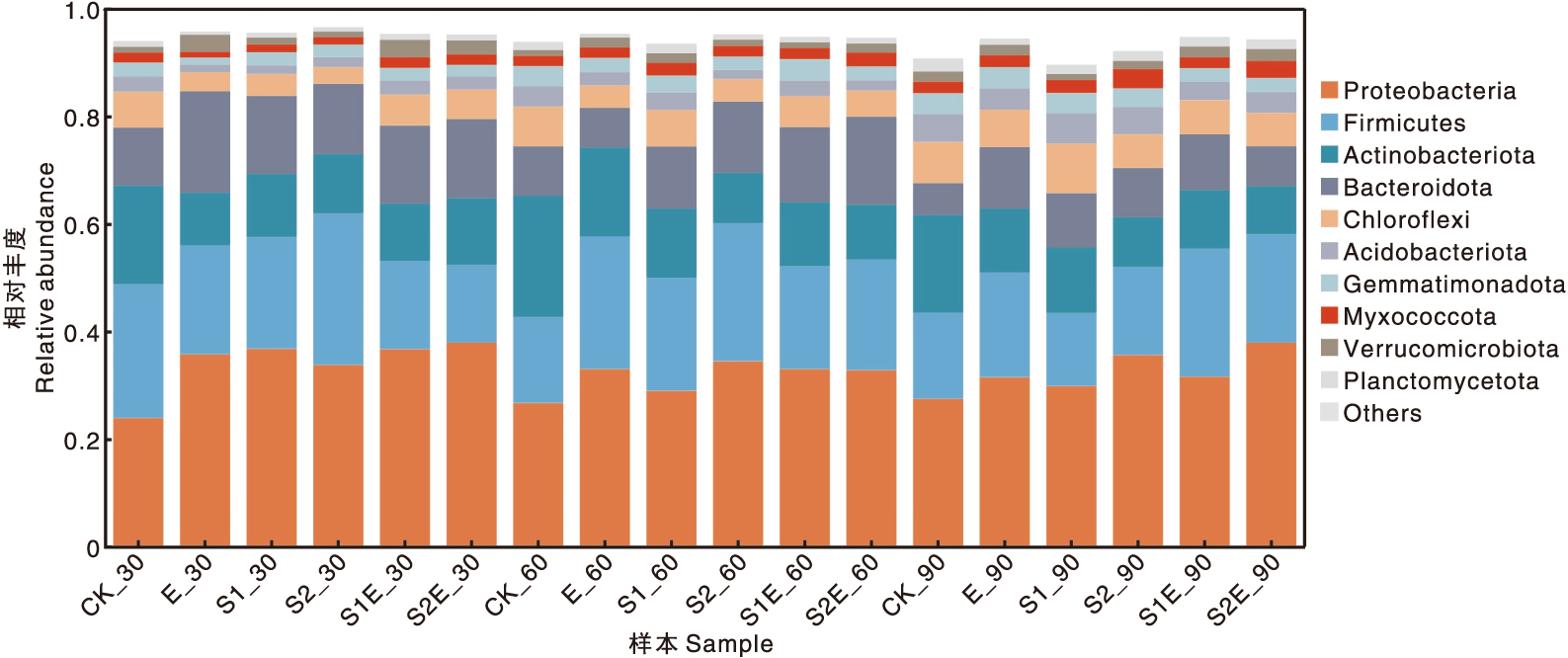
Fig.3 Relative abundance of microorganism in topsoil at phylum level
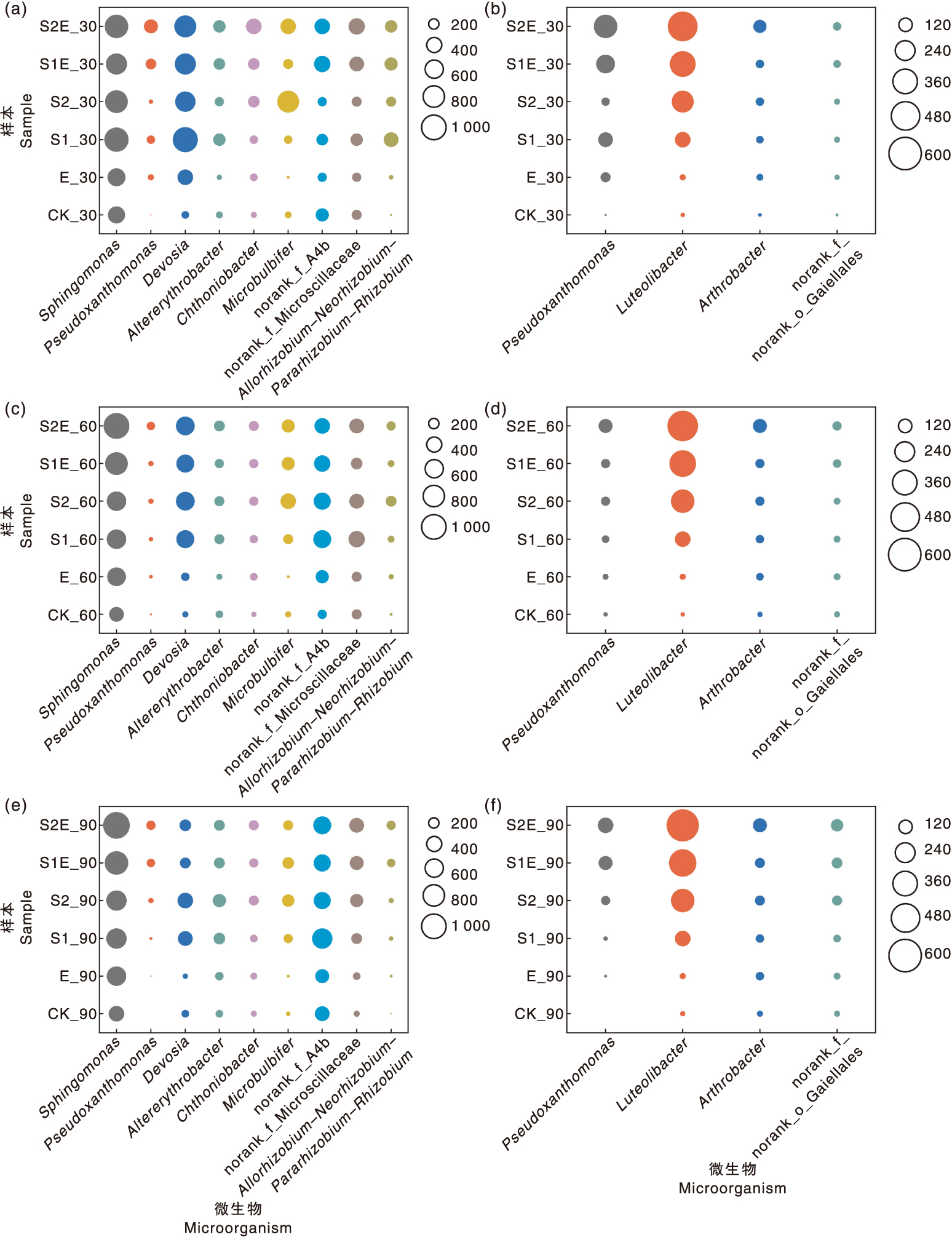
Fig.4 Absolute abundances of some functional microorganisms at genus level in topsoil under different treatments a, c, and e represent the absolute abundances of OTU of lignin/cellulose-degrading bacteria at the genus level in the topsoil (0-20 cm) on the 30th, 60th, and 90th day of the experiment, respectively; while b, d, and f represent the absolute abundances of operational taxonomic unit (OTU) of salt-sensitive bacteria at the genus level in the topsoil on the 30th, 60th, and 90th day of the experiment, respectively.
| 处理Treatment | ωAN/(mg·kg-1) | ωAP/(mg·kg-1) | ωAK/(mg·kg-1) | ωOM/(g·kg-1) | ωDOC/(mg·L-1) |
|---|---|---|---|---|---|
| CK | 124.51±0.27 d | 39.37±0.27 b | 300.00±2.65 c | 18.74±0.33 c | 22.59±0.07 c |
| E | 163.45±0.27 a | 38.84±2.84 b | 278.00±6.08 d | 18.64±0.31 c | 22.53±0.12 d |
| S1 | 96.75±1.63 e | 42.85±0.48 a | 339.00±4.58 b | 20.22±0.07 b | 35.26±0.28 a |
| S2 | 96.29±1.58 e | 43.76±0.33 a | 340.37±4.28 b | 20.37±0.04 b | 35.27±0.55 a |
| S1E | 142.14±0.33 b | 44.27±0.33 a | 344.67±3.74 ab | 22.39±0.25 a | 29.41±0.11 b |
| S2E | 140.30±0.01 c | 45.11±0.60 a | 351.30±3.90 a | 22.72±0.16 a | 29.60±0.36 b |
Table 2 Soil nutrients content under different treatments
| 处理Treatment | ωAN/(mg·kg-1) | ωAP/(mg·kg-1) | ωAK/(mg·kg-1) | ωOM/(g·kg-1) | ωDOC/(mg·L-1) |
|---|---|---|---|---|---|
| CK | 124.51±0.27 d | 39.37±0.27 b | 300.00±2.65 c | 18.74±0.33 c | 22.59±0.07 c |
| E | 163.45±0.27 a | 38.84±2.84 b | 278.00±6.08 d | 18.64±0.31 c | 22.53±0.12 d |
| S1 | 96.75±1.63 e | 42.85±0.48 a | 339.00±4.58 b | 20.22±0.07 b | 35.26±0.28 a |
| S2 | 96.29±1.58 e | 43.76±0.33 a | 340.37±4.28 b | 20.37±0.04 b | 35.27±0.55 a |
| S1E | 142.14±0.33 b | 44.27±0.33 a | 344.67±3.74 ab | 22.39±0.25 a | 29.41±0.11 b |
| S2E | 140.30±0.01 c | 45.11±0.60 a | 351.30±3.90 a | 22.72±0.16 a | 29.60±0.36 b |
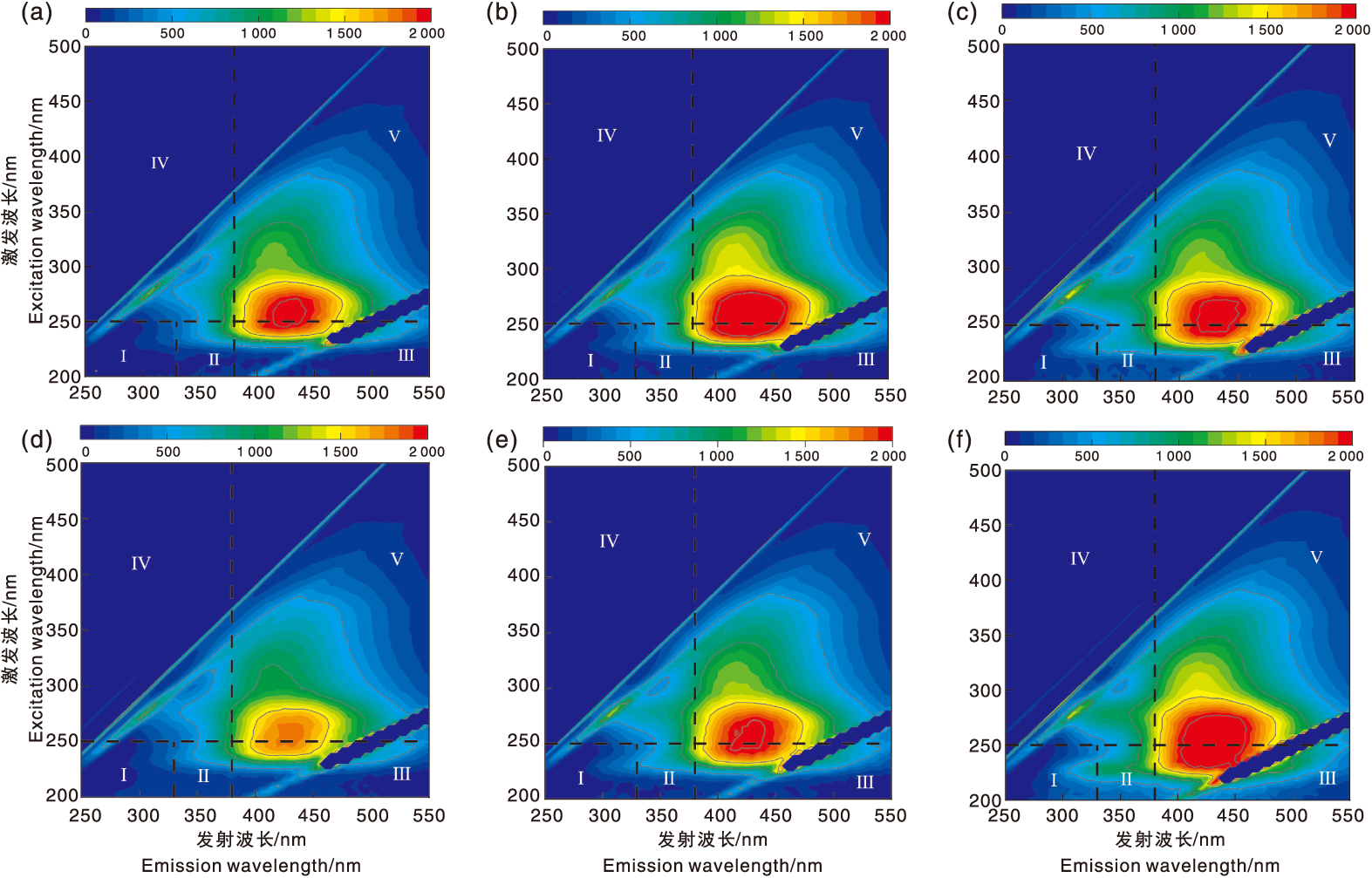
Fig.5 Three-dimensional (3D) fluorescence spectra of topsoil under different treatments a-f show the result of CK, S1, S2, E, S1E, S2E in sequence.
| [1] | 杨真, 王宝山. 中国盐渍土资源现状及改良利用对策[J]. 山东农业科学, 2015, 47(4): 125-130. |
| YANG Z, WANG B S. Present status of saline soil resources and countermeasures for improvement and utilization in China[J]. Shandong Agricultural Sciences, 2015, 47(4): 125-130. | |
| [2] | ABIALA M A, ABDELRAHMAN M, BURRITT D J, et al. Salt stress tolerance mechanisms and potential applications of legumes for sustainable reclamation of salt-degraded soils[J]. Land Degradation & Development, 2018, 29(10): 3812-3822. |
| [3] | 吴晓卫, 付瑞敏, 郭彦钊, 等. 耐盐碱微生物复合菌剂的选育、复配及其对盐碱地的改良效果[J]. 江苏农业科学, 2015, 43(6): 346-349. |
| WU X W, FU R M, GUO Y Z, et al. Breeding, compounding and improvement effect of saline-alkali tolerant microbial compound agent on saline-alkali soil[J]. Jiangsu Agricultural Sciences, 2015, 43(6): 346-349. | |
| [4] | 周哲哲, 张磊, 王甲辰, 等. 种植年限对京郊温室土壤生态环境的影响[J]. 土壤通报, 2021, 52(1): 177-184. |
| ZHOU Z Z, ZHANG L, WANG J C, et al. Effects of planting years on soil ecological environment of greenhouse in a suburb of Beijing[J]. Chinese Journal of Soil Science, 2021, 52(1): 177-184. | |
| [5] | 胡炎, 杨帆, 杨宁, 等. 盐碱地资源分析及利用研究展望[J]. 土壤通报, 2023, 54(2): 489-494. |
| HU Y, YANG F, YANG N, et al. Analysis and prospects of saline-alkali land in China from the perspective of utilization[J]. Chinese Journal of Soil Science, 2023, 54(2): 489-494. | |
| [6] | 周和平, 张立新, 禹锋, 等. 我国盐碱地改良技术综述及展望[J]. 现代农业科技, 2007(11): 159-161, 164. |
| ZHOU H P, ZHANG L X, YU F, et al. Summary and prospect of saline-alkali land improvement technology in China[J]. Modern Agricultural Science and Technology, 2007(11): 159-161, 164. | |
| [7] | SASTRE-CONDE I, CARMEN LOBO M, ICELA BELTRÁN-HERNÁNDEZ R, et al. Remediation of saline soils by a two-step process: washing and amendment with sludge[J]. Geoderma, 2015, 247: 140-150. |
| [8] | 陈尚洪, 朱钟麟, 吴婕, 等. 紫色土丘陵区秸秆还田的腐解特征及对土壤肥力的影响[J]. 水土保持学报, 2006, 20(6): 141-144. |
| CHEN S H, ZHU Z L, WU J, et al. Decomposition characteristics of straw return to soil and its effect on soil fertility in purple hilly region[J]. Journal of Soil and Water Conservation, 2006, 20(6): 141-144. | |
| [9] | 秦都林. 滨海盐碱地棉花秸秆还田和深松对土壤理化性质及棉花产量品质的影响[D]. 泰安: 山东农业大学, 2017. |
| QIN D L. Effects of cotton stalk returning and subsoiling on soil physico-chemical properties and cotton yield and fiber quality in coastal saline-alkali soil[D]. Tai’an: Shandong Agricultural University, 2017. | |
| [10] | 董建新, 丛萍, 刘娜, 等. 秸秆深还对黑土亚耕层土壤物理性状及团聚体分布特征的影响[J]. 土壤学报, 2021, 58(4): 921-934. |
| DONG J X, CONG P, LIU N, et al. Effects of deep straw incorporation on subsoil physical properties and aggregate distribution in black soil[J]. Acta Pedologica Sinica, 2021, 58(4): 921-934. | |
| [11] | 李磊, 樊丽琴, 吴霞, 等. 秸秆还田对盐碱地土壤物理性质、酶活性及油葵产量的影响[J]. 西北农业学报, 2019, 28(12): 1997-2004. |
| LI L, FAN L Q, WU X, et al. Effects of straw returning to field on physical properties, enzyme activity of saline-alkali soil and yield of oil sunflower[J]. Acta Agriculturae Boreali-occidentalis Sinica, 2019, 28(12): 1997-2004. | |
| [12] | 唐继华, 黄臻瑞, 马永华, 等. 蚯蚓生物反应器处理技术对小麦秸秆消解的应用效果[J]. 中国科技信息, 2013(1): 65. |
| TANG J H, HUANG Z R, MA Y H, et al. Application effect of earthworm bioreactor treatment technology on wheat straw digestion[J]. China Science and Technology Information, 2013(1): 65. | |
| [13] | SONG K, SUN Y F, QIN Q, et al. The effects of earthworms on fungal diversity and community structure in farmland soil with returned straw[J]. Frontiers in Microbiology, 2020, 11: 594265. |
| [14] | 张娟琴, 郑宪清, 李双喜, 等. 种养模式下蚯蚓对西瓜连作障碍的影响[J]. 土壤通报, 2023, 54(5): 1159-1166. |
| ZHANG J Q, ZHENG X Q, LI S X, et al. Effects of different earthworms on continuous cropping obstacles in watermelon-earthworm co-culture pattern[J]. Chinese Journal of Soil Science, 2023, 54(5): 1159-1166. | |
| [15] | 胡南南, 逄蕾, 路建龙, 等. 秸秆覆盖对玉米农田土壤有机碳及其组分的影响[J]. 土壤通报, 2024, 55(3): 695-706. |
| HU N N, PANG L, LU J L, et al. Effects of straw mulching on soil organic carbon and its components in maize fields[J]. Chinese Journal of Soil Science, 2024, 55(3): 695-706. | |
| [16] | BUGG T D, AHMAD M, HARDIMAN E M, et al. The emerging role for bacteria in lignin degradation and bio-product formation[J]. Current Opinion in Biotechnology, 2011, 22(3): 394-400. |
| [17] | 王彦伟, 祝其丽, 吴波, 等. 富集纤维素降解菌群过程中微生物群落多样性分析[J]. 中国沼气, 2023, 41(1): 40-46. |
| WANG Y W, ZHU Q L, WU B, et al. Analysis of microbial diversity of cellulose degrading concentration process[J]. China Biogas, 2023, 41(1): 40-46. | |
| [18] | 章俊, 雷琼, 邱祖明, 等. 江陵天星观一号楚墓出土饱水木漆器F455中细菌对硬松木的腐蚀研究[J]. 文物保护与考古科学, 2017, 29(4): 19-26. |
| ZHANG J, LEI Q, QIU Z M, et al. Study of wood degradation by bacteria from the archaeological waterlogged wood F455 excavated at Chu Tomb No.1 at Tianxingguan[J]. Sciences of Conservation and Archaeology, 2017, 29(4): 19-26. | |
| [19] | 杨素勤, 魏森, 张彪, 等. 连续施用改性生物质炭对镉铅土壤修复效果及其对微生物群落结构的影响[J]. 农业环境科学学报, 2022, 41(7): 1460-1471. |
| YANG S Q, WEI S, ZHANG B, et al. Remediation effect of continuous application of modified biochar on cadmium- and lead-contaminated soil and its effect on microbial community structure[J]. Journal of Agro-Environment Science, 2022, 41(7): 1460-1471. | |
| [20] | 王泽铭, 李传虹, 马巧丽, 等. 湿度盐度pH协同驱动锡林河景观疣微菌群空间异质性[J]. 微生物学报, 2021, 61(6): 1728-1742. |
| WANG Z M, LI C H, MA Q L, et al. Moisture, salinity and pH co-driving spatial heterogeneity of Verrucomicrobial populations in Xilin River landscape[J]. Acta Microbiologica Sinica, 2021, 61(6): 1728-1742. | |
| [21] | 林伟芬. 牛粪蚯蚓堆肥过程中水溶性有机物结构的光谱—电化学—质谱研究[D]. 福州: 福建农林大学, 2019. |
| LIN W F. Spectroscopic-electrochemical-mass spectrometric study on the structure of dissolved organic matter during vermicomposting of dairy manure[D]. Fuzhou: Fujian Agriculture and Forestry University, 2019. | |
| [22] | 王楠. 基于腐殖酸生物合成的木质纤维素好氧固态发酵特性研究[D]. 重庆: 重庆大学, 2019. |
| WANG N. Characteristics of aerobic solid fermentation of lignocellulose for humic acids biosynthesis[D]. Chongqing: Chongqing University, 2019. | |
| [23] | 周小惠. Microbulbifer hydrolyticus IRE-31发酵产纤维素酶的研究[D]. 北京: 北京化工大学, 2015. |
| ZHOU X H. The research of fermentation Microbulbifer hydrolyticus IRE-31 to produce cellulase[D]. Beijing: Beijing University of Chemical Technology, 2015. | |
| [24] | DEL CARMEN OROZCO-MOSQUEDA M, GLICK B R, SANTOYO G. ACC deaminase in plant growth-promoting bacteria (PGPB): an efficient mechanism to counter salt stress in crops[J]. Microbiological Research, 2020, 235: 126439. |
| [25] | 高玉坤, 张建东, 杨溥原, 等. 高粱根际土壤细菌群落对盐胁迫的响应[J]. 生物技术通报, 2024, 40(4): 203-216. |
| GAO Y K, ZHANG J D, YANG P Y, et al. Responses of sorghum rhizosphere soil bacterial communities to salt stress[J]. Biotechnology Bulletin, 2024, 40(4): 203-216. | |
| [26] | 戴良香, 徐扬, 张冠初, 等. 花生根际土壤细菌群落多样性对盐胁迫的响应[J]. 作物学报, 2021, 47(8): 1581-1592. |
| DAI L X, XU Y, ZHANG G C, et al. Response of rhizosphere bacterial community diversity to salt stress in peanut[J]. Acta Agronomica Sinica, 2021, 47(8): 1581-1592. | |
| [27] | 宿庆瑞, 李卫孝, 迟凤琴. 有机肥对土壤盐分及水稻产量的影响[J]. 中国农学通报, 2006, 22(4): 299-301. |
| SU Q R, LI W X, CHI F Q. Effect of organic fertilizer application on soil salt content and the yield of rice[J]. Chinese Agricultural Science Bulletin, 2006, 22(4): 299-301. | |
| [28] | 黄强, 殷志刚, 田长彦, 等. 施有机肥条件下的土壤溶液盐分变化动态[J]. 干旱区研究, 2001, 18(1): 53-56. |
| HUANG Q, YIN Z G, TIAN C Y, et al. The variation of saltiness of soil solution in the farmland fertilized by organic manure[J]. Arid Zone Research, 2001, 18(1): 53-56. | |
| [29] | 郜翻身, 崔志祥, 樊润威, 等. 有机物料对盐碱化土壤的改良作用[J]. 土壤通报, 1997, 28(1): 9-11. |
| GAO F S, CUI Z X, FAN R W, et al. Improvement of organic materials on saline-alkali soil[J]. Chinese Journal of Soil Science, 1997, 28(1): 9-11. | |
| [30] | RAHMAN M M, HAGARE D, MAHESHWARI B. Framework to assess sources controlling soil salinity resulting from irrigation using recycled water: an application of Bayesian Belief Network[J]. Journal of Cleaner Production, 2015, 105: 406-419. |
| [31] | LIU M L, WANG C, LIU X L, et al. Saline-alkali soil applied with vermicompost and humic acid fertilizer improved macroaggregate microstructure to enhance salt leaching and inhibit nitrogen losses[J]. Applied Soil Ecology, 2020, 156: 103705. |
| [32] | LIU M L, WANG C, WANG F Y, et al. Maize (Zea mays) growth and nutrient uptake following integrated improvement of vermicompost and humic acid fertilizer on coastal saline soil[J]. Applied Soil Ecology, 2019, 142: 147-154. |
| [33] | DING Z L, KHEIR A M S, ALI O A M, et al. A vermicompost and deep tillage system to improve saline-sodic soil quality and wheat productivity[J]. Journal of Environmental Management, 2021, 277: 111388. |
| [34] | HOSSEINZADEH S R, AMIRI H, ISMAILI A. Evaluation of photosynthesis, physiological, and biochemical responses of chickpea (Cicer arietinum L. cv. Pirouz) under water deficit stress and use of vermicompost fertilizer[J]. Journal of Integrative Agriculture, 2018, 17(11): 2426-2437. |
| [35] | YANG L J, ZHAO F Y, CHANG Q, et al. Effects of vermicomposts on tomato yield and quality and soil fertility in greenhouse under different soil water regimes[J]. Agricultural Water Management, 2015, 160: 98-105. |
| [36] | CASTILLO J M, ROMERO E, NOGALES R. Dynamics of microbial communities related to biochemical parameters during vermicomposting and maturation of agroindustrial lignocellulose wastes[J]. Bioresource Technology, 2013, 146: 345-354. |
| [1] | LI Chuanzhe, DONG Qingjun, JI Li, WANG Jidong, CHEN Chuan, ZHANG Ankang, ZHANG Yongchun, SHAO Wenqi. Effects of new-type fertilizers on soil nutrients, microbial community, and yield of rice and wheat in the typical ancient course area of Yellow River, China [J]. Acta Agriculturae Zhejiangensis, 2026, 38(1): 136-147. |
| [2] | ZHU Weijing, WU Jia, HONG Chunlai, ZHU Fengxiang, HONG Leidong, ZHANG Tao, ZHANG Shuo, ZHU Huifen. Effects of straw mulching on water, heat, fertility status of soil and yield and quality of flat peach [J]. Acta Agriculturae Zhejiangensis, 2025, 37(9): 1924-1932. |
| [3] | CHEN Wei, WANG Rongrong, JIANG Wenjing, GENG Weisong, CHEN Cen. Preparation of chitosan-chitosan oligosaccharide composite film and its application in strawberry preservation [J]. Acta Agriculturae Zhejiangensis, 2025, 37(8): 1785-1793. |
| [4] | ZHANG Zhi, HE Haohao, YU Miao, XU Jianfeng. Effects of chemical fertilizer reduction combined with soil conditioner on soil acidity, soil nutrients and rice yield [J]. Acta Agriculturae Zhejiangensis, 2025, 37(6): 1301-1308. |
| [5] | SU Yang, SHANG Xiaolan, QIAN Zhongming, WU Lingen, HUANG Jiaqi, ZHUANG Haifeng, ZHAO Yufei, DANG Hongyang, XU Lijun. Effects of synergistic enhancement of straw returning to the field with decomposition agent and biochar on soil quality and rice growth [J]. Acta Agriculturae Zhejiangensis, 2025, 37(5): 1139-1148. |
| [6] | SHEN Lan, YANG Xiaofang, ZHANG Guofang. Identification and fungicide sensitivity of the pathogen causing root rot on strawberry [J]. Acta Agriculturae Zhejiangensis, 2025, 37(2): 417-425. |
| [7] | XIE Yujia, LI Zhenjiang, SHA Feiyu, ZHANG Lin, TONG Yana, QIAO Changsheng, CAO Weifeng. Isolation, screening, and functional characteristics of endophytes from strawberry [J]. Acta Agriculturae Zhejiangensis, 2025, 37(12): 2525-2534. |
| [8] | QIU Yan, YE Ziran, TAN Xiangfeng, DAI Mengdi, GE Shihao, RUAN Yunjie, ZHAO Xianliang, KONG Dedong. Design and experiment of strawberry picking and grading robot based on YOLOv5-7.0 [J]. Acta Agriculturae Zhejiangensis, 2025, 37(11): 2364-2375. |
| [9] | WANG Yunlong, JIA Shengqiang, CUI Lingyu, LYU Haohao, SHEN Alin, SU Yao. Interactions of soil carbon and nitrogen distribution with nitrogen fixing and denitrifying bacteria community under straw returning [J]. Acta Agriculturae Zhejiangensis, 2025, 37(10): 2150-2164. |
| [10] | HAN Xiao, LIU Xujie, SHI Lyu, ZHANG Jin, SHAN Haiyong, SHI Xiaoxu, YAN Yini, LIU Jian, XUE Yaguang. Effects of reduced application of controlled-release nitrogen fertilizer on rice yield, quality and nitrogen fertilizer utilization efficiency under concentrated coverage of wheat straw between rows for returning to field [J]. Acta Agriculturae Zhejiangensis, 2025, 37(1): 1-13. |
| [11] | ZHOU Maocuo, LU Jianxiong, GUO Xiaonong, FENG Yulan, CHAI Weiwei, GAO Pengfei. Optimization of quinoa straw fermentation process based on response surface methodology [J]. Acta Agriculturae Zhejiangensis, 2024, 36(9): 2020-2030. |
| [12] | YAN Jingying, NI Liang, SHEN Xingyu, LI Yu. Effect of heat treatment on the degradation of recombinant protein and recombinant DNA in transgenic straws [J]. Acta Agriculturae Zhejiangensis, 2024, 36(9): 2079-2088. |
| [13] | HU Tiejun. Effects of chemical fertilizer reduction combined with microbial fertilizer application on yield, quality, and soil properties of broccoli [J]. Acta Agriculturae Zhejiangensis, 2024, 36(7): 1657-1665. |
| [14] | XIONG Rui, OUYANG Ning, OU Xi, ZHONG Kangyu, ZHOU Wentao, WANG Hongrui, LONG Pan, XU Ying, FU Zhiqiang. Effect of straw returning and tillage method on soil aggregates and carbon, nitrogen content in double-season rice [J]. Acta Agriculturae Zhejiangensis, 2024, 36(6): 1347-1356. |
| [15] | HOU Dong, LI Yali, YUE Hongzhong, ZHANG Dongqin, YAO Tuo, HUANG Shuchao, YANG Haixing. Effects of microbial fertilizer instead of partial chemical fertilizer on yield, quality and soil microorganisms of cauliflower [J]. Acta Agriculturae Zhejiangensis, 2024, 36(3): 589-599. |
| Viewed | ||||||
|
Full text |
|
|||||
|
Abstract |
|
|||||

