Acta Agriculturae Zhejiangensis ›› 2026, Vol. 38 ›› Issue (3): 581-587.DOI: 10.3969/j.issn.1004-1524.20250071
• Quality and Safety of Agricultural Products • Previous Articles Next Articles
Residual degradation and dietary risk assessment of tolfenpyrad and flonicamid in tea leaves
DING Peiheng1( ), YU Fei1,2, CHENG Ke1,2, WANG Chenxue1, ZHENG Xiao1, MU Wenjing1,*(), WANG Xiuguo1
- 1.
Institute of Tobacco Research ,Chinese Academy of Agricultural Sciences Qingdao 266100, Shandong, China
2.College of Life Sciences and Food Engineering ,Huaiyin Institute of Technology Huai’an 223003, Jiangsu, China
-
Received:2025-01-22Online:2026-03-25Published:2026-04-17

CLC Number:
Cite this article
DING Peiheng, YU Fei, CHENG Ke, WANG Chenxue, ZHENG Xiao, MU Wenjing, WANG Xiuguo. Residual degradation and dietary risk assessment of tolfenpyrad and flonicamid in tea leaves[J]. Acta Agriculturae Zhejiangensis, 2026, 38(3): 581-587.
share this article
Add to citation manager EndNote|Ris|BibTeX
URL: http://www.zjnyxb.cn/EN/10.3969/j.issn.1004-1524.20250071
| 农药 Pesticide | 保留时间/min Retention time/min | 定性离子对 Qualitative ion pair(m/z) | 定量离子对 Quantitative ion pair(m/z) | 管透镜电压/V Tube lens voltage/V | 碰撞能量/eV Collision energy/eV |
|---|---|---|---|---|---|
| 唑虫酰胺Tolfenpyrad | 3.2 | 384.2/154.1 | 384.2/197.1 | 200 | 38/22 |
| 氟啶虫酰胺Flonicamid | 2.3 | 230.2/174.1 | 230.2/203.1 | 73 | 17/16 |
Table 1 Ion pair information for qualitative and quantitative analysis of tolfenpyrad and flonicamid
| 农药 Pesticide | 保留时间/min Retention time/min | 定性离子对 Qualitative ion pair(m/z) | 定量离子对 Quantitative ion pair(m/z) | 管透镜电压/V Tube lens voltage/V | 碰撞能量/eV Collision energy/eV |
|---|---|---|---|---|---|
| 唑虫酰胺Tolfenpyrad | 3.2 | 384.2/154.1 | 384.2/197.1 | 200 | 38/22 |
| 氟啶虫酰胺Flonicamid | 2.3 | 230.2/174.1 | 230.2/203.1 | 73 | 17/16 |
| 农药 Pesticide | 工作液 Working solution | 线性方程 Linear equation | 决定系数(R2) Coefficient of determination(R2) |
|---|---|---|---|
| 唑虫酰胺 Tolfenpyrad | 乙腈Acetonitrile | y=1 776 319x+4 070 | 0.999 7 |
| 茶叶(鲜)空白基质Fresh tea blank substrate | y=1 056 435x+3 187 | 0.998 7 | |
| 茶叶(干)空白基质Dry tea blank substrate | y=930 132x+6 845 | 0.998 8 | |
| 氟啶虫酰胺 Flonicamid | 乙腈Acetonitrile | y=1 901 204x+5 224 | 0.999 6 |
| 茶叶(鲜)空白基质Fresh tea blank substrate | y=1 255 664x+4 587 | 0.999 9 | |
| 茶叶(干)空白基质Dry tea blank substrate | y=1 124 471x+5 783 | 0.999 9 |
Table 2 Validation of detection methods for tolfenpyrad and flonicamid
| 农药 Pesticide | 工作液 Working solution | 线性方程 Linear equation | 决定系数(R2) Coefficient of determination(R2) |
|---|---|---|---|
| 唑虫酰胺 Tolfenpyrad | 乙腈Acetonitrile | y=1 776 319x+4 070 | 0.999 7 |
| 茶叶(鲜)空白基质Fresh tea blank substrate | y=1 056 435x+3 187 | 0.998 7 | |
| 茶叶(干)空白基质Dry tea blank substrate | y=930 132x+6 845 | 0.998 8 | |
| 氟啶虫酰胺 Flonicamid | 乙腈Acetonitrile | y=1 901 204x+5 224 | 0.999 6 |
| 茶叶(鲜)空白基质Fresh tea blank substrate | y=1 255 664x+4 587 | 0.999 9 | |
| 茶叶(干)空白基质Dry tea blank substrate | y=1 124 471x+5 783 | 0.999 9 |
| 农药 Pesticide | 基质 Substrate | 添加浓度 Added concentration/(mg·kg-1) | 平均回收率/% Average recovery rate/% | RSD/% |
|---|---|---|---|---|
| 唑虫酰胺Tolfenpyrad | 茶叶(鲜)Fresh tea | 0.05 | 81 | 4.2 |
| 5.00 | 85 | 3.2 | ||
| 50.00 | 88 | 2.2 | ||
| 茶叶(干)Dry tea | 0.05 | 86 | 5.3 | |
| 5.00 | 85 | 4.7 | ||
| 50.00 | 92 | 2.1 | ||
| 氟啶虫酰胺Flonicamid | 茶叶(鲜)Fresh tea | 0.05 | 88 | 6.0 |
| 5.00 | 89 | 3.9 | ||
| 20.00 | 96 | 4.4 | ||
| 茶叶(干)Dry tea | 0.05 | 90 | 2.3 | |
| 5.00 | 90 | 2.9 | ||
| 20.00 | 93 | 2.3 |
Table 3 Recovery rates and relative standard deviation (RSD)of tolfenpyrad and flonicamid in tea samples
| 农药 Pesticide | 基质 Substrate | 添加浓度 Added concentration/(mg·kg-1) | 平均回收率/% Average recovery rate/% | RSD/% |
|---|---|---|---|---|
| 唑虫酰胺Tolfenpyrad | 茶叶(鲜)Fresh tea | 0.05 | 81 | 4.2 |
| 5.00 | 85 | 3.2 | ||
| 50.00 | 88 | 2.2 | ||
| 茶叶(干)Dry tea | 0.05 | 86 | 5.3 | |
| 5.00 | 85 | 4.7 | ||
| 50.00 | 92 | 2.1 | ||
| 氟啶虫酰胺Flonicamid | 茶叶(鲜)Fresh tea | 0.05 | 88 | 6.0 |
| 5.00 | 89 | 3.9 | ||
| 20.00 | 96 | 4.4 | ||
| 茶叶(干)Dry tea | 0.05 | 90 | 2.3 | |
| 5.00 | 90 | 2.9 | ||
| 20.00 | 93 | 2.3 |
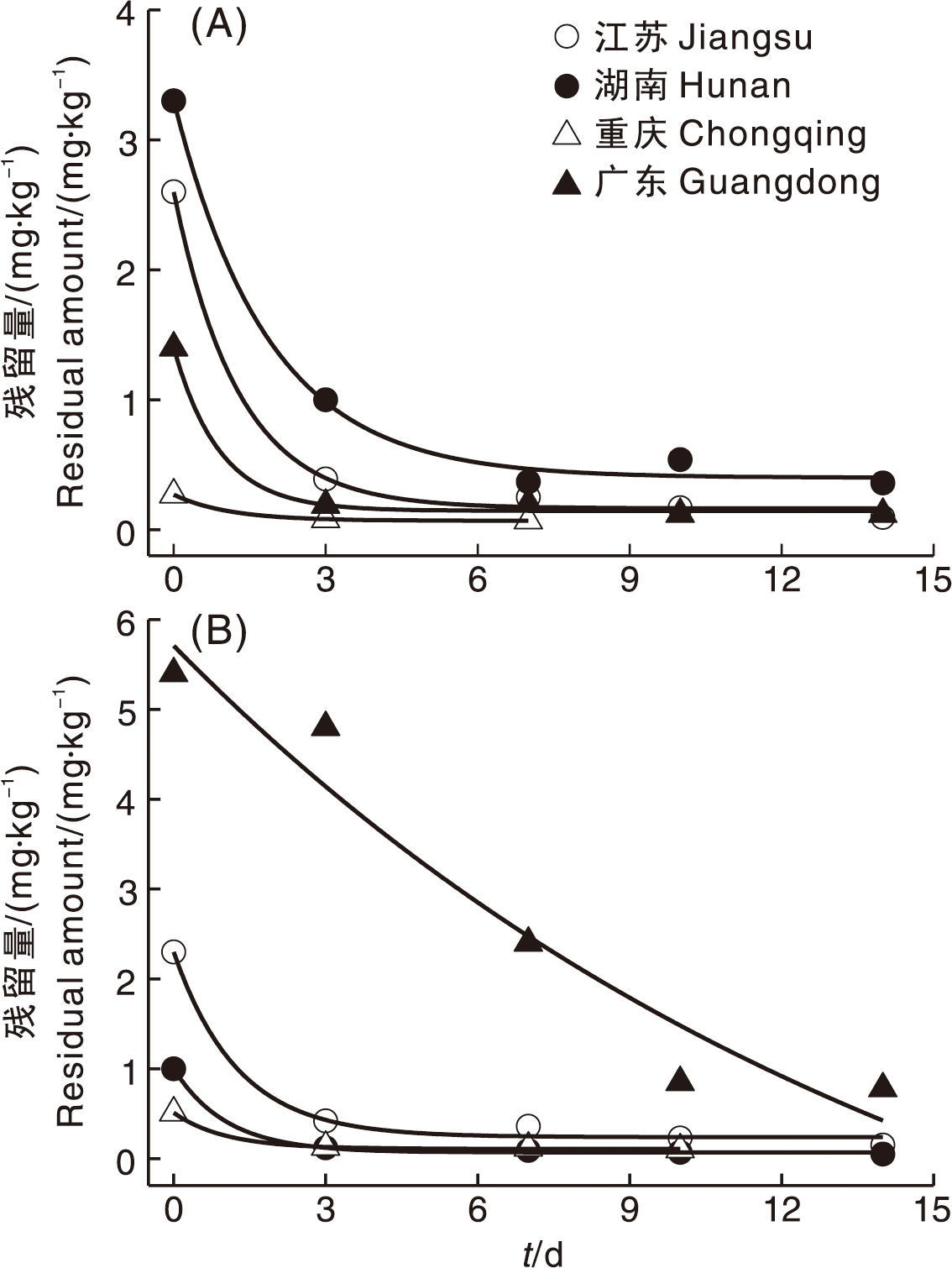
Fig.1 Degradation dynamics of tolfenpyrad (A) and flonicamid (B) in fresh tea samples
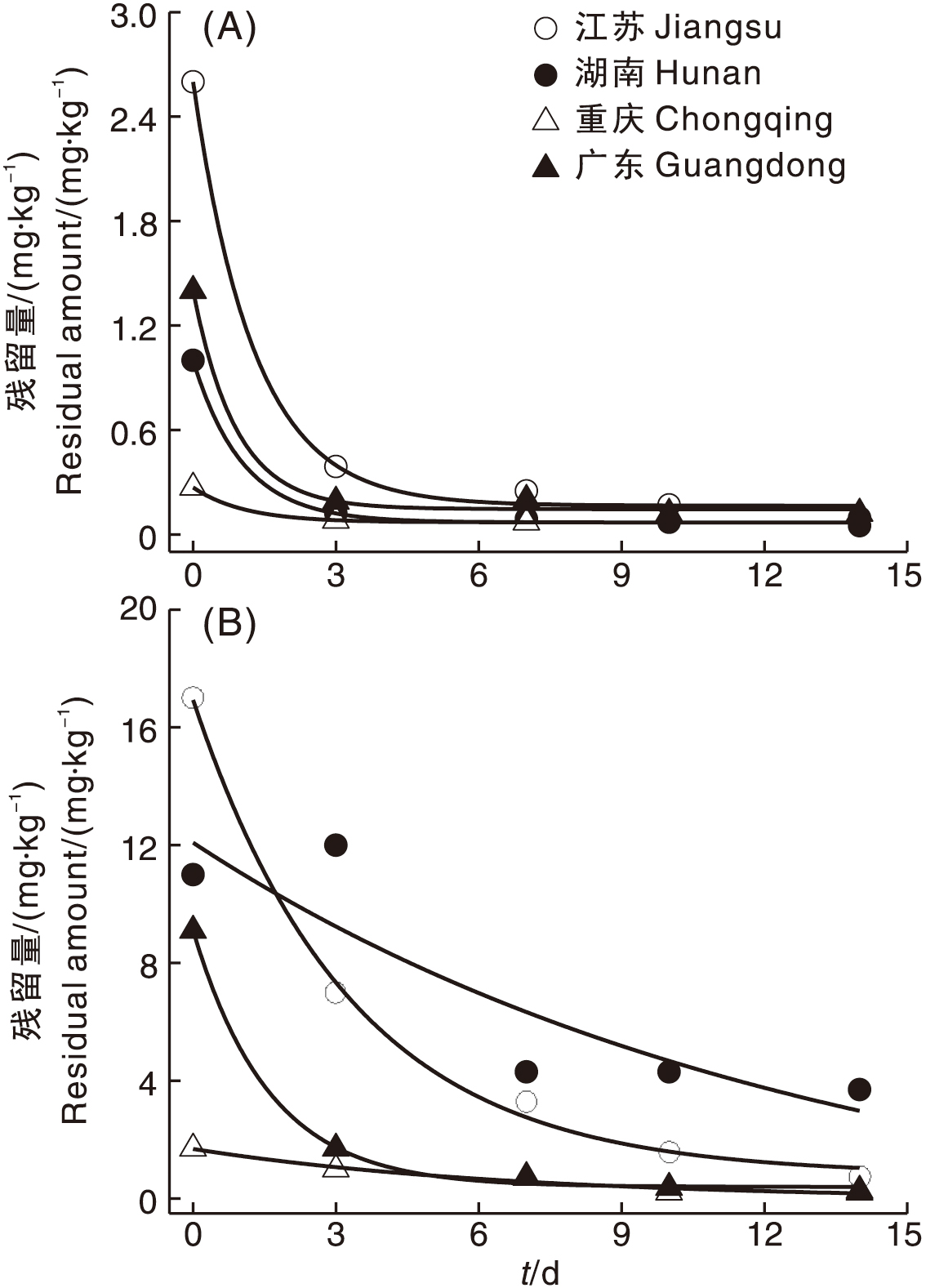
Fig.2 Degradation dynamics of tolfenpyrad (A) and flonicamid (B) in dry tea samples
| 农药 Pesticide | 采收间隔期/d Harvest interval/d | 基质 Substrate | 残留中值/(mg·kg-1) Supervised trials median residue/(mg·kg-1) | 最高残留量/(mg·kg-1) Highest residue/(mg·kg-1) |
|---|---|---|---|---|
| 唑虫酰胺Tolfenpyrad | 7 | 茶叶(鲜)Fresh tea | 1.10 | 5.00 |
| 茶叶(干)Dry tea | 1.60 | 5.20 | ||
| 10 | 茶叶(鲜)Fresh tea | 0.62 | 2.50 | |
| 茶叶(干)Dry tea | 0.83 | 4.60 | ||
| 氟啶虫酰胺Flonicamid | 7 | 茶叶(鲜)Fresh tea | 0.19 | 0.58 |
| 茶叶(干)Dry tea | 0.24 | 0.90 | ||
| 10 | 茶叶(鲜)Fresh tea | 0.18 | 0.37 | |
| 茶叶(干)Dry tea | 0.14 | 0.55 |
Table 4 Final residue test results of tolfenpyrad and flonicamid
| 农药 Pesticide | 采收间隔期/d Harvest interval/d | 基质 Substrate | 残留中值/(mg·kg-1) Supervised trials median residue/(mg·kg-1) | 最高残留量/(mg·kg-1) Highest residue/(mg·kg-1) |
|---|---|---|---|---|
| 唑虫酰胺Tolfenpyrad | 7 | 茶叶(鲜)Fresh tea | 1.10 | 5.00 |
| 茶叶(干)Dry tea | 1.60 | 5.20 | ||
| 10 | 茶叶(鲜)Fresh tea | 0.62 | 2.50 | |
| 茶叶(干)Dry tea | 0.83 | 4.60 | ||
| 氟啶虫酰胺Flonicamid | 7 | 茶叶(鲜)Fresh tea | 0.19 | 0.58 |
| 茶叶(干)Dry tea | 0.24 | 0.90 | ||
| 10 | 茶叶(鲜)Fresh tea | 0.18 | 0.37 | |
| 茶叶(干)Dry tea | 0.14 | 0.55 |
| 食物种类 Food classification | 登记作物 Registration crop | 膳食量/kg Dietary intake/kg | 参考限量/(mg·kg-1) Reference limit/(mg·kg-1) | 限量来源 Limited source | NEDI/mg |
|---|---|---|---|---|---|
| 浅色蔬菜Light vegetables | 甘蓝Cabbage | 0.183 7 | 0.5 | 中国China | 0.091 85 |
| 水果Fruits | 柑橘Citrus | 0.045 7 | 0.8 | 美国America | 0.036 56 |
| 饮料类Beverages | 茶Tea | 0.012 0 | 1.6 | STMR | 0.019 20 |
| 合计Total | — | 0.241 4 | — | — | 0.147 61 |
Table 5 The chronic dietary risk assessment of tolfenpyrad at recommended dose
| 食物种类 Food classification | 登记作物 Registration crop | 膳食量/kg Dietary intake/kg | 参考限量/(mg·kg-1) Reference limit/(mg·kg-1) | 限量来源 Limited source | NEDI/mg |
|---|---|---|---|---|---|
| 浅色蔬菜Light vegetables | 甘蓝Cabbage | 0.183 7 | 0.5 | 中国China | 0.091 85 |
| 水果Fruits | 柑橘Citrus | 0.045 7 | 0.8 | 美国America | 0.036 56 |
| 饮料类Beverages | 茶Tea | 0.012 0 | 1.6 | STMR | 0.019 20 |
| 合计Total | — | 0.241 4 | — | — | 0.147 61 |
| 食物种类 Food classification | 登记作物 Registration crop | 膳食量 Dietary intake/kg | 参考限量 Reference limit/(mg·kg-1) | 限量来源 Limited source | NEDI/mg |
|---|---|---|---|---|---|
| 米及其制品Rice and its products | 稻谷Rice | 0.239 9 | 0.50 | 中国China | 0.119 95 |
| 薯类Tubers | 马铃薯Potato | 0.049 5 | 0.20 | 中国China | 0.009 90 |
| 深色蔬菜Dark vegetables | 菠菜Spinach | 0.091 5 | 20.00 | 中国China | 1.830 00 |
| 浅色蔬菜Light vegetables | 甘蓝Cabbage | 0.183 7 | 2.00 | 中国China | 0.367 40 |
| 水果Fruits | 苹果Apple | 0.045 7 | 1.00 | 中国China | 0.045 70 |
| 植物油Vegetable oil | 棉籽Cottonseed | 0.032 7 | 0.60 | 中国China | 0.019 62 |
| 食盐Salt | 茶Tea | 0.012 0 | 0.24 | STMR | 0.002 88 |
| 酱油Soy sauce | 大葱Shallot | 0.009 0 | 0.03 | 欧盟EU | 0.000 27 |
| 合计Total | — | 0.664 0 | — | — | 2.395 72 |
Table 6 The chronic dietary risk assessment of flonicamid at recommended dose
| 食物种类 Food classification | 登记作物 Registration crop | 膳食量 Dietary intake/kg | 参考限量 Reference limit/(mg·kg-1) | 限量来源 Limited source | NEDI/mg |
|---|---|---|---|---|---|
| 米及其制品Rice and its products | 稻谷Rice | 0.239 9 | 0.50 | 中国China | 0.119 95 |
| 薯类Tubers | 马铃薯Potato | 0.049 5 | 0.20 | 中国China | 0.009 90 |
| 深色蔬菜Dark vegetables | 菠菜Spinach | 0.091 5 | 20.00 | 中国China | 1.830 00 |
| 浅色蔬菜Light vegetables | 甘蓝Cabbage | 0.183 7 | 2.00 | 中国China | 0.367 40 |
| 水果Fruits | 苹果Apple | 0.045 7 | 1.00 | 中国China | 0.045 70 |
| 植物油Vegetable oil | 棉籽Cottonseed | 0.032 7 | 0.60 | 中国China | 0.019 62 |
| 食盐Salt | 茶Tea | 0.012 0 | 0.24 | STMR | 0.002 88 |
| 酱油Soy sauce | 大葱Shallot | 0.009 0 | 0.03 | 欧盟EU | 0.000 27 |
| 合计Total | — | 0.664 0 | — | — | 2.395 72 |
| [1] | 宋红健, 刘玉秀, 汪清民. N-烷基吡唑-5-甲酰胺类杀虫杀螨剂的研究进展[J]. 中国科学: 化学, 2016, 46(11): 1143-1154. |
| SONG H J, LIU Y X, WANG Q M. Recent advances in insecticides/acaricides of N-alkylpyrazole-5-formamides[J]. Scientia Sinica: Chimica, 2016, 46(11): 1143-1154. | |
| [2] | MORITA M, UEDA T, YONEDA T, et al. Flonicamid, a novel insecticide with a rapid inhibitory effect on aphid feeding[J]. Pest Management Science, 2007, 63(10): 969-973. |
| [3] | 潘少霖, 王贤达, 林雄杰, 等. 15%唑虫酰胺悬浮剂对柑橘木虱田间药效评价[J]. 农药, 2018, 57(1): 58-60. |
| PAN S L, WANG X D, LIN X J, et al. Field efficacy of tolfenpyrad 15% SC against Diaphorina citri Kuwayama[J]. Agrochemicals, 2018, 57(1): 58-60. | |
| [4] | 王青青, 柳璇, 姜蔚, 等. 唑虫酰胺的残留研究进展及发展趋势[J]. 农药, 2016, 55(8): 557-560. |
| WANG Q Q, LIU X, JIANG W, et al. Research progress and development trend of tolfenpyrad residues[J]. Agrochemicals, 2016, 55(8): 557-560. | |
| [5] | 范文政, 顾保权, 朱伟清, 等. 唑虫酰胺的合成[J]. 现代农药, 2005, 4(2): 9-11. |
| FAN W Z, GU B Q, ZHU W Q, et al. Synthesis of tolfenpyrad[J]. Modern Agrochemicals, 2005, 4(2): 9-11. | |
| [6] | 曾明森, 刘丰静, 黄伙水, 等. 茶园唑虫酰胺残留动态与使用安全性[J]. 福建农业学报, 2014, 29(8): 774-778. |
| ZENG M S, LIU F J, HUANG H S, et al. Residue and safety of tolfenpyrad used in tea plantations[J]. Fujian Journal of Agricultural Sciences, 2014, 29(8): 774-778. | |
| [7] | 兰婷婷. 唑虫酰胺在四种叶类蔬菜中的分析检测、残留归趋及膳食风险研究[D]. 贵阳: 贵州大学, 2022. |
| LAN T T. Analysis, detection, residue dynamics and dietary risk of tolfenpyrad in four leafy vegetables[D]. Guiyang: Guizhou University, 2022. | |
| [8] | 石凯威, 汤丛峰, 李薇, 等. 新型农药氟啶虫酰胺在苹果中的残留消解及膳食风险评估[J]. 农药, 2015, 54(9): 674-677. |
| SHI K W, TANG C F, LI W, et al. Residue and dietary risk assessment of flonicamid in apple[J]. Agrochemicals, 2015, 54(9): 674-677. | |
| [9] | 吴燕, 杨静, 陈翔, 等. 氟啶虫酰胺、噻螨酮和烯唑醇在枸杞上的残留安全性分析[J]. 农药, 2023, 62(3): 194-199. |
| WU Y, YANG J, CHEN X, et al. Residual safety analysis of flonicamid, hexythiazox and diniconazole on Lycium barbarum[J]. Agrochemicals, 2023, 62(3): 194-199. | |
| [10] | 仇是胜, 柏亚罗, 顾林玲. 氟啶虫酰胺的研究开发及市场前景[J]. 现代农药, 2014, 13(5): 6-11. |
| QIU S S, BAI Y L, GU L L. Research, development and market prospect of flonicamid[J]. Modern Agrochemicals, 2014, 13(5): 6-11. | |
| [11] | 苏建亚. 氟啶虫酰胺作用靶标: 内向整流钾离子通道研究进展[J]. 农药学学报, 2019, 21(2): 131-139. |
| SU J Y. Molecular target of flonicamid: inward-rectifying potassium channels[J]. Chinese Journal of Pesticide Science, 2019, 21(2): 131-139. | |
| [12] | 张亦冰. 新颖杀虫剂: 氟啶虫酰胺[J]. 世界农药, 2010, 32(1): 54-56. |
| ZHANG Y B. A novel insecticide: flonicamid[J]. World Pesticides, 2010, 32(1): 54-56. | |
| [13] | 胡汉亮, 吴清莲, 蔡清毅, 等. 市售红茶中农药残留检测与健康风险评价[J]. 热带农业科学, 2024, 44(10): 101-107. |
| HU H L, WU Q L, CAI Q Y, et al. Detection and health risk assessment of pesticide residues in commercially available black tea[J]. Chinese Journal of Tropical Agriculture, 2024, 44(10): 101-107. | |
| [14] | 朱建华, 赵莉. 液相色谱串联质谱法测定果蔬中的唑虫酰胺、氟啶虫酰胺、氯虫苯甲酰胺及氟虫双酰胺残留[J]. 分析测试学报, 2011, 30(6): 646-650. |
| ZHU J H, ZHAO L. Simultaneous determination of tolfenpyrad, flonicamid, chlorantraniliprole and flubendiamide in vegetables and fruits by high performance liquid chromatography-tandem mass spectrometry[J]. Journal of Instrumental Analysis, 2011, 30(6): 646-650. | |
| [15] | 于乐祥, 刘敬民, 狄凤娟, 等. 50%氟啶虫酰胺·螺虫乙酯悬浮剂的高效液相色谱分析方法[J]. 农药, 2022, 61(2): 102-104. |
| YU L X, LIU J M, DI F J, et al. HPLC method of flonicamid and spirotetramat 50% SC[J]. Agrochemicals, 2022, 61(2): 102-104. | |
| [16] | 乔成奎, 庄明, 田发军, 等. 氟啶虫酰胺和螺虫乙酯在猕猴桃园中的降解及膳食风险评估[J]. 园艺学报, 2024, 51(6): 1386-1402. |
| QIAO C K, ZHUANG M, TIAN F J, et al. Degradation behaviors and dietary risk assessment of flonicamid and spirotetramat in kiwifruit plantations[J]. Acta Horticulturae Sinica, 2024, 51(6): 1386-1402. | |
| [17] | WTO. Japan agricultural chemical: flonicamid[EB/OL]. (2023-03-31)[2025-01-22]. https://members.wto.org/crnattachments/2023/SPS/JPN/23_8670_00_e.pdf. |
| [18] | 张清涛. 氟啶虫酰胺在茶叶中的降解行为研究[D]. 贵阳: 贵州大学, 2019. |
| ZHANG Q T. Degradation behavior of flonicamid in tea[D]. Guiyang: Guizhou University, 2019. | |
| [19] | 刘建亲, 花日茂. 微生物降解农药的研究进展[J]. 安徽农业科学, 2008, 36(24): 10663-10664. |
| LIU J Q, HUA R M. Research progress of pesticides degradation by microorganism[J]. Journal of Anhui Agricultural Sciences, 2008, 36(24): 10663-10664. |
| [1] | JIANG Yuanhao, HUANG Mengru, CHU Chenqi, ZHANG Jin, HU Jun, CHEN Wenxuan. Preservation effect of perilla essential oil-tea polyphenols-chitosan composite coating solution on chilled grass carp [J]. Acta Agriculturae Zhejiangensis, 2026, 38(6): 1073-1086. |
| [2] | SUN Da, MAO Binyu, HUANG Danyi, CUI Hongchun, XIA Bing, ZHENG Xuxia. Study on the quality of West Lake Longjing tea in different regions based on soil properties [J]. Acta Agriculturae Zhejiangensis, 2026, 38(6): 1087-1098. |
| [3] | CHI Qin, WEI Fuxiao, ZHOU Mei, LIN Shaoxia, LIU Xiaolan, LI Chunyan, YANG Yonggang, WANG Daoping. Functional components and aroma characteristics of introduced Wuyi rock tea in Guizhou of China [J]. Acta Agriculturae Zhejiangensis, 2026, 38(5): 919-933. |
| [4] | SHI Yin, WANG Yanxia, WANG Juanying, HUANG Xiaozhen. Comparative analysis on the tenderness and quality of wild ancient tea plants TZRR1 and Camellia sinensis L. cv. Fudingdabaicha in Guizhou [J]. Acta Agriculturae Zhejiangensis, 2026, 38(4): 621-631. |
| [5] | DONG Ruili, GU Lei, ZHANG Meng, ZHOU Guomo. Research on carbon storage of tea trees and carbon footprint of tea products in Lishui City, Zhejiang Province, China [J]. Acta Agriculturae Zhejiangensis, 2026, 38(2): 339-350. |
| [6] | YANG Chun, LIANG Sihui, WANG Anran, CHEN Juan, LI Yan, LIN Kaiqin, MI Xiaozeng, QIAO Dahe, CHEN Zhengwu, GUO Yan. Characteristic metabolite content and cold resistance of 54 tea germplasms [J]. Acta Agriculturae Zhejiangensis, 2025, 37(9): 1860-1871. |
| [7] | LIU Rui, WANG Lijuan, WANG Qiuhao, LIN Xudong, GUO Qihang, XU Duolin, LI Wenyan. Detection of pest and disease in tea based on improved YOLOv8s [J]. Acta Agriculturae Zhejiangensis, 2025, 37(9): 1933-1942. |
| [8] | LI Huaxin, YANG Xuankang, CHEN Ying, WU Xiaoting, LIU Silian, YANG Zhong, ZHOU Chenggang, GAO Dandan. Optimization of the preparation process and separation purification of antioxidant peptides from oat bran protein [J]. Acta Agriculturae Zhejiangensis, 2025, 37(9): 1958-1968. |
| [9] | DENG Yulian, TAN Lin, NIU Li, LU Qiancheng, ZHOU Linghong, LI Guihua, HU Qiulong. Screening and identification of an antagonistic fungus strain against root rot disease in tea plants and its biological characteristics [J]. Acta Agriculturae Zhejiangensis, 2025, 37(7): 1469-1480. |
| [10] | ZHU Lyuhan, FANG Kun, WU Xiaoli, YAO Qing, XIE Shuli, ZHENG Lei, AO Yue, CHEN Lihong, ZHAO Ke, WEI Jun, ZHANG Jin. Effect of microwave-assisted superheated steam heating on physicochemical property and sensory quality of pork batters [J]. Acta Agriculturae Zhejiangensis, 2025, 37(3): 679-688. |
| [11] | LIU Jie, SHU Zaifa, LIU Linmin, YE Huoxiang, ZHOU Huijuan, JI Qingyong, HE Weizhong. Research and application of whole process mechanization of tea [J]. Acta Agriculturae Zhejiangensis, 2025, 37(10): 2235-2246. |
| [12] | LIU Yuexuan, CHEN Yanling, ZHANG Peiqiang, YAN Peng. Research progress on soil acidification and its regulation in tea plantations [J]. Acta Agriculturae Zhejiangensis, 2025, 37(1): 245-254. |
| [13] | LI Hui, TAN Xiaoqin, TANG Qian, YANG Yang, CHEN Wei. Effects of flower thinning on yield and quality components of Zi Yan tea plants [J]. Acta Agriculturae Zhejiangensis, 2024, 36(7): 1602-1615. |
| [14] | WANG Xiaomei, LUO Yuqin, ZHAO Xueping, LU Lanfei, FANG Nan, WANG Xiangyun, JIANG Jinhua, HE Hongmei, ZHANG Changpeng, WANG Qiang. Residues and dietary risk assessment of fluopyram in Dendrobium officinale [J]. Acta Agriculturae Zhejiangensis, 2024, 36(7): 1666-1676. |
| [15] | ZHU Mingmin, ZHANG Guoping, TAN Jianjun, SUN Lingjiao, ZHU Li, JIAO Jie. A lightweight tea buds terminal detection model based on YOLOv5s [J]. Acta Agriculturae Zhejiangensis, 2024, 36(6): 1413-1424. |
| Viewed | ||||||
|
Full text |
|
|||||
|
Abstract |
|
|||||

