Acta Agriculturae Zhejiangensis ›› 2026, Vol. 38 ›› Issue (4): 643-654.DOI: 10.3969/j.issn.1004-1524.20250110
• Horticultural Science • Previous Articles Next Articles
Effects of different ground mulching methods on carbon dioxide concentration in solar greenhouses and tomato growth
SUN Qin1( ), LEI Yongzhong1, JIN Ning1, JIN Li2, WANG Shuya2, ZHANG Qian1, ZHANG Wei1, ZHAO Wang1, YU Jihua1,2, LYU Jian1,2,*()
- 1
College of Horticulture ,Gansu Agricultural University Lanzhou 730070, China
2State Key Laboratory of Aridland Crop Science Lanzhou 730070, China
-
Received:2025-02-13Online:2026-04-25Published:2026-05-08 -
Contact:LYU Jian

CLC Number:
Cite this article
SUN Qin, LEI Yongzhong, JIN Ning, JIN Li, WANG Shuya, ZHANG Qian, ZHANG Wei, ZHAO Wang, YU Jihua, LYU Jian. Effects of different ground mulching methods on carbon dioxide concentration in solar greenhouses and tomato growth[J]. Acta Agriculturae Zhejiangensis, 2026, 38(4): 643-654.
share this article
Add to citation manager EndNote|Ris|BibTeX
URL: http://www.zjnyxb.cn/EN/10.3969/j.issn.1004-1524.20250110
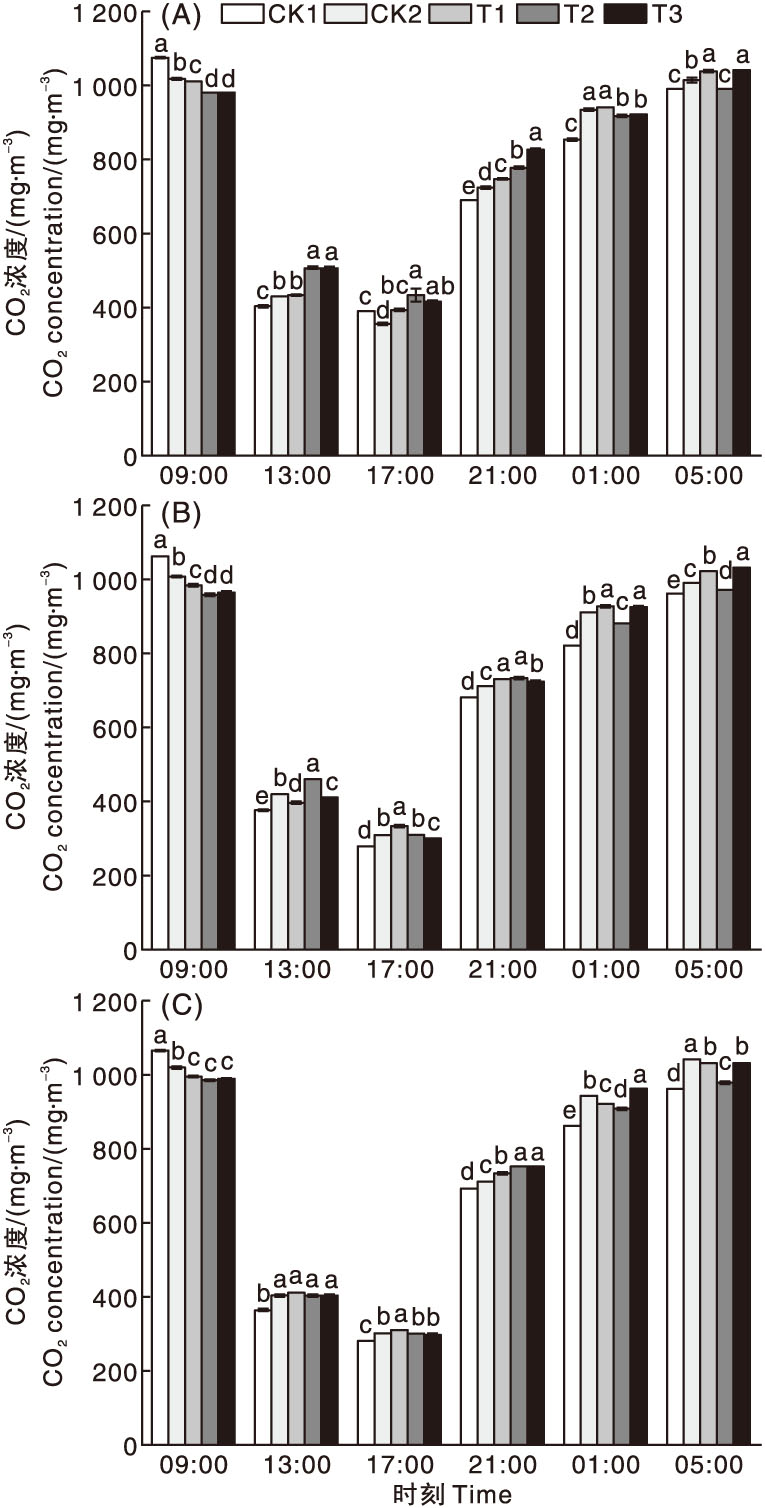
Fig.1 Effects of different treatments on vertical CO2 concentration distribution of tomato in greenhouse A, B and C represent the results at the near-ground level, canopy level, and upper canopy level, respectively. For the same time, bars marked without the same letters indicate significant difference at p<0.05.
| 位置 Location | 处理 Treatment | 日最大值 Daily maximum value | 日最小值 Daily minimum value | 日平均值 Daily average value |
|---|---|---|---|---|
| 近地面 | CK1 | 1 073.33±3.33 a | 390.00±0.01 c | 733.33±2.00 d |
| Near-ground | CK2 | 1 020.00±0.01 b | 356.67±3.33 d | 745.56±1.33 c |
| T1 | 1 013.33±6.67 b | 393.33±3.33 bc | 760.00±3.33 b | |
| T2 | 990.00±0.01 c | 433.33±16.67 a | 767.22±5.33 b | |
| T3 | 990.00±0.01 c | 416.67±3.33 ab | 781.67±2.67 a | |
| 冠层 | CK1 | 1 060.00±0.01 a | 280.00±0.01 d | 696.11±1.33 c |
| Canopy | CK2 | 1 020.00±3.33 b | 310.00±0.01 b | 724.44±0.67 a |
| T1 | 990.00±0.01 c | 333.33±3.33 a | 731.67±1.33 a | |
| T2 | 970.00±0.01 d | 310.00±0.01 b | 718.33±0.67 b | |
| T3 | 960.00±0.01 e | 300.00±0.01 c | 725.00±0.67 a | |
| 冠层上部 | CK1 | 1 063.33±3.33 a | 280.00±0.01 c | 702.78±0.67 c |
| Upper canopy | CK2 | 1 040.00±0.01 a | 300.00±0.01 b | 735.00±0.67 a |
| T1 | 1 000.00±0.01 b | 310.00±0.01 a | 732.78±0.67 a | |
| T2 | 983.33±3.33 c | 300.00±0.01 b | 720.00±2.00 b | |
| T3 | 986.67±3.33 c | 296.67±3.33 b | 737.78±1.33 a |
Table 1 Daily maximum, minimum and average values of CO2 concentration in vertical direction of tomato in greenhouse under different treatments Unit: mg·m-3
| 位置 Location | 处理 Treatment | 日最大值 Daily maximum value | 日最小值 Daily minimum value | 日平均值 Daily average value |
|---|---|---|---|---|
| 近地面 | CK1 | 1 073.33±3.33 a | 390.00±0.01 c | 733.33±2.00 d |
| Near-ground | CK2 | 1 020.00±0.01 b | 356.67±3.33 d | 745.56±1.33 c |
| T1 | 1 013.33±6.67 b | 393.33±3.33 bc | 760.00±3.33 b | |
| T2 | 990.00±0.01 c | 433.33±16.67 a | 767.22±5.33 b | |
| T3 | 990.00±0.01 c | 416.67±3.33 ab | 781.67±2.67 a | |
| 冠层 | CK1 | 1 060.00±0.01 a | 280.00±0.01 d | 696.11±1.33 c |
| Canopy | CK2 | 1 020.00±3.33 b | 310.00±0.01 b | 724.44±0.67 a |
| T1 | 990.00±0.01 c | 333.33±3.33 a | 731.67±1.33 a | |
| T2 | 970.00±0.01 d | 310.00±0.01 b | 718.33±0.67 b | |
| T3 | 960.00±0.01 e | 300.00±0.01 c | 725.00±0.67 a | |
| 冠层上部 | CK1 | 1 063.33±3.33 a | 280.00±0.01 c | 702.78±0.67 c |
| Upper canopy | CK2 | 1 040.00±0.01 a | 300.00±0.01 b | 735.00±0.67 a |
| T1 | 1 000.00±0.01 b | 310.00±0.01 a | 732.78±0.67 a | |
| T2 | 983.33±3.33 c | 300.00±0.01 b | 720.00±2.00 b | |
| T3 | 986.67±3.33 c | 296.67±3.33 b | 737.78±1.33 a |
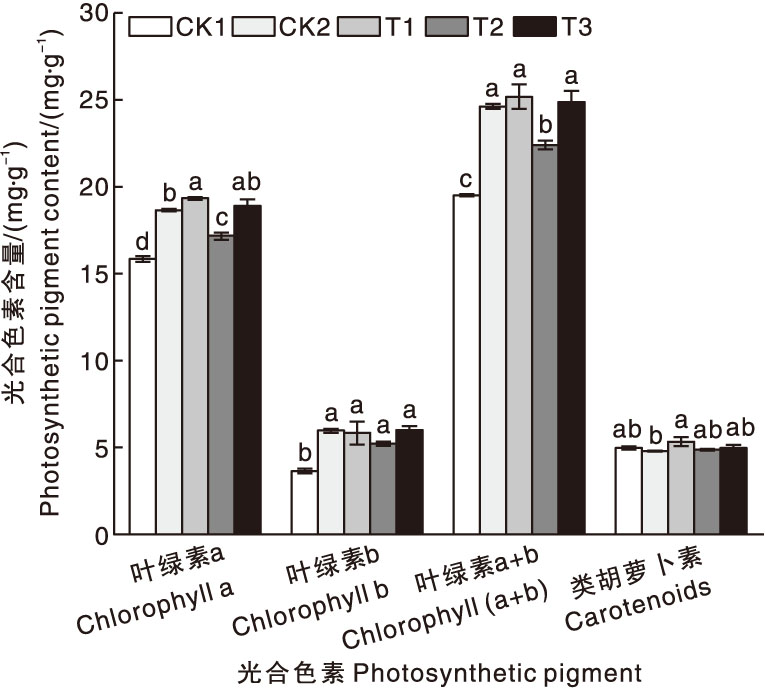
Fig.2 Effects of different treatments on photosynthetic pigment content of tomato leaves Bars marked without the same letters indicate significant (p<0.05) difference within treatments in the same photosynthetic pigment content.
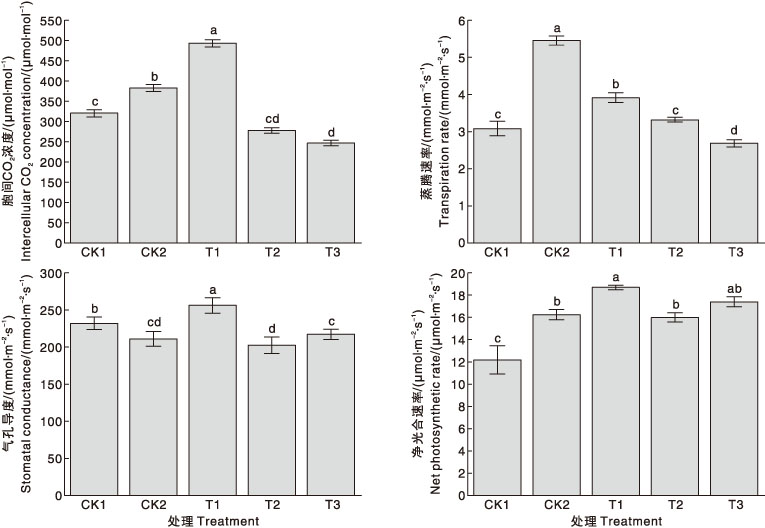
Fig.3 Effects of different treatments on photosynthetic parameters of tomato leaves Bars marked without the same letters indicate significant (p<0.05) difference. The same as Fig. 5.
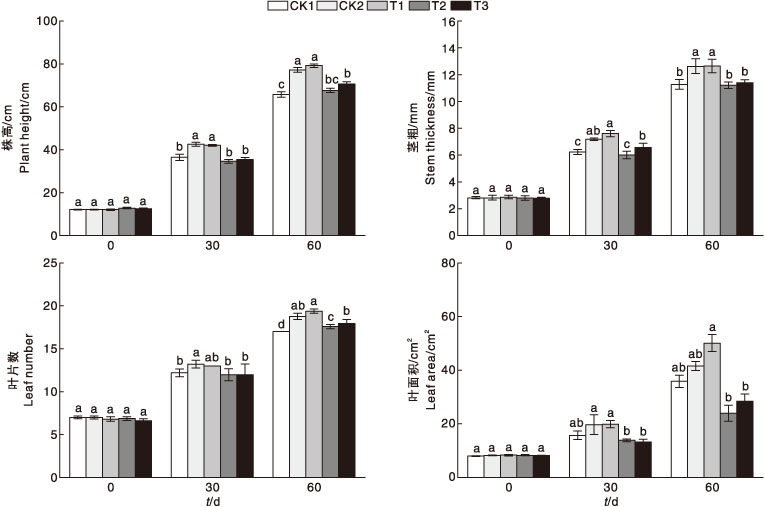
Fig.4 Effects of different treatments on growth indexes of aboveground part of tomato Bars marked without the same letters indicate significant (p<0.05) difference within treatments on the same day.
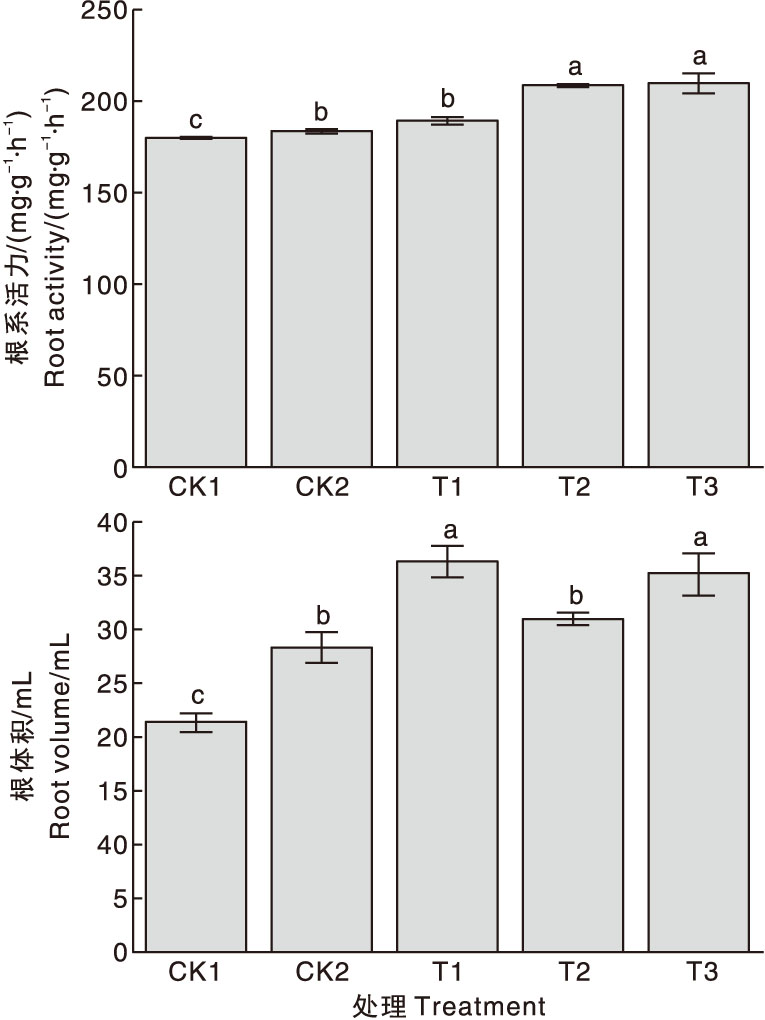
Fig.5 Effects of different treatments on root activity and root volume of tomato
| 处理 Treatment | 茎干重 Stem dry weight | 叶干重 Leaf dry weight | 根干重 Root dry weight | 总干重 Total dry weight |
|---|---|---|---|---|
| CK1 | 40.70±0.40 b | 69.40±0.56 b | 10.34±0.38 c | 120.44±0.69 bc |
| CK2 | 45.70±0.32 ab | 73.07±1.28 b | 11.93±0.10 ab | 130.70±1.47 ab |
| T1 | 49.03±1.26 a | 76.71±1.72 a | 12.41±0.24 a | 138.16±2.37 a |
| T2 | 41.43±0.44 b | 64.38±0.87 b | 11.02±0.68 b | 116.83±0.62 c |
| T3 | 46.77±1.46 a | 70.03±1.42 b | 12.63±0.45 a | 129.42±1.23 b |
Table 2 Effect of different treatments on dry weight of tomato per plant Unit: g
| 处理 Treatment | 茎干重 Stem dry weight | 叶干重 Leaf dry weight | 根干重 Root dry weight | 总干重 Total dry weight |
|---|---|---|---|---|
| CK1 | 40.70±0.40 b | 69.40±0.56 b | 10.34±0.38 c | 120.44±0.69 bc |
| CK2 | 45.70±0.32 ab | 73.07±1.28 b | 11.93±0.10 ab | 130.70±1.47 ab |
| T1 | 49.03±1.26 a | 76.71±1.72 a | 12.41±0.24 a | 138.16±2.37 a |
| T2 | 41.43±0.44 b | 64.38±0.87 b | 11.02±0.68 b | 116.83±0.62 c |
| T3 | 46.77±1.46 a | 70.03±1.42 b | 12.63±0.45 a | 129.42±1.23 b |
| 器官 Organ | 处理 Treatment | N含量 N content | P含量 P content | K含量 K content |
|---|---|---|---|---|
| 根Root | CK1 | 47.00±0.04 b | 6.020±0.100 b | 43.733±1.474 d |
| CK2 | 45.34±0.02 d | 4.270±0.101 d | 50.800±1.929 bc | |
| T1 | 47.13±0.08 b | 7.410±0.262 a | 54.200±0.693 a | |
| T2 | 54.80±0.01 a | 5.383±0.055 c | 48.867±0.577 c | |
| T3 | 46.46±0.27 c | 3.340±0.053 e | 51.867±0.702 b | |
| 茎Stem | CK1 | 33.06±0.88 e | 4.070±0.036 e | 56.200±1.064 d |
| CK2 | 41.13±0.33 d | 5.293±0.186 d | 70.650±1.580 bc | |
| T1 | 54.54±0.56 a | 8.037±0.235 a | 79.400±1.418 a | |
| T2 | 43.75±0.67 c | 6.300±0.085 c | 68.750±0.377 c | |
| T3 | 45.98±0.29 b | 6.597±0.032 b | 71.950±0.173 b | |
| 叶Leaf | CK1 | 46.58±0.54 d | 5.590±0.173 b | 31.733±0.702 c |
| CK2 | 47.98±0.34 c | 6.327±0.099 a | 38.400±3.365 b | |
| T1 | 51.27±0.35 b | 6.440±0.085 a | 48.933±1.528 a | |
| T2 | 48.38±0.34 c | 6.257±0.096 a | 37.667±0.503 b | |
| T3 | 55.57±0.34 a | 6.390±0.090 a | 47.733±5.085 a |
Table 3 Effect of different treatments on N, P, K content in different organs of tomato Unit: g·kg-1
| 器官 Organ | 处理 Treatment | N含量 N content | P含量 P content | K含量 K content |
|---|---|---|---|---|
| 根Root | CK1 | 47.00±0.04 b | 6.020±0.100 b | 43.733±1.474 d |
| CK2 | 45.34±0.02 d | 4.270±0.101 d | 50.800±1.929 bc | |
| T1 | 47.13±0.08 b | 7.410±0.262 a | 54.200±0.693 a | |
| T2 | 54.80±0.01 a | 5.383±0.055 c | 48.867±0.577 c | |
| T3 | 46.46±0.27 c | 3.340±0.053 e | 51.867±0.702 b | |
| 茎Stem | CK1 | 33.06±0.88 e | 4.070±0.036 e | 56.200±1.064 d |
| CK2 | 41.13±0.33 d | 5.293±0.186 d | 70.650±1.580 bc | |
| T1 | 54.54±0.56 a | 8.037±0.235 a | 79.400±1.418 a | |
| T2 | 43.75±0.67 c | 6.300±0.085 c | 68.750±0.377 c | |
| T3 | 45.98±0.29 b | 6.597±0.032 b | 71.950±0.173 b | |
| 叶Leaf | CK1 | 46.58±0.54 d | 5.590±0.173 b | 31.733±0.702 c |
| CK2 | 47.98±0.34 c | 6.327±0.099 a | 38.400±3.365 b | |
| T1 | 51.27±0.35 b | 6.440±0.085 a | 48.933±1.528 a | |
| T2 | 48.38±0.34 c | 6.257±0.096 a | 37.667±0.503 b | |
| T3 | 55.57±0.34 a | 6.390±0.090 a | 47.733±5.085 a |
| [1] | 岳钉伊, 潘铜华, 王嘉维, 等. 增施CO2与LED补光对日光温室番茄生长的影响[J]. 西北农林科技大学学报(自然科学版), 2017, 45(7): 81-89. |
| YUE D Y, PAN T H, WANG J W, et al. Effects of CO2 enrichment and LED light supplement on tomato growth in greenhouse[J]. Journal of Northwest A & F University(Natural Science Edition), 2017, 45(7): 81-89. | |
| [2] | 孙常华, 孙寿浩. 山东莱西日光温室番茄种植管理技术[J]. 农业工程技术, 2024, 44(21): 105-106. |
| SUN C H, SUN S H. Management techniques of tomato planting in solar greenhouse in Laixi, Shandong Province[J]. Agricultural Engineering Technology, 2024, 44(21): 105-106. | |
| [3] | OBATA K, UEKA Y, ARIMA S. Improvement of air flow circulation and daytime CO2 concentration using wind direction plates in the intelligent greenhouse[J]. Shokubutsu Kankyo Kogaku, 2021, 33(2): 69-76. |
| [4] | HAO P F, QIU C W, DING G H, et al. Agriculture organic wastes fermentation CO2 enrichment in greenhouse and the fermentation residues improve growth, yield and fruit quality in tomato[J]. Journal of Cleaner Production, 2020, 275: 123885. |
| [5] | 李伟静. 设施果树栽培增补二氧化碳的作用和方法[J]. 北方果树, 2023(1): 23-25. |
| LI W J. Functions and methods of supplementing carbon dioxide in protected fruit tree cultivation[J]. Northern Fruits, 2023(1): 23-25. | |
| [6] | JORDÁN A, ZAVALA L M, GIL J. Effects of mulching on soil physical properties and runoff under semi-arid conditions in southern Spain[J]. Catena, 2010, 81(1): 77-85. |
| [7] | HU C L, ZHENG C, SADRAS V O, et al. Effect of straw mulch and seeding rate on the harvest index, yield and water use efficiency of winter wheat[J]. Scientific Reports, 2018, 8: 8167. |
| [8] | ZOU Y N, CHEN X, SRIVASTAVA A, et al. Changes in rhizosphere properties of trifoliate orange in response to mycorrhization and sod culture[J]. Applied Soil Ecology, 2016, 107: 307-312. |
| [9] | CAMPIGLIA E, MANCINELLI R, RADICETTI E. Influence of no-tillage and organic mulching on tomato (Solanum Lycopersicum L.) production and nitrogen use in the Mediterranean environment of central Italy[J]. Scientia Horticulturae, 2011, 130(3): 588-598. |
| [10] | 刘子涵. 旱作农田不同覆盖种植方式对土壤水热特征和呼吸的影响[D]. 杨凌: 西北农林科技大学, 2020. |
| LIU Z H. Effects of different mulching methods on soil water and heat characteristics and respiration in dry farmland[D]. Yangling: Northwest A & F University, 2020. | |
| [11] | HAN Y L, MA W, ZHOU B Y, et al. Effects of straw-return method for the maize-rice rotation system on soil properties and crop yields[J]. Agronomy, 2020, 10(4): 461. |
| [12] | 薛福祥. 地膜不同覆盖方式对保护地黄瓜病害及生长发育的影响[J]. 甘肃农业大学学报, 2003, 38(1): 31-34. |
| XUE F X. Effects of different mulching methods on disease and growth of cucumber in green houses[J]. Journal of Gansu Agricultural University, 2003, 38(1): 31-34. | |
| [13] | 张丽华, 栾天宇, 徐晨, 等. 半湿润区秸秆还田及耕作技术对土壤水分、玉米光合特性及产量的影响[J]. 玉米科学, 2022, 30(3): 100-107. |
| ZHANG L H, LUAN T Y, XU C, et al. Effects of straw returning and tillage techniques on soil moisture, photosynthetic characteristics and yield of maize in semi humid area[J]. Journal of Maize Sciences, 2022, 30(3): 100-107. | |
| [14] | LI W W, ZHUANG Q L, WU W, et al. Effects of ridge-furrow mulching on soil CO2 efflux in a maize field in the Chinese Loess Plateau[J]. Agricultural and Forest Meteorology, 2019, 264: 200-212. |
| [15] | MU L, FANG L, LIANG Y L. Temporal and spatial variation of soil respiration under mulching in a greenhouse cucumber cultivation[J]. Pesquisa Agropecuária Brasileira, 2016, 51(7):869-879. |
| [16] | WANG W Y, AKHTAR K, REN G X, et al. Impact of straw management on seasonal soil carbon dioxide emissions, soil water content, and temperature in a semi-arid region of China[J]. Science of the Total Environment, 2019, 652: 471-482. |
| [17] | 李玲, 何国振. 植物生理学实验指导[M]. 北京: 高等教育出版社, 2021. |
| [18] | 王丽霞, 刘永霞, 丁哲利, 等. 根际pH值对香蕉幼苗生物量和根系生长的影响[J]. 江苏农业科学, 2024, 52(22): 154-161. |
| WANG L X, LIU Y X, DING Z L, et al. Influences of rhizosphere pH value on biomass and root growth of banana seedlings[J]. Jiangsu Agricultural Sciences, 2024, 52(22): 154-161. | |
| [19] | 鲍士旦. 土壤农化分析[M]. 3版. 北京: 中国农业出版社, 2000. |
| [20] | 王亚静, 毕于运, 高春雨. 中国秸秆资源可收集利用量及其适宜性评价[J]. 中国农业科学, 2010, 43(9): 1852-1859. |
| WANG Y J, BI Y Y, GAO C Y. Collectable amounts and suitability evaluation of straw resource in China[J]. Scientia Agricultura Sinica, 2010, 43(9): 1852-1859. | |
| [21] | 付文娥, 刘明慧, 王钊, 等. 覆膜栽培对甘薯生长动态及产量的影响[J]. 西北农业学报, 2013, 22(7): 107-113. |
| FU W E, LIU M H, WANG Z, et al. Effects of plastic film mulching on dynamic growth and yield of sweetpotato[J]. Acta Agriculturae Boreali-Occidentalis Sinica, 2013, 22(7): 107-113. | |
| [22] | 朱计谋, 王震, 白妮妮. 覆盖黑色无纺布对土壤环境和信阳五月鲜桃新梢生长的影响[J]. 现代园艺, 2021(23): 35-36. |
| ZHU J M, WANG Z, BAI N N. Effects of covering black non-woven fabric on soil environment and new shoot growth of Xinyang may peach[J]. Contemporary Horticulture, 2021(23): 35-36. | |
| [23] | 陈蓉, 董文, 秦玉芝, 等. 不同覆盖模式对湖南秋马铃薯生长、产量和品质的影响[J]. 湖南农业科学, 2024(12): 27-31. |
| CHEN R, DONG W, QIN Y Z, et al. Effects of different mulching patterns on the growth, yield, and quality of autumn potato in Hunan[J]. Hunan Agricultural Sciences, 2024(12): 27-31. | |
| [24] | 邵冠贵, 李盼, 胡发龙, 等. 干旱灌区地膜秸秆带状覆盖对玉米农田土壤温度的调控效应[J]. 西北农业学报, 2024, 33(12): 2261-2275. |
| SHAO G G, LI P, HU F L, et al. Regulation effect of strip mulching with plastic and straw on soil temperature for maize farmland in arid irrigated areas[J]. Acta Agriculturae Boreali-Occidentalis Sinica, 2024, 33(12): 2261-2275. | |
| [25] | 王艳兰, 胡丽琴, 王素华, 等. 调亏灌溉和秸秆覆盖对苦荞生物学特性和水分利用效率的影响[J]. 节水灌溉, 2024(11): 18-23. |
| WANG Y L, HU L Q, WANG S H, et al. Effects of regulated deficit irrigation and straw mulching on biological characteristics and water use efficiency of Tartary buckwheat[J]. Water Saving Irrigation, 2024(11): 18-23. | |
| [26] | 张京社, 陈园园, 阎世江. 多年秸秆覆盖对设施蔬菜土壤养分及微生物多样性的影响[J]. 江苏农业科学, 2023, 51(8): 217-222. |
| ZHANG J S, CHEN Y Y, YAN S J. Effects of multi-year straw mulching on soil nutrients and microbial diversity of facility vegetables[J]. Jiangsu Agricultural Sciences, 2023, 51(8): 217-222. | |
| [27] | LI Y S, YU Z H, YANG S C, et al. Soybean intraspecific genetic variation in response to elevated CO2[J]. Archives of Agronomy and Soil Science, 2019, 65(12): 1733-1744. |
| [28] | DE KAUWE M G, MEDLYN B E, ZAEHLE S, et al. Forest water use and water use efficiency at elevated CO2: a model-data intercomparison at two contrasting temperate forest FACE sites[J]. Global Change Biology, 2013, 19(6): 1759-1779. |
| [29] | 王维, 刘丹霞, 何昕洋, 等. 不同时期增补LED蓝光对番茄植株生长、果实品质和养分吸收的影响[J]. 北方园艺, 2021(11): 1-9. |
| WANG W, LIU D X, HE X Y, et al. Effects of supplemental blue light at different stages on tomato plant growth, fruit quality and nutrient uptake[J]. Northern Horticulture, 2021(11): 1-9. | |
| [30] | LIU J L, LIU L, FU Q, et al. Effects of straw mulching and tillage measures on the photosynthetic characteristics of maize leaves[J]. Transactions of the ASABE, 2019, 62(3): 851-858. |
| [31] | 陈影慧, 程宏波, 刘媛, 等. 覆盖栽培模式对冬小麦花后旗叶光合特性及产量的影响[J]. 干旱地区农业研究, 2019, 37(3): 192-199. |
| CHEN Y H, CHENG H B, LIU Y, et al. Effect of covering on photosynthetic characteristics of flag leaf during post-anthesis and yield in winter wheat[J]. Agricultural Research in the Arid Areas, 2019, 37(3): 192-199. | |
| [32] | 夏冬. 地面覆盖对土壤环境和番茄果实产量品质的影响[D]. 南京: 南京农业大学, 2014. |
| XIA D. Effects of mulching on soil environment, tomato fruit yield and quality[D]. Nanjing: Nanjing Agricultural University, 2014. | |
| [33] | 李玉鹏, 贾志宽, 杨保平, 等. 秸秆覆盖量对半干旱区旱作春玉米生长及水分利用效率的影响[J]. 灌溉排水学报, 2010, 29(1): 117-120. |
| LI Y P, JIA Z K, YANG B P, et al. Effects of straw mulching quantity on growth and water use efficiency of dry farming spring maize in semiarid areas[J]. Journal of Irrigation and Drainage, 2010, 29(1): 117-120. | |
| [34] | 赵丽丽. 覆盖方式对温室土壤温度及番茄生长发育的影响[D]. 北京: 中国农业科学院, 2012. |
| ZHAO L L. Effect for the cover means on the soil temperature and growing production of greenhouse tomatoes[D]. Beijing: Chinese Academy of Agricultural Sciences, 2012. | |
| [35] | 李龙, 郝明德, 王缠军, 等. 渭北旱塬保护性耕作对春玉米产量及水分利用效率的影响[J]. 西北农林科技大学学报(自然科学版), 2014, 42(12): 46-52. |
| LI L, HAO M D, WANG C J, et al. Effects of conservation tillage on water use efficiency and yield of spring maize on Weibei highland[J]. Journal of Northwest A & F University(Natural Science Edition), 2014, 42(12): 46-52. | |
| [36] | 张向前, 徐云姬, 杜世州, 等. 氮肥运筹对稻茬麦区弱筋小麦生理特性、品质及产量的调控效应[J]. 麦类作物学报, 2019, 39(7): 810-817. |
| ZHANG X Q, XU Y J, DU S Z, et al. Regulation effect of nitrogen application on physiological characteristics, quality and yield of weak gluten wheat in rice-wheat cropping area[J]. Journal of Triticeae Crops, 2019, 39(7): 810-817. | |
| [37] | 王保君, 金海刚, 张红梅, 等. 浙北地区秸秆全量还田下氮肥用量对单季晚粳稻生长和土壤养分、碳库的影响[J]. 水土保持研究, 2021, 28(2): 60-66. |
| WANG B J, JIN H G, ZHANG H M, et al. Effects of nitrogen application on late single season japonica rice growth, soil nutrient and carbon pool under full straw returning in northern Zhejiang Province[J]. Research of Soil and Water Conservation, 2021, 28(2): 60-66. | |
| [38] | 穆兰. 覆盖对温室辣椒生理特性及土壤环境的影响研究[D]. 北京: 中国科学院, 2014. |
| MU L. Study on the physiological characteristics and soil environment of hot pepper(Capsicum annuum L.) under mulching practices in greenhouse[D]. Beijing: Chinese Academy of Sciences, 2014. | |
| [39] | 赵东霞, 牛俊义, 闫志利, 等. 不同地表覆盖方式油菜花后干物质积累与分配规律研究[J]. 干旱地区农业研究, 2012, 30(3): 31-36. |
| ZHAO D X, NIU J Y, YAN Z L, et al. Study on principle of dry matter accumulation and distribution in rape under different field mulching and planting patterns[J]. Agricultural Research in the Arid Areas, 2012, 30(3): 31-36. | |
| [40] | MAKINO A. Photosynthesis, grain yield, and nitrogen utilization in rice and wheat[J]. Plant Physiology, 2011, 155(1): 125-129. |
| [41] | 于强波. 越橘地面有机物覆盖栽培效应研究[D]. 长春: 吉林农业大学, 2006. |
| YU Q B. Study on the effect of organic mulching on blueberry[D]. Changchun: Jilin Agricultural University, 2006. |
| [1] | LIU Junli, JIANG Jianfeng, DONG Xiangwei, YANG Haijun, BAO Xiaoqi, FU Chenxi, GUO Bin, TONG Wenbin. The influence of Rhizophagus irregularis on the growth and gene expression of tomato under cadmium stress [J]. Acta Agriculturae Zhejiangensis, 2026, 38(1): 54-66. |
| [2] | ZHU Changsong, NA Qiting, ZHANG Mengzhuo, CAO Hui, LIU Shiying, ZHANG Zhengke, MENG Lanhuan. Effect of SlCHRC gene on tomato floral thermotolerance under high-temperature environment [J]. Acta Agriculturae Zhejiangensis, 2026, 38(1): 67-75. |
| [3] | XIANG Ying, CONG Jianmin, PAN Danhong, TAO Yonggang. Comprehensive evaluation of the growth process of different tomato varieties under spring organic greenhouse planting [J]. Acta Agriculturae Zhejiangensis, 2025, 37(6): 1252-1261. |
| [4] | LIU Pengfei, ZHANG Shuhan, HONG Kai, SHAO Yue, LOU Binggan. Isolation and identification of the pathogen causing tomato canker in Zhejiang Province of China [J]. Acta Agriculturae Zhejiangensis, 2025, 37(6): 1293-1300. |
| [5] | DI Yancui, JI Zelin, WANG Yuanyuan, LOU Shihao, ZHANG Tao, GUO Zhixin, SHEN Shunshan, PIAO Fengzhi, DU Nanshan, DONG Xiaoxing, DONG Han. Identification, subcellular localization and expression analysis of tomato SlMYB52 gene [J]. Acta Agriculturae Zhejiangensis, 2025, 37(4): 808-819. |
| [6] | XIAO Yumiao, MA Qiaomei, ZHANG Sifa, HE Yong, ZHAO Zhenqing. Effects of fish protein hydrolysate on the growth and photosynthetic characteristics of tomato seedlings [J]. Acta Agriculturae Zhejiangensis, 2025, 37(12): 2504-2515. |
| [7] | YAN Peiyu, ZHANG Shengyin, CHEN Liang, LIU Bin. Effects of water-fertilizer coupling on growth, yield and quality of tomato cultivated in facility [J]. Acta Agriculturae Zhejiangensis, 2025, 37(12): 2516-2524. |
| [8] | BAO Mengnan, LI Jinbin, ZHANG Xian, YAN Jiahui. Identification of Meloidogyne spp. infecting tomato in Haidong City, Qinghai Province, China [J]. Acta Agriculturae Zhejiangensis, 2025, 37(12): 2545-2553. |
| [9] | WANG Tonglin, SHAO Zhiyong, NIE Zhixing, GUO Saisai, LIU Lihong, WANG Qiaomei, ZHENG Jirong. Construction of a quality evaluation system for fresh-eating tomatoes based on Delphi method and analytic hierarchy process [J]. Acta Agriculturae Zhejiangensis, 2025, 37(12): 2583-2592. |
| [10] | LI Tengfei, YANG Guiling, RUAN Meiying, CHU Tianfen, QIN Hua, DENG Meihua. Effects of fertilizer and pesticide managements on soil health and tomato qualities in greenhouse tomato cultivation [J]. Acta Agriculturae Zhejiangensis, 2025, 37(1): 145-158. |
| [11] | GU Rui, SONG Cuiling, QIAN Chunhua. A lightweight tomato leaf disease recognition model integrating a sandglass structure with improved coordinate attention [J]. Acta Agriculturae Zhejiangensis, 2025, 37(1): 217-230. |
| [12] | ZHAO Liming, WANG Yaxin, JIANG Wenxin, DUAN Shaobiao, SHEN Xuefeng, ZHENG Dianfeng, FENG Naijie. Effects of plant growth regulators on yield, quality and photosynthetic characteristics of high-quality japonica rice [J]. Acta Agriculturae Zhejiangensis, 2024, 36(5): 1003-1014. |
| [13] | YANG Mingfeng, JI Chunrong, LIU Yong, BAI Shujun, CHEN Xue, LIU Ailin. Effects of continuous drought stress on cotton growth and soil drought threshold at flowering and boll stage [J]. Acta Agriculturae Zhejiangensis, 2024, 36(4): 738-747. |
| [14] | GUO Nana, LI Wei, HUANG Lijuan, ZHANG Tao, WEI Bingqiang. Research progress on resistance of pepper to Tomato spotted wilt virus (TSWV) [J]. Acta Agriculturae Zhejiangensis, 2024, 36(10): 2416-2425. |
| [15] | ZUO Xiaojie, WU Mingjiang, LUO Lin, MA Zengling, PANG Guanfeng, CHEN Binbin. Comparison of tolerance to high temperature of excellent strains of Sargassum fusiforme [J]. Acta Agriculturae Zhejiangensis, 2024, 36(1): 148-155. |
| Viewed | ||||||
|
Full text |
|
|||||
|
Abstract |
|
|||||

