浙江农业学报 ›› 2026, Vol. 38 ›› Issue (7): 1400-1409.DOI: 10.3969/j.issn.1004-1524.20250429
绣球湖蓝炭疽病病原菌的分离、鉴定与防治
刘光炎( ), 熊海燕, 周梅, 李正敏, 王金燕, 陈晶晶, 张玉, 王超*()
西南林业大学 云南省园林绿化植物资源培育与应用重点实验室 ,云南省功能性花卉资源及产业化技术工程研究中心,云南省森林灾害预警与控制重点实验室 云南 昆明 650224
-
收稿日期:2025-06-11出版日期:2026-07-25发布日期:2026-08-20 -
作者简介:刘光炎,研究方向为风景园林(植物方向)。E-mail:lgy112818@dingtalk.com -
通讯作者:*王超,E-mail: 47188127@qq.com -
基金资助:云南省重大科技专项(202202AE090028);云南省教育厅自然科学项目(2025Y0866);云南省大学生创新训练计划项目(20200554052)
Isolation, identification and control of the pathogen of anthracnose in Hydrangea macrophylla Hulan
LIU Guangyan(), XIONG Haiyan, ZHOU Mei, LI Zhengmin, WANG Jinyan, CHEN Jingjing, ZHANG Yu, WANG Chao*()
Yunnan Key Laboratory of Landscape Plant Resource Cultivation and Application ,Yunnan Province Engineering Research Center for Functional Flower Resources and Industrialization, Yunnan Key Laboratory of Forest Disaster Warning and Control, Southwest Forestry University Kunming 650224, China
-
Received:2025-06-11Published:2026-07-25Online:2026-08-20

摘要: 为明确引起绣球炭疽病的病原菌并探寻适宜的防治方法,本研究对大叶绣球品种湖蓝的炭疽病样本,采用组织分离法进行病原菌分离,结合柯赫氏法则验证其致病性,并通过形态学特征和基于ITS、Actin、TUB2、CHS-1和GAPDH多基因序列构建的系统发育树分析,对病原菌进行鉴定。采用菌丝生长速率法,研究不同培养基、碳源、氮源、温度、光照和pH值对病原菌菌丝生长的影响;选取5种常用杀菌剂和32个常见绣球品种,测定其对病原菌的室内毒力和抗病性。结果表明,该炭疽病病原菌为喀斯特炭疽菌(Colletotrichum karstii),其在25 ℃、pH值为7、马铃薯葡萄糖琼脂培养基、碳源为木糖、氮源为牛肉膏的条件下生长较好,但对光照条件不敏感,致死温度为56 ℃持续10 min。室内毒力测定结果显示,50%腐霉·福美双的抑菌效果最佳,其有效中浓度(EC50)为0.075 4 mg·L-1。品种抗性评价显示,蓝色海洋、万紫千红、博大蓝、倩影、雪花、人面桃花、紫鹃和星空为免疫品种。本研究是喀斯特炭疽菌引起的绣球炭疽病在中国的首次报道。
中图分类号:
引用本文
刘光炎, 熊海燕, 周梅, 李正敏, 王金燕, 陈晶晶, 张玉, 王超. 绣球湖蓝炭疽病病原菌的分离、鉴定与防治[J]. 浙江农业学报, 2026, 38(7): 1400-1409.
LIU Guangyan, XIONG Haiyan, ZHOU Mei, LI Zhengmin, WANG Jinyan, CHEN Jingjing, ZHANG Yu, WANG Chao. Isolation, identification and control of the pathogen of anthracnose in Hydrangea macrophylla Hulan[J]. Acta Agriculturae Zhejiangensis, 2026, 38(7): 1400-1409.
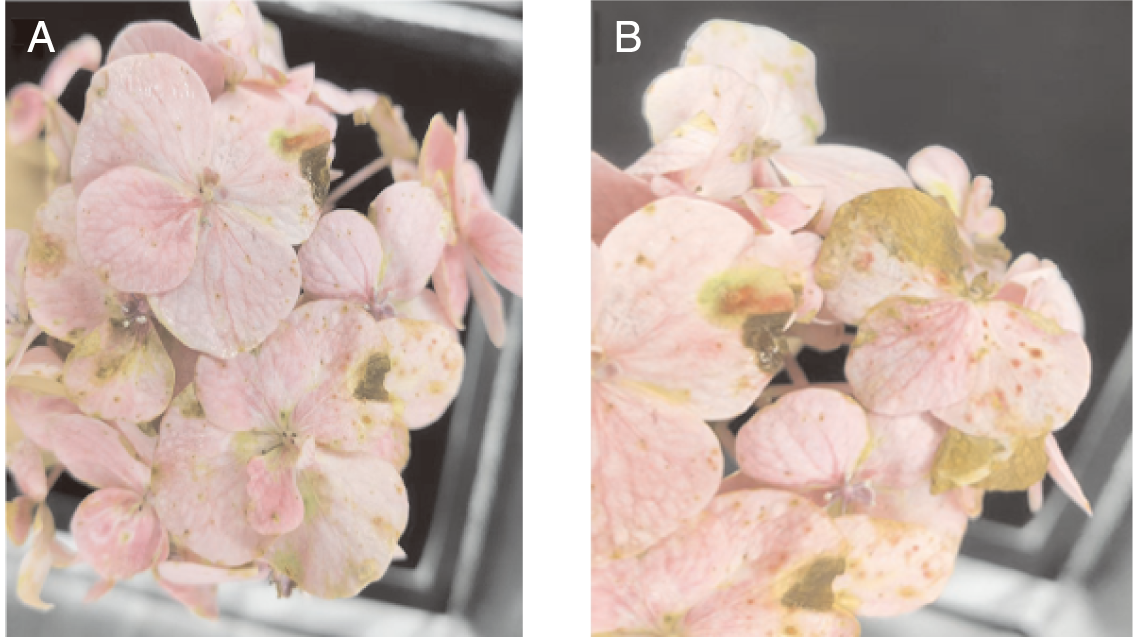
图1 绣球炭疽病的田间症状
Fig.1 Symptoms of anthracnose on hydrangea in the field
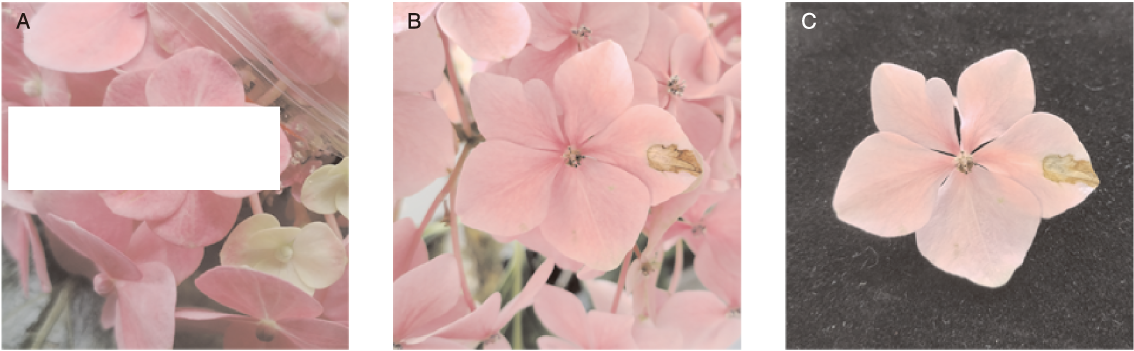
图2 分离菌株H3F20回接湖蓝萼片的症状 A,对照;B和C,接种菌株H3F20后7 d的症状。
Fig.2 Symptom of Hulan inoculated with isolated fungus H3F20 A, Control; B and C, 7 days after inoculation with strain H3F20.
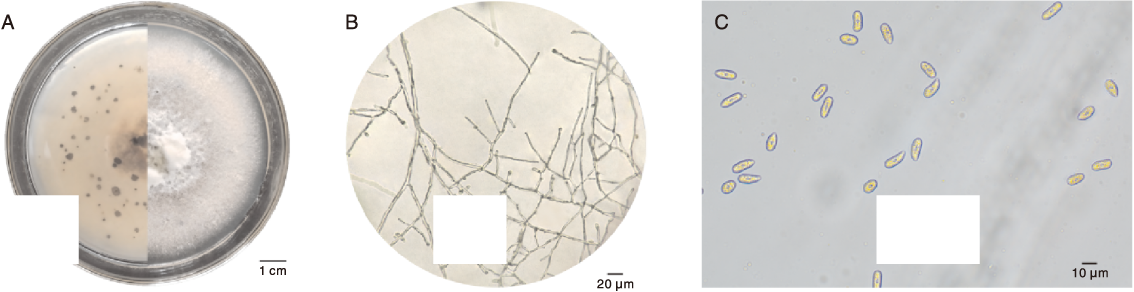
图3 菌株H3F20的形态特征 A,在PDA上培养15 d的菌落特征;B和C,分生孢子梗和孢子形态。
Fig.3 Morphological characteristics of strain H3F20 A, Colony on PDA at 15 d; B and C, Conidiophores and spore morphology.
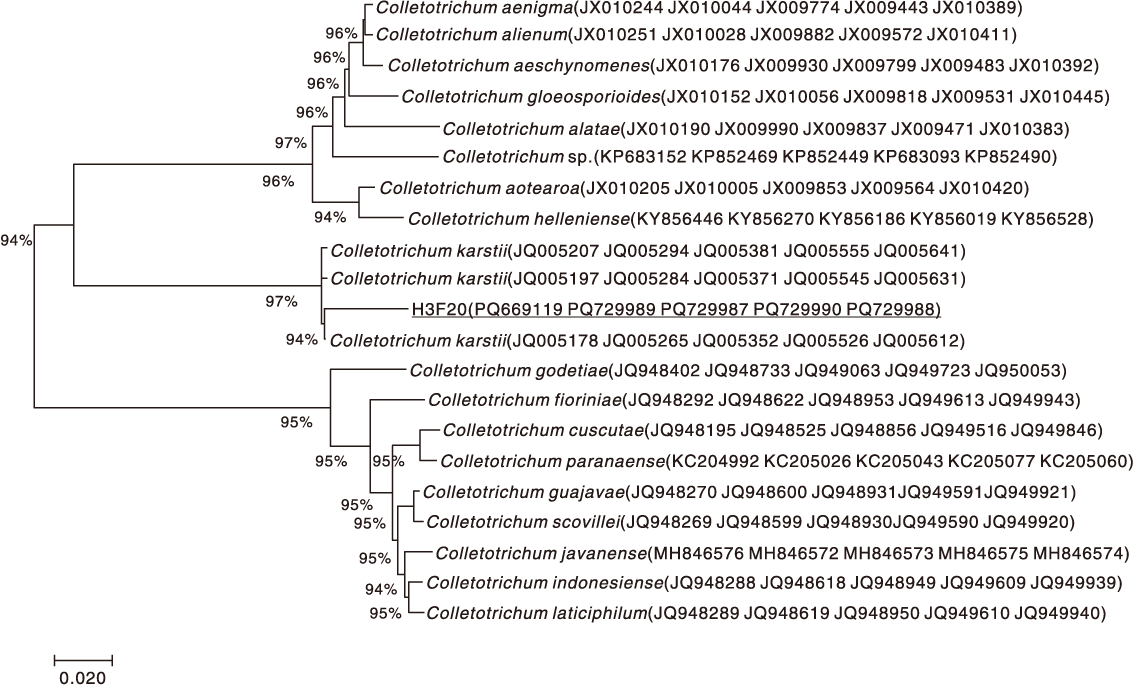
图4 菌株H3F20与相关菌株基于ITS、Actin、TUB2、CHS-1和GAPDH序列构建的系统发育树
Fig.4 Phylogenetic tree based on ITS, Actin, TUB2, CHS-1, and GAPDH sequences of H3F20 and related strains
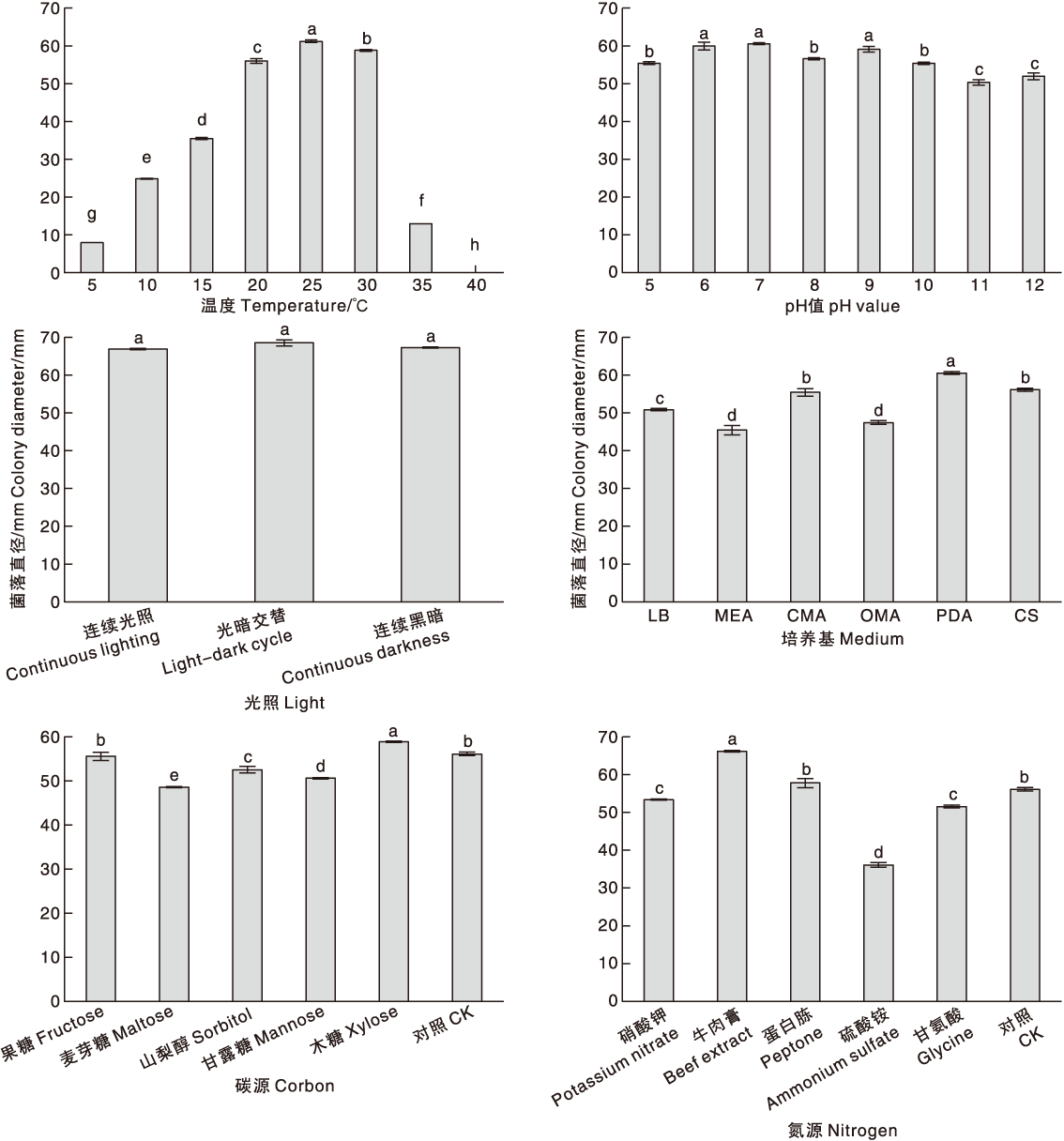
图5 不同培养条件对菌株H3F20菌丝生长速率的影响 LB,酵母膏蛋白胨琼脂培养基;MEA,麦芽糖琼脂培养基;CMA,玉米粉琼脂培养基;OMA,燕麦琼脂培养基;PDA,马铃薯葡萄糖琼脂培养基;CS,察氏培养基。柱上无相同小写字母表示组间差异显著(p<0.05)。
Fig.5 Effect of different culture conditions on the mycelial growth rate of H3F20 strain LB, Luria-Bertani agar culture medium; MEA, Malt extract agar culture medium; CMA, Corn meal agar culture medium; OMA, Oatmeal agar culture medium; PDA, Potato dextrose agar culture medium; CS, Czapek medium. Bars marked without the same lowercase letters indicate significant (p<0.05) differences between treatments.
| 杀菌剂 Fungicide | 质量浓度/ (mg·L-1) Mass concentra- tion/(mg·L-1) | H3F20平均菌落 直径/mm Average colony diameter/mm | 抑菌率/% Inhibition rate/% |
|---|---|---|---|
| 72%烯酰· | 720 | 24.08 | 58.92 |
| 锰锌WP 72% | 900 | 23.35 | 60.17 |
| Dimethomorph+ | 1 200 | 21.73 | 62.93 |
| mancozeb WP | 1 800 | 20.22 | 65.51 |
| 3 600 | 10.06 | 82.84 | |
| 50%腐霉· | 500 | 19.31 | 67.06 |
| 福美双WG 50% | 625 | 19.16 | 67.32 |
| Thiram+ | 833 | 18.25 | 68.87 |
| procymidone WG | 1 250 | 17.17 | 70.71 |
| 2 500 | 12.70 | 78.33 | |
| 70%烯酰· | 700 | 34.75 | 40.73 |
| 霜脲氰WP 70% | 875 | 29.34 | 49.95 |
| Dimethomorph+ | 1 166 | 21.66 | 63.05 |
| cymoxanil WP | 1 750 | 19.975 | 65.93 |
| 3 500 | 10.70 | 81.74 | |
| 50%多菌灵 | 500 | 54.63 | 6.82 |
| WP 50% | 625 | 54.195 | 7.56 |
| Carbendazim WP | 833 | 46.15 | 21.28 |
| 1 250 | 24.46 | 58.28 | |
| 2 500 | 36.365 | 37.97 | |
| 80%烯酰吗啉 | 800 | 51.06 | 12.91 |
| WG 80% | 1 000 | 47.65 | 18.72 |
| Dimethomorph | 1 333 | 45.275 | 22.77 |
| WG | 2 000 | 42.06 | 28.26 |
| 4 000 | 39.49 | 32.64 |
表1 5种供试杀菌剂对H3F20菌丝生长的抑制作用
Table 1 Inhibitory effects of five tested fungicides on mycelial growth of H3F20
| 杀菌剂 Fungicide | 质量浓度/ (mg·L-1) Mass concentra- tion/(mg·L-1) | H3F20平均菌落 直径/mm Average colony diameter/mm | 抑菌率/% Inhibition rate/% |
|---|---|---|---|
| 72%烯酰· | 720 | 24.08 | 58.92 |
| 锰锌WP 72% | 900 | 23.35 | 60.17 |
| Dimethomorph+ | 1 200 | 21.73 | 62.93 |
| mancozeb WP | 1 800 | 20.22 | 65.51 |
| 3 600 | 10.06 | 82.84 | |
| 50%腐霉· | 500 | 19.31 | 67.06 |
| 福美双WG 50% | 625 | 19.16 | 67.32 |
| Thiram+ | 833 | 18.25 | 68.87 |
| procymidone WG | 1 250 | 17.17 | 70.71 |
| 2 500 | 12.70 | 78.33 | |
| 70%烯酰· | 700 | 34.75 | 40.73 |
| 霜脲氰WP 70% | 875 | 29.34 | 49.95 |
| Dimethomorph+ | 1 166 | 21.66 | 63.05 |
| cymoxanil WP | 1 750 | 19.975 | 65.93 |
| 3 500 | 10.70 | 81.74 | |
| 50%多菌灵 | 500 | 54.63 | 6.82 |
| WP 50% | 625 | 54.195 | 7.56 |
| Carbendazim WP | 833 | 46.15 | 21.28 |
| 1 250 | 24.46 | 58.28 | |
| 2 500 | 36.365 | 37.97 | |
| 80%烯酰吗啉 | 800 | 51.06 | 12.91 |
| WG 80% | 1 000 | 47.65 | 18.72 |
| Dimethomorph | 1 333 | 45.275 | 22.77 |
| WG | 2 000 | 42.06 | 28.26 |
| 4 000 | 39.49 | 32.64 |
| 杀菌剂 Fungicide | 毒力回归方程 Toxicity regression equation | r | EC50/(mg·L-1) | p |
|---|---|---|---|---|
| 72%烯酰·锰锌WP 72% Dimethomorph + mancozeb WP | y=1.010 5x+5.290 1 | 0.942 1 | 0.516 3 | 0.016 6 |
| 50%腐霉·福美双WG 50% Thiram + procymidone WG | y=0.190 8x+5.551 1 | 0.961 0 | 0.075 4 | 0.009 2 |
| 70%烯酰·霜脲氰WP 70% Dimethomorph + cymoxanil WP | y=1.540 1x+5.086 0 | 0.979 0 | 0.879 4 | 0.003 6 |
| 50%多菌灵WP 50% Carbendazim WP | y=2.080 9x+4.274 2 | 0.786 5 | 2.232 4 | 0.114 5 |
| 80%烯酰吗啉WG 80% Dimethomorph WG | y=0.912 5x+4.072 2 | 0.944 8 | 10.393 0 | 0.015 4 |
表2 5种供试杀菌剂的毒力回归方程
Table 2 Toxicity regression equations of the five tested fungicides
| 杀菌剂 Fungicide | 毒力回归方程 Toxicity regression equation | r | EC50/(mg·L-1) | p |
|---|---|---|---|---|
| 72%烯酰·锰锌WP 72% Dimethomorph + mancozeb WP | y=1.010 5x+5.290 1 | 0.942 1 | 0.516 3 | 0.016 6 |
| 50%腐霉·福美双WG 50% Thiram + procymidone WG | y=0.190 8x+5.551 1 | 0.961 0 | 0.075 4 | 0.009 2 |
| 70%烯酰·霜脲氰WP 70% Dimethomorph + cymoxanil WP | y=1.540 1x+5.086 0 | 0.979 0 | 0.879 4 | 0.003 6 |
| 50%多菌灵WP 50% Carbendazim WP | y=2.080 9x+4.274 2 | 0.786 5 | 2.232 4 | 0.114 5 |
| 80%烯酰吗啉WG 80% Dimethomorph WG | y=0.912 5x+4.072 2 | 0.944 8 | 10.393 0 | 0.015 4 |
| 品种 Variety | 病斑直径/mm Diameter of lesion/mm | 抗病性级别 Resistance level | 品种 Variety | 病斑直径/mm Diameter of lesion/mm | 抗病性级别 Resistance level |
|---|---|---|---|---|---|
| 紫鸢Ziyuan | 2.27 | MS | 瑞雪Ruixue | 1.41 | HR |
| 碧玉Biyu | 1.32 | HR | 蔚蓝天空Weilantiankong | 1.64 | R |
| 珠圆玉润Zhuyuanyurun | 1.53 | R | 如嫣Ruyan | 2.91 | S |
| 团圆Tuanyuan | 3.17 | HS | 万紫千红Wanziqianhong | 0 | I |
| 盛世之花Shengshizhihua | 2.49 | MS | 博大蓝Bodalan | 0 | I |
| 蓝色海洋Lansehaiyang | 0 | I | 蓝宝石Lanbaoshi | 1.83 | R |
| 五彩缤纷Wucaibinfen | 1.88 | R | 蓝天Lantian | 0.86 | HR |
| 梦境Mengjing | 2.76 | S | 翘瓣蓝Qiaobanlan | 3.26 | HS |
| 金匮Jinkui | 1.51 | R | 蓝水晶Lanshuijing | 1.56 | R |
| 繁星Fanxing | 1.32 | HR | 雪韵Xueyun | 2.36 | MS |
| 碧空Bikong | 2.22 | MS | 琥珀Hupo | 2.98 | S |
| 紫水晶Zishuijing | 2.07 | MS | 倩影Qianying | 0 | I |
| 花团锦簇Huatuanjincu | 2.51 | S | 雪花Xuehua | 0 | I |
| 粉黛Fendai | 0.83 | HR | 人面桃花Renmiantaohua | 0 | I |
| 白雪Baixue | 1.86 | R | 紫鹃Zijuan | 0 | I |
| 璞玉Puyu | 1.62 | R | 星空Xingkong | 0 | I |
表3 供试绣球品种对菌株H3F20的抗病性
Table 3 Disease resistance of tested hydrangea varieties to strain H3F20
| 品种 Variety | 病斑直径/mm Diameter of lesion/mm | 抗病性级别 Resistance level | 品种 Variety | 病斑直径/mm Diameter of lesion/mm | 抗病性级别 Resistance level |
|---|---|---|---|---|---|
| 紫鸢Ziyuan | 2.27 | MS | 瑞雪Ruixue | 1.41 | HR |
| 碧玉Biyu | 1.32 | HR | 蔚蓝天空Weilantiankong | 1.64 | R |
| 珠圆玉润Zhuyuanyurun | 1.53 | R | 如嫣Ruyan | 2.91 | S |
| 团圆Tuanyuan | 3.17 | HS | 万紫千红Wanziqianhong | 0 | I |
| 盛世之花Shengshizhihua | 2.49 | MS | 博大蓝Bodalan | 0 | I |
| 蓝色海洋Lansehaiyang | 0 | I | 蓝宝石Lanbaoshi | 1.83 | R |
| 五彩缤纷Wucaibinfen | 1.88 | R | 蓝天Lantian | 0.86 | HR |
| 梦境Mengjing | 2.76 | S | 翘瓣蓝Qiaobanlan | 3.26 | HS |
| 金匮Jinkui | 1.51 | R | 蓝水晶Lanshuijing | 1.56 | R |
| 繁星Fanxing | 1.32 | HR | 雪韵Xueyun | 2.36 | MS |
| 碧空Bikong | 2.22 | MS | 琥珀Hupo | 2.98 | S |
| 紫水晶Zishuijing | 2.07 | MS | 倩影Qianying | 0 | I |
| 花团锦簇Huatuanjincu | 2.51 | S | 雪花Xuehua | 0 | I |
| 粉黛Fendai | 0.83 | HR | 人面桃花Renmiantaohua | 0 | I |
| 白雪Baixue | 1.86 | R | 紫鹃Zijuan | 0 | I |
| 璞玉Puyu | 1.62 | R | 星空Xingkong | 0 | I |
| [1] | 邓衍明, 韩勇, 齐香玉, 等. 绣球属植物种质资源分析及其花色可调性和叶斑病抗性比较[J]. 植物资源与环境学报, 2018, 27(4): 90-100. |
| Deng Y M, Han Y, Qi X Y, et al. Analysis on germplasm resources of species in Hydrangea Linn. and comparisons on their flower color variability and resistance to leaf spot disease[J]. Journal of Plant Resources and Environment, 2018, 27(4): 90-100. | |
| [2] | Sacco E, Savona M, Antonetti M, et al. In vitro propagation and regeneration of several Hydrangea genotypes[J]. Acta Horticulturae, 2012(937): 565-572. |
| [3] | Dirr M A. Manual of woody landscape plants[M]. Champaign: Stipes Publishing, 2001. |
| [4] | 谢治东, 刘生祥, 戴帮潮, 等. 绣球花色调控技术研究[J]. 安徽林业科技, 2020, 46(5): 19-22. |
| Xie Z D, Liu S X, Dai B C, et al. Study on regulation techniques for flower colors of Hydrangea macrophylla[J]. Anhui Forestry Science and Technology, 2020, 46(5): 19-22. | |
| [5] | Leite R S, Barreto R W. Petal spotting of Hydrangea flowers caused by Corynespora cassiicola: old pathogen: new disease[J]. Mycologist, 2000, 14(2): 80-83. |
| [6] | Nagashima S, Tojo M. Hydrangea diseases in Japan[J]. Japan Agricultural Research Quarterly, 2023, 57(3): 183-194. |
| [7] | Hu Y F, Luo X X, Xu Z H, et al. First report of anthracnose caused by Colletotrichum siamense on Hydrangea macrophylla in China[J]. Plant Disease, 2023, 107(9): 2853. |
| [8] | Hamim I, Sipes B, Wang Y N. Detection, characterization, and management of plant pathogens[J]. Frontiers in Plant Science, 2024, 15: 1354042. |
| [9] | 方中达. 植病研究方法[M]. 3版. 北京: 中国农业出版社, 1998: 122-127. |
| [10] | Chung P C, Wu H Y, Wang Y W, et al. Diversity and pathogenicity of Colletotrichum species causing strawberry anthracnose in Taiwan and description of a new species, Colletotrichum miaoliense sp. nov.[J]. Scientific Reports, 2020, 10(1):14664. |
| [11] | de Silva D D, Groenewald J Z, Crous P W, et al. Identification, prevalence and pathogenicity of Colletotrichum species causing anthracnose of Capsicum annuum in Asia[J]. IMA Fungus, 2019, 10: 8. |
| [12] | 陈晶晶, 张玉, 温联好, 等. 绣球叶斑病的病原菌分离鉴定与防治研究[J]. 浙江农业学报, 2026, 38(1): 105-113. |
| Chen J J, Zhang Y, Wen L H, et al. Isolation, identification and control of the pathogen causing leaf spot disease on Hydrangea[J]. Acta Agriculturae Zhejiangensis, 2026, 38(1): 105-113. | |
| [13] | 黄宇. 烟草Didymella segeticola病害病原学及叶际微生物多样性研究[D]. 贵阳: 贵州大学, 2021. |
| Huang Y. Pathogenesis of Didymella segeticola disease in Nicotiana tabacum and study on microbial diversity at leaf margins[D]. Guiyang: Guizhou University, 2021. | |
| [14] | 任纬恒. 高山杜鹃病害的病原菌分离鉴定与防治基础研究[D]. 贵阳: 贵州师范大学, 2019. |
| Ren W H. Fundamental research on pathogen isolation, identification, and control of diseases in Rhododendron lapponicum[D]. Guiyang: Guizhou Normal University, 2019. | |
| [15] | 孟珂. 薄壳山核桃黑斑病病原菌鉴定及室内药剂筛选[D]. 新乡: 河南科技学院, 2020. |
| Meng K. Pathogen identification of black spot disease in Carya illinoinensis and in vitro chemical screening[D]. Xinxiang: Henan Institute of Science and Technology, 2020. | |
| [16] | 王葆生, 张艳萍, 刘晓蕊, 等. 胡萝卜根腐病病原菌鉴定及品种抗病性评价[J]. 蔬菜, 2024(4): 54-58. |
| Wang B S, Zhang Y P, Liu X R, et al. Identification of the pathogen of root rot and evaluation of disease resistant varieties of carrot[J]. Vegetables, 2024(4): 54-58. | |
| [17] | 于海英, 兰建强, 刘林. 胶孢炭疽菌侵染芒果的过程及寄主的组织病理学研究[J]. 热带作物学报, 2022, 43(2): 361-368. |
| Yu H Y, Lan J Q, Liu L. Process of mango infected by Colletotrichum gloeosporioides and host histopathology[J]. Chinese Journal of Tropical Crops, 2022, 43(2): 361-368. | |
| [18] | Talhinhas P, Baroncelli R. Hosts of Colletotrichum[J]. Mycosphere, 2023, 14: 158-261. |
| [19] | Chen J, Wang M, Han X, et al. First report of leaf blight caused by Colletotrichum karstii on banana shrub (Michelia figo) in Sichuan, China[J]. Plant Disease, 2023, 107(9): 2868. |
| [20] | Uysal A, Kurt Ş. First report of fruit and leaf anthracnose caused by Colletotrichum karstii on avocado in Turkey[J]. Crop Protection, 2020, 133: 105145. |
| [21] | Velho A C, Alaniz S, Casanova L, et al. New insights into the characterization of Colletotrichum species associated with apple diseases in southern Brazil and Uruguay[J]. Fungal Biology, 2015, 119(4): 229-244. |
| [22] | 冉飞, 陈佳, 莫飞旭, 等. 百香果炭疽病菌生物学特性及室内药剂筛选[J]. 热带作物学报, 2021, 42(4): 1080-1085. |
| Ran F, Chen J, Mo F X, et al. Biological characteristics of the pathogen and fungicides screening in laboratory for anthracnose of Passiflora edulia Sims[J]. Chinese Journal of Tropical Crops, 2021, 42(4): 1080-1085. | |
| [23] | 江紫薇, 陈选鹏, 马恩耀, 等. 广东黑老虎炭疽病病原鉴定、生物学特性及其室内药剂毒力检测[J]. 西南农业学报, 2024, 37(7): 1504-1512. |
| Jiang Z W, Chen X P, Ma E Y, et al. Pathogen identification of Kadsura coccinea anthracnose and indoor toxicity measurement of fungicides[J]. Southwest China Journal of Agricultural Sciences, 2024, 37(7): 1504-1512. | |
| [24] | 谢美华, 杨金奎, 李雪玲, 等. 紫果西番莲炭疽病病原菌鉴定及生物学特性研究[J]. 西南农业学报, 2017, 30(6): 1358-1363. |
| Xie M H, Yang J K, Li X L, et al. Study on identification and biological characteristics of anthracnose pathogen of Passiflora edulis[J]. Southwest China Journal of Agricultural Sciences, 2017, 30(6): 1358-1363. | |
| [25] | 赵杰, 支月娥, 赵宝明, 等. 无花果炭疽病菌生物学特性及药剂的毒力测定[J]. 北方园艺, 2016(14): 126-129. |
| Zhao J, Zhi Y E, Zhao B M, et al. Biological characteristics of Colletotrichum gloeosporioides (Penz.) Sacc. and toxicities of fungicides[J]. Northern Horticulture, 2016(14): 126-129. | |
| [26] | Riolo M, Aloi F, Pane A, et al. Twig and shoot dieback of citrus, a new disease caused by Colletotrichum species[J]. Cells, 2021, 10(2): 449. |
| [27] | Mayorquin J S, Nouri M T, Peacock B B, et al. Identification, pathogenicity, and spore trapping of Colletotrichum karstii associated with twig and shoot dieback in California[J]. Plant Disease, 2019, 103(7): 1464-1473. |
| [1] | 蒋沅均, 付曼曼, 程凡, 吴超. 浙江省百合灰葡萄孢菌的生物学特性及防治药剂筛选[J]. 浙江农业学报, 2026, 38(7): 1388-1399. |
| [2] | 胡江龙, 姜万龙, 彭辉, 吴骏成, 张真, 汤近天, 张雅芬, 叶子弘. 茭白种质资源收集及不同茭白品种对茭白胡麻斑病的抗性评价[J]. 浙江农业学报, 2026, 38(5): 886-897. |
| [3] | 张玉, 陈晶晶, 温联好, 杨振翼, 杨曾华, 童译, 王超. 绣球博大蓝叶斑病病原菌的分离鉴定与防治[J]. 浙江农业学报, 2026, 38(4): 696-706. |
| [4] | 陈晶晶, 张玉, 温联好, 刘光炎, 周梅, 李正敏, 熊海燕, 杨振翼, 杨曾华, 童译, 王超. 绣球叶斑病的病原菌分离鉴定与防治研究[J]. 浙江农业学报, 2026, 38(1): 105-113. |
| [5] | 邓玉莲, 谭琳, 牛丽, 卢前程, 周玲红, 李桂花, 胡秋龙. 一株茶根腐病拮抗真菌的筛选鉴定与生物学特性研究[J]. 浙江农业学报, 2025, 37(7): 1469-1480. |
| [6] | 沈国强, 汪明德, 关雅文, 武军, 王汉荣. 高粱弯孢叶斑病病原菌鉴定、生物学特性研究及防治药剂筛选[J]. 浙江农业学报, 2025, 37(7): 1492-1500. |
| [7] | 王超, 李艳杰, 牛芸, 温联好, 陈晶晶, 吴红芝, 杨玉勇, 吴艳迪. 月季黑斑病病原菌的生物学特性与品种抗性评价[J]. 浙江农业学报, 2025, 37(5): 1087-1096. |
| [8] | 杨志坚, 阮妙鸿, 林珊珊, 林世强, 廖素凤, 陈选阳. 紫心甘薯品种金薯20的选育与生长特性[J]. 浙江农业学报, 2025, 37(11): 2249-2257. |
| [9] | 刘亚婷, 吴立东, 邱胤晖, 陈国钰, 钟柳青. 辣椒炭疽病病原菌分离鉴定及防治药剂筛选[J]. 浙江农业学报, 2025, 37(11): 2315-2324. |
| [10] | 宋鹏, 李理想, 江厚龙, 王茹, 李慧, 赵鹏宇, 张均, 秦平伟, 任江波, 陈庆明. 施用侧孢短芽孢杆菌对烤后烟叶钾含量及烟株生理特征的影响[J]. 浙江农业学报, 2024, 36(3): 494-502. |
| [11] | 罗芷涵, 刘朋飞, 于军, 齐鹤, 陈小光, 楼兵干. 国槐枝枯病病原菌鉴定及其生物学特性[J]. 浙江农业学报, 2024, 36(3): 579-588. |
| [12] | 王士臻, 黄俊, 李明江, 黄英杰, 张娟. 浙江省桂花叶斑病的病原鉴定及生物学特性等相关研究[J]. 浙江农业学报, 2024, 36(12): 2763-2773. |
| [13] | 潘长漭, 王玉珊, 黄秋月, 何建清, 巴桑旺姆, 张格杰. 卷须猴头菌的鉴定及生物学特性研究[J]. 浙江农业学报, 2024, 36(10): 2229-2237. |
| [14] | 潘攀, 张建华, 郑晓明, 周国民, 胡林, 冯全, 柴秀娟. 深度学习在作物及其近缘种抗病性智能鉴定上的研究进展[J]. 浙江农业学报, 2023, 35(8): 1993-2012. |
| [15] | 冯连荣, 张妍, 赵鑫闻, 宋立志, 梁德军. 一株野生金针菇菌种的分离、鉴定与生物学特性研究[J]. 浙江农业学报, 2023, 35(5): 1088-1096. |
| 阅读次数 | ||||||
|
全文 |
|
|||||
|
摘要 |
|
|||||

