Acta Agriculturae Zhejiangensis ›› 2026, Vol. 38 ›› Issue (5): 965-978.DOI: 10.3969/j.issn.1004-1524.20250614
• Environmental Science • Previous Articles Next Articles
Acidification characteristics of red and yellow cultivated soils in southern China and their impacts on soil fertility and enzyme activity: a case study of the soil acidification amelioration demonstration zone in Jinyun County of China
LYU Yongjie1,2( ), SUN Wanchun1, MA Junwei1, ZHU Xiaofang3, YE Jing1, YU Qiaogang1, WANG Qiang1, CHEN Zhaoming1, CHEN Zhengdao4, ZHOU Jun5, HE Xinhua6, WANG Feng1,*()
- 1
Institute of Soil ,Fertilizer and Environmental Resources, Zhejiang Academy of Agricultural Sciences Hangzhou 310021, China
2Jinyun County Agricultural and Rural Affairs Bureau Jinyun 321400, Zhejiang, China
3Institute of Soil Science ,Chinese Academy of Sciences Nanjing 211135, China
4Zhejiang Cultivated Land Quality and Fertilizer Management Station Hangzhou 310020, China
5Institute of Mountain Hazards and Environment ,Chinese Academy of Sciences & Ministry of Water Resources Chengdu 610040, China
6College of Resources and Environment ,Shanxi Agricultural University Taiyuan 030031, China
-
Received:2025-09-25Online:2026-05-25Published:2026-06-02

CLC Number:
Cite this article
LYU Yongjie, SUN Wanchun, MA Junwei, ZHU Xiaofang, YE Jing, YU Qiaogang, WANG Qiang, CHEN Zhaoming, CHEN Zhengdao, ZHOU Jun, HE Xinhua, WANG Feng. Acidification characteristics of red and yellow cultivated soils in southern China and their impacts on soil fertility and enzyme activity: a case study of the soil acidification amelioration demonstration zone in Jinyun County of China[J]. Acta Agriculturae Zhejiangensis, 2026, 38(5): 965-978.
share this article
Add to citation manager EndNote|Ris|BibTeX
URL: http://www.zjnyxb.cn/EN/10.3969/j.issn.1004-1524.20250614
| 级别Level | SOM(g·kg-1) | STN/(g·kg-1) | SAK(mg·kg-1) | SAP(mg·kg-1) |
|---|---|---|---|---|
| 1 | >40 | >2.0 | >200 | >40 |
| 2 | >30~40 | >1.5~2.0 | >150~200 | >20~40 |
| 3 | >20~30 | >1.0~1.5 | >100~150 | >10~20 |
| 4 | >10~20 | >0.7~1.0 | >50~100 | >5~10 |
| 5 | 6~10 | 0.5~0.7 | 30~50 | 3~5 |
| 6 | <6 | <0.5 | <30 | <3 |
Table 1 Soil fertility grading standards
| 级别Level | SOM(g·kg-1) | STN/(g·kg-1) | SAK(mg·kg-1) | SAP(mg·kg-1) |
|---|---|---|---|---|
| 1 | >40 | >2.0 | >200 | >40 |
| 2 | >30~40 | >1.5~2.0 | >150~200 | >20~40 |
| 3 | >20~30 | >1.0~1.5 | >100~150 | >10~20 |
| 4 | >10~20 | >0.7~1.0 | >50~100 | >5~10 |
| 5 | 6~10 | 0.5~0.7 | 30~50 | 3~5 |
| 6 | <6 | <0.5 | <30 | <3 |
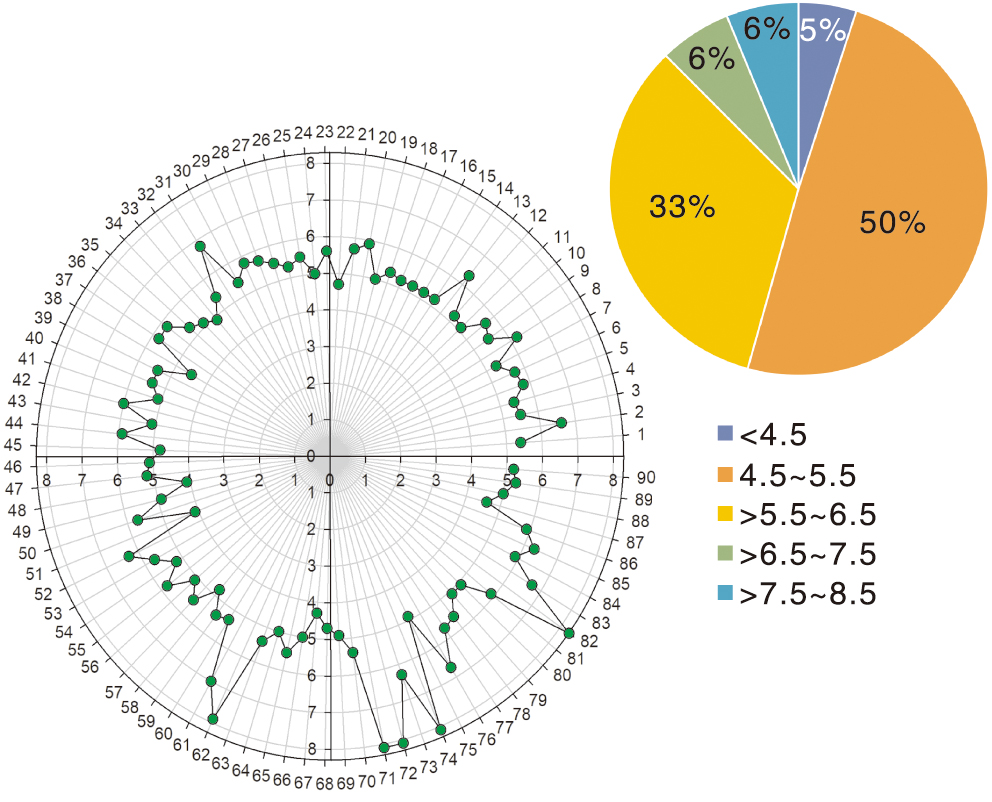
Fig.1 Distribution of soil pH value of samples in Jinyun County
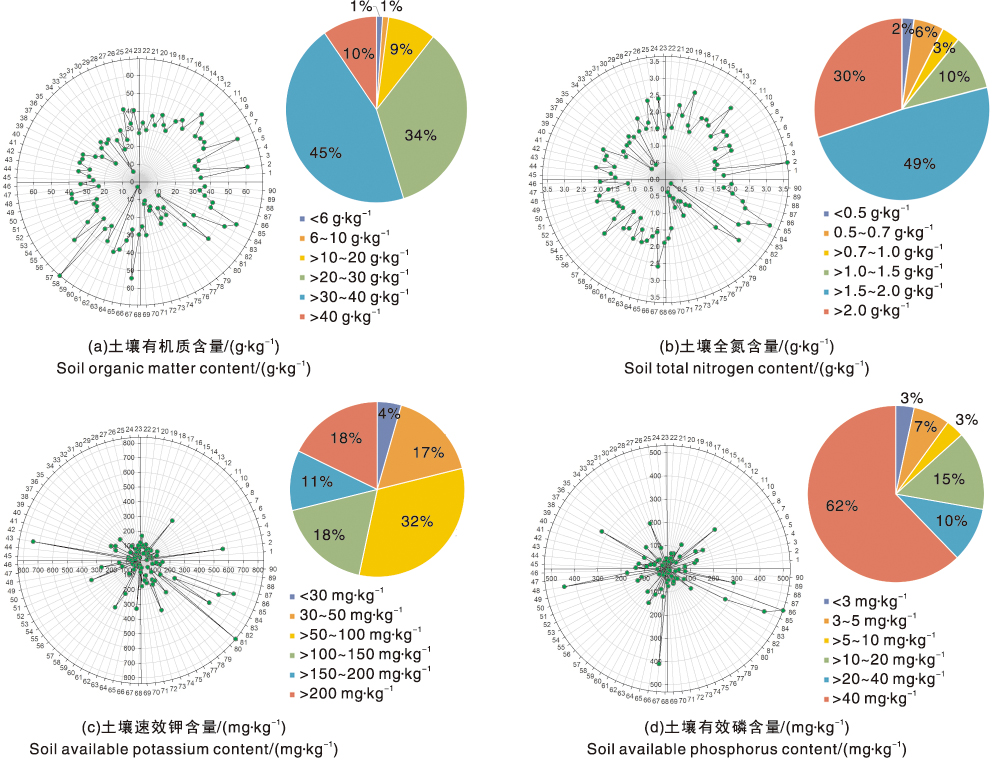
Fig.2 Distribution characteristics of main nutrients and organic matter contents of soil samples in Jinyun County
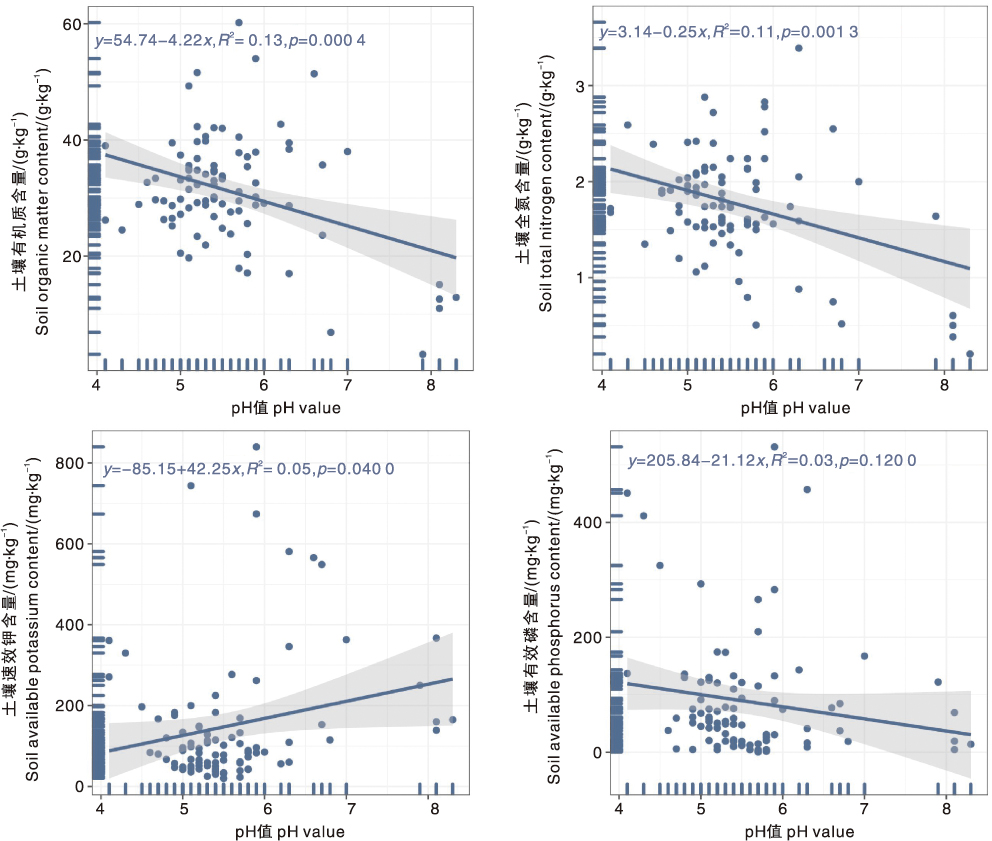
Fig.3 Correlation between soil pH value and soil fertility of samples in Jinyun County
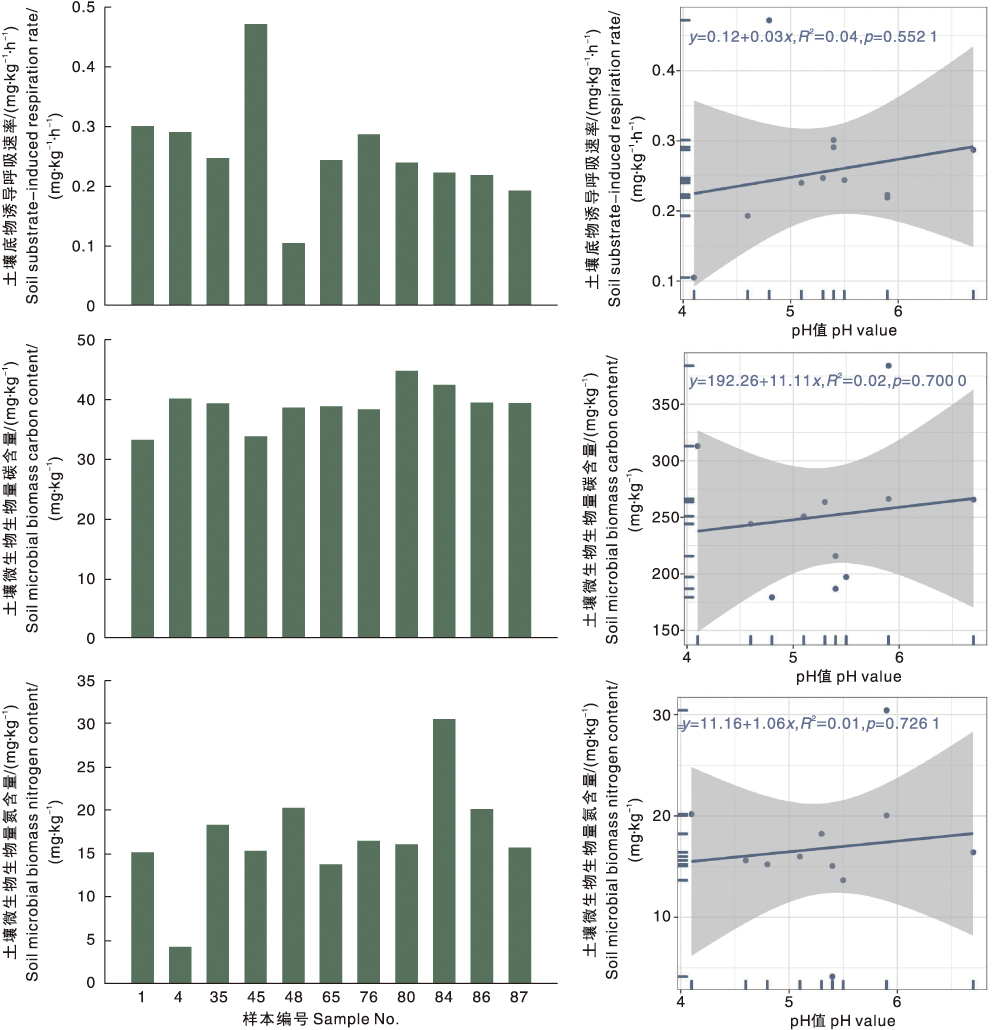
Fig.4 Characteristics of soil microbial biomass carbon and nitrogen contents of samples in Jinyun County and their correlation with soil pH value
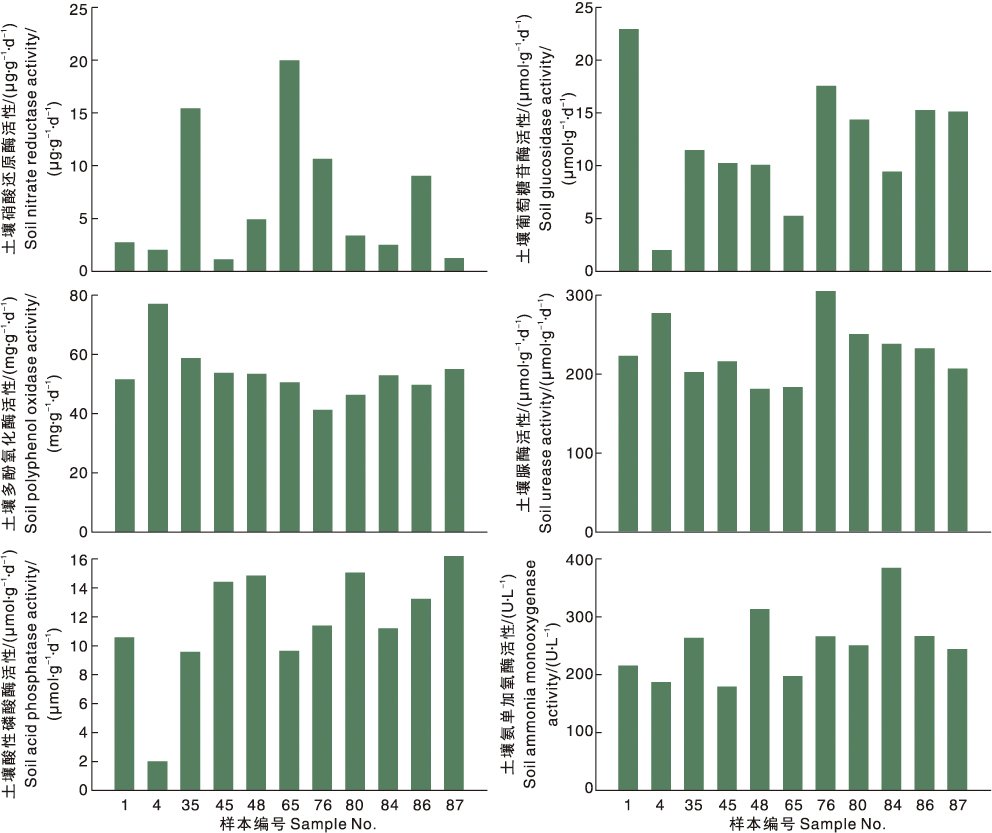
Fig.5 Soil enzymes activity of samples in Jinyun County
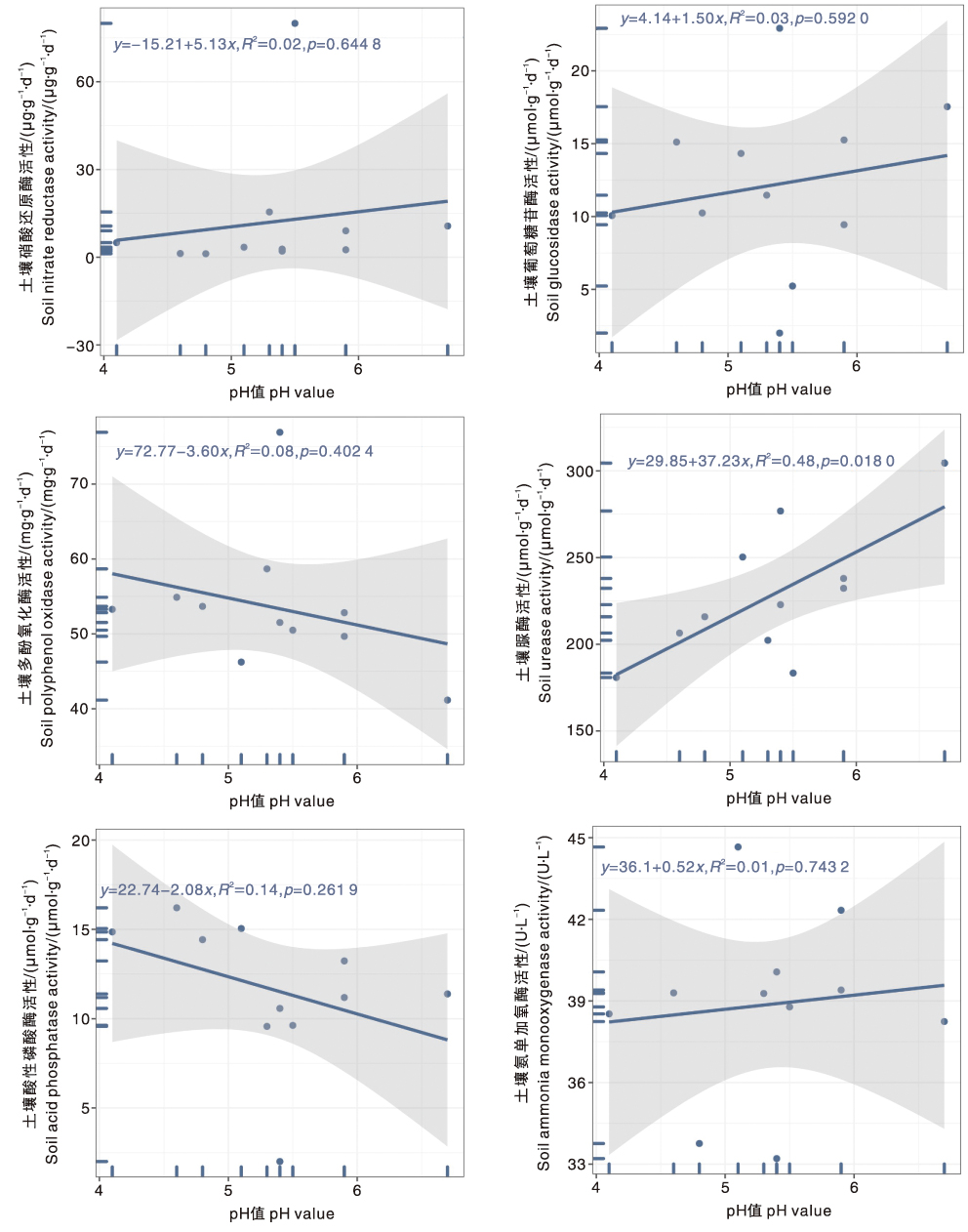
Fig.6 Correlation between soil pH value and enzymes activity of samples in Jinyun County
| [1] | 徐明岗, 卢昌艾, 李菊梅, 等. 农田土壤培肥[M]. 北京: 科学出版社, 2009: 123-135. |
| [2] | 徐仁扣. 土壤酸化及其调控研究进展[J]. 土壤, 2015, 47(2): 238-244. |
| XU R K. Research progresses in soil acidification and its control[J]. Soils, 2015, 47(2): 238-244. | |
| [3] | KOBAYASHI Y, KOBAYASHI Y, WATANABE T, et al. Molecular and physiological analysis of Al3+ and H+ rhizotoxicities at moderately acidic conditions[J]. Plant Physiology, 2013, 163(1): 180-192. |
| [4] | GUO J H, LIU X J, ZHANG Y, et al. Significant acidification in major Chinese croplands[J]. Science, 2010, 327(5968): 1008-1010. |
| [5] | 李科伟, 徐仁扣. 碳循环在土壤酸化与调控中的作用[J]. 土壤, 2025, 57(3): 485-497. |
| LI K W, XU R K. Role of carbon cycle in soil acidification and its inhibition[J]. Soils, 2025, 57(3): 485-497. | |
| [6] | 冀建华, 吕真真, 刘淑珍, 等. 长期施用化肥对南方稻田土壤酸化和盐基离子损失的影响[J]. 中国农业科学, 2024, 57(13): 2599-2611. |
| JI J H, LÜ Z Z, LIU S Z, et al. Long-term application of chemical fertilizers induces soil acidification and soil exchangeable base cation loss on paddy in Southern China[J]. Scientia Agricultura Sinica, 2024, 57(13): 2599-2611. | |
| [7] | 吴聪敏, 陈漂, 韩小明, 等. 三元复合肥料的酸度特征及其对土壤酸化的影响[J]. 土壤, 2022, 54(2): 365-370. |
| WU C M, CHEN P, HAN X M, et al. Acidity characteristics of ternary compound fertilizers and its effect on soil acidification[J]. Soils, 2022, 54(2): 365-370. | |
| [8] | 翁建华, 黄连芬, 刘晓茹, 等. 土壤酸化及天然土壤溶液中铝的形态[J]. 中国环境科学, 2000, 20(6): 501-505. |
| WENG J H, HUANG L F, LIU X R, et al. Acidification of soils and aluminum species in natural soil solution[J]. China Environmental Science, 2000, 20(6): 501-505. | |
| [9] | 沈仁芳, 赵学强. 酸性土壤可持续利用[J]. 农学学报, 2019, 9(3): 16-20. |
| SHEN R F, ZHAO X Q. The sustainable use of acid soils[J]. Journal of Agriculture, 2019, 9(3): 16-20. | |
| [10] | 鲍士旦. 土壤农化分析[M]. 3版. 北京: 中国农业出版社, 2000: 20-22. |
| [11] | 鲁如坤. 土壤农业化学分析方法[M]. 北京: 中国农业科学技术出版社, 2000. |
| [12] | 周晓阳, 周世伟, 徐明岗, 等. 中国南方水稻土酸化演变特征及影响因素[J]. 中国农业科学, 2015, 48(23): 4811-4817. |
| ZHOU X Y, ZHOU S W, XU M G, et al. Evolution characteristics and influence factors of acidification in paddy soil of Southern China[J]. Scientia Agricultura Sinica, 2015, 48(23): 4811-4817. | |
| [13] | AAS W, SHAO M, JIN L, et al. Air concentrations and wet deposition of major inorganic ions at five non-urban sites in China, 2001-2003[J]. Atmospheric Environment, 2007, 41(8): 1706-1716. |
| [14] | 柯琴, 韦向向, 赵隽宇, 等. 广西红壤区桉树林地土壤酸化特征及控酸技术初探[J]. 中国土壤与肥料, 2024(11): 49-56. |
| KE Q, WEI X X, ZHAO J Y, et al. Study on soil acidification characteristics and acid control technology of Eucalyptus forest in Guangxi red soil region[J]. Soil and Fertilizer Sciences in China, 2024(11): 49-56. | |
| [15] | 张永春, 汪吉东, 沈明星, 等. 长期不同施肥对太湖地区典型土壤酸化的影响[J]. 土壤学报, 2010, 47(3): 465-472. |
| ZHANG Y C, WANG J D, SHEN M X, et al. Effects of long-term fertilization on soil acidification in Taihu Lake region, China[J]. Acta Pedologica Sinica, 2010, 47(3): 465-472. | |
| [16] | 童文彬, 李荣会, 杨海峻, 等. 浙江省典型农田土壤酸化关键pH段的酸缓冲性能及影响因素研究[J]. 农学学报, 2024, 14(4): 37-41. |
| TONG W B, LI R H, YANG H J, et al. Study on acid buffering performance and influencing factors of key pH stage of soil acidification in typical farmland of Zhejiang Province[J]. Journal of Agriculture, 2024, 14(4): 37-41. | |
| [17] | ROUSK J, BÅÅTH E, BROOKES P C, et al. Soil bacterial and fungal communities across a pH gradient in an arable soil[J]. The ISME Journal, 2010, 4(10): 1340-1351. |
| [18] | 姜雯琪, 徐从斌, 孙天然. 硅酸盐矿物对酸化土壤的调理及无机碳固定性能的影响[J]. 农业环境科学学报, 2025, 44(2): 461-470. |
| JIANG W Q, XU C B, SUN T R. Soil conditioning and inorganic carbon accumulation in acidified soil by silicate rock[J]. Journal of Agro-Environment Science, 2025, 44(2): 461-470. | |
| [19] | 汪吉东, 许仙菊, 宁运旺, 等. 土壤加速酸化的主要农业驱动因素研究进展[J]. 土壤, 2015, 47(4): 627-633. |
| WANG J D, XU X J, NING Y W, et al. Progresses in agricultural driving factors on accelerated acidification of soils[J]. Soils, 2015, 47(4): 627-633. | |
| [20] | 徐影, 于镇华, 李彦生, 等. 土壤酸化成因及其对农田土壤-微生物-作物系统影响的研究进展[J]. 土壤通报, 2024, 55(2): 562-572. |
| XU Y, YU Z H, LI Y S, et al. Research progresses on soil acidification and its effects on soil-microorganism-crop systems in agricultural soil[J]. Chinese Journal of Soil Science, 2024, 55(2): 562-572. | |
| [21] | 饶聪, 王珏. 丽水市耕地土壤酸化原因及改良措施[J]. 特种经济动植物, 2022, 25(9): 182-184. |
| RAO C, WANG J. Causes and improvement measures of farmland soil acidification in Lishui City[J]. Special Economic Animal and Plants, 2022, 25(9): 182-184. | |
| [22] | 童根平, 姜霓雯, 傅伟军, 等. 清凉峰自然保护区土壤阳离子交换量的剖面分布特征及其影响因素[J]. 东北林业大学学报, 2023, 51(2): 111-115. |
| TONG G P, JIANG N W, FU W J, et al. Profile distribution characteristics and influencing factors of soil cation exchange capacity in low mountain natural forest land in South China[J]. Journal of Northeast Forestry University, 2023, 51(2): 111-115. | |
| [23] | 邹骏, 李春苗, 周建丞, 等. 钾在矿区农用土壤重金属形态转化过程中的作用研究进展[J]. 农业与技术, 2025, 45(22): 92-95. |
| ZOU J, LI C M, ZHOU J C, et al. Research progress on the role of potassium in heavy metal fraction transformation in agricultural soils of mining areas[J]. Agriculture and Technology, 2025, 45(22): 92-95. | |
| [24] | 佟德利, 张馨, 姜科名, 等. 酸化土壤铝毒危害及缓解研究进展[J]. 沈阳师范大学学报(自然科学版), 2025, 43(5): 466-470. |
| TONG D L, ZHANG X, JIANG K M, et al. Research progress on hazards and mitigation of aluminum toxicity in acidified soils[J]. Journal of Shenyang Normal University (Natural Science Edition), 2025, 43(5): 466-470. | |
| [25] | MUHAMMAD I, WANG J, SAINJU U M, et al. Cover cropping enhances soil microbial biomass and affects microbial community structure: a meta-analysis[J]. Geoderma, 2021, 381: 114696. |
| [26] | MAEDA M, HIDAKA M, NAKAMURA A, et al. Cloning, sequencing, and expression of thermophilic Bacillus sp. strain TB-90 urease gene complex in Escherichia coli[J]. Journal of Bacteriology, 1994, 176(2): 432-442. |
| [27] | 吴云昭, 李向广, 尚元贺. 几株芽孢杆菌生长及产酶特性研究[J]. 云南化工, 2024, 51(7): 76-80. |
| WU Y Z, LI X G, SHANG Y H. Study on the growth and enzyme production characteristics of several Bacillus strains[J]. Yunnan Chemical Technology, 2024, 51(7): 76-80. | |
| [28] | 周梦岩, 何冬梅, 李亚超, 等. 紫色酸性磷酸酶在植物响应低磷胁迫中的作用研究进展[J]. 分子植物育种, 2021, 19(11): 3763-3770. |
| ZHOU M Y, HE D M, LI Y C, et al. Research progress of the role of purple acid phosphatase in plant response to low phosphorus stress[J]. Molecular Plant Breeding, 2021, 19(11): 3763-3770. | |
| [29] | ROMBOLA T H, PEDRINHO E A N, DE MACEDO LEMOS E G, et al. Identification and enzymatic characterization of acid phosphatase from Burkholderia gladioli[J]. BMC Research Notes, 2014, 7(1): 221. |
| [30] | 王彬彬, 林启美, 陈源泉, 等. 微池板比色法在多酚氧化酶和β葡萄糖苷酶研究中的应用[J]. 土壤学报, 2012, 49(4): 773-779. |
| WANG B B, LIN Q M, CHEN Y Q, et al. Application of microplate colorimetric method in determining activities of polyphenol oxidase and β-glucosidase in soil[J]. Acta Pedologica Sinica, 2012, 49(4): 773-779. | |
| [31] | 常文华, 马维伟, 李广, 等. 尕海湿地区沼泽草甸退化对土壤氮转化酶活性的影响[J]. 草业学报, 2023, 32(2): 54-64. |
| CHANG W H, MA W W, LI G, et al. Effects of swamp meadow degradation on soil nitrogen invertase activity in wet areas of Gahai[J]. Acta Prataculturae Sinica, 2023, 32(2): 54-64. | |
| [32] | 孙波, 朱安宁, 姚荣江, 等. 潮土、红壤和盐碱地障碍消减技术与产能提升模式研究进展[J]. 土壤学报, 2023, 60(5): 1231-1247. |
| SUN B, ZHU A N, YAO R J, et al. Research progress on barrier remediation technology and productivity enhancement model for fluvo-aquic soil, red soil, and saline-alkali soil[J]. Acta Pedologica Sinica, 2023, 60(5): 1231-1247. |
| [1] | ZHANG Zhi, HE Haohao, YU Miao, XU Jianfeng. Effects of chemical fertilizer reduction combined with soil conditioner on soil acidity, soil nutrients and rice yield [J]. Acta Agriculturae Zhejiangensis, 2025, 37(6): 1301-1308. |
| [2] | DU Song, TANG Tao, CHENG Xi, ZHAO Xueping, ZHANG Chunrong, LIANG Xiaoyu, WANG Meng, ZHANG Zhen, LI Yongcheng, ZHANG Chenghui. Exploring the degradation and soil enzyme impact of pyroxasulfone and its main metabolites in soils [J]. Acta Agriculturae Zhejiangensis, 2025, 37(4): 847-857. |
| [3] | HUANG Pengwu, WU Qianqian, ZHAO Lifang, SHAO Dezhong, WU Lujie, ZHAO Miyang, TIAN Yu, LU Shenggao. Long-term effects of inorganic conditioner combined with organic manure in ameliorating acidified soil [J]. Acta Agriculturae Zhejiangensis, 2025, 37(4): 858-868. |
| [4] | YUE Zongwei, LI Jiaxiao, SUN Xiangyang, LIU Guoliang, LI Suyan, WANG Chenchen, ZHA Guichao, WEI Ningxian. Effects of chemical fertilizer combined with organic fertilizer on soil properties, cherry fruit quality and yield [J]. Acta Agriculturae Zhejiangensis, 2023, 35(9): 2192-2201. |
| [5] | YAO Yanlai, ZHU Weijing, DING Jian, HONG Leidong, HONG Chunlai, WANG Weiping, ZHU Fengxiang, HE Weike, HONG Haiqing. Investigation and analysis of continuous cropping obstacle and soil environment in large-scale vegetable bases in Zhejiang Province, China [J]. Acta Agriculturae Zhejiangensis, 2022, 34(7): 1474-1484. |
| [6] | GAO Zhiyuan, YANG Shuna, WANG Zhaoli, WANG Zhihao, XI Xinyan, HE Juan, JIA Huijuan. Effects of different fumigation on continuous cropping soil in peach orchard [J]. Acta Agriculturae Zhejiangensis, 2022, 34(10): 2251-2258. |
| [7] | LI Meilin, CHEN Yutiao, HONG Xiaofu, QIAO Yuying, WANG Qingxia, CHEN Xijing, SHEN Alin, YU Man. Effects of nitrogen management on soil microbial community structure in paddy fields [J]. , 2020, 32(2): 308-316. |
| [8] | DONG Yufei, LYU Xiangzhang, ZHANG Zikun, HE Hongjun, YU Jingquan, ZHOU Yanhong. Effects of different cultivation patterns on soil microbial community and enzyme activity in continuous cropped pepper field [J]. , 2019, 31(9): 1485-1492. |
| [9] | WANG Yiming, LONG Shengju, CHEN Yan, HE Zhongqun, ZHAO Yingpeng, YANG Luxi, YAN Wenyi. Effect of soil simulated acidification on photosynthetic characteristics and ultrastructure of Sedum aizoon L. leaves [J]. , 2019, 31(6): 915-921. |
| [10] | WANG Yanyun, ZHAO Longjie, HAO Chunli, CAI Jinzhong. Effects of bio-organic fertilizer on soil microbial population and enzymes activities under different continuous cropping years of protected cucumber [J]. , 2019, 31(4): 631-638. |
| [11] | ZHANG Bowei, WANG Haijing, SONG Maoyong, XIE Huijun, ZHANG Jian. Effect of tetrabromobisphenol A on inorganic nitrogen transformation in soil and its possible microbiological mechanism [J]. , 2019, 31(4): 639-645. |
| [12] | GUAN Qinzhuang, CHENG Yongxu, LI Cong, WANG Haifeng, CHEN Huangen, LI Jiayao. Changes of soil organic carbon and relationships with soil properties in rice-crayfish coculture system [J]. , 2019, 31(1): 113-120. |
| [13] | SA Rula, YANG Hengshan, GAO Julin, FAN Fu, ZHANG Ruifu, LIU Jing, WU Shuai. Effects of maize straw returning modes on soil fertility and maize yield [J]. , 2018, 30(2): 268-274. |
| [14] | CHEN Chongjun, LIU Yuxue, FENG Yu, WANG Jianfang. Effects of bamboo charcoal addition on nitrogen and phosphorus loss and microbial community structures in greenhouse vegetable soil [J]. , 2018, 30(1): 123-128. |
| [15] | YANG Zifeng, CHEN Weiqiang, WANG Wei, LI Wanyi, HE Xianbiao, YANG Xiangtian. Effect of rotation tillage on soil microbial biomass and enzyme activity of broccoli [J]. , 2017, 29(5): 818-823. |
| Viewed | ||||||
|
Full text |
|
|||||
|
Abstract |
|
|||||

