浙江农业学报 ›› 2026, Vol. 38 ›› Issue (6): 1198-1208.DOI: 10.3969/j.issn.1004-1524.20250624
CaCl2对西蓝花芽苗菜生长与活性物质含量的影响
陈梦微1( ), 张成磊1, 梁徐2, 谢永东3,*(), 尹欣幸1
- 1
台州科技职业学院 农业与生物工程学院 浙江 台州 318020
2台州市黄岩永拓土地开发有限公司 浙江 台州 318020
3成都市农林科学院 农产品加工研究所 四川 成都 611130
-
收稿日期:2025-09-28出版日期:2026-06-25发布日期:2026-07-14 -
作者简介:陈梦微,主要从事园艺植物栽培与生理研究。E-mail:912468236@qq.com -
通讯作者:*谢永东,E-mail:xie.yd@foxmail.com -
基金资助:浙江省教育厅一般科研项目(Y202456086);台州科技职业学院年度课题(25ND01)
Effects of CaCl2 on growth and active substance content in broccoli sprouts
CHEN Mengwei1(), ZHANG Chenglei1, LIANG Xu2, XIE Yongdong3,*(), YIN Xinxing1
- 1
College of Agriculture and Bioengineering ,Taizhou Vocational College of Science & Technology Taizhou 318020, Zhejiang, China
2Taizhou Huangyan Yongtuo Land Development Co. ,Ltd. Taizhou 318020, Zhejiang, China
3Institute of Agro-Products Processing ,Chengdu Academy of Agriculture and Forestry Sciences Chengdu 611130, China
-
Received:2025-09-28Published:2026-06-25Online:2026-07-14

摘要:
为探究CaCl2浸种对西蓝花芽苗菜生长和活性物质含量的影响,并从分子水平阐明CaCl2对硫苷的调控机制,以西蓝花种子为试材,采用0(CK)、1.0、2.5、5.0和10.0 mmol·L-1CaCl2溶液进行浸种处理,比较不同处理下芽苗菜生长指标、营养物质含量和硫苷含量的变化,并利用实时荧光定量PCR技术检测脂肪族硫苷合成关键基因的表达水平。结果表明,不同浓度CaCl2处理均能促进西蓝花芽苗菜的伸长生长,但对生物量、维生素C含量和叶绿素含量无显著影响;低浓度CaCl2处理可提高可溶性糖、可溶性蛋白、类胡萝卜素和脂肪族硫苷含量;各浓度CaCl2处理均能上调西蓝花芽苗菜中MYB28、Elong、CYP79F1、CYP83A1、UGT74B1和ST5b基因的转录水平。基于主成分分析的综合评价得分显示,5个处理的综合效果排序为:2.5 mmol·L-1CaCl2>1.0 mmol·L-1CaCl2>CK>10.0 mmol·L-1CaCl2>5.0 mmol·L-1CaCl2。综上,CaCl2浸种能够促进西蓝花芽苗菜中脂肪族硫苷合成相关基因的表达,其中2.5 mmol·L-1CaCl2处理在促进生长和生物活性物质积累方面效果最佳。
中图分类号:
引用本文
陈梦微, 张成磊, 梁徐, 谢永东, 尹欣幸. CaCl2对西蓝花芽苗菜生长与活性物质含量的影响[J]. 浙江农业学报, 2026, 38(6): 1198-1208.
CHEN Mengwei, ZHANG Chenglei, LIANG Xu, XIE Yongdong, YIN Xinxing. Effects of CaCl2 on growth and active substance content in broccoli sprouts[J]. Acta Agriculturae Zhejiangensis, 2026, 38(6): 1198-1208.
| 基因 Genes | 正向引物序列(5'→3') Forward primer sequence(5'→3') | 反向引物序列(5'→3') Reverse primer sequence(5'→3') | 产物长度/bp Product length/bp |
|---|---|---|---|
| β-actin | CCAGAGGTCTTGTTCCAGCCATC | GTTCCACCACTGAGCACAATGTTAC | 137 |
| MYB28 | TTCCTCCAAACAACGTTTTACC | TGGAACACATCGGACATAAGAA | 176 |
| Elong | AAGGTCGTCTGAAAGAGTTGGG | TGATTTCGTTGTCGTTAGTGCC | 186 |
| CYP79F1 | CAAGCGGAGAAAGATCATCTTG | GGATTGTTGTAACTGCGAACTT | 164 |
| CYP83A1 | ATAAGCGAGCTTATGTTGACCT | ATCATATAAGCCGTGAGACCTG | 206 |
| UGT74B1 | CAGTGGTTTTTGTTTCGTTTGG | GTTGGATTCTTGTAACGCCTTT | 86 |
| ST5b | TCTCCTGAAATGTAACCCTCAC | GAGGGATATGAGTCGAGAACAG | 119 |
表1 硫苷生物合成相关基因的qRT-PCR引物序列
Table 1 Primer sequences for qRT-PCR analysis of genes involved in glucosinolate biosynthesis
| 基因 Genes | 正向引物序列(5'→3') Forward primer sequence(5'→3') | 反向引物序列(5'→3') Reverse primer sequence(5'→3') | 产物长度/bp Product length/bp |
|---|---|---|---|
| β-actin | CCAGAGGTCTTGTTCCAGCCATC | GTTCCACCACTGAGCACAATGTTAC | 137 |
| MYB28 | TTCCTCCAAACAACGTTTTACC | TGGAACACATCGGACATAAGAA | 176 |
| Elong | AAGGTCGTCTGAAAGAGTTGGG | TGATTTCGTTGTCGTTAGTGCC | 186 |
| CYP79F1 | CAAGCGGAGAAAGATCATCTTG | GGATTGTTGTAACTGCGAACTT | 164 |
| CYP83A1 | ATAAGCGAGCTTATGTTGACCT | ATCATATAAGCCGTGAGACCTG | 206 |
| UGT74B1 | CAGTGGTTTTTGTTTCGTTTGG | GTTGGATTCTTGTAACGCCTTT | 86 |
| ST5b | TCTCCTGAAATGTAACCCTCAC | GAGGGATATGAGTCGAGAACAG | 119 |
| CaCl2浓度/(mmol·L-1) CaCl2 concentration/(mmol·L-1) | 下胚轴长/mm Hypocotyl length/mm | 主根长/mm Main root length/mm | 单株可食鲜重/g Edible fresh weight per plant/g |
|---|---|---|---|
| 0(CK) | 38.55±1.80 b | 76.35±16.69 b | 0.061±0.003 a |
| 1.0 | 43.04±4.92 ab | 109.14±3.58 a | 0.061±0.006 a |
| 2.5 | 48.26±7.26 a | 111.02±6.51 a | 0.068±0.009 a |
| 5.0 | 40.36±0.73 ab | 114.37±5.79 a | 0.058±0.007 a |
| 10.0 | 42.74±2.49 ab | 105.66±9.10 a | 0.061±0.001 a |
表2 CaCl2处理下西蓝花芽苗菜的生长指标与生物量
Table 2 Growth indicators and biomass of broccoli sprouts under CaCl2 treatment
| CaCl2浓度/(mmol·L-1) CaCl2 concentration/(mmol·L-1) | 下胚轴长/mm Hypocotyl length/mm | 主根长/mm Main root length/mm | 单株可食鲜重/g Edible fresh weight per plant/g |
|---|---|---|---|
| 0(CK) | 38.55±1.80 b | 76.35±16.69 b | 0.061±0.003 a |
| 1.0 | 43.04±4.92 ab | 109.14±3.58 a | 0.061±0.006 a |
| 2.5 | 48.26±7.26 a | 111.02±6.51 a | 0.068±0.009 a |
| 5.0 | 40.36±0.73 ab | 114.37±5.79 a | 0.058±0.007 a |
| 10.0 | 42.74±2.49 ab | 105.66±9.10 a | 0.061±0.001 a |
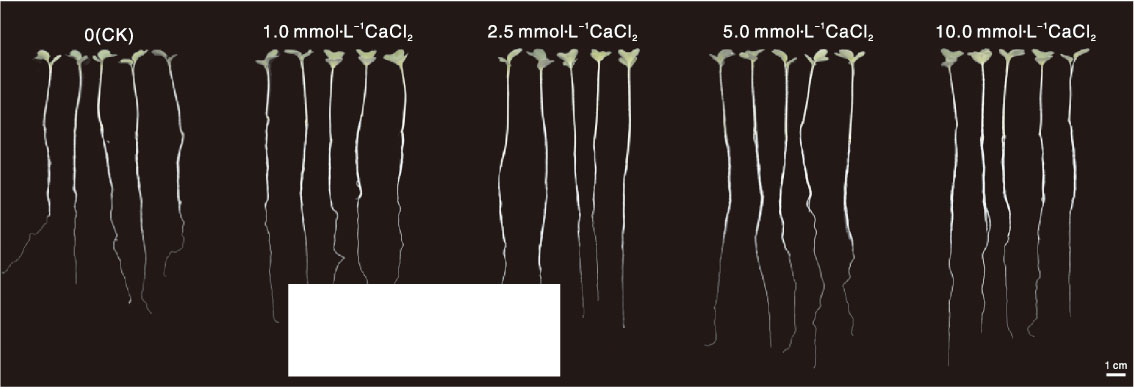
图1 不同CaCl2处理下西蓝花芽苗菜的生长形态
Fig.1 Growth morphology of broccoli sprouts under different CaCl2 treatments
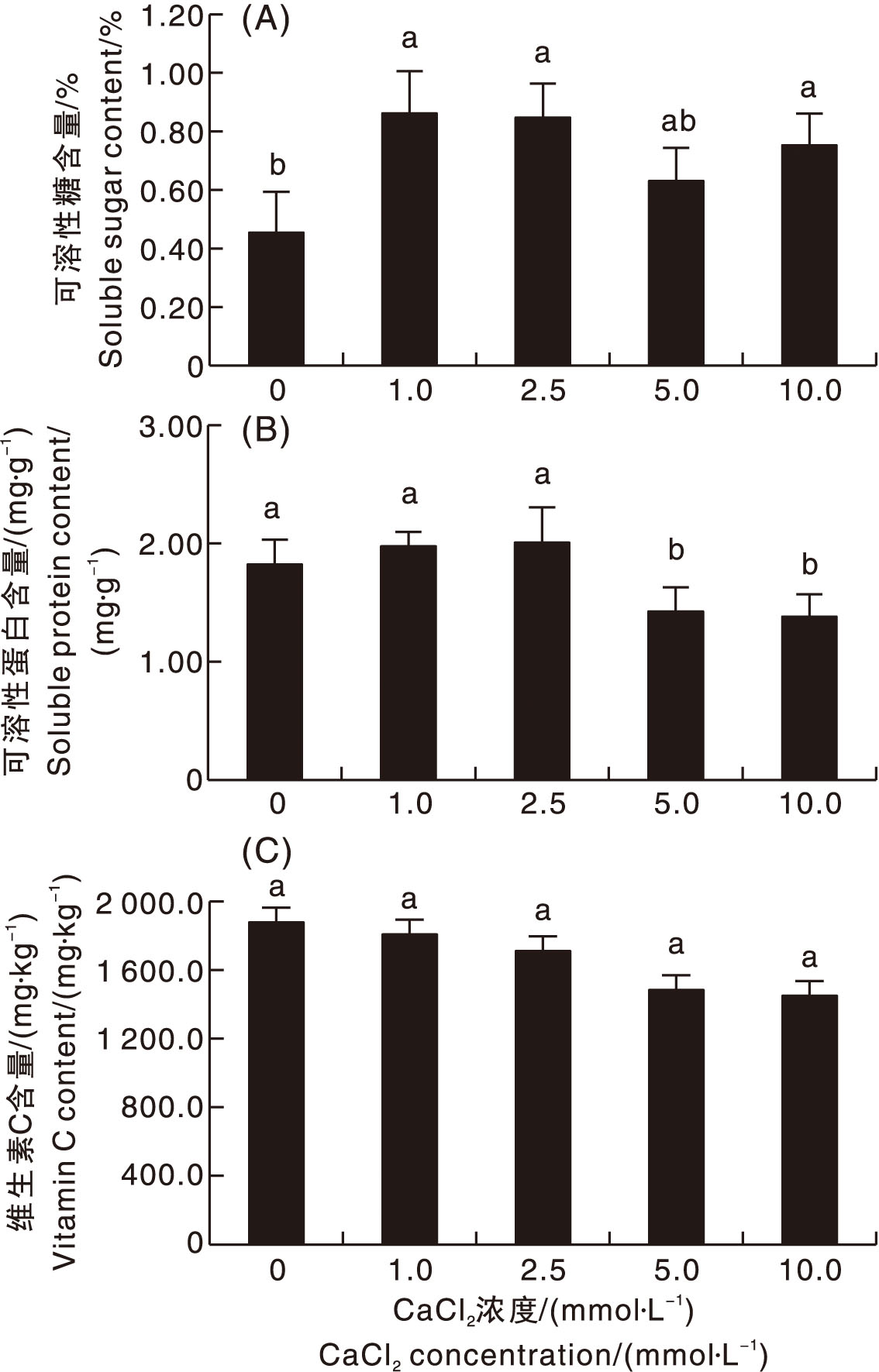
图2 CaCl2处理下西蓝花芽苗菜的营养物质含量 柱上无相同小写字母表示不同处理间差异显著(p<0.05)。下同。
Fig.2 Nutrient contents of broccoli sprouts under CaCl2 treatment Bars marked without the same lowercase letter indicate significant (p<0.05) differences among treatments. The same as below.
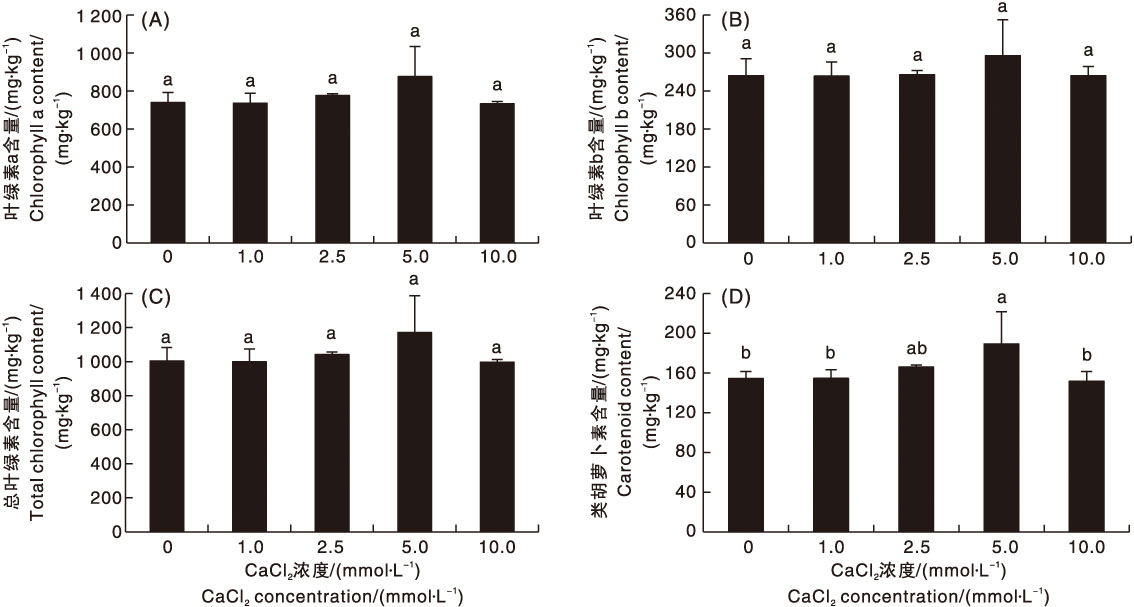
图3 CaCl2处理下西蓝花芽苗菜的叶绿素和类胡萝卜素含量
Fig.3 Chlorophyll and carotenoid contents in broccoli sprouts under CaCl2 treatment
| CaCl2浓度/ (mmol·L-1) CaCl2 concentration/ (mmol·L-1) | 含量/(μmol·g-1) Content/(μmol·g-1) | |||||||
|---|---|---|---|---|---|---|---|---|
| GRA | PRO | GNA | GER | 4HGBS | GBS | 4MGBS | NGBS | |
| 0(CK) | 51.23± 2.94 b | 0.42± 0.02 c | 1.85± 0.13 a | 19.07± 0.91 bc | 2.10± 0.15 a | 4.04± 0.20 a | 1.68± 0.07 a | 0.64± 0.03 b |
| 1.0 | 64.72± 3.87 a | 0.72± 0.05 a | 2.35± 0.14 a | 20.82± 0.95 ab | 1.91± 0.27 a | 3.56± 0.18 ab | 1.66± 0.13 a | 0.69± 0.02 b |
| 2.5 | 61.09± 4.70 a | 0.44± 0.02 bc | 2.17± 0.23 a | 23.85± 1.07 a | 2.08± 0.06 a | 3.96± 0.13 a | 1.54± 0.04 ab | 0.99± 0.03 a |
| 5.0 | 34.33± 7.86 c | 0.45± 0.05 bc | 1.59± 0.34 b | 17.37± 2.63 c | 1.35± 0.22 b | 3.18± 0.33 b | 1.27± 0.13 c | 0.75± 0.08 b |
| 10.0 | 39.57± 1.99 c | 0.52± 0.05 b | 1.79± 0.19 a | 20.37± 2.04 bc | 1.35± 0.40 b | 3.36± 0.40 b | 1.31± 0.19 bc | 0.89± 0.09 a |
表3 CaCl2处理下西蓝花芽苗菜的硫代葡萄糖苷含量
Table 3 Glucosinolate content in broccoli sprouts under CaCl2 treatment
| CaCl2浓度/ (mmol·L-1) CaCl2 concentration/ (mmol·L-1) | 含量/(μmol·g-1) Content/(μmol·g-1) | |||||||
|---|---|---|---|---|---|---|---|---|
| GRA | PRO | GNA | GER | 4HGBS | GBS | 4MGBS | NGBS | |
| 0(CK) | 51.23± 2.94 b | 0.42± 0.02 c | 1.85± 0.13 a | 19.07± 0.91 bc | 2.10± 0.15 a | 4.04± 0.20 a | 1.68± 0.07 a | 0.64± 0.03 b |
| 1.0 | 64.72± 3.87 a | 0.72± 0.05 a | 2.35± 0.14 a | 20.82± 0.95 ab | 1.91± 0.27 a | 3.56± 0.18 ab | 1.66± 0.13 a | 0.69± 0.02 b |
| 2.5 | 61.09± 4.70 a | 0.44± 0.02 bc | 2.17± 0.23 a | 23.85± 1.07 a | 2.08± 0.06 a | 3.96± 0.13 a | 1.54± 0.04 ab | 0.99± 0.03 a |
| 5.0 | 34.33± 7.86 c | 0.45± 0.05 bc | 1.59± 0.34 b | 17.37± 2.63 c | 1.35± 0.22 b | 3.18± 0.33 b | 1.27± 0.13 c | 0.75± 0.08 b |
| 10.0 | 39.57± 1.99 c | 0.52± 0.05 b | 1.79± 0.19 a | 20.37± 2.04 bc | 1.35± 0.40 b | 3.36± 0.40 b | 1.31± 0.19 bc | 0.89± 0.09 a |
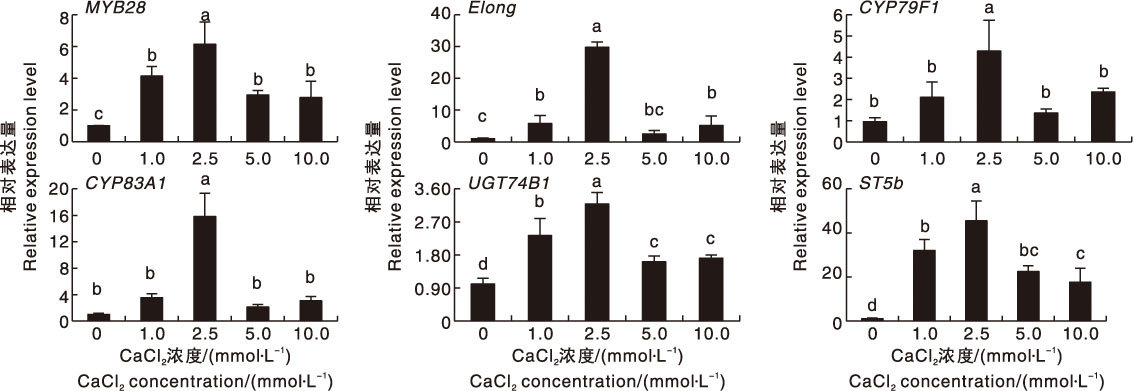
图4 CaCl2处理下西蓝花芽苗菜硫代葡萄糖苷合成关键基因的表达
Fig.4 Expression of key genes involved in glucosinolate biosynthesis in broccoli sprouts under CaCl2 treatment
| 指标Indicator | GRA | PRO | GNA | GER | MYB28 | Elong | CYP79F1 | CYP83A1 | UGT74B1 |
|---|---|---|---|---|---|---|---|---|---|
| PRO | 0.47 | ||||||||
| GNA | 0.96** | 0.65 | |||||||
| GER | 0.72 | 0.13 | 0.74 | ||||||
| MYB28 | 0.52 | 0.21 | 0.60 | 0.79 | |||||
| Elong | 0.51 | -0.18 | 0.49 | 0.89* | 0.88* | ||||
| CYP79F1 | 0.47 | 0 | 0.52 | 0.92* | 0.91* | 0.96* | |||
| CYP83A1 | 0.50 | -0.18 | 0.48 | 0.87 | 0.88* | 1.00** | 0.95* | ||
| UGT74B1 | 0.60 | 0.23 | 0.67 | 0.85 | 0.99** | 0.90* | 0.93* | 0.90* | |
| ST5b | 0.48 | 0.28 | 0.58 | 0.71 | 0.99** | 0.81 | 0.86 | 0.82 | 0.97** |
表4 脂肪族硫苷含量与其合成关键基因表达量的相关性
Table 4 Correlation between aliphatic glucosinolates and the expression of key genes involved in their synthesis
| 指标Indicator | GRA | PRO | GNA | GER | MYB28 | Elong | CYP79F1 | CYP83A1 | UGT74B1 |
|---|---|---|---|---|---|---|---|---|---|
| PRO | 0.47 | ||||||||
| GNA | 0.96** | 0.65 | |||||||
| GER | 0.72 | 0.13 | 0.74 | ||||||
| MYB28 | 0.52 | 0.21 | 0.60 | 0.79 | |||||
| Elong | 0.51 | -0.18 | 0.49 | 0.89* | 0.88* | ||||
| CYP79F1 | 0.47 | 0 | 0.52 | 0.92* | 0.91* | 0.96* | |||
| CYP83A1 | 0.50 | -0.18 | 0.48 | 0.87 | 0.88* | 1.00** | 0.95* | ||
| UGT74B1 | 0.60 | 0.23 | 0.67 | 0.85 | 0.99** | 0.90* | 0.93* | 0.90* | |
| ST5b | 0.48 | 0.28 | 0.58 | 0.71 | 0.99** | 0.81 | 0.86 | 0.82 | 0.97** |
| 主成分 Principal component | 特征值 Eigenvalue | 方差贡献率/% Variance contribution rate/% | 累计方差贡献率/% Cumulative variance contribution rate/% |
|---|---|---|---|
| 1 | 8.059 | 50.371 | 50.371 |
| 2 | 4.342 | 27.137 | 77.508 |
| 3 | 2.166 | 13.536 | 91.044 |
| 4 | 1.433 | 8.956 | 100 |
表5 主成分的特征值与贡献率
Table 5 Eigenvalues and contribution rates of principal components
| 主成分 Principal component | 特征值 Eigenvalue | 方差贡献率/% Variance contribution rate/% | 累计方差贡献率/% Cumulative variance contribution rate/% |
|---|---|---|---|
| 1 | 8.059 | 50.371 | 50.371 |
| 2 | 4.342 | 27.137 | 77.508 |
| 3 | 2.166 | 13.536 | 91.044 |
| 4 | 1.433 | 8.956 | 100 |
| CaCl2浓度/(mmol·L-1) CaCl2 concentration/(mmol·L-1) | Y1 | Y2 | Y3 | Y4 | 综合得分 Comprehensive score | 排序 Ranking |
|---|---|---|---|---|---|---|
| 0 | 0.975 | -3.439 | 0.833 | -0.239 | -0.351 | 3 |
| 1.0 | 2.147 | 0.114 | -2.296 | 0.524 | 0.849 | 2 |
| 2.5 | 2.642 | 2.113 | 1.608 | 0.398 | 2.158 | 1 |
| 5.0 | -4.122 | 0.193 | 0.152 | 1.241 | -1.892 | 5 |
| 10.0 | -1.642 | 1.018 | -0.298 | -1.924 | -0.764 | 4 |
表6 不同CaCl2处理的主成分因子得分与排序
Table 6 Principal component factor scores and ranking under different CaCl2 treatments
| CaCl2浓度/(mmol·L-1) CaCl2 concentration/(mmol·L-1) | Y1 | Y2 | Y3 | Y4 | 综合得分 Comprehensive score | 排序 Ranking |
|---|---|---|---|---|---|---|
| 0 | 0.975 | -3.439 | 0.833 | -0.239 | -0.351 | 3 |
| 1.0 | 2.147 | 0.114 | -2.296 | 0.524 | 0.849 | 2 |
| 2.5 | 2.642 | 2.113 | 1.608 | 0.398 | 2.158 | 1 |
| 5.0 | -4.122 | 0.193 | 0.152 | 1.241 | -1.892 | 5 |
| 10.0 | -1.642 | 1.018 | -0.298 | -1.924 | -0.764 | 4 |
| [16] | GUO L P, ZHU Y L, WANG F W. Calcium sulfate treatment enhances bioactive compounds and antioxidant capacity in broccoli sprouts during growth and storage[J]. Postharvest Biology and Technology, 2018, 139: 12-19. |
| [17] | DE BANG T C, HUSTED S, LAURSEN K H, et al. The molecular-physiological functions of mineral macronutrients and their consequences for deficiency symptoms in plants[J]. New Phytologist, 2021, 229(5): 2446-2469. |
| [18] | LI H X, CHENG W J, YU X N, et al. Effect of combined light quality and calcium chloride treatments on growth and quality of Chinese kale sprouts[J]. Horticulturae, 2025, 11(7): 780. |
| [19] | LI C, SONG S H, HE Y N, et al. Transcriptomics integrated with metabolomics reveals the mechanism of CaCl2-HCl electrolyzed water-induced glucosinolate biosynthesis in broccoli sprouts[J]. Food Science and Human Wellness, 2024, 13(2): 801-812. |
| [20] | 李合生. 植物生理生化实验原理和技术[M]. 北京: 高等教育出版社, 2000. |
| [21] | 孙勃, 汪炳良, 闫会转, 等. 芥蓝感染核盘菌过程中活性氧和芥子油苷的变化[J]. 园艺学报, 2012, 39(2): 289-296. |
| SUN B, WANG B L, YAN H Z, et al. Studies on changes of reactive oxygen species and glucosinolates in Chinese kale infected by Sclerotinia sclerotiorum[J]. Acta Horticulturae Sinica, 2012, 39(2): 289-296. | |
| [22] | ADHIKARI A, SAPKOTA M, SAVIDYA R N, et al. Calcium enhances the effectiveness of melatonin in improving nutritional properties of soybean sprouts and germination under salt and cadmium stress[J]. International Journal of Molecular Sciences, 2025, 26(3): 878. |
| [23] | WANG X K, YANG R Q, ZHOU Y L, et al. A comparative transcriptome and proteomics analysis reveals the positive effect of supplementary Ca2+on soybean sprout yield and nutritional qualities[J]. Journal of Proteomics, 2016, 143: 161-172. |
| [24] | 慕志颖, CONTEH Omar, 纪悦玲, 等. 钙处理对‘84K’杨无菌苗生长发育的影响[J]. 南京林业大学学报(自然科学版), 2025, 49(4): 145-151. |
| MU Z Y, OMAR C, JI Y L, et al. The effects of calcium treatment on the growth and development of hybrid poplar ‘84K’ in vitro culture[J]. Journal of Nanjing Forestry University(Natural Sciences Edition), 2025, 49(4): 145-151. | |
| [25] | 王梦琦, 王菲, 赵琬璐, 等. 不同浓度硅、钙对留兰香幼苗生长和生理特性的影响[J]. 草业学报, 2025, 34(3): 154-163. |
| [1] | SUGIYAMA R, LI R, KUWAHARA A, et al. Retrograde sulfur flow from glucosinolates to cysteine in Arabidopsis thaliana[J]. Proceedings of the National Academy of Sciences of the United States of America, 2021, 118(22): e2017890118. |
| [2] | NANDINI D B, RAO R S, DEEPAK B S, et al. Sulforaphane in broccoli: the green chemoprevention!! role in cancer prevention and therapy[J]. Journal of Oral and Maxillofacial Pathology, 2020, 24(2): 405. |
| [25] | WANG M Q, WANG F, ZHAO W L, et al. Effects of different concentrations of silicon and calcium on the growth and physiological characteristics of Mentha spicata seedlings[J]. Acta Prataculturae Sinica, 2025, 34(3): 154-163. |
| [26] | 王呈阳, 刘洁雅, 吴敏怡, 等. 钙处理对涝害下寒香蜜葡萄果实品质的影响[J]. 浙江农业学报, 2025, 37(7): 1451-1458. |
| WANG C Y, LIU J Y, WU M Y, et al. Effect of calcium treatment on the fruit quality of Reliance grape under waterlogging[J]. Acta Agriculturae Zhejiangensis, 2025, 37(7): 1451-1458. | |
| [27] | 周玉柳, 荆澳航, 韩艳英, 等. 叶面喷施硒、锌、钙肥对林芝地区响富苹果光合特性与果实品质的调控效应[J]. 果树学报, 2026, 43(1): 26-38. |
| ZHOU Y L, JING A H, HAN Y Y, et al. Effects of foliar fertilizer on photosynthetic characteristics and fruit quality of Xiangfu in Linzhi, Xizang[J]. Journal of Fruit Science, 2026, 43(1): 26-38. | |
| [28] | 柏是林, 欧斯扬, 杨雪莲, 等. 硅钙肥对百香果品质及细胞壁代谢的影响[J]. 热带作物学报, 2024, 45(8): 1623-1632. |
| BAI S L, OU S Y, YANG X L, et al. Effects of silica-calcium fertilizer on quality and cell wall metabolism of passion fruit[J]. Chinese Journal of Tropical Crops, 2024, 45(8): 1623-1632. | |
| [29] | 闫琳琳, 韩珑, 陈震, 等. 钙肥对茄子光合和果实相关指标的影响[J]. 北方园艺, 2025(16): 28-38. |
| [3] | ARORA I, SHARMA M, LI S Z, et al. An integrated analysis of the effects of maternal broccoli sprouts exposure on transcriptome and methylome in prevention of offspring mammary cancer[J]. PLoS One, 2022, 17(3): e0264858. |
| [4] | VANDUCHOVA A, ANZENBACHER P, ANZENBACHEROVA E. Isothiocyanate from broccoli, sulforaphane, and its properties[J]. Journal of Medicinal Food, 2019, 22(2): 121-126. |
| [5] | GU Z X, GUO Q H, GU Y J. Factors influencing glucoraphanin and sulforaphane formation in Brassica plants: a review[J]. Journal of Integrative Agriculture, 2012, 11(11): 1804-1816. |
| [6] | 邱秋萍, 梁奕昀, 罗梓昕, 等. 褪黑素与水杨酸处理对西兰花芽苗生长及活性物质的影响[J]. 食品科技, 2025, 50(1): 35-42. |
| QIU Q P, LIANG Y Y, LUO Z X, et al. Effect of melatonin and salicylic acid treatment on the growth and active substances of broccoli sprouts[J]. Food Science and Technology, 2025, 50(1): 35-42. | |
| [7] | AHMAD MIR S, AHMAD SHAH M, MIR M M. Microgreens: production, shelf life, and bioactive components[J]. Critical Reviews in Food Science and Nutrition, 2017, 57(12): 2730-2736. |
| [8] | CHOE U, YU L L, WANG T T Y. The science behind microgreens as an exciting new food for the 21st century[J]. Journal of Agricultural and Food Chemistry, 2018, 66(44): 11519-11530. |
| [9] | RIGGIO G, JONES S, GIBSON K. Risk of human pathogen internalization in leafy vegetables during lab-scale hydroponic cultivation[J]. Horticulturae, 2019, 5(1): 25. |
| [10] | 谢沛宁, 佟静, 武占会, 等. 叶面喷施钙肥对生菜品质及干烧心的影响[J]. 山东农业科学, 2024, 56(8): 110-116. |
| XIE P N, TONG J, WU Z H, et al. Effects of foliar spraying of calcium chloride on lettuce quality and tipburn[J]. Shandong Agricultural Sciences, 2024, 56(8): 110-116. | |
| [11] | BIAĹASEK M, GÓRECKA M, MITTLER R, et al. Evidence for the involvement of electrical, calcium and ROS signaling in the systemic regulation of non-photochemical quenching and photosynthesis[J]. Plant and Cell Physiology, 2017, 58(2): 207-215. |
| [12] | 寸丽芳. 外源钙参与调控骏枣果实裂果及其作用机制的研究[D]. 阿拉尔: 塔里木大学, 2023. |
| CUN L F. Study on exogenous calcium regulation of fruit cracking and its mechanism in Junzao jujube[D]. Ala’er: Tarim University, 2023. | |
| [13] | 赵齐燕, 唐宁, 赵德宸, 等. NaCl和CaCl2对箭筈豌豆芽苗菜酚类物质积累与抗氧化性的影响[J]. 食品与机械, 2022, 38(7): 47-56. |
| ZHAO Q Y, TANG N, ZHAO D C, et al. Effects of NaCl stress and CaCl2 supplemental on phenolic accumulation and antioxidant activity in common vetch sprouts[J]. Food & Machinery, 2022, 38(7): 47-56. | |
| [14] | 翁小航, 李慧, 周永斌, 等. 氮钙协同对杨树生长、光合特性及叶绿素荧光的影响[J]. 沈阳农业大学学报, 2021, 52(3): 356-361. |
| WENG X H, LI H, ZHOU Y B, et al. Effects of nitrogen-calcium synergy on growth, photosynthetic characteristics and chlorophy Ⅰ fluorescence of Populus L[J]. Journal of Shenyang Agricultural University, 2021, 52(3): 356-361. | |
| [15] | 许可心, 朱英莲, 刘璇, 等. 钙盐对ZnSO4胁迫下西兰花芽苗菜抗氧化酶活力和萝卜硫苷代谢的影响[J]. 青岛农业大学学报(自然科学版), 2019, 36(2): 136-141. |
| [29] | YAN L L, HAN L, CHEN Z, et al. Effects of calcium fertilizer on photosynthetic and fruit-related indicators in eggplant[J]. Northern Horticulture, 2025(16): 28-38. |
| [30] | 马玉华, 马锋旺, 马小卫, 等. 干旱胁迫对苹果叶片抗坏血酸含量及其代谢相关酶活性的影响[J]. 西北农林科技大学学报(自然科学版), 2008, 36(3): 150-154, 160. |
| MA Y H, MA F W, MA X W, et al. Effects of drought stress on ascorbic acid contents and activities of related metabolic enzymes in apple leaves[J]. Journal of Northwest A & F University(Natural Science Edition), 2008, 36(3): 150-154, 160. | |
| [31] | 何鑫, 张存政, 刘贤金, 等. 外源硝酸钙对水培生菜生长及矿质元素吸收的影响[J]. 核农学报, 2016, 30(12): 2460-2466. |
| HE X, ZHANG C Z, LIU X J, et al. Effect of exogenous calcium nitrate on dynamic growth and nutrient absorption of hydroponic lettuce[J]. Journal of Nuclear Agricultural Sciences, 2016, 30(12): 2460-2466. | |
| [32] | SAMUOLIENĖ G, VIRŠILŠ A, BRAZAITYTĖ A, et al. Blue light dosage affects carotenoids and tocopherols in microgreens[J]. Food Chemistry, 2017, 228: 50-56. |
| [33] | 李中勇, 张媛, 韩龙慧, 等. 氮钙互作对设施栽培油桃叶片光合特性及叶绿素荧光参数的影响[J]. 植物营养与肥料学报, 2013, 19(4): 893-900. |
| LI Z Y, ZHANG Y, HAN L H, et al. The interactive effects of nitrogen and calcium on photosynthetic characteristics and chlorophyll fluorescence parameters of nectarine under protected culture[J]. Journal of Plant Nutrition and Fertilizer, 2013, 19(4): 893-900. | |
| [34] | 王婧, 陈燕, 刘晓翠, 等. 抗坏血酸结合氯化钙处理对鲜切莴笋丝品质的影响[J]. 保鲜与加工, 2025, 25(4): 53-59. |
| WANG J, CHEN Y, LIU X C, et al. Effect of ascorbic acid combined with calcium chloride treatment on quality of fresh-cut shredded lettuce[J]. Storage and Process, 2025, 25(4): 53-59. | |
| [15] | XU K X, ZHU Y L, LIU X, et al. Effect of calcium salts on antioxidant enzyme activity and glucoraphanin metabolism in broccoli sprouts under ZnSO4 stress[J]. Journal of Qingdao Agricultural University(Natural Science), 2019, 36(2): 136-141. |
| [35] | 徐彦红, 左意才, 席溢, 等. 不同钙磷配比及浓度对多花黑麦草生长特性的影响[J]. 中国农业科技导报, 2020, 22(5): 174-180. |
| XU Y H, ZUO Y C, XI Y, et al. Influences of different Ca/P ratios and concentrations on growth characteristics of Lolium multiflorum[J]. Journal of Agricultural Science and Technology, 2020, 22(5): 174-180. | |
| [36] | 李文杨, 王慧芳, 郑伟, 等. 外源钙对盐碱干旱交叉胁迫下红豆杉生长发育的影响[J]. 干旱区资源与环境, 2025, 39(6): 175-185. |
| LI W Y, WANG H F, ZHENG W, et al. Effect of exogenous calcium on growth and development of Taxus wallichiana var. mairei under saline-alkali and drought cross stress[J]. Journal of Arid Land Resources and Environment, 2025, 39(6): 175-185. | |
| [37] | 赵欢欢, 罗淑芬, 周宏胜, 等. 光照和湿度对西兰花硫苷代谢及生物活性物质的影响[J]. 食品与发酵工业, 2022, 48(7): 201-210. |
| ZHAO H H, LUO S F, ZHOU H S, et al. Effect of fluorescence irradiation and relative humidity on the glucosinolate metabolism and contents of bioactive substance in fresh-cut broccoli[J]. Food and Fermentation Industries, 2022, 48(7): 201-210. | |
| [38] | 张艾. 氨基酸处理对西兰花芽苗菜生长与品质影响研究[D]. 邯郸: 河北工程大学, 2023. |
| ZHANG A. Effect of amino acid treatment on growth and quality of broccoli sprouts[D]. Handan: Hebei University of Engineering, 2023. |
| [1] | 张均, 张博, 胡碧博, 刘京亮, 张晓宇, 李春阳, 熊盛婷, 郭彬彬, 王秀存, 马超. 小麦SWEET和SUT家族基因鉴定与表达分析[J]. 浙江农业学报, 2025, 37(9): 1825-1839. |
| [2] | 任晓蓉, 王新全, 张善英, 王萌, 朱鸿明, 章程辉, 齐沛沛. 基于LC-MS/MS的桑叶5种生物活性物质的同时检测[J]. 浙江农业学报, 2025, 37(10): 2179-2189. |
| [3] | 何昌熙, 郑建波, 马建波, 贾永义, 刘士力, 蒋文枰, 迟美丽, 程顺, 李飞. 翘嘴鲌Runx2b基因的克隆与表达特征分析[J]. 浙江农业学报, 2024, 36(5): 1024-1031. |
| [4] | 李亚萍, 金福来, 黄宗贵, 张涛, 段晓婧, 姜武, 陶正明, 陈家栋. 铁皮石斛糖苷水解酶GH3基因家族鉴定及表达模式分析[J]. 浙江农业学报, 2024, 36(4): 790-799. |
| [5] | 彭佳诚, 吴越, 徐洁皓, 夏美文, 齐天鹏, 徐海圣. 日本沼虾桩蛋白基因的克隆与镉胁迫对其表达的影响[J]. 浙江农业学报, 2024, 36(2): 247-253. |
| [6] | 刘筱琳, 孙婷婷, 杨捷, 何恒斌. 天香百合、药百合黄酮醇合成酶FLS基因克隆和表达分析[J]. 浙江农业学报, 2024, 36(2): 344-357. |
| [7] | 赵凌吉, 廖香娇, 刘德春, 胡威, 匡柳青, 宋杰, 易明亮, 刘勇, 杨莉. 桃溪蜜柚果实贮藏期有机酸含量变化及相关基因表达分析[J]. 浙江农业学报, 2024, 36(11): 2510-2520. |
| [8] | 吴娇, 龚成宇, 陈超群, 陈红旭, 刘俊宏, 唐文静, 初元琦, 杨文龙, 张瑶, 龚荣高. 不同海拔黄果柑果实有机酸代谢的生态响应[J]. 浙江农业学报, 2023, 35(4): 853-861. |
| [9] | 李虹仪, 周润盛, 梁笑玲, 张楚玥, 吕祺欣, 杨长华, 张茂. 日粮钙磷水平对马岗鹅生长性能及肝脏基因表达的影响[J]. 浙江农业学报, 2023, 35(11): 2533-2542. |
| [10] | 孔凡旺, 张志刚, 李伟, 陈玉峰, 王长江, 郑亚琴, 徐蒙. 桃4CL基因家族鉴定及其在果实色泽发育和采后贮藏冷害中的表达分析[J]. 浙江农业学报, 2023, 35(11): 2600-2610. |
| [11] | 林先玉, 李紫倩, 柏松, 罗军, 屈燕. 云南山茶在干旱-复水过程中抗氧化酶活性变化及关键基因差异表达分析[J]. 浙江农业学报, 2023, 35(11): 2611-2620. |
| [12] | 熊兴伟, 王艺琴, 田怀志, 张素勤, 耿广东. 基于转录组测序解析南瓜子叶黄化的分子机理[J]. 浙江农业学报, 2023, 35(1): 90-102. |
| [13] | 闫梅, 姚彦东, 牟开萍, 淡媛媛, 李伟泰, 廖伟彪. 脱落酸通过提高抗氧化酶活性与基因表达参与富氢水增强番茄幼苗抗旱性[J]. 浙江农业学报, 2022, 34(9): 1901-1910. |
| [14] | 梁成刚, 汪燕, 关志秀, 韦春玉, 邓娇, 黄娟, 孟子烨, 石桃雄. 苦荞蔗糖转运体家族FtSUCs的鉴定与生物信息学分析[J]. 浙江农业学报, 2022, 34(8): 1591-1598. |
| [15] | 董袁袁, 徐恒, 张华, 张恒, 王伏林, 顾娜娜, 朱英. 水稻种子成熟后期高湿环境下种子休眠相关基因的表达[J]. 浙江农业学报, 2022, 34(6): 1103-1113. |
| 阅读次数 | ||||||
|
全文 |
|
|||||
|
摘要 |
|
|||||

